

Politics
2027: President Tinubu Accepts APC Presidential Ticket, Vows to Deepen Reforms
2027: President Tinubu Accepts APC Presidential Ticket, Vows to Deepen Reforms
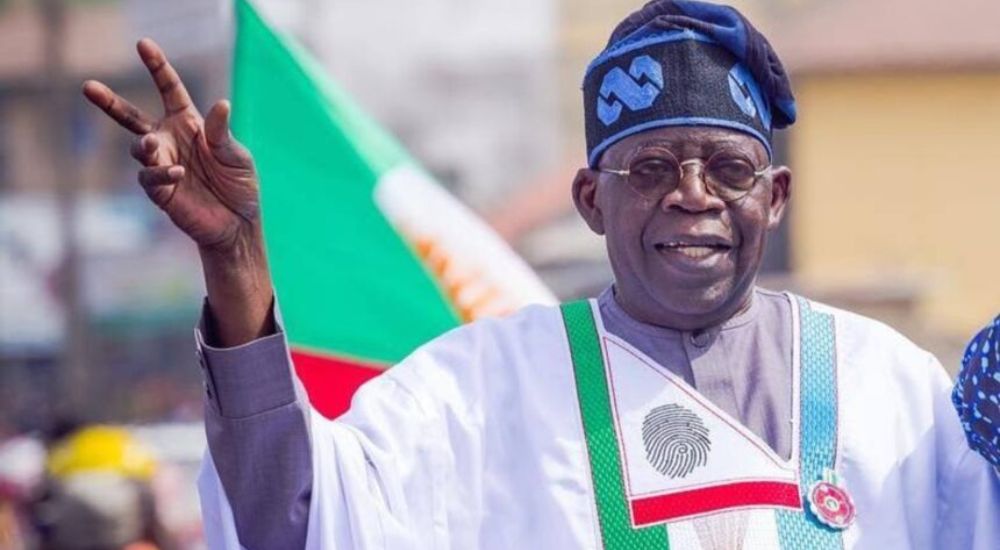
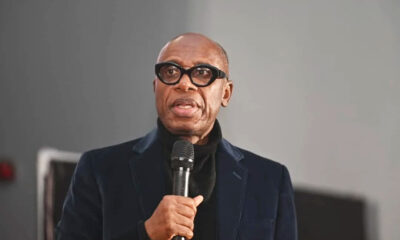
ABUJA – President Bola Tinubu on Sunday officially accepted the All Progressives Congress (APC) presidential ticket for the 2027 elections, pledging to consolidate ongoing reforms, deepen national development, and push for the creation of state police as a matter of national emergency. Tinubu spoke in Abuja while delivering his acceptance speech after emerging as the APC presidential flagbearer for the 2027 general elections, where he polled 10,999,162 votes to defeat his sole challenger, Stanley Osifo, in the party’s nationwide direct primary election held on Saturday, May 23, 2026. The formal acceptance took place as party leaders, governors, National Working Committee members, and lawmakers gathered at the APC National Secretariat to affirm the President’s candidacy.
President Tinubu opened his acceptance speech by celebrating what he described as a proud moment in Nigeria’s democratic journey. “Today, we celebrate another proud moment in our democratic journey, a history not defined by any individual, but by our collective resolve,” he told the gathering. The President recalled how he emerged as the party’s candidate in 2022 and later became President with the support of party members and Nigerians. “Today, I return as your incumbent President, humbled by your enduring support and encouraged by your continued confidence,” Tinubu said. He emphasized that the task before the party was to sustain continuity, consolidate reforms, and strengthen the foundation of a modern Nigeria. “I accept, with humility and profound gratitude, the nomination of our great party, the APC, to stand again as its Presidential candidate,” he declared. The President thanked party leaders, governors, the National Working Committee, lawmakers, and members for sustaining the unity and strength of the APC.
President Tinubu also expressed gratitude to Nigerians for supporting what he described as the “difficult but necessary path of reform” embarked upon by his administration. He acknowledged that the reforms had brought temporary hardship but insisted they were essential for long-term national prosperity. The President’s acceptance followed earlier comments he made after casting his vote in the primary, where he stated: “Democracy is not sustained by noise, speculation, or borrowed platforms. It is sustained by citizens who show up, party members who believe, institutions that endure, the grassroots, and a political family rooted in the people.” Speaking at his ward in Ikoyi, Lagos, where he and his wife Oluremi Tinubu cast their votes, the President described the primary exercise as proof of the APC’s democratic credentials.
READ ALSO:
- Trump’s Reception of Ambassador Are Signals Stronger Nigeria–US Partnership
- APC Presidential Primary: Tinubu Polls 10,999,967 Votes, Floors Osifo Nationwide
- Nigerian Troops Deployed to Cotonou as Benin Republic Swears in President Wadagni
Highlighting his administration’s achievements in education, President Tinubu announced that the government had established the Nigerian Education Loan Fund to remove financial barriers to higher education for Nigerian youth. “We promised to remove the financial barriers to higher education for our youth. Today, we have established the Nigerian Education Loan Fund,” he said. According to the President, over N282 billion had been disbursed to more than 1.5 million beneficiaries under the student loan scheme, providing access to tertiary education for thousands of Nigerian students who would otherwise have been unable to afford it. The scheme represents one of the largest direct interventions in educational financing in Nigeria’s history.
On power reforms, President Tinubu detailed significant investments in the electricity sector, stating that the administration had supplied 2.5 million electricity meters and established a N4 trillion bond programme to settle legacy debts owed to Generation Companies (GENCOs) and Gas Companies (GASCOs). The Presidential Power Sector Debt Reduction Plan, approved by Tinubu and endorsed by the Federal Executive Council in August 2025, authorized the issuance of government-backed bonds to settle verified arrears. “Under our administration, power generation sometimes peaked at 6000MW, 50 per cent higher than we had inherited,” Tinubu said. Industry data confirms that Nigeria recorded a peak generation of 6,003MW on March 2, 2025 — the highest in the country’s history. The integration of the Zungeru Hydropower Plant, rehabilitation of thermal plants, and grid-strengthening efforts under the Presidential Power Initiative contributed to this achievement.
President Tinubu reiterated that his government had removed fuel subsidy, unified exchange rates, and initiated reforms to strengthen macroeconomic stability and investor confidence. He described the previous subsidy regime as “monumental corruption” and insisted that Nigeria now enjoys greater stability as a result of these difficult decisions. The administration has prioritized infrastructure projects in transportation, power, housing, irrigation, and digital connectivity to drive inclusive growth and industrialization. “We are building concrete, durable roads and superhighways along the coast and on the Sokoto-Badagry route that will last for over 100 years,” the President said. Tinubu acknowledged that many Nigerians still faced economic hardship and rising living costs but assured citizens that the government remained focused on delivering lasting solutions. His position has received backing from party leaders, with Imo State Governor Hope Uzodimma — Chairman of the Progressive Governors Forum — declaring that APC governors were united in support of Tinubu’s second term ambition.
READ ALSO:
- Usyk Defeats Verhoeven via Controversial Stoppage to Retain Heavyweight Titles
- Three Dead, 15 Kidnapped in Fresh Kwara Worship Centre Attack
- ICE Arrests Nigerian National in Los Angeles for Theft, Fraud; Faces Deportation
Addressing the country’s security challenges, President Tinubu assured Nigerians that his administration remained committed to restoring peace and strengthening national security architecture across the country. He urged the National Assembly to expedite constitutional amendments to allow the establishment of state police across the federation. “We also expect the National Assembly to amend the Constitution to allow the creation of State police as a matter of national emergency,” the President declared. This marks the latest in a series of calls by Tinubu for decentralized policing. Speaking during an interfaith breaking of fast with senators at the Presidential Villa in February 2026, Tinubu had stated that Nigeria is “extremely challenged” by terrorism, banditry, and insurgency, stressing that decentralized policing is needed to secure forests and protect citizens. In a subsequent meeting with members of the House of Representatives, Tinubu urged lawmakers to ensure that any constitutional amendment creating state police includes safeguards to prevent misuse by governors. Constitutional amendment would require approval by two-thirds of both chambers of the National Assembly and ratification by at least 24 state Houses of Assembly.
The President outlined his administration’s continued focus on industrialization, energy security, food sufficiency, infrastructure development, and democratic consolidation. “Our mission remains clear: To build a Nigeria where every life is secure, where enterprise thrives, and where young people find opportunity,” Tinubu said. He called for national unity and urged Nigerians across political, ethnic, and regional divides to work together for the country’s progress. Tinubu pledged to build a more inclusive government and continue serving Nigerians with sincerity, commitment, and renewed determination. “I pledge to build an even more inclusive government, one that listens, learns, and leads with the best interests of all Nigerians at heart,” the President said.
President Tinubu emerged as the winner of the APC presidential primary election with 10,999,162 votes across the 36 states and the Federal Capital Territory, defeating his sole challenger, Stanley Osifo, who secured 16,504 votes nationwide. The results were drawn from direct primary elections conducted simultaneously across all 8,809 wards in the country on Saturday, May 23, 2026. According to state-by-state results, Tinubu’s strongest showing came from Lagos State, his political base, where he polled 814,988 votes — his highest single-state tally. Adamawa State delivered 644,149 votes, Kaduna State followed with 618,914 votes, Imo State gave him 582,960 votes, and Kano State, Nigeria’s most populous northern state, delivered 500,852 votes for the President. In Abia State, Tinubu secured 161,005 votes to defeat Osifo, who polled 1,007 votes — the highest secured by the challenger in any state. In Edo State, Osifo’s home state, the President polled 131,096 votes while the challenger managed just one vote. In Gombe State, Governor Inuwa Yahaya announced that out of 550,516 registered APC members, President Tinubu secured an overwhelming 450,516 votes, while Osifo recorded zero votes. In the Federal Capital Territory, Tinubu also secured substantial victories across all wards.
President Tinubu’s landslide victory in the APC presidential primary effectively clears the path for his re-election bid in the January 2027 general elections. With the ruling party presenting a united front behind the President, the opposition will now have to coalesce around a single candidate to mount a credible challenge. The President will now face off against candidates from opposition parties, including the Peoples Democratic Party (PDP) , Labour Party , and other opposition platforms, in what is expected to be a fiercely contested election. President Tinubu is expected to kick off his re-election campaign in the coming weeks, focusing on his administration’s achievements in infrastructure development, security sector reforms, economic transformation, and social investment programmes. As the APC prepares for the 2027 general election, party leaders have emphasized the need for unity and continued engagement with voters to explain the benefits of the administration’s reform agenda. The President will now proceed as the APC’s flag bearer for the January 16, 2027, presidential election, seeking a second and final term in office.
2027: President Tinubu Accepts APC Presidential Ticket, Vows to Deepen Reforms





Politics
2027 Elections: FG Warns Hotel Owners Against Illegal Activities, Suspicious Funds
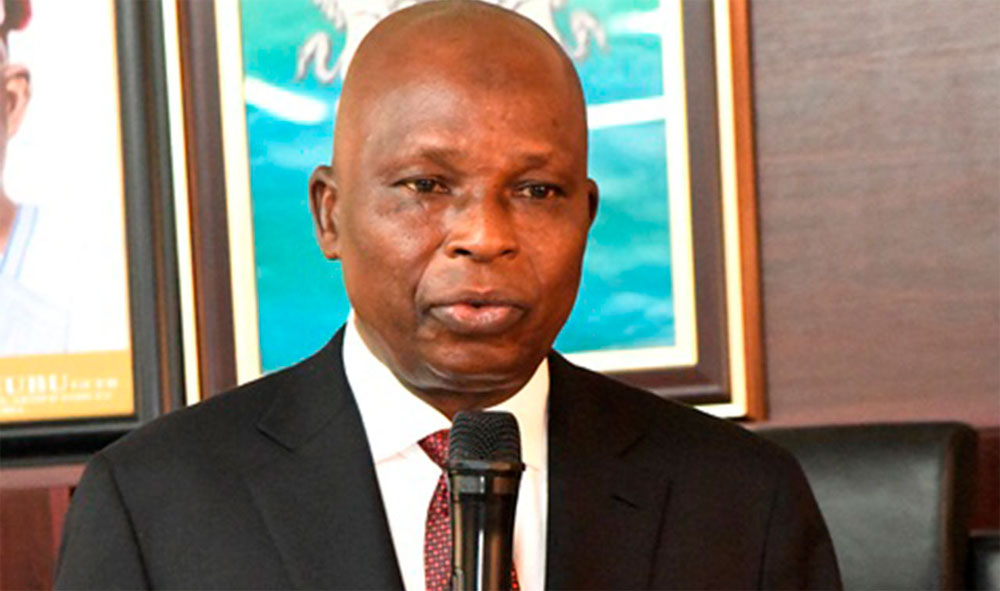
The Federal Government has warned hotel owners and managers across Nigeria against allowing their facilities to be used for illegal activities, including the movement of illicit funds, as political activities intensify ahead of the 2027 general elections.
The Attorney-General of the Federation and Minister of Justice, Lateef Fagbemi, issued the warning while addressing the second edition of the JAGZ Hospitality Conference in Ibadan, Oyo State.
Fagbemi, who was represented by Fernandez Marcus-Obiene, Special Assistant to President Bola Ahmed Tinubu on Justice Sector Reform and ICT/Digital and Innovative Technology, said the hospitality industry had an important role to play in promoting security and peaceful elections.
The conference, themed “The Hotel at the Centre: Money, Elections, Security,” brought together government officials, security personnel, financial crime regulators and hospitality industry stakeholders to examine the responsibilities of hotel operators as the country approaches another election cycle.
Fagbemi urged hotel managers to strengthen their security arrangements, maintain accurate records of guests and cooperate with relevant authorities when legally required to provide information concerning individuals or groups using their facilities.
He stressed that hotels must not become channels for illicit financial transactions or provide cover for activities capable of undermining public security during the election period.
READ ALSO:
- NDC Blames Computer Glitch as INEC Omits Kano Governorship Candidate From Final List
- Oshiomhole Accuses Umahi of Bias in Road Projects, Demands Repairs Before New Construction
- 2027: Pantami Breaks Silence as INEC Excludes Him From Final Gombe Governorship List
The Attorney-General’s warning comes as political parties, campaign organisations and political interest groups increase their activities ahead of the 2027 polls. Hotels and event centres are expected to host political meetings, campaign teams, journalists, business representatives and security personnel.
The government therefore wants hospitality operators to ensure that their businesses comply with relevant laws and financial regulations while maintaining professional standards and political neutrality.
Fagbemi’s warning also reflects growing concerns about the possible use of commercial establishments to facilitate suspicious financial transactions during election campaigns.
At the conference, stakeholders emphasised the need for stronger cooperation between hotel operators, law enforcement agencies and financial regulators to identify and address suspicious activities without disrupting legitimate hospitality services.
The convener of the conference and Group Managing Director of Charis Ultimo Hotels Limited, Lugard Agbomoagan, said the hospitality sector had evolved beyond providing accommodation to become an important part of international tourism, foreign investment, cross-border business and financial transactions.
He argued that hotel operators needed a clearer understanding of their legal obligations when dealing with customers, political organisations and transactions involving substantial sums of money.
Agbomoagan stressed that the objective was not to portray hotels as centres of criminal activity but to encourage preparedness, professionalism and compliance.
He also urged hotel managers to review their security arrangements ahead of the election period rather than wait until incidents occurred.
As an example of security preparedness, Agbomoagan said The JAGZ Hotel operated a dedicated surveillance unit that monitored closed-circuit television footage around the clock to observe activities within the premises and respond to potential security concerns.
The conference also highlighted the importance of maintaining reliable guest records and ensuring that suspicious transactions are handled in accordance with applicable anti-money laundering requirements.
The warning follows an earlier directive by the Federal Capital Territory Administration (FCTA) cautioning hotel and event-centre owners in Abuja against allowing their premises to be used by political organisations or factions whose leadership was not recognised by the Independent National Electoral Commission (INEC).
The FCTA had directed operators to verify the status of political groups seeking to use their facilities and maintain proper records of transactions. It warned that non-compliance could attract severe consequences, including the revocation of property title documents.
Although the FCTA directive applies specifically to the Federal Capital Territory, the latest comments by the Attorney-General underline the Federal Government’s broader concerns about election security, financial transparency and the responsibilities of businesses during the political season.
However, the warning does not mean that hotels are prohibited from accommodating politicians or hosting lawful political meetings. Rather, operators are being urged to ensure that their facilities are not used to facilitate criminal activities and that they comply with applicable legal and regulatory requirements.
With the 2027 elections approaching, hotel owners and managers face increased pressure to strengthen internal controls, protect guests and employees, maintain accurate records and cooperate appropriately with law enforcement agencies.
The Federal Government’s message is that the hospitality industry must remain professional and politically neutral while ensuring that its facilities are not exploited for illegal financial activities or other offences during the electioneering period.
2027 Elections: FG Warns Hotel Owners Against Illegal Activities, Suspicious Funds
Politics
NDC Blames Computer Glitch as INEC Omits Kano Governorship Candidate From Final List
NDC Blames Computer Glitch as INEC Omits Kano Governorship Candidate From Final List
The Nigeria Democratic Congress (NDC) has attributed the absence of its Kano State governorship candidate, Aminu Abdussalam-Gwarzo, from the Independent National Electoral Commission’s (INEC) final list of candidates for the 2027 election to an alleged computer glitch.
The party has urged its members and supporters to remain calm, insisting that it completed the necessary nomination procedures within the stipulated period and that the omission was not caused by any failure on its part.
The NDC’s Kano State Public Relations Officer, Yusif Fasaha, disclosed this in a statement made available to journalists in Kano following the publication of INEC’s final list on Saturday, October 10, 2026.
Fasaha said the party had contacted the electoral commission over the omission and was assured that the problem would be addressed.
“I want to assure you that, as the PRO of the party, the problem is not from us. We have consulted INEC, and they told us that the problem was from the computer and that they would rectify it,” he said.
The spokesperson expressed confidence that a corrected list containing Gwarzo’s name would be published by Monday, October 12, and appealed to party members not to panic over the development.
“So, everybody should remain calm. Between now and Monday, another list containing his name will be released,” Fasaha added.
He maintained that Gwarzo had fulfilled all the requirements for the governorship election and that the party had completed the relevant processes on time.
However, INEC has not publicly confirmed that a computer glitch caused the omission or independently explained why the candidate was left off the final list.
The commission’s published document contains 17 governorship candidates and their running mates from various political parties contesting the February 6, 2027 Kano governorship election. Neither Gwarzo nor his running mate, Mustapha Rabiu Kwankwaso, appears on the list.
READ ALSO:
- Oshiomhole Accuses Umahi of Bias in Road Projects, Demands Repairs Before New Construction
- 2027: Pantami Breaks Silence as INEC Excludes Him From Final Gombe Governorship List
- ‘My Wife Fed Actresses I Was Dating Despite Knowing About Our Affairs’ – Yinka Quadri
Among the candidates included is incumbent Governor Abba Kabir Yusuf, who is listed as the candidate of the All Progressives Congress (APC), with Murtala Sule-Garo as his running mate.
Abacha Muhammad Sani is listed as the candidate of the Peoples Democratic Party (PDP), while other political parties also have candidates on the commission’s list.
The omission has raised questions about the NDC’s participation in the Kano governorship election, particularly because Gwarzo had emerged as the party’s candidate alongside Kwankwaso, a former Kano State commissioner for youth development and son of former governor Rabiu Musa Kwankwaso.
The development also comes amid wider scrutiny of INEC’s final lists for the 2027 governorship elections. In Gombe State, the commission omitted former Minister of Communications and Digital Economy Isa Ali Pantami, who had emerged as the PDP candidate following a fresh primary.
In Pantami’s case, the omission comes against the backdrop of legal disputes over the party’s nomination process and questions surrounding compliance with the Electoral Act 2026.
The Supreme Court’s September 24 judgment restored provisions of the Electoral Act governing political party membership registers and eligibility to participate in party primaries. The provisions require parties to comply with statutory deadlines for submitting their membership registers to INEC.
However, the electoral commission’s published Kano list does not establish whether the NDC’s omission is connected to the membership-register requirements, a documentation issue or another administrative matter.
The distinction is important because the NDC’s claim of a computer glitch remains unconfirmed by the commission.
If INEC issues a revised list, it would clarify whether Gwarzo and his running mate have been included among the candidates cleared to contest the election. Until then, uncertainty remains over the party’s representation in the Kano governorship race.
The NDC has maintained that it complied with the nomination requirements and is continuing consultations with the electoral commission to resolve the matter.
The immediate focus is now on whether INEC will publish a corrected list by the date indicated by the party and provide an official explanation for the omission.
For the NDC, the outcome will determine whether its preferred candidates appear on the final list for the Kano governorship election. For voters, the issue highlights the importance of transparent candidate-selection procedures and clear communication from electoral authorities ahead of the 2027 polls.
NDC Blames Computer Glitch as INEC Omits Kano Governorship Candidate From Final List
Politics
2027: Pantami Breaks Silence as INEC Excludes Him From Final Gombe Governorship List
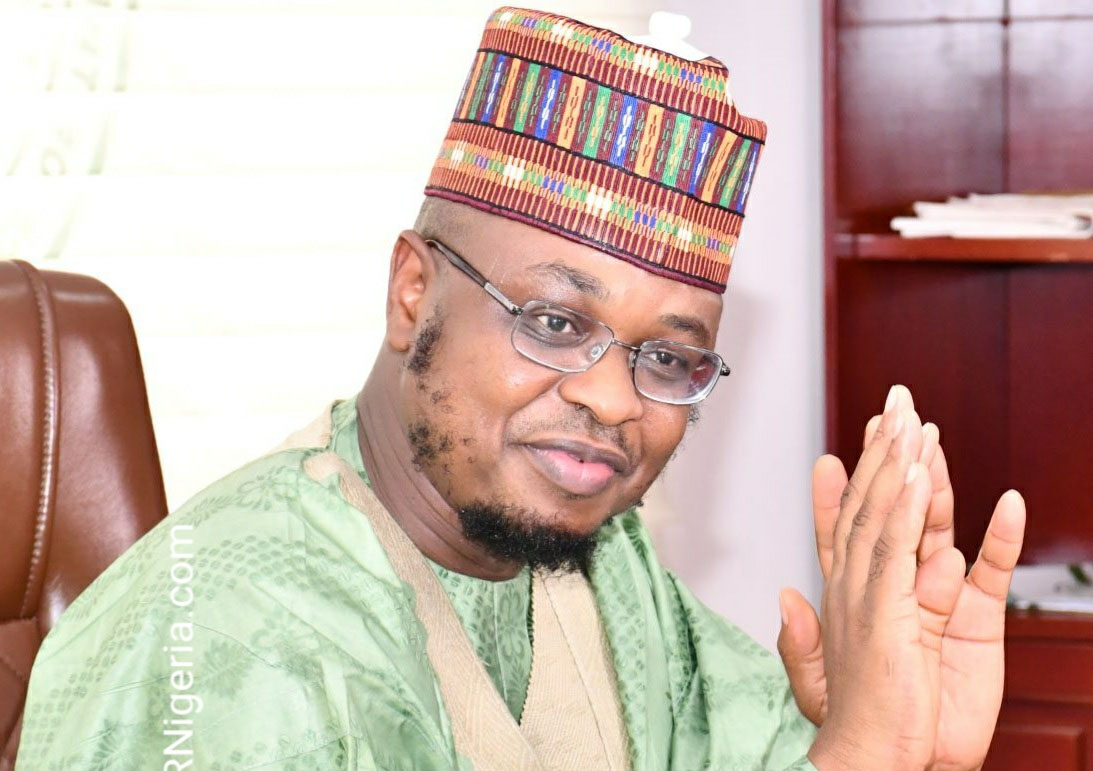
Former Minister of Communications and Digital Economy, Isa Ali Pantami, has reacted to the exclusion of his name from the Independent National Electoral Commission’s (INEC) final list of candidates for the 2027 Gombe State governorship election, urging supporters to remain calm as his political camp works to resolve the issue.
Pantami’s name was missing from the list released by INEC on Saturday, October 10, 2026, despite his emergence as the Peoples Democratic Party (PDP) governorship candidate following a fresh primary election conducted on September 29.
In a statement shared on Pantami’s verified Facebook page, the Pantamiyya Movement’s spokesperson, Professor Suleiman Mohammed Gombe, described the development as a temporary setback and assured supporters that efforts were underway to address the omission.
“This is a temporary challenge and a normal part of the electoral process, not a final determination,” the statement said.
Mohammed disclosed that the movement’s legal and liaison teams were engaging with relevant PDP organs and INEC to secure what they described as a correction within the period permitted by law.
He also alleged that political opponents were working behind the scenes to frustrate Pantami’s governorship ambition, although the statement did not provide evidence identifying those allegedly involved.
The statement urged members of the PDP and the Pantamiyya Movement to remain united, continue their mobilisation and avoid being distracted by the development.
READ ALSO:
- ‘My Wife Fed Actresses I Was Dating Despite Knowing About Our Affairs’ – Yinka Quadri
- Tension in Kano as Phone Traders Confront Chinese Sellers Over Cheaper Phones
- OASIS Muslim Care Foundation Holds Webinar on Healthy Lifestyles, NCD Prevention
“We urge our supporters to continue their mobilisation and to remain focused on our collective ideology of service to humanity,” Mohammed said.
INEC’s published list contains 16 governorship candidates for Gombe State, but it does not include Pantami or a PDP candidate. Among those listed are Jamilu Gwamna of the All Progressives Congress (APC), Bala Tinka of the African Democratic Congress (ADC) and Babayo Kumo of the Nigerian Democratic Congress (NDC).
The omission comes after a series of legal disputes over the PDP’s nomination process in Gombe State.
Pantami initially emerged as the party’s governorship candidate in May 2026 after leaving the APC, where he had sought the party’s ticket. His initial nomination was subsequently challenged by fellow aspirants, including Khamisu Mailantarki and Usman Garry.
On September 24, the Federal High Court in Gombe nullified the original nomination and ordered the PDP to conduct a fresh governorship primary within 30 days. The court found that the earlier process did not comply with the party’s procedures and applicable electoral laws, including the exclusion of some aspirants who had been screened and cleared to participate.
The court did not grant a separate request seeking Pantami’s removal from the PDP.
Following the ruling, the PDP conducted a fresh primary on September 29, in which Pantami again emerged as the party’s candidate. However, the outcome continued to face objections from rival aspirants.
Mailantarki reportedly challenged Pantami’s eligibility, arguing that he had joined the PDP after the relevant party-register deadline. The dispute has added another layer of uncertainty to the party’s efforts to secure representation in the 2027 Gombe governorship election.
INEC has not publicly explained in the reports reviewed why Pantami’s name and the PDP’s nomination were absent from the final list.
The omission does not, on its own, establish the precise legal or administrative reason for the decision. The outcome will depend on the applicable electoral requirements and any further action by the commission, the party or the courts.
The 2027 Gombe governorship election is scheduled for February 6, 2027. With Pantami’s camp saying it is engaging the relevant institutions, attention will now focus on whether the omission can be resolved within the legally permitted period.
For the PDP, the development presents a challenge as it seeks to participate in the Gombe contest. For Pantami and his supporters, the immediate priority is to establish the reason for the omission and determine the available legal options.
2027: Pantami Breaks Silence as INEC Excludes Him From Final Gombe Governorship List
-

 metro1 day ago
Tension in Kano as Phone Traders Confront Chinese Sellers Over Cheaper Phones
-
 Health2 days ago
NAFDAC Raises Alarm Over Toxic Pesticides in Beans, Seizes ₦800m Banned Chemicals
-

 Business3 days ago
NNPCL: We Introduced ₦66 Fuel Discount Before FG’s Announcement
-

 metro3 days ago
2027: Ekiti Driver Takes ₦3.5m Loan to Back Tinubu’s Re-election Bid
-
 metro2 days ago
Police Launch Manhunt After Fresh Attacks, Kidnappings Rock Four Nigerian States
-

 metro2 days ago
EFCC Wins ₦132m Money Laundering Case as Court Orders Forfeiture of Lagos Properties
-
 Auto3 days ago
Electric Mobility: Spiro Unveils Expansion Plan, Names Nigeria New MD
-

 Business2 days ago
NNPC Petrol Discount: Motorists Must Download App to Save ₦66 Per Litre