

metro
Pregnant, Bleeding, and Still Forced to Work: The Unthinkable Ordeal of 7 Nigerian Teens
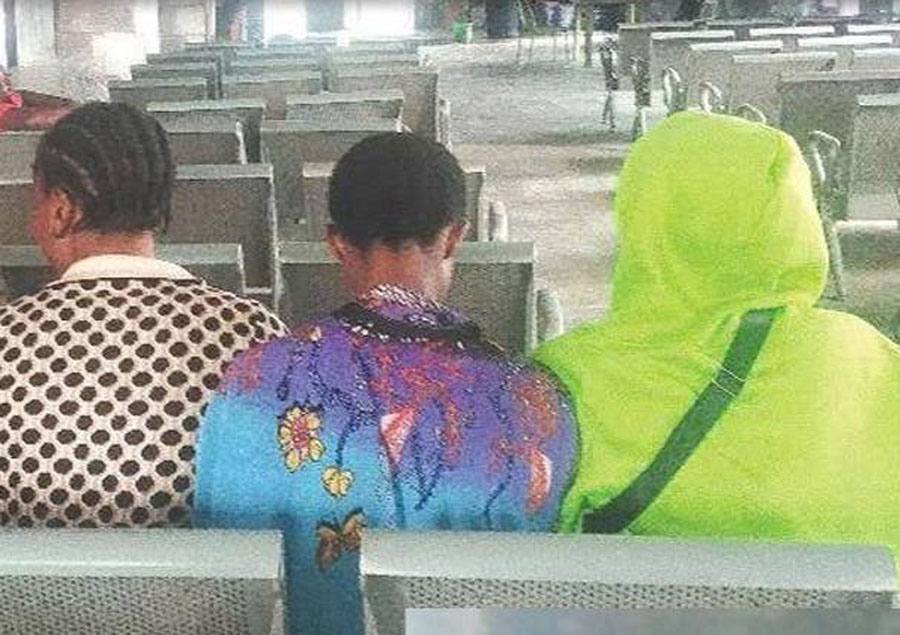
Pregnant, Bleeding, and Still Forced to Work: The Unthinkable Ordeal of 7 Nigerian Teens
In a devastating betrayal of trust, seven young Nigerian women—most still teenagers—were lured across West African borders by friends and relatives with promises of legitimate jobs, only to be trapped in a brutal sex trafficking network where they were forced to service multiple men daily, even during pregnancy and menstruation.
For these seven young Nigerian women, most of whom are teenagers, the nightmare began not with strangers lurking in shadows, but with familiar faces—friends, relatives, and community members who presented themselves as trusted helpers offering a lifeline out of poverty. The recruiters claimed to have connections abroad who could secure decent jobs in boutiques, restaurants, salons, and homes. What awaited the young girls across the border, however, was a brutal reality of deception, coercion, and exploitation. Their rescue by the Global Anti-Human Trafficking Organization (GAHTO) , working with authorities in Mali, Burkina Faso, and Nigeria’s National Agency for the Prohibition of Trafficking in Persons (NAPTIP) , is more than a narrative of survival. It is a chilling reminder of how human traffickers increasingly rely on trusted agents, relatives, and acquaintances to lure vulnerable young people into modern-day slavery.
For 22-year-old Sunday Sofia, known in Mali as “Testie,” the trap was carefully laid. Working as a maid and sales assistant in a Lagos boutique for just ₦20,000 monthly, she dreamed of earning more to support her family and younger siblings. When a friend introduced her to what appeared to be a better opportunity, she saw hope. “It was one of my friends who told me she had secured another job for me,” Sofia recalled. “I accepted thinking it was a legitimate job. We were told we were going to work as housekeepers.” Instead, she found herself trapped in Mali, far from home and stripped of every right she once took for granted.
READ ALSO:
- Ekiti 2026: EU Observers Hail Peaceful Poll, 96% BVAS Performance
- Bandits Flee as Troops Rescue 17 Passengers, 5 Farmers in Sokoto Raids
- Ekiti 2026: Governor Oyebanji Sweeps Polling Unit with 326 Votes as PDP Records Zero
Her story mirrors those of 17-year-old Blessing Samson, Esther Gyang, Odey Blessing, and others who were allegedly recruited through a network of agents who presented themselves as trusted helpers. Blessing said a man identified as Peter approached them in their hometown in Plateau State with what sounded like a life-changing opportunity. “He told us his sister had a business in Mali and needed people to work with her,” Blessing stated. The girls were promised jobs in boutiques, restaurants, and phone shops. They repeatedly sought assurances, suspicious of the too-good-to-be-true offer. “We asked him if it was really the work he told us we were going there to do. We even asked if it was hookup work. He said no,” recalled Odey Blessing, known as “Beauty.” 22-year-old Sandy Sophia, also from Plateau State, echoed this sentiment: “I asked countless times if it was prostitution, and they kept telling me it was not. It was only after we reached Burkina Faso that they finally admitted it was prostitution.”
The assurances were enough. They packed their bags, filled with hope and dreams of a better life. The moment they crossed the border, the dream died. Upon arrival in Mali, the girls were taken not to boutiques or restaurants but to bars where other young women greeted them with a phrase they did not understand at the time. “The following day, reality became impossible to ignore. They told us there was no boutique or phone plaza. They said it was prostitution,” Odey said. The girls cried. They pleaded. They begged. But they were told they had no choice.
One alleged trafficker reportedly informed them they owed 1.5 million CFA Francs each—approximately ₦4 million—and could only repay the debt through sex work. This tactic of debt bondage is a common tool used by trafficking networks to control their victims, creating a cycle of exploitation that seems impossible to escape. “They started starving us for three days. We had no option. What followed were weeks of exploitation. Some of us had to service multiple men daily while struggling to repay debts that seemed impossible to clear,” Odey recounted. According to Odey, there were no breaks—even during menstruation. “Even when we were having our menstrual cycle, we still had to sleep with men,” she said.
READ ALSO:
- Argentine TV Presenter Resigns After Falsely Reporting Death of Lionel Messi’s Father
- #EkitiDecides2026: APC Leads Early Results as Vote Counting Begins
- VIDEO: Drama as Ekiti Voters Chase EFCC Operatives Out of Polling Unit
Perhaps the most disturbing revelation from the rescue operation is how pregnancy became another layer of vulnerability rather than a shield from exploitation. 20-year-old Augusta Akoghamhen said the recruitment began through a relative of her father. The man allegedly assured the family that she would work as a domestic employee for foreigners and would travel by air. Because the information came through someone known to the family, suspicion never arose. “My father agreed because he believed the job was legitimate,” Augusta said. The journey eventually took more than a week by road. When they arrived, the promises vanished. “They didn’t even allow us rest from the stress of the travel. That same evening we were forced to start working. The work, I discovered, was prostitution. At the time, I was already pregnant. Unfortunately, pregnancy offered no protection,” she recalled. Augusta said she was beaten whenever she resisted working. “Anytime I refused to work because I was not feeling well, my boss attacked me. Despite being pregnant, I was expected to continue servicing clients while handing over virtually all earnings,” Augusta noted.
Elizabeth, another survivor who was trafficked alongside Augusta, experienced the same cruelty. “If they had told me it was prostitution, I would not have agreed to travel. My trafficker continued demanding work despite my advancing pregnancy. She said we would continue to work until we gave birth,” Elizabeth said. The dehumanization was complete when Elizabeth discovered she had become a commodity in a dispute between traffickers. “What shocked me most was discovering I had effectively become a commodity in a dispute between my boss, Osas, and her co-trafficker, Aisha. She refused and said except Aisha would buy me. I became a commodity for sale,” Elizabeth recounted.
Several of the girls recounted threats that they would go mad if they attempted to escape. Blessing remembered being warned repeatedly. “Our madam threatened that we would run mad if we refused to work or escape,” Blessing stated. The threats were designed to exploit cultural fears and keep victims psychologically trapped, demonstrating the sophisticated manipulation tactics employed by trafficking rings.
Despite the intimidation, the girls quietly began planning their escape. Ironically, one of the people who eventually helped rescue the girls was someone they knew from home. Sofia recalled meeting a man from their village who worked in Mali. “We knew him in our village before we travelled. He knows us and he knows our parents. When he discovered our situation, he promised to help,” she said. That intervention eventually connected the victims to GAHTO, setting in motion a rescue effort that would bring them back to Nigeria. For Augusta, the turning point came when she secretly reached out to her father in Nigeria. The message triggered a chain of events that eventually reached GAHTO and NAPTIP.
READ ALSO:
- #EkitiDecides2026: Fayose Predicts Landslide Victory for Oyebanji
- Tinubu proved me wrong in Kwara, By Farooq Kperogi
- Oba of Benin Summons Native Doctors, Priests Over Rising Kidnapping in Edo
GAHTO coordinated efforts leading to the rescue of Augusta and Elizabeth from Burkina Faso, after which they were received by NAPTIP’s Benin Zonal Command upon arrival in Nigeria. For the five girls rescued from Mali—Sunday Sofia, Blessing Samson, Esther Gyang, Odey Blessing, and Rose Pam—the intervention also brought an end to months of fear and uncertainty. Most returned home with little more than the clothes they were wearing. Some lost personal belongings; others worked for months without compensation. Yet all returned with something more valuable: freedom.
For Sofia, who spent two months in Mali, returning home felt like being given a second chance. “My greatest regret is travelling to Mali. I am happy to see myself in Nigeria. I won’t go back again,” Sofia declared. Today, she hopes to return to hairdressing and complete the apprenticeship she abandoned in pursuit of a better life. “I want to complete my hairdressing training. I was learning before I left, and I want to continue. I don’t want to experience that kind of life again,” she said.
These young women were not kidnapped by strangers lurking in dark corners. Many were recruited by people they knew: friends, relatives, neighbours, and trusted community members. The traffickers understood a painful truth: trust opens doors that force cannot. According to NAPTIP, human trafficking remains a major challenge in Nigeria. In 2025 alone, NAPTIP rescued over 370 Nigerian trafficking victims from countries including Ghana, Senegal, and other West African states, reflecting ongoing cross-border trafficking networks within the region. The agency also secured 93 convictions of human traffickers and intercepted more than 2,500 potential victims of trafficking both within Nigeria and across borders. The agency has noted that Edo and Delta States remain high-risk zones for human trafficking due to proximity to international borders and high migration pressure.
GAHTO’s founder, Prosper K.A. Michael, emphasized that poverty remains the primary driver of the crime: “When young people lack opportunities and parents are struggling, traffickers step in with false promises. We must tackle poverty and strengthen family bonds to protect our children.” The survivors’ stories exposed how false promises of jobs, education, and prosperity continue to lure vulnerable young Nigerians across borders into exploitation through recruitment by trusted connections, cross-border transportation, debt bondage, forced prostitution, psychological manipulation, and exploitation of vulnerability even during pregnancy and illness.
Anti-trafficking advocates and survivors themselves agree that meaningful change requires strengthening border controls to intercept trafficking networks, launching public awareness campaigns in high-risk communities, implementing economic empowerment programs to reduce vulnerability, ensuring stricter prosecution of traffickers including those who recruit through trusted networks, providing support services for survivors including counseling and job training, and offering community education to help families recognize recruitment tactics. Today, Sofia dreams of reopening her path to becoming a professional hairdresser. Others hope to return to school, rebuild their lives, and reunite with their families. For them, the journey home is a new beginning—and a powerful reminder that no promise of quick wealth is worth the price of freedom. Their stories are not just tales of survival. They are a call to action for governments, communities, and individuals to stand against human trafficking and protect the vulnerable among us.
Pregnant, Bleeding, and Still Forced to Work: The Unthinkable Ordeal of 7 Nigerian Teens









metro
Mambilla: Malami Defends $200m Settlement, Rejects ICC Corruption Findings
Mambilla: Malami Defends $200m Settlement, Rejects ICC Corruption Findings
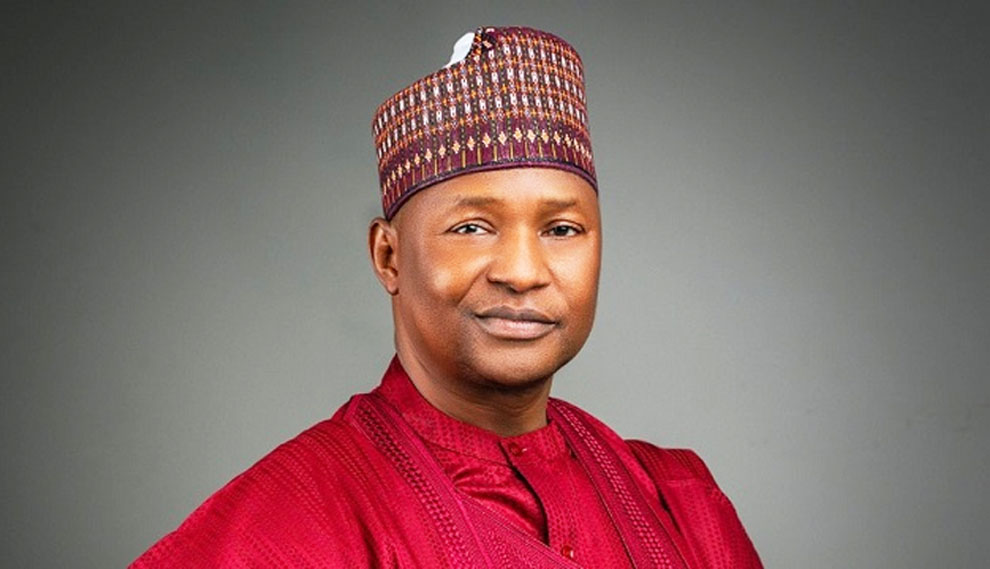
Former Attorney-General of the Federation and Minister of Justice, Abubakar Malami, has defended the controversial $200 million settlement agreement reached between the Federal Government and Sunrise Power and Transmission Company Limited over the long-running Mambilla Hydroelectric Power Project dispute.
Malami said the proposed settlement was negotiated in what he considered to be Nigeria’s interest, arguing that the government was attempting to resolve a dispute that had persisted for years and had become an obstacle to the development of the 3,960-megawatt Mambilla power project in Taraba State.
His response followed a 616-page final award delivered by an International Chamber of Commerce (ICC) arbitration tribunal in Paris on September 16, 2026. The tribunal rejected Sunrise Power’s claims against Nigeria but also made adverse findings about Malami’s handling of the settlement negotiations.
The tribunal found that the 2020 settlement agreement and its addendum were not binding on Nigeria because they lacked the required presidential approval. It also concluded that the agreements were products of corruption and contrary to Nigerian public policy.
Malami has rejected those findings concerning his conduct, stressing that the arbitration was a commercial proceeding and not a criminal trial.
He said the tribunal’s award should therefore not be presented as a criminal conviction against him.
According to Malami, the dispute between Sunrise Power and the Federal Government began years before he became Attorney-General and passed through several administrations, ministries and Attorneys-General.
He said his involvement arose from his constitutional and professional responsibility to advise the government on its legal exposure and possible options for resolving the longstanding dispute.
The Mambilla controversy dates back to 2003, when Sunrise became involved in plans for the development of the hydroelectric project in Taraba State. The project was later redesigned with a proposed capacity of 3,960MW, but disagreements over Sunrise’s contractual role eventually produced years of litigation and international arbitration.
READ ALSO:
- Obasanjo Family, Orji Kalu Among Nigerians Linked to $271m US Property Investigation
- Nationwide Blackout Looms As Electricity Workers Give NAF Three-Day Ultimatum
- Phyna, Nkechi Blessing Take Social Media Feud To Boxing Ring In Lagos
By 2019, Malami said, the unresolved dispute had become an impediment to financing discussions surrounding the Mambilla power project, including engagements involving China Exim Bank.
He said Sunrise initially demanded $500 million as a full and final settlement during negotiations in London in November 2019.
Government representatives reportedly countered with $100 million before negotiations produced the $200 million figure that was eventually incorporated into the settlement agreement.
The January 2020 agreement provided for Nigeria to pay Sunrise $200 million to settle the dispute.
However, a subsequent addendum dated March 25, 2020 introduced another $200 million liability in the event of default, potentially increasing Nigeria’s exposure to $400 million, apart from interest.
The additional liability became a major issue before the ICC tribunal.
The tribunal examined the circumstances surrounding the settlement and the subsequent addendum, including communications between Malami and Leno Adesanya, the promoter of Sunrise Power.
According to the tribunal’s findings reported from the final award, Adesanya alleged that Malami and former Minister of Power Saleh Mamman discussed a payment arrangement under which Nigeria would initially release $100 million and the remaining $100 million would be paid after Adesanya had done “what is needed”.
Adesanya also claimed to have audio and video recordings relating to the alleged discussions.
The tribunal noted, however, that those recordings were not produced before it. It therefore considered the absence of the recordings when assessing the evidence surrounding the allegations.
Despite that limitation, the tribunal concluded that the evidence before it established what it described as a corrupt deal between Malami and Adesanya and found that the settlement agreements were consequently tainted.
The tribunal also found that Malami had acted against Nigeria’s interests and was motivated by other incentives in his handling of the settlement. It noted that Malami did not appear before the tribunal to give evidence.
Malami has categorically rejected the allegation.
In a statement issued by his Special Assistant on Media, Mohammed Doka, the former AGF said his official actions were not motivated by a promise of personal financial benefit.
He argued that the allegation should be assessed against the complete documentary and evidentiary record, including whether he ever received money or any other financial benefit from Sunrise, Adesanya or an associated entity.
READ ALSO:
- Edo Police Arrest Cleric Over Alleged Abduction, Sexual Abuse Of Five Girls
- Abia Police Rescue Four-Day-Old Baby, Arrest Four Over Alleged Theft, Trafficking
- Rent Crisis Deepens as Tenants Struggle With Soaring Housing Costs in Calabar, Lagos, Abuja
Malami also pointed to the fact that former President Muhammadu Buhari never approved the $200 million settlement.
According to the tribunal’s findings, Buhari wrote in a note dated April 20, 2020 that the Federal Government did not have the $200 million required to pay Sunrise.
A later request for approval was also rejected. On January 18, 2021, Buhari reportedly wrote “Not approved” on a communication relating to the settlement.
Malami said his subsequent actions should be considered in that context.
He maintained that when Sunrise later sought to enforce the settlement against Nigeria, he instructed government lawyers to resist the attempt and preserve the country’s legal position.
The former AGF therefore argued that it would be inaccurate to portray his role simply as an attempt to secure payment for Sunrise despite Buhari’s position.
The tribunal reached a different conclusion about aspects of his conduct, finding that Malami and Adesanya had maintained an inappropriate relationship during the dispute and had coordinated on matters relating to the settlement.
The findings have generated calls for further investigation from anti-corruption groups.
The Human and Environmental Development Agenda (HEDA Resource Centre) has called on Nigeria’s anti-corruption agencies to investigate the tribunal’s findings and prosecute any offences established by the evidence.
The ICC proceedings themselves, however, were commercial arbitration proceedings, not a criminal prosecution of Malami.
That distinction is significant because the tribunal’s findings regarding alleged corruption do not amount to a criminal conviction. Any criminal liability would have to be established through the appropriate criminal justice process.
While the tribunal criticised the handling of the settlement, its overall decision was favourable to Nigeria in the underlying arbitration.
Sunrise had sought hundreds of millions of dollars from Nigeria in connection with the settlement and was pursuing a separate claim exceeding $2.7 billion over the Mambilla project dispute.
The tribunal rejected Sunrise’s claims, including its demand for $400 million under the 2020 settlement and subsequent default provision. It also ordered Sunrise and Adesanya to reimburse Nigeria for a substantial portion of its legal costs.
Reports on the award put Nigeria’s recoverable legal fees and expenses at about $11.82 million, while Sunrise and Adesanya were also ordered to bear most of the arbitration costs.
President Bola Ahmed Tinubu welcomed the ruling and described it as the removal of a major legal obstacle to the long-delayed Mambilla Hydroelectric Power Project.
The President commended the Federal Ministry of Justice, Nigeria’s legal defence team and witnesses who participated in the arbitration, including former President Olusegun Obasanjo and the late President Muhammadu Buhari.
The Federal Government has said the arbitration outcome clears a major legal hurdle surrounding the Mambilla project, which has remained stalled for years.
The project is expected to have a generation capacity of 3,960MW, making it one of Nigeria’s most ambitious planned power developments.
For Malami, however, the ICC decision has created two separate issues: Nigeria’s success in defeating Sunrise’s financial claims and the tribunal’s findings about his conduct during the settlement negotiations.
He has welcomed the arbitration victory while rejecting the corruption findings against him.
Malami said he would provide a more comprehensive response after reviewing the complete ICC award and the evidence underpinning the tribunal’s conclusions.
The Mambilla settlement controversy is therefore likely to remain a subject of scrutiny, particularly over the circumstances surrounding the $200 million agreement, the March 2020 addendum that potentially doubled Nigeria’s liability, the absence of presidential approval and the communications between Malami and Sunrise’s promoter.
At the same time, the ICC ruling has settled the immediate arbitration dispute in Nigeria’s favour by preventing Sunrise from enforcing the disputed $400 million settlement claim.
The distinction between the two aspects of the case remains important: the ICC arbitration victory belongs to Nigeria in the commercial dispute, while the tribunal’s adverse findings concerning Malami are allegations and findings arising from that arbitration and are being expressly rejected by the former AGF.
Mambilla: Malami Defends $200m Settlement, Rejects ICC Corruption Findings
metro
Obasanjo Family, Orji Kalu Among Nigerians Linked to $271m US Property Investigation
Obasanjo Family, Orji Kalu Among Nigerians Linked to $271m US Property Investigation
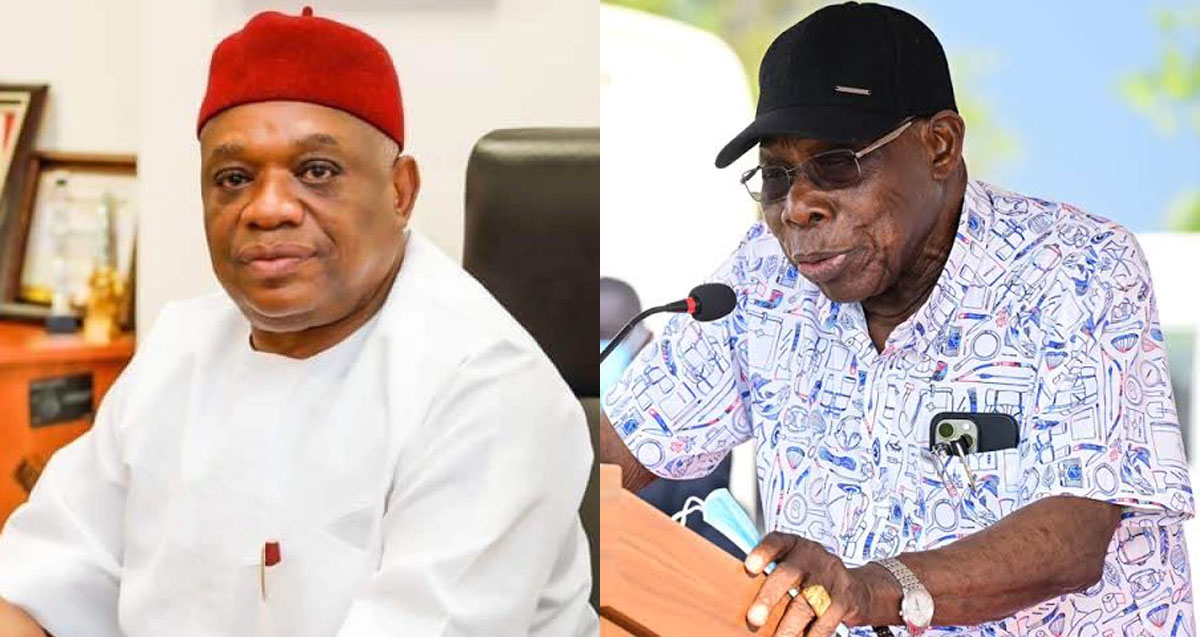
Members of the families of former President Olusegun Obasanjo and former Abia State governor Orji Uzor Kalu are among 61 Nigerian-linked individuals identified in a fresh investigation into about $271 million worth of US property and assets.
The investigation was conducted by the Platform to Protect Whistleblowers in Africa (PPLAAF) in partnership with the Anti-Corruption Data Collective (ACDC) as part of a broader examination of how wealth connected to Nigerian politically exposed persons (PEPs) has been moved into and held through United States real estate.
The findings, released on Tuesday, September 22, 2026, examine property ownership records, corporate structures and other data relating to Nigerian political figures, their relatives and associates.
The investigation comes days after PPLAAF announced that it had uncovered additional US properties linked to the families of former Nigerian officials, saying the findings pointed to gaps in the ability of Nigerian and American authorities to trace assets across borders.
However, being named in the investigation does not by itself establish that an individual committed a crime or that every property identified was acquired with proceeds of corruption.
Rather, PPLAAF and ACDC have presented the investigation as an examination of asset ownership, financial flows and corporate structures, with the aim of identifying properties and transactions that may warrant further scrutiny by competent authorities.
The investigation has renewed attention on the overseas assets of Orji Kalu, whose family has previously been the subject of a separate PPLAAF investigation into US property.
According to PPLAAF’s earlier findings, Kalu spent about $3.3 million on US properties while serving as Abia State governor and acquired additional properties worth about $4.4 million in the 18 months after leaving office, during a period when he was facing corruption charges in Nigeria.
PPLAAF further reported that Kalu and members of his family had owned properties valued at approximately $20 million across Maryland, North Carolina, South Carolina and Texas.
The properties included residential, commercial and undeveloped assets, with some acquisitions made through companies associated with Kalu and his family.
READ ALSO:
- Nationwide Blackout Looms As Electricity Workers Give NAF Three-Day Ultimatum
- Phyna, Nkechi Blessing Take Social Media Feud To Boxing Ring In Lagos
- Edo Police Arrest Cleric Over Alleged Abduction, Sexual Abuse Of Five Girls
Kalu was governor of Abia State from 1999 to 2007 and was subsequently prosecuted by the Economic and Financial Crimes Commission (EFCC) over allegations relating to the diversion of public funds.
He was convicted in 2019, but the Supreme Court overturned the conviction in 2020 on grounds relating to the composition of the trial court.
The PPLAAF investigation into Kalu’s US assets therefore predates the latest $271 million investigation and provides part of the background to his inclusion in the broader examination of Nigerian-linked wealth in the United States.
The investigation has also brought renewed attention to the use of family members, trusts, companies and other legal structures in holding foreign property.
A recent PPLAAF investigation involving former Enugu State governor Chimaroke Nnamani illustrates the type of transactions the organisation has been examining.
PPLAAF said its investigation identified at least nine properties in Florida and Virginia acquired by Nnamani and members of his family during and after his tenure as governor.
The properties were reportedly worth several million dollars, with seven of those identified being purchased after the EFCC had begun proceedings against Nnamani.
According to PPLAAF, the EFCC had accused Nnamani, his sister Chinero Nwaigwe and associated companies of stealing and laundering approximately $41.8 million from Enugu State.
The organisation said US authorities subsequently investigated financial transactions linked to the family and identified companies, wire transfers and a Florida property purchased for about $1.8 million.
PPLAAF’s review of property records subsequently identified other assets that it said were not mentioned in the earlier Nigerian or US proceedings.
READ ALSO:
- Abia Police Rescue Four-Day-Old Baby, Arrest Four Over Alleged Theft, Trafficking
- Rent Crisis Deepens as Tenants Struggle With Soaring Housing Costs in Calabar, Lagos, Abuja
- Plateau Imposes 6pm–6am Curfew on Three LGAs After Fresh Attacks
One of the properties, according to the organisation, was purchased by Nwaigwe in Virginia in January 2022 for approximately $1.5 million and transferred to Nnamani in December of the same year without stated consideration. Nnamani was serving as a senator at the time.
PPLAAF said the wider Nnamani property network included assets acquired through trusts and companies, which it said raised questions about beneficial ownership and the source of funds.
Nnamani has denied wrongdoing and rejected allegations that he was the subject of an FBI investigation or US criminal proceedings, according to PPLAAF’s published investigation. The organisation said other family members it contacted did not respond to its questions.
The Nnamani case is significant to the latest investigation because PPLAAF had announced ahead of the September 22 release that it would publish a broader report detailing how hundreds of millions of dollars in American real estate were connected to current and former senior Nigerian officials.
The organisation said the report would examine the structures and regulatory gaps that can allow wealth to move across international borders and become invested in foreign property.
The broader investigation focuses on a problem that extends beyond Nigeria: the difficulty of identifying the true owners of property when assets are held through corporations, trusts or other legal arrangements.
Such structures are not inherently illegal. Companies and trusts are routinely used for legitimate estate planning, investment, privacy and commercial purposes.
However, investigators and anti-corruption organisations have argued that opaque ownership structures can also make it more difficult for authorities to establish who ultimately controls an asset and where the money used to purchase it originated.
This has made US real estate an important area of interest in international investigations into suspected illicit financial flows.
The latest investigation by PPLAAF and ACDC consequently raises questions about whether Nigerian and US authorities have sufficient information to trace the ownership and source of funds behind Nigerian-linked property holdings.
ACDC has worked with investigative journalists, researchers and other organisations on investigations involving transnational corruption and illicit financial flows, while PPLAAF focuses on whistleblower protection, investigations and legal advocacy concerning matters of public interest.
The two organisations have previously collaborated on investigations involving complex international financial structures and property ownership.
For Nigeria, the issue is particularly relevant because the recovery of assets allegedly acquired with public funds often depends on cooperation between domestic agencies and foreign authorities.
The EFCC, Independent Corrupt Practices and Other Related Offences Commission (ICPC), Nigeria Financial Intelligence Unit (NFIU) and other agencies can require international cooperation when assets suspected of being proceeds of crime are located outside the country.
The latest findings therefore do not amount to a judicial determination that the individuals identified are guilty of corruption or money laundering.
Instead, the report places a large number of Nigerian-linked US properties and assets under renewed public scrutiny and calls attention to the need for authorities to establish ownership, source of funds and, where necessary, whether particular assets are connected to criminal proceeds.
The distinction is important because property ownership alone is not evidence of corruption. Any allegation that a particular asset represents proceeds of crime would ultimately require evidence and, where contested, determination through the appropriate legal process.
The investigation is nevertheless likely to generate further questions about Nigerian politicians’ foreign assets, the role of relatives and corporate entities in holding property abroad, and the capacity of Nigerian institutions to recover assets located in other jurisdictions.
PPLAAF’s recent investigations have also highlighted cases in which property records revealed assets that investigators said were not fully reflected in earlier corruption or forfeiture proceedings.
The organisation has called on Nigerian and US authorities to investigate the newly identified financial and property structures and determine whether any of the assets warrant further action.
As scrutiny of the $271 million US property investigation continues, the central issue will be whether the ownership structures and financial transactions identified by the investigators can be independently verified and whether competent authorities find evidence of unlawful conduct.
For the individuals and families named, inclusion in the investigation should therefore be understood as an allegation or investigative finding requiring further verification, rather than proof of criminal liability.
Obasanjo Family, Orji Kalu Among Nigerians Linked to $271m US Property Investigation
metro
Nationwide Blackout Looms As Electricity Workers Give NAF Three-Day Ultimatum

Nationwide Blackout Looms As Electricity Workers Give NAF Three-Day Ultimatum
A nationwide blackout could occur if electricity workers proceed with threatened industrial action over the alleged assault and detention of staff of the Jos Electricity Distribution Company (JED) by personnel of the Nigerian Air Force (NAF) in Bauchi State.
The National Union of Electricity Employees (NUEE) and the Senior Staff Association of Electricity and Allied Companies (SSAEAC) have issued a three-day ultimatum to the authorities, demanding action over the alleged treatment of electricity workers following a dispute over unpaid electricity bills.
The ultimatum, which commenced on September 21, 2026, expires on September 23, after which the unions have threatened to withdraw their services nationwide if their demands are not addressed.
The dispute reportedly began after JED disconnected electricity supply to NAF residential quarters along Ningi Road in Bauchi over an outstanding electricity bill.
JED said the disconnection took place on September 14 following prolonged non-payment and put the outstanding debt owed by the affected NAF quarters at ₦196,730,844.
The distribution company said the amount represented about two per cent of the outstanding debt profile within its Bauchi franchise.
According to JED, the situation escalated on September 18, when NAF personnel allegedly invaded the company’s Bauchi headquarters following the disconnection.
The company said its State Operating Officer, Samaila Isa Bukar, was among those allegedly taken away, alongside an unconfirmed number of meter installers working under the Distribution Sector Recovery Programme (DISREP).
JED alleged that the workers were taken in Air Force vehicles to the disconnected residential quarters.
The company further alleged that some of the meter installers were physically assaulted and that Bukar was threatened with further assault unless electricity supply was restored.
JED also alleged that the workers’ mobile phones were seized during the incident and that they were released only after power was restored to the affected quarters.
The allegations have triggered strong reactions from electricity workers, who say the incident threatens the safety of personnel responsible for operating and maintaining Nigeria’s electricity distribution infrastructure.
READ ALSO:
- Edo Police Arrest Cleric Over Alleged Abduction, Sexual Abuse Of Five Girls
- Abia Police Rescue Four-Day-Old Baby, Arrest Four Over Alleged Theft, Trafficking
- Rent Crisis Deepens as Tenants Struggle With Soaring Housing Costs in Calabar, Lagos, Abuja
The unions have demanded an investigation into the incident and protection for their members while carrying out their official responsibilities.
Rilwanu Shehu, national deputy president of SSAEAC, said the alleged incident had created fear among electricity workers in Bauchi.
He said workers could not be expected to continue performing their duties if they were exposed to alleged intimidation or physical attacks in the course of their work.
The unions have also called for medical examination of the affected workers, the return of their belongings and an apology over the alleged treatment.
The NUEE Bauchi branch has reportedly directed workers to remain at home pending further instructions from the union’s national leadership.
Union officials have also approached the Bauchi State Commissioner of Police and the state director of the Department of State Services (DSS) to report the matter and seek intervention.
The unions said they were prepared to shut down electricity-sector operations nationwide if the dispute was not resolved before the expiration of the ultimatum.
Such an action could affect activities across the electricity generation, transmission and distribution sectors, potentially disrupting power supply to homes, businesses, industries and public institutions.
However, the threat of a nationwide blackout should not be interpreted as confirmation that such a shutdown has already begun. The proposed action remains conditional on the outcome of efforts to resolve the dispute before the September 23 deadline.
The disagreement also highlights the continuing challenges surrounding electricity debt collection and enforcement of payment obligations involving government establishments and other large electricity consumers.
JED has maintained that the disconnection of the NAF quarters followed prolonged non-payment and that the company had taken the action as part of its efforts to recover outstanding revenue.
The company has also alleged that the subsequent intervention by NAF personnel resulted in the forced restoration of electricity supply.
The Nigerian Air Force, however, had not issued a substantive public response to the allegations in the reports reviewed as of Tuesday.
An NAF spokesperson in Bauchi, Friday Ogili John, was reported to have indicated that the military would respond to the allegations.
Consequently, the claims of assault, unlawful detention, seizure of phones and forced reconnection remain allegations pending an official response and any findings from investigations.
The controversy comes as Nigeria continues to grapple with challenges in the power sector, including electricity distribution losses, infrastructure constraints, unpaid bills and the gap between available generation and reliable supply to consumers.
Power Minister Joseph Tegbe said on September 21 that electricity generation and transmission had remained above 5,000 megawatts in the preceding weeks. He acknowledged, however, that higher generation had not necessarily translated into reliable electricity supply in every community.
The immediate focus is now on the intervention efforts involving the unions, security agencies, JED and the NAF before the expiration of the three-day ultimatum.
If no resolution is reached and the electricity workers implement their threat to withdraw services, the resulting disruption could have implications for Nigeria’s national power supply.
For now, the unions’ September 23 deadline remains the key date in the dispute.
Nationwide Blackout Looms As Electricity Workers Give NAF Three-Day Ultimatum
-
 International2 days ago
18 Suspects Transferred to US Over 2021 Killing of Haitian President Moïse
-

 Auto3 days ago
Abuja Demand Rises as Jetour Brings X70 Plus Experience to FCT
-

 metro2 days ago
Irreconcilable Developments: Wedding Cancelled 24 Hours Before Ceremony
-
 Sports3 days ago
Enough Is Enough: Muslim Supporters Demand Change of New Man United Owners
-
 Politics2 days ago
2027: NDC Predicts Wider Obi Victory Over Tinubu in Lagos
-
 metro2 days ago
My Heart Has Always Been Home With You — Tinubu’s Powerful Message to Oluremi at 66
-

 Politics2 days ago
‘Join the Hunt’ — Soludo Urges Igbos to Strategically Align Ahead of 2027
-

 Sports2 days ago
Messi Fires Stunning 75th Career Free-Kick to Reach 930 Goals in Inter Miami Draw