

Opinion
ON THE IMPLEMENTATION OF THE ASUU-FGN 2025 AGREEMENT
ON THE IMPLEMENTATION OF THE ASUU-FGN 2025 AGREEMENT
Jeff Godwin Doki
It has become very necessary to clear some of the innumerable misconceptions surrounding the implementation of the ASUU-FGN Agreement which was signed on December, 23, 2025. Without doubt, this clarification shall be for the benefit of the General public, the Nigerian Media, Students, Parents and other stakeholders in the Education sector who have overtime been fed with all manner of untruths and a litany of lies by the Ministry of Education. Below is a true and honest account of the whole issue. Recall that the negotiation of this agreement lasted for eight good years punctuated essentially by many hiccups and false starts. But first, let us historicize this. The ASUU- FGN 2025 Agreement started in 2006 and stretched to 2009. In 2009, the FGN signed the agreement with ASUU made up of all Federal and State Universities. The Government team was headed by Chief Gamaliel Onosode while ASUU was represented by Dr. Abdullahi Sule who was later replaced by Prof.Ukachukwu Awuzie, himself a Professor from a State University in Nigeria. Over the years, ASUU made series of efforts to get the government to renegotiate this very agreement. The efforts of ASUU bore some kind of fruit in March, 2017 when the government constituted a committee to renegotiate the 2009 Agreement.
The first attempt was by the committee headed by Wale Babalakin which was botched and replaced by the committees by Jibril Munzali and Emeritus Prof. Nimi Briggs both of which produced agreed documents but, sadly, the Federal Government turned down the two draft agreements especially the one headed by Emeritus Prof. Nimi Briggs. At the end of the day, it was the Agreement submitted by the Alhaji Yayale Ahmed committee in February, 2025 that was renegotiated and signed in December 2025.
READ ALSO:
- Mbappe Penalty Sends France Past Paraguay in Heated World Cup Clash
- FIFA lifts Balogun’s ban, clears US striker for Belgium World Cup clash
- Can a School Founded by a Public University Truly Be Called Private?
Then on January 14, 2026, the FGN decided to publicly unveil the agreement in Abuja with much mumbo-jumbo and fanfare that smacked of hypocrisy and deceit. As a matter of fact, some commentators called the unveiling ceremony a cynical and mischievous one. The question that such fanfare surrounding the unveiling of an agreement raises in such a timely fashion is straightforward: is this public show of patriotism not one of the whims and chicanery of the Education Minister? Why draw the attention of the entire world to the unveiling of an agreement between the Government and the University teachers? Has the signing of an agreement become some national victory? But more worrisome is the fact that after the whole shebang of that public show, the FGN did not find it necessary to match its words with action by inaugurating an Implementation Monitoring Committee (IMC) with the responsibility of ensuring that all the terms spelt out in the 2025 Agreement were implemented.
More disturbing is that the same FGN did not find it necessary to provide the solvent or cash-backing to University administrators to implement the Agreement and in a letter in the month of February, 2026, the Education Minister had requested University authorities to go ahead and pay the three major components of the Agreement namely: Consolidated Academic Tools Allowance (CATA), Earned Academic Allowance (EAA) and Professorial Allowance (PA) using their Internally Generated Revenue (IGR). It could be perceived that mischief and deceit were clearly at work here. The reasons trumped off for Government’s inability to implement the Agreement at that time was that the 2026 Budget was awaiting approval by the National Assembly. And what happened when the budget was eventually approved? Silence! No action!
When by May 2026, it became apparent that both the Federal and State Governments have not demonstrated serious and sincere commitment to implementing the Agreement, the National Executive Council of ASUU at its meeting held at the at Modibbo Adamawa University Yola, resolved to engage the Press by drawing the attention of the general public to the imminent crisis in the Nigerian universities should governments fail to urgently honor the Agreement. Perhaps, it was this Media option that compelled the Federal Government to release about 80 billion Naira to take care of the monetary component of the Agreement. The FGN also set up an Implementation Monitoring Committee saddled with the responsibility of developing an equitable formula for fund allocation among beneficiary institutions, in this case, both Federal and State Universities.
READ ALSO:
- NIPSS Attack: Troops Nab Suspects, Recover Stolen Army Rifle in Jos South Raid
- Haaland’s brace fires Norway past Brazil into first-ever World Cup quarterfinals
- Technician dies protecting family during armed robbery in Ondo
In all fairness, the Implementation Monitoring Committee (IMC) allocated the sum of Seventy -four billion six hundred and ten million naira (#74,610,000,000.00) to be shared to both Federal and States universities. The committee also identified a total of seventy -nine universities in Nigeria as eligible beneficiaries. Out of this number, forty-four are Federal universities and thirty-five State universities. But most importantly, Federal universities were allocated 70% of this sum amounting to fifty-one billion, eight hundred and forty two million seven hundred thousand naira (#51, 842,700,000,00), while State universities received 30% amounting to (#22,218,300.000.00).
Apart from states that have more than two or more universities (namely Kano, Ondo, Bayelsa,) each state university received a uniformed sum of six hundred and fifty three million, four hundred and seventy nine thousand four hundred and eleven naira seventy six kobo(#653,479,411.76).
Now to the point: many state governments are yet to commence the implementation of the Agreement. Some even claim that the Agreement was signed between the Federal Government and ASUU alone. Some outrightly deny that they were not aware of such an Agreement. But mark this: the Federal Government of Nigeria has, times without number, told Nigerian citizens that since the removal of fuel subsidy in 2023, gargantuan sums of money are being released on a monthly basis to all state Governors in the country and for that reason, state Governors have no excuse but to bring the much-needed development to the people and give them a better life and education. And from the figures quoted above it could be perceived that the Federal Government has released money to both Federal and state universities in Nigeria. Let us concede that in this regard, some state Governments namely: Bauchi, Benue, Ekiti, Osun, Ogun, and Sokoto States, deserve commendation for taking the lead to implement this agreement in their state universities. The obvious implication is that the Vice chancellors of these state universities have demonstrated abundantly that they are genuine and patriotic citizens concerned with the development of the education sector.
From the foregoing argument, it could be deduced that any State Governor or visitor who has not released money meant for the implementation of the ASUU-FGN Agreement is an unpatriotic nation-wrecker whose desire is to derail our country and, in fact, the entire Nigerian university system from its chosen path of orderly progress into renewed crisis and anarchy.
From the figures quoted above, one can say with considerable justification that the Federal Government of Nigeria has partly kept its own terms of the ASUU-FGN 2025 Agreement and it is left for visitors of state universities in Nigeria to simulate the example of the six other visitors of states universities cited above.
Lest we forget, Education, whether at the Federal or State levels, remains a basic human right as outlined in article 26 of the Universal Declaration of Human rights, article 28 of the Convention on the rights of the child and article 11 of the African charter of the rights and welfare of the child. All these Conventions emphasize the need for the state to provide free and compulsory basic education.
READ ALSO:
- NNPCL cuts petrol price as Dangote Refinery competition intensifies
- US to closely monitor Nigeria’s 2027 elections, tie future support to religious freedom
- Gunmen Kill Retired Army Officer, Abduct Woman in Nasarawa Community
Another challenge in the higher education sector is the incessant establishment of universities in Nigeria. We find ourselves in a situation where universities are established not for pragmatic reasons but just to score some cheap pollical points. As a matter of fact, the idea of the university as the ‘ivory tower’ has been completely eroded in Nigeria and we fear that one day every Nigerian Senator shall have a university located at his very backyard. Just look at this: Nigeria hosts 312 universities (77 federal, 67 state, and 168 private). By contrast, the United Kingdom, a nation with a far stronger economy and a firm commitment to educational quality, has approximately 163 universities. South Africa, the continent’s most developed economy, has only 26 public universities. Kenya has 64 universities (37 public and 27 private). And this explains why foreign universities are considered among the best in global university rankings. Is it surprising that many Nigerian students flock to foreign universities to acquire higher education? Here again, the National Universities Commission (NUC), has played a quisling role.
It seems clear that the Commission lacks the capacity to effectively perform its role as a regulatory body saddled with the responsibility of enhancing quality in the university system. Rather, the Commission encourages the establishment of private universities charging extortionate fees which are not commiserate to the services offered and which are essentially profit-driven. ASUU’s demand for a review of the laws governing the NUC and JAMB, therefore, is truly justified. In Nigeria, private universities consider their students as customers because of their financial capacity to pay exorbitant school charges.
But apart from the signed Agreement, there are other outstanding issues like the release of withheld three and half months salaries, sustainable funding of public universities, revitalization of public universities, cessation of the victimization of ASUU members in LASU, Kogi State University and FUTO, payment of outstanding 25-35 % salary arrears, payment of promotion arrears and the release of withheld third party deductions.
Looking back, it seems clear that the FGN has treated ASUU so monstrously.
From the regime of Babangida to Obasanjo, to that of Yaradua, to Jonathan and Buhari to Tinubu it has been the same farcical drama of sham, indifference and disdain. Promises were made but not fulfilled, negotiations began and were stopped only to begin again and stop. For the past three decades, no Nigerian leader has dealt with the ASUU- FGN agreement seriously, sincerely, honestly and honorably. It is expected that the Nigerian leadership should prioritize education and burnish our universities up to international standards.
From 1992 to date, the rot in the University system has continued unabated. Nigerian Universities hold up their decaying buildings and potholed roads as physical emblems of a deeper malaise. Nigerian University teachers have embarked on several warning strikes and sometimes indefinite strikes all in an attempt to press the Nigerian government to tread the path of honor by respecting its promises. But strikes could be avoided in our ivory towers if the Nigerian leadership lives up to its social responsibility of providing education for all its citizens. How can posterity believe that their parents were responsible for the present rot in the education sector? It is common knowledge that in Nigeria students do not pass through the Universities anymore, they merely survive through them. In Nigerian universities, graduation is not a dream come true, it is the other end of a long chaotic nightmare because the facilities that could make learning a pleasure are non-existent.
The only peaceful solution is for all visitors of State Universities in Nigeria to direct the immediate implementation of the 2025 FGN/ASUU Agreement, and to address all other lingering issues in their respective universities. The FGN has released funds to both Federal and state universities and for any state Governor to refuse to implement the FGN-ASUU 2025 is , to say the least, the height of criminality. Finally, this is also the right time for all well-meaning Nigerians, parents, traditional rulers, the clergy, the Press and other stakeholders to mount pressure on state governments to do the needful in order to ensure industrial peace on university campuses in Nigeria.
But it is left to be said that, from all indications, the Federal Government has only scorched the snake, it is yet to kill it.
ON THE IMPLEMENTATION OF THE ASUU-FGN 2025 AGREEMENT





Opinion
Fifty Years After “Africa Has Come of Age”: A Personal Reflection on Nigeria’s Silence at the United Nations
By Disu Kamor, Executive Chairman, Muslim Public Affairs Centre (MPAC)
There are moments when a nation’s silence says more than its speeches. Last week at the United Nations was one of them. For years, I have introduced myself in rooms around the world as a Nigerian, and I have done so with a certain inherited pride. Not pride in our perfection, but pride in our posture. We were the country that once told the world, at great cost to itself, where it stood. We were the country that severed ties, nationalised oil companies, lost contracts and risked isolation because we believed that freedom in Southern Africa and freedom in Palestine were not foreign causes, but our own.
So when the organisation I chair, the Muslim Public Affairs Centre, issued a press release last week asking why Nigeria’s address to the 81st United Nations General Assembly could not find a single sentence for Palestine, I felt it personally, not just institutionally. Because twelve months earlier, at UNGA 80, Nigeria had not whispered. It had spoken, and spoken clearly. It spoke about the devastation in Gaza. It condemned violence and aggression against innocent civilians. It looked the world in the eye and declared, “without stuttering and without doubt,” that a two-state solution remained the path to lasting peace, and that the people of Palestine are not collateral damage but human beings, equal in worth, entitled to the same freedoms we take for granted. MPAC’s release laid out the record: last year’s clarity, this year’s erasure, the Security Cooperation Agreement with Israel signed quietly in August 2025 in between, the Joint Commission, the intelligence deals, and our three demands — join South Africa’s genocide case at the ICJ, make security cooperation conditional on accountability, and next time nations walk out when Netanyahu speaks, let Nigeria walk with them. I stand behind every word.
But this article is not that press release. This is what that silence has weighed on me as a Nigerian who was raised on the memory of a different Nigeria, and who fears we are now spending down a moral inheritance we did not earn, and will struggle to recover once it is gone.
Fifty years ago this January, a young Nigerian Head of State stood before his fellow African leaders in Addis Ababa and said four words that outlived him by half a century. General Murtala Mohammed, addressing an Extraordinary Session of the Organisation of African Unity convened to decide where Africa would stand on Angola’s liberation, rejected a letter from the American government pressuring Nigeria to side with apartheid South Africa. “Africa has come of age,” he told them. Thirty-four days later, he was dead, assassinated in a coup attempt, having spent the last months of his life turning that declaration into policy rather than leaving it as a line for historians to admire.
READ ALSO:
- Family seeks N10m to free kidnapped newlywed, other victims
- Trump launches ‘Super Intelligence Force’ to keep US ahead in AI race
- NDLEA intercepts N5bn worth of drugs at ports, arrests Milan-bound businessman
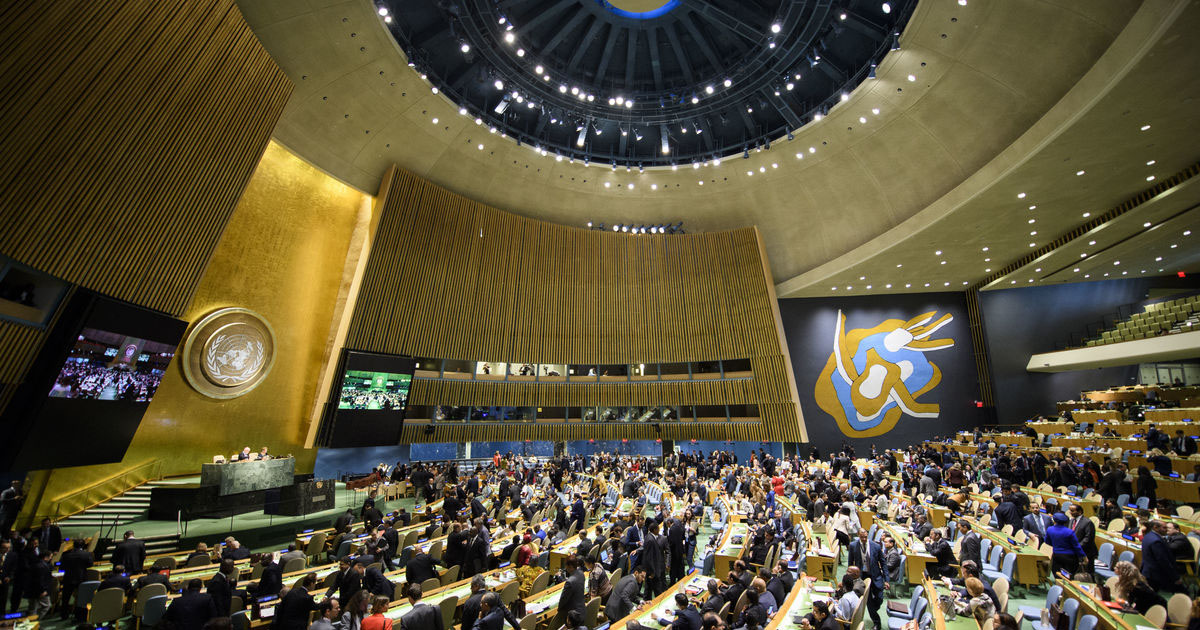
This year, the fiftieth anniversary of that declaration, I watched Nigeria’s national statement at the United Nations General Assembly run to twenty-four paragraphs — Security Council reform, climate finance, artificial intelligence, debt architecture, counter-terrorism in the Sahel — without once naming Gaza, or Palestine, or the two-state solution Nigeria itself had insisted on just a year before. I do not think that is a small thing. I think it is a rupture. I grew up understanding Nigeria as a country that put its resources where its convictions were, not merely its rhetoric. This is not nostalgia. It is documented history, and it deserves to be told again because too few Nigerians under fifty have ever been taught it.
Under Murtala and his successor, Olusegun Obasanjo, Nigeria funnelled oil revenue to liberation movements across the continent — the MPLA in Angola, ZANU and ZAPU in Zimbabwe, the ANC and PAC in South Africa, SWAPO in Namibia. Nigeria led the rejection of South Africa’s Bantustan system at the UN General Assembly in 1975 and donated $500,000 to SWAPO, granting it office space in Lagos. When Obasanjo’s government discovered that Nigerian crude, sold through British Petroleum, was indirectly reaching apartheid South Africa’s refineries, Nigeria nationalised BP’s entire Nigerian operation in 1979 rather than let its oil serve a racist regime even by accident. When Margaret Thatcher’s government moved to ease sanctions on Rhodesia, Obasanjo pulled British contracts from Lagos’s Apapa port and threatened to leave the Commonwealth, pressure credited with contributing to Robert Mugabe’s election victory in 1980. Nigeria went on to chair the UN’s Special Committee Against Apartheid until 1994.
And on Palestine specifically, Nigeria did not merely speak. It paid a real, sustained cost. When the Yom Kippur War broke out in 1973, Nigeria, in solidarity with the Organisation of African Unity and the Arab world, severed diplomatic relations with Israel entirely. That severance held for nearly two decades, across multiple changes of government, before ties were restored in 1992. An entire generation of Nigerian diplomats came of age in a country that had decided that Palestinian self-determination was worth nineteen years of severed ties.
That history is what makes this year’s silence so difficult to bear, because what Nigeria was silent about is not abstract. It is a living catastrophe now in its eighth decade. It began with the Nakba in 1948, when some 750,000 Palestinians were expelled from their homes during the creation of the State of Israel. What followed in 1967, after the Six-Day War, was a military occupation of the West Bank, including East Jerusalem, and the Gaza Strip that has never ended. For fifty-eight years, Palestinians in those territories have lived under military law while Israeli settlers in the very same land live under civil law, their settlements expanding, their roads segregated, their movement controlled by checkpoints and walls. In July 2024, the International Court of Justice declared that this occupation itself is unlawful, that it amounts to racial segregation and apartheid, and that it must end.
Within that occupation, violence has never been episodic. Palestinians remember Deir Yassin and Tantura in 1948, Khan Younis and Rafah in 1956, Sabra and Shatila in 1982, when Israeli forces encircled Palestinian refugee camps in Beirut while allied militias slaughtered thousands, the Ibrahimi Mosque in Hebron in 1994, Jenin in 2002, and the successive wars on Gaza in 2008-09, 2012, 2014 and 2021, each leaving thousands dead, overwhelmingly civilian.
READ ALSO:
- Madonna University expels final-year nursing student, suspends 14 over dance video
- JUST IN: WAEC appoints Suleiman Kum as new Nigeria National Office head
- Ojudu Reveals How Tinubu, He Narrowly Escaped Death In Third Mainland Bridge Crash
But what has happened in the last three years has no parallel. Since October 2023, Gaza has endured a war that UN agencies and courts now describe in terms of genocide. In less than three years, more than 65,000 Palestinians have been killed, the majority women and children, and more than 120,000 wounded. Almost the entire population of 2.3 million has been forcibly displaced, many ten times over. The United Nations has documented the systematic destruction of hospitals, of every university in Gaza, of schools sheltering displaced families, of mosques, churches, bakeries and water plants. UN experts, Amnesty International, Human Rights Watch and Israeli human rights groups have documented the blocking of food, water, medicine and fuel as a weapon of war. It is this record that led South Africa to bring its case under the Genocide Convention to the International Court of Justice in December 2023.
And for the first time, accusation has moved to indictment. On November 21, 2024, the International Criminal Court issued arrest warrants for Prime Minister Benjamin Netanyahu and former Defence Minister Yoav Gallant for war crimes and crimes against humanity, including using starvation as a method of warfare, murder, persecution and intentionally directing attacks against civilians. The sitting prime minister of a state with which our government signed a Security Cooperation Agreement in August 2025 is now wanted in 125 member states.
I cannot reconcile the Nigeria under Murtala and Obasanjo with the one that could not find a single sentence for Palestine this year while, rather unbothered, it got busy signing discreet pacts and agreements with an apartheid and genocidal state as recently as March 2026. I cannot reconcile it with the fact that when dozens of nations walked out of the General Assembly hall this year as Netanyahu spoke, Nigeria’s delegation remained seated.
And it was not just any walkout. When the footage came out, it was Africa itself that stood up. South Africa, Senegal, Botswana, Uganda, Namibia, Kenya, Ghana, Angola, Niger, Madagascar, Mozambique, Chad, Central African Republic, Liberia, Eritrea, Lesotho, Eswatini, Equatorial Guinea, both Congos — the Republic of the Congo and the Democratic Republic of the Congo — were among the African countries that walked out or refused to sit through that speech. These are not marginal states. They include countries that fought apartheid alongside us, countries we trained, funded and housed. If Africa has come of age, as Murtala said fifty years ago, then Africa showed it last week. Nigeria, the country that once taught the continent how to stand, chose to remain seated.
I do not say this to manufacture hostility toward any state. Murtala’s generation did not act out of hostility either. They acted out of principle, and they paid whatever price principle demanded. What troubles me is the gap between the courage that generation had when the cost was real, and the caution my generation has settled for now that the cost is merely inconvenient. MPAC’s press release said what needed to be said institutionally. But I wanted to say this as one Nigerian to others: I was raised on the memory of a country that told the most powerful nation on earth it would no longer take orders from anyone. Fifty years later, having watched genocide beamed live on our screens, at the world’s most powerful podium, we managed silence instead.
Let me be clear about what this article is not calling for. It is not a call for Nigeria to once again funnel its oil revenue into the Palestinian cause of self-determination, as we did for Southern Africa five decades ago. The world has changed, and Nigeria’s burdens at home are heavy enough. What this article calls for is simpler and more urgent: that Nigeria remembers that its moral standing is diminishing due to its romance with a state that is considered a pariah by the vast majority of the world’s nations, and finds the courage to re-earn it. A nation does not inherit its moral standing and build on it through immoral dealings with a state openly engaged in war crimes and genocide, and then react with silence on the world stage. It re-earns it, decision by decision, generation by generation. Murtala’s generation earned theirs at real cost — with severed ties, nationalised assets, lost contracts and, ultimately, blood. They did not do it for applause. They did it because they understood that justice could not be seasonal. They did it also for the simple reason that, as Rev. Dr. Martin Luther King Jr. wrote in his “Letter from Birmingham Jail”, “Injustice anywhere is a threat to justice everywhere.” I am not yet ready to accept that my generation should spend that inheritance in silence. And I do not believe most Nigerians are either, if they are given the full record and asked to judge for themselves.
Lastly, what is at stake here is bigger than Palestine alone. It is the independence of Nigeria’s foreign policy itself. That policy must never be outsourced, subcontracted, or dictated by any foreign capital, however powerful. It must be independent of foreign control and influence, and must reflect, first and foremost, the interests, the vision and the values of the Nigerian people. It must draw from the long history of our nation’s reputation — not as a follower of convenience, but as a champion of just causes.
What worries many Nigerians today is the growing impression that our foreign policy is no longer guided by that long, principled history, but is now at the mercy of a few individuals who have prioritised personal friendship and the influence of Israel over Nigeria’s reputation and historical values. When private affinities and lobbying networks begin to shape national statements at the United Nations, when security deals are signed quietly while the National Assembly and the public are kept in the dark, we have departed from the Murtala doctrine. Foreign policy ceases to be Nigerian policy; it becomes the project of a few. Murtala understood this danger when he tore up that letter from Washington. Obasanjo understood it when he chose principle over BP. That is the tradition I am now calling on us to honour, not abandon. Nigeria must return to a foreign policy that is truly Nigerian — independent, people-centred, and anchored in justice.
Opinion
Ortom and His 23 Cars’ ‘Bonus’, by Dele Sobowale
Ortom and His 23 Cars’ ‘Bonus’, by Dele Sobowale
“As I talk to you, after I left office, vehicles that were given to me legitimately by government, this government went and seized them in a manner that was not befitting.” – Former Governor Samuel Ortom of Benue State
Last week, former Governor Donald Duke of Cross River declared that military rule was, in many respects, better than civil rule since 1999.
I cannot agree more.
I had the privilege of visiting about seven former military governors before 1999.
No military governor had up to 23 cars assigned to the Governor’s Office or residence.
By contrast, since 1999, a civilian governor with only 23 cars in the office alone would be regarded as extremely prudent.
Many have 50 or more.
Ortom’s 23 cars have triggered a dispute. Governors, on their way out of office, routinely take what they deem as their entitlements and thus render their states poorer than they met them.
Most commentaries on Ortom’s 23 cars have been superficial.
The impression they have created is that only 23 cars were taken away.
Nothing can be further from the truth.
Ortom was not the only beneficiary of that largesse.
It is quite possible that over 100 cars were taken away as parting gifts – with Ortom’s approval – as I will explain shortly.
Ortom revealed the hidden truth by saying, with a straight face, that the vehicles were allocated to him and other members of his administration through the State Executive Council, SEC, after they had been used for more than four years.
It was the worst defence for an assault on public funds ever uttered by a former official.
It provided a window into the minds of top government officials everywhere – irrespective of political party affiliation.
Every State Executive Council, SEC, comprises the governor, the deputy governor, the Secretary to the State Government and commissioners.
All the others are selected or appointed by the governor and, with the exception of the deputy governor, can be removed from office.
In other words, the SEC is created by the governor and can take no independent decision of its own.
READ ALSO:
- Abuja Demand Rises as Jetour Brings X70 Plus Experience to FCT
- Enough Is Enough: Muslim Supporters Demand New Man United Owners
- Stray Bullet Kills 400-Level IBBU Student During Land Dispute in Niger
It is not an autonomous body.
Stripped of the subterfuge surrounding it, the decision to allocate 23 cars to Ortom amounted to the governor deciding to go home with the cars and getting his echoes in the SEC to endorse it.
Ortom, inadvertently, disclosed that more cars than 23 were driven home by his government officials when he claimed that the SEC allocated the vehicles in dispute to him “and other members of his administration”.
Since “the other members of his administration” start with the SEC, it stands to reason that the deputy governor, the Secretary to the State Government, all the commissioners, the Chief of Staff, several Special Advisers, heads of state agencies, etc., were also allowed to go home with cars declared over four years old – even if by one day.
Nobody has documented the number of cars Ortom and “the other members of his administration” took away. Over 100 vehicles might be involved.
That leads to the next question because it strikes at the heart of why poverty is increasing in Nigeria.
IS A CAR FOUR YEARS OLD READY FOR THE JUNKYARD?
Most Nigerians known to me, including those driving corporate official cars, are driving vehicles more than five years old.
Mine is 12 years old and can still break the speed limit anywhere in the world.
I also own a LAGRIDE taxi, now four years old.
The Chinese-made car was offered four years ago at N4.8 million, with a down payment of N1.82 million and the balance to be paid in instalments. Today, the car costs N25 million new, and offers have been made to buy my used one for N11–N13 million.
Obviously, when any government gives away, at far less than market value, to departing officials, the public loses.
Ortom’s 23 cars, as well as the others allocated to members of his administration, would have fetched almost five times what the officials paid for them.
To put the matter in perspective, Benue State would have to pay nothing less than N6 trillion just to replace the vehicles.
Left untouched is the question: What else was taken away – furniture, generators, air-conditioners, borehole pumps?
Outgoing officials are never satisfied with taking cars with them.
“Laws grind the poor, and rich [as well as powerful] men rule the law.” – Oliver Goldsmith, 1728–1774
The other half of his self-defence concerns the legality of the allocations.
That the law is an ass has been well established; so is the fact that what we often call law might be injustice codified.
Strictly speaking, everything Abacha did was supported by laws passed as decrees. Justice was never considered.
Civilian governments also make laws which are inherently unjust to the masses.
READ ALSO:
- Oyo Police: Student Who Died by Suicide Was Charged With Assault, Not ₦8,000 Debt
- Delta Police Intercept Sienna With Military Uniforms, Suspected Drugs
- Jehovah’s Witnesses Adjust Blood Transfusion Rules, Allow Personal Choice
The regulation allowing some public servants appointed by the governor to take away very useful public properties cannot be regarded as equitable, given the fact that those who served for 30 or 35 years cannot take away a single pin without being prosecuted.
What exactly does an outgoing governor want to do with 23 cars?
MEANWHILE, GOVERNOR ALIA SETS BACK DEMOCRACY IN BENUE
Governor Hyacinth Alia, a Catholic cleric, honourably fought for justice by having the 23 cars taken away by Ortom retrieved.
It is not clear whether other cars allocated by Ortom’s SEC members were also seized.
If not, the measure would appear personal and discriminatory.
It would appear to be partial justice and tainted with vendetta.
Frequently, individuals transiently invested with near-absolute power, like Nigerian governors, cross the thin line between the divine and the ridiculous within a short time.
When Alia, for the second time, blocked Peter Obi from moving freely about in Benue State, he betrayed democracy and the Constitution of Nigeria he swore to uphold.
He failed the democracy test. He even failed the test of advanced education.
His tenure is limited by the Constitution. Obviously, he will become an ex-governor one day – without armed escorts to protect him and clear the way.
He has established a precedent which will make it legitimate for any governor in Nigeria to block his right of passage.
Two examples in Nigerian history should serve as a warning to Alia.
Military Head of State Obasanjo passed the decree under which General Gowon would have been executed in 1976 – if Britain had not granted the deposed leader political asylum.
The same decree, with slight amendment, was used by Abacha to nail his former boss.
He was saved by divine intervention.
Malam El-Rufai, as governor of Kaduna State, had critics living in other states arrested, brought to Kaduna State and detained without bail for days – before media protests got them released on bail.
Today, El-Rufai is in detention by the DSS and ICPC, without bail for almost six months.
The same media, held in contempt by El-Rufai, has now undertaken the campaign to get him released.
As one of our founding fathers, Dr Nnamdi Azikiwe, reminded us before passing to eternal life: “No condition is permanent.”
Governor Alia should climb down from his high horse and apologise to Obi and Nigerians.
Ortom and His 23 Cars’ ‘Bonus’, by Dele Sobowale
Opinion
2027: Competence, Not Zoning, Should Decide Nigeria’s Next President — Imasuagbon
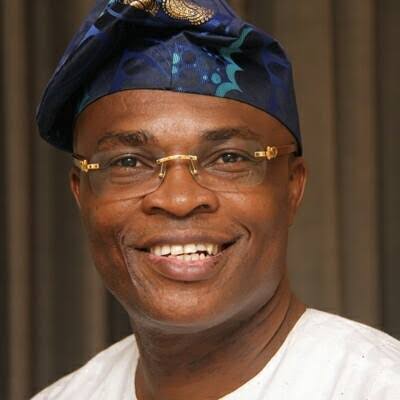
Nigerians should look beyond ethnicity, region and the longstanding debate over rotational presidency when choosing the country’s next leader, according to a chieftain of the African Democratic Congress (ADC), Kenneth Imasuagbon.
The former Edo State governorship aspirant said the priority ahead of the 2027 election should be finding a president with the ability to confront Nigeria’s economic, security and infrastructure challenges.
Speaking to journalists in Benin, Imasuagbon argued that presidential rotation is not a requirement of the Nigerian Constitution and should therefore not outweigh the question of competence.
He said voters should be more concerned about replacing poor schools with better ones, improving healthcare and addressing hardship than debating where the next president comes from.
Imasuagbon specifically appealed to voters in the South to support former Vice President Atiku Abubakar, who is contesting the 2027 presidency on the ADC platform.
According to him, Atiku has demonstrated the experience and determination needed to improve the country, describing the former vice president as someone capable of promoting national unity and fairness.
He also accused the Bola Tinubu administration of worsening economic pressure through policies including the removal of fuel subsidy, while expressing concern about the condition of roads, electricity and other infrastructure.
Imasuagbon argued that the next administration must focus on practical improvements in areas such as power, transportation, employment, security and public services.
The ADC chieftain also dismissed the idea that the ruling All Progressives Congress (APC) would automatically benefit from its incumbency advantage in 2027.
He maintained that the electorate ultimately determines the outcome of an election, arguing that voters could change the political direction of the country if they were determined to do so.
Imasuagbon further criticised what he described as regional and ethnic considerations in the distribution of political appointments and opportunities, insisting that the next president should give Nigerians across different parts of the country a sense of belonging.
His comments come as political parties and their candidates intensify preparations for the 2027 presidential election.
-
 Entertainment3 days ago
Phyna Knocks Out Nkechi Blessing in Fourth Round, Wins ₦50m, New Car
-
 metro2 days ago
NYSC Kidnap: Abductors Demand N950m for 19 Prospective Corps Members in Imo
-
 Entertainment3 days ago
Olu Jacobs Laid to Rest in Lagos as Dignitaries, Nollywood Stars Honour Screen Icon
-

 Politics2 days ago
2027: Oshiomhole Dares Opposition Over ₦500 Petrol Promise, Says APC Will Take Argument to Nigerians
-
 International3 days ago
Trump Threatens Iran With ‘Very Hard’ Response Over Flydubai Attack
-
 metro3 days ago
Nigeria Launches 11-Character Digital Postcode System for Every Addressable Building
-
 metro2 days ago
Amaechi: Tinubu’s Policies Made My Mother’s Drugs Unaffordable
-

 metro1 day ago
‘I Thought I Was Dead’ — Hairstylist’s Daring Escape From Kidnappers After Benin-Ore Ambush