

metro
Court of Appeal to Decide Fate of ADC, Accord Party Today in Deregistration Suit
Court of Appeal to Decide Fate of ADC, Accord Party Today in Deregistration Suit
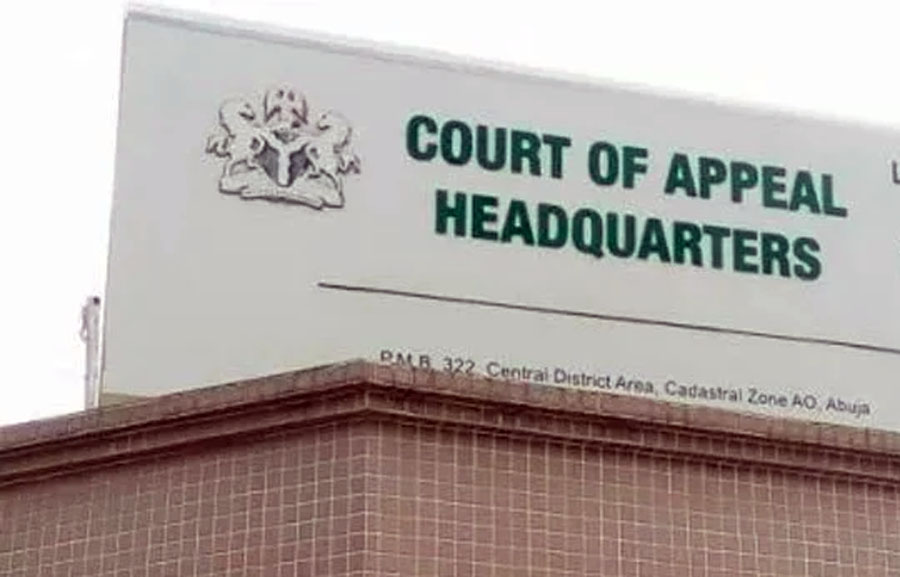
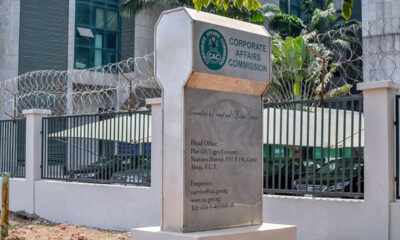
ABUJA — The Court of Appeal, Abuja division, will today hear the substantive appeal challenging the deregistration of the African Democratic Congress (ADC) , Accord Party , and three other political parties, in a case that has exposed deep tensions within Nigeria’s judiciary and sparked fears of a slide toward a one-party state. The appellate court had earlier adjourned the hearing from June 25 to July 7 to enable all parties in the appeal to file and exchange their processes for a full-scale hearing, and at the proceedings of June 25, counsel for the Accord Party, Musibau Adetunbi, SAN , informed the three-member panel of justices, led by Justice Abubakar Mohammed , that the record of appeal and the final judgment of the Federal High Court had been obtained on Monday, June 22, and transmitted to the Court of Appeal as required by law. The senior lawyer subsequently applied for a short adjournment to enable him and other parties to file their briefs of argument and exchange same to pave the way for the hearing of the matter, and the application for adjournment was not opposed by all other parties, prompting the panel to adjourn the hearing of the appeal till today by 2 pm. Although Adetunbi applied for three days to file and exchange briefs of argument, Justice Mohammed noted that some of the justices would be out of Abuja next week for a special session and announced July 7 as the hearing date, setting the stage for what legal observers describe as a landmark judicial confrontation.
The legal battle began when Justice Peter Lifu of the Federal High Court, Abuja, in a judgment, ordered the Independent National Electoral Commission (INEC) to deregister the ADC, Accord Party, and three other political parties on the ground that they did not fulfill constitutional requirements in the previous election. The affected parties are the African Democratic Congress (ADC) , Accord Party (AP) , Action Alliance (AA) , Zenith Labour Party (ZLP) , and Action Peoples Party (APP) , all of which have fielded candidates in previous elections and maintain structures across various states. Justice Lifu held that the parties failed to meet the constitutional threshold of Section 225A of the 1999 Constitution , which empowers INEC to deregister political parties that fail to satisfy prescribed constitutional requirements, including securing at least 25 per cent of the votes in a state during a presidential election or winning at least one elective seat. He held that the parties failed to secure the required electoral performance in the last general elections in compliance with the provisions of the law, and the court also barred INEC from further according recognition to the parties, accepting nominations of candidates from the affected parties, or giving effect to their activities for the purpose of participating in the 2027 general elections.
READ ALSO:
- Nigerian-Born Teen Among Two Found Guilty of Murder in Enfield Gang Shooting
- Police arrest 153 suspects, recover guns, drugs in Lagos Operation
- Dangote, marketers slash petrol depot prices amid FG pressure
Although INEC opposed the deregistration at the trial court, insisting that the parties met constitutional requirements and even provided evidence—including certificates of return issued to candidates elected on the platforms of the affected parties—Justice Lifu nonetheless ordered the electoral body to deregister the five parties, dismissing the commission’s arguments as unsubstantiated. The suit was instituted by the National Forum of Former Legislators (NFFL) , which argued that the parties performed poorly in the 2023 general elections and subsequent by-elections, failing to win seats across key tiers of government, and that their continued recognition as political parties was a waste of electoral resources and a distortion of the democratic process. The plaintiffs maintained that the parties failed to meet the electoral performance thresholds set out in Section 225A of the 1999 Constitution (as amended) , as reinforced by the Electoral Act 2022 and INEC’s regulations, and the forum argued that the continued existence of the said parties as recognised political parties was unlawful and undermined the integrity of the country’s electoral system. The Attorney General of the Federation , Lateef Fagbemi, SAN, who was joined as a defendant, threw his weight behind the plaintiffs, arguing that the continued existence of the political parties violated extant provisions of the 1999 Constitution and that the electoral body had the legal duty to deregister non-performing parties to sanitise the political landscape.
In a unanimous ruling delivered on June 16, 2026, the three-member panel of the Court of Appeal ordered an immediate stay of execution of the Federal High Court judgment, preventing INEC from implementing the deregistration order pending the determination of the substantive appeal, a decision that effectively suspended the trial court’s judgment and restored the parties’ legal status. The appellate court not only suspended enforcement of the judgment but also strongly reprimanded Justice Lifu for proceeding to hear the matter and deliver judgment despite an earlier order of the Court of Appeal directing him to stay proceedings, describing his conduct as a direct affront to judicial hierarchy. Justice Mohammed, who led the panel, held that the appellate court has a duty to invoke its power to ensure that its order is obeyed, and he described the action of Justice Lifu as “judicial impunity” and “rascality,” adding that: “What the trial court did was a violation of judicial precedent and the Constitution” . The court held that Justice Lifu’s action was “the highest form of judicial impertinence,” stressing that the Supreme Court had previously held that a judge who acts in such manner “is unfit for the bench, as the conduct amounts to judicial rascality,” and that such behaviour undermines public confidence in the judiciary and the rule of law. The appellate court noted that an enrolled order of the court, signed by Deputy Registrar Josephine Ekperobe, had expressly directed Justice Lifu to stay further proceedings in the suit pending the determination of an appeal filed by the Accord Party, but despite this clear directive, Justice Lifu proceeded to deliver judgment, directing INEC to deregister the five parties and barring them from participating in any future elections, including the 2027 general polls.
READ ALSO:
- ICYMI: How to Apply for 2026 FRSC Recruitment Successfully
- Tinubu orders probe of Google, Meta, X, AI platforms over alleged exploitation of Nigerian news content
- Russian airstrike kills Nigerian medical student days before graduation in Ukraine
“Courts are enjoined to protect their integrity. This Court has supervisory authority over the trial court. The decision of the lower court to proceed with the judgment despite the express order of this court is a brazen violation of the hierarchy of the court and the 1999 Constitution” .
Interestingly, INEC itself supported the application for a stay of execution at the appellate court, a move that surprised many observers given the commission’s statutory role as the electoral regulatory body. Represented by a legal team led by Haliru Mohammed, INEC informed the appellate court that the commission was surprised by Justice Lifu’s decision to proceed with delivery of judgment despite the earlier order restraining the lower court, and according to the commission, it was never formally notified about delivery of the judgment and only became aware of the development through media reports. In a statement that underscored the commission’s discomfort with the trial judge’s conduct, INEC declared: “We were not aware of any notice from the court regarding the delivery of the judgment. We only saw it as breaking news in the media. We therefore do not oppose the application of the appellant to stay execution of the judgment” , effectively aligning itself with the political parties seeking to overturn the deregistration order.
The judgment carried significant political implications, as it affected candidates sponsored by the affected parties, including former Vice President Atiku Abubakar , presidential candidate of the ADC, and Osun State Governor Ademola Adeleke , governorship candidate of Accord Party in the upcoming state election, both of whom would have been rendered ineligible to contest future elections if the deregistration had been enforced. Both political figures slammed the deregistration judgment, describing it as an attempt to weaken opposition politics and undermine democracy ahead of the 2027 general elections, with Atiku’s camp describing the ruling as a “judicial coup” against democracy. The ADC, in a statement by its National Publicity Secretary, Bolaji Abdullahi, described the court ruling as a threat to democracy and warned against actions capable of destabilising Nigeria’s political system, arguing that the judgment contradicted constitutional provisions and electoral laws governing political parties and that it was an overreach by the judiciary into the affairs of political associations. The party also faulted the judgment, citing the subsisting Court of Appeal order directing a stay of proceedings, which the trial judge proceeded despite being aware of, and described the development as an embarrassment to the Nigerian judiciary and a dangerous precedent for the rule of law. Had the judgment been enforced immediately, thousands of aspirants would have lost their legal platforms ahead of the 2027 general elections, and the Court of Appeal’s intervention was widely seen as averting a potential constitutional and electoral crisis that would have disenfranchised millions of voters who identify with the affected parties.
Today, the Court of Appeal will hear the substantive appeals filed by the affected parties seeking to set aside the deregistration judgment, and all defendants, including INEC, have urged the appellate court to overturn the trial court’s verdict on the grounds that it was delivered in breach of judicial hierarchy and without proper consideration of the evidence presented by INEC. Legal observers note that the outcome of today’s hearing will determine whether the five political parties can continue to participate in future elections, including the 2027 general elections, and whether the judiciary can restore public confidence in its ability to enforce its own orders and maintain decorum among its judges. The case has become a test of the resilience of Nigeria’s democracy and the independence of its judiciary, and all eyes are on the Court of Appeal as it prepares to deliver a verdict that could reshape the country’s political landscape for years to come.
Court of Appeal to Decide Fate of ADC, Accord Party Today in Deregistration Suit






metro
Benue Boat Mishap: Catholic Priest Among Four Dead, Nine Missing

Benue Boat Mishap: Catholic Priest Among Four Dead, Nine Missing
A Catholic priest, Rev. Fr. Moses Tsuagh, is among four people confirmed dead following a boat mishap at the Buruku crossing point in Buruku Local Government Area of Benue State.
The accident occurred on Saturday, October 3, 2026, as passengers were travelling across the Buruku River after attending a burial ceremony. Most of those on board were reportedly from neighbouring Gboko Local Government Area.
The Benue State Emergency Management Agency (SEMA) confirmed that four bodies had been recovered, while nine passengers remained missing as search and rescue operations continued.
SEMA Information Officer, Tema Ager, said the number of people who were aboard the boat was still being established because different accounts had emerged from survivors, relatives and community members.
READ ALSO:
- Rivers Police Arrest OSPAC Operative Over Alleged Killing, Secret Burial
- Adeleke Signs New Law to Regulate Motor Parks Across Osun
- Tragedy Strikes FMC: Medical Director Loses Two Daughters—A Doctor and a Pharmacist—Within 48 Hours
An earlier estimate suggested that more than 200 people may have been on the vessel, while subsequent information put the number of passengers believed to have been involved at about 138. The boat was also carrying numerous motorcycles.
Ager said 125 passengers had been rescued as of Monday, while divers and other rescue personnel continued searching for those still unaccounted for.
The rescue operation is also focused on recovering motorcycles and other belongings that went into the river. Authorities said 38 motorcycles were believed to have entered the water, with five subsequently recovered.
Initial accounts attributed the mishap to engine failure, overloading and difficulties encountered while attempts were made to rescue passengers. Another preliminary account from the state Commissioner for Marine and Blue Economy, Dennis Iyaghigba, said a strong current swept the boat into an abandoned barge, causing it to overturn.
The differing preliminary accounts are expected to be clarified as the authorities complete their investigation.
Following the accident, the Benue State Government suspended the Buruku crossing-point branch of the Nigeria Union of Maritime Workers.
Iyaghigba also ordered the suspension of the line operator and directed the arrest and detention of the boat skipper involved in the incident pending investigation.
SEMA has continued to appeal to passengers using the state’s waterways to observe water safety measures, particularly the use of life jackets and compliance with instructions from maritime officials.
The tragedy has renewed concerns about maritime safety in Benue, including passenger capacity, boat maintenance, enforcement of safety regulations and the need for safer river crossings.
Search and rescue efforts are continuing as authorities work to account for all passengers believed to have been aboard the vessel.
Benue Boat Mishap: Catholic Priest Among Four Dead, Nine Missing
metro
Rivers Police Arrest OSPAC Operative Over Alleged Killing, Secret Burial

Rivers Police Arrest OSPAC Operative Over Alleged Killing, Secret Burial
The Rivers State Police Command has arrested a member of the Onelga Security and Advisory Committee (OSPAC) over the alleged killing and secret burial of a man in Omoku, Ogba/Egbema/Ndoni Local Government Area of Rivers State.
The suspect, identified as Felix Dibia, is accused of killing Francis Chibuzor Ogwu during an incident reported on October 1, 2026.
According to the police, Dibia allegedly accosted Ogwu and another man along a road in Omoku and ordered both men to sit on the ground. While Ogwu reportedly complied, the other man allegedly fled from the scene.
Dibia allegedly shot Ogwu and subsequently buried his body in a shallow grave before leaving the area.
READ ALSO:
- Adeleke Signs New Law to Regulate Motor Parks Across Osun
- Tragedy Strikes FMC: Medical Director Loses Two Daughters—A Doctor and a Pharmacist—Within 48 Hours
- 27-Year-Old Woman Allegedly Kills Newborn Hours After Giving Birth in Abuja
The alleged incident came to light the following day, prompting the Rivers Police Command to launch an investigation.
Police investigators subsequently arrested Dibia and recovered a firearm allegedly linked to the incident.
The Rivers State Police Public Relations Officer, ASP Agabe Blessing Kaborlo, confirmed the arrest and said the investigation was ongoing to establish the circumstances surrounding the man’s death.
The command said the suspect would be subjected to due process as investigators work to determine what led to the alleged killing and whether any other person was involved.
The police have not disclosed further details about the recovery of Ogwu’s remains or whether additional suspects have been arrested.
The case has renewed attention on the activities of vigilante groups and community security outfits operating in parts of Rivers State, particularly the need for such groups to operate within the law while supporting conventional security agencies.
Dibia remains in police custody as the investigation continues, and the allegations against him have not been established in court.
Rivers Police Arrest OSPAC Operative Over Alleged Killing, Secret Burial
metro
Adeleke Signs New Law to Regulate Motor Parks Across Osun
Adeleke Signs New Law to Regulate Motor Parks Across Osun
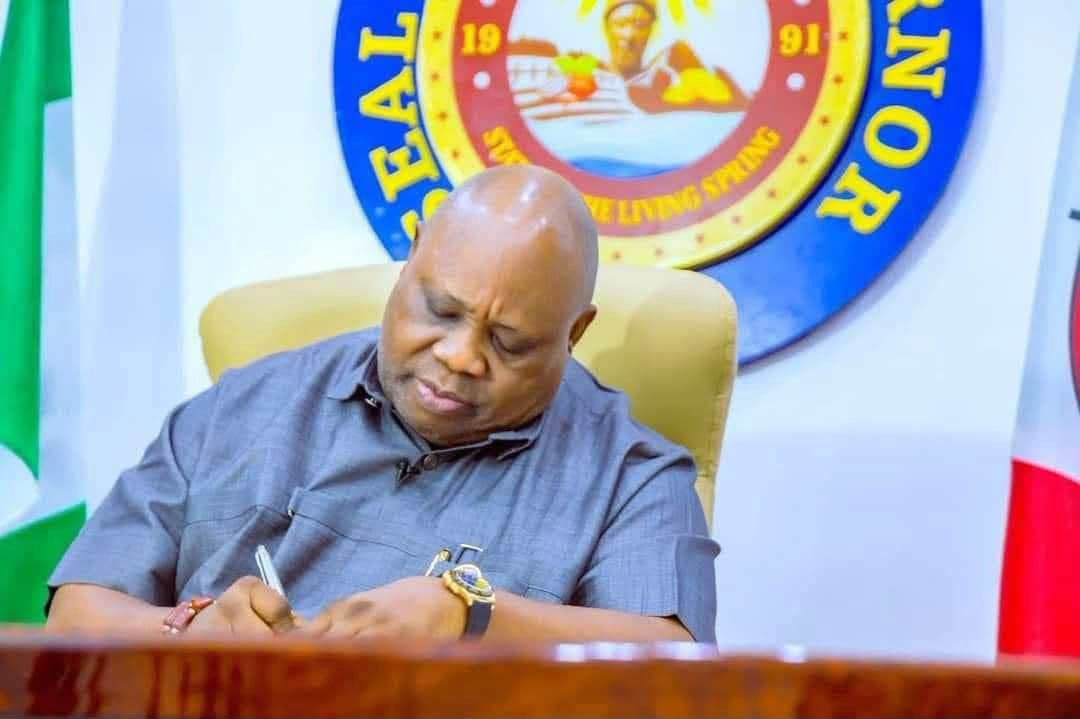
Osun State Governor Ademola Adeleke has signed the Osun State Park Management Bill, 2026 into law, providing a new legal framework for the administration of motor parks and transport-related activities across the state.
The legislation, signed in Osogbo, is aimed at restructuring the management of motor parks, improving accountability in the transport sector and addressing longstanding disputes over the control and administration of parks.
The new law provides for a more organised system of park management, including measures to regulate operations, improve revenue collection and reduce leakages in the system.
It also introduces provisions for digital ticketing, with the aim of eliminating multiple ticketing and making revenue collection more transparent. The framework is expected to strengthen oversight of commercial transport activities while reducing opportunities for extortion and other irregular practices.
READ ALSO:
- Tragedy Strikes FMC: Medical Director Loses Two Daughters—A Doctor and a Pharmacist—Within 48 Hours
- 27-Year-Old Woman Allegedly Kills Newborn Hours After Giving Birth in Abuja
- Transporters Urge IGP Disu to Arrest Illegal Highway Tax Collectors
Under the new law, activities such as thuggery, violence and other unlawful conduct within motor parks are prohibited, as the state seeks to create a safer and more orderly environment for transport operators and commuters.
The legislation follows renewed efforts by the Adeleke administration to address disputes and insecurity associated with the control of motor parks in Osun.
The governor had earlier directed the reintroduction of a formal Park Management System following the killing of Olalekan Oyeyemi, popularly known as Emir Ajagungbade, in Ile-Ife. The incident heightened concerns over rival interests and disputes surrounding motor park operations.
Following the development, the state government ordered rival groups to vacate motor parks and directed security agencies to restore order while steps were taken to establish a statutory framework for park administration.
The Osun State House of Assembly subsequently passed the park management legislation, paving the way for the governor’s assent.
With the signing of the bill, the state now has a statutory framework for regulating motor parks, garages, loading points, transport operations and related revenue collection.
The implementation of the law is expected to bring changes to the way parks are administered and how transport operators interact with the state government. Its effectiveness will depend largely on enforcement, transparency and the cooperation of transport stakeholders.
Adeleke Signs New Law to Regulate Motor Parks Across Osun
-

 metro2 days ago
NYSC Kidnap: Abductors Demand N950m for 19 Prospective Corps Members in Imo
-

 Politics2 days ago
2027: Oshiomhole Dares Opposition Over ₦500 Petrol Promise, Says APC Will Take Argument to Nigerians
-

 metro2 days ago
N500 Petrol, Wage Award: Public Sector Workers Begin Warning Strike
-

 metro2 days ago
Amaechi: Tinubu’s Policies Made My Mother’s Drugs Unaffordable
-

 metro2 days ago
Tension as Kidnappers Threaten to Kill Abducted Oyo Corps Members
-

 metro1 day ago
‘I Thought I Was Dead’ — Hairstylist’s Daring Escape From Kidnappers After Benin-Ore Ambush
-

 Entertainment2 days ago
Less Than Four Months After Wedding, Jarvis Threatens Peller With Lawsuit Over Second-Wife Plan
-

 Politics2 days ago
Wike to Amaechi: What Did You Bring to Rivers After 24 Years in Power?