

News
Buhari, others mourn Joda, who dies at 91, buried in Yola

Tributes have poured in for an elder statesman, Alhaji Ahmed Joda, who died on Friday at the age of 91 and has been buried.
The retired federal permanent secretary passed on at the Federal Medical Centre, Yola, Adamawa State.
He was buried at the Yola cemetery in accordance with Islamic tradition.
He is survived by four children, among them a humanitarian, Asma’u Joda, Bilkisu, Aliyu and Abubakar.
Abubakar Joda described his father as a statesman who sacrificed everything to make Nigeria great.
“He was a father to most Nigerians; therefore, the loss is quite universal. We have received calls from virtually all over the world. He loved Nigeria more than anything. He was an astute man, very straightforward and did all his best at any time,” he said.
President Muhammadu Buhari described Joda as a hero.
In a tribute to the last surviving member of the cabinet of late Governor Hassan Usman, Buhari said that even in death, Joda “will continue to inspire every generation to move forward with love, brotherhood and harmony.”
In a statement issued on Friday by his media aide, Garba Shehu, Buhari highlighted Joda’s contributions to Nigeria’s unity and progress.
He prayed to Allah to accept his good deeds and grant fortitude to those he left behind in his family, the Adamawa Emirate Council and the entire people of the state to bear the loss.
Also paying tribute to the late Joda, former President Olusegun Obasanjo described him as a great Nigerian who was committed to unity, development and progress of the country.
In a statement by his special assistant on media, Kehinde Akinyemi, Obasanjo noted, “If every Nigerian had the attributes of Joda, Nigeria would have been better than what it is now.”
He noted that Joda and other “super permanent secretaries” preserved the unity of Nigeria shortly after the country’s upheaval in 1966.
Joda was the chancellor of Bells University, Otta, and had about 60 years of friendship with Obasanjo.
Former Vice President Atiku Abubakar also described Joda as a colossus and an iroko tree in Nigeria and the North.
Atiku said he received the news of his death with shock though he lived to a prime age. He noted that the former permanent secretary was among the first generation of people who put Adamawa State and the North on the map of modern Nigeria.
“Ahmed Joda, with few of his peers, wrote the rule book of Nigeria’s civil service. His footprints will remain indelible.
“As we mourn this great Nigerian with immense contribution to the growth of our country, we pray that the Almighty Allah accepts his soul and provides his family with the fortitude to bear the loss,” he stated.
An elder statesman, Tanko Yakasai, also described the late Joda as a very dedicated Nigerian and a national hero.
Governor AbdulRahman AbdulRazaq of Kwara State has described the death of Joda as the “end of a great era,” calling him one of the best public administrators in the post-independent Nigeria.
In a condolence message on Friday, the governor hailed the former NCC chairman as a patriot with sterling records of integrity and service to the nation.
“He belonged to the generation of Nigerians who gave their all to birth a greater country.
“His death is painful. It is a personal loss to me as one of his ‘adopted sons’ and protégées,” Abdulrazaq added.
Secretary to the Government of the Federation, Boss Mustapha, expressed sorrow over the death of Joda.
In a statement by his media aide, Willie Bassey, on Friday, Mustapha described the death of Joda as a personal loss as he derived inspiration and guidance from his wise counsel in the execution of government’s activities.
He recalled his sterling contribution in 2015 when he was appointed the chairman of the Presidential Transition Committee, which led to a successful transition.
The SGF also mourns the passing away of Hajiya Hadiza Shagari, the widow of the late former president of Nigeria, Alhaji Shehu Shagari. He described the matriarch as a humble and dutiful wife.
He sent his condolence to the government and people of Adamawa and Sokoto states, the Sultan of Sokoto, and their families, praying God to grant the deceased Al-Jannah Firdaus.
Also, Abubakar Joda described his father as a statesman who sacrificed everything to make Nigeria great.
“He was a father to most Nigerians; therefore, the loss is quite universal. We have received calls from virtually all over the world.
“He loved Nigeria more than anything. He was an astute man, very straightforward and did all his best at any time,” he said.
The driver to the deceased in the last 41 years, Ahmed Ja-Allah, described his late boss as calm, caring, straightforward, hard working and honest.
“He hated corruption and bribery. Workers’ welfare was always his priority. As soon as it was 30th day of the month, he would not relent until every worker was paid,” he said.
A condolence message by the chief press secretary to the Adamawa State governor, Ahmadu Fintiri, Humwashi Wunosikou, eulogised Joda as an epitome of discipline and integrity.
A journalist, Abdullahi Tasiu Abubakar said, “Ahmed Joda was a well-respected elder statesman who was greatly admired, not just in his home state of Adamawa but throughout the country. He was simple, straightforward and honest.
“I remembered when I interviewed him in Yola several years ago; he was frank in his discussion. He was a man with great ideas on many issues: education, agriculture, sustainable development and so on. If his ideas had been used, Nigeria would not have been witnessing the herders-farmers clashes that are now bedevilling the country.”
Born in 1930, Joda had his early education at Yola Elementary and Middle School before proceeding to the Barewa College to complete his secondary education in 1948. He worked briefly at Moor Plantation in Ibadan.
Having received journalism training at the Pitsman College, London in the 1950s, he got his first journalism job at Gaskiya Corporation, Zaria, before his subsequent appointment as the editor of the Nigerian Broadcasting Commission in Kaduna.
He joined the northern Nigeria civil service as chief information officer and rose to become a permanent secretary before moving to Lagos in 1967 to become a federal permanent secretary.
He was one of the powerful civil servants known as super permanent secretaries in the 1970s, who played an important role during and after the Nigerian civil war.
After the war, Joda was seconded to the Ministry of Education to help undertake the rehabilitation of facilities in the old East-Central region. That was also the time the ministry was in the process of establishing the Nigerian Universities Commission (NBC) and involved in the launch of the Universal Basic Education.
Former President Olusegun Obasanjo appointed Joda on the Presidential Policy Advisory Committee headed by General Theophilus Danjuma (retd).
In 2015, the incoming President Muhammadu Buhari entrusted Joda with the chairmanship of the 18-member transition committee that coordinated the transfer of power from the outgoing President Goodluck Jonathan to Buhari. Earlier in 1979, he chaired the transition committee when General Obasanjo handed over power to the civilian government of President Shehu Shagari. He was also the permanent secretary of the Federal Ministry of Industry.
Joda served as chairman and member of several governments and private bodies, including the National Communications Commission (NCC), the Nigerian National Petroleum Corporation (NNPC), the Pastoral Resolve, SCOA Nigeria, LNG and the Nigeria Flour Mills.
He served as chairman of the Board of Trustees of the American University of Nigeria, Yola.

News
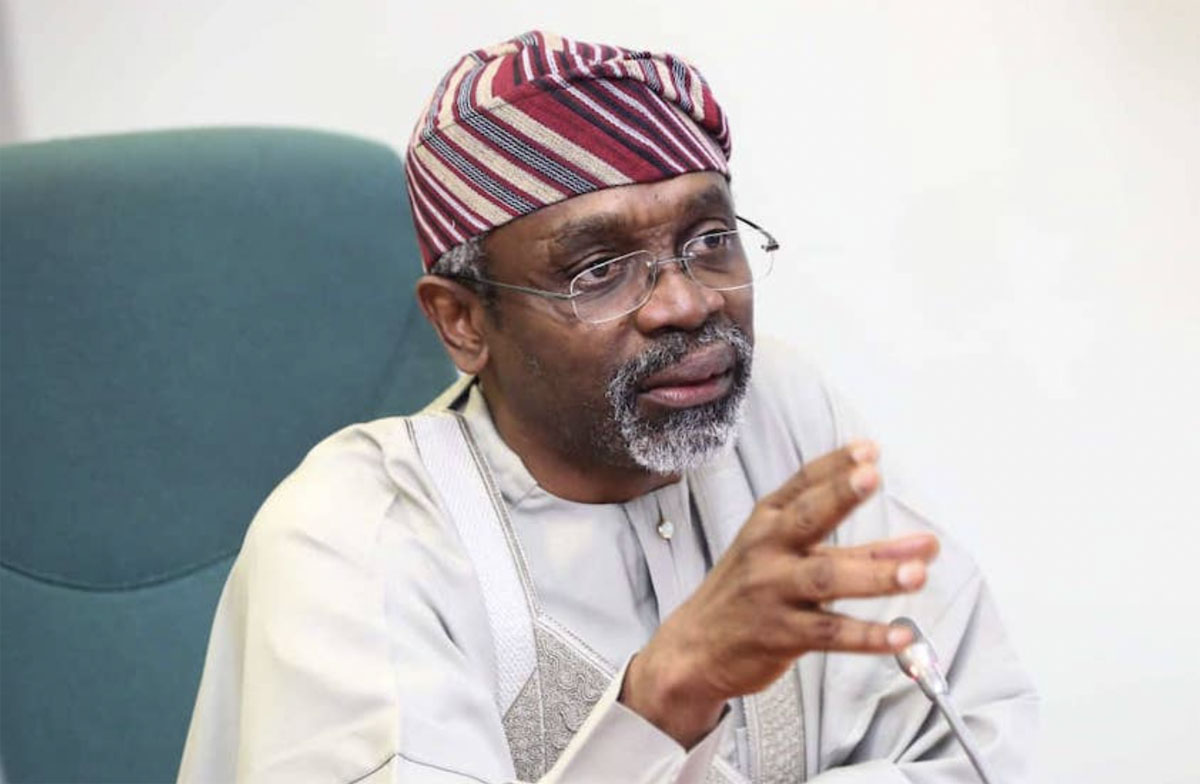
State police bill: Gbajabiamila-led panel extends deadline for public input
State police bill: Gbajabiamila-led panel extends deadline for public input
ABUJA — The Presidential Working Group on the National Policing Bill has extended the deadline for the submission of memoranda and position papers on the proposed legislation to Friday, August 21, 2026.
The submissions must be made by 5 p.m. West Africa Time (WAT) through the official National Policing Bill portal.
The extension was announced on Thursday in a statement issued by the Chief of Staff to President Bola Tinubu and Chairman of the Presidential Working Group, Rt. Hon. Femi Gbajabiamila.
Gbajabiamila said the additional time would enable stakeholders to prepare more detailed submissions and allow interested individuals, institutions and organisations to make well-considered contributions to the proposed legislation.
He said the Working Group remained committed to broad consultation and would consider informed contributions from Nigerians and relevant stakeholders as it develops the National Policing Bill.
The proposed legislation is expected to establish the operational, administrative, institutional and funding framework for an effective policing system capable of responding to Nigeria’s changing security needs.
It is also expected to provide safeguards for police accountability, professionalism and the protection of citizens’ rights.
“Given the significance of the proposed reform to the future of policing and internal security in Nigeria, the Working Group considers it important that stakeholders are afforded more opportunity to make substantive and technically sound contributions to the process,” the statement said.
READ ALSO:
- Davido Halts London Concert, Threatens to Walk Off Stage Over Fan’s Disrespect to Staff
- 29-Year Kwankwaso Ally Who Swore on Qur’an Defects to APC
- ICPC Uncovers Official Who Enrolled 14 Family Members on Govt Payroll, Another Collected 13 Salaries
The panel specifically encouraged legal practitioners, civil society organisations, security-sector professionals, state governments, professional bodies, academics, experts and other interested members of the public to use the extended period to submit their views.
“All submissions must be made on or before 5:00 p.m. WAT on Friday, August 21, 2026, exclusively through the official National Policing Bill portal, nationalpolicingbill.com,” the statement added.
The extension comes as the Federal Government advances plans for a new national policing framework, including the proposed establishment of state police.
The reform has gained renewed attention amid persistent security challenges across Nigeria, including kidnapping, banditry, terrorism, communal violence and other forms of criminality.
Supporters of state police argue that a more decentralised policing structure could strengthen community intelligence, improve response times and enable security agencies to better understand local security threats.
However, concerns have also been raised over the possibility of political interference and abuse of state-controlled police structures. These concerns have made accountability, oversight and safeguards against political interference important elements of the proposed reform.
The Working Group said its assignment would require careful consideration of several issues, including sustainable funding, command and control structures, recruitment and training standards, operational jurisdiction, inter-agency coordination and accountability mechanisms.
The group will also consider safeguards against political interference and abuse to ensure that the proposed policing framework protects citizens while allowing security agencies to operate effectively.
The development of the National Policing Bill is linked to the ongoing constitutional process for the establishment of state police in Nigeria. The proposed reform seeks to create a legal framework that would allow policing responsibilities to be more effectively shared between federal and state authorities.
President Bola Tinubu had earlier inaugurated the Presidential Working Group to develop an implementation-ready draft of the bill for onward legislative consideration.
The Working Group brings together representatives from the Federal Government, state governments, the security sector and the legal profession, reflecting the broad institutional implications of the proposed state police system.
The Presidency has said the proposed framework is expected to address issues such as minimum policing standards, state readiness, federal-state coordination, accountability, human rights protection and sustainable financing.
These issues are considered critical to ensuring that a decentralised policing system does not create significant disparities in policing standards or weaken national security coordination.
The Working Group said the issues under consideration underscore the need for extensive stakeholder engagement to develop a policing framework that is effective, accountable, sustainable and responsive to the security needs of communities across Nigeria.
“At the conclusion of its assignment, the Presidential Working Group will present a final, implementation-ready draft of the National Policing Bill for onward legislative processing,” the statement said.
The panel thanked stakeholders who had already submitted memoranda and encouraged others intending to participate in the process to take advantage of the extended deadline.
With the new timeline, all memoranda and position papers must be submitted by 5 p.m. on Friday, August 21, 2026.
The submissions are expected to help shape the final draft of the legislation before it proceeds to the next stage of the legislative process.
State police bill: Gbajabiamila-led panel extends deadline for public input
News
FG to Attach 300 NYSC Corps Members to CNG Workshops for Skills Training

FG to Attach 300 NYSC Corps Members to CNG Workshops for Skills Training
The Federal Government has announced plans to train and attach 300 National Youth Service Corps members to compressed natural gas conversion centres across the country as part of efforts to equip young Nigerians with practical technical skills and promote the adoption of CNG-powered vehicles.
The initiative is expected to provide the selected corps members with specialised training in CNG vehicle conversion and maintenance, enabling them to acquire skills that could improve their employment and entrepreneurship prospects after completing their national service.
The Senior Special Assistant to the President on Youth Initiatives, Monitoring and Delivery, Dr Titilope Gbadamosi, disclosed the plan at the opening of a CNG Retrofitting Training Programme for corps members at the NYSC FCT Orientation Camp in Kubwa, Abuja.
Gbadamosi said the selected corps members would undergo training and certification as CNG technicians before being deployed to CNG conversion centres across the country.
She explained that the programme would cover the six geopolitical zones and was designed to contribute to the Federal Government’s broader plan to expand the conversion of petrol and diesel-powered vehicles to CNG.
According to her, the initiative is expected to support the government’s target of converting 100,000 vehicles to CNG annually, while simultaneously creating opportunities for young Nigerians to develop specialised technical expertise.
The programme is being implemented in collaboration with relevant government agencies and stakeholders in the automotive and energy sectors.
READ ALSO:
- INEC reprints Osun ballot papers, result sheets, includes SDP candidate
- Iran Had Detailed Intel on Trump’s Location Before Secret Turkey Escape
- PSG Pocket £5.2m After Super Cup Thriller, Villa Get £3.4m
The Minister of Youth Development, Ayodele Olawande, said the initiative would provide corps members with practical skills capable of complementing their university and polytechnic qualifications.
Olawande urged the beneficiaries to take the training seriously, describing technical and vocational skills as important tools for reducing youth unemployment and increasing self-reliance.
He said the Federal Government was interested in ensuring that the NYSC programme did not end with the traditional primary assignment and community development activities, but also provided corps members with skills that could sustain them after their service year.
The Director-General of the NYSC, Brigadier General Olakunle Nafiu, also described the programme as an important step towards equipping young Nigerians for emerging opportunities in Nigeria’s changing energy and automotive landscape.
He said the collaboration demonstrated the scheme’s commitment to providing corps members with practical skills and preparing them for the labour market.
The National Automotive Design and Development Council is also involved in the initiative, particularly in relation to technical standards and certification for the CNG conversion training.
The Federal Government has in recent years intensified efforts to promote CNG as a cheaper alternative fuel following the removal of petrol subsidy and the resulting increase in transportation costs.
The government has maintained that greater adoption of CNG could help reduce transportation costs, conserve foreign exchange spent on petroleum products and create new jobs in the automotive conversion and maintenance sector.
The training of NYSC members is therefore expected to address both sides of the policy — increasing the pool of skilled personnel available to service the growing CNG industry while providing young Nigerians with employable technical skills.
Meanwhile, reports circulating that each of the 300 corps members will receive a monthly training allowance of ₦100,000 have not been independently confirmed in the official details released on the programme.
The confirmed aspect of the initiative is that the selected corps members will receive specialised training and certification before being attached to CNG conversion centres across the country.
The programme is expected to serve as a pilot for broader youth-focused skills development initiatives as the Federal Government continues to seek ways of linking national service with employment, entrepreneurship and emerging economic opportunities.
FG to Attach 300 NYSC Corps Members to CNG Workshops for Skills Training
News
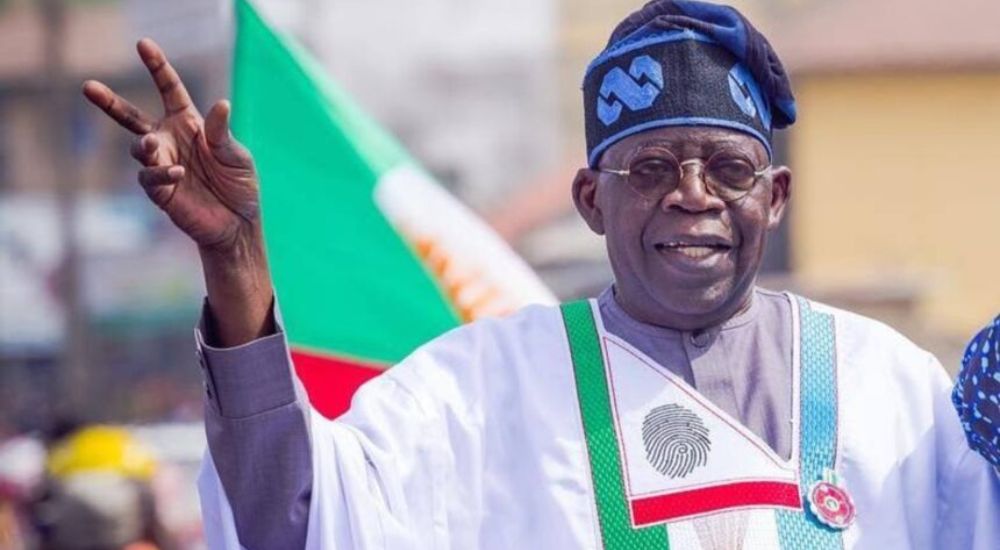
Tinubu Vows to Secure Nigeria, Declares Unity Non-Negotiable Amid Worsening Insecurity
-
 Education2 days ago
Nigerian Young Academy, LASU to Host 16th International Conference on Convergent Research
-

 News2 days ago
Trump smuggled out of Turkey in catering truck over Iran threat
-
 Politics3 days ago
Keep Religion Out of Nigeria’s ‘Dirty Politics,’ Gumi Tells Jingir
-

 metro3 days ago
Ex-Aiye Confraternity Leader Arrested in Lagos, Confesses to Multiple Killings in Mushin
-
 metro3 days ago
‘I Acted Out of Patriotism’ — Army Colonel Ma’aji Breaks Silence, Explains Why He Plotted Coup Against Tinubu
-
 News3 days ago
South Africa Visa Applications Double From Nigerians Despite Xenophobia Concerns – Envoy
-
 News2 days ago
Tinubu Vows to Secure Nigeria, Declares Unity Non-Negotiable Amid Worsening Insecurity
-
 metro3 days ago
How Enugu Abduction Led to Recovery of 4 AK-47 Rifles, 133 Ammunition – Army