

Education
NELFUND: How schools, banks are ripping off students
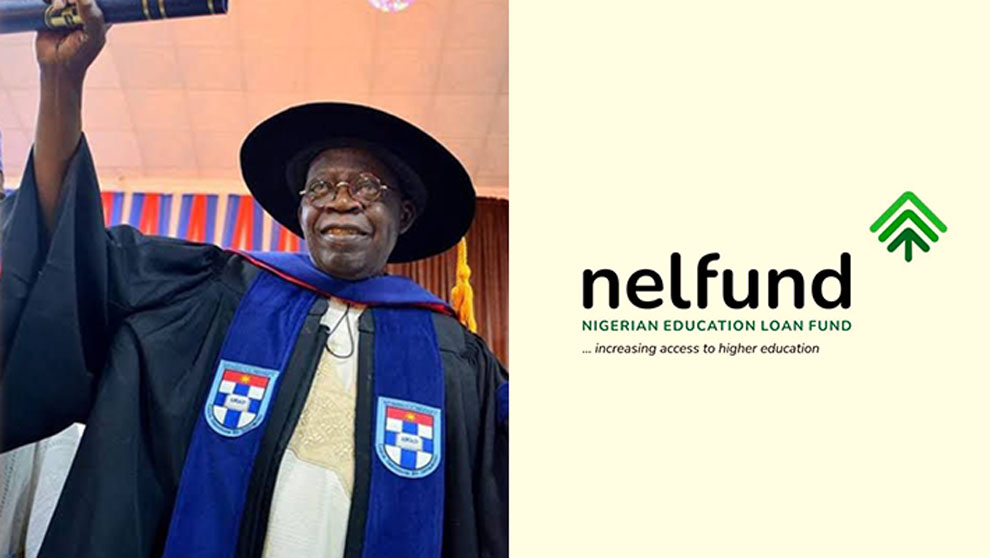
NELFUND: How schools, banks are ripping off students
The National Orientation Agency (NOA) said its recent investigations have revealed have uncovered several unethical practices by some institutions of higher learning in the disbursement of the Federal Government Student Loan Fund, NELFUND.
Paul Odenyi, Deputy Director, Communications and Media, NOA quoted the Director General of the Agency, Mallam Lanre Issa-Onilu as announcing the findings after meeting with NELFUND Managing Director, Mr. Akintunde Sawyerr, over the weekend.
According to the statement, the findings from investigations conducted by the Community Orientation and Mobilisation Officers (COMO) of NOA revealed that the tertiary institutions and banks are conspiring to short-change the students who are beneficiaries of NELFUND.
According to the statement, the reports indicated that certain university officials have been withholding vital information regarding loan disbursements, prompting immediate action from NELFUND.
“The NOA’s feedback shows how specific institutions have, in connivance with some banks, deliberately delayed payments to successful student applicants for personal financial benefit. Some universities fail to acknowledge the NELFUND’s disbursements to the students,” the statement by NOA indicated.
READ ALSO:
- U-20 AFCON: Nigeria drawn in Group B with Tunisia, Morocco, Kenya
- Kidnap kingpin arrested, many killed after shoot-out with police in Delta
- NIS expands contactless passport renewal to United States, others
The statement also quoted Sawyerr as confirming that some institutions are failing to inform students about loan disbursements made in their name while still requiring them to pay tuition fees.
He stated, “Recent findings by NELFUND have shown that some institutions have received student loan disbursements directly into their accounts yet neglect to inform the affected students or record the payments in their financial records, leading to unnecessary confusion.
“Withholding critical financial information from students is not only unethical but also a breach of the principles on which NELFUND was founded. We are prepared to take legal action against any institution engaged in such deceptive practices.”
In response, Mallam Issa-Onilu has issued a strong warning to these institutions and collaborating banks to cease such activities.
“NOA has directed its state directorates to provide further feedback from students across the country to ensure that the Federal Government takes appropriate actions against erring schools and banks,” Mallam Issa-Onilu was quoted as saying.
NELFUND: How schools, banks are ripping off students






Education
Niger State Urges Local Communities to Protect Newly Completed Public Schools
Niger State Urges Local Communities to Protect Newly Completed Public Schools
Basic education officials deliver modern classrooms to help children learn safely, kicking off an ambitious statewide renovation drive.
State education leaders in Niger State are calling on neighborhood residents and parent groups to take good care of newly renovated primary schools.
On Wednesday, the head of the Niger State Universal Basic Education Board, Dr. Ibrahim A. Liman, reminded communities that public classrooms belong to everyone, warning that state funding can only make a lasting difference when local people watch over these shared spaces.
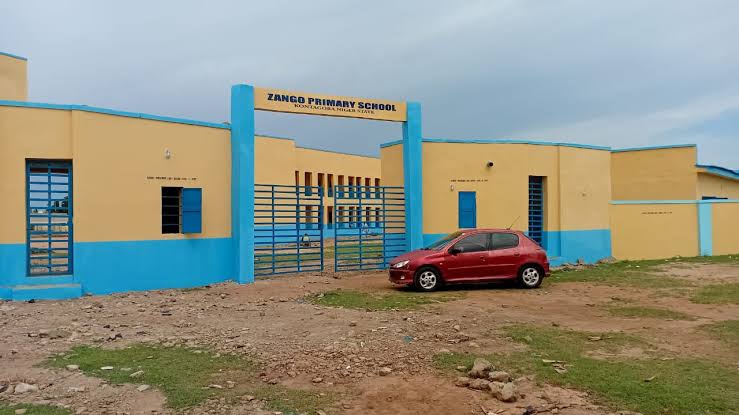
To prepare for handing over the keys, board officials visited Zango Primary School in Kontagora and Richard Lander Primary School in New Bussa. These two locations are the first to finish out of seven model schools currently under construction.
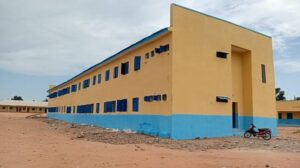
During their visits, team members inspected classrooms to make sure builders followed high safety standards, while encouraging neighbors to keep the grounds secure, tidy, and ready for pupils.
Furthermore, state officials explained that these building projects are part of a larger plan to improve early education across every community. Alongside these new classrooms, the board is starting repair work on about 400 primary schools throughout the state.
In addition to fixing desks and roofs, authorities are upgrading classroom teaching tools and supporting teachers. As a result, children across all backgrounds will have safe, welcoming spaces to learn and grow together.
Niger State Urges Local Communities to Protect Newly Completed Public Schools
Education
LASU, LASUED, LASUSTECH Shut as ASUU Begins Indefinite Strike
LASU, LASUED, LASUSTECH Shut as ASUU Begins Indefinite Strike
Students at three Lagos State-owned universities are facing an indefinite interruption of academic activities after ASUU declared a strike over unresolved demands.
LASU, LASUED and LASUSTECH are affected by the industrial action announced by the union’s Joint Campus Group.
ASUU said it had given the Lagos State Government 14 days from August 31 to address its concerns. According to the union, the deadline expired without a concrete plan or meaningful dialogue.
The union had also issued a final warning on September 10, but said the September 13 deadline passed without talks.
Its main demand is for Lagos State to domesticate and implement the December 2025 Federal Government-ASUU agreement across the three institutions.
ASUU also wants the implementation of welfare provisions, including the Consolidated Academic Tools Allowance for serving and retired academic staff.
The union said the strike would continue until negotiations produce a satisfactory outcome. It also urged students and parents to remain calm.
While the dispute has led to a fresh shutdown in Lagos, another ASUU branch has suspended its strike in Plateau State.
The Plateau State University branch reached an agreement with the state government on issues including the 2025 agreement, outstanding arrears, staff accommodation and other demands. Members are expected to return to academic activities from midnight on September 16.
Meanwhile, ASUU at Taraba State University has issued a fresh 14-day ultimatum to the Taraba State Government. The notice runs from September 14 to September 28 and concerns outstanding provisions of the 2025 Federal Government-ASUU agreement.
LASU, LASUED, LASUSTECH Shut as ASUU Begins Indefinite Strike
Education
ASUU Crisis Deepens: Lagos Universities Join UNIBEN, Taraba on Indefinite Strike
ASUU Crisis Deepens: Lagos Universities Join UNIBEN, Taraba on Indefinite Strike
The Academic Staff Union of Universities (ASUU) has not declared a nationwide indefinite strike. However, the union’s national leadership has issued a fresh threat to resume its suspended national strike without notice, while at least three university branches are currently on indefinite strike over unresolved welfare disputes with state governments.
The confusion stems from a wave of branch-level industrial actions that began in early September 2026, combined with an emergency National Executive Council (NEC) resolution warning that a nationwide shutdown could be activated “within the shortest time possible” if governments fail to honour the 2025 Federal Government-ASUU agreement.
The ASUU branches at the three Lagos State-owned universities declared a total, comprehensive, and indefinite strike on September 15, 2026, after the state government allowed a 14-day ultimatum to lapse without initiating dialogue. The unions’ principal demand is the full domestication and implementation of the December 2025 ASUU-FGN agreement, including the Consolidated Academic Tools Allowance (CATA) and critical welfare protections for both active and retired academic staff. The strike has the full backing of the ASUU national leadership, and the union stated it will not be suspended until the state government signs, domesticates, and implements the applicable provisions of the agreement in full.
READ ALSO:
- Lagos Power Outage: Ikeja Electric Blames TCN as Businesses, Homes Groan
- US Court Blocks Trump Visa Rule Limiting Stay of Foreign Students, Journalists
- Sokoto Shuts Mosque After Cleric Stabbing, Names Ulamas Probe Panel
The UNIBEN ASUU branch is continuing its indefinite strike, which began on September 9, 2026, over the alleged underpayment of August 2026 salaries. A congress held on September 11 resolved that the strike would continue because the university administration failed to provide clear details of what was paid, what was outstanding, and when it would be paid. University management insists the Federal Government paid August salaries in full, and that the payment in question was CATA, not salary.
ASUU at Taraba State University resumed an indefinite strike following the state government’s failure to implement an agreement reached on January 17, 2025. On September 14, the branch issued a final 14-day ultimatum to the Taraba State Government, which will expire on September 28, 2026, if outstanding provisions are not addressed. The union had previously suspended a planned strike in August to allow the university’s combined convocation ceremonies to proceed.
The UNIZIK ASUU branch suspended its indefinite strike on September 11, 2026, after the university management paid the complete August 2026 salary. The strike had been declared on September 7 over the non-payment of full August salaries. The branch directed all members to resume academic and administrative duties immediately.
At the national level, ASUU has threatened to reactivate its suspended nationwide strike if the Federal Government and state governments fail to urgently resolve outstanding issues. This decision followed an emergency NEC meeting held at the University of Abuja on September 5, 2026. ASUU President, Prof. Christopher Piwuna, stated that unless immediate and concrete steps are taken, the union “will not accept any blame for calling out its members on a nationwide strike action within the shortest time possible”. The unresolved issues include three-and-a-half months of withheld salaries from the seven-and-a-half months withheld under the previous administration, unremitted third-party deductions (pension contributions, cooperative funds, and ASUU check-off dues) allegedly withheld for several months, breaches of university laws and autonomy, and the worsening conditions of the academic profession.
ASUU commended governors who had commenced implementation of the 2025 agreement, singling out Abia State Governor Alex Otti for praise, noting he publicly announced full adoption and apologised for bureaucratic delays. The union also listed Bauchi, Ekiti, Ogun, Benue, Yobe, Adamawa, Kebbi, Katsina, and Borno as states where implementation had commenced. It noted pledges to begin in Kano, Edo, Plateau, Taraba, Gombe, and Bayelsa in September or October 2026.
Former Vice President Atiku Abubakar challenged President Bola Tinubu to account for savings from petrol subsidy removal, arguing that the renewed university crisis exposed a contradiction in the government’s reform claims. Atiku said Nigerians had endured unprecedented cost-of-living increases while public universities remained underfunded and lecturers were again threatening to strike.
ASUU Crisis Deepens: Lagos Universities Join UNIBEN, Taraba on Indefinite Strike
-
 Politics2 days ago
2027: Northern Lecturers Back Tinubu, ASUU Disowns Endorsement
-

 metro2 days ago
Police Arrest Mother Over Alleged Brutal Abuse of 7-Year-Old Girl in Anambra
-

 Sports2 days ago
‘I Was Never the Chosen One’ — Dembele Responds to Mbappe
-
 News3 days ago
Nwifuru Dismisses Cubana Chief Priest as ‘Attention-Seeker’
-
 Politics3 days ago
2027: Sowore Promises ₦500,000 Minimum Wage, Free Education, 24-Hour Electricity
-
 metro3 days ago
Grand Chief Imam calls for professional communication structure for Rabitoh 1964
-

 Education2 days ago
JAMB Moves 2027 UTME Time — Here’s What Candidates Need To Know
-
 Politics2 days ago
2027: APC Governors Reject Wike’s Rainbow Coalition, Insist on Party Loyalty