

Education
Edo Varsity Suspends 27 Medical Students Over Exam Fraud

Edo Varsity Suspends 27 Medical Students Over Exam Fraud
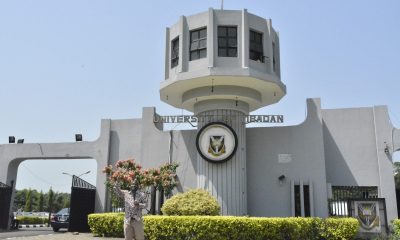
The management of the Ambrose Alli University (AAU), Ekpoma, Edo State, has approved the rustication of 27 medical students over allegations of examination misconduct and impersonation in the institution’s College of Medicine.
The affected students, drawn from the Departments of Medicine and Surgery, Nursing, Medical Laboratory Science, Anatomy, and Human Physiology, are in the 300, 400, and 500 levels.
The university stated that the disciplinary action will take effect from the 2025/2026 academic session, with the students handed rustication periods ranging from two to four semesters, depending on the severity of their offences.
The decision followed recommendations from the Mobile Disciplinary Committee of the College of Medicine for the 2024/2025 academic session, which investigated cases of alleged examination malpractice and impersonation during professional examinations.
The Registrar of the university, Mrs. Oluwayomi Agbebaku, confirmed the development in an official statement released on Wednesday, explaining that the affected students were found culpable of various forms of examination misconduct, including impersonation and other violations of academic regulations.
READ ALSO:
- Police Fire Tear Gas as Osun Students Protest Colleague’s Death
- CBN Data Shows Naira Strengthening Across Forex Markets
- US Congressman Pushes Bill Requiring Religious Immigrants to Reject Sharia Law
She added that the sanctions were necessary to uphold academic integrity, maintain discipline, and preserve the credibility of professional training in the medical field.
The university further stated that the rusticated students will not be allowed to participate in any internal or external examinations until they have fully served their punishment.
It also explained that some of the students face additional academic restrictions, including non-upgrading of certain courses, while the result of at least one student will not be processed until completion of the rustication period.
However, the institution confirmed that one student was cleared of wrongdoing and exonerated after investigations, with his mobile phone returned following a stern warning.
The management of AAU reiterated its commitment to a zero-tolerance policy on examination malpractice in Nigerian universities, particularly within sensitive professional programmes such as medicine and allied health sciences.
It stressed that it will continue to strengthen monitoring mechanisms during examinations and enforce strict disciplinary actions to deter future cases of impersonation and academic fraud.
The development highlights ongoing concerns about examination malpractice in Nigerian tertiary institutions, where authorities have increasingly adopted strict sanctions to protect the integrity of academic qualifications.
Education stakeholders continue to call for stronger supervision, improved invigilation systems, and stricter enforcement of examination rules to curb recurring cases of cheating and impersonation.
Edo Varsity Suspends 27 Medical Students Over Exam Fraud








Education
MURIC Raises Alarm Over Alleged Hijab Ban, Forced CRK in Ekiti Schools
MURIC Raises Alarm Over Alleged Hijab Ban, Forced CRK in Ekiti Schools
The Muslim Rights Concern (MURIC) has called on the Ekiti State Government to investigate allegations that female Muslim students are being denied the use of hijab in public schools and that Muslim students who registered for Islamic Religious Knowledge (IRK) are being made to take Christian Religious Knowledge (CRK).
The organisation made the demand in a statement issued on Monday, September 28, 2026, by its Executive Director, Professor Ishaq Akintola, following allegations raised by the League of Imams and Alfas in Ekiti State.
The League reportedly raised the allegations at its monthly meeting held at the Central Mosque, Iyin-Ekiti, on Thursday, September 24.
MURIC described the allegations as “grave, concerning and unnerving”, arguing that, if established, the reported practices would raise serious questions about religious freedom and the rights of Muslim pupils in public schools.
Akintola said the alleged denial of hijab to Muslim female students was particularly concerning, arguing that Muslim women and girls should be able to observe their religious dress requirements.
“In the 21st century, when hijab is allowed in London, Paris and New York schools, female Muslim students are still being denied the use of hijab in public schools in Ekiti State,” he said.
He questioned the state’s record on religious tolerance, saying the allegations appeared inconsistent with claims of peaceful coexistence and mutual respect among religious communities in Yorubaland.
MURIC also expressed concern over the allegation that Muslim students who had registered for IRK were being compelled to study CRK.
The group described the alleged practice as “anachronistic, myopic and repressive”, and called on the state government to examine the conduct of education officials involved.
Akintola said MURIC was opposed to what it described as “illegal, illegitimate, unlawful and unconstitutional practices” in the state’s education sector.
He further linked the latest allegations to previous incidents involving Muslims in Ekiti, citing an alleged clash between traditionalists and Muslims at Ikun in Moba Local Government Area, during which an imam was reportedly injured and a mosque vandalised.
He also referred to a previous controversy over the proposed demolition of four mosques during the administration of former Governor Ayo Fayose, as well as the reported demolition of Sabo Central Mosque in Aramoko-Ekiti in April 2025.
According to Akintola, the incidents cited by MURIC demonstrated the need for the state government to address complaints concerning religious rights before tensions escalate.
“We therefore charge the Ekiti State Government to investigate the allegations levelled by the League of Imams against Ekiti State education officials with a view to making amends,” he said.
On the constitutional dimension, MURIC cited Section 38 of the 1999 Constitution, which guarantees freedom of thought, conscience and religion.
Akintola argued that Muslim students should not be compelled to receive religious instruction contrary to their faith, while calling on education authorities to ensure that pupils are allowed to practise their religion without discrimination.
He said the allegations, if established, would amount to violations of the rights of Muslim children and urged the Ekiti Government to take corrective measures.
MURIC’s statement, however, characterised the alleged actions in stronger terms, accusing those responsible of religious intolerance and persecution of Muslims.
The organisation consequently urged the state government to investigate the claims made by the League of Imams and ensure that religious freedom and the rights of students are protected in public schools across Ekiti State.
MURIC Raises Alarm Over Alleged Hijab Ban, Forced CRK in Ekiti Schools
Education
UK Student Visa: 63 Countries Exempt From Proof of Funds, Nigeria Excluded

UK Student Visa: 63 Countries Exempt From Proof of Funds, Nigeria Excluded
The United Kingdom has exempted citizens of 63 countries and territories from providing financial evidence upfront when applying for a Student visa, under its differential evidence requirement.
The policy means eligible applicants generally do not need to submit documents showing that they have sufficient funds to support themselves during their studies when they make their initial visa applications.
However, the exemption does not remove the underlying financial requirement. The UK government can still ask applicants from the exempt countries to provide evidence of their finances before deciding their applications.
For students who are required to provide financial evidence, the current UK Student visa rules require applicants to demonstrate that they have enough money to cover their living expenses while studying in Britain.
Students studying in London are required to show £1,529 per month for up to nine months, while those studying outside London must generally demonstrate £1,171 per month for up to nine months.
Applicants may also be required to show that they have enough money to pay their course fees for one academic year, subject to the amount stated on their Confirmation of Acceptance for Studies (CAS).
The required maintenance funds generally must have been held for 28 consecutive days, with the end of that period falling within 31 days of the visa application.
The countries covered by the differential evidence arrangement include Australia, Austria, Bahrain, Barbados, Belgium, Botswana, Brazil, Brunei, Bulgaria, Cambodia, Canada, Chile, China, Croatia, Cyprus, Czechia, Denmark, Dominican Republic, Estonia, Finland, France, Germany, Greece, Hungary, Iceland, Indonesia, Ireland, Italy, Japan, Kazakhstan, Kuwait, Latvia, Liechtenstein, Lithuania, Luxembourg, Malaysia, Malta, Mauritius, Mexico, Netherlands, New Zealand, Norway, Oman, Peru, Poland, Portugal, Qatar, Romania, Serbia, Singapore, Slovakia, South Korea, Spain, Sweden, Switzerland, Thailand, Tunisia, United Arab Emirates and the United States.
The relevant UK immigration guidance also contains provisions covering certain applicants holding passports from Hong Kong SAR, Macau SAR and Taiwan, as well as British National (Overseas) passport holders.
READ ALSO:
- Lagos Intensifies Surveillance as Adulterated Palm Oil Raises Food Safety Concerns
- Saudi Arabia Rejects Nigeria’s Request for More 2027 Hajj Slots
- MURIC Warns FG: Any Move Against Atiku Now Lacks Tact
Among African countries, Botswana, Mauritius and Tunisia are included on the list.
Nigeria is not included, meaning Nigerian citizens applying for a UK Student visa should continue to prepare to meet the applicable financial evidence requirements.
The same applies to applicants from several other major African countries, including Ghana, Kenya and South Africa, which are also not among the countries listed under the differential evidence arrangement.
The exemption is therefore not a blanket waiver of financial requirements for international students.
Instead, it changes the documentary evidence requirement at the point of application for nationals of the specified countries.
Applicants covered by the arrangement must still satisfy other UK Student visa requirements, including securing admission to an approved education provider and obtaining a valid Confirmation of Acceptance for Studies.
They must also satisfy the other eligibility and immigration conditions applicable to their circumstances.
For applicants who do need to provide financial evidence, acceptable funds can generally include money held by the applicant, qualifying funds held by a parent or partner, an eligible student loan or official financial sponsorship.
The UK rules exclude certain assets from being used as qualifying financial evidence, including overdrafts, cryptocurrencies, stocks and shares and pensions.
There are also circumstances in which an applicant who is not covered by the 63-country differential evidence list may not have to provide financial evidence.
For example, applicants who have been living in the UK with valid permission for at least 12 months immediately before the date of their Student visa application are generally exempt from demonstrating the financial requirement.
The distinction between the financial requirement and the requirement to submit financial evidence is therefore important.
A student from one of the 63 countries is generally not required to attach proof of funds to the initial application, but UK Visas and Immigration can still request evidence.
If such a request is made, the applicant must be able to demonstrate that they meet the relevant financial requirement.
For Nigerian students, the situation remains unchanged by the latest differential evidence list.
A Nigerian applicant planning to study in Britain should therefore ensure that the required funds are available and satisfy the relevant rules before submitting a UK Student visa application.
Students should also ensure that their financial documents meet the prescribed holding-period requirements and correspond with the information contained in their visa application and CAS.
The development is particularly relevant to international students considering the UK as a destination for higher education, as financial evidence is one of the key requirements that applicants may have to satisfy before receiving a Student visa.
The UK government advises prospective students to check the latest immigration guidance before applying because Student visa requirements and financial thresholds can be updated.
For Nigerians seeking to study in Britain, the key point is that the 63-country differential evidence arrangement does not currently include Nigeria.
Nigerian applicants should therefore continue to prepare the appropriate proof of funds and meet all other requirements applicable to the UK Student visa route.
UK Student Visa: 63 Countries Exempt From Proof of Funds, Nigeria Excluded
Education
JAMB Sacks Staff Over Candidate Extortion, Warns Against Abuse of Office
JAMB Sacks Staff Over Candidate Extortion, Warns Against Abuse of Office
The Joint Admissions and Matriculation Board (JAMB) has terminated the appointment of a staff member found culpable of extorting candidates, reinforcing the examination body’s warning that employees who abuse their positions will face disciplinary action.
The development was disclosed in JAMB’s latest bulletin as the board continues its efforts to strengthen accountability and protect candidates from fraud, extortion and other forms of exploitation within the UTME and admission process.
JAMB did not disclose the identity of the affected staff member or the specific amount allegedly collected from candidates. However, the board’s decision to terminate the appointment underscores its stated position that misconduct by its own personnel will not be tolerated.
The action comes amid the board’s broader campaign against fraudulent practices targeting UTME candidates, including attempts by individuals and organised groups to exploit candidates and their parents by promising examination assistance, admission-related services or other benefits.
JAMB has repeatedly warned candidates and parents against paying individuals who claim they can manipulate examination results, secure admission through unofficial channels or provide services outside the board’s approved procedures.
The board maintains a cashless registration system aimed partly at reducing opportunities for unnecessary financial dealings between candidates and officials. Its official guidance also states that candidates should use JAMB-approved Computer-Based Test (CBT) centres for registration and other designated services.
READ ALSO:
- Jetour T1 Storms Abuja as Automaker Accelerates Nigeria Expansion
- Kidnapped Female Police Officer Found Dead in Ebonyi as Suspect Leads Police to Remains
- CNN, MS NOW, Politico Sue Trump Over White House Access Ban
JAMB has previously acknowledged concerns about extortion involving officials and operators. In 2024, the board said it had received reports of candidates being allegedly extorted in connection with regularisation and other services and directed investigations into the complaints.
The board had also considered reducing physical interaction between candidates and officials, particularly because many UTME candidates are underage, as part of efforts to reduce opportunities for exploitation and improve monitoring.
The latest dismissal is also coming as JAMB continues to confront wider forms of examination malpractice and fraud.
Earlier in 2026, the board disclosed that it had uncovered syndicates using artificial intelligence and other methods to impersonate JAMB officials and defraud candidates preparing for the UTME. Investigations in that case reportedly linked more than 100 candidates to the scheme, with dozens confirmed to have made payments to the fraudsters.
JAMB has also taken disciplinary and other enforcement measures against personnel and centres implicated in activities considered capable of compromising the integrity of its examination system.
The board’s position is that the fight against examination malpractice must include both external fraudsters and individuals working within the system who exploit their official positions.
For candidates, JAMB advises that payments and transactions relating to its services should be made through approved channels and that sensitive information such as passwords, profile details and e-PINs should not be disclosed to unauthorised persons.
Candidates who encounter problems or suspect misconduct can also use JAMB’s Central Online Support System (COSS) to submit complaints and track their cases.
The latest action therefore sends a clear administrative signal that JAMB staff misconduct can attract serious consequences, particularly where officials are found to have exploited candidates entrusted to their care.
JAMB said its personnel are expected to maintain professionalism and integrity in dealing with candidates, while the board will continue to take appropriate action against those found to have violated its rules.
The development is expected to further focus attention on safeguards around the JAMB registration process, candidate support services and other interactions between applicants and officials as the board continues efforts to protect the integrity of Nigeria’s tertiary admission system.
JAMB Sacks Staff Over Candidate Extortion, Warns Against Abuse of Office
-

 News3 days ago
Anambra Releases ₦473m Salary Arrears Document as Obi’s Debt Claim Sparks Fresh Dispute
-

 News2 days ago
Keyamo: ₦70,000 Minimum Wage No Longer Enough as Cost of Living Soars
-
 metro3 days ago
EFCC Chairman Raises Alarm Over Alleged Theft of Nigeria’s Public Funds
-

 Sports2 days ago
AFCON 2027 Qualifier: Nigeria Fight Back to Beat Madagascar 2-1 in Uyo
-

 Politics3 days ago
2027: Otti Explains Why He Supports Tinubu Despite Remaining in Labour Party
-

 metro3 days ago
Umahi Announces First Niger Bridge Reopening Next Week, Orders Tinubu Pictures
-

 metro3 days ago
Anambra Police Arrest 25-Year-Old Suspect Linked to 2023 Kidnap, Murder
-

 Entertainment2 days ago
Jetour Takes Adventure Beyond the Road, Brings Solar-powered Borehole to Ibeju-Lekki community