

News
How Kwara can tackle insecurity, by AbdulRazaq
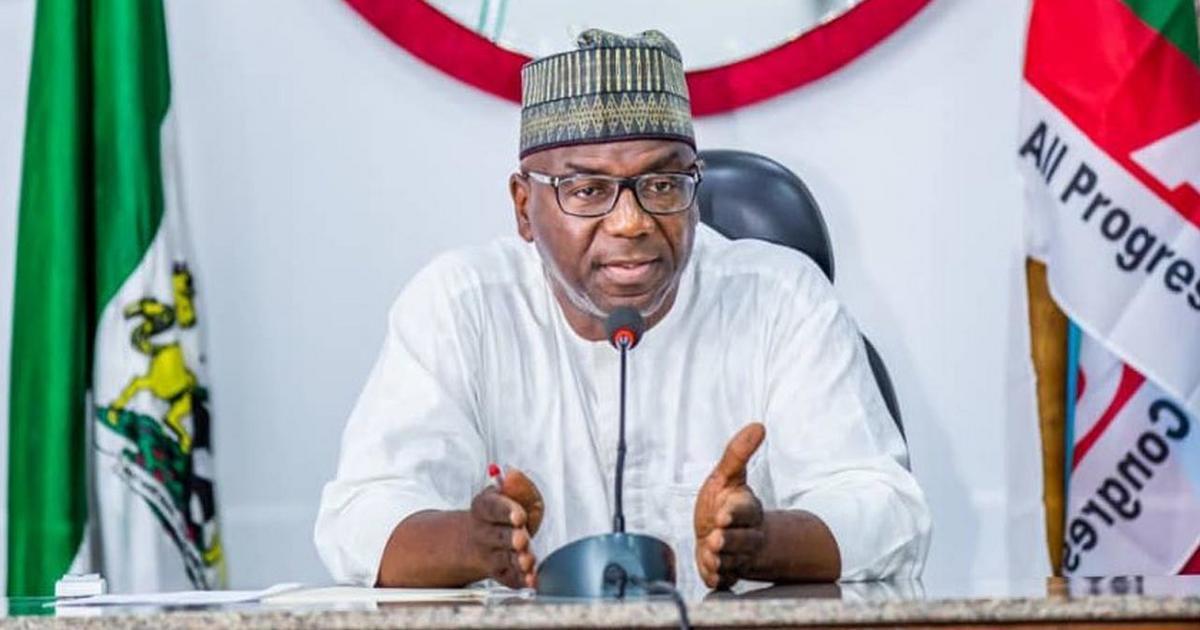
Kwara State Governor AbdulRahman AbdulRazaq has called for increased presence of policemen and other security officials in the state to fortify the state and enhance its socio-economic development.
“Our challenges are enormous. Being a relatively safe state, security agencies tend to be comfortable with Kwara and that explains why they often take out forces from Kwara to bolster security elsewhere. For example, the Army has taken out most of their men to Northeast and we are making efforts to get them back. For the police, our need requirement is about 8,000-10,000 men but we have only about 3,000 now. Many officers of the two mobile squadrons here have been moved out. I am saying this because we definitely need more men on ground here,” AbdulRazaq said when he received the Inspector General of Police Usman Alkali Baba at the presidential lodge in Ilorin.
“The recent ban on grazing by Southern Governors and some security issues in our neighbouring states have resulted in influx of internally displaced persons to Kwara. In many parts of some of our villages, the communities are outnumbered by those that are coming in. This is a state of harmony and people are welcome but this (influx) is clearly overstretching the manpower of the Nigeria Police which is the primary agency for internal security. From Kwara North to Kwara South, it is an enormous task for them, so we definitely need and seek more hands.”
AbdulRazaq also called for improved collaboration among security agencies to sustain relative peace in the state, with the traditional rulers equally playing vital roles in strengthening security architecture.
“There is no chance for criminalities in the state because of the nature of security architecture in the state. We also involve and encourage our traditional rulers to work with the security agencies by providing actionable intelligence for use,” he said.
“We thank the Police authorities for the Police School in Ballah and the Intelligence School in Share. In fact, we had to put a transformer there few months ago to make sure we get the place working. But we are saddened by the relocation of Police Public Relations School that was here in Ilorin before. We hope you will look into that again and return it.”
AbdulRazaq praised the police and other security agencies for making the state relatively safe for economic activities.
“We appreciate your efforts for keeping this state safe. Now we have peace and people are coming to live in Kwara State. Now we have four airlines coming to the state and the economy of the state is booming, hotels are often filled and rent (in houses) are going up,” the Governor said.
“This points to better security, and I commend the security agencies for what they do to keep us safe. Now, people see Kwara as a safe haven and they are coming here to settle. The security issue is kept to the barest minimum by the police and other security agencies.”
Inspector General of Police Usman Alkali Baba, for his part, said he was in Kwara to meet with officers and men of the Nigeria Police in Kwara command and inspect the Nigeria Police Intelligence School which is under construction in Share, Ifelodun local government area.
“I am here on a one-day visit to appreciate and give words of encouragement to our officers and men in Kwara, as well as tell them what my administration has come to do,” he said.
“The government of President Muhammadu Buhari is doing its best efforts to meet our needs. The police reform is also being pursued. Our pension, which is one of the bane of retired police officers, is also being looked at. We have one of our most important institutions in Kwara which is our intelligence school which ought to have taken up since in Share (Ifelodun local government). My mission is to get it take off immediately.”
Alkali said his administration is adopting intelligence gathering and ICT to check crimes and criminalities in the country.
“I have a mission and vision of policing through intelligence and proactive means of policing. Policing is key, ICT is key and training is key. With the three, you can sit down and police the whole state,” he said.
“It is our intention to do manpower development in the art of intelligence gathering so that we will be able to police the country not manually but through e-policing. We can do a lot with proactive policing instead of being reactive. We are asking for more support from your administration to ensure that the school take off.
“We are ready and willing under this administration to make the condition of service more conducive for our officers and men to better serve the people.
The IGP was accompanied on the visit by AIG Zone 8, Ede Ayuba;
AIG Intelligence Abu Sanni; Kwara CP Tuesday Assayomo; and Force Public Relations Officer Frank Mba.

News
US Imposes 12.5% Tariff on Nigerian Imports Over Forced Labour Claims
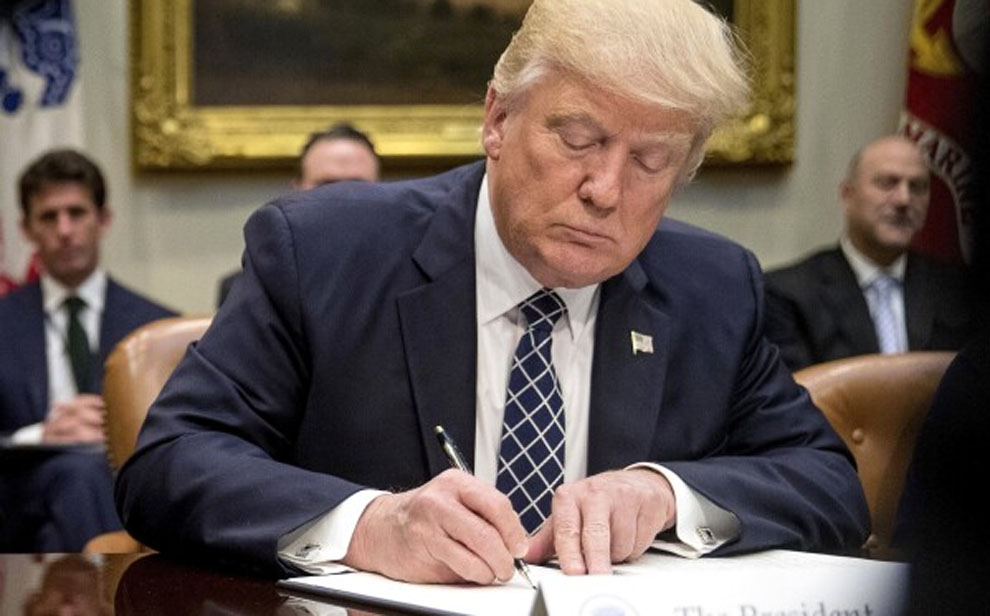
US Imposes 12.5% Tariff on Nigerian Imports Over Forced Labour Claims
The United States has imposed a 12.5 per cent tariff on imports from Nigeria as part of a new trade measure targeting 60 economies it says have failed to prohibit the importation of goods produced with forced labour.
The measure, announced on Thursday, July 23, 2026, by the Office of the United States Trade Representative (USTR), affects imports from 60 economies that Washington says have not “imposed and effectively enforced a prohibition on the importation of goods produced with forced labour”. Nigeria is among the countries subject to the higher 12.5 per cent tariff rate, while some nations that have adopted or committed to implement bans on imports linked to forced labour will face a lower 10 per cent rate. The move follows investigations launched by the USTR in May 2026 under Section 301 of the Trade Act of 1974 into 60 of the United States’ largest trading partners. According to the agency, it received more than 1,600 written submissions, held public hearings involving over 100 witnesses, and consulted more than 45 governments before announcing the tariffs.
US Trade Representative Jamieson Greer said the action was aimed at encouraging trading partners to strengthen measures against forced labour. “President Trump recognises that decades of moral suasion have not eradicated forced labour from global supply chains. The United States has had a forced labour import ban for nearly a century. It’s well past time for our trading partners to do the same,” Greer stated. Explaining the tariff structure, the USTR stated that 10 per cent is the appropriate rate for investigated economies that impose a forced labour import prohibition, have committed to impose such a prohibition through an Agreement on Reciprocal Trade, or have imposed a partial regime preventing the importation of certain forced labour goods. These economies include Argentina, Bangladesh, Cambodia, Canada, Ecuador, El Salvador, Guatemala, Honduras, India, Indonesia, Jordan, Malaysia, Mexico, Pakistan, Sri Lanka, Trinidad and Tobago, and the United Kingdom. The 12.5 per cent tariff applies to all other investigated economies, including Nigeria, Algeria, Angola, Australia, Brazil, China, Egypt, Japan, Morocco, South Africa, Saudi Arabia, Thailand, and Vietnam, among others. A full list published by Punch Newspapers shows that Nigeria is grouped with 46 other economies facing the higher tariff rate.
READ ALSO:
- Dollar to Naira Exchange Rate Today: Naira Holds Steady as Fuel Importer Demand Mounts
- Senate Bill Requiring Social Media Offices in Nigeria Gains Stakeholder Support at Public Hearing
- Army Declares Soldier Wanted Over Alleged Sale of Military Uniforms to Terrorists
A Federal Register notice issued by the USTR specifically confirmed that Nigeria would be subject to the 12.5 per cent tariff on its exports to the United States, except for products covered under listed exemptions. The notice stated: “Based on the findings in the investigation of Nigeria, considering the public comments, testimony, and the advice of the Section 301 Committee, as well as the advice of advisory committees, and in accordance with the specific direction of the President, the Trade Representative has determined to impose 12.5 percent tariffs on products of Nigeria, except as provided in Annex I and Annex II, Part A, of this Notice.” The notice added that the Trade Representative determined that the tariff rate and scope of exemptions are appropriate to obtain the elimination of the acts, policies, and practices determined to be actionable in the investigation.
The USTR clarified that certain categories of products would be exempted from the tariffs. These include raw materials whose restriction could trigger domestic supply shortages, goods capable of causing widespread economic disruption, products unavailable in sufficient quantities within the United States or from alternative suppliers, as well as selected imports from countries that have adopted or committed to enforcing bans on forced labour-related goods. Additional exemptions apply where the tariffs are not considered effective in addressing the trade practices identified during the investigations.
The new tariff regime comes after President Donald Trump invoked Section 122 of the Trade Act of 1974 to introduce a temporary universal tariff on imports following a US Supreme Court decision that blocked his administration’s broader tariff programme under the International Emergency Economic Powers Act. The Trump administration subsequently raised the rate to 15 per cent, with the temporary measure due to expire on Friday. For countries like Nigeria, the 12.5 per cent tariff comes on top of the existing 10 per cent baseline duty introduced under President Trump’s reciprocal trade framework, effectively raising total tariffs on Nigerian exports to the United States to 27.5 per cent.
The development comes as Nigeria continues efforts to expand non-oil exports and strengthen trade relations with major economies. If implemented, the additional tariff could make it more expensive for affected countries to sell products into one of the world’s largest consumer markets, raising concerns about trade competitiveness and export earnings. The USTR said the measure was aimed at levelling the playing field, arguing that countries that fail to prevent the import of goods produced with forced labour gain an unfair edge by allowing cheaper products to flood global supply chains. “The failure of our most important trading partners to address the importation of goods made with forced labour is unacceptable. This creates a dynamic where American workers are forced to compete globally on an unlevel playing field,” Greer said. Nigeria already has laws prohibiting forced and compulsory labour, including constitutional protections and anti-trafficking legislation, but enforcement remains a key issue in international assessments. Some US trading partners have already criticised the new tariffs. Japan’s chief government spokesman, Minoru Kihara, said Japan regrets that the measure imposes tariffs on Japan solely on the grounds that there is no ban on the import of products produced through forced labour. Brazil called the measure “completely arbitrary” and accused the USTR of manipulating an issue of great importance to human rights for protectionist purposes.
US Imposes 12.5% Tariff on Nigerian Imports Over Forced Labour Claims
News
House of Reps Passes State Police Bill with 311 Votes, Moves Nigeria to Decentralised Policing
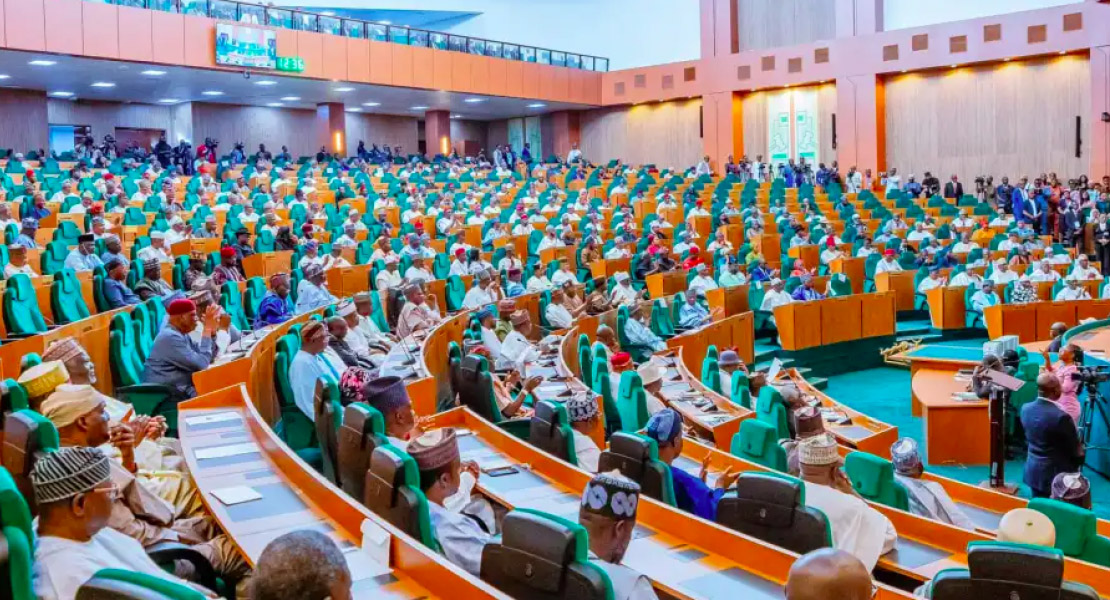
House of Reps Passes State Police Bill with 311 Votes, Moves Nigeria to Decentralised Policing
- The landmark constitutional amendment bill, transmitted by President Bola Tinubu, seeks to establish state-controlled police services alongside the existing Nigeria Police Force amid minority walkout protest.
In a historic move to restructure Nigeria’s security architecture, the House of Representatives on Thursday overwhelmingly passed the executive bill seeking to establish state police across the federation. No fewer than 311 lawmakers voted in support of the constitutional amendment bill, with Speaker Tajudeen Abbas confirming that 35 members participated virtually while 276 voted physically in the chamber. The legislation, titled “A Bill for an Act to Alter the Constitution of the Federal Republic of Nigeria, 1999 to Provide for the Establishment of State Police Services and for Related Matters (HB. 2797),” was approved following the consideration and adoption of the report of the House Committee on the Review of the 1999 Constitution, chaired by Deputy Speaker Benjamin Kalu. The decision followed the Nigerian Senate’s earlier passage of its version of the legislation, bringing the proposed reform closer to becoming law. This comes weeks after the House had separately passed a constitutional amendment bill on state police, during which about 288 lawmakers supported the proposal.
President Bola Tinubu transmitted the Constitution of the Federal Republic of Nigeria (Alteration) (State Police) Bill, 2026 to the House of Representatives last week, describing it as a “critical component” of his administration’s strategy to reorganise Nigeria’s security architecture. In his letter to the House, the President stated that the bill builds on the significant work already done by the National Assembly and incorporates additional safeguards to ensure the effective implementation of a dual policing structure. Upon receiving the executive proposal, the House rescinded its earlier resolution of June 11, 2026, on the establishment of state police and dissolved the 12-member Conference Committee it had constituted on July 9, 2026. The decision allowed lawmakers to proceed with the executive-backed version of the constitutional amendment.
READ ALSO:
- BREAKING: 68 Passengers Escape Death as Enugu Air Crash-Lands at Benin Airport
- Ibadan Council Boss Demolishes Criminal Hideout in Apata
- Fashola: I Have Tinubu’s Ears, Can’t Advise Him on Television
The proposed legislation seeks to amend Section 214 of the 1999 Constitution to formally establish both Federal Police and State Police formations across the country. Under the proposal, the National Assembly will determine the structure, organisation, administration, and powers of the Federal Police, while also providing the legal framework and national standards for establishing state police services. The bill provides that no state police force can begin operations unless it is established through a law passed by the relevant State House of Assembly and certified as meeting the minimum national standards prescribed by an Act of the National Assembly. Until then, the Federal Police will continue to perform policing duties in any state without an operational state police service. The legislation also limits the circumstances under which the Federal Police can intervene in a state’s internal security matters. Such intervention would only be permitted in cases of a complete breakdown of law and order, at the request of a state governor, or where a state police force becomes unable to function because of administrative, financial, or other challenges.
The bill proposes significant changes to the appointment and command structure of the police. Under the amendment, the Inspector-General of Police would be appointed by the President on the advice of the Nigeria Police Council from among serving members of the Federal Police, subject to confirmation by the National Assembly. State Commissioners of Police would be appointed by governors on the advice of the National Police Council from among serving members of the State Police, subject to confirmation by their respective State Houses of Assembly. The proposal also empowers governors to issue lawful directives to State Commissioners of Police on matters relating to public safety and maintaining law and order. However, where a commissioner believes such directives are unlawful or inconsistent with accepted policing standards, the matter may be referred to the National Police Council, whose decision would be final. To address concerns over possible abuse of state police by political authorities, lawmakers incorporated safeguards to protect civil liberties and political freedoms. One provision states that a state Commissioner of Police shall not arrest, detain, investigate, or deploy force against any individual, political party, or group merely for criticising a government, except in accordance with the law.
Despite the overwhelming support for the bill, the Minority Caucus in the House of Representatives staged a walkout from the chamber in protest, accusing the House leadership of violating constitutional provisions and the chamber’s Standing Orders during the passage. Addressing journalists shortly after leaving the chamber, the Minority Leader, Fredrick Agbedi, insisted that their action was not borne out of opposition to state police but against what they described as the abuse of parliamentary procedures. The caucus argued that the Speaker, while presiding as Chairman of the Committee of the Whole, ignored clear constitutional requirements governing the alteration of the Constitution. “Constitutional amendment bills must be considered clause by clause, with each provision supported by a two-thirds majority of members as stipulated in both the Constitution and the House Standing Orders,” Agbedi said. He faulted the decision to merely read the long title of the bill and determine its passage through a voice vote without detailed consideration of each clause. Defending his handling of the proceedings, Speaker Abbas said the constitutional threshold required for the amendment had already been met, noting that 276 members signed the attendance register in support while 35 more voted online, bringing the total to 311 lawmakers in support—well above the two-thirds requirement of 240 members.
Following the House’s passage, the bill will now require concurrence with the Senate, which had already passed its own version earlier. Both chambers of the National Assembly are working in close collaboration to fast-track the constitutional amendment process. The harmonised bill must then secure the endorsement of at least two-thirds of the State Houses of Assembly (24 out of 36 states) before it can be transmitted to the President for assent to become part of the Constitution of the Federal Republic of Nigeria.
The push for state police has continued to receive support from several state governments. On Wednesday, Kano State Governor Abba Yusuf declared that Kano was ready for the establishment of state police, describing the initiative as critical to improving security and protecting lives and property. “The proposed State Police will complement, not compete with, the Nigeria Police Force. Both institutions share the responsibility of protecting lives and property and maintaining law and order,” Yusuf said. He added, “Kano State has the institutional capacity, human resources, and political will to establish and sustain State Police when the necessary constitutional frameworks are in place.” The governor also pledged his administration’s support for efforts to strengthen Nigeria’s security system, saying, “We will support every legitimate initiative that strengthens Nigeria’s security architecture and creates a safer environment for citizens.”
House of Reps Passes State Police Bill with 311 Votes, Moves Nigeria to Decentralised Policing
News
Nigerian researcher develops AI system to transform marine conservation, fisheries management
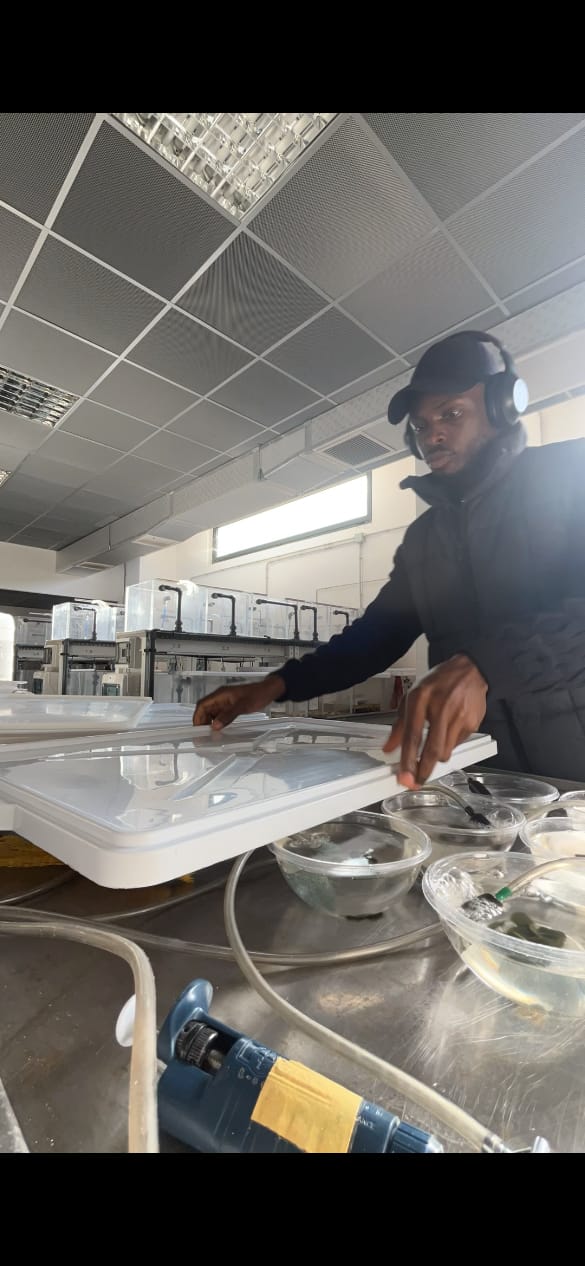
Nigerian researcher develops AI system to transform marine conservation, fisheries management
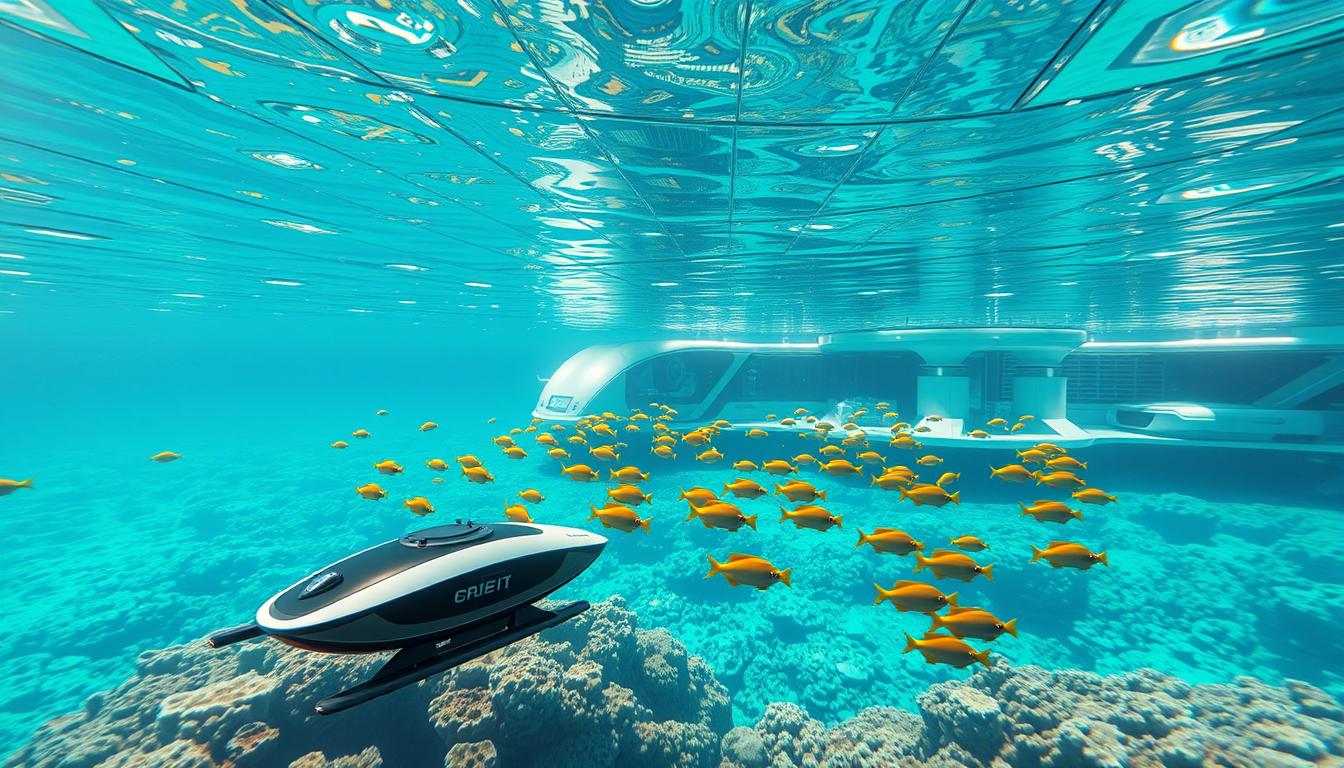
A Nigerian researcher, Dolapo Salim Olatoye, is attracting international attention with his groundbreaking work that combines Artificial Intelligence (AI) and ecology to develop smart monitoring systems capable of transforming marine conservation, fisheries management and biodiversity protection in Nigeria and across West Africa.
Olatoye, currently pursuing a fully funded PhD at the University of Pisa, Italy, said his research focused on developing computer vision and remote-sensing technologies that could enable scientists to automatically monitor marine ecosystems using underwater cameras, satellite imagery and sensor data.
His research, which forms part of two European Union Horizon-funded projects, comes at a time when governments and technology companies worldwide are increasingly deploying AI to tackle environmental degradation and biodiversity loss.
According to him, the systems he is developing use advanced object-detection and ensemble computer vision models to identify marine species automatically, making ecological monitoring faster, more accurate and scalable than traditional manual survey methods.
He noted that while many ecological AI tools are designed by computer scientists with little biological field experience, his approach bridges both disciplines through years of practical fisheries and marine fieldwork in Nigeria and Italy, alongside hands-on expertise in deep-learning engineering.
“I build the detection models myself and deploy them as working software rather than research demonstrations,” Olatoye explained, adding that the goal is to create practical tools that close the gap between field science and engineering.
The researcher began his academic journey at the Federal University Oye-Ekiti, where he studied Fisheries and Aquaculture and graduated as the best student in his department during the 2018/2019 academic session.
READ ALSO:
- Nigeria Takes Centre Stage at UN Road Safety Summit as Tinubu Delegates FRSC Corps Marshal
- FG begins JAMB registration for NCE, non-tech agricultural programmes without UTME
His outstanding academic performance earned him a fully funded Master’s scholarship at the University of Salento, Italy, where he graduated with a perfect score before securing another fully funded doctoral scholarship at the University of Pisa, one of Italy’s leading research institutions.
Beyond Europe, Olatoye believes his work holds enormous promise for Nigeria.
With an 853-kilometre coastline along the Gulf of Guinea and some of West Africa’s richest marine resources, Nigeria still meets only about 30 per cent of its annual fish demand through local production.
Experts believe improved scientific monitoring of marine ecosystems could significantly strengthen fisheries management, support conservation efforts and enhance food security.
Nigeria is also among eight Gulf of Guinea nations that signed the Yaoundé Declaration, committing to the sustainable management of ocean resources. The Federal Government has equally identified agriculture as a priority sector under its National Artificial Intelligence Strategy, creating opportunities for AI-driven solutions in fisheries and environmental management.
Olatoye said the technologies being developed for marine ecosystem monitoring align closely with these national priorities and could eventually be adapted for use by Nigerian fisheries and conservation agencies.
His work also reflects a growing global movement where leading technology companies are investing heavily in AI-powered biodiversity monitoring.
Google Research has developed SpeciesNet, an AI platform that has processed more than one billion wildlife images and audio recordings from 11 countries to identify animal species automatically.
Similarly, Microsoft’s AI for Good Lab recently unveiled Project SPARROW, a solar-powered bioacoustic monitoring system designed to track biodiversity in real time.
According to Olatoye, these initiatives demonstrate that AI is no longer being used merely to automate data collection but to revolutionise how scientists understand and protect ecosystems.
As part of his commitment to open science, Olatoye is also developing EcoQuad, a software platform emerging from his research.
The tool has already been adopted as instructional material for teaching at the University of Pisa and is designed to be openly accessible, allowing researchers and institutions to adapt it to local needs.
He expressed the hope that Nigerian and West African scientists would not have to depend entirely on imported technologies but would instead develop and customise world-class AI tools locally.
“My ambition is to build open, reproducible monitoring systems that meet the same standards as those developed by leading research groups in the United States, the United Kingdom and Canada,” he said.
He added that by making such tools accessible, researchers across Africa would be better positioned to participate fully in the global scientific community while addressing local environmental and food security challenges through home-grown innovation.
Nigerian researcher develops AI system to transform marine conservation, fisheries management
-

 metro2 days ago
How to apply for FG’s YouthCred loan and qualify for up to ₦2 million
-
 News2 days ago
NACOMYO urges greater Muslim youth participation in politics at Lagos summit
-
 Politics2 days ago
Ondo Speaker given Sunday deadline to resign or face impeachment
-
 Opinion2 days ago
UI, UCH and the Question of Inclusive Leadership
-
 Politics3 days ago
2027: North-Central group backs Tinubu for second term, says re-election ‘done deal’
-

 Education3 days ago
High graduation fees spark outrage among parents, guardians
-
 News2 days ago
Kalu denies ₦1bn church budget claim, says actual allocation is ₦780m
-
 metro3 days ago
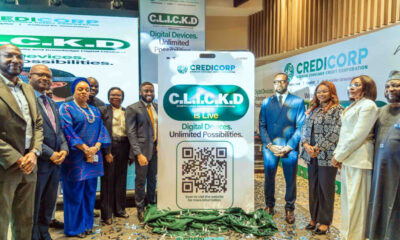
FG, CREDICORP Roll Out Laptop Credit Scheme for 3MTT Beneficiaries – 1,000 Devices Ready