

Opinion
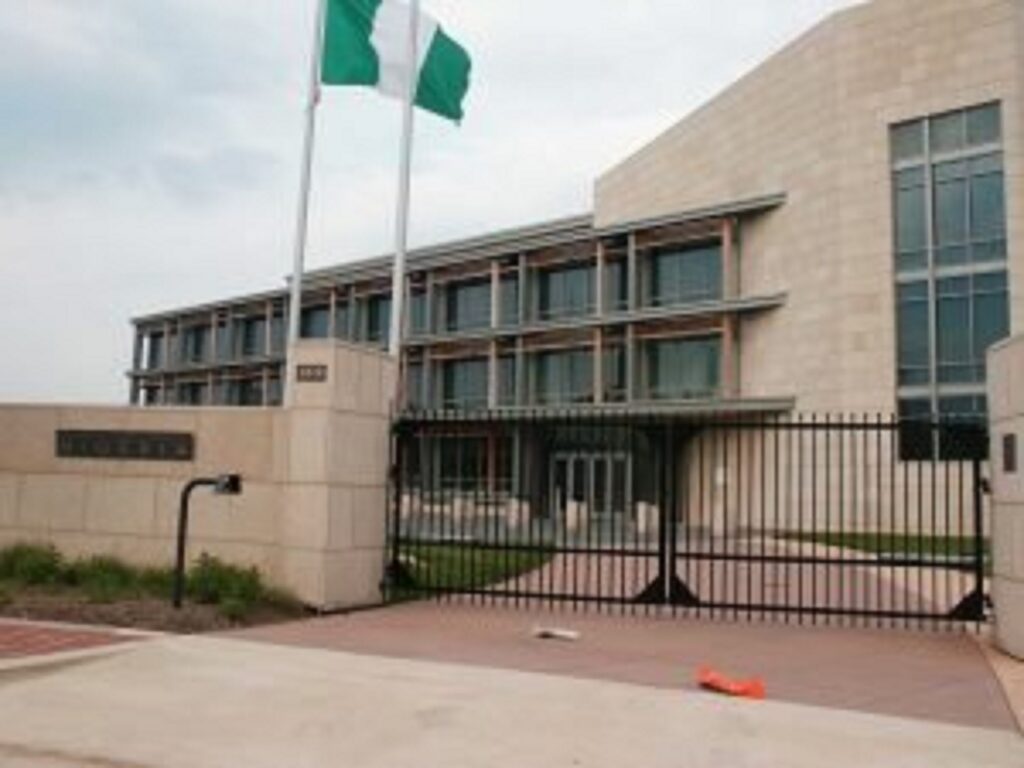
Opinion: Nigerian embassies of shame by Tunde Odesola (2)
(Published in The PUNCH on Monday, September 20, 2021)
With a tongue roughly twice the length of its body, and a brocade of dubious colours for skin, the chameleon is the ultimate invisible animal predator.
Without premonition, small creatures like worms and insects searching for daily bread disappear suddenly into the Bermuda Triangle in the belly of the dodgy chameleon via a sticky, snappy tongue.
Like worms and insects, in June 2021 alone, 1,032 Nigerians met sudden death in the hands of gunmen and kidnappers across the country, according to a fresh security report.
Approximately, the 1,032 casualty figure translates to 34.4 wasted lives per day, excluding deaths by sicknesses, auto accidents, extrajudicial killings, ritual killings, etc in a peaceful country in pieces.
Home or abroad, the fate of the average Nigerian is mournful.
Home-based Nigerians are plagued by physical and psychological deaths just like Nigerians abroad are not spared psychological torture and humiliation in Nigerian embassies.
The overwhelming corruption yet pervading most Nigerian embassies despite numberless media reports in the last six years attests to the failure of the retired Major General Muhammadu Buhari led-regime in curbing dishonest dealings that have cemented the green passport in the hall of infamy.
Lamenting the nasty treatment she went through in the hands of officials at the Nigeria High Commission in the UK, a registered nurse, Kemi Samuel, who has lived in England for over three decades, said she suffered Post-Traumatic Stress Disorder whenever she visited the commission.
A registered nurse with more than 30 years under her belt, Samuel recalled that every Nigerian in England, notwithstanding their locations, was required to physically come to obtain visas, renew passports or get new ones.
Samuel explained that it was ridiculous that she renewed her 10-year British passport within two hours at Her Royal Majesty Passport Office, Globe House, London, while she laboured to renew her five-year Nigerian passport after visiting the high commission on seven different occasions.
She said, “If you want your British passport to be done as an emergency, you need to visit the passport office, but if you want to follow the normal process, it will arrive in your mail within four to five days.
“The reverse is the case in the Nigeria High Commission, where officials allow applicants to shunt the queue after bribing them. The officials were nasty to young and old, and they’ve no regard for children, women and the physically challenged. I was breastfeeding my baby and I had to leave my work each time I visited, meaning that I was losing money.
“In 1997, an immigration officer wanted to steal my passport at the Murtala Muhammed International Airport, Lagos. He hid my passport among the documents he was clutching and he said I didn’t give him my passport, and he was trying to walk away. I raised my voice and told him to bring out my passport from among the papers in his hands.
“In 2010 when I wanted to renew my passport, they said there were no booklets from Abuja, so I had to use my British passport.
“Between February and August of 2016, my daughter and I visited the high commission over 20 times to renew our passports! Nigerians came from other European countries to renew their passports, too.
“There was the pitiable case of a female Nigerian student who needed her passport to renew her studentship. She said that was the 11th time she had come to the commission.
“When we got to Nigeria, the carousel didn’t work as there was no light at the airport, prompting passengers to use the light of the phones. All that was strange to my daughter who suddenly felt pressed to use the toilet. She ran out of the toilet when she saw heaps of maggots.”
A Nigerian resident in Houston, Texas, who doesn’t want his name in print, lamented that he was asked to pay an unreceipted $20 as car park fee at the Nigerian embassy in Atlanta, Georgia.
The 50-year-old applicant, who is from southern Nigeria, said, “The embassy won’t process applications for more than one year, and after the expiration of one year, the applicant will be required to pay a fresh $195 as passport fee. Since it was the embassy that failed to produce passports as and when due, applicants should not be made to pay twice for passports.”
Nicknamed BB, the sad Nigerian also alleged that his online application was changed and ‘sold’ by embassy officials to another applicant who had bribed them.
“I picked up my American passport that can enable me to enter about 200 countries visa-free in my mailbox. I don’t know why my Nigerian passport, which nobody wants to see, is so problematic,” he said.
Complaining about the terrible treatment meted out to visa and passport applicants at the Nigeria High Commission in London, a Nigerian, Sunday John, said applicants were never given appointment when they apply online.
He said, “They won’t give you an appointment when you apply online because they make money by giving appointments to those who have bribed them.
“Passport fee is 75 pounds but they will charge you between 300 and 700 pounds through the backdoor. I refused to pay, and I’ve since not been able to take my wife and three children to see my mum in Nigeria.
“I wanted to open a business account but because I’m not British yet, my nationality was required. The non-issuance of a passport to me has put the business I’m planning to do on hold. I’ve vowed not to bribe them because if I do so, I’ll be encouraging corruption. Sadly, other African nationals in England get their passports in a matter of days.”
Sharing his ordeal, another Nigerian, Mr Frederick Oluwole, who has lived in New York for over 30 years, said passport production at the Nigerian embassy in Manhattan was delayed because of lack of ‘nylon’ covering for passport pages.
Oluwole said, “They took my unsigned money order from me. They didn’t allow me to write my name on it. What they would later do is to write their own name on it and collect the money on the order, and pocket it.
“They talk down on you as if they’re doing you a favour. An official had to fly to Nigeria to bring common ‘nylon’ which could have been sent through courier.”
It’s the same hopeless song in Ottawa where the Nigerian embassy in Canada is located.
Narrating his nightmare, a Nigerian, Valentine Abiodun, disclosed that calls to the embassy were never picked.
“When someone eventually picked my call after weeks of calling, I told him I had been calling the embassy repeatedly, the officer said he travelled. I was shocked, and I told him the embassy wasn’t a private business that should be held up by an official.
“I told him I had sent in my passport for renewal. He told me they’ve not received it. Because I was tracking the passport, I told him who received it at the embassy.
“Then, he said I should call back. When I called back, he said he had seen it, adding that he would stamp and send it to me through mail. I said he shouldn’t. By 2am that night, I got a car and travelled down to Ottawa, getting to the embassy in the morning to pick my passport.”
A young Nigerian living in Mississauga, Ontario, Emmanuel Ogunlade, said he just received his renewed passport, which he had been processing since January 2020, two weeks ago.
Ogunlade said, “It was a terrible experience. I travelled to the Nigerian embassy, Ottawa, a journey of 427km, thrice after uncountable calls that were not answered before my passport was renewed even as I paid $23 twice for prepaid envelopes. They sent an email saying that they’ve sent my passport to me, but it was false. They later admitted they’ve not sent it.”
An anonymous female resident of Dubai said Nigerians now go to Abu Dhabi from Dubai to obtain their passports because of the hardship encountered at the Nigerian embassy in Dubai.
Uhhmm, Nigeria, under Buhari, is rich in corruption, home and abroad.
Sai chameleon!
(Concluded)
Email: tundeodes2003@yahoo.com
Facebook: @tunde odesola
Twitter: @tunde_odesola
TundeOdesola.com






Opinion
Ejimakor: Kanu, IPOB Members Should Not Be Jailed Over Biafra Agitation
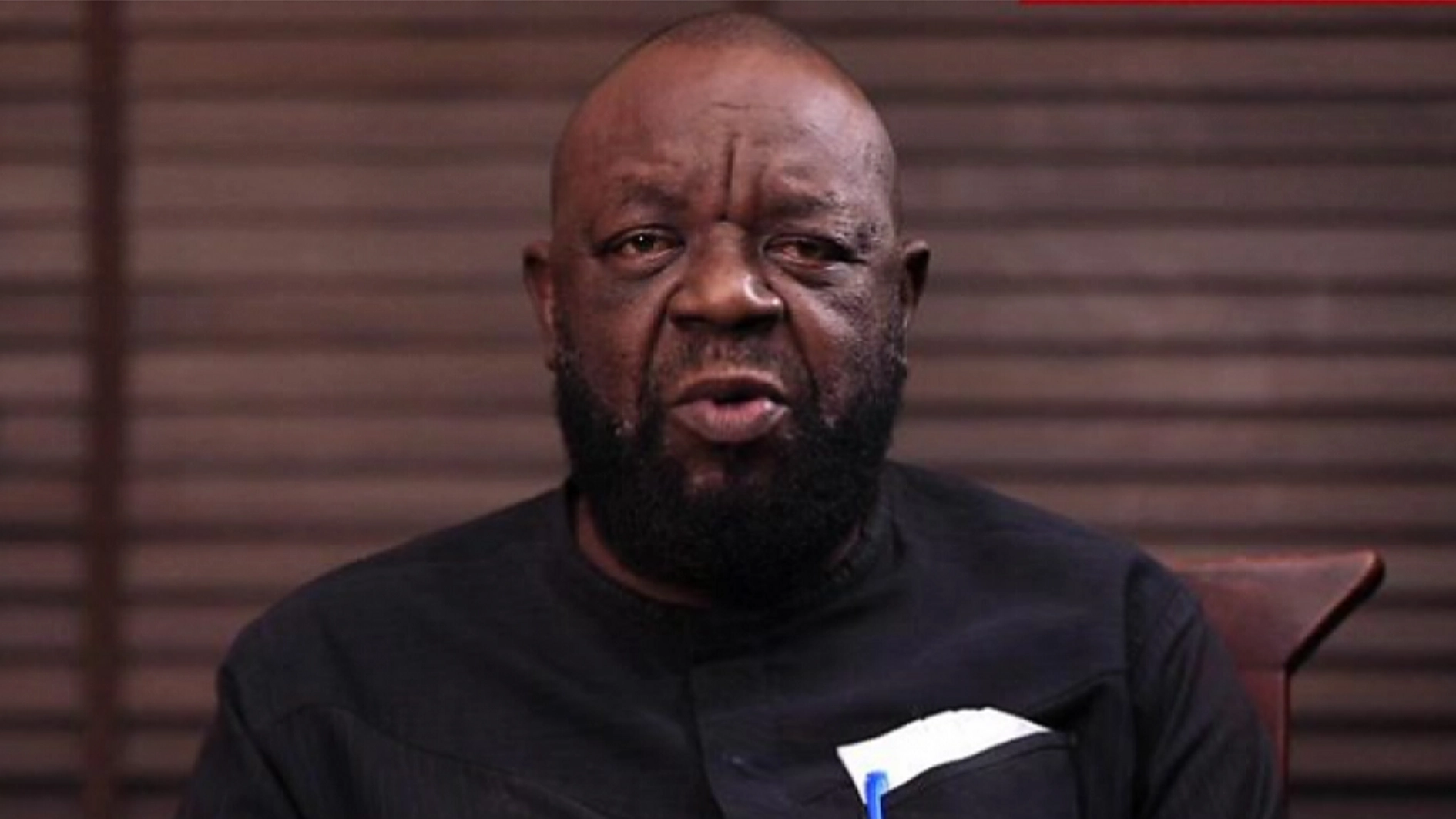
Aloy Ejimakor, Special Counsel to Indigenous People of Biafra (IPOB) leader Nnamdi Kanu, has called for the release of people he described as prisoners of conscience ahead of Nigeria’s 2027 general elections.
Ejimakor made the demand while arguing that the continued imprisonment of Kanu and other alleged IPOB members for their separatist position could further deepen political and social divisions in the country.
In a statement issued on Saturday, the lawyer said the Nigerian government should address the grievances driving calls for Biafra rather than relying on prosecution and imprisonment.
He maintained that advocating for self-determination, regardless of how controversial or forceful the expression may be, should not automatically amount to terrorism or treason.
According to Ejimakor, democratic societies should have room for political opinions that are unpopular or challenging to the existing order.
He warned that punishing people for expressing separatist aspirations could create greater resentment and make efforts at national reconciliation more difficult.
The lawyer also pointed to examples of countries and territories where demands for self-determination had resulted in political processes, including referendums.
Ejimakor argued that Nigeria should similarly consider political engagement and dialogue as a way of addressing the Biafra question.
He further criticised what he described as the criminalisation of political dissent, saying the government should focus on resolving the grievances behind the agitation.
The lawyer consequently urged the Federal Government to consider freeing what he called prisoners of conscience before the 2027 elections, arguing that dialogue and a political settlement would offer a more sustainable path to peace.
Health
“Cheap Alcohol Fuels Banditry”: NAFDAC Chief Stands Firm on Sachet Ban

Nigeria’s top food and drug regulator has linked the widespread availability of pocket-sized alcohol directly to violent crime and a mounting public health crisis.
Opinion
2027: Tinubu May Get Less Than 10% of Northern Votes — Ard
2027: Tinubu May Get Less Than 10% of Northern Votes — Ard
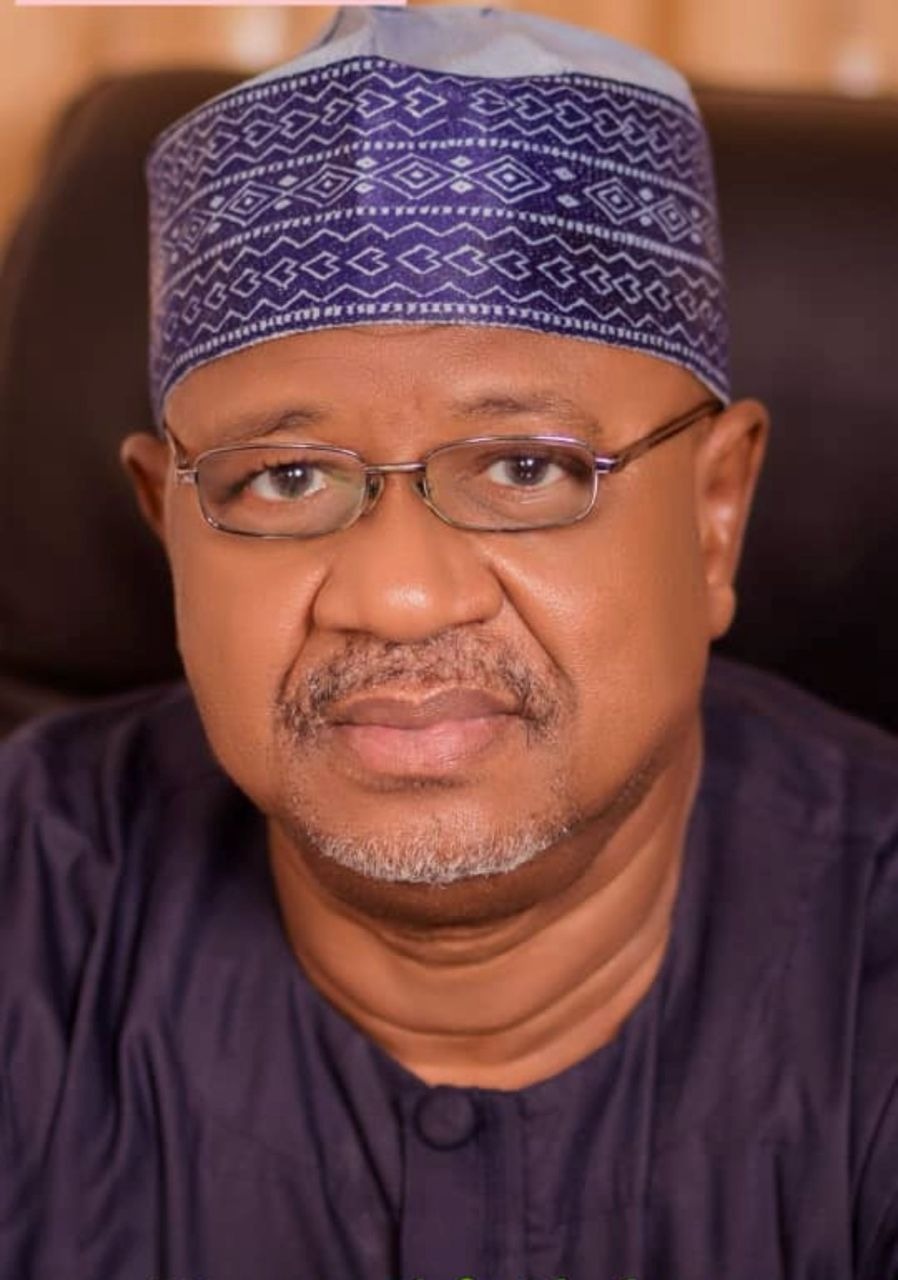
President Bola Tinubu could suffer a dramatic collapse in his Northern support in the 2027 presidential election, securing less than 10 per cent of votes from the region if the poll is free and credible, Convener of the League of Northern Democrats and key promoter of the All-Democratic Alliance (ADA), Dr Umar Ardo, has predicted.
Ardo made the prediction on Monday in an interview on Frontline, a current affairs programme on Eagle 102.5 FM, Ilese-Ijebu, Ogun State, arguing that the outcome would largely reflect how Northern voters assess the Tinubu administration’s performance.
He identified insecurity, worsening poverty, economic hardship and the rising cost of living as major issues likely to influence voting decisions in the region.
According to him, the persistent insecurity affecting communities, farmers, traders and businesses remains one of the administration’s biggest challenges.
READ ALSO:
- JUST IN: Tension in Benue as Suspected Thugs Attack Peter Obi’s Convoy, Block Access
- FIFA, CAF suspend NFF election as Nigeria football reforms face fresh review
- NNPC Disowns Cannabis-Laden Tanker, Threatens Legal Action Over Brand Misuse
“You can solve the issue of insecurity and insurgency in one year,” he said, insisting that the Federal Government could significantly reduce the crisis with the right strategy and sufficient political will.
Ardo also faulted the administration’s economic reforms, particularly the removal of fuel subsidy, questioning whether ordinary Nigerians had experienced corresponding benefits.
“Subsidy removal, is it a benefit?” he asked, arguing that the reforms had eroded purchasing power and made basic necessities increasingly unaffordable.
He said the impact had been particularly severe in Northern Nigeria, where a large proportion of the population is economically vulnerable.
“The economic reform has pushed from the state of poverty to destitution,” he said.
The political commentator also raised concerns about political representation under the Tinubu administration, arguing that the composition of government could shape public perception of its commitment to different regions.
Ardo said Northern voters should not be assumed to be permanently aligned with the voting pattern recorded in 2023, stressing that prevailing economic and security conditions would determine their choices in 2027.
“If a free, fair and credible election is conducted in Nigeria, Tinubu can’t get 10 percent of the Northern part,” he declared.
His prediction puts the spotlight on the opposition’s capacity to exploit any erosion of Tinubu’s Northern support, with former Vice President Atiku Abubakar and other opposition figures potentially positioned to benefit from any major electoral realignment.
2027: Tinubu May Get Less Than 10% of Northern Votes — Ard
-

 metro1 day ago
Woman disguises as Muslim woman in Niqab to steal in Ado-Ekiti market, video sparks outrage
-

 metro2 days ago
Police Arrest Woman Over Fake OPay Shutdown Notice
-

 Politics3 days ago
Amaechi will be caged politically, Wike shouldn’t bother about Ikwerre votes — Wihioka
-

 metro3 days ago
Residents Cry Out Over Poorly Constructed Entrance of Ademola Abiola Street, Demand Urgent Intervention
-
 Politics2 days ago
Remi Tinubu Appeals To South-East Voters, Says She Wants To ‘Enjoy Nigeria’ In Old Age
-
 Politics2 days ago
Breaking the Cycle of Collective Guilt: When a Ruling Party Voice Backs Peter Obi
-

 Business14 hours ago
Dangote: ₦525 Refinery Shares Could Rise to ₦10,000
-

 News1 day ago
AI on the Roads: LASTMA Turns to China to Fix Lagos Traffic