

Business
How to halt N1t electricity subsidy, CBN’s N1.5t interventions
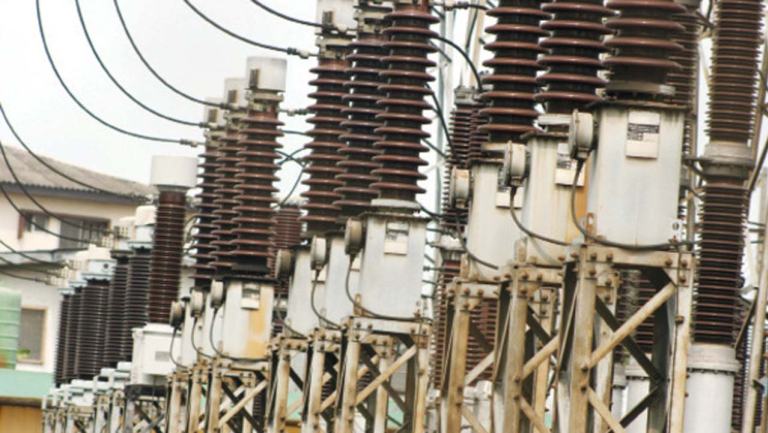
Electricity stakeholders in the country, yesterday, insisted that removal of subsidy in the power sector was feasible if the Federal Government and the Central Bank of Nigeria (CBN) could streamline interventions in the sector to mitigate the negative impact on the masses.
Last week, the Federal Government alerted that the gap between the Cost Reflective Tariff (CRT), and Allowable Tariff (AT) peaking at N28 per unit of electricity supplied to consumers, this year stands at about N1t.
Coming at a time that it is also considering subsidy removal on Premium Motor Spirit (PMS), the Special Adviser to President Muhammadu Buhari on Infrastructure, Ahmad Zakari, had disclosed at the 12th edition of PwC Nigeria’s Annual Power and Utilities Roundtable, that the nation needs to optimise the potential in the power sector through a cost-reflective tariff regime.
Since the sector was privatised in 2013, perpetual interventions through the CBN have served as lifelines to the sector. They include Power and Aviation Intervention Fund (PAIF), hovering at about N300b, Nigerian Electricity Market Stabilisation Facility (NEMSF), which is about N213b, an N140b Solar Connection Intervention Facility, an over N600b tariff shortfall intervention, as well as a recent N120b intervention designed for mass metering among others.
READ ALSO:
- UK suspends indefinitely visitor visa applications from Nigeria
- UNIABUJA probes 10 cases of sexual harassment
- Police arrest sergeant suspected of killing driver in Osogbo
In March 2017, the Federal Executive Council (FEC) approved an N701b CBN facility as Power Assurance Guarantee, just as the Federal Government, in 2019, also signed the release of another N600b to bridge the shortfall in the payment of monthly invoices by key stakeholders in the sector.
Fueled by tariff shortfall, receivable collection, technical, commercial and collection losses, financial liquidity in the power sector hovers around N4t as the apex bank, alongside the Federal Government has continued to initiate a series of interventions to douse tension and avert a collapse of the 2013 electricity privatisation exercise.
In about eight years, the CBN would have spent over N1.5t to keep the nation’s power sector afloat although the sector was privatised to survive by itself.
Although most stakeholders insisted that the interventions remained critical, especially in easing the liquidity crisis and attracting further interventions, they maintained that tweaking the interventions in manners that would ease further the masses’ burden and halt arbitrary billing of consumers was very important.
Renowned energy expert, Prof. Wunmi Iledare, noted that interventions by the CBN as a payable loan was understandable, even if it is a forgivable loan.
He insisted that the current structure of the electricity market in the country could mar the interventions, stressing that there must be a decentralised energy planning system.
According to him, while it is good that banks are targeting spending, subsidy may be a political expediency instrument, not economic efficiency hence “it should be disavowed. By the way, estimated billing now termed electronic billing is fraudulent! A quick way to bring subsidy to an end is metering and decentralisation of power management and services. Nearly everything centralised in the fashion of militarism has failed woefully, education, health, energy services road infrastructure, name it,” Iledare said.
READ ALSO:
- Sylvester’s torturers won’t escape justice, I’m glad he named them before dying –Father of late Dowen College pupil
- DSS arrests General Idris Dambazau
- NPA: ALL port operations to go digital by 2025
An energy expert, Eseosa Lloyd Onaghinon, stated that the energy sector must be rid of inefficiencies, which is usually passed on to consumers, adding that there are about 40 per cent inefficient losses between transmission and distribution.
“If we do not address such losses that occur, we might as well get into a trap where it’s an unending discussion of ‘subsidy’ even though it is continuous inefficiencies covered up as subsidies,” Onaghinon stated.
For energy lawyer, Osagie Agbonlahor, most of the woes experienced in the sector were responsible for the poor electricity situation in the country, adding that the development should be blamed on electricity operators, revenue collectors and the powers that be.
“How many army, police, air force, navy barracks in the country that their residents pay electricity bills at all? How many government ministries, army, air force, navy offices pay for the electricity that they consume? Who has ever dared to drive to the barracks and disconnect their source of public power supply the way they do to ordinary Nigerians? For how long has this been going on in this country? If you take away these huge leakages, you will see that the ordinary Nigerians have been sustaining and subsidising the electricity consumption of these people.
Agbonlahor said that the government broached the idea of deducting the huge outstanding electricity bill consumed in barracks and government offices under President Olusegun Obasanjo.
He noted that “until we start to do the right things, we are just going to be beating about the bush.”
He asked the government to do a forensic audit of the N1t subsidy to check where the so-called subsidy is coming from.
The Guardian had earlier reported that the failure of federal and state governments, as well as their ministries and agencies to pay over N100b outstanding electricity bills is currently worsening the liquidity crisis in the sector.
The situation has also reportedly led to distribution companies hounding private electricity consumers who pay more through estimated bills and higher tariffs, rather than recover outstanding debts from government agencies.
Guardian




Auto
FRSC Boss: Tinubu’s CNG, EV Drive Creating Jobs, Attracting Investment
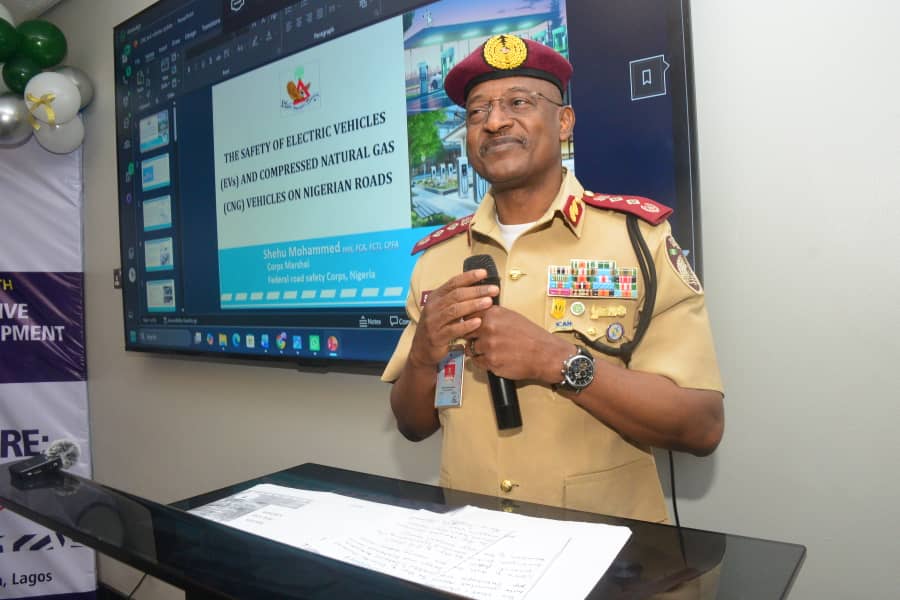
FRSC Boss: Tinubu’s CNG, EV Drive Creating Jobs, Attracting Investment
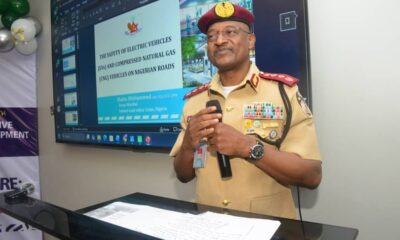
President Bola Tinubu’s ambitious transition to Compressed Natural Gas (CNG) and Electric Vehicles (EVs) is already attracting fresh investments, creating new employment opportunities and laying the foundation for a cleaner, safer and more sustainable transport system, the Corps Marshal of the Federal Road Safety Corps (FRSC), Shehu Mohammed, has said.
Speaking at the 2026 Nigeria Auto Industry Summit (NAISU) organised by the Nigeria Auto Journalists Association (NAJA), Mohammed described the Presidential CNG and EV Initiative as a game-changing policy capable of reshaping Nigeria’s automotive and transportation landscape while stimulating industrial growth and youth employment.
The FRSC boss said the initiative aligns with the United Nations Sustainable Development Goals (SDGs), particularly those promoting climate action and sustainable transportation, while commending President Bola Tinubu for the bold reforms and for assigning the corps a strategic role in the programme’s implementation.
“This initiative has brought in so many investments. We have assembly plants producing electric vehicles and CNG vehicles, companies manufacturing CNG cylinders and conversion kits, and new technology that is creating opportunities for our youths,” he said.
According to him, the initiative is expected to generate thousands of jobs while positioning Nigeria as a leading destination for green mobility investments in Africa.
“Really, it is a massive investment coming into Nigeria, and it is producing massive jobs for the unemployment challenge we have,” he added.
Mohammed also linked the administration’s transport agenda to ongoing infrastructure projects, including the Lagos-Calabar Coastal Highway and the Sokoto-Badagry Super Highway, noting that the projects would improve connectivity and support a safer, more efficient transport network.
READ ALSO:
- Lanre Shittu Motors Leads Drive to Steer Lagos Students Away from Crime, Donates books to public Schools
- UNIOSUN ranks third among state universities in latest Webometrics ranking
- State police: Shari’ah Council urges caution, wider consultations
He expressed confidence that the reforms would help Nigeria achieve the United Nations target of providing “a safe, accessible, affordable, reliable and sustainable transport system for all Nigerians by 2030.”
On road safety, the Corps Marshal stressed that reducing road crashes and fatalities requires collective action rather than relying solely on the FRSC.
“Road safety should not be left to the FRSC alone. It is a collective responsibility involving government, communities and every Nigerian,” he said.
While noting that the corps has sustained public enlightenment campaigns for over three decades, Mohammed said greater participation from state governments, local councils, traditional institutions and community leaders is essential to changing road users’ behaviour.
He disclosed that the FRSC has expanded its awareness campaign beyond motor parks to grassroots town hall meetings, enabling the agency to engage drivers, passengers and community stakeholders more directly.
“When you see a bad driving culture, stop the person and caution him. Let him be embarrassed. Road safety is everyone’s responsibility,” he said.
The Corps Marshal expressed concern over persistent traffic violations such as speeding, overloading and the dangerous practice of conveying passengers alongside goods and livestock, warning that such behaviours remain major causes of fatal crashes.
He also urged passengers to challenge reckless drivers, particularly those who exceed speed limits, saying public intervention could save lives.
Mohammed commended NAJA and the media for their sustained support for the FRSC’s road safety campaigns and called for deeper collaboration with journalists to achieve the global target of cutting road traffic crashes, injuries and fatalities by 50 per cent before 2030.
Speaking on the legacy he hopes to leave, the FRSC boss said his priority is to build a technology-driven, people-focused organisation anchored on professionalism, collaboration and excellent service delivery.
“The legacy I want to leave is partnership, collaboration and bringing out the best in FRSC personnel to serve Nigerians and further enhance the image of the corps,” he said.
FRSC Boss: Tinubu’s CNG, EV Drive Creating Jobs, Attracting Investment
Auto
Lanre Shittu Motors Leads Drive to Steer Lagos Students Away from Crime, Donates books to public Schools
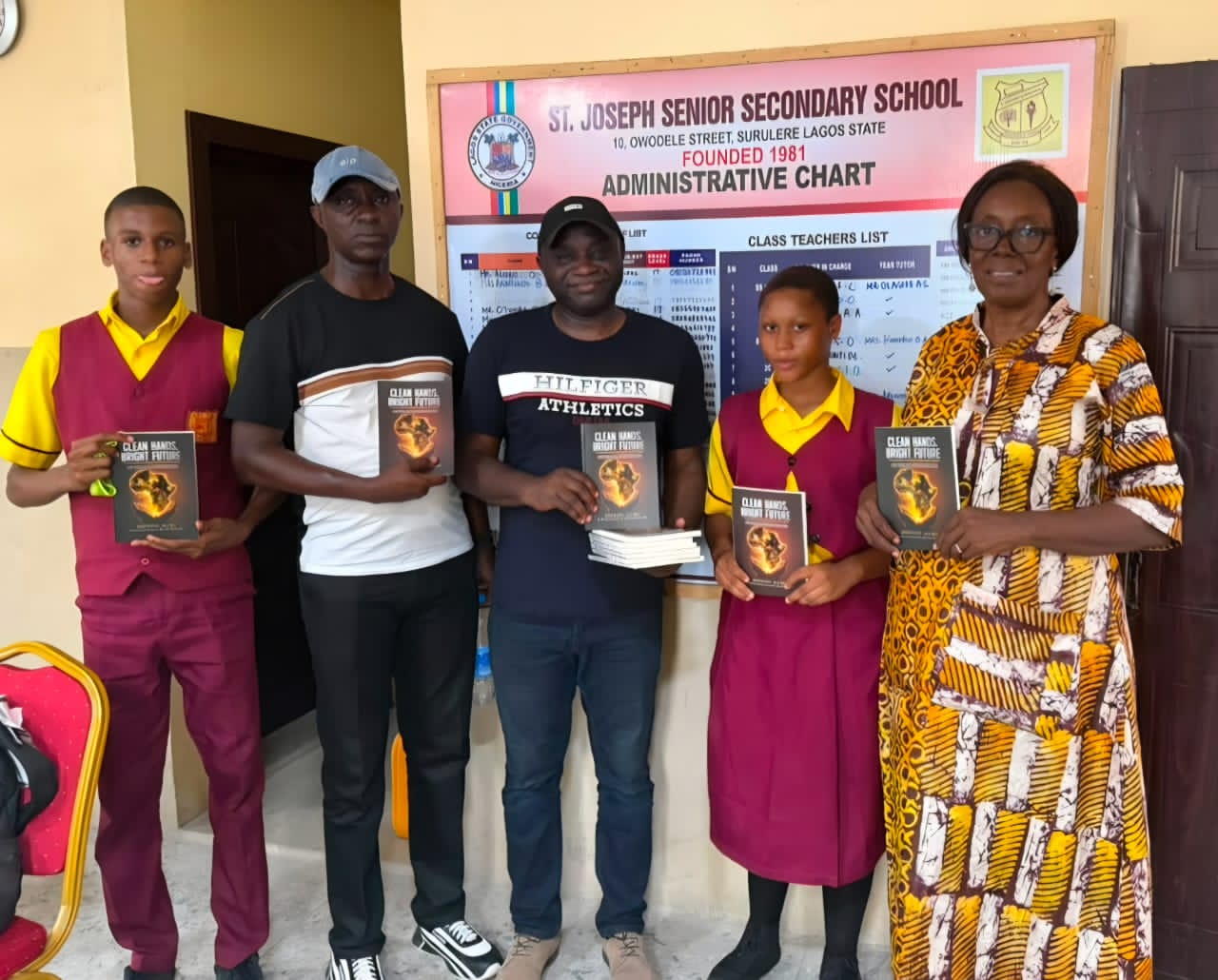
Lanre Shittu Motors Leads Drive to Steer Lagos Students Away from Crime, Donates books to public Schools
Lanre Shittu Motors is expanding its investment in youth development beyond skills acquisition, launching a major education campaign aimed at steering thousands of Lagos secondary school students away from financial crime through value-based learning and character development.
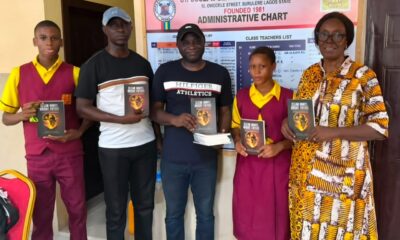
In partnership with the author of Clean Hands, Bright Future: A Youth Guide to Avoiding Financial Crime in Africa, the foremost automotive company has begun distributing the book to 200 public secondary schools across Lagos State, with more than 150 schools already reached in the first phase of the initiative.
The campaign, which began at Kuramo Senior College and Victoria Island Senior Secondary School, seeks to equip students with a clear understanding of the dangers of fraud, cybercrime, identity theft, examination malpractice and other financial crimes, while promoting integrity, hard work, ethical leadership and responsible citizenship.
Author of the book, Mr. Adedayo Aluko, said the project was inspired by the alarming rise in financial crime among young people and the need to intervene early through education.
“The rate of financial crime among youths is becoming increasingly alarming. We believe education is one of the most effective tools to prevent crime. The message of the book is simple: crime does not pay, and with clean hands, every young person can build a brighter future,” Aluko said.
He explained that the initiative goes beyond book distribution, with plans to return to beneficiary schools for interactive enlightenment sessions and career talks to reinforce the message of integrity.
According to him, the book simplifies over 100 forms of financial crimes, helping students understand offences that many young people unknowingly become involved in. Rich illustrations and practical examples were deliberately included to engage students and make the lessons memorable.
Aluko commended Lanre Shittu Motors for supporting the project, describing the Managing Director of the company, Mr Taiwo Shittu, as a long-standing advocate of youth empowerment and education.
READ ALSO:
- UNIOSUN ranks third among state universities in latest Webometrics ranking
- State police: Shari’ah Council urges caution, wider consultations
“Mr. Taiwo Shittu believes there is no shortcut to success. During the flag-off, he personally handed copies of the book to students and encouraged them to embrace hard work, education and skill acquisition as the true pathways to success.
Speaking on the initiative, the LSM MD, Mr. Taiwo Shittu, said the company’s decision to sponsor the distribution reflects its belief that preventing crime begins with shaping values at an early age.
“Young people are the future of our nation. By investing in character development and educating students about the consequences of financial crime, we are helping to build responsible citizens who will contribute positively to society.
“At Lanre Shittu Motors, we believe integrity, education and hard work remain the surest foundations for lasting success,” he said.
Shittu noted that the company’s strong culture of corporate social responsibility was inherited from its founder and his father, the late Alhaji Rasak Olanrewaju Shittu.
 He said the late automotive icon instilled in his children and employees the enduring values of compassion, community service and giving back to society, a legacy that continues to shape Lanre Shittu Motors’ investment in education, youth development and other impactful social initiatives.
Published in May 2026 and endorsed by the Chartered Institute of Bankers of Nigeria (CIBN), Clean Hands, Bright Future, has been described as a practical guide for young people navigating increasing social and economic pressures.
The ongoing distribution programme underscores Lanre Shittu Motors’ commitment to corporate social responsibility and its determination to inspire a generation that chooses integrity over shortcuts and honest enterprise over criminality.
Lanre Shittu Motors has over the years maintained a strong record of investing in youth development through skills acquisition and capacity building initiatives.
The company has consistently provided opportunities for young Nigerians to acquire technical and vocational skills in automotive engineering, vehicle maintenance and related fields through internship, apprenticeship and industry training programmes.
It has also supported educational and youth empowerment initiatives aimed at preparing young people for productive careers, reinforcing its belief that equipping youths with employable skills remains one of the most effective ways to reduce unemployment, discourage crime and promote sustainable national development.
Lanre Shittu Motors Leads Drive to Steer Lagos Students Away from Crime, Donates books to public Schools
Auto
Policy Bottlenecks Threaten Nigeria’s Clean Mobility Drive, LCCI Warns
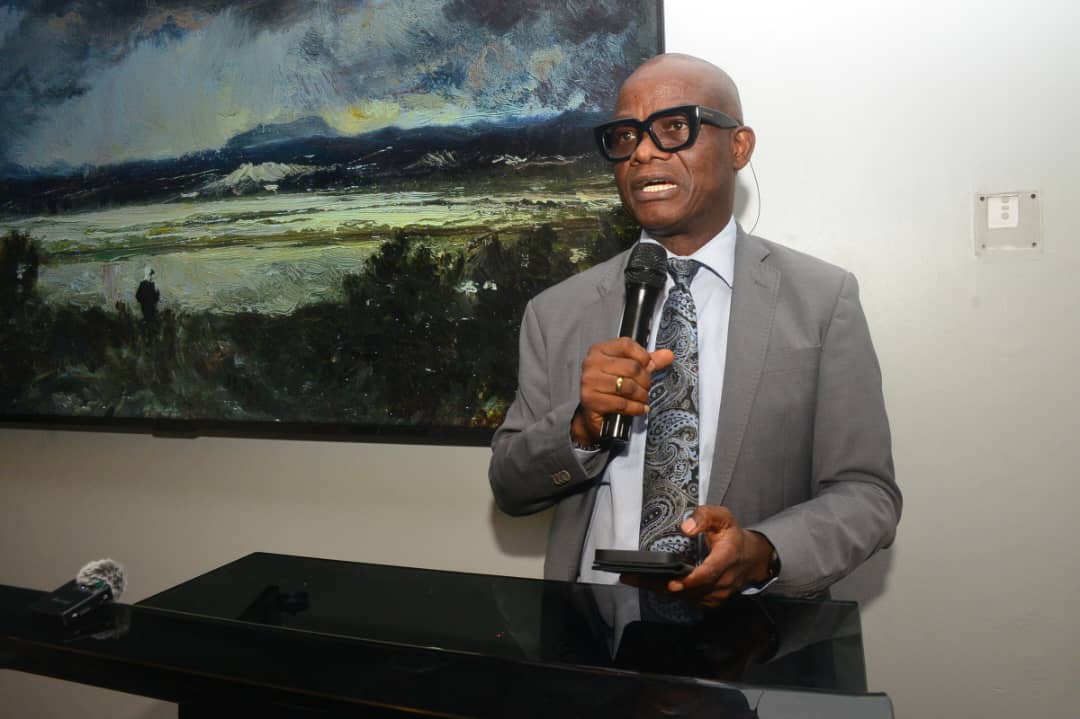
Policy Bottlenecks Threaten Nigeria’s Clean Mobility Drive, LCCI Warns
The Chairman of the Auto and Allied Sector Group of the Lagos Chamber of Commerce and Industry (LCCI), Dr. Femi Eguahide, has warned that policy inconsistencies, regulatory bottlenecks and weak coordination between the public and private sectors could derail Nigeria’s clean mobility ambitions, urging the Federal Government to deepen collaboration with industry stakeholders to accelerate the transition to Compressed Natural Gas (CNG) and Electric Vehicles (EVs).
Speaking at the 3rd Nigeria Auto Industry Summit in Lagos on Thursday, Eguahide said the success of the Federal Government’s clean mobility agenda would depend on sustained stakeholder collaboration, policy consistency and the removal of operational challenges slowing investment and implementation.
The summit, organised by the Nigeria Auto Journalists Association (NAJA) under the theme, “Nigeria’s Clean Mobility Future: The EV and CNG Journey Under the Bola Tinubu Administration,” brought together policymakers, regulators, automobile manufacturers, financiers, transport operators, researchers, safety agencies and development partners to chart a roadmap for accelerating Nigeria’s transition to cleaner transportation.
Eguahide acknowledged the Federal Government’s commitment to alternative energy solutions through the Presidential Initiative on Compressed Natural Gas and Electric Vehicles (Pi-CNG & EV), but stressed that translating policy into tangible results would require stronger coordination between government institutions and private investors.
According to him, the automotive industry remains a critical driver of industrialisation, job creation and economic growth, making it imperative for government agencies to work closely with manufacturers, assemblers, financiers and technology providers to create a more predictable and investment-friendly operating environment.
READ ALSO:
- Policy Bottlenecks Threaten Nigeria’s Clean Mobility Drive, LCCI Warns
- Troops arrest three suspects over killing of soldier in Imo ambush, recover stolen rifles
- Kidnapped Lt. Col. Ofor Amobi, civilian rescued after 10-day military operation in Enugu
He said effective policy implementation must be backed by continuous stakeholder engagement capable of resolving challenges surrounding vehicle conversion, local manufacturing, infrastructure development, financing and technology deployment.
Eguahide maintained that Nigeria possesses enormous potential to build a globally competitive clean mobility ecosystem, but cautioned that fragmented policies and institutional inefficiencies could slow the country’s progress if left unresolved.
He therefore urged government agencies to deepen engagement with the organised private sector to develop practical solutions that would accelerate the rollout of CNG refuelling infrastructure, EV charging networks and local automotive production.
Earlier, the Federal Government reaffirmed its commitment to expanding Nigeria’s clean mobility ecosystem through increased investment in infrastructure, local manufacturing and strategic partnerships.
Speaking on behalf of the Executive Chairman and Chief Executive Officer of the Presidential Initiative on Compressed Natural Gas and Electric Vehicles (Pi-CNG & EV), Barrister Ismaeel Ahmed, the Initiative’s Chief Compliance Officer, Engr. Zayyanu Tamberi Yabo, said the programme had evolved into a key pillar of President Bola Tinubu’s transport and energy reform agenda.
According to Ahmed, the Presidential Initiative was established not merely to promote alternative fuels but to build an integrated ecosystem covering infrastructure development, investment, vehicle conversion, local manufacturing, technical capacity building and consumer confidence.
“Our approach from the beginning has been to build the foundations of a sustainable industry rather than pursue isolated interventions,” he said.
He disclosed that certified CNG conversion centres had expanded significantly across the country over the past two years, while new refuelling stations were being developed through public and private sector investments.
Ahmed added that vehicle conversions continue to rise as commercial transport operators and private motorists increasingly embrace CNG because of its lower operating costs.
He also highlighted partnerships with financial institutions, energy companies and automobile manufacturers aimed at improving access to financing and accelerating the adoption of clean mobility technologies.
Despite the progress, he identified infrastructure expansion, consumer financing, local manufacturing capacity, technical training, research, innovation and standardisation as priority areas requiring sustained attention.
In his welcome address, NAJA Chairman Theodore Opara described the summit as a strategic platform for shaping the future of Nigeria’s automotive industry.
He said reforms introduced by the Tinubu administration had created fresh momentum for CNG, electric vehicles and local automotive manufacturing, adding that stronger collaboration among government, industry players and the media would be critical to sustaining the gains.
Also speaking, the Director-General of the Standards Organisation of Nigeria (SON), Dr. Ifeanyi Chukwunonso Okeke, represented by Engr. Olalekan Omoniyi, said strict compliance with internationally recognised standards would determine the success of Nigeria’s transition to EVs and CNG-powered transportation.
He disclosed that SON had developed more than 80 Nigerian Industrial Standards for CNG vehicles and equipment, as well as 87 additional standards and the National Nigeria Guideline (NNG 1214:2024) for CNG vehicle conversions.
The SON boss warned against the proliferation of uncertified conversion centres and substandard equipment, urging mandatory certification for imported and locally assembled EVs, CNG vehicles, conversion kits and charging infrastructure.
Policy Bottlenecks Threaten Nigeria’s Clean Mobility Drive, LCCI Warns
-
 News2 days ago
Oloyede clears air on JAMB’s ₦36m ‘snake swallowed money’ controversy
-

 News2 days ago
475 Police Officers Recalled After Controversial Retirement, Ordered for Mandatory Induction
-

 metro2 days ago
MURIC Hails Oloyede as ‘Game Changer,’ Says He Proved Muslims Can Excel in Public Office
-

 Sports2 days ago
Nigeria Shines in Commonwealth Games, Tops Africa with 10 Gold Medals
-
 Auto2 days ago
Lanre Shittu Motors Leads Drive to Steer Lagos Students Away from Crime, Donates books to public Schools
-
 Education2 days ago
UNIOSUN ranks third among state universities in latest Webometrics ranking
-

 metro2 days ago
DSS, Vigilantes Ambush, Kill Notorious Bandit Kingpin Idi Abasu Aiki, Over 60 Fighters in Katsina
-
 Auto2 days ago
FRSC Boss: Tinubu’s CNG, EV Drive Creating Jobs, Attracting Investment