

Politics
Electoral Act: Respite For Malami, Amaechi, Others As Court Nullifies Contentious Clause
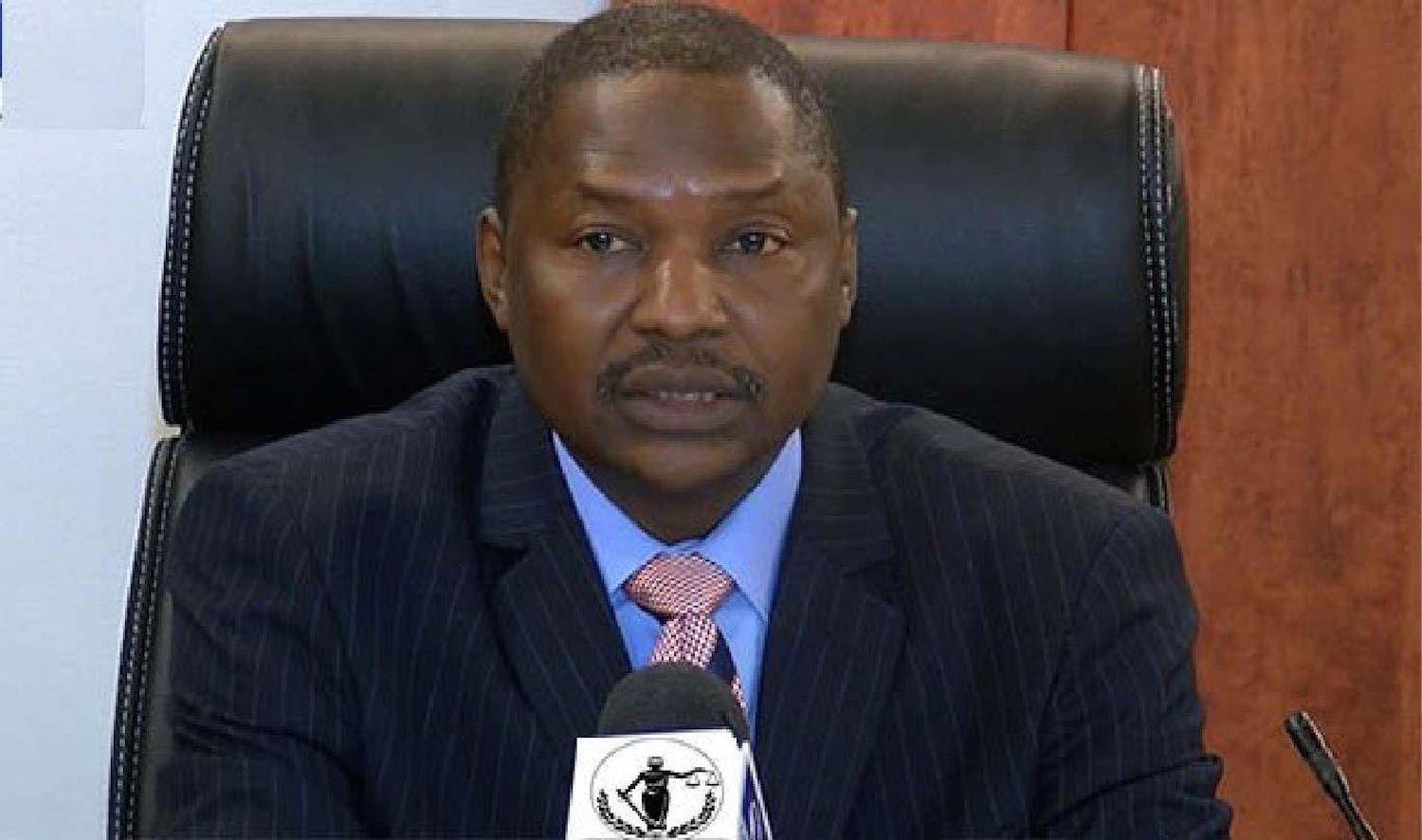
Respite came the way of Rotimi Amaechi, Abubakar Malami, Chris Ngige and other appointees who are nursing ambition in 2023 as a Federal High Court on Friday nullified section 84 (12) of the amended Electoral Act, which requires them to resign before participating in primaries, convention and other electoral activities.
Buhari had sought the amendment of the act to delete section 84(12), which he said contravened the rights of political officeholders to vote or be voted for in political party conventions and congresses. But the parliament rejected the president’s request.
In line with the section, many state governors have asked their appointees seeking to contest for election to resign.
Section 84(12) states, “No political appointee at any level shall be a voting delegate or be voted for at the convention or congress of any political party for the nomination of black candidates for any election.”
While Amaechi and Ngige are said to be eyeing the presidency, Malami, who hails from Kebbi State, wants to contest for the governorship seat of his home state. Head of agencies who are set to contest for elections are also going to be affected by this development.
Court nullifies clause
The Federal High Court sitting in Umuahia, on Friday nullified Section 84(12), saying it was a violation of the provisions of the constitution.
The court, in a judgement delivered by Justice Evelyn Anyadike, held that the section was unconstitutional, invalid, illegal, null, void and of no effect whatsoever, saying it ought to have been struck out.
Mr Nduka Edede, a lawyer and chieftain of the Action Alliance (AA) party had approached the court in the suit that had the Attorney General of the Federation as the defendant
The plaintiff had asked the court to determine whether Section 84(12), when read together with Sections 66(1)(f) 107(1)(f)(137(1)(f) and 182(1)(f) of the 1999 Constitution was not inconsistent.
The court agreed with the submissions and ordered that Section 84(12) of the Electoral Act was inconsistent with the rights of Nigerian citizens.
READ ALSO:
- ASUU kicks as NASS pushes for establishment of 186 varsities
- Protest as police open fire on Oyo corps member’s car, flee
- Ohanaeze Ndigbo president to Obiano: Stop your wife from going into politics
Anyadike held that the said sections already stipulated that appointees of government seeking to contest elections were only to resign, at least 30 days to the date of the election.
She held that any other law that mandated such appointees to resign or leave the office at any time before that was unconstitutional, invalid, illegal null and void, “to the extent of its inconsistency to the clear provisions of the constitution”.
The judge thereafter ordered the Attorney General of the Federation to forthwith delete the said subsection 12 of Section 84 from the body of the Electoral Act, 2022.
The counsel to the plaintiff, Emeka Ozoani, a Senior Advocate of Nigeria (SAN), said that by this judgement, the National Assembly was not required to further make any amendment to the section.
The defense counsel, Mr Chris Nevo, hailed the judgement, saying the court had put to rest, the section that had been in conflict with provisions of the constitution.
INEC reacts
Reacting to the development, Mr Rotimi Lawrence Oyekanmi, the Chief Press Secretary to the chairman of the Independent National Electoral Commission (INEC), Professor Mahmood Yakubu, told Daily Trust Saturday that it is within the ambit of the judiciary to adjudicate on matters brought before competent courts of law.
“When such cases are tried and judgements are delivered, compliance becomes compulsory for all parties until a higher court decides otherwise.
“The INEC did not institute the case you referred to, nor are we a party to it, therefore, we do not have any opinion on the ruling,” Oyekanmi said.
We’re not aware of suit – N/Assembly
The Senate spokesman, Senator Ajibola Basiru, said he was not aware of the suit and whether the National Assembly was a party or was served and represented.
Also, the spokesman of the House of Representatives, Benjamin Kalu, said they were not aware of the judgement.
Court has powers to expunge clause – Lawyers
Paul Ananaba (SAN) said that according to section 6 of the Nigerian constitution, the court has the powers to nullify any section of an act that it deems unconstitutional
On the effects of the order on the upcoming 2023 general elections, he said it was for the INEC to study and give its guidelines, and that the court ruled based on the circumstances and not really about the timing of the election.
Also speaking, Abdulrasheed Abdulkareem (SAN) said the Federal High Court had powers to set aside any act or law.
He added that the latest decision would not affect the conduct of the 2023 elections as “that provision is only saying if you want to contest, resign. How does that one aspect affect the Electoral Act?”
Similarly, a former attorney-general of Ekiti State, Dayo Akinlaja (SAN) said the court had the powers to make pronouncements invalidating any provision that is found to be unconstitutional, adding that “it has always been the position of the law.”
“The practice is that once a court has struck down a provision of the law, that provision becomes inoperative.
“Of course, it is a decision of the High Court, anybody who is aggrieved can choose to go on appeal,” he said.
Print new electoral law – AGF
The Attorney-General of the Federation and Minister of Justice, Abubakar Malami (SAN), said his office would give effect to the decision of the court and would be recognised by the government printers.
In a statement signed by his media aide, Dr Umar Gwandu, the AGF noted, “The Act will be gazetted factoring the effect of the judgement into consideration and deleting the constitutionally offensive provision accordingly.
“The provision of Section 84(12) of the Electoral Act 2022 is not part of our law and will be so treated accordingly.
“This is in line with the dictates of Chapter 7, Part 4, Section 287 of the 1999 Constitution of the Federal Republic of Nigeria (as amended) on enforcement of decisions that make it a point of duty and obligation on all authorities and persons to have the judgement of the Federal High Court, among others, to be enforced.”
DAILY TRUST




Politics
APC Wins Four of Five By-Elections as APM Takes Bauchi Seat
APC Wins Four of Five By-Elections as APM Takes Bauchi Seat
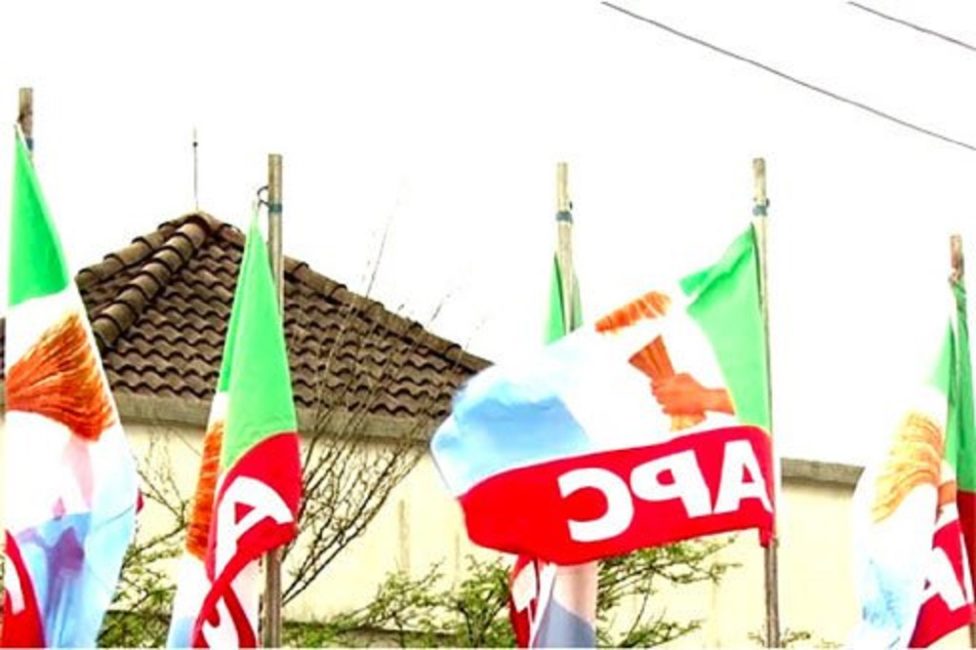
The All Progressives Congress (APC) won four of the five legislative by-elections conducted across Gombe, Kano, Bauchi and Delta states, while the Allied Peoples Movement (APM) secured the remaining seat in Bauchi.
The elections, conducted by the Independent National Electoral Commission (INEC) on Saturday, September 19, 2026, were held to fill one vacant federal constituency seat and four vacant state assembly seats.
The APC victories came in the Gombe/Kwami/Funakaye Federal Constituency of Gombe State, Dawakin Kudu State Constituency in Kano, Udu State Constituency in Delta and Disina State Constituency in Bauchi.
The APM won the Sakwa State Constituency in Zaki Local Government Area of Bauchi State.
In Gombe, APC candidate Kallamu Usman MaiJama’a won the Gombe/Kwami/Funakaye Federal Constituency election with 41,121 votes. The Labour Party candidate polled 3,553 votes, while the APM candidate received 872 votes.
In Kano, APC candidate Husseini Datti emerged winner of the Dawakin Kudu State Constituency election with 22,890 votes. The Peoples Redemption Party scored 270 votes, while the Peoples Democratic Party recorded 108 votes. Other parties recorded lower figures.
In Delta State, APC candidate Okolosi Ator won the Udu State Constituency seat with 8,724 votes, while the PDP candidate polled 214 votes.
The APC also secured the Disina State Constituency seat in Bauchi, where its candidate, Yakubu Ali, obtained 5,846 votes. The APM candidate scored 5,225 votes, while the PRP candidate received 3,701 votes.
The second Bauchi contest produced a different result, with Adamu Yakubu of the APM winning the Sakwa State Constituency seat with 8,515 votes. The APC polled 3,771 votes, the PDP 2,076, and the PRP 727.
The results followed INEC’s conduct of the five polls across the four states after the seats became vacant through different circumstances, including death, resignation and defection.
READ ALSO:
- Atiku Offers Scholarship to Viral Niger Teen Miner After 37 Miners’ Deaths
- NDLEA Seizes N3.4bn Drugs, Arrests Fake Police Officer in Nationwide Crackdown
- Oyo: Police Arrest Serving Air Force Personnel Over Alleged Robbery, Abduction
The Gombe/Kwami/Funakaye federal seat became vacant following the death of the former lawmaker, Yaya Bauchi Tongo, in June 2026. In Bauchi, the Sakwa seat became vacant following the death of its former occupant, while the Disina seat became vacant after the lawmaker resigned to pursue another political position.
The Udu seat in Delta became vacant following the defection of its former occupant, Collins Egbetamah, from the APC to the Nigeria Democratic Congress. The Dawakin Kudu seat in Kano became vacant after its former occupant, Rabiu Shuaibu, left the state assembly to contest the Dawakin Kudu/Warawa Federal Constituency election.
Ahead of the polls, INEC deployed sensitive materials and electoral personnel to the affected constituencies, while security agencies announced deployments aimed at maintaining order before, during and after voting.
INEC Chairman, Professor Joash Amupitan, monitored the elections from the commission’s National Situation Room in Abuja and described the exercise as an important operational test ahead of the 2027 general elections.
Amupitan said the five by-elections would provide the commission with lessons on logistics, technological deployment and the readiness of field personnel.
He stressed that bye-elections should not be treated as routine exercises because each poll provides an opportunity for INEC to assess and improve its electoral processes ahead of larger elections.
Reports from the four states indicated that voting was generally peaceful, although some operational challenges were recorded.
In parts of Gombe and Kano, reports indicated relatively low voter turnout, while some Bimodal Voter Accreditation System (BVAS) challenges were reported during the Delta election.
The Bauchi election also recorded a security incident, with the state police command reporting the arrest of 47 suspects in parts of Shira Local Government Area.
According to the police, the suspects allegedly posed as members of a state-owned security outfit and were found in possession of items including guns, cutlasses and sticks. The arrests were made in connection with the election security operation.
The results have also drawn attention because of their timing ahead of the 2027 general elections, although the outcome of five constituency-level by-elections does not by itself determine the outcome of the wider 2027 elections.
APC National Chairman, Professor Nentawe Yilwatda, congratulated the party’s candidates who won the four seats and commended APC members, campaign teams and party leaders involved in the contests.
Yilwatda also acknowledged voters, INEC, security agencies and other stakeholders who participated in the elections, while urging the successful candidates to remain committed to their constituents.
President Bola Ahmed Tinubu also congratulated the successful candidates. He urged the newly elected lawmakers to justify the confidence placed in them by their constituents and called on unsuccessful candidates to accept the results in good faith.
The INEC election results portal continued to receive result sheets from the five constituencies after the polls, providing an electronic record of results uploaded from polling units.
The commission is scheduled to conduct the next nationwide presidential and National Assembly elections on January 16, 2027, followed by governorship and state House of Assembly elections in participating states on February 6, 2027.
The September 19 by-elections therefore provide INEC and participating political parties with an opportunity to review electoral logistics, voter participation, technology deployment and election security before the larger 2027 electoral cycle.
APC Wins Four of Five By-Elections as APM Takes Bauchi Seat
Politics
2027: NDC Predicts Wider Obi Victory Over Tinubu in Lagos
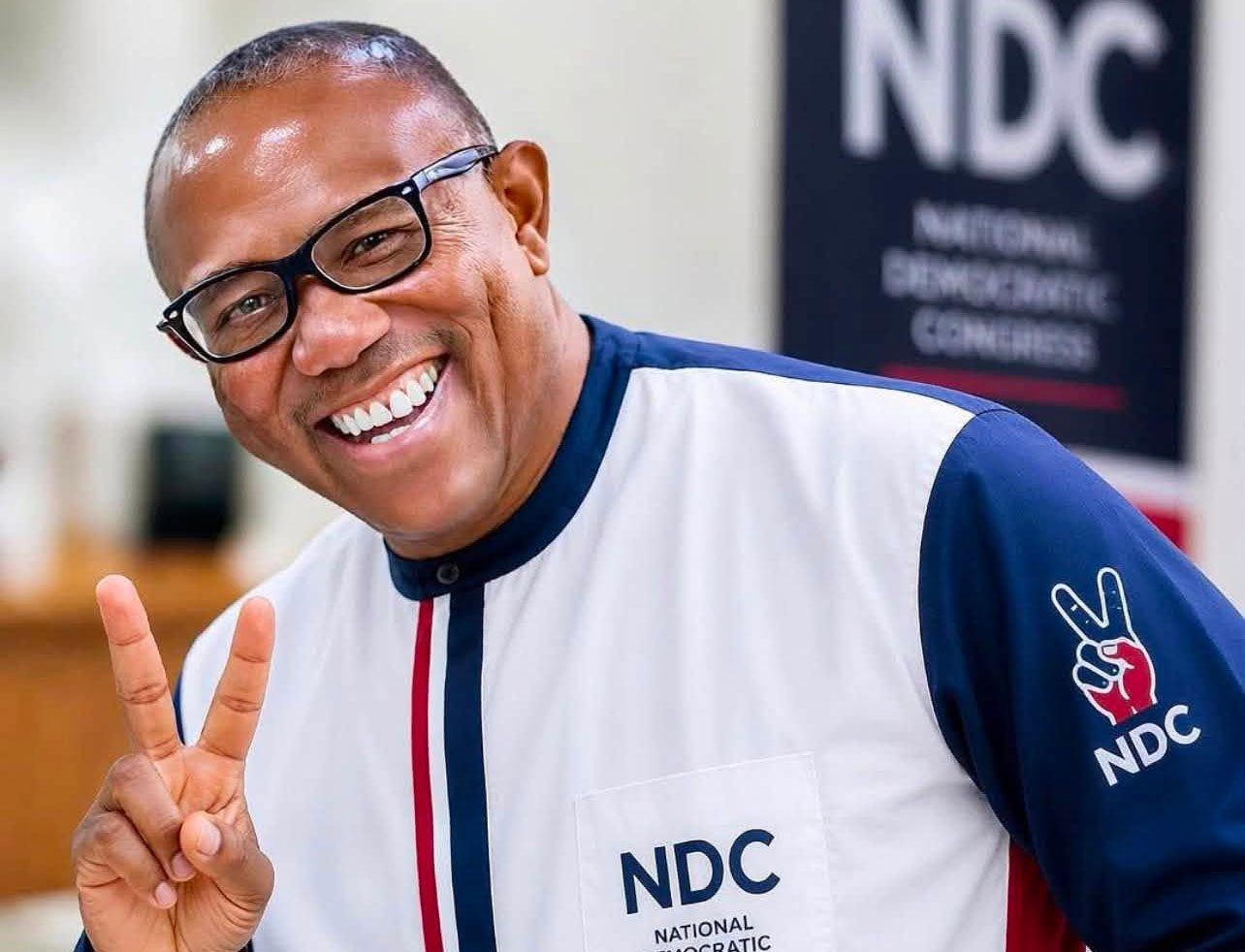
2027: NDC Predicts Wider Obi Victory Over Tinubu in Lagos
The Nigeria Democratic Congress (NDC) has expressed confidence that its presidential candidate, Peter Obi, will defeat President Bola Ahmed Tinubu in Lagos State in the 2027 presidential election, predicting that the former Anambra State governor will win by a wider margin than he did in 2023.
The party’s National Publicity Secretary, Osa Director, said Obi’s victory over Tinubu in Lagos during the 2023 presidential election was not accidental, describing it as a reflection of the political mood in the state.
Director said the NDC expected Obi to build on his previous performance if the 2027 election was conducted under conditions the party considers free and fair.
He also challenged the All Progressives Congress (APC) and its supporters to allow voters to determine the outcome of the election without intimidation, violence, inducement or other forms of electoral malpractice.
According to him, the NDC has studied the lessons of the 2023 election and is preparing to strengthen its structures and protect its votes across the country.
Director said the party was prepared to confront any challenges that could arise during the election, including alleged attempts to intimidate voters or disrupt the electoral process.
Another NDC candidate in Lagos, Ladipo Johnson, also expressed confidence in Obi’s prospects in the state, attributing the expected improvement to what he described as dissatisfaction with the Tinubu administration.
Johnson said Obi would win Lagos again and by a wider margin, adding that the NDC had become stronger following the realignment of opposition politicians and political groups ahead of the 2027 election.
READ ALSO:
- Olawepo-Hashim: My Political Ideology Differs From Obi, Atiku
- Ortom and His 23 Cars’ ‘Bonus’, by Dele Sobowale
- Abuja Demand Rises as Jetour Brings X70 Plus Experience to FCT
He also raised concerns about possible voter intimidation, harassment and vote buying, urging Nigerians to protect their votes and ensure that electoral choices are respected.
However, the claims by Director and Johnson about Obi’s expected performance in Lagos are political predictions by NDC officials and do not constitute an established election outcome.
The 2023 presidential election remains the latest completed presidential contest in Lagos. Obi won the state with 582,454 votes, narrowly ahead of Tinubu, who polled 572,606 votes, according to results declared by the Independent National Electoral Commission (INEC).
Obi won nine of Lagos State’s 20 local government areas, including Ajeromi-Ifelodun, Amuwo-Odofin, Eti-Osa, Ikeja, Kosofe, Oshodi-Isolo, Somolu, Ojo and Alimosho.
Tinubu won the remaining 11 local government areas: Agege, Apapa, Badagry, Epe, Ibeju-Lekki, Ifako-Ijaiye, Ikorodu, Lagos Island, Lagos Mainland, Mushin and Surulere.
The result made Lagos one of the closely watched states in the 2023 presidential contest, particularly because Tinubu had previously served as governor of the state and maintained a significant political structure there.
The political landscape has since changed considerably ahead of the 2027 election.
INEC has published its final list of presidential candidates, with 18 candidates cleared to contest the January 16, 2027 presidential election.
Tinubu is listed as the APC presidential candidate, while former Vice President Atiku Abubakar is contesting under the African Democratic Congress (ADC). Obi is listed as the presidential candidate of the NDC, with former Kano State Governor Rabiu Musa Kwankwaso as his running mate.
The changes mean that the party alignments and political structures involved in the 2027 contest are different from those that shaped the 2023 election.
Obi’s move from the Labour Party to the NDC has also changed the political platform through which he is seeking the presidency, while Kwankwaso’s emergence as his running mate has brought another major political bloc into the NDC structure.
For the NDC, Lagos remains an important target as it seeks to expand Obi’s support beyond the areas where he performed strongly in 2023.
The party’s argument is based partly on the margin by which Obi won Lagos in 2023 and its assessment of the current political environment in the state.
The APC, meanwhile, remains a major political force in Lagos, where it has maintained a strong organisational structure over several election cycles.
The 2027 contest will therefore take place against a different political backdrop, with new party alliances, candidates and campaign structures competing for the support of Lagos voters.
Beyond Lagos, the NDC is seeking to build a nationwide campaign around Obi’s candidacy, while the APC and other parties are also working to consolidate their respective support bases.
Issues likely to shape the campaign include the economy, cost of living, security, employment, governance, electoral credibility and the performance of the federal government.
The NDC has continued to emphasise the need for a credible electoral process, with its officials urging security agencies, electoral authorities and political parties to ensure that voters can cast their ballots without intimidation.
For now, the prediction that Obi will defeat Tinubu by a wider margin in Lagos remains the stated expectation of the NDC and its candidates.
The actual result will depend on the votes cast and officially declared in the 2027 presidential election.
2027: NDC Predicts Wider Obi Victory Over Tinubu in Lagos
Politics
Olawepo-Hashim: My Political Ideology Differs From Obi, Atiku

Olawepo-Hashim: My Political Ideology Differs From Obi, Atiku
Accord Party presidential candidate Gbenga Olawepo-Hashim has sought to distinguish his political philosophy from those of former Anambra State Governor Peter Obi and former Vice President Atiku Abubakar, saying the three politicians do not share the same political ideology.
Olawepo-Hashim’s position comes as political parties and opposition figures continue to realign ahead of the 2027 presidential election, with competing platforms emerging from the broader opposition movement.
The former presidential aspirant has repeatedly argued that Nigerian politics should be driven by clearly defined policies and ideology rather than alliances formed principally around personalities or the immediate objective of winning elections.
His comments also reflect his longstanding emphasis on economic policy, federalism, electoral reform, institutional governance and political restructuring.
Olawepo-Hashim has particularly used the issue of fuel subsidy removal to highlight differences between his position and that of Atiku.
He has criticised Atiku’s past position on petroleum subsidy and questioned subsequent calls for a targeted subsidy, arguing that politicians who change their positions on major economic policies should explain the reasons for such changes to Nigerians.
The Accord candidate has maintained that he opposed the removal of petroleum subsidy and believes government policy should take into account its effect on households, businesses and the productive economy.
Beyond subsidy policy, Olawepo-Hashim has argued that Nigeria’s political challenges cannot be resolved simply by changing the occupants of political offices.
READ ALSO:
- Ortom and His 23 Cars’ ‘Bonus’, by Dele Sobowale
- Abuja Demand Rises as Jetour Brings X70 Plus Experience to FCT
- Enough Is Enough: Muslim Supporters Demand New Man United Owners
He has advocated stronger institutions and a more decentralised political system, while distinguishing federalism from the practice of rotating political offices among geopolitical zones.
His position on political restructuring has been a recurring feature of his public interventions, including his criticism of the country’s electoral system and the role of institutions in guaranteeing credible elections.
The politician has also become embroiled in a legal dispute over his status as the Accord Party presidential candidate for the 2027 election.
Following the publication of the final list of candidates, Olawepo-Hashim’s name was omitted. He subsequently maintained that he remained the party’s duly nominated candidate and that the dispute was before the courts.
He said he emerged from an Accord presidential primary held on May 30, 2026, which he said was monitored by electoral officials, and argued that an administrative decision could not finally determine a candidate’s eligibility where a court case was pending.
The development has added another dimension to the political contest involving Olawepo-Hashim and Accord as parties prepare for the 2027 election.
Meanwhile, the opposition landscape has continued to change following the formation of a coalition involving Atiku, Obi and other political figures.
Obi is now the presidential candidate of the Nigeria Democratic Congress (NDC), while Atiku is the presidential candidate of the African Democratic Congress (ADC). The earlier coalition that brought the two politicians and other opposition leaders together has since developed into separate political platforms.
Olawepo-Hashim has therefore positioned his campaign separately from both politicians, stressing what he describes as differences in political philosophy and policy priorities.
His comments come against the backdrop of renewed efforts by opposition groups to build alliances ahead of the 2027 poll. However, disagreements over presidential candidates, party structures, zoning and policy positions have continued to shape the opposition landscape.
For Olawepo-Hashim, the distinction between his political approach and those of Obi and Atiku goes beyond party affiliation.
He has argued that Nigerians should assess political leaders based on their policy programmes, ideological positions, institutional reform proposals and approach to governance, rather than simply on the strength of political alliances.
His campaign has continued to focus on issues including economic restructuring, democratic reform, electoral credibility, federalism and strengthening institutions.
The differences he has highlighted between himself, Obi and Atiku are therefore part of his broader effort to establish a distinct political identity ahead of the 2027 Nigeria presidential election.
As the election approaches, the competing positions of opposition politicians are likely to remain a major feature of the political debate, particularly as parties continue negotiations and legal disputes over candidates and alliances.
Olawepo-Hashim: My Political Ideology Differs From Obi, Atiku
-
 News2 days ago
ECOWAS Biometric Card Expands as Seven Countries Begin Rollout
-

 Sports2 days ago
Ballon d’Or 2026: Mbappe Responds to Yamal’s Bold Claim
-
 metro2 days ago
FG Suspends Niger NSCDC Commandant As 37 Suspected Illegal Miners Die In Custody
-

 Politics2 days ago
Toyin Abraham Rejects Lagos APC Campaign Council Inclusion
-

 International2 days ago
Ninth Body Discovered in South Africa: Nigeria Issues Urgent Safety Alert to Nationals
-

 Politics2 days ago
2027: Sowore Says He’d Rather Die Than Travel Abroad For Medical Treatment
-

 metro1 day ago
Niger Miners’ Deaths: Families Demand Compensation, Justice for Victims
-
 Sports2 days ago
Falconets Thrash England 3-0, Face Colombia in U-20 World Cup Quarter-Finals