

metro
Lagos Hausa community seeks okada ban reversal, promises Sanwo-Olu massive votes

Some leaders of the Hausa community in Lagos State have appealed to Governor Babajide Sanwo-Olu to reverse the ban on Okada operations in six local government areas of the state.
The leaders, who spoke in separate interviews with The PUNCH, on Wednesday, said Okada riders who hail from northern Nigeria contribute significantly to the voting population of Lagos and should not be economically strangulated.
Sanwo-Olu had on Wednesday banned the operations of commercial motorcycle riders in six Local Governments and nine Local Government Development Areas in the state.
The affected councils are Eti-Osa, Ikeja, Surulere, Lagos Island, Lagos Mainland and Apapa.
The governor said, “We will not sit back and watch criminally-minded people use that mode of transportation (motorcycles) to perpetrate crimes and criminality in Lagos. Lives are being lost on a daily basis, preventable accidents are happening every day and the riders are not respecting any of our traffic laws.
“The situation has led to a complete breakdown of law and order. This ban has come to stay and we will not tolerate any weakness in enforcement.”
But the Seriki of Obalende, Saliu Waziri, told The PUNCH that the government should rethink its decision.
Waziri said the government should instead get the data of Okada riders in Lagos to fish out any intruder or criminally-minded fellows.
He said, “This issue has taken us a long time and we have been trying to put our members on the line. I want to advise the government to rethink its decision because Lagos can’t operate without bikes because of traffic. Government should register Okada riders in each local government to know those working in any local government. By so doing, the government would know who to pick when any issue arises.
“Some of our members stay here in Lagos and vote during elections. That should count for something because we contribute to votes during elections. The government should change the system of Okada riders not stopping them.”
Waziri, however, ruled out the possibility of taking any legal action against the state government.
The Seriki Hausa of Ajah, Ibrahim Ngoma, agreed with his Obalende counterpart that the government should consider the voting population of Hausa Okada riders in Lagos.
“Truth be told, Governor Sanwo-Olu has been understanding with Okada people unlike Governor (Babatunde) Fashola. Okada members should obey the law while I appeal to Governor Sanwo-Olu to look into the matter and lift the ban before the election because the ban is affecting my people,” he said.
Also, another leader of the Hausa community in Lagos, Iliyasu Kira, in a telephone interview with The PUNCH on Wednesday, pleaded with Governor Babajide Sanwo-Olu, to reverse the ban.
According to the Seriki Hausa in Shasha in the Alimosho Local Government Area of Lagos, the voting population of the Hausa Okada riders in Lagos is not something the government want to joke with.
He said, “I appeal to the government to leave Okada riders to continue their operations. These Okada riders help the government during elections with votes. Our voting population in Lagos constitutes over 2.7 million because most of us vote here in Lagos. We are not all bad people.
“Many of our people are Okada riders in Lagos. If the government claims that robbers are rampant among Okada riders, then the government should sieve out the criminals. The government should provide replacement for our members affected by the ban.
“We don’t have the power to start any legal case with the government. This is why I am appealing with the government to reconsider the ban.”
An aide to the Sarkin Hausawa of Agege, Abdullahi Salihu, in a chat with The PUNCH, said the Hausa community in the state will not challenge the government’s ban.He said, “The Chieftaincy Council of Hausa Community in Agege, under his Royal Highness, Alhaji Musa Muhammed Dogon Kadai, doesn’t challenge government laws. We believe that whenever government makes a law, it’s for the best of the general public. So, challenging the government’s law is like saying we don’t want the betterment of the state. We know that many of our people earn their daily income from the Okada business but that doesn’t mean that because of their own income we should jeopardise the security of lives and property in the state.”
Salihu said he also spoke with the Sarkin in three of the affected LGAs, saying they gave the same position as that of the Hausa leadership in Agege.
He said, “Majority of them are on the same page as we are here. They said our stand on the issue is also their stand, so that’s the resolution we have reached. We are urging every member of the community to abide by the rules and laws of the state government. Anybody found wanting, we’ll not be reliable for the person’s act because the law is the law anywhere. We cannot get our people to protest or take action against the law of the state government. So, that is the resolution we all came about after I called them.”
Criminals won’t be allowed in other LGs – Okada union
Meanwhile, the Amalgamated Commercial Motorcycle Owners and Riders Association of Nigeria, said the ban does not affect its members.
Those six local governments you mentioned, we, ACOMORAN do not operate there. So, we are not affected. We operate in eight local governments in Lagos,” the Lagos chairman of the association, Olaoluwa Ogundare, told our correspondent in a telephone interview.
Speaking on the possible exodus of Okada riders from the affected areas to ACOMORAN’s territory including the Alimosho LGA, Ogundare said, “Our members are all registered and easily identified when they commit any atrocity. We also issue identity cards to them. Majority of the Hausa people affected are not registered. Those who want to move to our zone must register; we must have their data because we don’t want anyone to implicate us.”
An online petition started by one Ronke Onadeko to ban Okada in Lagos following the gruesome killing of Mr David Imoh in Lekki axis by suspected motorcyclists has garnered 1,510 signatures as of 5.05 pm on Wednesday.
Imoh was lynched by some okada operators on Thursday, May 12, 2022, in Lekki, Lagos State. Two other people, Francis Olatimji and Phillip Balogun, were hospitalised in the incident.
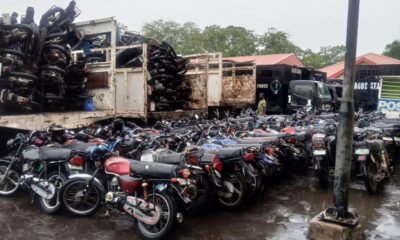
On Tuesday, a day prior to Sanwo-Olu’s directive, the Lagos State Taskforce, led by its chairman, CSP Shola Jejeloye, stormed the axis in a sting operation at mid-day and seized 115 motorcycles for flouting the State Traffic laws of operating on restricted routes and plying the state’s highways.
According to Jejeloye, the operation will be a continuous one not just in Lekki but in every other part of the state.
He further appealed to Lagosians to join efforts with the government in its efforts to restore and maintain sanity on Lagos roads.
He said, “Restoring sanity is not an easy task, neither is it a job for one man or the Agency alone. If we join hands together we will achieve our desired goals of ensuring that no one takes the laws into their hands and gets away with it, especially not in a cosmopolitan city like Lagos.”
The Punch







metro
Kidnappers torture abducted corps members, slash ransom to N100m
Kidnappers torture abducted corps members, slash ransom to N100m
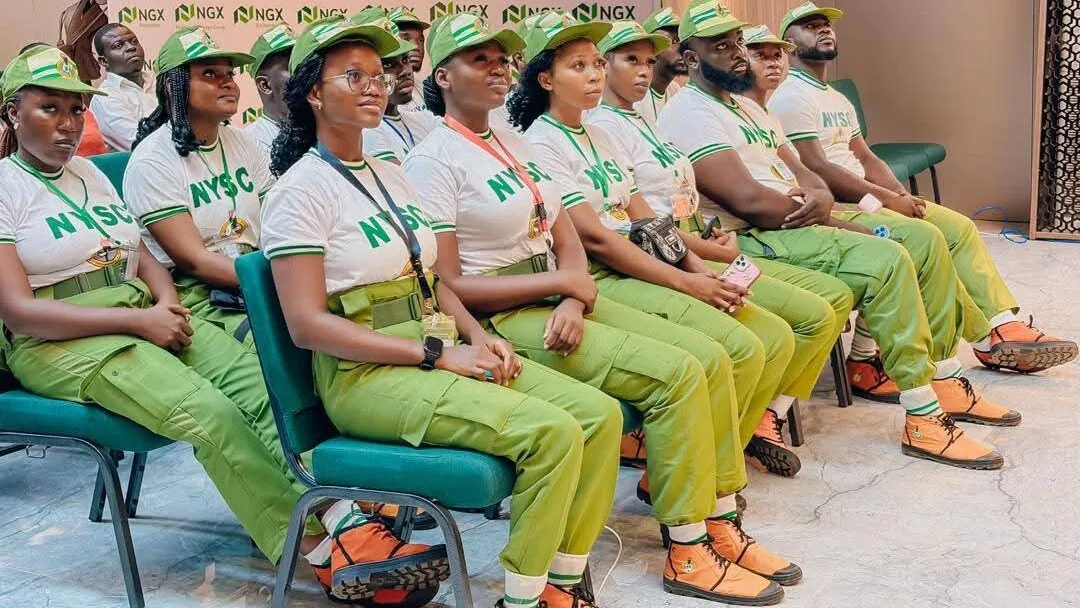
Relatives of 20 abducted corps members have raised fresh concerns over the safety of the victims, alleging that kidnappers have subjected them to physical torture while reducing their ransom demand to N100 million.
The prospective National Youth Service Corps (NYSC) members were reportedly travelling from Ibadan, Oyo State, to orientation camps in Abia and Akwa Ibom states when gunmen attacked two buses along the Owerri–Onitsha Road in Umunoha, Mbaitoli Local Government Area of Imo State, on October 1.
The abductors initially reportedly demanded N50 million from each victim, putting the total ransom at N1 billion.
However, relatives said the kidnappers have now reduced the demand to N5 million per victim, bringing the total to N100 million.
The families also alleged that the abducted corps members were being beaten in captivity, including female victims, raising fears over their physical condition as the rescue operation continues.
A relative of one of the victims, Alimot Akande, said the situation had become increasingly frightening, appealing to the authorities to intensify efforts to secure the victims’ safe release.
According to the relatives, the abductors have maintained contact with some families through the phones of the captives and have used the communication to demand ransom.
READ ALSO:
- Family seeks N10m to free kidnapped newlywed, other victims
- Trump launches ‘Super Intelligence Force’ to keep US ahead in AI race
- NDLEA intercepts N5bn worth of drugs at ports, arrests Milan-bound businessman
The families had earlier appealed to the Olubadan of Ibadanland, Oba Rashidi Ladoja, for intervention after the kidnappers reportedly demanded the initial N1 billion ransom.
Meanwhile, security agencies have intensified efforts to locate the kidnappers’ hideout and rescue the victims.
The Imo State Police Command said its operatives had traced the suspected kidnappers to a location in the bush. However, the operation has reportedly been complicated by intelligence that the area may have been planted with improvised explosive devices (IEDs).
The police said drone surveillance was used to identify the suspected location of the captives, with plans underway to deploy additional operational equipment to safely access the area.
The Inspector-General of Police, Olatunji Disu, has also deployed the Deputy Inspector-General of Police in charge of Operations, Shehu Umar Nadada, to Imo State to coordinate the rescue operation.
Nadada subsequently reviewed the security deployment and directed additional tactical resources towards efforts to rescue the abducted corps members.
Police authorities have assured the families that efforts are ongoing to locate the victims and bring them home safely.
There have also been varying reports over the exact number of people abducted and those already rescued. The police initially reported that some victims had been rescued after the attack, while relatives continued to maintain that 20 prospective corps members remained affected by the abduction.
The two buses involved in the incident have reportedly been recovered as security agencies continue operations around the area.
The Oyo State Government has also joined efforts to secure the release of the victims, maintaining contact with the Imo State Government and security agencies.
The incident has renewed concerns about the safety of prospective corps members travelling to NYSC orientation camps, particularly along major highways where kidnapping remains a persistent security challenge.
For the affected families, the immediate priority remains the safe return of their loved ones as security agencies work to overcome the reported explosives threat and reach the suspected kidnappers’ hideout.
Kidnappers torture abducted corps members, slash ransom to N100m
metro
Family seeks N10m to free kidnapped newlywed, other victims
Family seeks N10m to free kidnapped newlywed, other victims
The family of a newlywed woman kidnapped in Kwara State has appealed to Nigerians for financial assistance to raise ₦10 million being sought for the release of her and other victims still held by their abductors.
The victims were among six passengers reportedly abducted along the Eruku-Iyemero Road, a route linking communities in Kwara and Kogi states.
The incident involved newlyweds Funmilayo Bamidele and Rev. Abiodun David, who were travelling with other passengers when suspected kidnappers intercepted their vehicle.
Following the abduction, the victims’ vehicle was reportedly found abandoned around Ayetoro in Ekiti State, prompting security agencies and authorities from Kwara, Kogi and Ekiti to intensify efforts to locate the victims and rescue them.
READ ALSO:
- JUST IN: WAEC appoints Suleiman Kum as new Nigeria National Office head
- Ojudu Reveals How Tinubu, He Narrowly Escaped Death In Third Mainland Bridge Crash
- Trump launches ‘Super Intelligence Force’ to keep US ahead in AI race
The family of Precious Alonge, one of those abducted, has now appealed for public support, saying they need to raise ₦10 million to secure the release of the captives.
The appeal comes amid growing concern over the safety of travellers using the route, which has witnessed security challenges and kidnapping incidents.
One of the six abducted passengers has reportedly been rescued, while efforts are continuing to secure the release of those still in captivity.
The families of the victims have continued to appeal for assistance as security agencies work to locate the kidnappers and secure the safe return of the remaining captives.
The incident has renewed concerns about kidnapping along inter-state roads in Nigeria, particularly routes connecting communities across Kwara, Kogi and Ekiti states.
Security authorities have yet to provide a full account of the circumstances surrounding the abduction or disclose details of any arrests made in connection with the incident.
The families are urging members of the public, community leaders and other well-meaning Nigerians to support their efforts to secure the safe release of the remaining victims.
Family seeks N10m to free kidnapped newlywed, other victims
metro
NDLEA intercepts N5bn worth of drugs at ports, arrests Milan-bound businessman
NDLEA intercepts N5bn worth of drugs at ports, arrests Milan-bound businessman
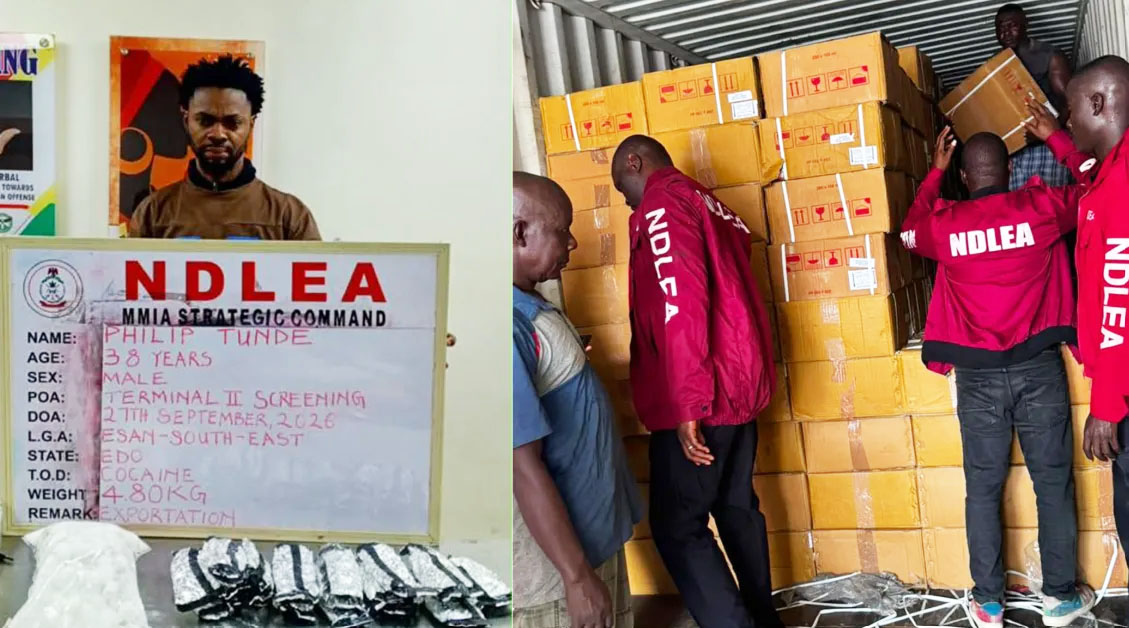
The National Drug Law Enforcement Agency (NDLEA) has intercepted illicit drug consignments worth more than N5 billion at major Nigerian seaports and arrested a businessman allegedly attempting to smuggle 4.8kg of cocaine to Milan, Italy.
The seizures were recorded during separate operations at the Apapa Port and Tin Can Island Port in Lagos, as well as the Onne Port in Rivers State, according to the anti-narcotics agency.
At Apapa Port, NDLEA operatives intercepted a container containing about 3.5 tonnes of skunk, a strain of cannabis. The agency said the consignment had been imported from Canada and was concealed among items declared as used vehicles and household goods.
At Tin Can Island Port, officers discovered another consignment of cocaine concealed in shoe soles during the examination of imported cargo from Canada.
A further seizure was made at Onne Port, where NDLEA operatives intercepted consignments containing cannabis and other illicit substances.
The agency put the combined value of the seized drugs at more than N5 billion.
READ ALSO:
- Madonna University expels final-year nursing student, suspends 14 over dance video
- JUST IN: WAEC appoints Suleiman Kum as new Nigeria National Office head
- Ojudu Reveals How Tinubu, He Narrowly Escaped Death In Third Mainland Bridge Crash
In a separate operation at the Murtala Muhammed International Airport (MMIA), Lagos, NDLEA officers arrested a businessman allegedly preparing to travel to Milan, Italy, with cocaine concealed in the soles of shoes.
The suspect was arrested during an outbound operation after officers discovered 4.80 kilogrammes of cocaine concealed in his luggage.
NDLEA said the suspect was scheduled to travel to Milan when he was stopped for further checks. The agency subsequently took him into custody as investigations continued.
The latest operations highlight the various methods allegedly used by drug trafficking networks to move illicit substances across Nigeria’s borders, including concealing drugs in commercial cargo and everyday items such as footwear.
The NDLEA has continued to strengthen surveillance at Nigeria’s seaports and international airports, with particular attention on consignments and passengers suspected of involvement in drug trafficking.
The agency said the latest interceptions demonstrate its continued efforts to disrupt the supply chain for illicit drugs and prevent Nigeria from being used as a transit point for international drug trafficking.
Investigations into the seizures and arrests are ongoing, with the agency expected to prosecute suspects where sufficient evidence is established.
The businessman and other suspects remain presumed innocent unless proven guilty in court.
NDLEA intercepts N5bn worth of drugs at ports, arrests Milan-bound businessman
-

 Entertainment3 days ago
Phyna Knocks Out Nkechi Blessing in Fourth Round, Wins ₦50m, New Car
-

 metro2 days ago
NYSC Kidnap: Abductors Demand N950m for 19 Prospective Corps Members in Imo
-

 Entertainment3 days ago
Olu Jacobs Laid to Rest in Lagos as Dignitaries, Nollywood Stars Honour Screen Icon
-

 Politics2 days ago
2027: Oshiomhole Dares Opposition Over ₦500 Petrol Promise, Says APC Will Take Argument to Nigerians
-

 International3 days ago
Trump Threatens Iran With ‘Very Hard’ Response Over Flydubai Attack
-
 metro3 days ago
Nigeria Launches 11-Character Digital Postcode System for Every Addressable Building
-
 metro2 days ago
Amaechi: Tinubu’s Policies Made My Mother’s Drugs Unaffordable
-
 Politics3 days ago
NDC Protests Police Cancellation of Obi-Kwankwaso March in Akwa Ibom