

Politics
Presidential Race: Osinbajo’s Campaign Trips’ Funding Raises Dust

The funding of the trips of the Vice President, Professor Yemi Osinbajo to states for his presidential campaigns ahead of the primary of the All Progressives Congress (APC) has continued to attract mixed reactions in the polity.
Osinbajo, one of the 23 aspirants eyeing the ticket of the ruling party has gone to 36 states and the Federal Capital Territory (FCT), to woo delegates and other stakeholders of the APC ahead of the presidential primary slated for May 29 and 30.
Daily Trust had reported how nine serving governors, who are also aspiring for the presidency have spent millions of naira to charter private jets to move around the country.
The vice president, who declared for the presidential race on April 11, has been going about to meet delegates using the 16-seater presidential jet across the country.
The Boeing 727-2N6 with registration no. 5N-FGN aircraft was used to Maiduguri, Borno State on Monday as part of his consultation.
It was not clear from which airport Osinbajo left for Maiduguri, a flight from Abuja to the Borno State capital, which is 710km takes about one hour and 10 minutes on the Boeing Jet used by the vice-president.
The aircraft consumes at least 4,500 litres per hour of flight. As at today, a litre of aviation fuel known as Jet A1, which has been on a steady increase in recent times, presently costs between N550 and N600 depending on the location.
READ ALSO:
- Toddler’s death: Delta police dismiss suspect’s bail report
- Jonathan slams APC, PDP ongoing primaries
- Nigeria’s oil revenue not enough to cover petrol import costs – Finance minister
For instance, at the cost of N600 per litre, it implies that it would be costing the federal government about N2.7m to fuel the aircraft on each one-way trip embarked upon by the president and over N5m for a return trip.
Aides, others get DTA from government coffers
Aside from the use of a presidential jet, it was gathered that the vice president also travelled with a retinue of aides tagged Protocol, Security and Press (PSP).
Daily Trust reports that the vice president by virtue of his office as number two citizen travels with a retinue of aides drawn from different departments including the protocol, security, and media among others who are officially entitled to Duty Tour Allowance (DTA) of about N12,000 per day after each trip.
A source in the presidency told this paper that no fewer than 40 members of the PSP are on the entourage of the vice president.
Asked who pays the aides their Duty Tour Allowance (DTA), the source, who is familiar with the workings of the presidency, said they are being paid from the government coffers.
“You need to understand this, he is not an appointee, he was elected together with the president. He is eligible for all the entitlements of his office as the vice president.
“Who else will pay for their allowance? They are attached to the office of the vice president and as such, they will draw their allowances from the coffers,” he said,” pleading not to be named.
But another source said the allowances of aides on the vice president’s team are not being paid from the government coffers.
“Osinbajo was conscious of the implication of using the government’s fund to finance his campaign trips, hence he has been using donations from his movement and friends to fund his campaigns,” the source said.
READ ALSO:
- Nigeria’s oil revenue not enough to cover petrol import costs – Finance minister
- APC primaries: Police arrest two aspirants for allegedly refusing to step down
- Politicians forced me to contest election, collected all my savings – Ex-IGP Okiro
Use of presidential jet paid for in US – Aviation analyst
Aviation analyst, Group Capt. John Ojikutu said Nigerian leaders are thoughtless in the use of public facilities.
He said in the US, any unofficial use of the presidential jet is paid for.
In a chat with our correspondent, he said, “In the US, unofficial use of the presidential jet is paid for; the cost is the fare of a business class for each person on board including the media personnel.
“Trump would rather use his personal aircraft to go to Palm Beach in Miami on holidays when he was president. Unfortunately, our leaders in the administration of our government are reckless in the use of our public facilities including the use of security personnel.”
Our correspondents report that President Muhammadu Buhari also used Presidential Jet during his 2015 re-election campaign.
It’s an act of corruption – Kari
According to an associate Professor of Political Sociology, University of Abuja, Dr Abubakar Umar Kari, the use of state resources by government officials for campaigns was an act of corruption.
“Government officials using state resources for political campaigns were morally reprehensible, legally unjustifiable and logically unacceptable. It is an act of corruption and a clear abuse of office. No impunity is greater.
“In saner climes, it is enough to put the offending officer in trouble – and that’s how it ought to be here.
“It’s regrettable that our moral and political values are so low and so loose that we do not even seem to realise that such a thing is wrong. Beyond being a misnomer, it also confers an unfair advantage on the officer over and above his opponents who are not so opportune.
“It personalises things that are public and makes strictly the property of the state to become or be used as booty by virtue of being in power or in office. But let’s face it: Osinbajo is not alone in this. Everyone from the president to councillor, and even their wives, children and friends, are engaged in it,” he said.
VP hasn’t breached law, conduct raises moral questions – Lawyers
Lawyers have said that Osinbajo’s use of official jets, vehicles and other facilities for his 2023 presidential campaigns has not breached any law, but could pose some moral issues.
Speaking on the matter, Paul Ananaba (SAN) said it is not illegal because even the American president and vice president use their official vehicles while going for campaigns.
“Their securities are not bifurcated because they are now going for campaigns. The Airforce One is what they use. So, those are part of the appurtenances of democracy. So, there is nothing wrong with that,” he said.
However, E.M.D. Umukoro Esq said although there is no law specifically prohibiting a sitting vice president from the use of public resources for campaigns, moral questions are bound to be raised.
He, therefore, called for inclusion into the statutes a law prohibiting the use of government jets, vehicles and others for campaigns.
“Unless there is a law that specifically puts that into contemplation, issues about it cannot be raised. Whether we like it or not, it gives the person an edge. It’s just like the president or governor seeking a second term using state apparatus and machinery.
“People need to raise this and when it is raised, we begin to look at the state and federal level and streamline it. This is why they talk about the power of incumbency,” he said.







Politics
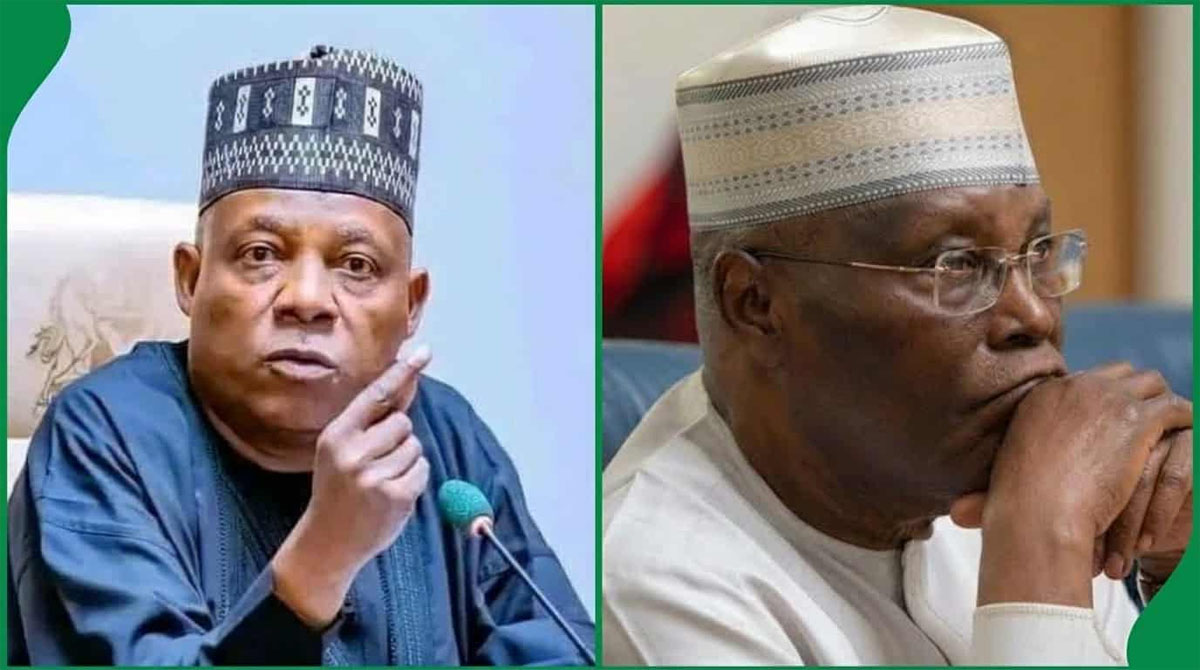
Shettima Attacks Atiku Over Tinubu Remarks, Questions Subsidy Plan
Shettima Attacks Atiku Over Tinubu Remarks, Questions Subsidy Plan
Vice-President Kashim Shettima has launched a fresh attack on former Vice-President Atiku Abubakar, declaring that he is “no Abraham Lincoln” while criticising him for addressing President Bola Ahmed Tinubu by his first name and questioning his proposed production subsidy policy ahead of the 2027 presidential election.
Shettima made the remarks on Wednesday, October 14, 2026, during the inauguration of the All Progressives Congress (APC) Presidential Campaign Council at the Banquet Hall of the Presidential Villa in Abuja.
The event provided an opportunity for the Vice-President to defend the Tinubu administration, challenge opposition figures and outline the ruling party’s arguments as preparations for the 2027 general election gather momentum.
Shettima argued that anyone aspiring to become Nigeria’s president should demonstrate maturity, discipline and respect for public institutions, even while criticising the incumbent administration.
“Those who want equity must come with clean hands. You can call him Bola. If you like, you can call him Adekunle. But the truth is that he is the President and Commander-in-Chief of the Armed Forces of the Federal Republic of Nigeria,” he said.
The Vice-President added that he would continue to address Atiku by his former official title despite their political differences.
“Your Excellencies, distinguished ladies and gentlemen, Atiku Abubakar. I will still respect him and call him his former Vice President, Atiku Abubakar,” Shettima said.
He subsequently compared Atiku with Abraham Lincoln, the 16th president of the United States, who is widely associated with the abolition of slavery in the country.
“But believe me, Atiku Abubakar, who has contested for the presidency of this country for the eighth time, is no Abraham Lincoln. He is more of Oginga Odinga,” the Vice-President said.
Oginga Odinga was a prominent Kenyan political figure who served as the country’s first vice-president. Shettima’s comparison formed part of his criticism of Atiku’s repeated presidential bids and political approach.
READ ALSO:
- 2027: We Know How to Stop Tinubu From Getting Second Term – Momodu
- Borno Woman Jailed Two Years for Sexual Exploitation of 16-Year-Old Girl
- Cosmetics Top Fake Products as NAFDAC Seals 179 Establishments, Arrests 52
The Vice-President maintained that the Nigerian presidency should not be regarded as an ordinary political prize, arguing that the office demands sound judgment, responsibility and respect for constitutional institutions.
“The presidency of the Federal Republic of Nigeria is not an ordinary political prize. It is the highest expression of constitutional authority in our country,” he said.
The dispute over the use of Tinubu’s first name has also attracted a response from Atiku’s camp. His aide on public communication, Phrank Shaibu, defended the former vice-president’s choice of words, arguing that “Bola” was the President’s name and that using it did not necessarily amount to disrespect.
The exchange highlights the increasingly sharp rhetoric between the ruling APC and opposition figures as political parties prepare for the next presidential election.
Shettima challenges Atiku over production subsidies
Beyond the disagreement over presidential protocol, Shettima questioned Atiku’s proposal for production subsidies, demanding explanations about how the policy would be financed and which competing government priorities might lose funding.
Atiku has advocated economic measures aimed at stimulating domestic production and easing pressure on consumers. His production subsidy proposal has become a point of contention between the opposition and the Tinubu administration.
Shettima argued that policy announcements must be accompanied by clear explanations of their costs, funding arrangements and expected benefits.
“This political season has become a masterclass in cinematic comedy,” he said.
The Vice-President continued: “Vice President Atiku Abubakar’s proposal for production subsidies raises questions that some changes cannot answer. Who pays? Who benefits? And which competing priorities must surrender their funding?”
“A change in ideological wardrobe cannot balance a national budget,” he added.
The APC Presidential Campaign Council has also challenged Atiku to explain the proposed subsidy’s funding source, spending limits, intended beneficiaries and safeguards against diversion or fraud. The council has questioned how the proposal would operate within Nigeria’s existing petroleum regulatory framework.
The disagreement raises important questions about the feasibility of fuel price relief, the cost of supporting domestic production and the government’s ability to balance economic assistance with other public spending needs.
READ ALSO:
- Nigeria Secures UN Human Rights Council Seat With 172 Votes
- Houthi Missile Targeting Riyadh Shot Down as Debris Injures Four, Damages 15 Homes
- Outrage as Israeli Settlers Torch Mosque, Burn Vehicle in Occupied West Bank
For the proposal to be properly assessed, details of its funding model, eligibility rules, implementation arrangements and expected impact on consumers and producers would need to be examined.
Vice-President questions opposition unity
Shettima also challenged opposition politicians over their ability to manage Nigeria’s competing interests, arguing that political leaders seeking to replace the APC government must demonstrate that they can work together.
“Meanwhile, those offering to rescue Nigeria cannot keep their own political households intact,” he said.
He questioned how opposition leaders could reconcile the interests of more than 200 million Nigerians if they struggled to resolve disagreements within their own political organisations.
“So I ask, if reconciling a few party leaders defeats you, how will you reconcile the interests of over 200 million citizens?” he asked.
The comments come amid political realignments ahead of the 2027 general election, with opposition figures seeking to build alliances capable of challenging the ruling party.
Shettima also criticised former Anambra State Governor Peter Obi, the presidential candidate of the Nigeria Democratic Congress (NDC), over his economic proposals and claims concerning the 2023 presidential election.
He questioned whether policies adopted in other countries could be transferred directly to Nigeria without accounting for differences in population, institutions and economic conditions.
The Vice-President argued that claims about elections and economic performance should be supported by evidence, while defending the APC’s record in office.
Shettima defends Tinubu’s economic reforms
The Vice-President also defended the Tinubu administration’s economic reforms, particularly the removal of the petrol subsidy and changes to the foreign exchange system.
He maintained that the government had inherited serious fiscal and economic challenges and that its reforms were intended to address longstanding structural problems.
According to the administration’s position, the changes are designed to reduce distortions in public finances, improve economic stability and create conditions for sustainable growth.
However, the reforms have placed significant pressure on households and businesses, with the cost of living, transport expenses and food prices remaining important concerns for many Nigerians.
These pressures are likely to feature prominently in the 2027 election campaign, as opposition parties scrutinise the government’s performance and propose alternative economic policies.
For the APC, the challenge will be to demonstrate that its reforms are delivering tangible improvements in employment, purchasing power, investment and public services.
For the opposition, presenting credible and adequately funded alternatives will be central to persuading voters that a change in leadership would produce better economic outcomes.
Shettima’s remarks reflect the intensifying political exchanges ahead of the election, with the ruling party defending its record and opposition leaders challenging its policies and leadership.
Ultimately, the debate over Tinubu’s second-term bid, Atiku’s production subsidy proposal and the opposition’s ability to work together will place economic performance, leadership and policy credibility at the centre of the 2027 presidential contest.
Shettima Attacks Atiku Over Tinubu Remarks, Questions Subsidy Plan
Politics
2027: We Know How to Stop Tinubu From Getting Second Term – Momodu

Veteran journalist and African Democratic Congress (ADC) chieftain, Dele Momodu, has expressed confidence that the opposition can prevent President Bola Ahmed Tinubu from securing a second term in the 2027 presidential election.
Momodu, who serves as Deputy Director-General of the ADC Presidential Campaign Council, made the remarks during an interview on Arise News’ Prime Time programme on Wednesday, October 14, 2026.
He criticised Tinubu’s political leadership, alleging that the President had consolidated excessive power and brought several arms of government under his influence.
The veteran journalist compared the current political situation with the administration of the late military ruler, General Sani Abacha, arguing that Tinubu had gone beyond what Abacha did in drawing political actors into his sphere of influence.
Momodu’s comments come amid growing political realignments ahead of the 2027 general election, with the ruling All Progressives Congress (APC) and opposition parties intensifying efforts to build support for their respective candidates.
The ADC chieftain expressed confidence that the opposition could mount an effective challenge against Tinubu, who has indicated his intention to seek re-election after winning the APC presidential primary.
READ ALSO:
- Cosmetics Top Fake Products as NAFDAC Seals 179 Establishments, Arrests 52
- Nigeria Secures UN Human Rights Council Seat With 172 Votes
- Houthi Missile Targeting Riyadh Shot Down as Debris Injures Four, Damages 15 Homes
Momodu has repeatedly argued that the opposition’s chances would depend on its ability to build a strong coalition, agree on an effective electoral strategy and prevent divisions from weakening its challenge to the ruling party.
In January 2026, he said defeating Tinubu was possible if opposition parties closely monitored the Independent National Electoral Commission (INEC) and presented candidates with sufficient political strength to compete against the APC.
He also identified prominent opposition figures, including former Vice-President Atiku Abubakar, former Anambra State Governor Peter Obi, former Rivers State Governor Rotimi Amaechi, former Kaduna State Governor Nasir El-Rufai and former Sokoto State Governor Aminu Tambuwal, as political figures with the capacity to contribute to a formidable challenge.
In March, Momodu further argued that an opposition presidential ticket pairing Atiku with a prominent southern politician, such as Obi or Amaechi, could threaten Tinubu’s re-election bid.
He maintained that opposition leaders needed to prioritise strategic cooperation over personal ambitions if they hoped to defeat the incumbent president.
Momodu has also warned that disagreements over presidential zoning could undermine the opposition’s chances by splitting votes along regional lines.
His latest comments come as Tinubu’s supporters continue to mobilise for his re-election. On October 10, Secretary to the Government of the Federation, George Akume, and six APC governors from the North-Central region endorsed Tinubu and Vice-President Kashim Shettima for a second term.
The endorsement illustrates the competing political efforts taking shape ahead of the 2027 election, as the APC seeks to consolidate its support base while opposition parties work to present a credible alternative.
Although Momodu has expressed confidence in the opposition’s prospects, the outcome of the election will depend on several factors, including candidate selection, party organisation, voter participation and the conduct of the electoral process.
The 2027 presidential contest is expected to test the strength of the ruling party and the ability of opposition groups to coordinate their political ambitions into an effective electoral challenge.
2027: We Know How to Stop Tinubu From Getting Second Term – Momodu
Politics
‘Tinubu Is Clearing Your Mess’ – Keyamo Blasts Atiku Over Nigeria Airways
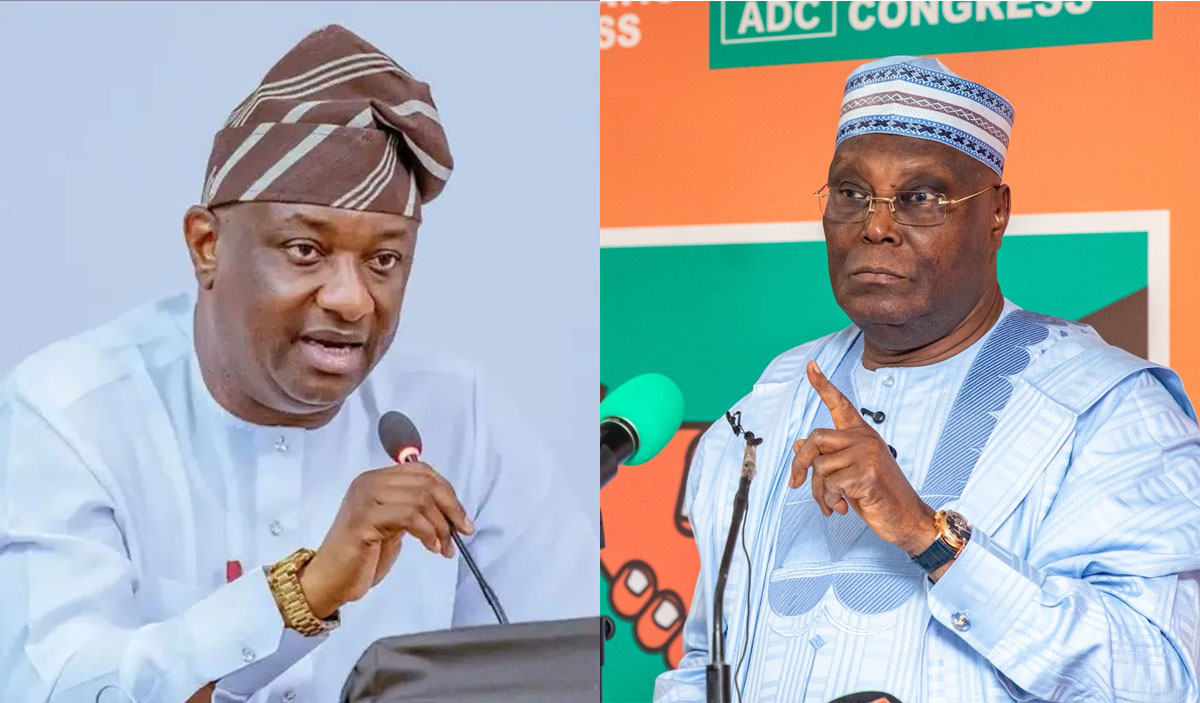
‘Tinubu Is Clearing Your Mess’ – Keyamo Blasts Atiku Over Nigeria Airways
Minister of Aviation and Aerospace Development, Festus Keyamo, has described former Vice-President Atiku Abubakar as a “hypocrite” and a “con artist” over his criticism of President Bola Ahmed Tinubu’s administration, accusing him of distancing himself from controversial decisions taken while he was in government.
Keyamo’s remarks followed Atiku’s criticism of Nigeria’s worsening economic conditions and insecurity ahead of the 2027 general elections. The former vice-president had urged Nigerians to collect their Permanent Voter Cards (PVCs), promising to make life more affordable and restore security if given the opportunity to lead the country.
In his post, Atiku said rising living costs had made it increasingly difficult for families to provide basic necessities, while pensioners faced difficult choices between buying food and obtaining medication. He also expressed concern about kidnapping and attacks that have left communities living in fear.
Reacting in a post on his official X account on Wednesday, October 14, Keyamo challenged Atiku’s criticism, citing the liquidation of the defunct national carrier, Nigeria Airways, in September 2004, when Atiku was vice-president under former President Olusegun Obasanjo.
“Your Excellency, Atiku Abubakar, this is hypocrisy at its peak! Let me just talk only about the sector that I head, Aviation,” Keyamo wrote.
The minister alleged that the liquidation left thousands of airline workers without jobs and that their pensions and gratuities, amounting to billions of naira, remained unpaid for years.
He argued that Atiku could not criticise the current administration over economic hardship without addressing the record of the government in which he served.
Keyamo further claimed that some former Nigeria Airways workers died while waiting for their outstanding entitlements, leaving their families to bear the consequences of the prolonged delay in payment.
According to the minister, President Tinubu had approved and released ₦36 billion to settle the outstanding entitlements owed to the former airline workers.
READ ALSO:
- Nigeria Secures UN Human Rights Council Seat With 172 Votes
- Houthi Missile Targeting Riyadh Shot Down as Debris Injures Four, Damages 15 Homes
- Outrage as Israeli Settlers Torch Mosque, Burn Vehicle in Occupied West Bank
Keyamo said payments had begun reaching beneficiaries and claimed that the workers’ union had recognised Tinubu’s intervention.
He presented the payment as evidence that the current administration was addressing an outstanding obligation inherited from previous governments, although the claim about the release and disbursement of the funds was made by the minister.
The aviation minister also accused Atiku of selectively taking credit for the achievements of the Obasanjo administration while distancing himself from decisions that attracted criticism.
“When it is convenient for you, you claim some credit of the Obasanjo-Atiku government and when not convenient, you say Obasanjo was in charge and not you as Vice-President,” he wrote.
Keyamo said younger Nigerians who were unfamiliar with the former vice-president’s political record could be misled by his criticism of the Tinubu administration.
He added that Atiku’s political ambitions should not, in his view, be disguised by what he described as misleading rhetoric.
“The proper posturing of a con artist!” the minister concluded.
The exchange adds to the growing political confrontation between the Tinubu administration and opposition figures as political activities intensify ahead of the 2027 elections.
Atiku, the presidential candidate of the African Democratic Congress (ADC), has repeatedly criticised the Federal Government over the cost of living, insecurity and the impact of its economic policies on households and businesses.
Tinubu’s administration, meanwhile, has defended its economic reforms and highlighted measures it says are intended to address longstanding fiscal challenges and support affected groups.
Keyamo’s latest comments shift the argument from the current administration’s performance to the record of the previous government, particularly its handling of Nigeria Airways and the entitlements owed to the airline’s former employees.
Atiku’s response to Keyamo’s latest allegations was not included in the reports available at the time of publication.
‘Tinubu Is Clearing Your Mess’ – Keyamo Blasts Atiku Over Nigeria Airways
-

 metro3 days ago
How Bandits Demand ₦300m Ransom for Abducted Kaduna Couple, Baby in Viral Video
-

 metro2 days ago
Oyo School Kidnappings: How ANSARU Allegedly Used Children to Pressure FG
-

 metro2 days ago
Tragedy in Ibadan as Truck Kills Female Corps Member, Injures Others
-

 metro2 days ago
Drama as Dutch Police Use Batons, Dogs to Shut Down Nigerian Wedding; Two Arrested
-
 International2 days ago
French Students Return to Streets as Anger Over School Conditions Grows
-

 metro2 days ago
VIDEO: Outrage as Indian National Assaults Nigerian Truck Drivers in Lagos
-

 Politics3 days ago
Oshiomhole Challenges Obi to Bible Oath Over Private Jet Controversy
-
 News2 days ago
Obasanjo Backs Higher Oil Derivation, Says 13% Is Only the Beginning