

Politics
APC Senatorial Tickets: Aliero, Ohakim Pull Out As Yari, Goje, Oshiomhole, Others Win

Two former governors, Adamu Aliero (Kebbi) and Ikedi Ohakim (Imo) yesterday pulled out of the race for the senatorial tickets of the All Progressives Congress (APC), citing irregularities.
Daily Trust on Sunday reports that the ruling party had conducted the primary across the country to elect its senatorial candidates for 2023 general elections
In Kebbi, the former governor of the state, Senator Aliero announced his withdrawal from the race for the Kebbi North ticket of the APC.
With his withdrawal, Kebbi State governor, Abubakar Atiku Bagudu has picked the ruling party ticket for the area.
There were indications that Aliero, who was governor of the state between 1999 and 2007, may likely dump the APC for the Peoples Democratic Party (PDP).
His rift with Bagudu has polarised the APC in the state.
For his part, Ohakim, who is aspiring for the Imo North senatorial zone announced his withdrawal from the race in a letter addressed to the National Chairman of APC, Abdullahi Adamu through the chairman of the party in Imo state.
Ohakim said he withdrew from the race after he consulted his family and close associates.
Yari, Marafa win in Zamfara
Former Governor Abdulaziz Yari Abubakar and Senator Kabiru Garba Marafa yesterday won the APC senatorial tickets at the primary election which was held in all the three senatorial zones of the state.
Yari emerged unopposed during the exercise which took place at his home local government headquarters of Talata Mafara.
Marafa also clinched the ticket for Zamfara Central while that of Zamfara North was won by Senator Sahabi Yau.
In Kaduna, a former Commissioner for Planning and Budget Mohammed Sani Dattijo emerged winner of the All Progressives Congress primary election for Kaduna Senatorial election, hours after two of his challengers, Rabi Salisu and Dr Usman Garba stepped down from the race.
Declaring the result, Chairman of the APC election committee, Ahmad Mai Yaki Datti got 388 votes to emerge winner.
Goje, Alkali, Lidani clinch Gombe tickets
Meanwhile, Senator Muhammadu Danjuma Goje was yesterday declared winner of the All Progressives Congress (APC) primary to contest for Gombe Central Senatorial District.
Chairman of the electoral committee, Dr Danjuma Dabo said Goje polled 100 votes to defeat Abubakar Mu’azu Hassan who scored 3 votes and Senator Idris Umar Abdullahi who got 2 votes.
Also, incumbent Senator Sa’idu Ahmed Alkali scored 216 votes to clinch the ticket for the Gombe North Senatorial District.
Meanwhile, for the Gombe South Senatorial District, the incumbent Senator Bulus K Amos failed in his bid to return to the senate for a second term.
He was defeated by Senator Joshua Lidani, a one time senator who represented the zone between 2011 and 2019.
Kalu unopposed in Abia North
Chief Whip of the 9th Senate, Chief Orji Uzor-Kalu, has won the ticket of the All Progressive Congress to represent the Abia North senatorial district for a second time unopposed. He polled 777 votes to emerge victorious.
The returning officer for senatorial primary election, Chief Paul Onwuka, declared him winner of the exercise.
In Nasarawa, senator representing Nasarawa South Senatorial zone in the National Assembly, Umaru Tanko Al-Makura, won his ticket through a voice vote.
Shettima, Ndume get return tickets
In Borno, Senator Kashim Shettima won his return ticket for Borno Central Senatorial District unopposed, during the exercise held in Maiduguri.
Similarly, Senator Mohammed Ali Ndume emerged victorious after defeating other contenders.
He garnered 432 votes ahead of Alhaji Idrissa Dukwa who got 65 votes and Mohammed Tumala who got 2 votes.
Ambode’s deputy, Ayade’s Chief of Staff, Abiru, Bamidele clinch ticket
Former Deputy Governor of Lagos State, Dr. Idiat Oluranti Adebule won the All Progressives Congress (APC) primary for Lagos West.
She defeated her rival and former Defence Minister, Senator Musiliu Obanikoro to clinch the party’s ticket for the 2023 election.
Similarly, the Deputy Speaker, Lagos State House of Assembly, Mr Wasiu Eshinlokun- Sanni, clinched the party’s ticket to contest the Lagos Central Senatorial District seat in the 2023 general elections.
Eshinlokun-Sanni defeated three other contestants for the ticket currently being held by Senator Oluremi, the wife of APC national lead
Oluremi Tinubu has occupied the seat since 2011.
In Lagos East Senatorial District, Senator Tokunbo Abiru was returned unopposed.
Announcing the result, the Returning Officer, Mr Fuad Oki, said Abiru won with 344 votes cast with no invalid vote.
The Chairman, Senate Committee on Judiciary, Human Rights and Legal Matters, Senator Opeyemi Bamidele, was also returned unopposed by 285 delegates during the Ekiti Central Senatorial Primary election of the APC.
In his acceptance speech, the lawmaker also thanked the leaders of the party in the state, especially Gov. Kayode Fayemi.
In the same vein, Lagos West Senator, Solomon Olamilekan Adeola won the APC ticket for Ogun West Senatorial district of Ogun State.
Adeola popularly known as Yayi polled 294 votes to defeat his main rival and incumbent Senator representing the zone, Tolu Odebiyi, who scored zero.
The Lagos West Senator recently relocated to the state and joined the Ogun West Senate race, in a sweeping movement tagged “West2West Agenda.”
Also, the Chief of Staff to Governor Dapo Abiodun, Alhaji Shuaib Afolabi Salisu, was declared winner of the Ogun Central Senatorial District primary election held on Saturday.
Salisu polled a total of 301 votes to defeat other aspirants.
Also, the Chief of Staff to Governor Ben Ayade of Cross River State, Mr Martins Orim emerged the Cross River Northern Senatorial Zone candidate.
The state’s former Commissioner for Finance, Asuquo Ekpenyong jnr, also clinched the ticket for Cross River South. Ekpenyong polled 347 votes to defeat his rival, Victor Ekpo who scored zero.
Oshiomole wins
Former Governor of Edo State and ex-national chairman of APC, Adams Oshiomole, clinched the party’s ticket for Edo North Senatorial District.
Oshiomole scored 309 votes to pick the APC ticket while his opponent, incumbent Senator Francis Alimikhena, polled five votes at the party primary election held in Auchi, Edo.
Also, Mr Valentine Asuen defeated former Edo Deputy Governor, Lucky Imasuen to emerge the candidate of the APC for Edo South Senatorial election.
Asuen polled 215 votes while Imasuen got 160 votes at the party primaries held in Benin.
Governor David Umahi’s younger brother, Austin Umahi, won the party’s ticket for Ebonyi South Senatorial zone of the state.
Umahi, a former National Vice Chairman, South East of the PDP, polled 279 out of the 284 votes of accredited voters during the primaries held at the headquarters of Afikpo North Local Government Area.
Mrs Adaku Ogbu polled 270 votes out of the 284 votes cast to emerge the Enugu East senatorial candidate of the APC in Enugu State.
Niger gov wins as Adeyemi, lose in Kogi
Governor Abubakar Sani Bello of Niger State defeated the incumbent senator, Aliyu Abdullahi Sabi with 335 votes against 7 votes to emerge the APC flag bearer for Niger North Senatorial District.
However, Senator Sani Musa of Niger East Senatorial District won with 492 votes while his rival, Dr Dada Nakowa scored 2 votes.
In Kogi State, Senator Smart Adeyemi lost his return bid for the Kogi West senatorial district as he was defeated by Sunday Karimi.
However, Senator Jibrin Isah (Echocho) however won his return ticket for Kogi East Senatorial District.
Ogun: Gbenga Daniel, Jimoh Ibrahim get ticket
Former Ogun State Governor, Otunba Gbenga Daniel won the APC ticket to contest Ogun East Senatorial District election in 2023.
The incumbent senator representing the district, Lekan Mustapha had reportedly withdrawn from the primary following the intervention of the Awujale and paramount ruler of Ijebuland, Oba Sikiru Adetona.
Also, a business mogul, Jimoh Ibrahim, secured the party’s ticket for Ondo South Senatorial District.
He got 190 votes to defeat other aspirants.
Meanwhile, a former Minister of State for Niger Delta, Tayo Alasoadura, failed to get the ticket of the APC for Ondo Central Senatorial District.
A senior Advocate of Nigeria, Adeniyi Adegbonmire, polled 144 votes to beat Alasoadura, who recorded 88 votes.
Confusion in Imo, Oyo
Meanwhile, there was confusion at the primary election of the APC in Imo State as one of the contestants; Mrs. Becky Akeredolu protested the consensus option adopted by the party in choosing its candidate for the 2023 election
Trouble started when Akeredolu, who is contesting for the Imo West Senatorial seat, arrived at the party secretariat with her supporters.
However, she was told that candidates would emerge by consensus.
An enraged Akeredolu, who is the wife of Ondo State Governor, Rotimi Akeredolu, insisted that candidates must emerge by election.
However, policemen chased Akeredolu and her supporters out of the premises to continue their protest outside the secretariat.
There was also commotion in Oyo State as the primaries in Oyo South and Oyo North were marred by protests. However, Dr. Yinus Akintunde was pronounced winner in Oyo central senatorial district.
Meanwhile the party postponed its primary for Abia Central Senatorial District till May 29 over alleged discrepancies in the delegates’ list.







Politics
Power Struggle Threatens Peter Obi-Kwankwaso Alliance Ahead of 2027 Polls
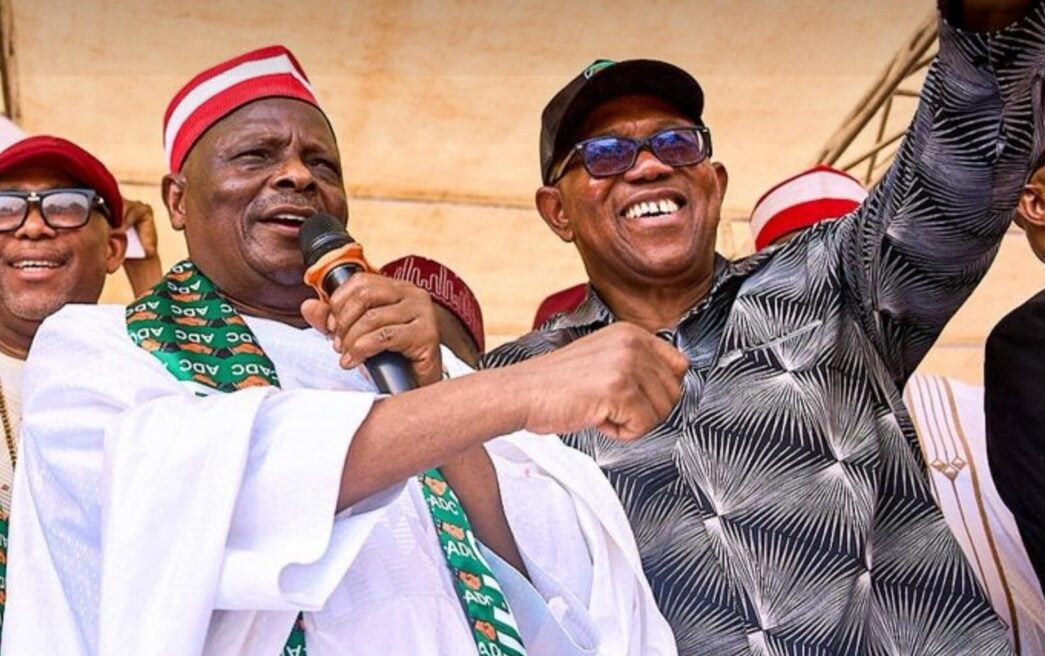
Power Struggle Threatens Peter Obi-Kwankwaso Alliance Ahead of 2027 Polls
Internal power struggle threatens opposition coalition as rival groups claim authority over movement’s leadership
The OK Movement, a political support platform established to mobilise backing for the joint ticket of Peter Obi and Rabiu Kwankwaso, is engulfed in a deepening leadership crisis that threatens to derail opposition unity ahead of the 2027 Nigerian presidential election. The power tussle erupted into public view following a controversial appointment that exposed bitter rivalries, competing claims to authority, and fundamental disagreements over the movement’s strategic direction and funding model.
The conflict escalated when Jackie Wayas, who identified herself as the National Convener of the movement, announced the appointment of former Inter-Party Advisory Council Chairman Peter Ameh as the movement’s National Director-General. In a statement, Wayas claimed the decision followed a meeting of the movement’s steering committee and that Ameh’s appointment was unanimously approved due to his political experience and commitment to the movement’s ideals. However, within hours of the announcement, controversy erupted as several members questioned Wayas’ authority to describe herself as the national convener. Multiple attempts by The PUNCH to obtain clarification from Wayas on when and how she assumed the position were unsuccessful, as calls and messages went unreturned.
The controversy quickly exposed a wider leadership dispute within the movement, with rival factions staking competing claims to authority. Justin Ijeh, the immediate past National Publicity Secretary of the movement, acknowledged the internal disagreements but insisted they should be resolved behind closed doors rather than through media platforms. In his comments to The PUNCH, Ijeh explained that there was a reason he had not spoken up on the issue, as he believed some things should be resolved behind the scenes. He emphasised that the primary target was to achieve their aim at the polls and that while it was acceptable to have differences, allowing them to come out into the public space was a significant concern. Ijeh revealed he had stepped aside as spokesman pending resolution of the dispute, noting the difficulty of functioning when “two persons declared themselves DG of an organisation.”
READ ALSO:
- Gumi: Clerics who join politics are better than those praying for politicians
- FRSC Boss: Tinubu’s CNG, EV Drive Creating Jobs, Attracting Investment
- Lanre Shittu Motors Leads Drive to Steer Lagos Students Away from Crime, Donates books to public Schools
However, the movement’s Director-General, John Ughulu, dismissed Ijeh as a “sacked official” and accused the rival faction of attempting to hijack the organisation. Ughulu maintained that Ijeh had been relieved of his position long ago and belonged to the other group, stating that he had relieved all of them of their responsibility to allow the movement to move forward. He maintained that Ijeh no longer had authority to speak for the organisation and accused him of partisanship and undermining the movement’s objectives.
Ughulu provided deeper insight into the origins of the conflict, revealing fundamental disagreements over the movement’s funding model. He traced his fallout with Jackie Wayas to a dispute over financial management, claiming she opposed his insistence on raising funds through small public contributions rather than from questionable sources. Ughulu explained that people were bringing in illegal money, and he insisted that would not happen because one could not verify where such money was coming from. He suggested they raise funds from the streets by encouraging Nigerians to contribute N1,000 or N500 to take care of posters, T-shirts and logistics. He added that he had made it clear from the outset that coordinators would not be paid, as they were “well-to-do on their own,” but Wayas reportedly “flared up and said no” to this approach.
Ughulu claimed that Peter Obi personally intervened to prevent the internal conflict from escalating further, urging him to avoid public commentary. He revealed that Obi pleaded with him, saying, “John, please, I beg you. Do not go to press. Do not say anything.” He confirmed that Obi had been briefed on the development and was unhappy with the situation, a position corroborated by Ladipo Johnson, a former spokesman of the New Nigeria People’s Party. Johnson, speaking on Arise Television, described the situation as a “distraction” rather than an existential threat, but confirmed Obi’s displeasure, stating that he saw the presidential candidate along with the DG and that Obi was not happy about the whole situation.
The OK Movement was conceived as a strategic political coalition designed to unite the Obidient Movement’s youthful, digitally-savvy supporters with the Kwankwasiyya Movement’s grassroots political organisation. Ughulu traced the movement’s origins to discussions aimed at creating a broader coalition capable of bringing together supporters of both candidates under one umbrella without dissolving their existing political identities. He disclosed that there was an initial agreement between the two candidates, Obi and Kwankwaso, that the OK Movement would not be relinquished and would still campaign for him in 2031 if he decides to come out for the presidential position, and he was a signatory to that agreement. He revealed that the movement’s name was deliberately chosen to attract supporters outside the traditional Obidient base, noting that there are people who love and want to support Peter Obi who are not Obidient members, and sticking only to that would make other associations and political parties unwilling to associate with them.
Adding another layer to the unfolding crisis, social media reports alleged that Obi had dismissed the National Coordinator of the Obidient Movement Worldwide, Dr. Yunusa Tanko, over financial impropriety. When contacted by The PUNCH, Tanko categorically denied the allegation, stating that it was not true and that someone was just flying a kite. He mentioned that they were having a programme in the office and insisted he did not have a separate account and was not even a signatory to the account of the Obidient Movement, questioning why he would have a money-related matter. He also dismissed claims of tension between the Obidient Movement and the OK Movement, stressing that there was no crisis or internal conflict and that they were just trying to work together as a team.
READ ALSO:
- UNIOSUN ranks third among state universities in latest Webometrics ranking
- State police: Shari’ah Council urges caution, wider consultations
- CAF Suspends Two Super Falcons Stars Ahead of Decisive Egypt Clash in WAFCON 2026
Shortly after Tanko’s defence, Idris Zekeri, Obi’s media aide, released a statement dismissing the reports as a “coordinated effort by political adversaries” to create division. The statement from the Peter Obi Media Office acknowledged recent coordinated efforts by political adversaries and disruptive individuals to create division, misrepresent their leader’s objectives, and foster artificial rifts within the movement dedicated to improving Nigeria. The statement accused unnamed political opponents of manufacturing distractions while Nigerians continued to grapple with economic hardship, insecurity and unemployment. They implored devoted supporters, including the Obidients and Kwankwasiyya movements, and all Nigerians of good conscience, to disregard rumours, fabricated stories, and deliberate provocations, including the purported sack of the Obidient Movement National Coordinator.
The internal wrangling comes at a critical period for the opposition as political groups continue consultations aimed at forging a united front capable of challenging the ruling All Progressives Congress in the 2027 presidential election. While leaders of both movements have continued to insist that their disagreements are internal and resolvable, the public exchange of accusations and rival claims to leadership has raised fresh questions about cohesion within one of the emerging support platforms expected to play a significant role in opposition mobilisation. Johnson urged members to focus on strengthening the movement instead of allowing personal disagreements to undermine its broader political objectives, acknowledging that while there was a distraction, it was not significant enough to warrant unilateral actions that could scuttle or bring bad blood within the support base of the person they purportedly want to become president.
Political analysts warn that such infighting represents a significant gift to the ruling APC, as it weakens the opposition’s capacity to present a united front against President Bola Tinubu’s re-election bid. The OK Movement’s internal crisis highlights the challenges of merging two powerful and distinct political bases, each with its own leadership structures, funding mechanisms, and strategic priorities. For the movement to fulfill its objective of mobilising a broad coalition capable of challenging the APC, leaders must resolve these internal disputes and present a cohesive vision for Nigeria’s future.
Power Struggle Threatens Peter Obi-Kwankwaso Alliance Ahead of 2027 Polls
Additional reporting by The PUNCH
Politics
Gumi: Clerics who join politics are better than those praying for politicians
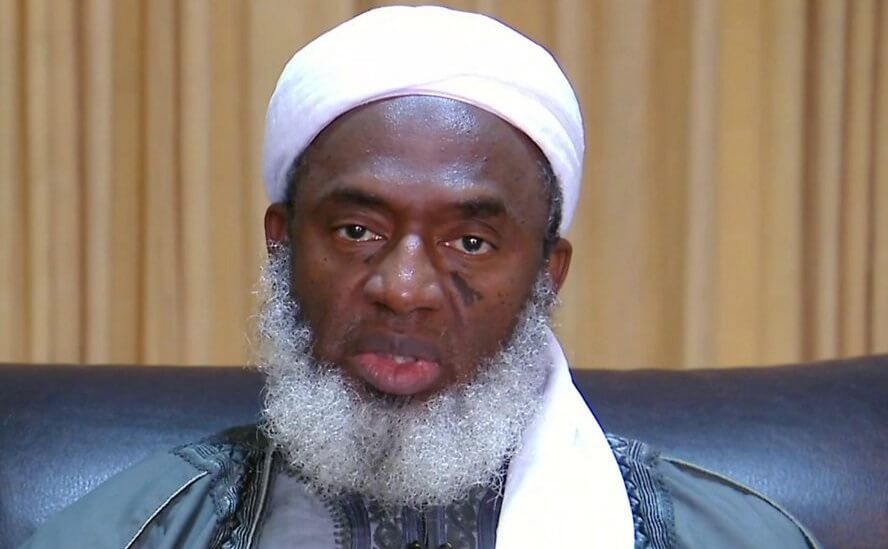
Gumi: Clerics who join politics are better than those praying for politicians
Prominent Islamic scholar, Sheikh Ahmad Abubakar Gumi, has defended the participation of religious scholars in politics, arguing that clerics who actively engage in the political process and accept its challenges are better positioned to contribute to society than those who remain outside and only pray for political leaders.
Gumi made the remarks amid growing debate over whether Islamic clerics should participate directly in partisan politics or focus exclusively on religious teachings, spiritual guidance and public advocacy.
The discussion has gained renewed attention following the political involvement of several respected Islamic scholars, particularly in northern Nigeria, where religious leaders play influential roles in community development, public discourse and social affairs.
The issue has become more prominent following the emergence of former Minister of Communications and Digital Economy, Professor Isa Ali Ibrahim Pantami, as a Peoples Democratic Party (PDP) governorship candidate in Gombe State ahead of the 2027 general election.
Pantami’s political ambition has generated mixed reactions, with supporters describing his participation as an opportunity for a religious scholar and public policy expert to contribute directly to governance. However, critics have raised concerns about the possible impact of partisan politics on the independence, public image and moral authority of religious leaders.
READ ALSO:
- FRSC Boss: Tinubu’s CNG, EV Drive Creating Jobs, Attracting Investment
- Lanre Shittu Motors Leads Drive to Steer Lagos Students Away from Crime, Donates books to public Schools
- UNIOSUN ranks third among state universities in latest Webometrics ranking
While some religious scholars have previously held political appointments or served in government, the increasing interest of prominent clerics in elective offices has renewed debate over the appropriate role of religious leaders in Nigeria’s political system.
Those opposed to clerics participating in partisan politics argue that the political environment can be highly divisive and may expose religious leaders to personal attacks, public criticism, political rivalry and allegations that could affect the respect they command among their followers.
They believe clerics may be more effective when they remain independent of political parties and use their platforms to provide spiritual guidance, promote ethical leadership, advise public officials and hold governments accountable.
Supporters, however, argue that religious scholars should not remain on the sidelines while the country continues to face challenges related to governance, insecurity, economic hardship and public service delivery.
They maintain that scholars who possess leadership experience, professional competence, integrity and a clear vision for public service should be free to seek elective offices and participate directly in efforts to improve governance.
According to this view, meaningful political change may require responsible citizens, including religious leaders, to move beyond public criticism and take part in the decision-making process.
Weighing in on the debate in a Facebook post, Gumi said there was nothing wrong with religious scholars joining politics and participating actively in governance.
He argued that clerics who enter politics and endure its demands are making a more direct contribution than those who remain outside the political system and only offer prayers for elected officials.
“A religious scholar who gets involved in politics and bears its rigours is better than one who sits on a prayer mat, offering prayers for politicians,” Gumi wrote.
Gumi’s comments reflect the view that religious scholars should be prepared to participate in practical efforts aimed at improving leadership and governance rather than limiting their involvement to sermons, prayers and public commentary.
The scholar’s position has added a fresh dimension to the ongoing conversation about the relationship between religion and politics in Nigeria, especially as political activities ahead of the 2027 general election continue to gather momentum.
The debate is expected to remain active as more religious leaders consider political appointments or elective offices and as Nigerians continue to assess the role of faith-based leadership in public governance.
While supporters believe clerics can bring moral values, discipline and accountability into government, critics insist that religious leaders must carefully protect their independence and avoid allowing political affiliations to divide their communities.
Ultimately, the debate raises broader questions about whether direct political participation would enable religious scholars to contribute more effectively to governance or expose them to political pressures that could affect their religious responsibilities and public influence.
Gumi: Clerics who join politics are better than those praying for politicians
Politics
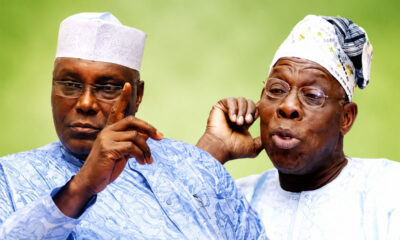
Atiku Accuses Obasanjo of Distorting History, Defends Role in Third-Term Battle
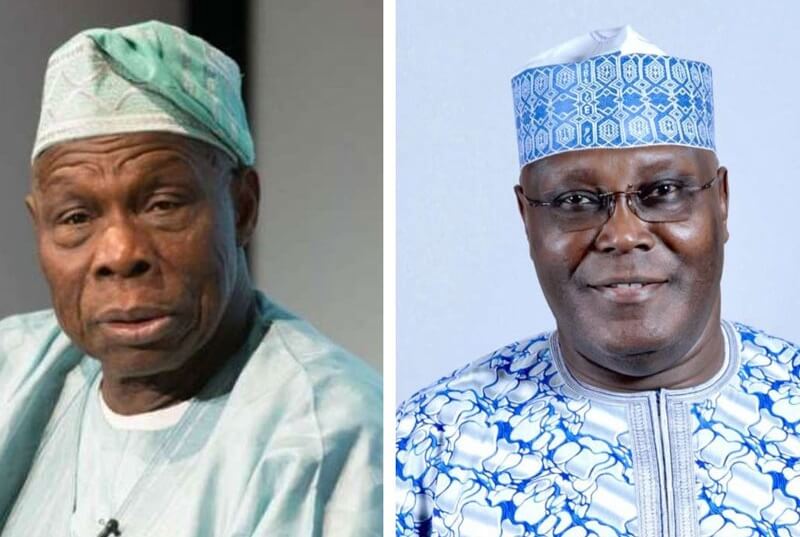
Atiku Accuses Obasanjo of Distorting History, Defends Role in Third-Term Battle
ABUJA – Former Vice President and presidential candidate of the African Democratic Congress (ADC), Atiku Abubakar, has accused former President Olusegun Obasanjo of attempting to rewrite history, insisting that he has no regrets for opposing the controversial third-term agenda during the Obasanjo administration.
In a statement issued on Saturday by his Senior Special Assistant on Public Communication, Phrank Shaibu, Atiku said Obasanjo’s recent public comments reflected “personal resentment” rather than historical facts.
According to the former vice president, his opposition to the third-term agenda was driven by his commitment to Nigeria’s Constitution and democratic principles.
“I am proud that I stood against the third-term agenda. I am proud that I stood by the Constitution of the Federal Republic of Nigeria. I have no apology whatsoever for frustrating every attempt to subvert our democracy for personal ambition,” Atiku said.
He maintained that no individual was greater than Nigeria, stressing that democracy ultimately triumphed over what he described as an unconstitutional bid to extend presidential tenure.
Atiku also claimed that the hostility between him and Obasanjo stemmed from his refusal to support the third-term project, saying he would wear any resentment arising from that decision “as a badge of honour.”
The former vice president further argued that history would remember the constitutional struggle as a victory for democracy rather than a personal feud between two political figures.
Atiku also referenced recent remarks by Director-General of the World Trade Organization, Dr. Ngozi Okonjo-Iweala, who reportedly praised the economic management team under the Obasanjo administration, saying the commendation underscored the contributions made during his tenure as vice president.
He alleged that despite such recognition, Obasanjo remained determined to downplay his role in what he described as one of Nigeria’s most successful periods of economic management.
The ADC presidential candidate also recalled supporting Obasanjo during his imprisonment under the late military regime, claiming he assisted his family, worked for his release, and later helped mobilise political structures that contributed to Obasanjo’s emergence as president in 1999.
While saying he did not regret those efforts, Atiku warned against what he described as attempts to replace gratitude with historical revisionism.
He expressed disappointment that, at a time when Nigeria faces economic hardship, insecurity and unemployment, a former president was focusing on old political disagreements instead of offering solutions to national challenges.
“The 2027 election should be about rebuilding Nigeria, restoring security, reviving the economy and giving hope to the next generation—not reopening old political wounds,” he said.
Atiku added that although he had maintained silence over the years out of respect for Obasanjo and the office he once occupied, he would no longer allow what he called repeated distortions of history to go unanswered.
He concluded by saying his focus remained on Nigeria’s future, declaring that “history is stubborn” and that both history and the Nigerian people would ultimately deliver their verdict.
Atiku Accuses Obasanjo of Distorting History, Defends Role in Third-Term Battle
-

 Education3 days ago
ICYMI: Court orders JAMB, CBT centre to pay ₦10m over forced removal of candidate’s hijab during UTME
-
 News20 hours ago
Oloyede clears air on JAMB’s ₦36m ‘snake swallowed money’ controversy
-
 Education3 days ago
Oyo Muslim Leaders Receive Saudi Delegation, Intensify Drive for Muslim College of Nursing
-
 Auto2 days ago
Policy Bottlenecks Threaten Nigeria’s Clean Mobility Drive, LCCI Warns
-
 News20 hours ago
475 Police Officers Recalled After Controversial Retirement, Ordered for Mandatory Induction
-
 Politics3 days ago
Naming Atiku as My Running Mate in 1999 My Biggest Political Error – Obasanjo
-
 Opinion3 days ago
Five days in Salvador, Brazil’s Yoruba city, By Farooq Kperogi
-
 metro3 days ago
Where did Nigeria’s fuel subsidy savings go? FG reveals how funds were spent