

Politics
Court orders INEC not to end voter registration on June 30

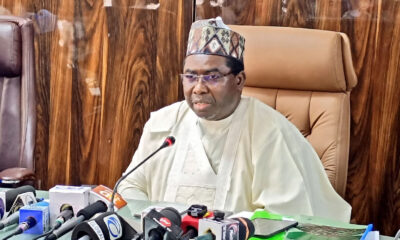
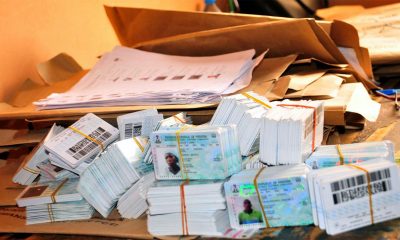
A federal high court in Abuja has stopped the Independent National Electoral Commission (INEC) from ending Continuous Voter Registration (CVR) on June 30.
INEC had fixed June 30 as the deadline for ending the ongoing CVR across the country ahead of the 2023 general election.
The Socio-Economic Rights and Accountability Project (SERAP) and 185 Nigerians had filed a lawsuit against INEC.
SERAP said the deadline should be pushed forward in the same manner INEC extended the deadline for the conduct of primaries by political parties.
In the suit FHC/L/CS/1034/2022 filed at the federal high court, Lagos, and transferred to Abuja, SERAP had asked the court for “an order restraining INEC, its agents, privies, assigns, or any other person(s) claiming through it from discontinuing the continuous voters’ registration exercise from the 30th June 2022 or any other date pending the hearing and determination of the motion on notice.”
SERAP asked the court to determine “whether the failure of INEC to extend the deadline for voter registration is not a violation of Nigerian Constitution, 1999 [as amended], the Electoral Act, and international standards”.
It also asked for “a declaration that the failure of INEC to extend the deadline for voter registration is a violation of eligible Nigerians’ rights to participate freely in their own government, equality and equal protection.”
SERAP is also seeking “an order of mandamus to direct and compel INEC to extend voter registration by a minimum of three months and take effective measures to ensure that eligible Nigerians are able to register to exercise their right to vote in the 2023 general elections”.
SERAP Deputy Director, Kolawole Oluwadare, in a statement on Monday, said Mobolaji Olajuwon, the presiding judge, granted an order of interim injunction following the hearing of an argument on an ex parte motion.
The suit was adjourned to June 29, 2022, for the hearing of the motion on notice for interlocutory injunction.




Politics
Presidency tells Peter Obi to stop dreaming, insists he lost 2023 presidential election
Presidency tells Peter Obi to stop dreaming, insists he lost 2023 presidential election
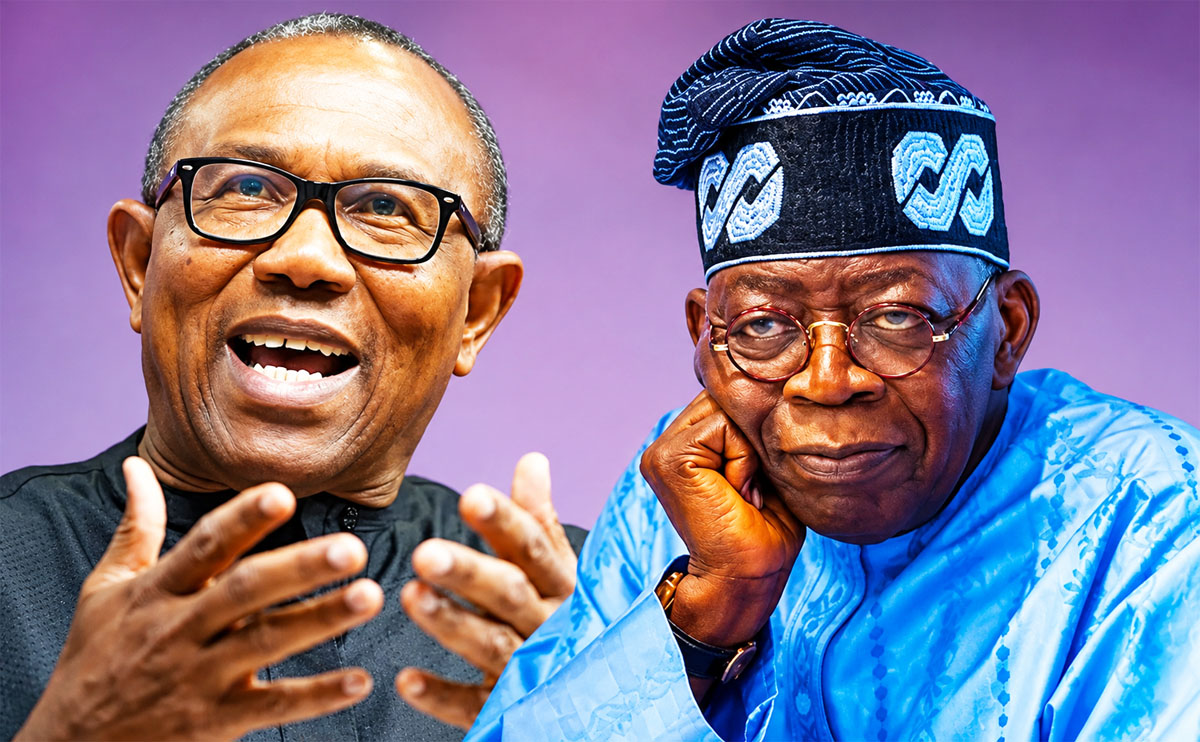
The Presidency has intensified its criticism of Peter Obi, the presidential candidate of the Nigeria Democratic Congress (NDC), telling him to stop claiming victory in the 2023 presidential election and accept what it described as his defeat at the polls.
Special Adviser to President Bola Tinubu on Information and Strategy, Bayo Onanuga, made the remarks in a lengthy post on his verified X account while reacting to Obi’s appearance on Channels Television’s Sunday Politics programme.
Onanuga said he watched only part of the interview before turning it off, describing it as a failed attempt to revive Obi’s political fortunes ahead of the 2027 general election. He accused the former Anambra State governor of making misleading claims, particularly when comparing his political journey with that of President Tinubu.
According to the presidential aide, President Tinubu has remained consistent with his political ideology throughout his career. He noted that Tinubu’s political path moved from the Social Democratic Party (SDP) to the Alliance for Democracy (AD), the Action Congress (AC), the Action Congress of Nigeria (ACN) and eventually the All Progressives Congress (APC).
Onanuga also recalled Tinubu’s role in the pro-democracy struggle following the annulment of the June 12, 1993 presidential election, saying the President endured detention, lived in exile during military rule and later returned to serve as governor of Lagos State before becoming one of the founding leaders of the APC.
“Tinubu remained true to his ideological persuasion. He stayed in the same political lane,” Onanuga said.
READ ALSO:
- Kano Woman Arrested for Severing Boyfriend’s Manhood Over Plan to Marry Another
- PFIPC scandal: How Accountant-General exposed Adeniyi Adeyemi’s fake presidential agency
- Senate Defends Bus Preaching Bill Amid Public Outcry
The presidential spokesman contrasted Tinubu’s political history with Obi’s movement across several parties. He pointed out that Obi was elected governor of Anambra State under the All Progressives Grand Alliance (APGA) before moving to the Peoples Democratic Party (PDP), later contesting the presidency on the platform of the Labour Party, and eventually joining the Nigeria Democratic Congress (NDC).
Onanuga alleged that Obi has repeatedly abandoned political parties instead of helping to rebuild them after internal crises or electoral setbacks.
He claimed that the Labour Party became embroiled in a leadership crisis after the 2023 presidential election and alleged that campaign funds remained a subject of unresolved questions. According to him, rather than stay behind to strengthen the party, Obi opted to leave.
The presidential aide further alleged that Obi also exited the African Democratic Congress (ADC) after reportedly concluding that securing the party’s presidential ticket would be difficult, accusing him of frequently changing political platforms whenever circumstances became unfavorable.
Onanuga also faulted Obi for continuing to insist that he won the 2023 presidential election, despite the Supreme Court judgment affirming President Tinubu’s victory.
According to him, Channels Television presenter Seun Okinbaloye gave Obi an opportunity during the interview to reconsider his position on the election, but the former Labour Party presidential candidate maintained that he was denied victory.
“You lost, Peter. You didn’t win that election. You came third,” Onanuga stated, adding that Obi should accept the outcome instead of revisiting the election more than three years after the Supreme Court delivered its final judgment.
He maintained that while Obi performed strongly despite contesting without a nationwide political structure, the election had been concluded legally and politically.
“Mr Obi, it is time you accepted the stark reality of the loss. Stop dreaming of a victory that you never had,” Onanuga added.
The Presidency’s remarks followed Obi’s interview in which the former presidential candidate defended his political record and renewed his call for reforms to improve Nigeria’s electoral process. Obi also urged public officials and political opponents to focus more on addressing Nigeria’s economic challenges, insecurity, unemployment and poverty rather than making him the subject of political debates.
The latest exchange underscores the deepening political rivalry between the Presidency and Obi as political realignments and preparations for the 2027 general election continue to shape Nigeria’s political landscape.
Presidency tells Peter Obi to stop dreaming, insists he lost 2023 presidential election
Politics
Accord Party, Governor Adeleke Adopt Tinubu as 2027 Presidential Candidate
Accord Party, Governor Adeleke Adopt Tinubu as 2027 Presidential Candidate
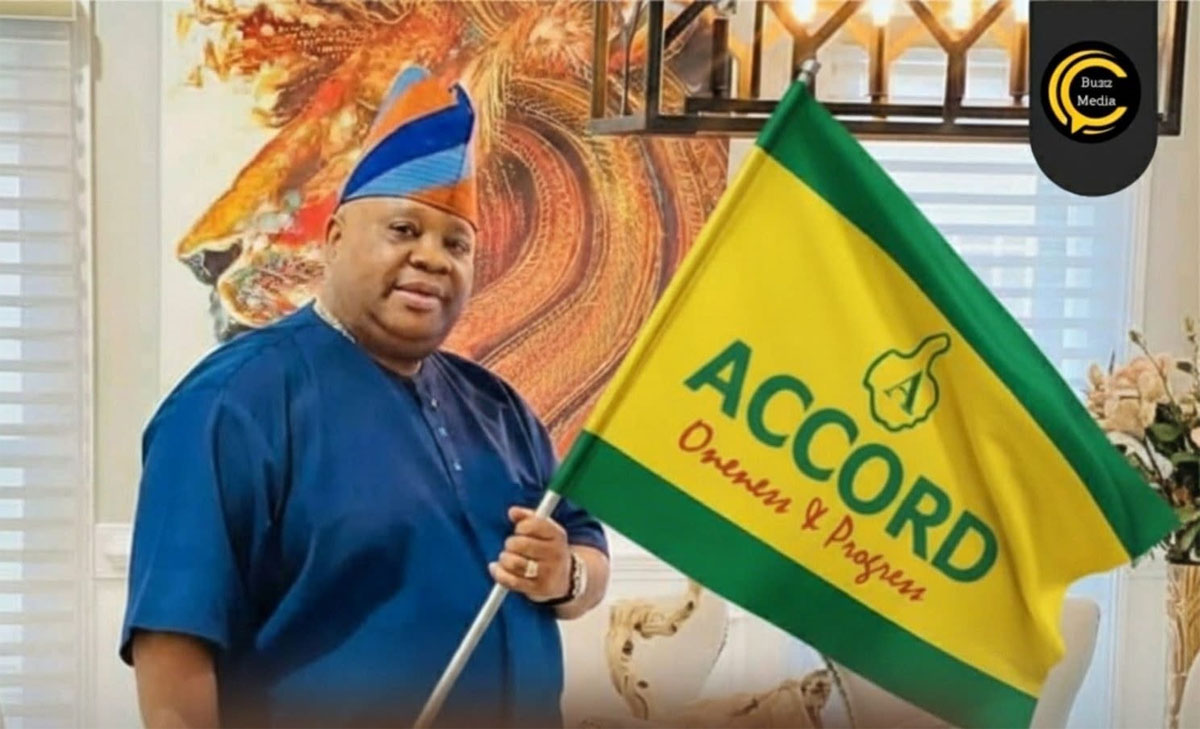
President Bola Tinubu has been adopted as the preferred presidential candidate for the 2027 election by Osun State Governor Ademola Adeleke and the national leadership of the Accord Party. The decision was reached during a meeting held on Saturday night in Osogbo, the Osun State capital, bringing together top officials of the party from across the country, including members of the National Working Committee and state chairmen. According to a statement issued on Sunday by Adeleke’s re-election campaign spokesman, Pelumi Olajengbesi, discussions at the meeting focused on the future of the party, national development issues and preparations ahead of the forthcoming Osun governorship election. Party leaders said their support for Tinubu was influenced by the need for continuity in ongoing infrastructure projects being executed by the Federal Government, stressing that major road projects across the country should be completed without interruption.
Among the projects highlighted were the Lagos-Calabar Coastal Highway and the Sokoto-Badagry Super Highway. The party leadership maintained that continuity would help ensure the successful delivery of the projects and their expected economic benefits. According to the party, it is crucial for the Tinubu administration to complete these ongoing legacy projects as they are critical to the country’s development. The meeting also reviewed the political atmosphere ahead of the August governorship election in Osun State. Leaders of the party called for a peaceful electoral process and urged all stakeholders to avoid actions capable of undermining the credibility of the poll. They warned against violence, intimidation of political opponents, electoral malpractice and the alleged use of security agencies to harass members of the party during the election period. The party further appealed to the Independent National Electoral Commission, security agencies and other relevant institutions to ensure a level playing field for all contestants.
Several national officers attended the meeting. They included the National Chairman of the Accord Party, Maxwell Mgbudem; Deputy National Chairman, Maryam Sale; National Secretary, Ajaja Abiola Adebukola; National Treasurer, Abdulazeez Oyeniyi Salaudeen; National Organising Secretary, Ibe Thankgod; and National Publicity Secretary, Omorogbe Joseph. Also present were state chairmen and other senior party officials drawn from different parts of the country. The endorsement marks another significant political development in the growing relationship between Adeleke and the Accord Party following the governor’s alignment with the platform ahead of the Osun governorship election. Party leaders at the meeting expressed confidence in Adeleke’s chances in the forthcoming poll and pledged to mobilise support structures across the state to secure victory. They also reaffirmed their commitment to strengthening the party nationwide while positioning it for future political contests.
READ ALSO:
- Obasanjo Brokered Obi-Kwankwaso Ticket, Remains Principal Sponsor – Akin Osuntokun
- Army arrests wanted soldier over alleged supply of military gear to terrorists
- BREAKING: Bandits Abduct Kebbi High Court Judge in Midnight Residence Attack
Governor Ademola Adeleke publicly reaffirmed his support for President Bola Tinubu’s second-term ambition on several occasions, describing the move as being in the interest of Osun State and the South-West region. Speaking on May this year, during an inspection of the ongoing reconstruction work on the Ibadan-Ile Ife-Ilesa Expressway, Adeleke said his support for the President went beyond partisan politics. The governor described Tinubu as “our own son, father and leader,” insisting that he needed no persuasion to back the President’s re-election bid. “I am the governor of the ancestral birthplace of Mr President. How can I have my own in the saddle and think twice before embracing him? I need no persuasion to act as I have declared repeatedly our endorsement of Mr President,” Adeleke said. He added that the endorsement was a “moral and development-driven action” aimed at advancing the interests of Osun State and the Yoruba people. The governor maintained that supporting Tinubu would help sustain ongoing federal projects and strengthen cooperation between Osun State and the Federal Government. The position was again repeated in June, when Adeleke formally flagged off his re-election campaign in Osogbo. Addressing supporters at the event, he declared: “As we seek your votes on August 15, we also restate our endorsement of our son, father and leader, President Bola Ahmed Tinubu, for re-election in 2027. Our support for Mr President is unshaken and total.”
Despite the national leadership’s endorsement, there has been internal friction within the Accord Party regarding this move. Dr. Gbenga Olawepo-Hashim, who reportedly emerged as the party’s presidential candidate through direct primaries, and his supporters have warned Governor Adeleke that his support for Tinubu could lead to internal divisions similar to those that weakened the Peoples Democratic Party. His support group, the Gbenga Hashim Solidarity Movement (GHSM), argued that Adeleke’s endorsement of Tinubu was made before he joined the Accord Party and should not be presented as a reflection of the party’s national position. GHSM further stated that the national leadership of Accord Party later engaged Olawepo-Hashim in March 2026 as part of efforts to build a broader political platform ahead of the 2027 presidential election, resulting in him emerging as the party’s candidate through open direct primaries. The group warned that Governor Adeleke’s approach within Accord Party could create internal contradictions similar to those that affected the PDP, stressing that political parties could only thrive when members respect party structures and collective decisions. “Accord Party must not travel the same path that weakened PDP. A political party cannot survive when individual calculations are placed above the collective aspirations of its members,” the group stated. GHSM also claimed that 24 state chairmen of the Accord Party had endorsed Olawepo-Hashim, while noting that the legal dispute surrounding the party’s presidential primary is currently before the Federal High Court in Abuja. The group said it would refrain from making public comments on the matter because it was already before the court.
Accord Party, Governor Adeleke Adopt Tinubu as 2027 Presidential Candidate
Politics
Obasanjo Brokered Obi-Kwankwaso Ticket, Remains Principal Sponsor – Akin Osuntokun
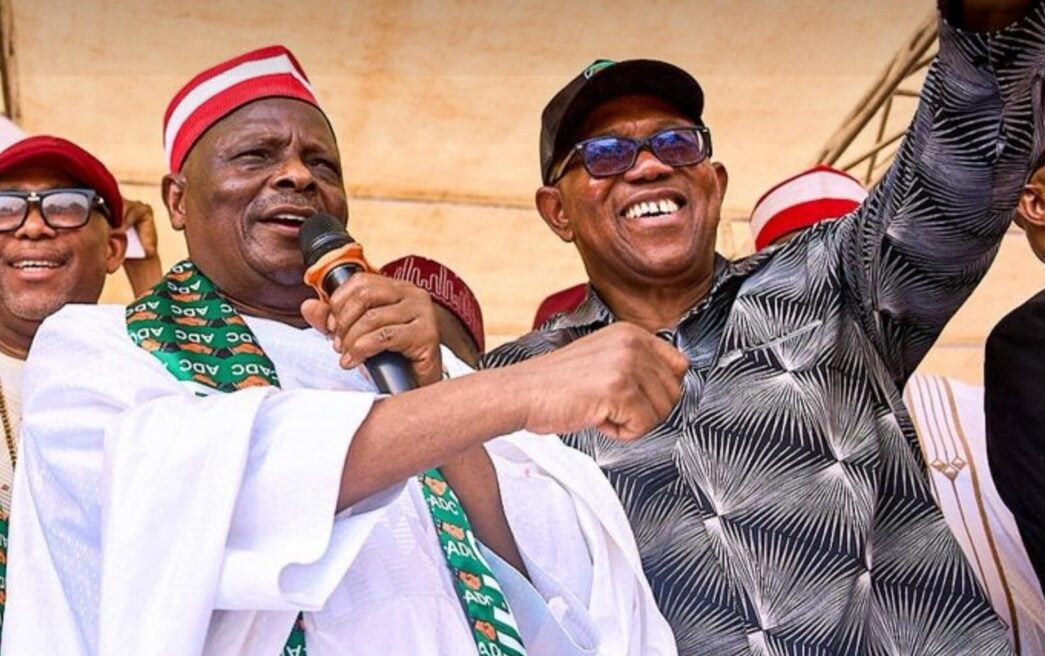
Obasanjo Brokered Obi-Kwankwaso Ticket, Remains Principal Sponsor – Akin Osuntokun
A former Political Adviser to ex-President Olusegun Obasanjo, Akin Osuntokun, has revealed that the former Nigerian leader personally brokered the political alliance between Peter Obi and Rabiu Kwankwaso and remains the principal force behind their joint presidential ticket for the 2027 election. The disclosure has sent shockwaves through Nigeria’s political landscape, offering a rare glimpse into the backroom negotiations shaping the opposition’s challenge to the ruling All Progressives Congress (APC). Osuntokun made the revelation during an interview on Arise Television on Sunday while firmly dismissing suggestions that Obasanjo was secretly working for President Bola Tinubu’s re-election bid. He argued that such claims were inconsistent with the former president’s political actions, insisting that Obasanjo had instead played a leading role in bringing Obi and Kwankwaso together as running mates under the Nigeria Democratic Congress (NDC) ticket.
“If you can say that Obasanjo is supporting any ticket, it is the Peter Obi–Kwankwaso ticket. As a matter of fact, he is the principal sponsor of that ticket,” Osuntokun declared during the interview. He maintained that allegations linking Obasanjo with Tinubu’s political camp lacked logic, especially considering the former president’s alleged involvement in putting the opposition ticket together. “So how do you then suggest that he is secretly working for Tinubu? It does not make sense to me. I think that claim is absolute bunkum. The evidence is in the public domain. Obasanjo is playing a major role in supporting the Obi-Kwankwaso ticket. He was the one who brought the two men together,” he added. When pressed to confirm whether Obasanjo actually brokered the ticket, Osuntokun stood firmly by his remarks. “Yes, of course. That’s what I said. He brokered the ticket between Obi and Kwankwaso. Both of them are quite close to him. It is a ticket that makes sense and has the potential to make a significant impact in the 2027 election. I can tell you for free that he was the one who brought the ticket together,” Osuntokun stated.
The former adviser also revealed that discussions for an Obi-Kwankwaso alliance could have materialized much earlier, saying talks had taken place several years before the current arrangement. “Kwankwaso could have teamed up with Obi four years ago. I remember him saying that if they had agreed then, they would probably have had an arrangement in which they would each spend one term in office, and Kwankwaso would now have been the beneficiary,” he said. He stressed that Obasanjo’s role in the alliance was already public knowledge and questioned why anyone would conclude that the former president was supporting Tinubu simply because the president visited him in 2023. Beyond the political alliance, Osuntokun also rejected claims that former President Obasanjo manipulated the 2003 elections to undermine Alliance for Democracy (AD) governors in the South-West. He described conspiracy theories surrounding that election as unfounded, insisting there were logical reasons why the AD governors lost. “I was very active during that period and I can say categorically that nothing of that sort happened. The election in which the AD governors lost can be explained state by state,” he said.
READ ALSO:
- Army arrests wanted soldier over alleged supply of military gear to terrorists
- BREAKING: Bandits Abduct Kebbi High Court Judge in Midnight Residence Attack
- Why Buhari refused to publicly endorse Tinubu before APC primary – Babachir Lawal
Fresh details have emerged over the political arrangement underpinning the NDC presidential ticket, with the party’s vice-presidential candidate, Senator Rabiu Kwankwaso, revealing that he and the presidential candidate, Peter Obi, signed a written agreement committing the former Anambra State governor to serve only a single four-year term if elected in 2027. The disclosure places the issue of power rotation at the centre of the unfolding 2027 political contest, with Kwankwaso presenting the agreement as part of a broader understanding designed to preserve national balance and sustain cooperation within the party beyond the next election cycle. Speaking during an interview on Channels Television, Kwankwaso said the understanding was not merely verbal but documented through formal agreements reached by both leaders. According to him, the arrangement provides that if the NDC wins the 2027 presidential election, Obi would complete one four-year tenure between 2027 and 2031, after which the presidency would return to Northern Nigeria. “We have agreed to formalise it in writing. We have executed one document for the party and another between the two of us,” Kwankwaso stated.
Responding to questions on whether Obi’s commitment to a single term could be relied upon, Kwankwaso expressed confidence that the former governor would abide by the agreement. “I personally believe him. Based on what I know about him, I don’t think he will change his mind when the time comes. We are all gentlemen, and we have accepted to put it on paper,” he said. He explained that both agreements were designed to guide the partnership throughout the life of a potential administration while laying the foundation for an orderly political transition at the end of the proposed four-year tenure. “The agreement is that after four years, we will continue to work together as a party, as friends and brothers, so that after our four-year term, from 2027 to 2031, power returns to the North. That is the consensus,” he said. Kwankwaso also explained the circumstances that informed his decision to accept the vice-presidential nomination despite previously pursuing the presidency, saying the decision was anchored on what both leaders considered the principles of fairness, equity and national inclusion. According to him, the two politicians reached a consensus that the South should produce the president for one term before the office rotates back to the North, describing the arrangement as one intended to reinforce national cohesion and political stability.
READ ALSO:
- Oyetola, VP’s aide, Opeifa to drive discussions at 2026 TCAN Transport Summit
- Is Nigeria’s Electricity Tariff Going Up? FG Finally Breaks Silence
- ISWAP finance chief surrenders to Nigerian troops with two children in Borno
The formal power-sharing arrangement between Obi and Kwankwaso aligns with the broader zoning framework already adopted by the NDC at its maiden National Convention held in Abuja in May 2026. At that convention, delegates overwhelmingly endorsed a power-rotation formula designed to promote national unity and balance regional interests. Under the resolution, the NDC declared that its presidential candidate for the 2027 general election must emerge from Southern Nigeria and, if elected, serve only one term ending in 2031. After that, the party’s presidential ticket will rotate to Northern Nigeria for the next electoral cycle. The motion was moved by Afam Victor Ogene, who represents Ogbaru Federal Constituency in Anambra State, and was overwhelmingly endorsed by party delegates. Announcing the resolution, the National Chairman of the party, Moses Cleopas, said the arrangement was aimed at promoting equity, inclusiveness and stability within the growing opposition coalition ahead of the 2027 general elections. He explained that under the agreement reached by party stakeholders, the South would produce the party’s presidential candidate in 2027 for only one term of four years, after which the ticket would automatically rotate to Northern Nigeria in 2031. “It will be the turn of the North in 2031,” Cleopas declared while addressing delegates at the convention.
Addressing delegates at the convention, Obi described the NDC as a platform for “national liberation”, insisting Nigerians would resist every attempt to undermine democracy and credible elections. The former presidential candidate warned against attempts to entrench one-party dominance in the country. “We cannot have one party in Nigeria. Nigeria must have democracy. Those who think there will be no free and fair elections in 2027 should rethink because Nigerians will insist on credible elections,” he declared. Obi also painted a grim picture of the nation’s socio-economic situation, claiming that over 140 million Nigerians were living in multidimensional poverty while millions of youths remained unemployed or underemployed. “Nigeria is not poor. Nigeria was looted into poverty, and we are coming to reverse that situation,” he added. Kwankwaso, while endorsing the zoning arrangement at the convention, described it as a necessary step toward fairness, equity and national healing. “It is therefore with great sense of unity and solidarity that as a loyal party member, I support the decision to zone the presidential ticket of the NDC to the South so that it allows the region to complete its turn in producing national leadership,” he stated. He expressed optimism that the NDC would emerge as a platform for national renewal, anchored on inclusive leadership devoid of ethnic and religious bias. “This party shall also ensure to change the way things are done today by prioritising leadership without ethnic jingoism and religious favouritism,” he added.
The emergence of the Obi-Kwankwaso ticket has reshaped political calculations ahead of the 2027 presidential election. Political observers believe the alliance combines Obi’s strong support among young voters, professionals and urban residents with Kwankwaso’s influence through the Kwankwasiyya Movement in Kano and parts of northern Nigeria. Supporters of the ticket argue that the partnership gives the NDC a broader national appeal by bringing together a South-East Christian and a North-West Muslim, while also reducing the fragmentation of opposition votes. The Nigeria Democratic Congress and the Obidient Movement have dismissed former National Chairman of the APC, Abdullahi Ganduje’s claim that the presidential ticket lacks the political legacy to win the 2027 election. Abdulmumin Abdulsalam, Deputy National Publicity Secretary of the NDC, dismissed Ganduje’s comments as inconsequential, saying the former APC chairman had lost political relevance in Kano. He argued that Obi’s electoral performance in the 2023 presidential election demonstrated his national appeal and predicted that the former Anambra governor would attract even more votes in 2027.
However, analysts have also pointed to major challenges facing the alliance, including the organisational strength of the ruling APC, the political influence of the African Democratic Congress, and questions over whether the combined support bases of both candidates will translate into electoral victory in 2027. The APC has dismissed the NDC’s zoning arrangement as no threat to Tinubu’s second-term ambition, insisting that the ruling party remained firmly in control of the nation’s political structure ahead of the 2027 polls. APC National Chairman, Nentawe Yilwatda, argued that the real political battle ahead of 2027 was not between the APC and the NDC, but among opposition parties themselves.
Akin Osuntokun, who served as Political Adviser to President Olusegun Obasanjo between 1999 and 2007, is a Nigerian political scientist, strategist, researcher, administrator, journalist and writer with experience in media advocacy, policy research and implementation and political analysis. He was later appointed Director of the Presidential Campaign of the Peoples Democratic Party in the 2011 general elections. In December 2022, he was announced by the Nigerian Labour Party as the Director General of the Obi-Datti Presidential Campaign Council to lead the 2023 presidential election campaign of Peter Obi. Osuntokun has previously spoken about the fragmentation within Nigeria’s opposition parties, warning that the lack of a united coalition among key figures such as Obi, Kwankwaso and Atiku Abubakar is giving the ruling APC a clear advantage ahead of the 2027 presidential election.
Obasanjo Brokered Obi-Kwankwaso Ticket, Remains Principal Sponsor – Akin Osuntokun
-
 Politics2 days ago
2027 election: Atiku accuses Obasanjo of reviving false allegations to favour preferred candidate
-

 metro1 day ago
NDLEA intercepts ₦10bn worth of cocaine, Loud, opioids in Lagos
-

 Sports1 day ago
Super Falcons recover stolen cash after hotel theft suspect confesses
-

 Sports2 days ago
Anthony Joshua stuns Kristian Prenga with dramatic knockout to revive career
-
 metro3 days ago
Bandits Abduct Zamfara LG Chairman, Kill Four Security Operatives
-
 metro2 days ago
Al-Mustapha Fires Back: Ex-DSS Officer’s Account of Abacha’s Death Is a Lie, I Have CCTV Evidence
-

 metro2 days ago
ISWAP finance chief surrenders to Nigerian troops with two children in Borno
-
 metro3 days ago
Gumi Questions FG’s Refusal To Dialogue With Bandits, Boko Haram, Cites Niger Delta Precedent