
metro
NPC Foils Attempt to Hack Recruitment Portal in Anambra

The National Population Commission (NPC) in Anambra yesterday said it foiled attempted hacking of its online recruitment portal by unqualified candidates in the ongoing trial census in the state.
The Commissioner representing Anambra at the NPC, Mr. Chidi Ezeoke, made the disclosure at a news conference in Awka.
The event was to give update on the Trial Population and Housing Census in the seven towns of Idemili South Local Government Area of the state.
Ezeoke said that the commission had established a fully digitalised online geo-fenced portal to recruit personnel from the selected communities across the country, where the exercise would be conducted.
He said that the commission was committed to correcting any detected anomaly, to ensure an accurate and reliable census in 2023.
READ ALSO:
- Man Kills 71-year-old Woman, Sells her Parts in Ogun
- Singer Portable Flaunts Cash Gift From Osun Governor
- Kuje Prison Escapee Arrested In Ogun
“The essence of the trial census is to correct some anomalies. We want to ensure we organise a process that is hitch-free.
“If hackers were not able to succeed in this, we want to ensure and assure that it will be difficult for them to hack during the 2023 census.
“I’m almost certain that the attempt to a large extent, was foiled. But when you are trying out something new, it will be very difficult to prevent people from trying their hands to short-circuit or bypass your efforts, ” he said
He said census was capital intensive, adding that funding would not constitute a barrier towards achieving a hitch-free exercise.
“Government is always assisted by foreign donor agencies because everyone, including international organisations, wants to get exact, accurate and reliable figures from Nigeria.
” It is always embarrassing when you want to quote Nigeria’s population and you say ‘about’. So, the donors also want to be part of the process,” he added.
Also, Dr Joachim Ulasi, NPC State Director, refuted alleged substitution of recruited officers for the exercise, saying the only ones dropped were those absent during the 12-day training.
THISDAY












metro
Man Admits Stabbing Wife 22 Times in Front of Four Children

Man Admits Stabbing Wife 22 Times in Front of Four Children
A 56-year-old man, Momodou Bobb, is facing a mandatory life sentence after admitting to the brutal killing of his wife, Ndata Bobb, in a shocking domestic violence case that took place while their four children were inside the home.
The High Court in Edinburgh heard that the attack occurred at the family’s home in Restalrig, Restalrig, Edinburgh, where the victim suffered at least 22 stab wounds to multiple parts of her body, including the face, neck, chest, back, arms, and abdomen.
Prosecutors told the court that Bobb initially claimed the incident happened during a struggle in which he was holding a knife that “slipped,” but he later admitted murdering his wife during a violent confrontation on 27 and 28 August last year.
The court was told that emergency services were alerted after a 999 call reported a “fight” between the couple. When police arrived, Bobb opened the door wearing only boxer shorts and was covered in blood. Officers also found two blood-stained knives in the kitchen.
Despite rapid medical intervention, including attempts by paramedics to resuscitate the victim at the scene, she was later pronounced dead at hospital. A post-mortem examination confirmed that the cause of death was a deep stab wound to the neck that severed a major vein.
READ ALSO:
- Melania Trump Denies Epstein Links, Calls for Public Hearings for Survivors
- CAF President Denies Corruption Claims Over AFCON Senegal–Morocco Controversy
- Pope Leo XIV Launches 11-Day Africa Tour Across Four Nations
Witness testimony presented in court described hearing the victim screaming for help, reportedly shouting “leave me alone” before collapsing inside the living room.
The court also heard that Bobb sustained injuries to his hand during the incident and was treated in hospital under police supervision. During treatment, he reportedly told officers that the knife had “slipped” during a fight.
Lady Haldane, presiding over the case, described the victim as a “much-loved mother” and noted the devastating impact her death has had on her family, including her four children—three of whom she shared with the accused and one from a previous relationship.
She further confirmed that under UK law, murder carries a mandatory life sentence, with the court set to determine the minimum term Bobb must serve before being eligible to apply for parole.
The judge noted that the victim, originally from The Gambia, had a large extended family and was deeply loved by those who knew her, adding that the “tragedy of her loss is immense.”
Court proceedings revealed that the couple had moved to the UK in the 1990s and later settled in Scotland, with the victim obtaining tenancy of the Edinburgh property in late 2023.
Sentence has been deferred pending the preparation of background and sentencing reports.
Authorities have described the case as a deeply disturbing example of domestic violence, highlighting ongoing concerns about the need for stronger prevention and intervention measures to protect vulnerable families.
Man Admits Stabbing Wife 22 Times in Front of Four Children
BBC
metro
EFCC Debunks Fake Wanted Poster of Sabinus

EFCC Debunks Fake Wanted Poster of Sabinus
The Economic and Financial Crimes Commission (EFCC) has dismissed as false a viral “wanted” poster featuring popular Nigerian comedian Emmanuel Chukwuemeka Ejekwu, widely known as Sabinus, describing it as fake, misleading, and the work of mischief-makers.
In a statement shared via its official social media platforms on Thursday, the anti-graft agency clearly stamped the circulating image “FAKE NEWS”, warning individuals responsible for spreading such content to desist. In a strongly worded caption, the EFCC wrote, “Clout chaser, stop this now!” — signaling frustration over the growing trend of misinformation online.
The doctored poster, which spread rapidly across social media, mimicked the official EFCC “wanted” notice format, including the agency’s logo and layout. It falsely claimed that Sabinus, allegedly aged 43, was wanted for obtaining money under false pretence, and even listed a supposed last known address in Victoria Island, Lagos State.
READ ALSO:
- Making Up for Lost Sleep Might Be Healthier Than Experts Once Believed — What Science Says
- Sleeping Positions: How They Affect Your Health and Which Ones to Avoid
- Thousands Rally Across Iran to Honour Late Supreme Leader Khamenei
However, further checks confirm that no such notice exists on any official EFCC platform, including its verified website and social media pages, which are the only legitimate channels through which the commission declares individuals wanted. The agency reiterated that all authentic wanted notices are publicly verifiable, urging Nigerians to rely on official sources before sharing sensitive claims.
The EFCC did not disclose whether it has identified those behind the fabricated poster but emphasized that the spread of false information could have serious legal and reputational consequences. The commission has, in recent years, intensified warnings against the circulation of fake news, impersonation of government agencies, and digital misinformation, particularly on social media.
Sabinus, a widely recognised entertainer known for his viral comedy skits and brand endorsements, commands a massive following both within Nigeria and internationally. As of the time of reporting, he has not publicly reacted to the incident.
The development highlights growing concerns about the misuse of digital platforms to create convincing but false narratives, especially involving public figures. Authorities continue to advise the public to verify information carefully and avoid amplifying unconfirmed reports that could harm individuals or undermine public trust.
EFCC Debunks Fake Wanted Poster of Sabinus
metro
12-Year-Old Dies After Alleged Bullying at FGC, Ikot Ekpene
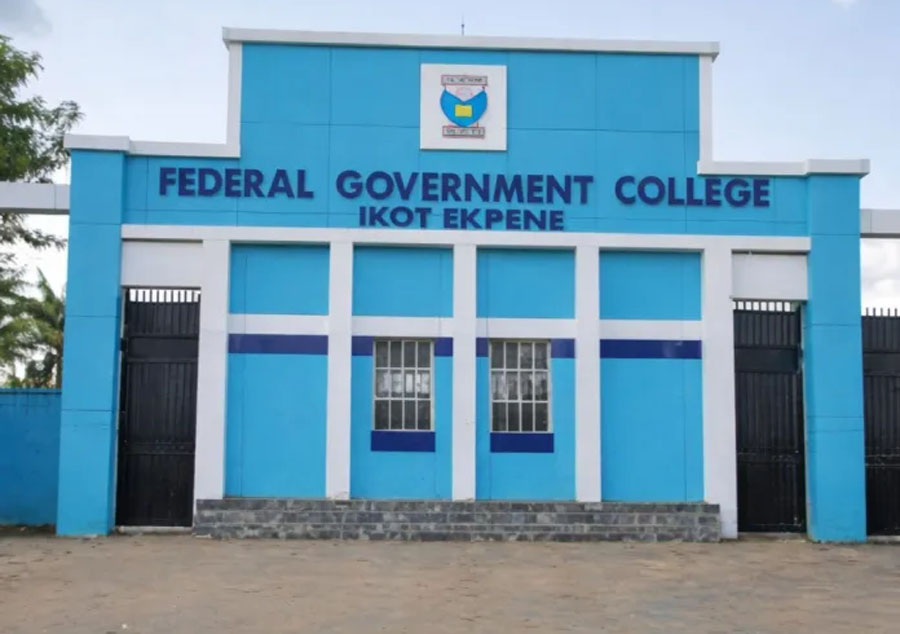
12-Year-Old Dies After Alleged Bullying at FGC, Ikot Ekpene
Tension and outrage have gripped Federal Government College, Ikot Ekpene in Akwa Ibom State after a 12-year-old Junior Secondary School 2 student, Ufokobong Edwin Godwin, reportedly died following alleged bullying by a senior student over provisions. The incident, which began before the Easter break, has raised serious concerns about student safety and bullying in Nigerian schools.
The attack reportedly occurred when a Senior Secondary School 3 student demanded provisions from the younger pupil during terminal examinations. Godwin refused, saying he did not have enough to share. Witnesses allege that the senior student responded with physical violence, repeatedly striking Godwin on the neck and throat, causing him to faint multiple times. Other students only intervened after the assault escalated.
Godwin was initially hospitalized on Easter Sunday for a neck injury. He briefly regained consciousness but was later returned to school without his parents being informed of the seriousness of the incident. Upon returning home for the holiday, the boy began complaining of severe neck and throat pain. Despite taking pain relief medication at home, his condition worsened, prompting his father to rush him back to the hospital, where he tragically died. Medical personnel later confirmed that his death resulted from complications associated with blood clots around the neck and throat area.
READ ALSO:
- JAMB Urges Candidates, Parents to Protest Admission Bias as CAPS Ensures Transparency
- EFCC Arrests Maiduguri Woman for Cleaning Nose With N500 Note
- Court Stops ADC Congress, Orders Status Quo in Leadership Row
The school principal, Mr. Jude Ezeogu, described the incident as deeply unfortunate and confirmed that the school community is in mourning. He said a school management committee will meet to review the circumstances surrounding the student’s death and communicate their findings to the public.
The family of the deceased has called on the Federal Government of Nigeria to investigate the matter and ensure justice. The boy’s father urged the authorities to intervene, saying he would provide more details at an appropriate time.
The tragic death of Ufokobong Edwin Godwin has reignited discussions about bullying, student protection, and campus safety across Nigeria, with parents and education stakeholders calling for stricter measures to prevent such incidents in boarding schools.
12-Year-Old Dies After Alleged Bullying at FGC, Ikot Ekpene

-

 metro3 days ago
FG Deports US Missionary Alex Barbir Over Alleged Role in Nigeria Insecurity
-

 Entertainment3 days ago
Veteran Nollywood Actor Davis Ofor ‘Clarus’ of New Masquerade Dies at 85
-

 Africa22 hours ago
ECOWAS Recruitment 2026: Over 30 Job Vacancies Open for Nigerians (How to Apply)
-

 metro2 days ago
2026 NYSC Batch A Stream II: Registration, Swearing-In Dates Announced
-

 metro3 days ago
Lagos Announces Partial Road Closures for Project Commissioning
-

 Entertainment2 days ago
Saheed Osupa Defends Juju Use Amid Backlash From Islamic Clerics
-

 Politics1 day ago
Court Stops ADC Congress, Orders Status Quo in Leadership Row
-

 News3 days ago
Iran Lists Tough Conditions for Peace Talks with US