
Business
FG projects N6.72tn petrol subsidy for 2023, capital projects threatened
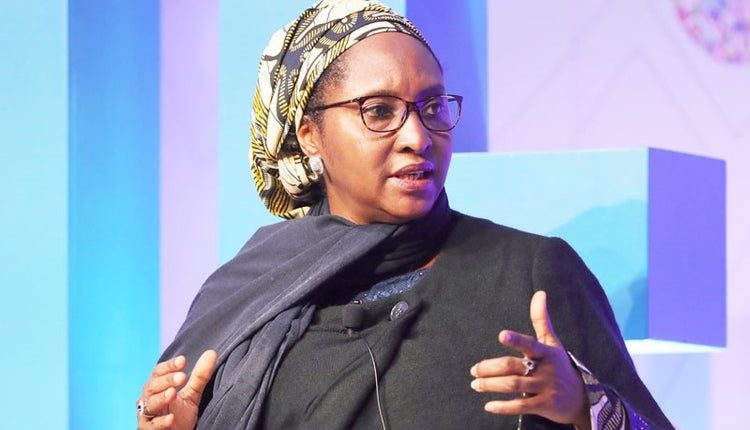
The Federal Government is projecting to spend N6.72 trillion on subsidy for Premium Motor Spirit (PMS) otherwise called petrol for the 2023 fiscal year.
The projected expenditure is N2.53trn higher than the current petrol subsidy figure, expected to roll till May next year.
With the amount of subsidy projected, governments at all levels may not get any allocations from oil revenues, which could jeopardise the capital expenditure budget. The situation is also likely to deepen governments’ borrowing spree.
The Minister of Finance, Budget and National Planning, Mrs Zainab Ahmed, who disclosed the projections at the public presentation of the 2023 – 2025 Medium Term Expenditure Framework and Fiscal Strategic Paper (MTEF and FSP), in Abuja, however, advocated the option of truncating the subsidy payment by May, next year.
She gave two scenarios as to how the 2023 budget will be implemented.
In the first scenario, the minister said, “The subsidy on PMS is estimated at N6.72 trillion for the full year 2023”. This amount, she said, “Will remain and be fully provided for by the NNPC on behalf of the federation”.
This first scenario will leave little or no savings to be shared by the Federal Account Allocation Committee (FAAC) thus limiting the shareable revenue to tax warnings, and royalties. This might impact the health of many states and local governments because of the huge reduction in the monthly FAAC allocations.
READ ALSO:
- Terrorism: FG Mulls Ban On Motorcycles, Mining Activities Nationwide
- Oshoala wins CAF women award for fifth time
- ASUU strike: No going back on nationwide protest, says NLC
- NCAA suspends Dana Air’s operations indefinitely
- Anti Muslim-Muslim ticket campaigners protest at unveiling of Shettima as APC VP candidate
For the second scenario, the minister said: “Petrol subsidy will remain up to mid-2023 based on the 18-month extension announced early 2022, in which case, only N3.36 trillion will be provided for”.
The minister cautioned that “Both scenarios have implications for net accretion to the Federation Account and projected deficit levels”.
She said the government might have a total budgetary estimate of about N17trn for 2022 in one of the scenarios and about N16trn in the other.
The minister noted that “The draft 2023-2025 MTEF/FSP has been prepared against the backdrop of continuing global challenges occasioned by lingering COVID-19 pandemic effects, as well as higher food and fuel prices due to the war in Ukraine”.
On revenue implications, the minister said: “The new arrangement has indicated that NNPC will not be contributing monthly to the Federation as they used to in the past. But NNPC will be paying royalties, dividends and taxes. So, while the revenue might not be monthly, we will work on an arrangement on how this will be paid.
“And it is possible to work out an arrangement where the payments could be monthly or quarterly. So, I was just saying that in a new arrangement regime NNPC will not be contributing to the FAAC on a monthly basis, but NNPC will still be paying taxes, royalties and dividends,” she explained further.
The minister clarified why NNPC has not remitted funds to FAAC for about eight months while it was transiting to NNPC Limited which took effect on Tuesday.
“Why are we not receiving any revenues from the Federation? Because the NNPC has been instructed to cover the cost of fuel subsidy on behalf of the federation. So NNPC is not paying the subsidy on its account and I mean, they were not paying the subsidies that would have been remittances distribution and this is the arena that we seek to continue in 2023,” she said.
To ward off this looming crisis, Ahmed said subsidy removal remains the best option.
“And that’s why it’s important for us to consider this issue of removal of subsidies very seriously because no marketer is willing to buy PMS after sourcing their foreign exchange and competing with subsidies, it can only be a government agency,” she stated.
Daily Trust reports that President Muhammadu Buhari had at various times suggested his disapproval of withdrawing the fuel subsidy, which he said, would worsen the condition of the poor.
Revenue challenges soar as debts, salaries gulp N4.7trn in 4 months
Meanwhile, the government admitted on Thursday that the country is in severe revenue challenges and must find sustainable strategies to boost revenue and revive the economy.
Ahmed, during the consultative forum, said figures so far have shown that Nigeria spends about 90 per cent of its revenue on debt servicing.
This is further compounded by the rising inflation, which is now 18.60 per cent according to the latest figures from the National Bureau of Statistics (NBS).
The country’s debt service has also worsened in the first quarter of 2022 as the country’s debt service to revenue ratio rose to 80 per cent, implying an increase of 400 basis points when compared to the 76 per cent obtainable last year.
A debt service to revenue ratio of 8 per cent implies that for every N100 earned by Nigeria, N80 is spent servicing debt.
Further checks by Daily Trust show that Nigeria’s total debt stock as at the first quarter of 2022 had risen to N41.60trn against N39.56trn in December 2021, which represents a N2.04trn increase in three months.
The minister said the federal government has so far released the sum of N4.72trn to finance some of the expenditure items contained in the 2022 budget.
The 2022 N17trn budget was signed into law on December 31 last year by President Muhammadu Buhari.
The breakdown of the budget includes N869bn for statutory allocation, N3.8trn for debt servicing, N6.9trn and N5.4trn for recurrent and capital expenditure respectively.
Speaking during the event, Ahmed said “Out of the N4.72trn spending, the government released N1.9trn for debt service while personnel costs and pensions gulped the sum of N1.26trn,”
READ ALSO:
- Senate passes bill for states, individuals to generate electricity
- CAN dares APC to names bishops at Shettima’s unveiling
- NCAA suspends Dana Air’s operations indefinitely
She said the balance of N773.63bn was spent by the federal government on capital projects.
On revenue generation, the minister explained that “Between January and April this year, the federal government generated the sum of N1.63trn. Out of the N1.63trn, N285.38bn came from oil revenue, which represents 39 per cent performance, while non-oil revenue collection was put at N632.56bn representing about 84 per cent.”
Corroborating the position of the minister, The Director -General of the Budget Office of the Federation, Ben Akabueze said that Nigeria is currently going through significant fiscal challenges.
Akabueze said while Nigeria had improved transparency and accountability in the oil sector, more work needed to be done in boosting revenue.
Nigeria recorded its best performance in the open market improving by 24 points in transparency in the latest Open Budget Initiative Report.
Despite new petrol price, fuel scarcity returns to Abuja
Even with a price increase for petrol, this week, queues for the product have persisted in Abuja.
Daily Trust observed yesterday that vehicular queues have returned at fuel stations said to be selling cheaper and whose pumps are perceived as accurate.
Last weekend, petrol stations in the capital city jerked up the pump price almost uniformly to N185/litre a development, which cleared the long queues suffered by motorists for weeks.
On Tuesday, some petrol marketers released a new price template, which contains official approval for petrol to sell above N165 per litre across the country. The Nigerian Midstream and Downstream Petroleum Regulatory Authority (NMDPRA), which fixes rates, did not confirm or refute the new price regime.
According to the regional price list, the rate rose to N169 in Lagos and N174 for Abuja.
However, there were varied prices for the six geopolitical zones with the South West, South South, southeast and north central regions getting a hike of N14 from N165 to N179/l.
The price was raised to N184 in the North West and N189 in the North East being a N24 increase, the highest in the new adjustment. Petrol will now sell at N179 in the North Central region.
The upward price review also affected ex-depot prices in the Lagos axis, rising from N148.17 to a range of N160 and 162. Depots in Warri/Ogbarra have their rates adjusted to N162-N165 while Port Harcourt depots will sell for N165-167.
However, in spite of this raise, motorists were shocked to see that the queues have sprung up again. According to a cross section of them found along some major stations in the nation’s capital, the resurfacing of the queues was something to worry about.
Hamisu Usman, a mechanic, said he was at a station to buy petrol in the Dutse area of Abuja on Thursday and although he bought the product for N175, he spent two hours in the queue.
In Jabi, some fuel stations sold the product for N175 while others were shut indicating they were yet to receive a fresh consignment of the product. Around the Wuse area, the few stations operating had vehicles besieging both their entrance and exit points.
Just opposite the NNPC Limited headquarters, the stations sold the product for N174/l with a winding queue of vehicles spanning over a kilometre on the Conoil side.
On the cause of the scarcity, a marketer, Samuel Okon, said it was barely 48 hours after the new price template came into effect.
He said, “It will take almost a week for this issue to normalise because the marketers who had stopped buying the product will have to mobilise funds to go to the depots and buy at the new rate knowing that they will get a profit margin.
“So, from next week, some of the stations that were shut earlier will begin to resume operations and that will ease the queues,” noted Okon.
But a pump attendant supervisor in one of the prominent stations in Abuja, Aliyu Musa, gave another view to the rising queue for petrol.
He said this is the first time in years that Nigerians are witnessing separate but ‘official’ prices of petrol and that it will take time for them to adjust.
“You know that the prices in Abuja and Lagos are cheaper than those in all other states and the geopolitical zones. What we have observed among the motorists we serve since Wednesday is that most of them who live in Suleja (Niger State) and Mararaba (Nasarawa) prefer to buy in town because they said stations are selling at N179 there while it is N174 officially in Abuja.”
Musa also said long distance and interstate drivers fill up their vehicles in Abuja rather than buying a little and that was adding to the queue. “If you make your observation in Lagos, you may see this same trend too,” he noted.
DAILY TRUST








Auto
Relief for Last-Mile Delivery Operators as TSS Motors launches Forland T5 light Trucks
Relief for Last-Mile Delivery Operators as TSS Motors launches Forland T5 light Trucks
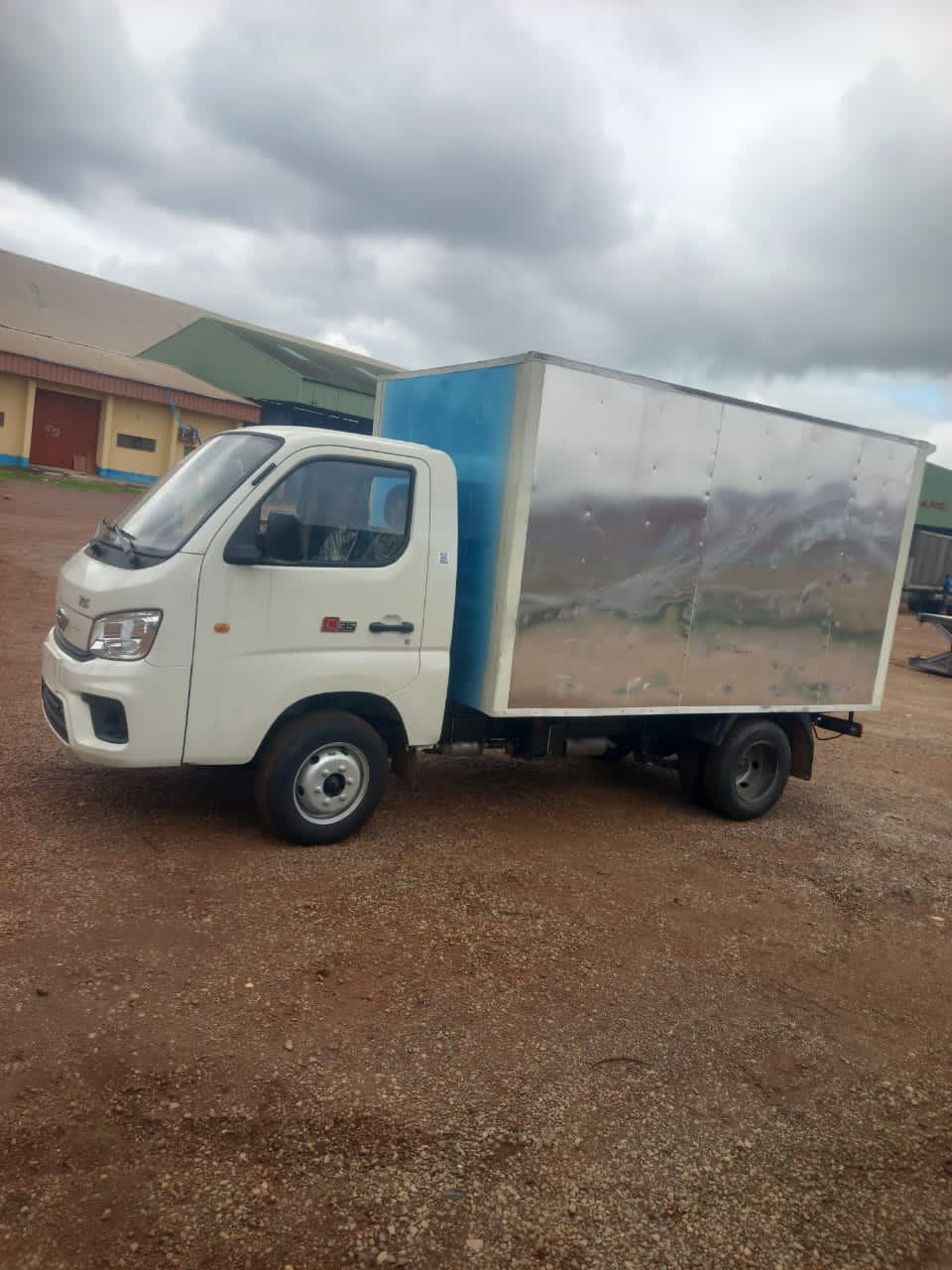
Nigeria’s fast-growing logistics and distribution sector has received a major boost as Transit Support Services Ltd. (TSS Motors) unveiled the locally assembled Forland T5 light truck, a new range of mini trucks designed to slash the high operating costs that have long plagued last-mile delivery operators.
The company said the introduction of the Forland T5 series, assembled at its Enugu plant, is aimed at providing businesses with a durable, affordable and fuel-efficient solution for the most expensive stage of the supply chain—the final delivery to customers.
Although the last mile is typically the shortest leg of the distribution process, it remains the most complex and costly, accounting for a significant share of transportation and shipping expenses.
By leveraging local vehicle assembly, TSS said it is passing on substantial cost savings to logistics operators and businesses.
Speaking on the new product, TSS Senior Sales Executive, Miss Blessing Aluh, said the company developed the Forland T5 in response to the growing demand for practical and cost-effective delivery vehicles.
“Businesses have long been searching for a practical solution to the high cost of last-mile deliveries. With our Forland T5, that much-awaited solution has finally arrived in Nigeria.
“TSS has come to the rescue with a truck specially adapted for last-mile delivery because of its low maintenance cost. It is guaranteed to reduce operating expenses and make deliveries more efficient,” she said.
According to Aluh, the T5 is built by Forland, the specialised light truck division of Foton, and manufactured to high international quality standards.
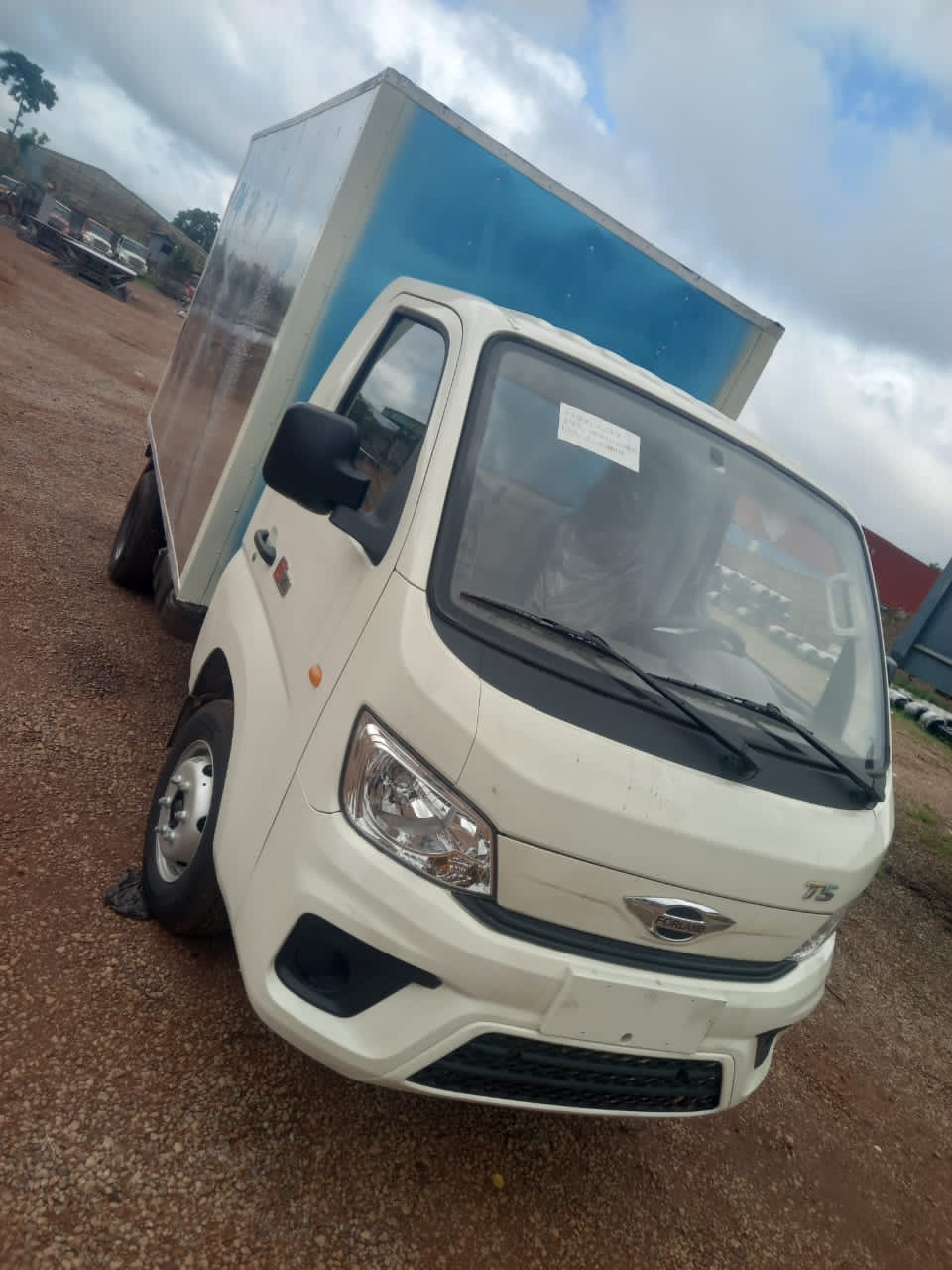
The truck is powered by an 82-kilowatt DAM 15R petrol engine noted for its fuel efficiency and low emissions.
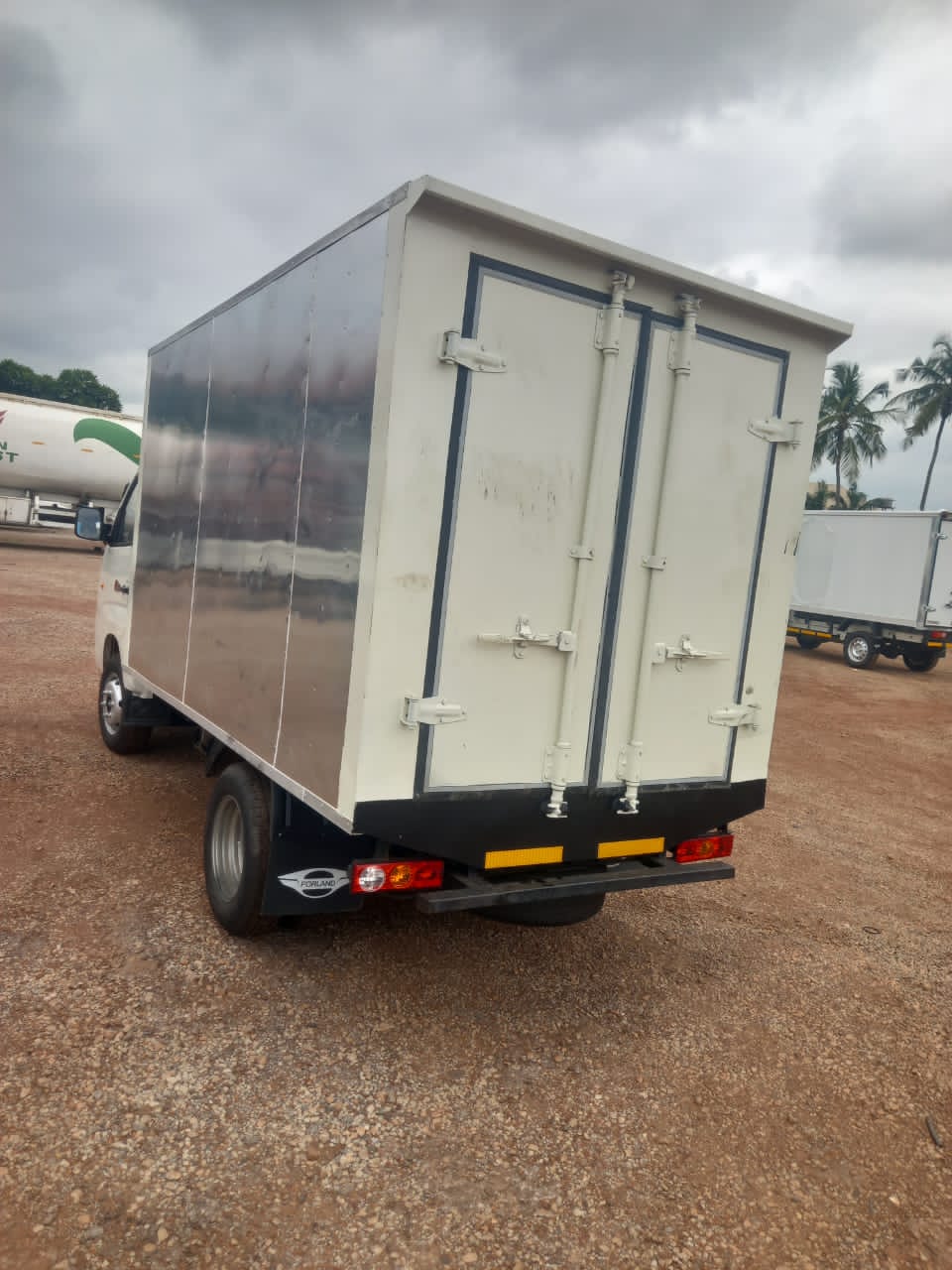
It is offered in both box-body and cabin-and-chassis configurations, giving businesses the flexibility to choose a model that best suits their operations.
Aluh explained that the cabin-and-chassis version would enable customers to fit a wide range of specialised bodies, including flatbeds, enclosed box bodies, drop-side bodies, refrigerated vans, mobile clinics and mobile vending units for food, snacks and beverages.
The air-conditioned cabin comfortably seats the driver and a salesperson, while the vehicle comes with a manual transmission and hydraulic braking system.
To meet varying operational needs, TSS is offering the Forland T5 in 1.5-tonne and 2-tonne payload variants, alongside a 2.5-tonne dual-fuel CNG/petrol version.
Like other Forland vehicles marketed by the company, the T5 is backed by nationwide after-sales support, including a one-year or 100,000-kilometre warranty.
TSS said local assembly has also made the vehicle more affordable, with the flatbed version priced at less than ₦16 million.
Aluh noted that customers have the option of buying the flatbed model and building a customised body elsewhere or purchasing a factory-fitted box-body version directly from the company.
“What this means is that you can build your box body elsewhere or customise it the way you need it. But we also supply box bodies,” she said.
She added that TSS can also facilitate bank financing for qualified buyers, enabling customers to spread payment for the vehicles over an agreed period.
Business
Nigeria’s stock market surpasses South Korea as world’s top-performing equity market

Nigeria’s stock market surpasses South Korea as world’s top-performing equity market
Nigeria’s stock market has emerged as the world’s best-performing equity market, overtaking South Korea as a combination of stronger economic fundamentals, policy reforms, improved foreign exchange liquidity and renewed investor confidence continues to fuel a remarkable rally on the Nigerian Exchange (NGX).
The latest performance marks a significant milestone for Nigeria’s capital market, with analysts attributing the surge to sustained reforms, firmer global oil prices, currency stability and growing optimism among domestic and international investors.
While South Korea’s market has struggled amid a global technology sell-off and a weakening currency, Nigeria has benefited from improving macroeconomic conditions that have boosted investor sentiment and strengthened capital inflows.
One of the major factors behind the contrasting performances has been currency movements.
The South Korean won has depreciated by about five per cent against the US dollar this year, making it one of Asia’s weakest-performing currencies and reducing returns for foreign investors.
In contrast, the naira has appreciated by about four per cent against the dollar since January, significantly enhancing dollar-denominated returns for foreign investors and helping propel the Nigerian market to the top of global rankings.
The rally has been driven largely by financial services stocks, with banking and insurance companies posting substantial gains.
Among the standout performers is Fortis Global Insurance Plc, which has delivered an estimated 1,400 per cent return in dollar terms this year, making it one of the strongest-performing stocks on the exchange.
READ ALSO:
- Tinubu vows not to betray Nigerians, says economic reforms will secure brighter future
- Mbappe breaks records as France defeat Morocco to reach World Cup last four
- Miyetti Allah President Remanded Over $2.63m Money Laundering, Terrorism Charges
Unlike South Korea, whose stock market is heavily concentrated in technology and artificial intelligence companies, Nigeria’s listed firms have relatively limited exposure to the sector.
That difference has shielded the local market from the recent global sell-off in technology stocks, allowing investors to maintain confidence in Nigerian equities.
Investor sentiment also received a significant boost after S&P Dow Jones Indices (S&P DJI) placed Nigeria on its 2027 Country Classification Watchlist for a possible upgrade from a “Standalone” market to a Frontier Market.
Although the move does not amount to an immediate reclassification, it is widely regarded as a major endorsement of Nigeria’s ongoing capital market reforms.
According to S&P DJI, improvements in market regulation, accessibility, transparency, enforcement and overall market integrity were among the key reasons for placing Nigeria under review.
The global index provider noted that continued policy consistency and operational resilience would be crucial in determining whether Nigeria qualifies for Frontier Market status during the 2027 review.
The Nigerian market extended its impressive rally on July 8, 2026, when the NGX All-Share Index climbed 2.27 per cent to close at 242,459.98 points, compared with 237,083.28 points recorded a day earlier.
Market capitalisation also increased by N3.45 trillion, rising to N155.59 trillion as investors returned strongly to the market.
The latest gains pushed the market’s year-to-date return to 55.81 per cent, a sharp rebound from 46.78 per cent recorded on July 7 and effectively erased losses suffered during the June market correction.
Telecommunications giant Airtel Africa played a pivotal role in the rally after its shares appreciated by the maximum daily limit of 10 per cent to close at N5,801.40, providing significant support for the benchmark index.
In a statement, the Nigerian Exchange described the S&P DJI watchlist decision as a positive signal that Nigeria’s recent regulatory and structural reforms are gaining recognition from one of the world’s leading index providers.
The exchange noted that while the watchlist status does not automatically translate into an upgrade, it demonstrates growing international confidence in the direction of Nigeria’s capital market.
Nigeria’s capital market has undergone a series of reforms led by the Securities and Exchange Commission (SEC) in collaboration with NGX Group, the Central Securities Clearing System (CSCS) and other stakeholders.
The reforms have focused on strengthening investor protection, improving market transparency, enhancing operational efficiency, modernising post-trade infrastructure and aligning Nigeria’s market with international best practices.
According to the Director-General of the SEC, Dr. Emomotimi Agama, the Commission remains committed to building a modern and efficient capital market capable of supporting innovation, intelligent investing and long-term economic growth.
He said the reform agenda includes faster settlement systems, tokenised securities and deeper derivatives markets aimed at making Nigeria’s capital market more competitive globally.
Agama reaffirmed the SEC’s commitment to maintaining a fair, orderly and transparent market while working closely with exchanges, market operators and other stakeholders to strengthen investor confidence and market integrity.
Also reacting to the development, NGX Group Managing Director and Chief Executive Officer, Temi Popoola, described Nigeria’s inclusion on the S&P DJI watchlist as an encouraging endorsement of the country’s reform efforts.
He said the recognition reflects the collective work of regulators, market infrastructure institutions and operators in building a more transparent, efficient and globally competitive marketplace.
According to Popoola, although the watchlist status does not yet amount to a formal market reclassification, it validates the progress already made and reinforces Nigeria’s attractiveness to both domestic and international investors.
He added that the NGX would continue working with stakeholders to deepen market liquidity, improve accessibility, strengthen investor confidence and sustain reforms capable of positioning Nigeria as a preferred investment destination.
Despite the optimism surrounding the market’s global ranking, some analysts believe the achievement should be viewed with caution.
Market analyst and investor Adeleke Adebayo argued that the development would only be meaningful if it translates into tangible benefits for ordinary Nigerians and local investors.
According to him, celebrating Nigeria’s emergence as the world’s best-performing stock market means little if the gains do not improve living standards or strengthen the broader economy.
He noted that the capital market lost more than N13 trillion in market capitalisation during the recent correction and said attention should remain focused on addressing inflation, economic growth, job creation and the welfare of citizens.
Adebayo questioned whether outperforming countries such as South Korea would have any practical value unless it leads to stronger businesses, improved household incomes and measurable economic progress.
He maintained that the true success of the market should ultimately be judged by its ability to support economic development, attract sustainable investment and positively impact the lives of Nigerians.
While opinions differ on the significance of the latest ranking, analysts agree that maintaining the market’s momentum will depend on sustained policy consistency, macroeconomic stability, stronger corporate earnings and the successful implementation of ongoing reforms aimed at deepening Nigeria’s capital market.
Nigeria’s stock market surpasses South Korea as world’s top-performing equity market
Insurance
Lasaco Assurance pays N17.60bn in claims, assures policyholders of prompt settlements

Lasaco Assurance pays N17.60bn in claims, assures policyholders of prompt settlements
Lasaco Assurance Plc has reinforced its reputation as a reliable insurance provider after paying N17.60 billion in claims during its 2025 financial period, reaffirming its commitment to settling genuine claims promptly despite prevailing economic challenges.
The company said the impressive claims payout reflects its unwavering dedication to protecting policyholders and honouring its obligations whenever insured losses occur.
According to recent industry data, the N17.60 billion paid in claims underscores Lasaco Assurance’s financial strength and its resolve to deliver on its promise to customers across its motor, property, life and other insurance portfolios.
For millions of Nigerians who rely on insurance to protect their vehicles, homes, businesses and livelihoods, prompt claims settlement remains one of the most important measures of an insurer’s credibility. Lasaco said its latest claims record demonstrates its continued focus on customer satisfaction and dependable service delivery.
The company noted that every genuine claim is carefully assessed and settled in line with policy terms, reinforcing public confidence in its operations and strengthening trust in the Nigerian insurance industry.
Beyond its claims performance, Lasaco Assurance Plc has also recorded significant progress in strengthening its capital base.
READ ALSO:
- ‘I didn’t eat or bathe for four days,’ Peller says after police detention
- US Names 124 Nigerians for Deportation in “Worst of the Worst” Criminal Crackdown
- Oyo school abduction: Bandits threaten to kill abducted pupils if troops advance
The insurer recently concluded a successful rights issue, achieving a 104.5 per cent subscription from existing shareholders, a development the company described as a strong vote of confidence in its long-term growth strategy and corporate leadership.
The successful capital raise has further positioned the company to expand its operations, improve service delivery and enhance its capacity to meet the evolving insurance needs of individuals, families and businesses across Nigeria.
Lasaco also disclosed that it is on course to meet the National Insurance Commission (NAICOM) recapitalisation requirements well ahead of regulatory deadlines.
According to the company, the ₦18.47 billion fresh capital injection, alongside other ongoing strategic initiatives, provides a solid financial foundation that will enable it to remain competitive and continue delivering value to policyholders for years to come.
Management said the strengthened capital structure will further improve the company’s underwriting capacity, claims-paying ability and overall financial resilience, giving customers greater confidence that their insurance policies are backed by a financially stable institution.
The insurer reiterated that prompt claims settlement remains at the heart of its business philosophy, assuring existing and prospective customers that it will continue to honour valid claims without unnecessary delays.
Industry analysts note that timely claims payment is one of the key indicators of an insurer’s financial health and operational efficiency. They believe companies that consistently fulfil their claims obligations are more likely to strengthen customer confidence and contribute to the growth of insurance penetration in Nigeria.
As the Nigerian insurance sector continues to evolve under ongoing regulatory reforms, Lasaco Assurance Plc says it remains committed to innovation, financial stability and customer-centric service, positioning itself as a trusted partner for individuals and businesses seeking reliable insurance protection.
Lasaco Assurance pays N17.60bn in claims, assures policyholders of prompt settlements
-

 metro2 days ago
Rescue Hope Rises as Security Operatives Identify Oyo Kidnappers’ Network
-

 metro2 days ago
Appeal Court orders status quo in ISI hijab case, adjourns hearing to Oct. 7
-

 News2 days ago
El-Rufai’s Wives Beg Tinubu for Fair Treatment, Say Family Is Traumatised
-

 News2 days ago
Properties Razed as Yoruba, Hausa Residents Clash in Ibadan
-

 metro2 days ago
Man Seeks Divorce Over Wife’s Alleged Refusal to Fund Daughter’s Treatment
-
 metro3 days ago
UPDATED: Gbajabiamila gives Adeniyi 72 hours to retract allegations or face ₦10bn defamation suit
-

 Business2 days ago
Dangote launches free petrol delivery in Lagos, Abuja, five other states
-

 Entertainment3 days ago
Nollywood actress appeals for support as recurring cancer spreads to bones