

metro
SERAP Sues INEC for Failing to Prosecute Ekiti Vote Buyers

The Socio-Economic Rights and Accountability Project (SERAP) has filed a lawsuit against the Independent National Electoral Commission (INEC) for failing to prosecute those suspected of vote buying and electoral bribery during the Ekiti State governorship election on June 17.
Kolawole Oluwadare and Opeyemi Owolabi, SERAP lawyers, filed the suit, numbered FHC/ABJ/CS/1189/2022, at the Federal High Court, Abuja, on Friday.
SERAP sought “an order of mandamus to direct and compel INEC to seek and obtain detailed information about reports of vote buying by the three leading political parties in the 2022 Ekiti State governorship election”.
SERAP also sought an order of mandamus to direct and compel INEC to promptly and effectively prosecute those arrested for vote buying and bribery.
“Vote buying undermines the ability of INEC to discharge its responsibilities under Section 153 of the 1999 Nigerian Constitution (as amended), paragraph 15(a) of the third schedule of the constitution and the Electoral Act 2022,” SERAP argued.
READ ALSO:
- WAFCON 2022: NFF congratulates Ajibade, Mimi Calvin-Onwuka
- 2023 elections in jeopardy over in-fighting at INEC
- ASUU adamant on renegotiated agreement
“Ending impunity for vote buying and electoral bribery would contribute to free and fair elections. A corruption-free electoral process is essential for building public confidence in the electoral process and the credibility and legitimacy of the 2023 elections.
“One of the people’s most sacred rights is the right to vote. INEC has a constitutional and statutory responsibility to ensure the effective exercise of the right of all eligible voters to participate in their own government in free and fair elections.
“Many years of allegations of vote buying and electoral bribery and entrenched impunity of perpetrators have undermined public confidence in the electoral process.
“Preventing and combating vote buying and electoral bribery would advance the people’s right to vote and to participate in their own government, as well as bolster the ability of INEC to effectively discharge its constitutional and statutory mandates.
“Prosecuting allegations of vote buying and electoral bribery would be entirely consistent with the Nigerian constitution, the electoral act and the country’s international human rights anti-corruption obligations.”
FIJ had reported pockets of violence and electoral malpractice in several polling units during the Ekiti governorship election, and SERAP had given INEC a seven-day ultimatum to investigate and prosecute suspects.
Agents of the All Progressives Congress (APC), the Peoples Democratic Party (PDP), and the Social Democratic Party (SDP) reportedly engaged in vote buying across Ekiti State in June. Some of these agents offered voters as much as N10,000 in exchange for their votes.
SERAP said that no date had been fixed for the hearing of the suit.
FIJ






metro
Osun Police Warn Against Planned Cult-Linked Protest, Investigate Recent Killing

Osun Police Warn Against Planned Cult-Linked Protest, Investigate Recent Killing
The Osun State Police Command has warned against a planned protest allegedly organised by a group identified as the “Congress of Cultists”, which the command said intelligence linked to the Neo-Black Movement (NBM), also known as Black Axe.
The police described the group as “faceless” and warned that anyone attempting to use the proposed protest to cause disorder, threaten lives, destroy property or disrupt public peace would face appropriate action.
In a statement issued on Sunday by the Osun Police Public Relations Officer, DSP Abiodun Ojelabi, the command said it had received intelligence about the planned gathering and would not allow any group to exploit the situation to engage in criminal activities.
The command said its operatives, in collaboration with other security agencies, would respond decisively and appropriately to any action capable of threatening public safety and security in the state.
The police did not disclose the proposed date, venue or expected number of participants. It also did not announce any arrest specifically linked to the alleged planned protest.
The command instead urged individuals and groups with grievances to use lawful channels of redress, warning against violence, reprisal attacks and self-help.
The warning over the alleged protest is a separate development from the police investigation into a recent killing in Osogbo, although both developments have heightened security concerns in the state.
In the separate incident, Adejuwon Adekunle, popularly known as “Asa”, was shot dead near a recreation centre in the Dele Yes Sir community, Osogbo, in the early hours of September 15.
According to the police, armed men arrived in the area and opened fire, during which Adekunle was shot.
He was rushed to a hospital but was pronounced dead on arrival.
The police said preliminary findings suggested that the Osogbo killing might be cult-related, but stressed that the circumstances surrounding the incident had not been fully established.
READ ALSO:
- Men’s Health: Common Warning Signs, Conditions Men Should Not Ignore
- Police Rescue Eight Kidnapped Passengers From Benue Forest, One Dies in Captivity
- Irreconcilable Developments: Wedding Cancelled 24 Hours Before Ceremony
The identities and whereabouts of the suspected attackers were not immediately known, and the command said no arrest had been made at the time of its latest update.
Following the killing, the Commissioner of Police, CP Ibrahim Zungura, directed that the case be transferred to the State Criminal Investigation Department (CID) for further investigation.
The police said investigators were working to establish the circumstances surrounding the killing and identify those responsible.
The command has appealed to residents who have credible information about the incident to assist the investigation, assuring them that information provided would be treated confidentially.
The recent Osogbo killing followed another separate violent incident in Ile-Ife, where Accord Party chieftain Olalekan Oyeyemi, popularly known as “Emir Ajagungbade”, was shot dead at the Mayfair Motor Park.
Another corpse was subsequently recovered within the motor park, according to the authorities.
The Ile-Ife incident was reportedly linked to a dispute over leadership of the motor park, and the state government directed security agencies to identify and arrest those responsible.
Governor Ademola Adeleke also ordered the immediate vacation of the affected motor parks by rival groups and announced the reintroduction of a Park Management System as part of measures to restore order.
That incident is being investigated separately from the Osogbo killing and the alleged planned cult-linked protest.
Against this backdrop, the Osun Police Command has continued to urge residents to remain vigilant and avoid activities capable of escalating tensions.
The Commissioner of Police also called on parents, traditional rulers, religious leaders and community leaders to caution young people against joining cult groups or participating in activities that could threaten peace and security.
The command advised residents to report suspicious movements and criminal activities to the nearest police station or other security agencies.
The police further warned suspected cult members and other criminal elements against using recent incidents as an opportunity to carry out reprisal attacks, cult violence or other criminal activities.
While the command has linked the proposed protest to an alleged cult group, it has not publicly established that the planned gathering is connected to the recent killing in Osogbo.
Similarly, the police have described the Osogbo killing only as suspected cult-related, pending the outcome of their investigation.
The distinction is important as security agencies work to establish the facts behind the separate developments.
The alleged protest concerns a warning issued by the police over a proposed gathering, while the Osogbo case concerns an ongoing criminal investigation into the death of Adekunle.
The police have urged residents not to take the law into their own hands and have appealed for cooperation as investigations continue.
For now, the command has not disclosed further details about the organisers of the alleged protest or confirmed whether the gathering will proceed.
It has, however, made clear that any gathering or activity that results in violence, destruction of property or a threat to public safety will attract security intervention.
The command said its priority remains the protection of lives and property, maintenance of public order and the investigation and prosecution of individuals found to have violated the law.
Osun Police Warn Against Planned Cult-Linked Protest, Investigate Recent Killing
metro
N8,000 Debt Dispute: Charge Sheet Raises Questions Over Oyo Police Account After Student’s Death

N8,000 Debt Dispute: Charge Sheet Raises Questions Over Oyo Police Account After Student’s Death
A fresh controversy has emerged over the circumstances surrounding the arrest, prosecution and subsequent death of Al-Amin Mohammed, a 30-year-old student and aluminium worker who died three days after his release from the Agodi Custodial Centre in Ibadan, Oyo State.
The controversy centres on an alleged N8,000 debt dispute involving Mohammed and a female Point-of-Sale (POS) operator, as well as significant differences between the account given by the Oyo State Police Command and details contained in the charge sheet filed against him.
Mohammed died on September 17, 2026, after ingesting rat poison at his residence in Ibadan, according to his family. He had been released from custody on September 14 after his parents stood as sureties to perfect his bail.
His death followed a chain of events that began with a financial transaction involving N23,000 and eventually resulted in a police investigation, court proceedings and his detention at the Agodi Custodial Centre.
The police, however, have rejected the description of the case as an arrest and prosecution over an N8,000 debt.
In a statement signed by the command’s Public Relations Officer, DSP Ayanlade Olayinka, the police described reports that Mohammed was detained and charged to court because he could not repay N8,000 as “false, unfounded and misleading.”
The command said Mohammed was prosecuted for assault and malicious damage, alleging that he assaulted the female POS operator and damaged her Airtel SIM registration machine valued at N177,000.
According to the police account, Mohammed had collected N23,000 from the POS operator with the intention of transferring the same amount to her through a POS transaction but left without completing the transfer or returning the money.
The command said he later refunded N15,000, leaving an outstanding N8,000 balance.
The police said the POS operator subsequently took possession of Mohammed’s mobile phone pending repayment of the balance.
According to the command, instead of settling the outstanding amount, Mohammed went to the complainant’s residence at about 10pm on September 8, where he allegedly assaulted her and damaged the SIM registration machine.
READ ALSO:
- Men’s Health: Common Warning Signs, Conditions Men Should Not Ignore
- Police Rescue Eight Kidnapped Passengers From Benue Forest, One Dies in Captivity
- Irreconcilable Developments: Wedding Cancelled 24 Hours Before Ceremony
Community members reportedly intervened and attempted to settle the matter before Mohammed and the complainant were taken to the police station by vigilantes.
The police said officers heard both sides and made another effort to resolve the matter amicably, but the complainant insisted on pursuing the case in court.
The command therefore maintained that the criminal proceedings arose from the alleged assault and property damage, rather than the N8,000 outstanding balance.
However, a charge sheet obtained in the case has raised questions over parts of the police explanation.
The document, with charge number OY/CCGA/MAP/184C/26, shows that Mohammed was arraigned before the Chief Magistrate’s Court of Oyo State, Ibadan Magisterial District, on two counts.
Notably, assault does not appear as one of the two counts listed in the charge sheet, despite the police saying Mohammed was charged with assault and malicious damage.
More significantly, the N8,000 debt is expressly mentioned in the second count.
The charge sheet identifies the allegedly damaged property as an Android Itel phone valued at N177,000, rather than the Airtel SIM registration machine described in the police statement.
It also identifies Inspector Adeboye Olaide and Inspector Akinteye Muinat as the investigating police officers.
The discrepancy between the police statement and the court document has become a central issue in the controversy.
While the command says the N8,000 was merely an outstanding balance from an earlier financial transaction and not the basis of the criminal case, the charge sheet explicitly includes the amount.
There is also a difference over the property allegedly damaged: the police referred to an Airtel SIM registration machine, while the charge sheet refers to an Android Itel phone.
The family has separately disputed the police account of how the case began.
Mohammed’s mother, Simiat Mohammed, said her son went to recover his mobile phone after it was allegedly seized because of the unpaid N8,000.
According to her account, a confrontation followed, leading to a struggle. The family has denied that Mohammed deliberately damaged the POS operator’s property.
The family also alleged that they were asked to provide N100,000 for bail and another N70,000 for the alleged damage. These claims have not been independently established.
After his arraignment, Mohammed was granted bail of N100,000 with two sureties in like sum, according to reports. He remained at the Agodi Custodial Centre because he could not immediately satisfy the bail conditions.
His parents eventually stood as sureties, securing his release on September 14.
His mother said Mohammed appeared deeply distressed after returning home.
She reportedly told journalists that he became withdrawn, barely ate and repeatedly complained about the experience of being arrested, taken to court and detained.
Three days after his release, Mohammed ingested rat poison, according to his family.
The family said they rushed him to hospitals for treatment, but he later died.
His father, Habeeb Mohammed, has accused the police of misrepresenting what happened at the Sanyo Police Division and called for an investigation into the handling of the case.
The family also alleged that they pleaded with police officers to resolve the dispute without prosecution.
The police, however, have rejected any direct conclusion that Mohammed’s death was caused by his arrest, detention or prosecution.
The command said the circumstances surrounding his death should be established through an appropriate investigation and verified evidence rather than through assumptions.
The police also stressed that Mohammed’s continued detention at the Agodi Custodial Centre after arraignment was due to his inability to immediately fulfil the court-ordered bail conditions, rather than a police decision to hold him over the N8,000 debt.
The case has nevertheless raised broader questions about how a relatively small financial dispute escalated into police involvement, criminal proceedings and custodial detention.
It has also drawn attention to the need to establish exactly what offence Mohammed was charged with, what property was allegedly damaged and how the N8,000 debt featured in the proceedings.
The available accounts remain sharply divided.
The Oyo Police Command says the N8,000 was not the basis of the criminal charge and that Mohammed was prosecuted over alleged assault and malicious damage.
The family maintains that the matter stemmed from the debt dispute and that Mohammed’s subsequent detention and prosecution had a profound effect on him.
The charge sheet, meanwhile, provides documentary evidence that differs from important elements of the police explanation, particularly over the inclusion of the N8,000 and the identity of the allegedly damaged property.
An independent examination of the charge sheet, police case file, court proceedings, bail conditions and statements from the parties involved would be necessary to resolve the conflicting accounts.
Until such an investigation is completed, the circumstances surrounding Mohammed’s arrest, prosecution, detention and death remain subject to competing accounts, while the documentary discrepancies in the charge sheet warrant further clarification from the relevant authorities.
N8,000 Debt Dispute: Charge Sheet Raises Questions Over Oyo Police Account After Student’s Death
metro
Bandits Demand N30m Ransom for Six Abducted Clerics in Zamfara

Bandits Demand N30m Ransom for Six Abducted Clerics in Zamfara
Suspected bandits in Zamfara State have demanded N30 million ransom for the release of six Islamic clerics abducted along the Dakko-Damri feeder road in Bakura Local Government Area.
The clerics were abducted on September 12, 2026, while travelling towards Talata Mafara, where they were expected to attend a meeting at the residence of former Zamfara State governor and serving Senator Abdul’aziz Yari, according to community sources.
The Zamfara State Police Command confirmed that six Islamic clerics were abducted when armed men reportedly ambushed their vehicle at about 11:30am along the Dakko-Damri feeder road.
Police spokesman DSP Yazid Abubakar said the attackers were armed with sophisticated weapons and intercepted the vehicle carrying the victims.
Following the incident, the Divisional Police Officer in Bakura mobilised police personnel, including the Violence Crime Response Unit (VCRU), alongside other security agencies, to begin a search-and-rescue operation.
The command said surrounding bushes were being combed in an effort to locate the victims and apprehend the perpetrators, while Commissioner of Police CP Ahmed Bello directed the operatives to intensify the search.
The Nigerian Army subsequently clarified that the clerics were not abducted at Senator Yari’s residence, correcting earlier reports that had linked the incident directly to the residence.
According to the Army, the victims were abducted while travelling from the Sububu Forest axis in Bakura towards Talata Mafara. The Army urged the public to disregard what it described as sensationalised and unverified accounts that could undermine the rescue operation.
The latest development is that the abductors have reportedly contacted the victims’ families and demanded N30 million for the release of the six clerics.
READ ALSO:
- Men’s Health: Common Warning Signs, Conditions Men Should Not Ignore
- Police Rescue Eight Kidnapped Passengers From Benue Forest, One Dies in Captivity
- Irreconcilable Developments: Wedding Cancelled 24 Hours Before Ceremony
A resident of Dakko village, Malam Muhammad Ibrahim, told The Whistler that the driver who was abducted alongside the clerics had regained his freedom after his family reportedly paid N2 million ransom.
Ibrahim said the wider incident involved eight people, comprising the six clerics, their driver and two other people who were reportedly abducted while returning from their farms.
According to the community source, the two other victims were released after the abductors reportedly demanded N300,000 each and two 25-litre jerrycans of petrol.
The driver was reportedly released on Saturday, September 19, and had returned to his family in Kwatsama village.
Ibrahim said preparations were subsequently being made to raise the N30 million demanded for the six clerics. A son of one of the abducted clerics also reportedly confirmed the ransom demand and said the driver’s release had raised the families’ hopes of securing the safe return of the religious leaders.
The reported ransom payment and demand have not been publicly confirmed by the police or Nigerian Army in the statements reviewed. The claim that a serving senator from Zamfara had pledged to pay the ransom also remains a report from a community source and has not been independently confirmed.
The six abducted clerics have been identified as Malam Muhammadu Shehu, Chief Imam of Dakko Juma’at Mosque; Malam Murtala Dakko, Deputy Imam of the mosque; Malam Muhammad Yahuza, Chief Imam of Dogon Madacci First Juma’at Mosque; Malam Magawata Abdullahi, Chief Imam of Dogon Madacci Second Juma’at Mosque; Malam Bala Hogun, Chief Imam of Hogun Juma’at Mosque; and Malam Muhammad Tasi’u, Chief Imam of Kwatsama Juma’at Mosque.
Community sources said the clerics had travelled through feeder roads because of concerns about attacks on major routes in the area.
One source alleged that the abductors may have had prior knowledge of the route used by the clerics, who reportedly travelled through areas including Lambar Bakura, Dambi and Sabon Garin Dambi before heading towards Talata Mafara.
That claim has not been independently established.
The incident has also highlighted the security difficulties faced by communities around Bakura, Bukkuyum and Anka, where residents have reported the presence of armed groups and criminal camps.
A report by Daily Trust said local vigilantes pursued the abductors after the clerics were taken and managed to restrict their movement for several hours, but eventually withdrew because they lacked sufficient reinforcement to confront the armed group without putting the hostages at greater risk.
The same account reported that residents had identified several suspected bandit camps around the area, although such claims have not been independently verified.
The abduction occurred against a backdrop of renewed security concerns in Zamfara State, where kidnapping for ransom and attacks by armed groups remain major challenges.
The police have urged residents to provide credible and timely information that could assist security agencies in locating the victims and apprehending the abductors.
The Nigerian Army has similarly said troops, working with other security agencies and local intelligence networks, were intensifying efforts to locate and rescue the victims.
The case has generated particular concern because the victims are Islamic clerics, several of whom are reported to be elderly.
Malam Hassan Mai-Fanta, Chief Imam of Izala Second Mosque in Shinkafi, who also attended the meeting in Talata Mafara, said he had left the town before the abducted scholars.
He described the abduction as unfortunate and called for intensified efforts to secure their release.
The reported N30 million ransom demand now places additional pressure on the families and authorities as the six clerics remain in captivity.
For the families, the reported release of the driver has provided some hope that the remaining victims could also regain their freedom. However, security agencies have not publicly confirmed that the six clerics have been located or that any ransom has been paid for their release.
The victims remain in the custody of their abductors, according to the latest available reports, while security agencies continue efforts to secure their safe return.
Bandits Demand N30m Ransom for Six Abducted Clerics in Zamfara
-
 News2 days ago
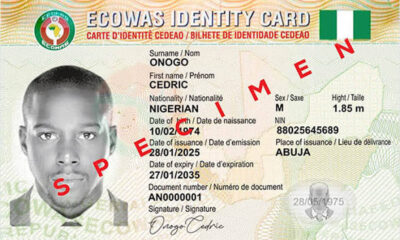
ECOWAS Biometric Card Expands as Seven Countries Begin Rollout
-

 Sports2 days ago
Ballon d’Or 2026: Mbappe Responds to Yamal’s Bold Claim
-

 metro2 days ago
FG Suspends Niger NSCDC Commandant As 37 Suspected Illegal Miners Die In Custody
-

 International2 days ago
Ninth Body Discovered in South Africa: Nigeria Issues Urgent Safety Alert to Nationals
-

 Politics2 days ago
Toyin Abraham Rejects Lagos APC Campaign Council Inclusion
-

 Entertainment3 days ago
Adunni Ade Reveals Christian Fans Unfollowed Her After Publicly Identifying as Muslim
-

 Politics2 days ago
2027: Sowore Says He’d Rather Die Than Travel Abroad For Medical Treatment
-

 Politics2 days ago
2027: Tinubu May Mediate Wike-APC Governors Rift In France