

Politics
Abiru, Lagos-East senator-elect, promises to facilitate business, others

The senator-elect for Lagos-East senatorial district and candidate of the All Progressives Congress, Tokunbo Abiru, has facilitate the completion of all state and federal road projects within the district.
He also pledged to promote ease of doing business as one of the ways to translate his campaign promises into tangible outcomes.
Abiru made these promises in a ‘Victory Speech’ shortly after the Independent National Electoral Commission declared him winner of the Lagos-East bye-election on Sunday, polled 89,204 votes, while his closest rival and candidate of the Peoples Democratic Party, Mr Babatunde Gbadamosi, scored 11,251 votes.
He said, “Now is the time to translate all the promises we made into positive and tangible outcomes our people are expecting us to bring about. Now is the time to take our people from the realm of expectations to the limelight of fulfilment.
“I commit myself irrevocably to the agenda I laid out before the electorate-offering people-focused quality representation; ensuring welfare of my constituents; working with my colleagues in the National Assembly to ensure special status for Lagos; promoting policies to improve national economic performance and financial sector development; implementation of the Sustainable Development Goals; facilitating the completion of all federal and state road projects in Lagos-East; promoting ease of doing business; supporting the 5 for 5 agenda for police reform; supporting fiscal federalism and joining forces with colleagues in the Senate and members of the House of Representatives to ensure devolution of powers to the sub-national governments.
“Within the limits of our statutory mandate, this is the time to make the aged smile; empower our jobless youths; minister to the vulnerable; secure the future of brilliant indigent children and support the implementation of the ideals of our party.
“To achieve these enviable goals, we are already in the process of establishing an endowment and empowerment fund to actualise my private philanthropy. The fund will implement different interventions we are coming up with in line with my agenda and the ideals of our party.
“Already, our team is perfecting the modalities for the implementation of all these intervention programmes. By the middle of January, we will unveil these programmes in full and begin implementation immediately. I thank our people for this mandate and promise to live up to your expectations.”
He noted that if there were people out there who still doubted the popularity of the APC, didn’t reckon with its leadership in the political landscape and still disputed its progressive approach to governance, its victory in the just concluded bye-election readily offered them an perfect answer.
He noted that having secured the senatorial mandate with a landslide, the party could not afford to fail the people.
He said, “We cannot afford to fail those who voted for us; those who chose not to vote for us for whatever reasons and those who did not vote at all. We cannot afford to betray the invaluable trust our people reposed in us as a political party and as their representatives in government.”


Politics
2027: Remi, Seyi Tinubu Reportedly Differ Over APC Youth Mobilisation
2027: Remi, Seyi Tinubu Reportedly Differ Over APC Youth Mobilisation
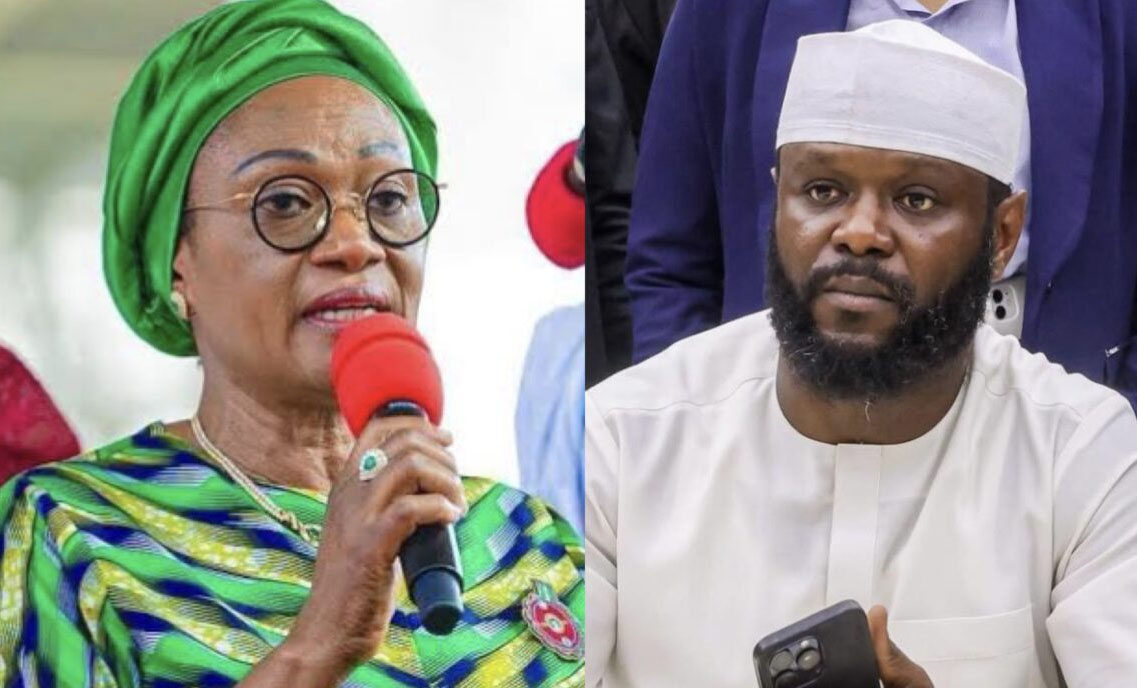
A reported disagreement between First Lady Oluremi Tinubu and President Bola Tinubu’s son, Seyi Tinubu, has drawn attention to competing political mobilisation networks within the ruling All Progressives Congress (APC) ahead of the 2027 presidential election.
The reported tension centres on the leadership of the APC Presidential Campaign Council’s youth mobilisation directorate and the activities of two support groups associated with the President’s family: Seyi Tinubu’s CityBoy Movement and the Mummy’s Men Movement, which is associated with the First Lady.
According to reports published on October 22 and 23, 2026, the latest development followed changes to the campaign council’s leadership structure, including appointments to its youth mobilisation directorate.
In the reshuffle announced by the campaign council, Imo State Governor Hope Uzodimma, who serves as the council’s secretary, named Minister of Youth Development Ayodele Olawande as director of youth mobilisation, while APC National Youth Leader Dayo Israel was appointed his deputy.
However, an unnamed source cited in the reports claimed that the arrangement displeased the First Lady, who allegedly preferred Israel to lead the directorate. The source further alleged that Olawande was perceived by the First Lady’s camp as being aligned with Seyi Tinubu and his CityBoy Movement.
READ ALSO:
- Igbo Presidency: Soludo Tells South-East to Back Tinubu for Future Power Shift
- 41 Days in Bandits’ Den: Five Islamic Clerics Still Held After Tinubu Re-Election Prayer Trip
- EFCC Opens Recruitment for Nigerians, Sets Age Limits for Four Job Categories
The reports suggested that the appointments had exposed competing interests over the direction of youth mobilisation for President Tinubu’s anticipated re-election campaign. However, the claims about the motivations behind the appointments have not been independently established.
The alleged disagreement also draws attention to the growing visibility of the CityBoy Movement, which Seyi Tinubu founded to mobilise young Nigerians in support of his father’s political ambitions.
The group has organised political activities and established support networks in different parts of the country ahead of the 2027 elections. President Tinubu has publicly praised his son and members of the movement for engaging young people and building a political support structure.
During a meeting with the group at the State House, the President commended Seyi and his associates for their efforts, saying they had invested their time in organising young people without demanding official positions or titles.
The President’s public endorsement of the movement has been cited in reports about the alleged tensions, although claims that it angered the First Lady remain allegations attributed to unnamed sources.
The Mummy’s Men Movement, meanwhile, emerged as another platform promoting support for the President’s second-term ambition. Dayo Israel has been associated with the initiative and announced its formation in August, describing it as a movement inspired by the First Lady.
Israel said the initiative was open to women, young people and Nigerians across different age groups.
A report by Peoples Gazette also cited an unnamed source alleging that the movement was established partly to counter the influence of the CityBoy Movement. The report further carried claims about an alleged attempt to restrict CityBoy members’ attendance at an event in Abeokuta, Ogun State, in August. These claims have not been independently verified.
The reported dispute comes amid wider concerns within the APC about internal disagreements and competing interests as the party prepares for the 2027 general elections.
Senator Ali Ndume recently warned that internal divisions and personal interests among party members could pose a challenge to the APC’s electoral preparations. Vice-President Kashim Shettima has also cautioned party members against undermining one another while publicly professing support for the President.
Although the reports have described the situation as a struggle for influence within Tinubu’s political camp, there has been no publicly established confirmation that the President’s wife and son are personally at war over the campaign structure.
The developments nevertheless highlight the importance of youth mobilisation and internal coordination as the APC works to consolidate support for Tinubu’s second-term bid.
2027: Remi, Seyi Tinubu Reportedly Differ Over APC Youth Mobilisation
Politics
Igbo Presidency: Soludo Tells South-East to Back Tinubu for Future Power Shift
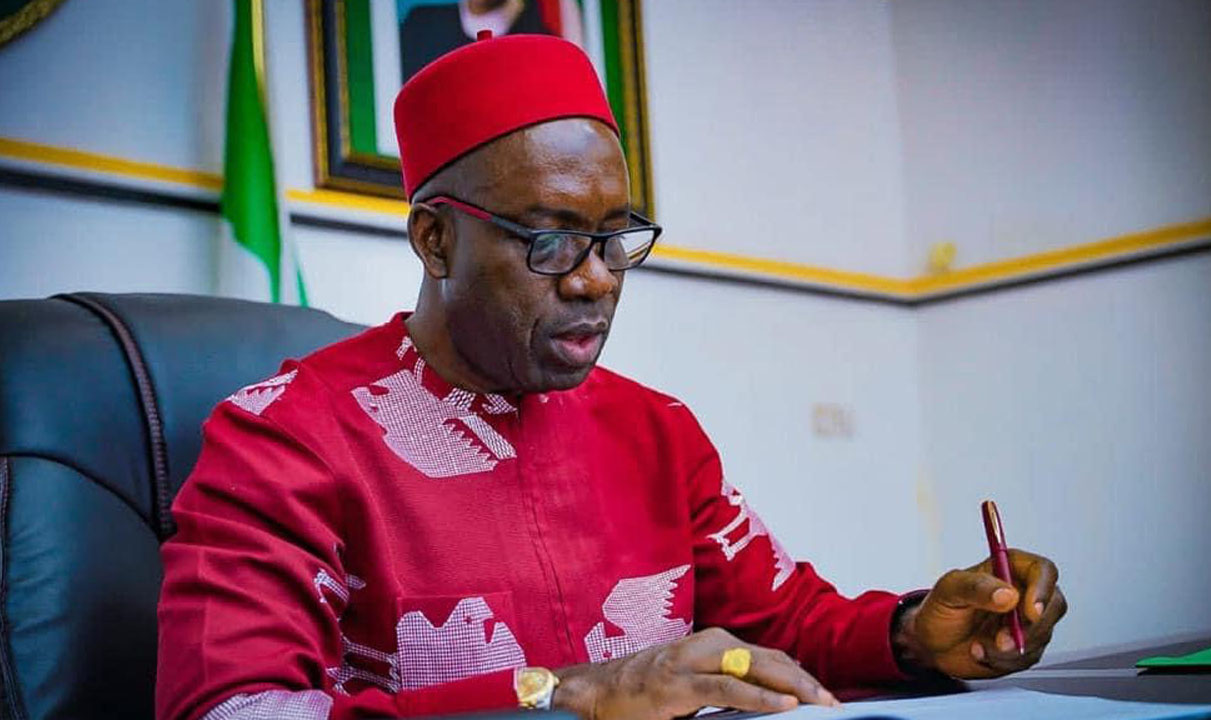
Anambra State Governor, Chukwuma Soludo, has urged the South-East to support President Bola Tinubu, arguing that political alliances with the South-West could improve the region’s chances of producing Nigeria’s president in the future.
Soludo said presidential power in Nigeria is shaped by political negotiations, agreements and cooperation between regions, suggesting that the South-East should adopt a strategic approach rather than rely solely on demands for an Igbo presidency.
The governor made the remarks while speaking in Igbo at a recent event, according to reports published on Friday, October 23, 2026.
“Presidency is about discussion and agreement. Now that President Tinubu, from the South-West, is in power, if we in the South-East support him, then when power returns to the South after going to the North, the South-West will support an Igbo presidency,” Soludo was quoted as saying.
The governor’s position comes as political activities gather momentum ahead of the 2027 general elections, with competing parties and regional interest groups seeking support for their preferred presidential candidates.
Soludo, who belongs to the All Progressives Grand Alliance (APGA), has repeatedly advocated political cooperation between the South-East and the Tinubu administration, maintaining that strategic alliances could help the region secure greater political and economic benefits.
READ ALSO:
- 41 Days in Bandits’ Den: Five Islamic Clerics Still Held After Tinubu Re-Election Prayer Trip
- EFCC Opens Recruitment for Nigerians, Sets Age Limits for Four Job Categories
- Saudi Executions: Truth Behind Viral Kissing Claim
- MURIC petitions Oyo police over 2019 murder of Muslim cleric in Fiditi
In March, during his second-term inauguration, the governor urged people in the South-East to support Tinubu in the 2027 presidential election, arguing that the region should prioritise political partnerships capable of advancing its interests.
He also called for a shift from what he described as the “politics of lamentations” to an alliance focused on progress and prosperity.
In June, Soludo reiterated his position at a pro-Tinubu rally in Abakaliki, Ebonyi State, where he called on political leaders across the country to unite behind the President.
The governor has also praised Tinubu over federal government approvals for the design and procurement processes for two major road projects linking Anambra with neighbouring states, describing the projects as important to the development of the South-East.
Soludo has maintained that cooperation between APGA, the ruling All Progressives Congress (APC) and the Federal Government can deliver practical benefits for the region, despite differences in party affiliation.
However, support for Tinubu is not unanimous across the South-East. The Igbo Agenda Dialogue recently endorsed Peter Obi and his running mate, Rabiu Musa Kwankwaso, for the 2027 presidential election, dismissing endorsements of Tinubu by Soludo and other political figures as positions that do not necessarily represent the choices of all Igbo voters.
The competing positions highlight the political debate within the South-East over whether supporting the incumbent President could improve the region’s prospects of producing a future Nigerian leader or whether backing an alternative candidate would better serve its interests.
Soludo’s latest remarks place renewed emphasis on political bargaining and regional alliances as key factors in the debate over an Igbo presidency.
Igbo Presidency: Soludo Tells South-East to Back Tinubu for Future Power Shift
Politics
Obasanjo Blames Tinubu’s Economic Policies for Rising Poverty
Obasanjo Blames Tinubu’s Economic Policies for Rising Poverty
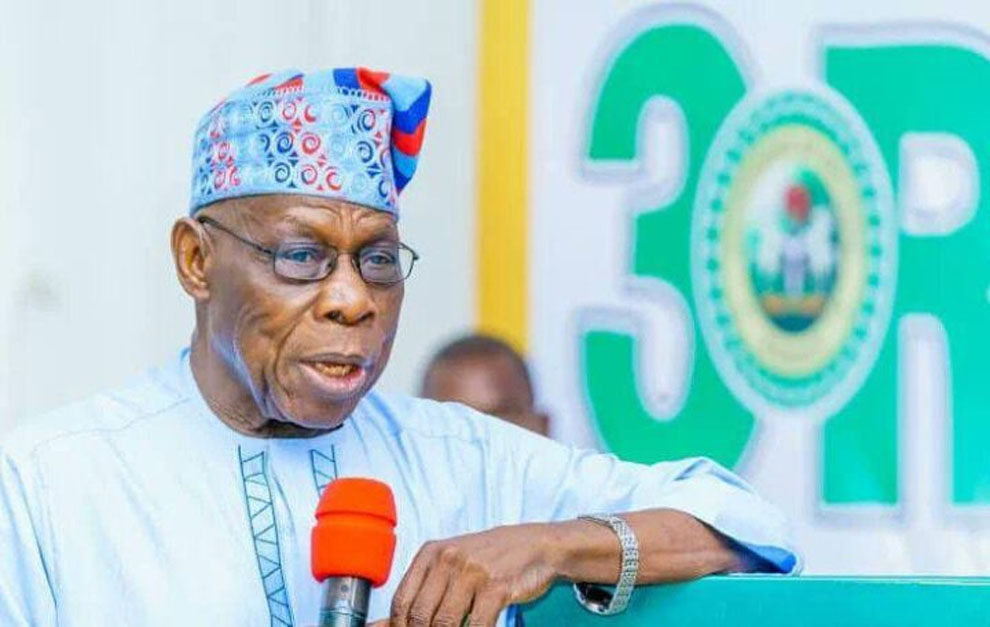
Former President Olusegun Obasanjo has criticised President Bola Ahmed Tinubu’s economic reforms, saying the sharp depreciation of the naira has reduced Nigerians’ purchasing power and worsened poverty across the country.
Obasanjo made the remarks on Wednesday, October 21, 2026, during the Financial Times Africa Summit in London, United Kingdom, where he questioned the economic consequences of the administration’s policies, particularly its foreign exchange reforms and the removal of the petrol subsidy.
The former president argued that the naira’s decline against the United States dollar had significantly weakened the financial position of Nigerian households, making it more difficult for citizens to afford essential goods and services.
He said the exchange rate had moved from approximately ₦500 to the dollar to about ₦1,500, a development he described as a major loss in the value of Nigerians’ money.
“We do not live in isolation as a country. We interact with the rest of the world. And overnight, you devalue the currency by 300 percent. The naira went from N500 to a dollar to N1,500 to a dollar,” Obasanjo said.
He added that the depreciation had made Nigerians poorer and contributed to the country’s severe poverty challenge.
“What that meant was that every Nigerian is made poor by 300 percent. That made Nigeria become the poverty capital of the world, which means Nigeria has the largest number of poor people in the world,” he said.
Obasanjo questioned the benefits of the currency adjustment, insisting that a policy that substantially eroded citizens’ purchasing power could not be considered beneficial to the country without examining its consequences for ordinary people.
“You cannot say to me that that is good for Nigeria. You cannot say to me that that is good for us in any sense,” he added.
The former president’s comments have added to the ongoing debate over the impact of the Tinubu administration’s economic reforms on inflation, living standards, business costs and poverty.
Tinubu announced the removal of the petrol subsidy shortly after assuming office in May 2023. His administration subsequently introduced foreign exchange reforms that allowed the naira to trade more freely against other currencies.
READ ALSO:
- Nigerian Journalist Sentenced to 4 Years Over Facebook Post Criticising Police
- Hyundai Unveils Mufasa, Grand Creta SUVs to Strengthen Nigeria Line-up (Updated)
- NAFDAC Busts Illegal Herbal Factory in Lagos, Arrests Manager Over Fake Registration Number
The government has defended the measures as necessary to address longstanding economic distortions, reduce pressure on public finances, improve the efficiency of the foreign exchange market and attract investment.
However, the reforms coincided with a sharp depreciation of the naira and increases in the cost of imported goods, transportation and other essential commodities, placing considerable pressure on household budgets.
Obasanjo also challenged the argument that the removal of the petrol subsidy was the only viable option available to the government, contending that corruption accounted for a substantial portion of the costs associated with the previous subsidy arrangement.
He argued that tackling corruption within the petroleum subsidy system could have reduced the financial burden on the government and limited the amount of support required.
The former president’s position differs from that of the Tinubu administration, which has maintained that ending the subsidy was necessary to reduce government expenditure and free up resources for development.
Obasanjo questions Tinubu’s second-term bid
Obasanjo also questioned the argument that Tinubu should be given a second term to consolidate his economic reforms, asking what specific policies were being sustained if the outcome was greater hardship for citizens.
He criticised the suggestion that Nigerians should continue to endure the consequences of the reforms without clearer evidence that their living conditions were improving.
The former president maintained that his criticism was directed at the administration’s economic policies and their impact on the public.
He also expressed doubts about the direction of the economy, saying he could not identify clear signs that conditions were improving for Nigerians.
Calls for production and anti-corruption measures
Despite his criticism, Obasanjo outlined measures he believes could help improve Nigeria’s economic prospects, identifying corruption, wasteful spending and unnecessary luxury as areas requiring urgent attention.
He argued that public resources must be managed more responsibly, while government expenditure should be directed towards priorities capable of improving citizens’ welfare.
Obasanjo also stressed the need to strengthen domestic production, saying Nigeria must produce more goods and services rather than depend heavily on imports.
His recommendations centred on reducing corruption, curbing waste and increasing productivity as part of a broader strategy to improve the economy.
The former president also referred to Ghana’s currency performance as a point of comparison, arguing that developments in the neighbouring West African country raised questions about Nigeria’s economic management.
However, exchange-rate movements alone do not provide a complete measure of economic performance, as inflation, export earnings, foreign reserves, productivity and other factors also influence a country’s financial position.
Tinubu, in his Independence Day address on October 1, 2026, defended his administration’s reforms, describing them as difficult but necessary measures to address longstanding weaknesses in the economy. He argued that the government was moving from economic adjustment towards broader prosperity.
The disagreement between the two leaders reflects the wider national debate over whether the reforms will eventually deliver improved living standards or whether changes to their implementation are needed to reduce the burden on households.
As Nigerians continue to contend with the cost of living, the central question remains whether economic growth, currency stability and government revenue gains can translate into affordable food, transportation, housing and other basic necessities.
Obasanjo Blames Tinubu’s Economic Policies for Rising Poverty
-
 metro3 days ago
Atiku: US Lobbying Firm Raises Alarm Over Alleged Assassination Plot
-

 metro3 days ago
‘We Don’t Know What Else to Do’ — Mother Begs for Release of Abducted Children
-
 metro3 days ago
Five Arraigned Over Kidnapping of 20 Prospective NYSC Members in Imo
-

 Auto2 days ago
Hyundai Unveils Mufasa, Grand Creta SUVs to Strengthen Nigeria Line-up (Updated)
-

 Auto3 days ago
Happening now: Hyundai unveiling of Mufasa and Grand Creta
-
 Education2 days ago
NELFUND Warns Schools: Student Loans Are Voluntary, Not Compulsory
-

 Auto3 days ago
No 5% Petrol Tax Plan, Oyedele Says, Amid Public Concerns
-
 News3 days ago
Mexico Clears Reno Omokri as Nigeria’s Ambassador After Eight-Month Wait
You must be logged in to post a comment Login