

Opinion
From warmongering to lie-peddling, Alapomu go explain taya
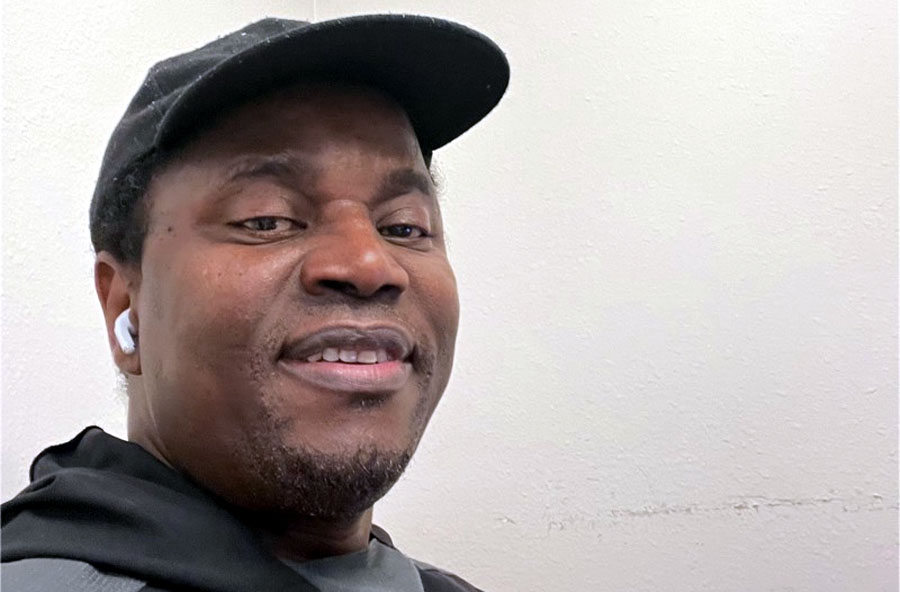
From warmongering to lie-peddling, Alapomu go explain taya
Tunde Odesola
(Published in The PUNCH, on Friday, November 22, 2024)
Ankara needs no introduction; it’s the capital of Turkey, an Islamic country with a 99% Muslim population. Ankara needs no introduction; it’s the name of the brightly-coloured cotton fabric popular in West Africa. Ankara is the introduction. It marks out its wearer as a guest qualified for semo and plastic bowl at Nigeria’s owambe shindigs. Welcome, dear ankara – the uniformity cloth, clothing the lowly and the mighty at parties, like green leaves clothe móín-móín and èko, two edible kindreds, tumbling in embrace down throaty road.
Native to Ankara, Turkey’s second largest populous city after Istanbul, are the Angora goat, Angora cat and Angora rabbit, renowned for their extraordinary coats which are shorn and made into mohair, a globally prized source of cotton, with Angora being the westernised name for Ankara.
Yet, there’s another meaning to ankara. In Spanish, ‘encara’ means ‘still’, an adverb, whose synonyms include yet, nevertheless, nonetheless, notwithstanding, however, despite that, all the same, even so, in spite of etc.
On April 18, 2007, at 19 years of age, Lionel Andres Messi Cuccitini, football GOAT, during a Copa del Rey semifinal first-leg match between Barcelona and Getafe, singlehandedly dribbled past the entire Getafe team, leaving in his wake, players and goalkeeper biting the grass, with the commentator, Joaquim Maria Puyal, screaming, “ankara Messi, ankara Messi, ankara Messi, Messi, Messi, ankara Messi, ankara Messi, ankara Messi, gol, gol, gol, gol, gol, gol, gol, gol, gol, goooooooooooooooooo…”
From Barcelona’s right half of the centre circle, Messi got a short pass from Xavi and made a beeline for goal, ghosting Getafe players, who fell over themselves like bags of beans, making the commentator scream, “ankara Messi, ankara Messi – meaning: ‘still Messi’, ‘still Messi’, ‘still Messi’, as each Getafe player tumbled and the entire stadium stood on edge, frenziedly watching if the charging GOAT was going to miss or score. The GOAT did not miss. He scored the greatest Goal of All Time. And the whole stadium – Barcelona and Getafe fans – erupted in ecstasy.
READ ALSO:
- EFCC chairman: Supreme Court judgement makes us stronger
- IMF praises Nigeria’s economic reforms as Tinubu promises to reduce hardship
- Reps to criminalise dichotomy between HND, BSc certificates – Speaker Abbas
Gripped by the pulsating dribbling run that produced Messi’s goal, the Catalan radio commentator, Puyal, mispronounced ‘encara’ which means ‘still’ in Spanish as ‘ankara’, thereby gifting football lexicon a new word. If you’re in doubt, please, google ‘Ankara Messi’.
I’m ready to put my neck on the chopping block at Ìmògún, the ancient place of skulls, if any of the three following assertions is wrong. One: Ankara, Turkey’s capital city, is not unfamiliar to the Alapomu of Apomu, Oba Kayode Adenekan Afolabi. Two: The Igbákejì Òrìsà is not unfamiliar with ankara, the popular fabric; and three, the stylish Alapomu is not unfamiliar with designer clothes made from Angora furs.
But, by the king’s insistence on standing his ground even though he’s standing on quicksand, the crown may tumble into the gutter of politics. It’s evident the kabiyesi believes that a lie vehemently told possesses the capacity to become the truth after some time like a lizard becoming a crocodile after eating. His rejoinder to the viral video of his call to arms screams, “A bad excuse is better than no excuse.”
Since public outcry trailed the video of Oba Afolabi, in which he personally called for violence in the 2023 Ayedaade/Irewole/Isokan House of Representatives election in Osun, Afolabi has remained as tenacious as Messi, trying to dribble out of the odium his indiscretion has landed him.
This is the badly-worded rejoinder the king sent to The PUNCH: “ALAPOMU IS NOT A WAR MONGER – Alapomu Media Aide.
“The attention of Oba Kayode Afolabi, the Alapomu of Apomu has been drawn to an opinion written by a Columnist titled “Apomu King turns war monger for PDP” published in a national newspaper.
“A statement made by his media aide, Tolu Adetunji said Oba Afolabi is not a war monger but a man of peace. He said the article is biased, prejudiced, subjective, one sided opinion which is not based on facts but on a video which the King has refuted in many national newspapers and online publications.
“The refuttal was made shortly after the video went viral nearly a week ago” according to the Media Aide.
“In the refutal the King said the video was doctored to bring his reputation down in the eyes of the right thinking members of the society.
“Based on the rebuttal, the Media Aide said “anyone who wants to do a story or write an opinion on the video should be fair and objective by balancing the story with the king’s official response to the video.”
I won’t bore you by reproducing all the incriminating assertions the Alapomu made while gassing at the empowerment programme by the incumbent House of Representatives member for Ayedaade/Irewole/Isokan federal constituency, Lanre Oldebo, recently. I’ll take just a paragraph of his speech.
READ ALSO:
- 115 terrorists killed, 289 others arrested in one week, says military
- Messi remains greatest player of all time – Rodri
- Dozens reportedly killed in Israeli strikes on northern Gaza
Oba Afolabi, “I said, Mao, if the election turns to war, so be it; if it turns to combat, so be it. No one can cage the king but God. I told Mao that at all costs, I am solidly behind him – go and unleash absolute violence – this candidate (Lanre) MUST win the election. Then the situation snowballed into “Ta! Ta! Ta! Ta! Ta! To! Ta! Ta! Ta! Ta! Ta! We thank God the effort yielded good fruit…”
May it please your kingship, Oriade, to know I did not remove one ‘ta’ from the 10 ‘ta-ta-ta’ and the one ‘to’ you said to describe what followed your battlecry. This is because I do not want to misquote your majesty.
Being a commoner in conversation with royalty, I need to minimise my excitement and maximise this opportune moment of man-god correspondence because the bull is no mincemeat to be hit twice by the hunter’s arrow, a kìí rí efón ta léèmejì.
The more I watch the video, the more I’m confused as to the motive of the kabiyesi coming out more than one year after the electoral heist, to publicly admit his role in the coup. I’m confused because the kabiyesi is a man of integrity; he wouldn’t say such a thing for money.
I sincerely feel pity for the kabiyesi because the video pinned him against the wall. Going by the language of his rejoinder, he didn’t really want to start a media war but he needed to say something, and by saying something, he impugns my own integrity, leaving me with no option than to spit out the salt and the fart. Omoye has run into the market naked, the flowery ankara clothe is of no use to her.
Kabiyesi, I know the APC are no saints. They cheat, shoot and maim, too. They have kings in their pockets, too. But every infraction on public integrity should be condemned fiercely as this is being condemned.
Oba Alapomu, you said, “Anyone who wants to do a story or write an opinion on the video should be fair and objective by balancing the story with the king’s official response to the video.”
What a cheeky statement! Kabiyesi, I advise you should just squarely face the warmongering duties you’ve taken on behalf of your party, the PDP, and leave elementary journalism alone.
Alayeluwa, I guess those around you, who have passed by a newspaper house in their wakabout peregrinations, are the ones telling you I must ‘balance’ my article, “Apomu king turns warmonger for PDP,” with your baggage of lies.
Kabiyesi, let me throw this in real quick, it might help your understanding of journalism. Sir, journalism is a profession based on truth, fairness, equity and justice. You lost the moral authority to call for balance when you gathered the balls of the APC in your hands and sharply pulled them backwards. Ouch!! You know it hurts. As the saying goes, “He who comes to equity, must clean with clean hands.” Igbá Kejì Òrìsà, did you come with clean hands?
Alapomu, you also said the video of your shenanigans was doctored. Please, kabiyesi, with due respect, ask enlightened people around you what is meant by, “He who alleges must prove.” Your Highness, the onus lies on you to produce the ‘authentic’ video, where you didn’t say all the things you said.
My Lord, I humbly challenge you to produce the video proving that I maligned you in any way. I am dead sure you can never produce such a video because any video you produce won’t only become an exhibit in court, it will also be subjected to forensic analysis as INEC, Police and the DSS will be joined in the case, and then, what the PDP cooked that burnt down the whole house would be revealed.
Kabiyesi, sir, your laughable rejoinder mistook denial of an allegation for proof of innocence. That may be a royal way of thinking but it’s not the justice way of thinking. Truth doesn’t think like that.
I’ll advise the kabiyesi to just apologise (publicly or privately) for the viral outburst and treat all citizens as his children, going forward. But if the Oriade prefers media back-and-forth, I’ll hold steadfastly my truth to his sword.
By the way, instead of cheerleading the PDP, the kabiyesi can earn some foreign currencies from publishers of English dictionaries – Thesaurus, Longman, Oxford, Merriam-Webster, Cambridge and Collins – by patenting his own meanings of electoral violence, rigging, prebendalism, serfdom, injustice, vanity, intolerance and evil.
Email: tundeodes2003@yahoo.com
Facebook: @Tunde Odesola
X: @Tunde_Odesola

Opinion
2027: Competence, Not Zoning, Should Decide Nigeria’s Next President — Imasuagbon
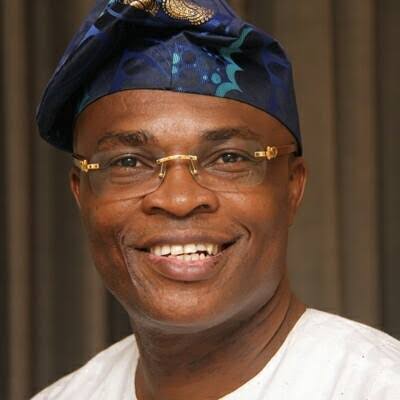
Nigerians should look beyond ethnicity, region and the longstanding debate over rotational presidency when choosing the country’s next leader, according to a chieftain of the African Democratic Congress (ADC), Kenneth Imasuagbon.
The former Edo State governorship aspirant said the priority ahead of the 2027 election should be finding a president with the ability to confront Nigeria’s economic, security and infrastructure challenges.
Speaking to journalists in Benin, Imasuagbon argued that presidential rotation is not a requirement of the Nigerian Constitution and should therefore not outweigh the question of competence.
He said voters should be more concerned about replacing poor schools with better ones, improving healthcare and addressing hardship than debating where the next president comes from.
Imasuagbon specifically appealed to voters in the South to support former Vice President Atiku Abubakar, who is contesting the 2027 presidency on the ADC platform.
According to him, Atiku has demonstrated the experience and determination needed to improve the country, describing the former vice president as someone capable of promoting national unity and fairness.
He also accused the Bola Tinubu administration of worsening economic pressure through policies including the removal of fuel subsidy, while expressing concern about the condition of roads, electricity and other infrastructure.
Imasuagbon argued that the next administration must focus on practical improvements in areas such as power, transportation, employment, security and public services.
The ADC chieftain also dismissed the idea that the ruling All Progressives Congress (APC) would automatically benefit from its incumbency advantage in 2027.
He maintained that the electorate ultimately determines the outcome of an election, arguing that voters could change the political direction of the country if they were determined to do so.
Imasuagbon further criticised what he described as regional and ethnic considerations in the distribution of political appointments and opportunities, insisting that the next president should give Nigerians across different parts of the country a sense of belonging.
His comments come as political parties and their candidates intensify preparations for the 2027 presidential election.
Opinion
Lesson from Dotun Oladipo’s Brave Daughters, by Bamidele Johnson
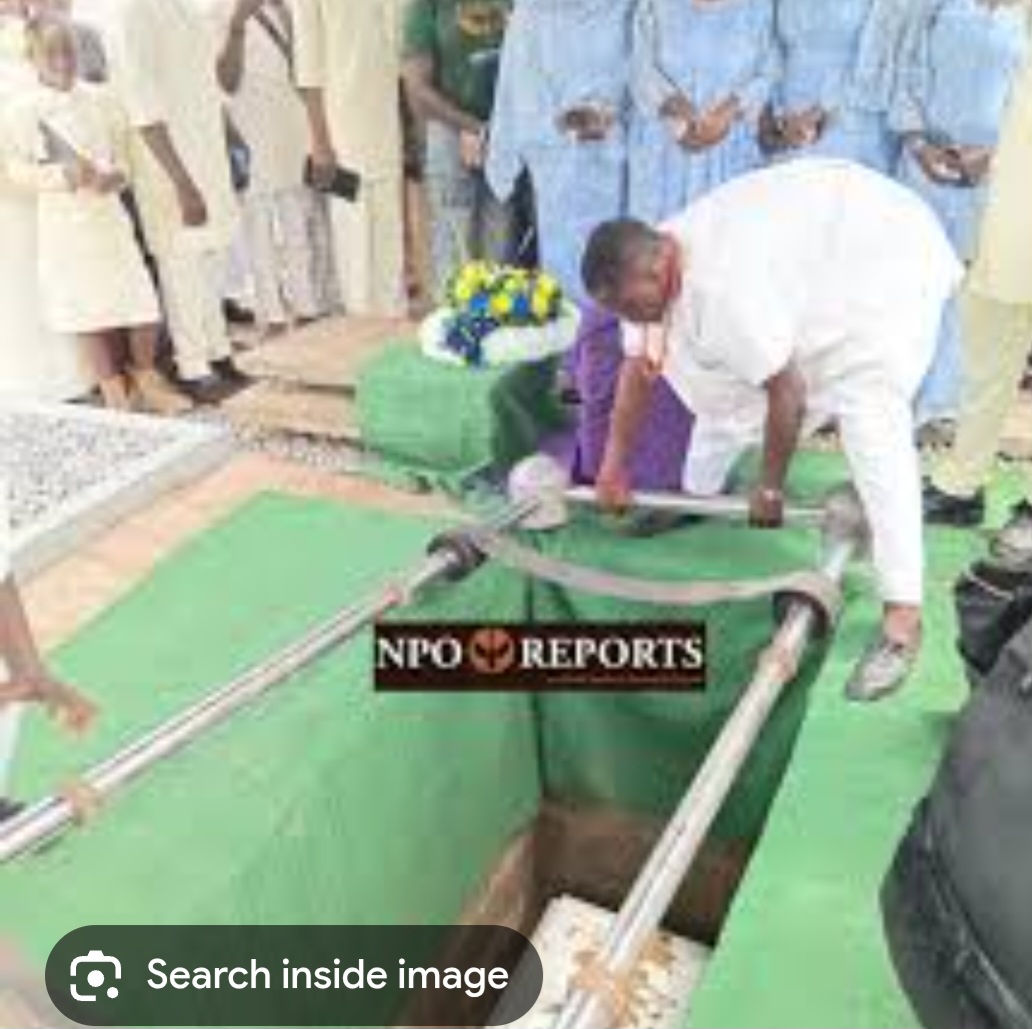
Lesson from Dotun Oladipo’s Brave Daughters, by Bamidele Johnson
I hope to grow old. I want to see my kids become real adults, find their own feet, make mistakes, recover from them, and perhaps one day complain that their own children are giving them grey hairs. I want that plainly stated before anything else, as everything that follows might read as a man agreeing to an early exit rather than a man simply being honest about the odds.
I want the decades. I want to become the grandfather who repeats the same stories until nobody bothers correcting him anymore. But wanting a thing and being granted are different things. The last year has made that difference harder to ignore than I would like. I have lost many friends recently to keep thinking that optimism is my natural resting state. Some of these men had better blood pressure than mine, better habits, better everything that is supposed to count. It did not save them.
There is no formula I know that reliably separates the men who make it to 70 from those who do not. Anyone who says he knows one is selling something. So, I do not assume that old age is an already booked destination. Even if I once did, which I doubt, the last three years have cured me of such an illusion. As such, I treat it as a hope rather than an expectation, and I have found that a more honest way to live.
It is exactly why I want something placed on record now, while I am still able to place things on record, rather than leave it for people to guess what my wishes were in the fog of a funeral week. If I do not make old bones, my children are not to be asked to read tributes at my funeral. Not one line, however short, however lovingly written.
This, for me, was settled today rather than re-opened. At Dotun Oladipo’s funeral service, his three daughters took turns to read their tributes to their dad, and I found myself watching them with awe. There was a kind of strength in them that I do not possess. It is the strength needed to stand in front of a hall brimming with grieving adults and speak about a man they have just lost. Forever. Strength, however, is not the same as ease. I could see plainly what that strength was costing them as they read. Their voices caught. Their composure held and then did not hold and then held again through sheer will.
In front of them, in the pews, men and women considerably older than them came undone in ways the girls themselves were somehow managing to resist. I went mightily close. Some of the sobbing was quiet, the type people try to fold into a handkerchief. Some of it was not quiet at all, the kind that announces itself whether or not you want it.
Those young women honoured their father with a grace that is beyond me. What they did was astonishing. So, what I am attempting is an observation of a custom I have now watched wound people. This was not the first time I had watched this particular ritual extract more than it should from people already running on fumes. I saw an earlier and harder version of it at a friend’s wake back in 2015.
The first son was called forward to read his father’s tribute, and he could not do it. He tried, but the words would not come, and he stood there in front of a crowd of mourners, with his grief simply refusing to organise itself into sentences. The officiating minister, rather than releasing him from the task, urged him to continue. I sat fizzing with sorrow and ire. He could not go on and, eventually, the minister accepted, but not before insisting a while longer than it should have reasonably taken. His younger brother was called up next, presumably on the theory that if one grieving son could not manage it, maybe another one could. He flunked it in the same way. Grief does not distribute itself more conveniently among siblings just because a programme has been printed and needs to be followed.
I have turned that memory over many times since, trying to work out why this part of the rites is treated as mandatory in the first place. I have not found a satisfying answer. Maybe it comes from a belief that a child’s words carry more weight than anyone else’s, which may even be true, but weight is exactly the problem when those carrying it are struggling to hold themselves together with nothing but adrenaline and the fear of dissolving in public.
Maybe it is simply inertia, the reason we still do a hundred things at funerals that nobody can explain the original purpose of. Either way, I have stopped looking for the justification. I no longer think one exists that is good enough to weigh against what I watched happen to that boy in 2015.
So, let this stand as my instruction rather than my preference, the kind of thing I would rather state plainly now than leave for my children to infer later from how uncertain I sound when the subject comes up in passing. If I do not get the old age I am hoping for, my children will not be asked to read a single word over my body. Someone else can speak for me. A friend, a stranger with a steadier voice and a smaller stake in the loss, anyone whose grief will not be quite so total that standing upright becomes almost impossible.
My children, of course, will sit in front and fall apart if that is what the day requires of them, but without the microphone. That, at least, is one small mercy I intend to arrange for them while I am still here to arrange it.
Dotun deserved every bit of the send-off his daughters gave him today, and I suspect he would have been the first to tell them to sit down and let someone else carry the weight for a while. He did not get a say in that, as none of us ever do once we are the ones being spoken of rather than the ones speaking. Rest well, Dotun. You raised three young women whose strength I will not soon forget. That alone says everything worth saying about the man you were.
Opinion
‘Tinubu Will Win Again in 2027’ — Charismatic Bishops’ Secretary
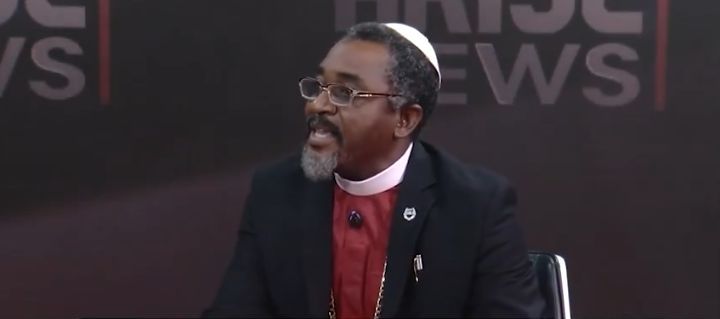
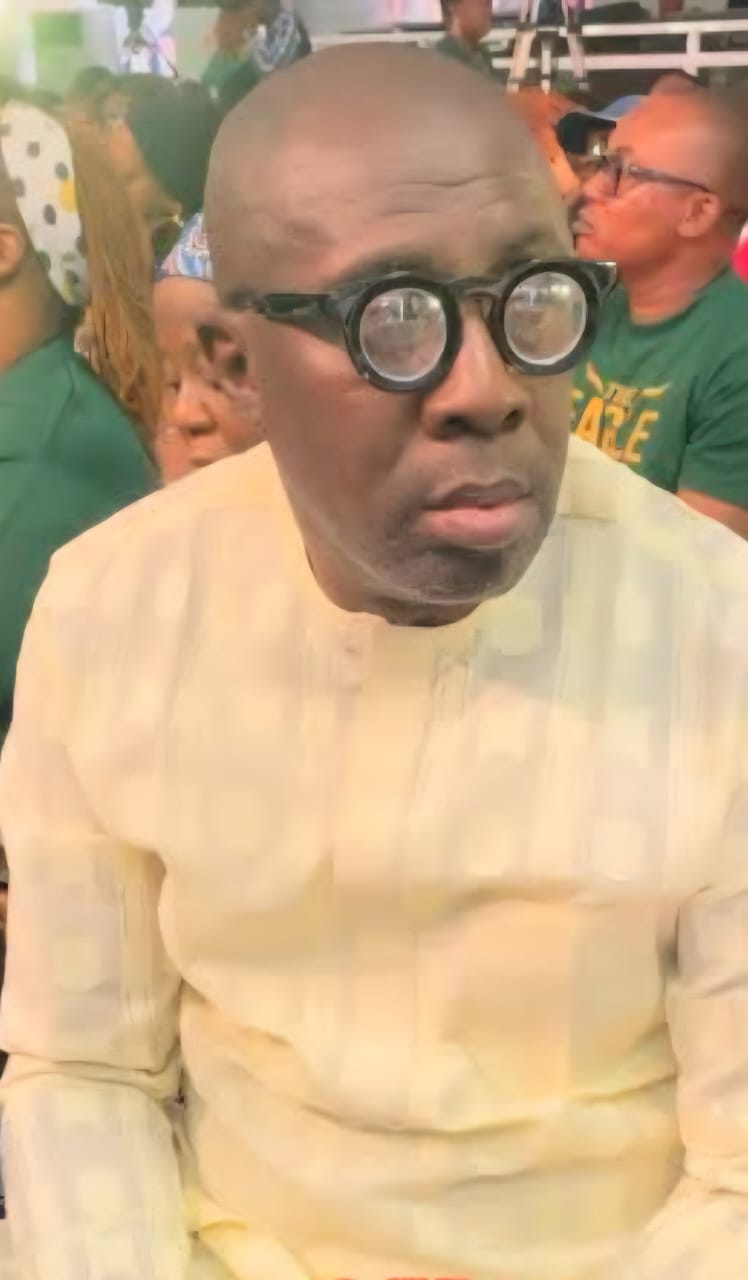
‘Tinubu Will Win Again in 2027’ — Charismatic Bishops’ Secretary
A senior Nigerian cleric, Archbishop Chivir Chianson, has declared that President Bola Tinubu will retain the presidency after the 2027 general election, attributing the prediction to a message he said came from God.
Chianson, who serves as Secretary General of the Charismatic Bishops’ Conference of Nigeria, made the statement while appearing on Arise Television on Saturday.
Rather than basing his prediction on political calculations, the archbishop said his confidence came from what he described as the prophetic role of bishops.
He maintained that the conference had previously spoken about Tinubu’s political future based on what he said was divine revelation and that the President would return for another term.
Chianson also predicted that Tinubu’s performance would improve if he wins the 2027 election.
READ ALSO:
- DSS warns Osun churches, mosques, markets over alleged terrorist attack plot ahead of 2027
- ‘Tinubu Will Win Again in 2027’ — Charismatic Bishops’ Secretary
- Fake miracles, bogus grants: How clerics allegedly fleece Nigerians of millions
Addressing the political opposition, the cleric said the bishops could not be blamed if rival parties failed to unite or organise themselves effectively ahead of the election.
He also sought to clarify the position of the bishops when dealing with government, saying their role in speaking truth to power did not mean they should approach political leaders with hostility or disrespect.
According to him, the Constitution, alongside their religious convictions, should guide how they engage the President and the country.
Chianson said he was sufficiently confident in his prediction to promise that he would return to the Arise TV studio after the 2027 election, when he expects the result to demonstrate that the bishops’ prophecy was correct.
His comments add a religious dimension to the increasingly active political conversation surrounding the 2027 presidential race.
‘Tinubu Will Win Again in 2027’ — Charismatic Bishops’ Secretary
-

 Business3 days ago
Fuel Prices Climb to ₦1,500 per Litre Across Nigeria, Sparking Calls for Urgent Action
-

 News3 days ago
OAU Investigates Death of Final-Year Student as Police Begin Probe
-

 News2 days ago
ECOWAS Biometric Card Expands as Seven Countries Begin Rollout
-
 Interview3 days ago
He Does Not Lose Elections”: Abdulmumin Jibrin Predicts 65% Landslide for Tinubu in 2027
-
 Politics3 days ago
Aisha Buhari Visits Atiku Amid Opposition Coalition Activities
-

 Business3 days ago
NCAA Moves Against Airlines Over Rising Flight Delays
-
 metro2 days ago
FG Suspends Niger NSCDC Commandant As 37 Suspected Illegal Miners Die In Custody
-

 Sports2 days ago
Ballon d’Or 2026: Mbappe Responds to Yamal’s Bold Claim