

Business
Nigeria’s economy can’t survive second lockdown, MAN, LCCI warn

The Manufacturers’ Association of Nigeria, the Lagos Chamber of Commerce and Industry and other economic groups have said Nigeria’s economy is still fragile and cannot survive another lockdown.
They stated this in separate interviews against the reported ride in COVID-19 cases in the country, just as some states including Lago and Kaduna have threatened to shut down their public spaces and the economies if people continued to ignore the recommended guidelines against the virus spread.
Nigeria’s economy slipped back into recession after its gross domestic product contracted for the second consecutive quarter, according to data released by the National Bureau of Statistics in November.
The Federal Government imposed lockdown in Lagos and Ogun states as well as the Federal Capital Territory in April this year.
The phase three of the lockdown, which was extended to other parts of the country, ended in September.
But there have been concerns about the increasing coronavirus cases with at least 26 generals and the Lagos State Governor, Babajide Sanwolu, testing positive for the virus. The Nigerian Army had also said a general, Olu Irefin, died of the virus.
The Director-General of the LCCI, Dr Muda Yusuf, in an interview with The PUNCH, said a second lockdown was not wise considering the current state of the economy.
He stated, “A second lockdown is not advisable. The social and economic environment is too tense and fragile to withstand the shock of another lockdown. What needs to happen is to intensify the sensitisation and awareness of COVID-19 protocols. Some subtle enforcement should also be put in place.”
Also, the acting Director-General of MAN, Ambrose Oruche, said the state of health of Nigerians was of paramount importance and the spread of the coronavirus should be prevented.
He, however, noted that it was not advisable for the government to introduce a complete lockdown considering the fragile state of the economy and the need for people to earn a living.
He advised the government to ban large gatherings and enforce the Nigeria Centre for Disease Control protocols like the wearing of facemasks, regular hand washing and observing of social distancing.
President, Nigeria-Malaysia Business Council, Michael Aderohunmu, said it would be counterproductive to lock down the nation’s economy again.
He said, “We are talking about productivity, humans produce and consumed products. You can see the last effect of the lockdown on the economy. Consumption crashed and most products were short in the markets.
“So humans should not be locked down again, rather massive advocacy should be done. If people don’t go to work again, the effect will be devastating on production, consumption and the economy.”
The National Vice President, Nigeria Association of Chambers of Commerce, Industry, Mines and Agriculture, who doubles as the President, Petroleum Products Retail Outlets Owners Association of Nigeria, Billy Gillis-Harry, stated that a lockdown would not mean well for production in Nigeria.







Business
Nigerians Pay N44 Extra Per Litre as Retailers Defy Falling Depot Prices – Full Report

Auto
Abuja Roars to Life as Jetour X50 Headlines Three-Day Motoring Experience
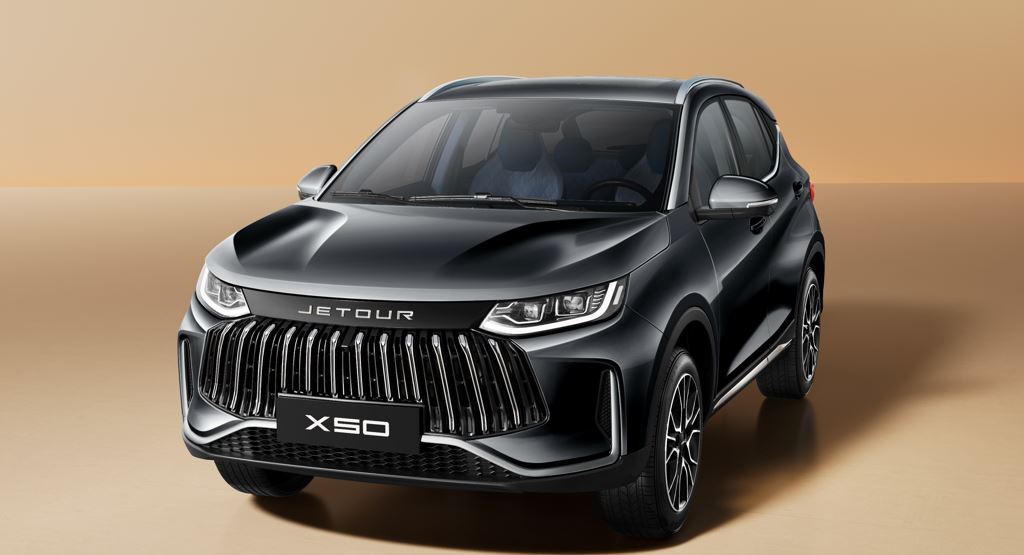
Abuja Roars to Life as Jetour X50 Headlines Three-Day Motoring Experience
Abuja is gearing up for a major motoring spectacle as Jetour Nigeria brings its fast-growing brand experience to the Federal Capital Territory, with the stylish Jetour X50 set to take centre stage in a three-day showcase of performance, technology and automotive innovation.
Scheduled for September 22 to 24, 2026, the Jetour Experience Abuja will move beyond the conventional vehicle exhibition, giving motorists and prospective buyers the opportunity to test-drive the X50, interact with automotive specialists and experience a range of entertainment and interactive activities.
The Abuja activation follows the strong reception recorded during Jetour Nigeria’s recent Lagos experience and forms part of the automaker’s strategy to deepen customer engagement while expanding its footprint across Nigeria.
Backed by an expanding authorised dealer network comprising Elizade Nigeria Limited, Mandilas Autos, Germaine Auto Centre, Kojo Motors, R.T. Briscoe, Tab Autos and New Era AutoVehicle Services, Jetour is also strengthening access to vehicle sales, after-sales support, genuine spare parts and certified technical services nationwide.
At the heart of the Abuja experience will be the Jetour X50, a compact SUV designed to combine contemporary styling, performance and a technology-rich driving environment.
Powered by a 1.5-litre turbocharged engine paired with a dual-clutch transmission, the X50 has positioned itself as a strong contender in Nigeria’s competitive compact SUV segment.
Jetour has equipped the model with a range of premium features, including a 360-degree camera, Blind Spot Detection, 10.5-inch infotainment system with Apple CarPlay and Android Auto, wireless charging and leather upholstery.
The combination of technology, comfort and performance is part of Jetour’s strategy of offering premium motoring features at competitive price points.
The Abuja event also highlights Jetour’s aggressive expansion strategy in Nigeria, following the brand’s recognition with industry accolades including Fastest Growing Auto Brand and Auto Brand of the Year.
With its expanding dealer network providing nationwide sales and after-sales support, Jetour is seeking to deepen customer engagement while making its vehicles and ownership services more accessible to motorists across the country.
As Abuja prepares to welcome the Jetour Experience, the three-day activation is expected to provide motorists with an opportunity to see, feel and drive the X50 while experiencing first-hand what is driving the brand’s growing appeal in Nigeria.
Business
Dangote Refinery Sets ₦525 Per Share for Landmark IPO
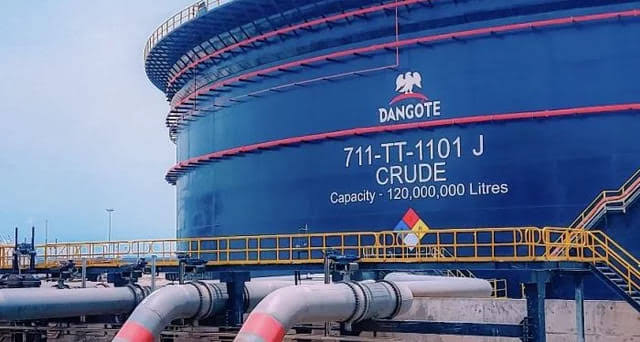
For ₦5,250, Nigerians could soon own a piece of the refinery that has reshaped the country’s fuel market.
-
 Auto3 days ago
Kaduna to Lead Govt Patronage of Local Vehicles as Sani Unveils Peugeot 5008
-

 metro2 days ago
El-Rufai Demands ₦10bn from Defence Minister Over Southern Kaduna Killings Allegation
-
 metro2 days ago
Catholic priest leaves priesthood, weds Kenyan woman after 12 years in Kenya
-

 News1 day ago
Lagos Moves to Slash Agency Fees, Curb Rent Hikes With New Tenancy Bill
-
 metro2 days ago
Oyoland Grand Chief Imam Celebrates Dr Sharafudeen Raji for Service to Islam
-

 metro3 days ago
Socialite Igho ‘Tiny’ Ubiribo Dies After Penis Enlargement Surgery
-
 Politics2 days ago
Why Did Peter Obi Attend Seyi Makinde’s Campaign Launch? Here’s What He Said
-
 metro2 days ago
No US Case Against Tinubu, Family Enjoy Unimpeded Transit for UNGA — Ambassador Ibrahim
You must be logged in to post a comment Login