

News
How minister, top govt official changed Buhari’s plan to allow recirculation of old N500, N1,000 notes

Fresh facts indicated yesterday that a minister and a top government official changed the plan of President Muhammadu Buhari to allow the recirculation of old N200, N500 and N1,000 notes till April 10.
Also it came to light that state governors would have accepted the decision despite the fact that they wanted a minimum of one year timeline to change the redesigned notes to the new ones.
According to a top source, the President highlighted three choices for consultations before addressing Nigerians.
READ ALSO:
- Naira crisis: Tinubu denies directing APC govs to disregard Buhari
- Elections will hold, no plans for interim govt – Presidency
- Naira: Buhari not properly guided on Supreme Court order, says Keyamo
- Outright review and reversal of the Naira redesign policy+
- Recirculation of old notes of N200, N500 and N1,000 from February 10th to April 10th
- Allowing the court to have the final say on the Naira redesign
- Out of court settlement to save the economy of any jolt
The top source said: “After isolating the alternatives to prevent chaos, the President initiated a series of consultations with state governors, allies, strategists and gauging the mind of the Governor of the Central Bank of Nigeria (CBN), Mr. Godwin Emefiele.
“The President was deeply concerned that the poor people were the most affected by naira scarcity. Based on the assurance he got from Emefiele, he had hoped that the policy would be executed with slight dislocations.
“Buhari noted the points made by those who asked for a review. What worried him most were reports of how poor Nigerians who legitimately made their money were finding it difficult to get the new notes and therefore unable to feed themselves and their families.
“Buhari had virtually made up his mind to allow the reintroduction of the three denominations and for both the old and new notes to be legal tender till April 10th. Some presidential aides were waiting for directive to announce the decision but the intervention of a minister and a presidency official led the President to have a change of heart. What followed was the broadcast by the President on Thursday morning.”
The source gave insights into how the two government officials ‘influenced’ the last-minute decision of the President.
“Both officials pressed it on the President that allowing N500 and N1000 to be legal tender until April 10th would defeat his resolve not to allow those who have stashed billions of the old notes for the forthcoming elections to bribe voters.
“They convinced the President that Nigerians would accept this when he addresses them, show understanding and embrace the policy. Lost on the President and the two officials was the concern of the governors that re-circulating only the N200 old notes will not end the scarcity of the national currency.
READ ALSO:
- Just in: Banks not authorised to accept old N500, N1,000 notes, says CBN
- Tonto Dikeh’s bestie slams Churchill for celebrating son’s birthday
- Breaking! At last, CBN Bows; Asks Banks to Accept N1000, N500 Notes
“Also glossed over was the injunction of the Supreme Court of February 8 which was reaffirmed on February 15 that the old notes remain legal tender until the suit filed by the governments of Kaduna, Zamfara and Kogi and the motion of objection filed by the Federal Government are heard and determined.”
Responding to a question, the source said: “The two officials are members of the cabal working against the APC presidential candidate, Asiwaju Bola Tinubu, because their ambitions were not realised.
“One of them wanted to be a governor and the other a presidential running mate. Buhari believed that their advice was altruistic, not knowing that they had an ulterior motive.”
Another reliable source, who was in the know, explained the intrigues on the Naira redesign policy and attempts by state governors to help Buhari arrive at a popular decision.
The source admitted that the governors wanted a minimum of one year timeline to change the redesigned notes to the new ones.
The source said: “After days of negotiation with the governors, Buhari wanted a quick resolution of the naira crisis. The option of re-circulating the N200 note proposed by the CBN was flatly rejected by the governors. Their argument was that the quantity of the denomination to be re-circulated would not be enough.
“They asked that the CBN make available the quantity of the new notes printed and the quantity of the N200 old notes to be re-circulated to see if it was close to the over N2 trillion mopped up. But the apex bank was not forthcoming with the figures.
“The governors were therefore not convinced that the option will ameliorate the hardships brought about by scarcity of the new notes.
“The governors therefore insisted that all the old notes be re-circulated for at least one year.
“Their position was informed by what a governor called the “authentic, verifiable information ” that the Mint would need close to over nine months to print one trillion naira of the new notes, assuming that it does no other job during the period.”





News
Adeleke Begins Second Term, Pledges Industrialisation, Jobs, Infrastructure
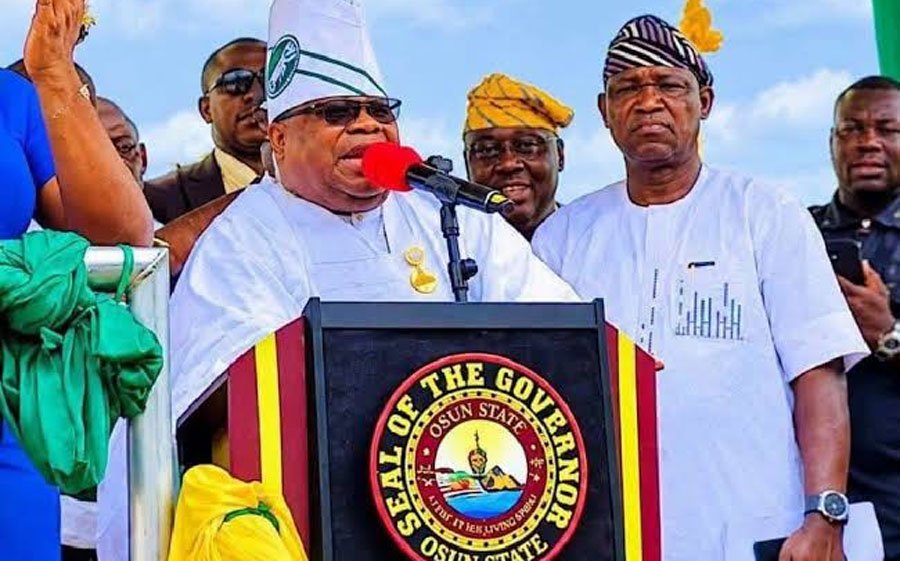
Adeleke Begins Second Term, Pledges Industrialisation, Jobs, Infrastructure
Osun State Governor Ademola Adeleke has been sworn in for a second term in office, pledging to pursue economic transformation, industrialisation, job creation, infrastructure development and improved welfare for residents.
Adeleke took the oath of office on Friday, November 27, 2026, at the Osogbo Township Stadium, marking the beginning of another four-year tenure following his re-election in the August 15 governorship election.
His deputy, Kola Adewusi, had earlier been sworn in at the inauguration ceremony.
The state’s Chief Judge, Justice Oyebola Adepele-Ojo, administered the oath to Adeleke at about 11:35 a.m., with the ceremony lasting approximately four minutes.
Vice-President Kashim Shettima, who represented President Bola Ahmed Tinubu, was among the dignitaries at the event, alongside former Osun governor Adebisi Akande, former Senate President Bukola Saraki and other political leaders and traditional rulers.
In his inaugural address, Adeleke said his administration would work to move Osun away from dependence on the civil service towards an industrialised economy capable of generating sustainable revenue and employment.
He said the government would target agro-processing factories, industrial parks across the state’s districts, free trade zones, tourism and sports development, while creating a more conducive environment for private investment.
The governor said citizens’ welfare, infrastructure expansion, agricultural transformation, digital economy development, wealth creation and the empowerment of young people and women would feature prominently in his second-term agenda.
He also pledged to complete ongoing projects and embark on new ones, particularly in water supply, electricity, education and healthcare.
READ ALSO:
- Ex-Governor Jailed 25 Years for Murder of Pregnant Lover
- Plateau Attack: Death Toll Rises to 22 as Gunmen Kill Residents in Fresh Bloodbath
- Niger Communal Violence: Bago Pledges ₦148m as 74 People Die in Kambari-Fulani Clash
Adeleke said major waterworks across the state would be rehabilitated, while his administration would seek a lasting solution to water challenges in Ilesa.
On electricity, he announced plans to establish the Osun State Electricity Regulatory Commission, following the state power sector law he signed earlier this year, saying stable electricity supply was critical to economic growth and industrial development.
He also promised to establish digital hubs in each of Osun’s three senatorial districts to expand employment opportunities and support growth in the digital economy.
In education, the governor pledged to recruit additional teachers, accelerate school rehabilitation, expand bursary and scholarship programmes, keep tuition affordable, address cultism and revive technical colleges.
Adeleke further promised to strengthen healthcare delivery through the upgrading of general hospitals, recruitment of additional health workers and improved availability of drugs across the state.
He said his administration would continue to prioritise the completion of existing projects while introducing new initiatives to accelerate development and improve living conditions.
The governor’s second term follows his victory in the August 15, 2026 governorship election, in which he contested on the platform of the Accord Party after leaving the Peoples Democratic Party (PDP).
The Independent National Electoral Commission (INEC) declared Adeleke winner with 511,067 votes, defeating the All Progressives Congress (APC) candidate, Bola Oyebamiji, who polled 444,815 votes. African Democratic Congress (ADC) candidate Najeem Salaam finished third with 17,180 votes.
Adeleke won in 19 of Osun’s 30 local government areas, while Oyebamiji secured victories in the remaining 11, giving the governor a winning margin of 66,252 votes.
The governor’s new tenure also begins amid a prolonged dispute over local government administration in Osun, involving the state government, the APC and elected council officials.
The crisis has affected local government operations and triggered political and legal disputes over control and legitimacy of council administrations.
During his inaugural address, Adeleke expressed optimism that the dispute would be resolved following President Tinubu’s intervention, saying he expected a breakthrough within a week.
He called on political leaders and stakeholders to embrace reconciliation, unity and cooperation, urging them to put the state’s interests above political differences.
The governor’s second term is expected to be closely watched, particularly on his promises to diversify Osun’s economy, attract investment, create jobs, improve infrastructure and strengthen public services.
Adeleke Begins Second Term, Pledges Industrialisation, Jobs, Infrastructure
News
Fake Drugs: NAFDAC Plans Wholesale Centres in Lagos, Anambra
Fake Drugs: NAFDAC Plans Wholesale Centres in Lagos, Anambra
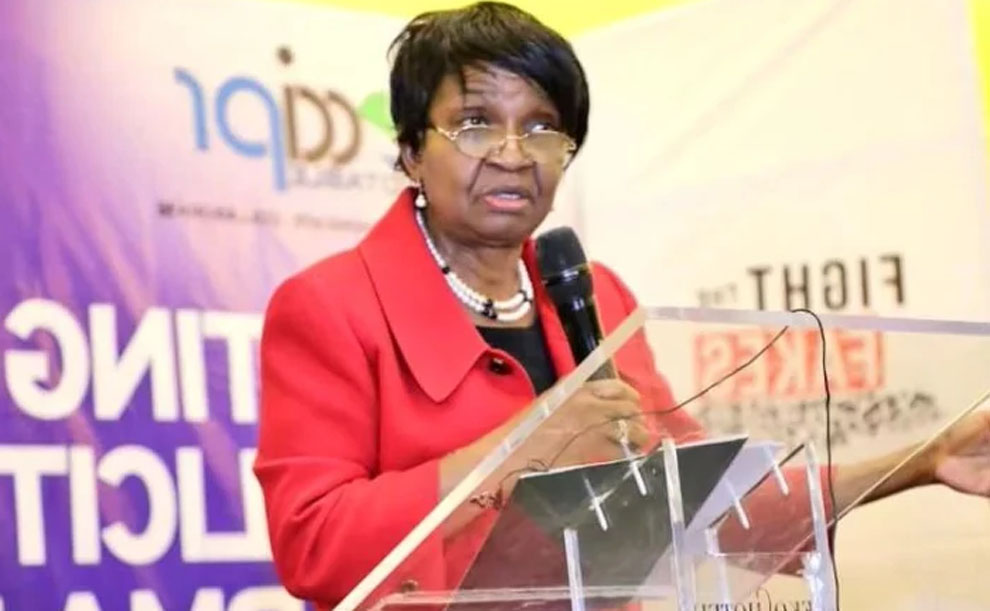
The National Agency for Food and Drug Administration and Control (NAFDAC) has announced plans to establish Coordinated Wholesale Centres (CWCs) in Lagos and Anambra states as part of efforts to strengthen pharmaceutical distribution and curb the circulation of fake and substandard medicines.
The initiative is aimed at relocating open drug markets to designated facilities where pharmaceutical products can be properly monitored, stored and traced across the supply chain.
Musa Godiya, a member of NAFDAC‘s Federal Taskforce and Investigation, Enforcement Directorate, disclosed the plan on Thursday at the 10th annual conference of the Association of Nigerian Health Journalists in Abuja.
Godiya said the centres would improve regulatory oversight and help the agency trace the sources of falsified and substandard medicines entering the distribution network.
“With the CWC, we will be able to trace where the bad products are coming from and have strong regulatory oversight over the distribution of these products in our supply chain,” he said.
He explained that the proposed centres would build on the pilot Coordinated Wholesale Centre unveiled in Kano State in February 2023.
According to him, NAFDAC had already shut down major open drug markets, including Idumota Market in Lagos, Bridge Head Market in Onitsha, Anambra State, and a market in Aba, Abia State, as part of its crackdown on unsafe pharmaceutical distribution.
Godiya said traders in the affected markets had signed irrevocable undertakings to relocate to designated wholesale centres once the facilities were ready.
READ ALSO:
- Niger Communal Violence: Bago Pledges ₦148m as 74 People Die in Kambari-Fulani Clash
- ‘Useful Errand Boy’ — Imo APC Rejects Wike’s Bid To Lead Tinubu Campaign
- Kenyan Pastor Serving 200 Years For Murder Convicted Of Terrorism-Related Charges
The Coordinated Wholesale Centres are designed to replace open drug markets with regulated environments that would improve storage conditions, product authentication, monitoring and accountability in the pharmaceutical supply chain.
The initiative is expected to reduce the circulation of counterfeit medicines, expired drugs and improperly stored pharmaceutical products, which pose serious health risks to consumers.
NAFDAC intensifies enforcement against sachet alcohol
Godiya also announced the commencement of the second phase of enforcement against sachet alcohol and alcoholic beverages packaged in containers below 200 millilitres.
He said the agency had concluded the first phase, which involved inspections of manufacturing facilities, and had now moved to market and street-level enforcement.
“We have concluded the first phase of the ban, which involved visiting manufacturing factories.
“We are now going to markets and streets for a total mop-up and enforcement action on sachet alcohol,” he said.
He disclosed that enforcement activities had commenced in markets, including a raid on Zuba International Market on Thursday.
NAFDAC‘s latest initiatives form part of wider efforts to strengthen public health regulation, improve medicine safety and address the proliferation of unregistered, falsified and substandard products in Nigeria.
Fake Drugs: NAFDAC Plans Wholesale Centres in Lagos, Anambra
News
Tinubu Offers Abuja Homes, N100m each to Families of Air Force Crash Victims
Tinubu Offers Abuja Homes, N100m each to Families of Air Force Crash Victims
President Bola Tinubu has approved three-bedroom flats in Abuja and N100m compensation for the bereaved families of Nigerian Air Force personnel who died in the October 5 aircraft crash in Igbokoda, Ondo State.
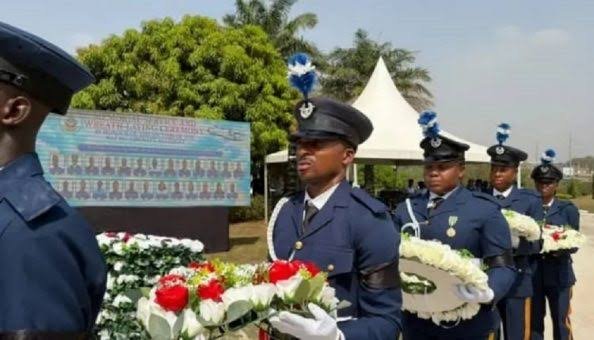
The President announced the package on Thursday at a memorial service and wreath-laying ceremony held at the Military Cemetery in Abuja in honour of the 25 victims of the tragedy.
The houses, located in the Federal Government’s Renewed Hope Housing Project in Abuja, will be allocated to the immediate families of the deceased military personnel and civilians who were aboard the ill-fated aircraft.
Tinubu described the intervention as a demonstration of the nation’s gratitude to those who lost their lives in service to the country, assuring their families that the government would not abandon them.
“As a tangible expression of the nation’s gratitude, I approve the allocation of three-bedroom flats in the Renewed Hope Housing Project in Abuja to the family of each of the military personnel who lost their lives in this accident.
“No home can ever replace the one you have lost, but they gave their lives for Nigeria, and Nigeria will give their family a home,” he said.
In addition to the housing allocation, the President announced an approval of N100m for each of the 19 deceased military personnel’s families.
He, however, extended the housing gesture to the immediate families of the civilians who also died in the crash.
Tinubu said the government’s responsibility to the bereaved families would go beyond the memorial ceremony, stressing that sustained support would be necessary to honour the sacrifices of the deceased.
“Long after the wreaths have faded, our commitment to these families must remain evergreen,” he said.
The President also promised a thorough investigation into the October 5 crash, assuring Nigerians that the findings would guide measures to strengthen aviation safety and prevent a recurrence.
“I assure the grieving nation that this accident will be thoroughly investigated. We will seek answers. We will learn the lessons. We will strengthen our military and civilian aviation safety standards.
“Our operational procedures and our institutional accountability will be strengthened. We owe them the truth, and we will honour that debt,” he stated.
The Nigerian Air Force aircraft, marked NAF ATR 42, crashed in a marshy area of Igbokoda, Ondo State, on October 5, 2026, killing 25 people, comprising military personnel and civilians.
Tinubu also reaffirmed his administration’s commitment to improving the welfare, safety and operational capacity of the Armed Forces through modernisation, improved training and the provision of better equipment.
“A nation that asks its sons and daughters to fly into danger must give them the best wings it can build,” he added.
He urged the bereaved families to take solace in the contributions of their loved ones to national service, assuring them that the country would continue to remember their sacrifices.
-
 metro2 days ago
Oyoland Grand Chief Imam Moves to End Feud, Seeks Reconciliation Among Markaziyya, Adabiyyah, Mahdul ‘Arabi
-

 metro1 day ago
Nigerian Health Worker, 26, Found Dead in Canada After Returning From Work
-
 metro1 day ago
Phone-Tapping Claim: I Lied to Unsettle Tinubu Government – El-Rufai
-

 metro2 days ago
‘I Came to Nigeria for Love, Now I’m Stranded, Begging for Rent’ — American Woman Married to Enugu Man Cries Out
-
 Politics1 day ago
BREAKING: Makinde Reportedly Agrees to Back Atiku’s Presidential Bid
-

 Politics1 day ago
2027 Presidency: ‘Atiku Should Forget His Ambition, Wait Until 2031’ – Bode George
-

 International3 days ago
Iran Flogs Singer, Four Others 74 Times Over Hijab-Free Performance
-
 Politics3 days ago
ADC Asks Tinubu to Resign or Face Impeachment Over Kano Court Allegation