

International
Israel protests indicative of identity crisis – Iran
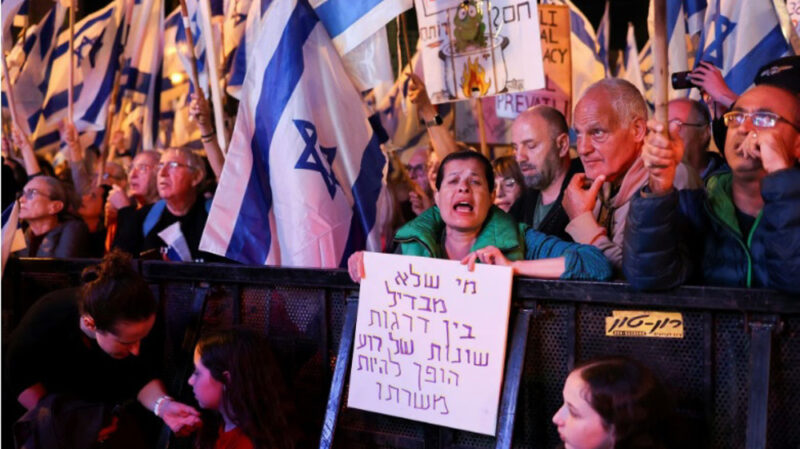
TEHRAN – Nasser Kanaani, the spokesman for the Iranian foreign ministry, has reacted to massive protests in Israel, saying they are emblematic of an identity crisis.
Kanaani said on Twitter that the huge rallies against the Zionist regime’s judicial changes for the 10th week as a testimony to “the hidden identity crisis at the spider’s den,” according to Tasnim.
Pointing to the street rallies that have been held in Tel Aviv and other regions of the occupied territories for the past ten weeks, the spokesman said, “This is only one of the aggregated crises in Israel.”
He further reminded the Zionist regime that its rootless foundation will collapse with a gust, citing verse 41 from surah Al-Ankabut of the Holy Quran, which says, “And indeed, the weakest of homes is the home of the spider.”
Israel has been racked in recent weeks by massive protests over a government-baked plan to curb the Supreme Court’s powers.
READ ALSO:
- Uganda president’s son declares interest to succeed father in 2026
- JUST-IN: Police Arrest Edo APC Deputy Chairman
- LP Gov’ship candidate, Rhodes-Vivour condemns ‘Lagos is a no man’s land’ narrative ahead of election
The internal rift has alarmed Israeli officials in such a way that some Israelis are now warning of a self-destruction process gripping Israel. It also comes against a backdrop of reconciliation between Iran and Saudi Arabia which also worried the Israelis and deepened their isolation.
Avigdor Liberman, a former Israeli minister, called on Israeli Prime Minister Benjamin Netanyahu to resign over the Iran-Saudi deal because it was his personal fiasco.
Former Prime Minister Yair Lapid described the deal as a dangerous development that deprives Israel of its regional wall against Iran. “The agreement between Saudi Arabia and Iran reflects the complete and dangerous failure of the Israeli government’s foreign policy,” Lapid said, according to Israeli media.
Former Prime Minister Naftali Bennett said the resumption of ties between Iran and Saudi Arabia was a “serious and dangerous development for Israel” and a “political victory for Iran.”
“This delivers a fatal blow to efforts to build a regional coalition against Iran,” said Bennett.
He then lamented, “Countries in the world and the region are watching Israel in turmoil over the dysfunctional government that is engaged in systematic self-destruction.”
Provided by SyndiGate Media Inc. (Syndigate.info).











International
Netanyahu Calls UK ‘Islamic Republic of Britain,’ Sparks Outrage Over Islamophobic Remark
Netanyahu Calls UK ‘Islamic Republic of Britain,’ Sparks Outrage Over Islamophobic Remark
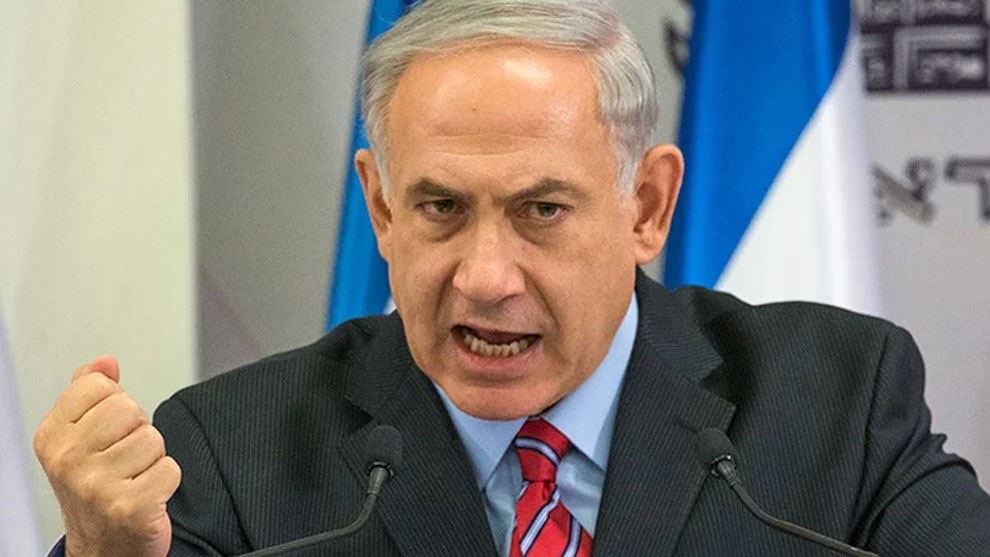
Israeli Prime Minister Benjamin Netanyahu has sparked a diplomatic firestorm after referring to the United Kingdom as the “Islamic Republic of Britain” during a podcast interview, drawing sharp condemnation from British Jewish leaders and former government officials while underscoring growing tensions between the two long-standing allies. Netanyahu made the remarks during an appearance on the Israeli podcast Melech Blitzer Haim, which aired on Thursday, August 13, 2026. The Israeli leader was discussing British media coverage of Israel, contrasting what he described as the “positive” reporting by journalist Randolph Churchill during the 1967 Six-Day War with the current British political climate.
“Try finding that in Britain today. What’s called ‘the Islamic Republic of Britain’,” Netanyahu said, according to translated comments published by Israeli media.
When the podcast host asked whether “all of Europe isn’t already like that,” referring to demographic changes and the growth of Muslim communities across the continent, Netanyahu responded, “Yes.” He then invoked remarks previously made by US Vice President JD Vance, stating: “Someone said that the first Islamic republic with nuclear weapons will be the Islamic Republic of Britain… so we’re making sure there won’t be another one in Iran.”
READ ALSO:
- “Obi Is a Regional Champion” — Dino Melaye Explains Why He Can’t Be President
- Adeleke Campaign Council Protests Release of APC Assembly Candidate Arrested with Gun in Osun
- Omo-Agege Escapes Assassination Attempt in Usiefrun, Six NDC Members Injured
The remarks were immediately condemned by British and Irish Jewish leaders, who accused Netanyahu of using divisive and irresponsible language at a time of heightened social tensions. “At a time when antisemitism, anti-Muslim hatred and social division are causing real fear across our country, language of this kind is dangerous and irresponsible,” said Rabbi Charley Baginsky and Rabbi Josh Lev, co-leads of the Movement for Progressive Judaism. “Prime Minister Netanyahu does not speak for British Jews. His words do not represent us.”
Gavin Barwell, a former Downing Street chief of staff under Prime Minister Theresa May, described the remarks as “blatant Islamophobia” and questioned whether Netanyahu could still be regarded as a friend of Britain. “Let’s hope everyone will now shed the pretence some still cling to that this man is any friend of Britain,” Barwell wrote on X. British broadcaster Piers Morgan also weighed in, sharing a clip of the remarks on X and calling Netanyahu an “idiot.” The post attracted hundreds of thousands of views and sparked a wider online dispute, with Israeli Channel 14 correspondent Omri Haim responding: “Yes, he is the idiot. How is Birmingham doing? Don’t come crying when you feel the water boiling, frog.” Israeli opposition politician Avi Dabush, running for the Knesset as a Democrats party candidate, also criticised the remarks, writing on X: “That’s what happens when there’s a horrific diplomatic failure, and an inability to rally countries in the world in favor of our interests.” Dabush noted that Britain is a member of the UN Security Council “six times the size of Israel.”
Netanyahu’s comments come amid increasingly strained relations between Israel and Britain, despite the countries’ traditionally strong ties. Tensions have escalated since the Labour Party returned to power in the UK in 2024. Under former Labour Prime Minister Keir Starmer, Britain paused free trade talks with Israel and suspended some arms export licences. The UK has also imposed sanctions on far-right Israeli cabinet members Itamar Ben-Gvir and Bezalel Smotrich. Last year, Britain joined France and Canada in recognising a Palestinian state.
Current British Prime Minister Andy Burnham recently apologised for Labour’s initial response to Israel’s actions in Gaza, saying the party was too slow to call for a ceasefire. Burnham has indicated he would pursue further sanctions on individuals and entities involved in violence in Gaza and consider measures to ban trading goods with illegal settlements. “We’ve got to do more to put pressure on the Israeli government,” Burnham said.
Rodwan Abouharb, associate professor of international relations at University College London, described Netanyahu’s comments as a “new low” in UK-Israel relations, while suggesting they could also serve Netanyahu’s domestic political interests as he faces a fractured governing coalition ahead of Israel’s October 27 election. Chris Doyle, director of the Council for Arab-British Understanding, said on X: “Netanyahu will say anything. This is as ridiculous as stating that Israel is a democracy that abides by the rule of law for all its citizens; or that it has the most moral army in the world.”
Netanyahu Calls UK ‘Islamic Republic of Britain,’ Sparks Outrage Over Islamophobic Remark
International
Iran rejects US claims that Strait of Hormuz has reopened
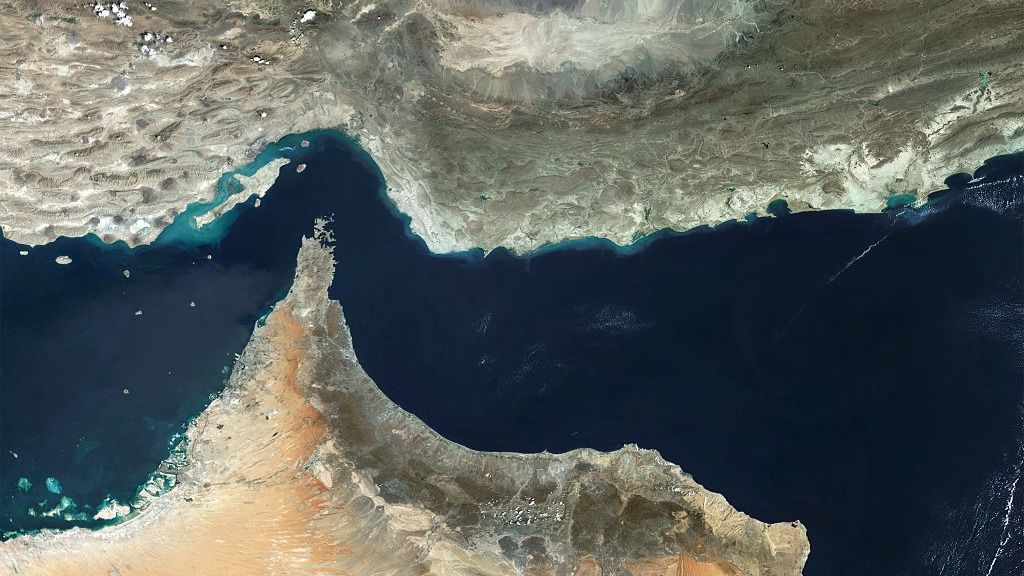
Iran rejects US claims that Strait of Hormuz has reopened
Iran has rejected claims by U.S. officials that the Strait of Hormuz has reopened, insisting that the strategic waterway remains closed to normal commercial shipping until its conditions are accepted.
The Persian Gulf Strait Authority (PGSA), the Iranian body responsible for maritime traffic through the waterway, said repeated statements from Washington did not change the situation.
“Claims and repeated posts by U.S. officials that the Strait of Hormuz is no longer blocked do not change the reality,” the authority said in a post on X.
The PGSA maintained that the Strait of Hormuz remains blocked and will not be reopened until Iran’s conditions are accepted.
The latest development followed a claim by U.S. President Donald Trump that the United States had “total control” of the strategic waterway and would maintain that control.
Trump said in a post on Truth Social that the U.S. naval blockade around Iran had created a “wall of steel” and suggested that Tehran lacked the ability to challenge the American military presence.
Iran has rejected the assertion, with its officials continuing to maintain that Tehran controls passage through the waterway.
The dispute comes amid an ongoing confrontation between the United States and Iran, with Washington maintaining a naval blockade of Iranian ports while Tehran has restricted most shipping through the Strait of Hormuz.
READ ALSO:
- Oyinlola Denies Adeleke’s Car Gift Claim: “Osun Govt Gave Me the Car, Not You”
- Tinubu Rejects Blame Game, Vows to Revive Refineries with Profitability Focus
- Scores of Terrorists Killed, 60 Arrested in Nationwide Military Operations
U.S. Defense Secretary Pete Hegseth said Washington could maintain the naval blockade of Iran indefinitely by rotating military vessels in and out of the region. The United States says the blockade is intended to restrict Iranian shipping while allowing non-Iranian vessels to pass.
Iranian officials, however, have said the Strait of Hormuz will not fully reopen unless the United States changes its position and accepts Tehran’s demands.
Iran’s newly appointed Supreme National Security Council secretary, Mohsen Rezaei, said the United States must end the war, address Iran’s frozen assets and support an end to hostilities across the region, including in Lebanon and Gaza.
Rezaei also said other Iranian demands had been communicated to Washington through mediators.
Meanwhile, Iran and Oman are discussing a possible arrangement for shipping through the Strait of Hormuz. However, Iranian Foreign Ministry spokesman Esmaeil Baghaei said any agreement between Tehran and Muscat on a new route would be separate from the question of reopening the strait itself.
That distinction is significant because reports earlier this month suggested that Iran and Oman were close to an arrangement that could facilitate commercial shipping through the waterway. Reuters reported that the proposed deal would not, by itself, lead to the reopening of the strait, as Iran has tied the move to broader issues involving the U.S. blockade and the war.
Despite Washington’s claim of control and Tehran’s insistence that the waterway remains blocked, vessels have continued to move through the Strait of Hormuz in limited numbers.
According to shipping data reported by Reuters, nine commodity vessels transited the strait on Thursday, compared with five the previous day. However, the figure remained below the August average of about 12 vessels a day. Most of the vessels that passed through used routes controlled by Iran.
The current traffic levels remain dramatically below normal.
The disruption has forced energy companies and traders to explore alternative arrangements. Reuters reported that TotalEnergies’ trading arm, Totsa, was offering Iraqi crude for loading at locations outside the Strait of Hormuz as buyers remained reluctant to send vessels to terminals inside the waterway because of security concerns.
The Strait of Hormuz is one of the world’s most important energy shipping routes, connecting the Persian Gulf with the Gulf of Oman and the Arabian Sea.
Any prolonged disruption threatens the movement of crude oil, petroleum products and liquefied natural gas from major energy producers in the Gulf to international markets.
The continuing restrictions have therefore raised concerns over global oil supplies, shipping costs and energy prices, particularly as the United States and Iran remain unable to reach a lasting agreement.
The crisis has also affected financial markets. Reuters reported that Gulf stock markets were mixed amid concerns over the prolonged disruption, while Brent crude remained elevated as investors assessed the risk of further escalation.
The situation has become increasingly complicated by competing claims over who controls the waterway.
While President Donald Trump maintains that the United States has “total control” of the Strait of Hormuz, Iranian authorities insist that Washington has not taken control of the passage and that vessels must comply with Iranian requirements to transit the area.
For now, the conflicting claims have not translated into a return to normal shipping. Maritime traffic remains restricted, diplomatic efforts involving Iran, Oman and the United States remain unresolved, and Tehran continues to insist that the Strait of Hormuz will not be fully reopened until its conditions are met.
Iran rejects US claims that Strait of Hormuz has reopened
International
Court Throws Out Trump-Era Case Accusing Harvard of Failing Jewish Students

Court Throws Out Trump-Era Case Accusing Harvard of Failing Jewish Students
A US federal judge has dismissed a lawsuit filed by President Donald Trump’s administration that accused Harvard University of failing to protect Jewish and Israeli students from harassment on campus. Boston-based US District Judge Richard Stearns – a Clinton appointee – ruled on Thursday that the government had not presented enough evidence to prove that Harvard was currently violating federal civil rights law. He granted the university’s motion to dismiss for failure to state a claim, dealing a fresh blow to the administration’s broader campaign against elite universities.
The US Department of Justice filed the lawsuit in March 2025, claiming that Harvard’s response to antisemitic incidents following the 7 October 2023 Hamas-led attack on Israel was woefully inadequate. Prosecutors argued that the university had shown “deliberate indifference” to the safety of Jewish and Israeli students, allowing anti-Israel protesters to breach campus rules “with impunity”. The administration sought to withhold federal funding and compel Harvard to overhaul its policies on discrimination, free speech, and diversity initiatives.
In his 30-page ruling, Judge Stearns found that the government’s amended complaint relied heavily on incidents from the 2023–2024 academic year – a period marked by intense campus protests over the Gaza war. By contrast, the complaint cited only three incidents from March 2025, which the judge described as “singly and collectively” too isolated and episodic to support a finding of systemic non-compliance. Crucially, Stearns noted that the government did not formally notify Harvard of its alleged Title VI violations until 30 June 2025. Under the Civil Rights Act of 1964, Title VI prohibits discrimination based on race, colour, or national origin in programmes receiving federal financial assistance. The judge wrote that the amended complaint “is devoid of any factual allegations plausibly establishing that any events that might be construed as evidence of noncompliance occurred after June 30, 2025.” He also emphasised that Congress’s intent with Title VI was “not to penalise a wayward funding recipient but instead to incentivise it to bring itself into compliance” – a point that directly undermined the administration’s push to claw back billions in federal research grants.
READ ALSO:
- Osun Election Tension: Lawyer Urges Davido to Apologise to Okpebholo Over WAEC Result Troll
- Customs Busts International Lion Cub Smuggling Ring, Rescues Two Cubs at Abuja Airport
- Seven Miners Killed in Plateau Mining Pit Collapse, Renewing Urgent Calls for Safety Reform
Harvard had consistently rejected the administration’s allegations, arguing that the lawsuit relied on outdated incidents and ignored the concrete steps the university had already taken to address antisemitism on campus. These included strengthening discrimination reporting systems, expanding educational programmes, and revising student conduct policies. In a statement following the ruling, Harvard called the lawsuit “yet another pretextual and retaliatory action by the administration for refusing to turn over control of Harvard to the federal government.” The university reiterated its commitment to protecting all students – Jewish, Israeli, Palestinian, Muslim, and others – from harassment and discrimination, while defending its academic independence and institutional autonomy.
Thursday’s dismissal is the latest setback in a series of confrontations between the Trump administration and Ivy League institutions. Before filing the lawsuit, the government had already frozen $2.2 billion** in multi-year research grants and **$60 million in contract funding to Harvard in April 2025, demanding that the university eliminate antisemitism and roll back certain diversity, equity, and inclusion (DEI) programmes. In a separate but related case last year, another federal judge ordered the administration to reverse more than $2.6 billion in funding cuts to Harvard, finding that the White House had used antisemitism as a “smokescreen for a targeted, ideologically-motivated assault” on universities. Assistant Attorney General Harmeet Dhillon responded to the dismissal by saying the administration “disagree[s] with the ruling and [is] assessing next steps” – suggesting a possible appeal.
While the dismissal does not minimise the real and ongoing concerns about antisemitism on US college campuses, it sends a clear legal signal: federal courts are reluctant to intervene without clear, current, and concrete evidence of institutional civil rights violations. The ruling also reinforces the principle that universities – even those receiving substantial federal funding – retain broad discretion over campus discipline, speech policies, and educational mission, provided they act reasonably and in good faith. For students, faculty, and advocates on all sides of the debate, the decision underscores the importance of evidence-based reporting, timely government action, and balanced approaches to protecting religious identity, national origin, and political expression within higher education.
Court Throws Out Trump-Era Case Accusing Harvard of Failing Jewish Students
-
 International1 day ago
Iran Had Detailed Intel on Trump’s Location Before Secret Turkey Escape
-
 News3 days ago
Tinubu Vows to Secure Nigeria, Declares Unity Non-Negotiable Amid Worsening Insecurity
-

 News1 day ago
FG to Attach 300 NYSC Corps Members to CNG Workshops for Skills Training
-

 metro2 days ago
Nigeria Needs Competent, Ethical Young Leaders, Says HAVEK Leadership Academy
-
 metro1 day ago
Seven Miners Killed in Plateau Mining Pit Collapse, Renewing Urgent Calls for Safety Reform
-

 News3 days ago
Ronaldo Marries Georgina Rodriguez in Intimate Portugal Wedding Ceremony
-

 metro3 days ago
Osun guber: Adeyanju petitions US, UK, Canada to sanction Fadahunsi over ‘kill accord’ comment
-

 International3 days ago
Pentagon Confirms 153 Civilians Killed in US Military Operations in 2025