

Politics
Seven in battle for Senate President
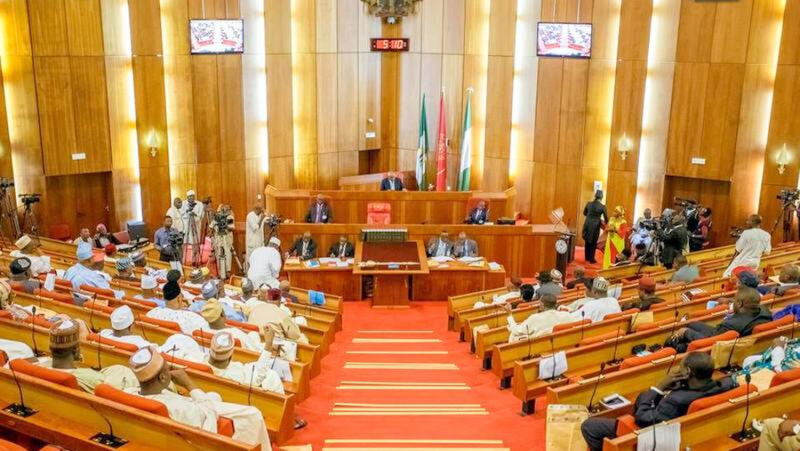
- Northcentral, Northwest join Southeast, Southsouth in race for top office
SEVEN senators-elect from five geo-political zones have thrown their hats into the ring for the 10th Senate President, The Nation has learnt.
All the aspirants are of the ruling All Progressives Congress (APC).
Kalu is the incumbent Senate Chief Whip; Jibrin is the Chairman of the Senate Committee on Appropriation and Umahi doubles as Ebonyi State Governor and Chairman of the Southeast Governors’ Forum.
Other senators-elect eying the position are incumbent Senate President Ahmad Lawan (Yobe North, Northeast); Senate Services Committee Chairman, Mohammed Sani Musa (Niger East, Northcentral); Mohammed Ali Ndume (Borno South, Northeast) and former Niger Delta Affairs Minister, Senator Godswill Akpabio (Akwa Ibom, Southsouth).
It was at a parley with National Assembly members-elect with the president-elect, vice president-elect and members of the APC National Working Committee (NWC).
READ ALSO:
- Kano-Maradi rail project gets funds for rolling stock
- APC suspends SGF Boss Mustapha
- INEC declares Alex Otti of LP Abia govenor-elect
- BREAKING: NLC directs workers to shutdown CBN offices nationwide
Jibrin promised to officially declare his intention to lead the Red Chamber in a matter of days.
The second-ranking senator-elect to make to publicly show interest, Jibrin described himself as the most experienced among senators-elect seeking to lead the 10th Senate.
Declaring his intention on Tuesday, Kalu said he will contest the position because ‘it is his turn to be Senate President’.
Governor Umahi, who dropped the hint to run for the position during yesterday’s State Executive Council meeting in Abakaliki, the Ebonyi State capital, urged President-elect Bola Tinubu and the APC leadership to zone the office to the Southeast.
But the Kano North senator dismissed recourse to religious sentiments by some aspirants instead of competence and record of performance as criteria for electing the next Senate President.
Jibrin, who has been in the National Assembly since 1999 and in the Senate since 2015, insisted that the Senate Standing Rule prioritises seniority (ranking) and legislative experience above other considerations.
The senator said: “I intend to seek to be the President of the 10th Senate. In the next few days, I will start my campaign and make a formal declaration.
“The legislature is a distinct arm of government that doesn’t work based on sentiments, it works on your ability to get the job done.
“It is the tradition all over the world and it is also stated there in our rule book and the rules are drafted from our Constitution.
“It is stated there in our Standing Rules that aspirations of elections for the seat of the Senate Presidency shall be in accordance with ranking.
“Among those who are running for the seat of the Senate Presidency, I am the most ranked senator.
“So, it is constitutional and among those who are showing their intentions to run for the Senate Presidency, I am the most experienced.
“The issue is that of competence. You need to be grounded in the residue of the legislature before you become the Senate President. Do you now play against competence based on sentiments?”
Disagreeing with claims that it would not augur well for the next APC’s administration to have a Muslim Senate President, Jibrin said: “Remember that David Mark was a Christian, his Deputy, Ike Ekweremadu, was a Christian and the Speaker, House of Representatives, Patricia Etteh, was a Christian because they were the most experienced and ranking and that is the tradition, so do we now relegate competence for other sentiments?
READ ALSO:
- Just in: Ebonyi high court set ablaze
- INEC to resume Abia, Enugu election results collations 4pm
- Task managers risk job loss to new technologies
- British Envoy makes u-turn on Aishat Binani’s ‘guber victory’ in Adamawa, deletes tweet
“Bringing religious sentiment won’t fly. It’s about competence, not sentiment. When we talk about experience, I’m the most experienced.”
Jibrin added: “There is a need to reward performance. The Northwest deserves to produce the Senate President because we gave the President-elect the highest votes.
“We want our President to go for a second term. We saw what he did in Lagos and want him to replicate that across the country.”
On Tuesday, Kalu urged APC national leadership to zone the Senate presidency to his Igbere country home in Abia North Senatorial District, Abia State.
Kalu said: “The question is whether I will run for the position of Senate President. Yes, I am ready to run for Senate President if the party zones it to my region because the party is supreme.
“If they want to zone, they should zone it to my village so nobody would contest it against me. I don’t even want them to zone it to the South…I am hoping that Nigerian people will pray for me to be the Senate President because it is my turn.”
Umahi urged the party to zone the Speakership of the House of Representatives to the Northwest.
The governor noted that zoning the two top positions to the Southeast and Northwest will be in the interest of equity, justice and fairness.
He said it was time to break protocol and bend the rules adding that the focus should be how to redeem the country.
Umahi said: “I plead and request the leadership of APC and the president-elect to please for the sake of equity, Justice and fairness zone the Senate President to Southeast and the Speaker of House of Representatives to Northwest.
“This is for inclusiveness, this will assure Nigerians of a total reunion and it will also calm frayed nerves.
“Miracle is when God set aside rules and breaks protocols. I am asking the APC leadership and the National Assembly leadership to set aside the rules so that we can get the best for the leadership of the national assembly.”
“If the APC family zones the Senate presidency to the Southeast, I am indicating interest on the platform that I have been in public service for the past 16 years so you can rightly say that I understand administration,” he said.
The governor insisted that zoning the speakership position to the Northwest will calm frayed nerves in the country.
He declared Ebonyi a complete APC state having given almost all the National Assembly seats to the party, adding that the governor-elect and majority of the state lawmakers are also APC members.
Umahi said: “When you have administered a state, which is more complex than any other position other than that of the presidency, I want to put myself forward and I plead with the National Assembly to amend the rules.
“We should be looking for the best. Anyone elected into the National Assembly is the best but let God be allowed to choose.
“We need to elect a leadership that will rebuild the nation. I put myself forward without prejudice to whatever is the will of God and the wish of our party leadership, the president-elect and vice president-elect.”
-The Nation





Politics
2027: Oshiomhole Dares Opposition Over ₦500 Petrol Promise, Says APC Will Take Argument to Nigerians
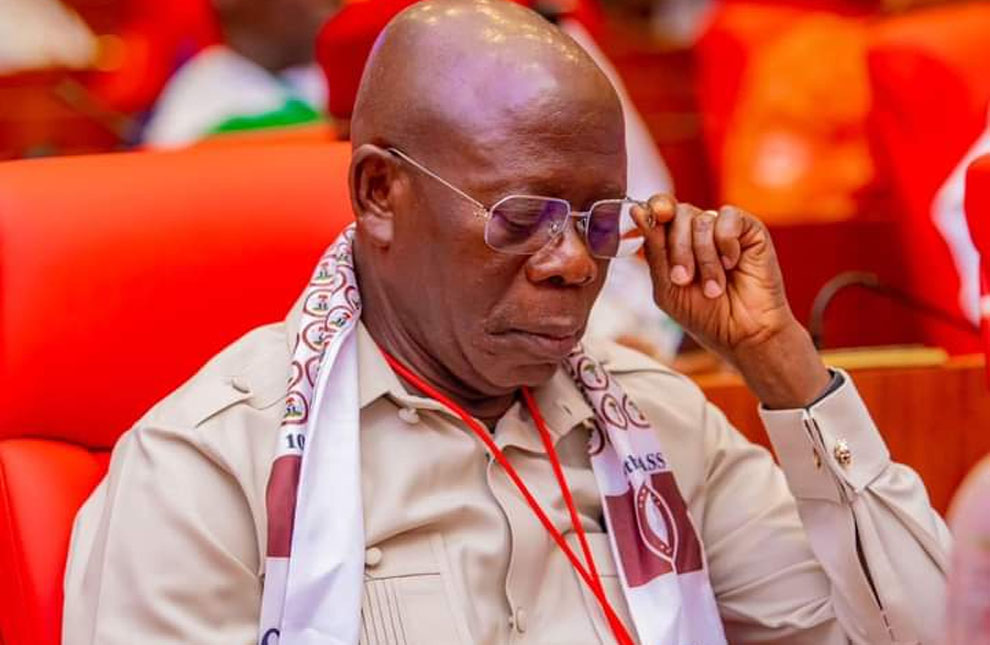
2027: Oshiomhole Dares Opposition Over ₦500 Petrol Promise, Says APC Will Take Argument to Nigerians
Abuja — Former National Chairman of the All Progressives Congress (APC) and Senator representing Edo North, Adams Oshiomhole, has declared that he is unbothered by opposition promises to crash the pump price of Premium Motor Spirit (PMS) to ₦500 per litre, stating that the ruling party will take the debate directly to the Nigerian people.
Oshiomhole made the assertion during a recent political engagement, according to a report monitored by Newstrends.ng on Friday. The former Edo State governor was responding to recent campaign pledges by opposition figures who have proposed a “Fuel Affordability Plan” aimed at leveraging local refining capacity to bring down the cost of petrol.
“I’m not worried about the promise to sell petrol at ₦500; we’ll take the argument to Nigerians,” Oshiomhole stated, signaling the APC’s readiness to defend its downstream sector policies ahead of the 2027 general elections.
The APC chieftain, known for his combative political style, questioned the consistency of the opposition’s stance on fuel subsidies. He reminded Nigerians that key opposition figures, including former Vice President Atiku Abubakar, had previously championed the removal of fuel subsidies during their time in office, arguing that their sudden conversion to affordable pump prices was politically motivated rather than economically sound.
Oshiomhole’s comments underscore the ruling party’s strategy to frame the 2027 election as a choice between what it describes as the “realistic economic reforms” of the President Bola Tinubu administration and what it calls the “populist rhetoric” of the opposition.
While the opposition maintains that its ₦500 per litre proposal is a well-thought-out plan to support local refining and not a return to the old corrupt subsidy regime, Oshiomhole insists that the APC will meet them at the grassroots level to dissect the feasibility of such promises.
Political observers note that the debate over fuel prices remains a highly emotive issue in Nigeria, given its direct impact on transportation, food prices, and the overall cost of living. As the 2027 election cycle gathers momentum, Oshiomhole’s remarks signal that the APC intends to go on the offensive, using the fuel subsidy debate as a key battleground to challenge the opposition’s credibility with the electorate.
2027: Oshiomhole Dares Opposition Over ₦500 Petrol Promise, Says APC Will Take Argument to Nigerians
Politics
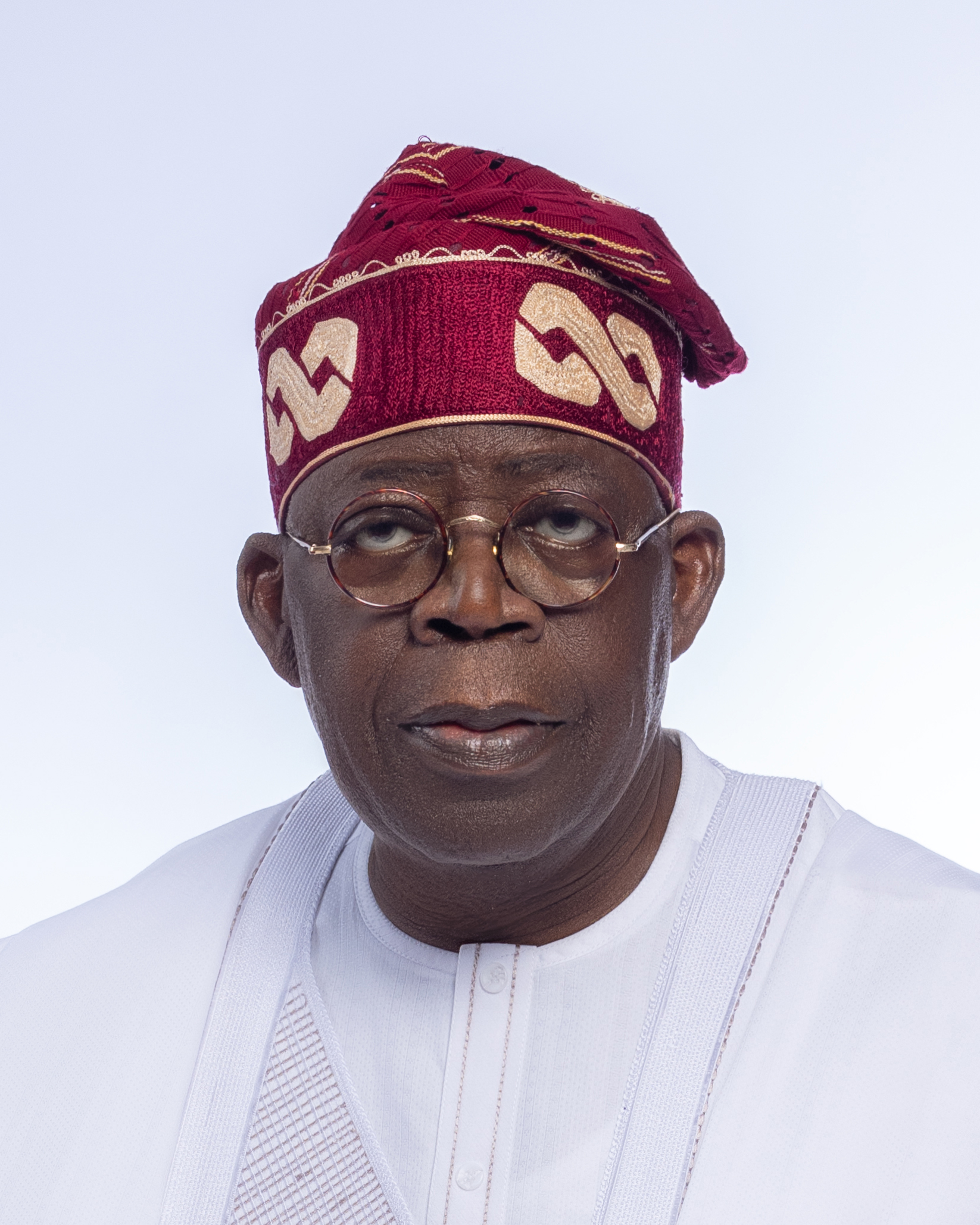
Tinubu Unpopular, Yet 2027 Re-election Still Possible — The Economist
Tinubu Unpopular, Yet 2027 Re-election Still Possible — The Economist
President Bola Ahmed Tinubu may be facing widespread dissatisfaction among Nigerians, but a divided opposition, religious considerations, incumbency and low voter turnout could shape the outcome of the 2027 presidential election, according to an analysis by the British publication, The Economist.
In a report titled “Nigerians Dislike Their President, But May Re-elect Him Anyway,” the publication examined the political dynamics surrounding the forthcoming presidential election and questioned why the President appears relatively confident about his chances despite the economic and security challenges confronting the country.
The analysis was published as Nigeria approaches the 2027 presidential election, with The Economist noting that Tinubu’s administration is operating amid a worsening security situation and economic pressures that have affected many households.
The publication specifically examined the situation in Borno State, where insurgency has persisted for years, damaging economic activities and leaving many young people without jobs and businesses struggling.
It noted that while Tinubu secured 54 per cent of the presidential vote in Borno in 2023, recent polling cited from SBM Intelligence suggested that his popularity in the state had fallen behind those of opposition figures Peter Obi and Atiku Abubakar.
The report said some residents of Maiduguri were prepared to express their dissatisfaction at the ballot box.
However, The Economist argued that public dissatisfaction alone might not determine the election, pointing to several structural factors within Nigeria’s political system.
One of the major factors identified was the fragmentation of the opposition.
The publication observed that Obi and Atiku had not formed a joint ticket, meaning that voters opposed to the ruling All Progressives Congress could be divided among different candidates.
It quoted Joachim MacEbong of Control Risks as saying that because there was no united opposition ticket, the anti-APC vote was not necessarily being consolidated behind one candidate.
The publication also identified incumbency as another factor in Nigerian elections, noting that sitting governments have access to established political structures and resources that can be mobilised during campaigns.
Religion was also discussed in the analysis, particularly in relation to northern Nigeria.
The Economist noted that Tinubu and Vice-President Kashim Shettima are Muslims, as are the majority of people in the northern region.
It quoted SBM Intelligence chief Cheta Nwanze as saying that the continued Muslim-Muslim ticket “resonates with quite a number of people”.
The report also suggested that religious identity could affect some voters considering Peter Obi, a Catholic, despite his Muslim running mate.
Beyond party politics and religion, the publication highlighted what it described as political cynicism among some voters.
It quoted MacEbong as saying that in communities where citizens have experienced prolonged shortages of security, healthcare and quality education, expectations of government can become increasingly low.
The report cited Borno as an example, saying that some residents might judge the government differently because of the long history of poor public services in the state.
The security situation could also affect voter participation.
According to the publication, turnout in Borno during the 2023 presidential election was below 20 per cent, compared with about 27 per cent nationwide.
It suggested that insecurity could discourage some voters from travelling to polling units during the next election.
In southern Nigeria, particularly Lagos, the report noted that regional identity could also influence voting behaviour, with some residents potentially considering Tinubu as a “son” of the state despite dissatisfaction over economic conditions.
The Economist also acknowledged that Tinubu’s economic reforms, including the removal of the petrol subsidy, have been welcomed by some investors and have contributed to economic adjustments.
However, it said the reforms had yet to translate into noticeable improvements in the daily lives of many Nigerians.
The publication consequently presented the 2027 contest as one in which economic hardship and insecurity could coexist with political factors capable of shaping voter behaviour.
The analysis has generated debate in Nigeria, particularly over whether dissatisfaction with the administration would translate into a consolidated opposition vote.
The 2027 presidential contest is expected to feature Tinubu and several opposition candidates, making the configuration of alliances and the distribution of votes among the major contenders significant factors in the election.
The Economist’s report is an analysis of the factors that could influence the 2027 contest; it is not a poll establishing the eventual winner.
Tinubu Unpopular, Yet 2027 Re-election Still Possible — The Economist
Politics
‘Tinubu Must Stay’ Movement Launches Ahead of 2027 Election

‘Tinubu Must Stay’ Movement Launches Ahead of 2027 Election
A political advocacy group, Tinubu Must Stay (TMS), has launched a national campaign ahead of the 2027 general election, calling for continuity in President Bola Ahmed Tinubu’s administration.
The movement was formally unveiled in Abuja on Thursday, October 1, 2026, with its National Convener, Ibrahim Uba, saying the organisation would promote its position through public engagement, data and what it described as fact-based communication.
Uba said the group was established by Nigerians who support the continuation of the Tinubu administration and want the government’s policies, programmes and reported achievements subjected to public discussion.
He acknowledged that major economic reforms, particularly the removal of the petrol subsidy and changes to the foreign-exchange system, had increased pressure on households through higher living, transportation and energy costs.
However, he argued that the reforms should also be assessed against their stated objectives, measurable outcomes and unresolved challenges.
According to Uba, TMS will operate around three main areas: presenting what it calls fact-based responses to criticisms of the administration, providing alternative explanations of government programmes based on available evidence, and increasing civic engagement ahead of the 2027 election.
READ ALSO:
- Trump Threatens Iran With ‘Very Hard’ Response Over Flydubai Attack
- Phyna Knocks Out Nkechi Blessing in Fourth Round, Wins ₦50m, New Car
- NDC Protests Police Cancellation of Obi-Kwankwaso March in Akwa Ibom
The group cited recent economic indicators in making its case. Uba referred to Nigeria’s reported 4.43 per cent real GDP growth in the second quarter of 2026, compared with 4.23 per cent in the same quarter of 2025 and 3.89 per cent in the first quarter of 2026. He also cited the reported moderation in headline inflation in August.
Uba, however, said economic statistics should not be used to dismiss the difficulties faced by Nigerians, arguing that government programmes should ultimately be assessed by their impact on citizens.
The movement also highlighted the Nigerian Education Loan Fund (NELFUND), the 3 Million Technical Talent (3MTT) programme, the National Health Fellows Programme and NG-CARES among initiatives it believes should feature in assessments of the administration.
On infrastructure, TMS cited projects including the Lagos-Calabar Coastal Highway, Sokoto-Badagry Super Highway and Abuja-Kaduna-Zaria-Kano Road, as well as housing projects under the Renewed Hope Housing Programme.
The group also pointed to the Federal Government’s Compressed Natural Gas (CNG) programme, saying it was part of efforts to provide alternatives to petrol and reduce transportation costs following the removal of the subsidy.
On security, Uba acknowledged that insecurity remains a major challenge, while saying government operations against terrorism, banditry, kidnapping, oil theft and other violent crimes had been intensified.
He said the movement would encourage Nigerians to examine both the administration’s reported achievements and the problems that remain unresolved as political activity ahead of the 2027 presidential election intensifies.
The launch of TMS adds to the growing number of political advocacy groups organising around President Tinubu’s political future. While TMS is campaigning for continuity, other groups have adopted opposing positions and are calling for a change of government in 2027.
Uba said TMS would pursue its campaign through what he described as peaceful, factual and democratic engagement, urging Nigerians to assess competing claims about the administration before making their choices in the election.
‘Tinubu Must Stay’ Movement Launches Ahead of 2027 Election
-
 metro2 days ago
Workers to Begin Nationwide Warning Strike Over Petrol Price, Wage Award
-
 metro3 days ago
Flood Cuts Off Part of Agbarho-Ughelli Road, Strands Commuters in Delta
-
 metro2 days ago
[UPDATED] Imo Highway Attack: 10 Rescued after Gunmen Abducted NYSC Prospective Members
-
 Business2 days ago
Dangote Sets 40-Month Deadline for $16bn East Africa Refinery in Kenya
-
 Politics2 days ago
2027: Amaechi Recalls How APC Defeated PDP, Orders ADC Mobilisation
-
 News2 days ago
Independence Day: Tinubu Unveils Plan to Cut Living Costs, Expand Jobs
-

 Entertainment1 day ago
Phyna Knocks Out Nkechi Blessing in Fourth Round, Wins ₦50m, New Car
-
 Politics2 days ago
2027: Wike Vows to Resign If Tinubu Loses FCT, Rivers