

metro
Four sentenced to death by hanging for kidnapping Emzor Pharmaceutical MD’s sister

Justice Lateef Lawal-Akapo of a Lagos State High Court sitting in Ikeja on Thursday sentenced four men to death by hanging for armed robbery and kidnapping of Mrs. Gloria Emole, the younger sister of Emzor Pharmaceutical Managing Director, Chief Ebuka Okafor.
The convicts are Victor Chukwunonso V, Ifeanyi Maduaka, Obinna Nwankwo, and Richard Nwabueze.
The trial judge, Justice Lawal-Akapo, held that the prosecution was able to prove its case beyond a reasonable doubt.
The first convict Chukwunoso was a former employee of the victim’s elder brother who was sacked after he fought in the company against the rule of the company that fighting was prohibited.
The convicts were arraigned on July 13, 2013, and were remanded in prison custody.
The convicts had on November 19, 2012, at about 8:30 a.m. committed the offences.
They were arraigned on a three-count charge bordering on conspiracy, armed robbery, and kidnapping preferred against them by Lagos State.
The Director of Public Prosecution, Dr. Babajide Martins, had told the court during their arraignment that they had kidnapped the victim who was about to leave her house at 7, Unity Street, Ogudu GRA, Lagos.
READ ALSO:
- Pastor absconded after using group’s thrift savings to pay LAPO debt
- Naira scarcity: CBN begins allocation of more cash to banks
- Ronaldo breaks another record, grabs brace in Euro qualifier
Martins had told the court that the victim was kidnapped, blindfolded thrown inside the booth, and was driven to an unknown area in Ikorodu.
According to the Prosecutor, the offences committed are contrary to and Punishable Under sections 297,285 (2) a, and 291, of the Criminal laws of Lagos State 2015.
The victim was later released on November 22, 2012, after a ransom of $ 70,000 US dollars was paid, by her husband.
During the trial, the prosecution called four witnesses, who testified against the defendants.
The victim narrated to the court that she made a statement at the Police station and how the incident happened.
She said that on November 19, 2012, the first accused person held a double barrel, accosted her at about 8:30 a.m., blindfolded and locked her in her booth, and took her to an unknown destination.
She narrated that after the kidnap they demanded $300,000.
The victim’s husband, Osodun Emole, in his testimony also told the court that he paid the first and second convicts the sum of $70,000 US dollars.
Emole said that they had initially asked for $300,000, but after negotiation, they accepted $70,000.
He stated that he put the money inside an envelope and he was instructed how he was to dress and where to drop the money.
Emole also told the court that it was the police that told him that the convicts had been arrested.
Inspector Gbenga Faguiro, who tendered nine exhibits, had also narrated that the first convict was arrested at Alapere Ketu and a Nokia phone was recovered from him. Independent








metro
Gunshots, Teargas Rock Osun Motor Park as Thugs Defy Adeleke’s NURTW Suspension Order
Gunshots, Teargas Rock Osun Motor Park as Thugs Defy Adeleke’s NURTW Suspension Order
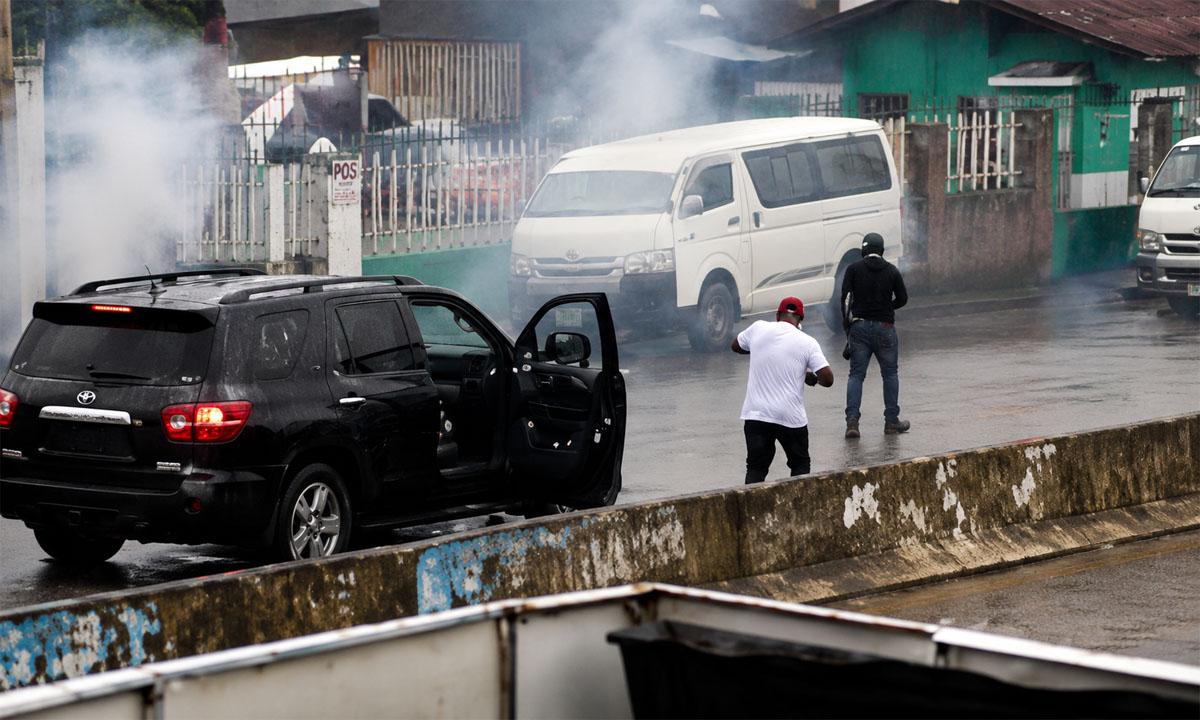
- Gunshots and teargas were reported at the Mayfair Motor Park in Ile-Ife, Osun State, on Sunday as suspected thugs allegedly accompanied by armed police officers defied Governor Ademola Adeleke’s directive suspending all National Union of Road Transport Workers activities across the state, in a violent escalation that has raised serious security concerns less than three weeks before the August 15 governorship election.
Gunshots and teargas rocked the Mayfair Motor Park in Ile-Ife, Osun State, on Sunday as suspected thugs allegedly accompanied by armed police officers defied Governor Ademola Adeleke’s directive suspending all National Union of Road Transport Workers activities across the state. Multiple eyewitness accounts revealed that the suspected thugs, reportedly escorted by armed police personnel, stormed the park firing weapons and deploying teargas, forcing residents, traders, and motorists to flee for safety. A video obtained by SaharaReporters appeared to show police officers discharging firearms and using teargas during the incident at the motor park. Sources expressed deep concern that security personnel were allegedly working against the government’s efforts to restore peace, with one source lamenting that the governor’s order was to ensure normalcy was restored to the parks, yet the police that should be concerned about peace were now escorting thugs to go against the governor’s order, describing it as an unfortunate situation.
The situation escalated dramatically when personnel of the Nigerian Navy stationed in Ile-Ife reportedly intervened, responding to distress calls from Mayfair residents. According to sources, the naval personnel arrested five suspected thugs allegedly found in possession of pump-action guns after they took over the park. A source told SaharaReporters that after shootings to scare away people and harassing motorists, men of the Nigerian Navy at Ile-Ife intervened to stop the police-aided thugs from the invasion of the Mayfair Park and arrested four thugs with pump-action guns. In a stunning escalation, the Osun State Government alleged that police operatives attacked the Navy personnel to secure the release of the arrested suspects. According to an official statement from the Commissioner for Information and Public Enlightenment, Kolapo Alimi, the Osun State Commissioner of Police contacted the Navy commandant demanding the release of the suspects. The commandant reportedly informed the CP that he needed to seek approval from higher authority before handing them over. The CP was said to be enraged and subsequently deployed four lorries of mobile policemen to attack the Navy personnel with teargas, rescuing the hoodlums. However, the police did not succeed in retrieving five pump-action rifles seized by the Navy from the suspects. Describing the incident as a bizarre situation and impunity carried too far, the government called on President Bola Ahmed Tinubu, National Security Adviser Mallam Nuhu Ribadu, and the diplomatic community to intervene. The government also called for a visa ban on any police official aiding political violence in Osun State.
READ ALSO:
- Kogi Poly Suspends 7 Lecturers Over Sex-For-Marks, Handout Sales Amid Cultism Crisis
- Tinubu appoints Olanrewaju-Smart as Special Adviser on House of Reps matters
- Gunmen invade Osun PVC distribution centre, flee with voter cards
The latest violence comes only days after Governor Adeleke ordered the immediate suspension of all NURTW activities in motor parks across Osun State following recurring clashes linked to transport union operations. He also directed security agencies to arrest anyone operating in the name of the union while making it clear that commercial transport services should continue uninterrupted. The governor stated that he was directing the police and other security agencies to stop all activities of the union in all parks across the state, clarifying that he was not saying they should close the parks but that they should not allow anyone to operate in the parks in the name of the union, adding that anyone found contravening this order should be arrested for possible prosecution for disturbance of public peace. The Osun State Government later clarified that the suspension of activities did not amount to dissolving the state’s NURTW leadership, maintaining that Nurudeen Alowonle remained the substantive chairman of the union in the state. The government alleged that a group led by Kazeem Oyewale, popularly known as Asiri Eniba, had wrongly interpreted the suspension as a dissolution and claimed there was a vacuum to justify inaugurating a caretaker committee. The government further directed security agencies to remove Asiri Eniba and his supporters from motor parks across the state, stating he had no legal basis to be there in all ramifications.
The fresh confrontation also followed Saturday’s announcement by the newly inaugurated NURTW chairman, Kazeem Oyewale, that union activities had resumed in motor parks despite the government’s directive. Oyewale said the new executives had been inaugurated in Abuja and appealed to residents not to associate union members with violence, assuring the people of Osun State that there was no longer any violence and that all issues in motor parks had been resolved. Governor Adeleke had earlier condemned repeated shootings around motor parks in Osogbo and accused individuals allegedly accompanied by police officers of disrupting public peace. He said he had reported the matter to the Inspector-General of Police and other security chiefs while demanding the arrest of Asiri Eniba over what he described as open defiance of public security laws. The crisis comes amid heightened political tension ahead of the August 15, 2026, Osun State governorship election, which is considered a crucial test of Nigeria’s democratic institutions ahead of the 2027 general elections. The Independent National Electoral Commission has identified 385 flashpoints and 200 difficult terrains across the state, with concerns over the high risk of kidnapping and banditry in parts of the state. The Imole Campaign Council has called on the Federal Government and INEC to ensure a free, fair, and credible poll, describing the election as a major assessment of the integrity of INEC, the Nigeria Police Force, and other institutions responsible for safeguarding the electoral process. With less than three weeks until the election, stakeholders have called on security agencies and political parties to ensure a peaceful and credible election, warning that violence must not be allowed to triumph over the will of the people.
Gunshots, Teargas Rock Osun Motor Park as Thugs Defy Adeleke’s NURTW Suspension Order
metro
Gunmen invade Osun PVC distribution centre, flee with voter cards
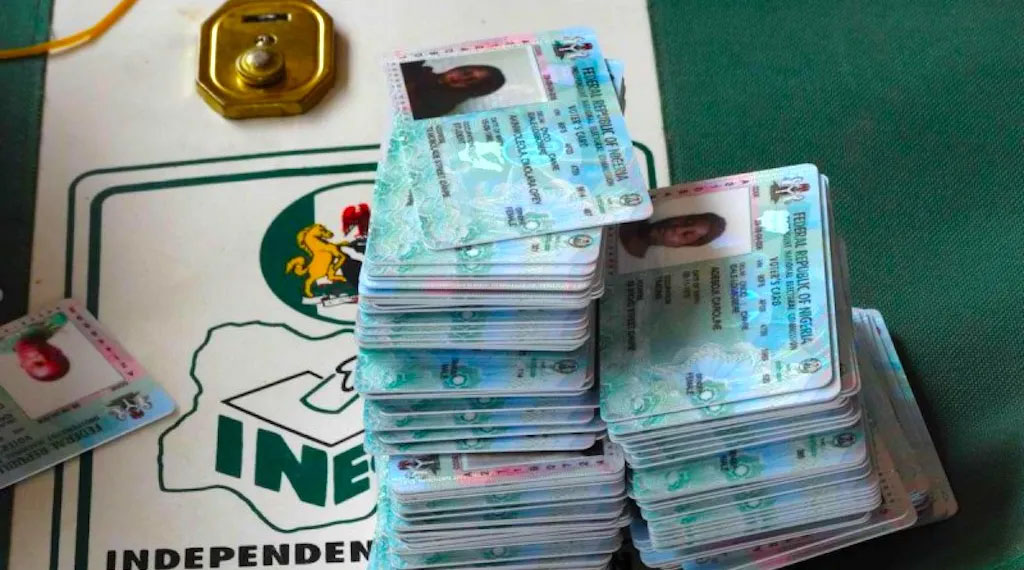
Gunmen invade Osun PVC distribution centre, flee with voter cards
Suspected armed hoodlums on Sunday attacked a Permanent Voter Card (PVC) distribution centre in Okuku, Odo-Otin Local Government Area of Osun State, disrupting the ongoing voter card collection exercise and carting away packs of voter cards in an incident that has heightened security concerns ahead of the August 15, 2026 Osun governorship election.
The attack occurred at Oyinlola DC Primary School, Ward 2, where officials of the Independent National Electoral Commission (INEC) were distributing Permanent Voter Cards (PVCs) to eligible voters as part of preparations for the upcoming election.
Eyewitnesses said between eight and 10 armed men stormed the venue unexpectedly and fired several gunshots into the air, sending electoral officials, prospective voters and residents scrambling for safety before making away with packs of voter cards.
A resident of the community, identified simply as Gbadebo, said the attackers appeared to have entered the premises unnoticed before launching the operation.
According to him, the hoodlums headed straight to the section where INEC officials kept the voter cards after firing into the air, forcing everyone at the venue to flee in different directions.
The Osun State Police Command confirmed the incident, stating that the armed attackers carted away three packs of Permanent Voter Cards before escaping.
READ ALSO:
- NDLEA intercepts ₦10bn worth of cocaine, Loud, opioids in Lagos
- Super Falcons recover stolen cash after hotel theft suspect confesses
- Accord Party, Governor Adeleke Adopt Tinubu as 2027 Presidential Candidate
In a statement issued by the command’s spokesperson, Abiodun Ojelabi, the police said the Commissioner of Police, Ibrahim Gotan, had strongly condemned the attack and ordered an immediate and comprehensive investigation.
The police disclosed that tactical teams, intelligence operatives and other security personnel had been deployed to identify, arrest and prosecute all those involved, as well as recover the stolen voter cards.
The command assured residents that every available resource was being deployed to ensure those responsible were brought to justice and appealed to members of the public to provide credible information that could assist investigators.
Reacting to the incident, Osun State Resident Electoral Commissioner (REC), Oluwatoyin Babalola, described the attack as unfortunate and condemned the disruption of the PVC distribution exercise.
She said INEC had commenced an internal assessment to determine the exact number of voter cards stolen and evaluate the impact of the incident on the ongoing distribution exercise.
The electoral commission, however, assured eligible voters that the attack would not derail preparations for the Osun governorship election, reiterating its commitment to conducting a free, fair, credible and transparent election.
The incident temporarily disrupted PVC collection in the affected community before normalcy was restored with the deployment of additional security personnel.
The attack comes as INEC continues the distribution of Permanent Voter Cards across Osun State ahead of the governorship election, encouraging registered voters to collect their PVCs before the deadline.
Political observers say attacks on electoral facilities and materials pose a serious threat to public confidence in the electoral process and underscore the need for stronger security around election-related activities.
Security experts also noted that while stolen PVCs alone cannot be used to manipulate election outcomes because Nigeria’s Bimodal Voter Accreditation System (BVAS) requires biometric verification before accreditation, such incidents could discourage voter participation and undermine public trust if perpetrators are not swiftly apprehended.
The police reaffirmed their commitment to protecting electoral personnel, facilities and materials throughout the election period and urged political actors, community leaders and residents to support efforts aimed at ensuring a peaceful and violence-free electoral process.
Investigations are ongoing as security agencies intensify efforts to recover the stolen voter cards and dismantle any criminal network behind the attack.
Gunmen invade Osun PVC distribution centre, flee with voter cards
metro
NDLEA intercepts ₦10bn worth of cocaine, Loud, opioids in Lagos
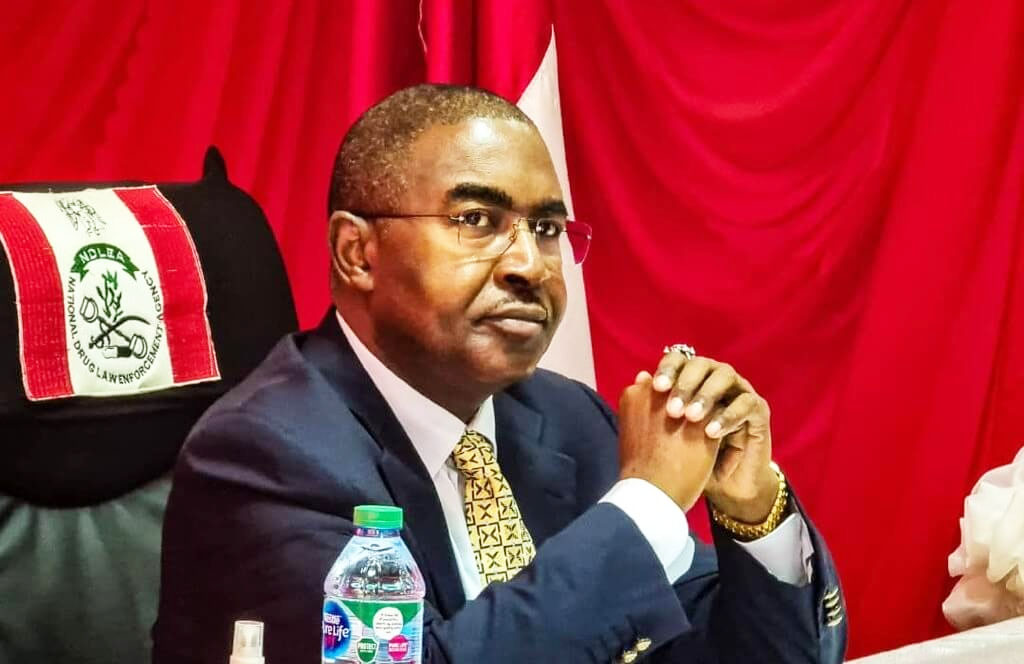
NDLEA intercepts ₦10bn worth of cocaine, Loud, opioids in Lagos
The National Drug Law Enforcement Agency (NDLEA) has intercepted illicit drugs valued at more than ₦10 billion in a series of coordinated operations at Lagos seaports and the Murtala Muhammed International Airport (MMIA), dealing a significant blow to drug trafficking syndicates operating within and outside Nigeria.
The seizures, which included cocaine, Loud (a potent synthetic strain of cannabis), Tapentadol, tramadol and other controlled substances, were recorded during intelligence-led operations at the MMIA Cargo Terminal, Apapa Seaport and a courier company in Lagos.
The agency announced the development in a statement issued by its Director of Media and Advocacy, Femi Babafemi, who said the successful operations reflected the NDLEA’s intensified efforts to dismantle international drug trafficking networks using Nigeria’s ports and airports as transit routes.
A major breakthrough during the operation led to the arrest of a 55-year-old businessman accused of attempting to export 3.30 kilogrammes of cocaine concealed inside specially modified cartons of food items destined for the United Kingdom.
According to the NDLEA, the suspect, a clothing trader at Balogun Market on Lagos Island, was arrested after operatives intercepted the shipment at the export section of the Lagos airport. The investigation initially resulted in the arrest of three cargo agents linked to the consignment before another suspect who allegedly delivered the shipment was apprehended.
READ ALSO:
- Super Falcons recover stolen cash after hotel theft suspect confesses
- Accord Party, Governor Adeleke Adopt Tinubu as 2027 Presidential Candidate
- Obasanjo Brokered Obi-Kwankwaso Ticket, Remains Principal Sponsor – Akin Osuntokun
Babafemi said intelligence gathered from those arrests eventually led operatives to the alleged kingpin of the trafficking syndicate.
“His arrest provided the lead to identifying the kingpin behind the syndicate and his eventual arrest while attempting to send another consignment of cocaine to the UK,” the NDLEA spokesman said.
In another operation, NDLEA operatives arrested a 31-year-old entrepreneur at her residence in Surulere, Lagos, over the alleged importation of 2.80 kilogrammes of Loud, a highly potent synthetic strain of cannabis.
The drug consignment reportedly arrived from the United States aboard a United Airlines flight before being intercepted by NDLEA officers through intelligence-based screening. The agency said the investigation enabled officers to trace the shipment to the suspect, leading to her arrest.
The NDLEA also intercepted 2.2 million pills of Tapentadol 250mg, an opioid medication with an estimated street value of more than ₦2.2 billion.
According to the agency, the consignment arrived from India aboard an Air Maroc flight and was intercepted during a joint cargo examination following credible intelligence. Tapentadol is a prescription opioid used for pain management but is increasingly abused and illegally trafficked because of its addictive effects.
In a separate operation, NDLEA officers intercepted another shipment containing tramadol concealed inside containers of black soap meant for export to the United Kingdom.
The consignment was uncovered at a courier facility in Lagos after officers identified suspicious packaging during routine inspection and intelligence profiling. The agency said traffickers have continued to adopt sophisticated concealment methods in an attempt to evade security checks at airports and seaports.
At the Apapa Seaport, NDLEA operatives discovered 4,777 sachets of Canadian Loud concealed inside three imported vehicles.
The cannabis weighed 2,388.5 kilogrammes and had an estimated street value exceeding ₦7.1 billion, making it one of the agency’s largest recent seizures at the nation’s seaports. Officials said the drugs were uncovered during a joint examination involving the NDLEA and other government agencies responsible for cargo inspection.
The latest seizures underscore the NDLEA’s sustained offensive against local and transnational drug trafficking organisations. The agency said criminal syndicates continue to devise new methods of concealing narcotics in food items, vehicle compartments, courier packages and commercial goods, prompting authorities to strengthen intelligence gathering, cargo profiling and inter-agency collaboration.
NDLEA Chairman and Chief Executive Officer, Brig.-Gen. Mohamed Buba Marwa (Rtd.), has repeatedly stated that the agency will continue targeting drug cartels while expanding its War Against Drug Abuse (WADA) campaign, which focuses on prevention, rehabilitation, treatment and public awareness.
The anti-narcotics agency reaffirmed that all suspects arrested in connection with the latest operations would face prosecution under the NDLEA Act, while investigations continue to identify other members of the trafficking networks and trace proceeds generated from the illegal drug trade.
Security experts have described the seizures as another major success in Nigeria’s fight against organised crime, noting that disrupting narcotics supply chains also weakens criminal groups involved in money laundering, arms trafficking and other transnational offences.
The NDLEA urged Nigerians to continue providing credible intelligence to security agencies, stressing that public cooperation remains critical to the fight against illicit drug trafficking.
NDLEA intercepts ₦10bn worth of cocaine, Loud, opioids in Lagos
-

 Opinion3 days ago
Osun election: Àtàọ́ja should stop running joro-jara-joro
-

 Entertainment3 days ago
“Don’t Let Me Die”: Veteran Nollywood Actress Ngozi Nwosu Begs for ₦30m Surgery Fund
-
 metro2 days ago
PFICP scandal: How ₦1.3bn ‘fake agency’ traced to Buhari’s government entered 2026 budget
-

 Politics2 days ago
Atiku denies Obasanjo’s N5m bribery claim, links accusation to 2027 presidential race
-

 Education2 days ago
Oluwo Urges Youths to Pair Degrees with Skills, Commends Westland University’s Excellence
-

 metro2 days ago
Dalung gives Mutfwang 72-hour ultimatum to withdraw apology to Igbos over civil war role
-
Politics1 day ago
2027 election: Atiku accuses Obasanjo of reviving false allegations to favour preferred candidate
-
 metro2 days ago
Police Detain 4 Officers Over Viral Ethnic Profiling Video on Lagos–Benin Expressway