

metro
N3.4bn debt: Court blocks Oyo State Govt’s accounts in four banks

A High Court of the Federal Capital Territory (FCT), Abuja has issued an order attaching funds standing to the credit of Oyo State Government and its agencies in four banks.
Justice A. O. Ebong issued the order while ruling on a motion ex-parte for garnishee order nisi filed by the ex-chairmen and councillors led by Bashorun Majeed, Bosun Ajuwon and Idris Okusesi.
The News Agency of Nigeria (NAN) reports that the affected banks are First Bank, United Bank for Africa (UBA), Wema Bank and Zenith Bank.
Justice Ebong ordered the banks to show cause why the order nisi should not be made absolute.
The ruling on the motion marked: FCT/HC/BW/M/238/2023, was delivered by the judge on March 2 and a certified true copy (CTC) sighted on Sunday in Abuja.
The funds, according to court filings, are to settle the outstanding balance of N3,374,889,425.60 from the judgment debt owed some former Local Government chairmen and councillors sacked on May 29, 2019 before the end of their tenure by Gov. Seyi Makinde of Oyo State.
The garnishee proceeding, initiated for the chairmen and councillors by their lawyer, Musibau Adetunbi, SAN, is in execution of a judgment they got against the governor and six others from the Supreme Court on May 7, 2021.
READ ALSO:
- Planned Protest: Prevail on NLC leadership, Emefiele appeals to Minister of Labour and Employment
- Journalist Agba Jalingo remanded again over alleged false publication
- Court compounds Ayu’s woes, restrains him from acting as PDP chairman
The ruling reads: “A garnishee order nisi is hereby granted to attach the judgment debtors’ accounts with garnishees Nos. 1 to 4 in the motion ex-parte, for the purpose of settling the judgment debt outstanding in the sum of N3,374,889,425.60 as awarded by the Supreme Court and conceded by the judgment debtors in Exhibit 11 attached to the applicant’s motion.
“The garnishees (1st to 4th) shall file affidavits and attend court on the next adjourned date to show cause why the order nisi should not be made absolute.
“A copy of this order nisi shall be served on the judgment debtors as required by law. This matter is hereby adjourned to the 4/4/2023 for continuation.”
It was gathered that the judgment creditors have since effected service of copies of the order on the judgment debtors as ordered by the court.
Listed as judgment debtor with the Oyo State Governor are the state’s Attorney General, the Commissioner for Local Government and Chieftaincy Affairs, the Accountant General, the House of Assembly, it’s Speaker and the Oyo State Independent Electoral Commission (OYSIEC).
The ex-Chairmen and Councillors were elected in the election conducted by OYSIEC on March 12, 2018 for a three-year term.
Upon learning that Makinde, who took office on May 29, 2019 had planned to sacked them, the Chairmen and Councillors sued before the High Court of Oyo State to challenge the constitutionality of Sections 11 and 12 of the Oyo State Local Government Law 2001, which empowered the governor and the House of Assembly to dissolve LG executives in the state.
In its judgment on May 6, 2019 the Oyo State High Court declared Sections 11 and 12 of the state’s Local Government Law 2001 as unconstitutional, on the grounds that it violated Section 7(1) of the Constitution.
Despite the subsistence of the judgment, Makinde sacked the Chairmen and Councillors on May 29, 2019 and subsequently appealed the judgment.
The Court of Appeal, in its judgment on July 15, 2020 set aside the judgment of the High Court, a decision the affected Chairmen and Councillors appealed at the Supreme Court.
In its judgment on May 7, 2021 a five-member panel of the apex court, presided over by Justice Kudirat Kekere-Ekun, allowed the appeal marked: SC/CV/556/2020 and set aside the decision of the Court of Appeal.
READ ALSO:
- Nigeria beat Guinea-Bissau 1-0, top Group A again
- INEC to conduct Adamawa, Kebbi gov supplementary poll April 15
- 19,000 Nigerians sign US visa ban petition on MC Oluomo
The apex court, which awarded a cost of N20 million against Makinde, ordered that the ex-Chairmen and Councillors, who were unlawfully sacked by the governor, be paid their salaries and allowances from May 29, 2019 to May 11, 2021 when their tenure ought to have expired.
In the lead judgment by Justice Ejembi Eko, the Supreme Court came down hard on Makinde, who it found, acted arbitrarily and undemocratic.
Justice Eko said: “I will not conclude this appeal without commenting on the disturbing ugly face of impunity displayed by the Governor of Oyo State (1st respondent herein) on 29th May, 2019, tantamounting to executive lawlessness, outrightly and vehemently condemned by this court in the case of the Military Governor of Lagos State v. Ojukwu.”
He noted that, even before appealing the High Court judgment, Makinde on May 29, 2019 “issued imperial directives dissolving all democratically elected local Government Councils in Oyo State in spite of the subsisting judgment of Oyo State High Court in the suit No. 1/347/2017.
“Series of applications were filed by the judgment creditors, the present appellants, to restrain, particularly the 1st respondent (the Governor), from embarking on the self-help designed to contemptuously frustrate the judgment of the High Court.
“He was not dissuaded. He proceeded in his imperial omnipotency to continue in his untrammelled, albeit invidious contemptuous, disregard of subsisting judgment of the High Court.
“It is unthinkable that a democratically elected governor would embark on these unwholesome undemocratic tendencies. These tendencies no doubt endanger democracy and the rule of law. .
“It is almost becoming universal phenomena that the democratically elected Governors have constituted themselves into a specie most dangerous to democracy in this country.
“They disdainfully disregard and disrupt democratically elected Local Government Councils and appoint their lackeys as caretaker committee’s to run affairs of Local Governments,” Justice Eko said.(NAN)






metro
Christian Council opposes ₦50,000 fine for bus preaching, seeks Tinubu’s intervention

Christian Council opposes ₦50,000 fine for bus preaching, seeks Tinubu’s intervention
The Christian Council of Nigeria (CCN) has called on President Bola Ahmed Tinubu and the National Assembly (NASS) to review contentious provisions of the proposed Federal Road Safety Corps (FRSC) Act (Amendment) Bill, 2026, warning that parts of the legislation could infringe on constitutional rights and impose additional hardship on struggling Nigerians.
The appeal follows the passage of the FRSC Amendment Bill, 2026 by the Senate, which proposes a ₦50,000 fine for anyone found hawking, trading or preaching in commercial buses, as well as stiffer penalties for several traffic-related offences. The bill is awaiting presidential assent before it can become law.
In a statement signed by its General Secretary, Rt. Rev. Evans Onyemara, the council said it fully supports efforts aimed at improving road safety and reducing accidents on Nigerian roads but insisted that such measures must respect the constitutional rights of citizens.
According to the CCN, the inclusion of preaching alongside hawking and trading among prohibited activities raises legitimate concerns over the constitutional rights to freedom of religion and freedom of expression guaranteed under the 1999 Constitution.
The council argued that while government has a responsibility to ensure road safety, legislation should not inadvertently criminalise peaceful religious activities carried out without disrupting drivers or passengers.
It noted that commercial buses have, for decades, served as platforms where Christians share brief messages of hope, repentance, encouragement and prayers with willing listeners, adding that any attempt to prohibit such activities deserves careful constitutional scrutiny.
According to the council, restricting peaceful evangelism without adequate consultation could create the perception that Christian religious expression is being unfairly targeted.
READ ALSO:
- EFCC secures final forfeiture of 52 luxury Lekki homes in landmark court ruling
- 2027 Gombe election: Pantami secures major boost as PDP aspirant withdraws court case
- MURIC backs FRSC bill to ban preaching, hawking in commercial buses
The CCN further expressed concern over the proposed ₦50,000 fine for hawkers, describing the penalty as harsh and insensitive to the prevailing economic realities facing millions of Nigerians.
It argued that many citizens engage in hawking and informal trading due to unemployment, poverty, inflation and the rising cost of living, stressing that poverty should not be criminalised through heavy financial penalties.
Rather than relying on punitive sanctions, the council urged the Federal Government to address the root causes of street trading by creating more employment opportunities, expanding social intervention programmes and implementing sustainable economic empowerment initiatives.
It also recommended the establishment of designated trading areas and age-appropriate restrictions where necessary instead of imposing blanket penalties on vulnerable Nigerians trying to earn a living.
The Christian body appealed to President Tinubu, the National Assembly and the Federal Road Safety Corps to embark on wider consultations before the bill is signed into law.
It said the consultation process should include faith-based organisations, civil society organisations, transport unions, road safety experts, constitutional lawyers and representatives of vulnerable groups to ensure that the final legislation adequately balances public safety with fundamental human rights.
According to the CCN, Nigeria needs laws that are firm enough to protect lives on the highways but compassionate enough to avoid placing unbearable burdens on citizens already grappling with severe economic hardship.
The council maintained that legislation should promote national unity, protect fundamental freedoms and avoid creating perceptions of discrimination against any religious group.
The latest appeal comes amid growing public debate over the proposed amendment. While the Muslim Rights Concern (MURIC) has endorsed the provision seeking to prohibit preaching in commercial buses, arguing that it would reduce driver distraction and help curb road accidents, several Christian organisations have urged the government to review the proposal to safeguard constitutionally guaranteed religious freedoms.
Legal analysts say the controversy surrounding the bill underscores the need for lawmakers to strike a careful balance between strengthening road safety regulations and protecting citizens’ fundamental rights as enshrined in the Constitution.
With the legislation now awaiting presidential assent, stakeholders across religious, legal and civil society circles are expected to intensify advocacy over the bill before a final decision is taken by the Presidency.
Christian Council opposes ₦50,000 fine for bus preaching, seeks Tinubu’s intervention
metro
EFCC secures final forfeiture of 52 luxury Lekki homes in landmark court ruling

EFCC secures final forfeiture of 52 luxury Lekki homes in landmark court ruling
A Federal High Court sitting in Ikoyi, Lagos, has ordered the permanent forfeiture of 52 terrace and maisonette housing units in the upscale Lekki area of Lagos State to the Federal Government, handing the Economic and Financial Crimes Commission (EFCC) one of its biggest asset recovery victories in recent years.
Justice Alexandra Owoeye delivered the landmark judgment on July 15, 2026, after granting an application filed by the Lagos Zonal Directorate 2 of the EFCC, which argued that the properties were reasonably suspected to have been acquired with proceeds of unlawful activities.
The forfeited properties are located at Mercyville Estate, Covenant Way, off New Road, Ilasan, Lekki, and were recovered from Fielddreams Limited, Ifeanyi Nweke and Amex Savings and Loans Limited, according to the anti-graft agency.
The ruling followed a lengthy legal process that began on August 14, 2024, when the EFCC secured an interim forfeiture order from Justice Akintayo Aluko after filing an ex parte application.
As required by law, the court directed the commission to publish the interim forfeiture order in a national newspaper, inviting anyone claiming ownership or interest in the properties to appear before the court and show cause why the estate should not be permanently forfeited to the Federal Government.
Following the publication, the respondents filed a counter-affidavit opposing the final forfeiture application. They initially claimed that the funds used to develop the estate were generated from the sale of part of a landed property and 29 terrace and maisonette housing units, which they valued at approximately ₦1.9 billion.
READ ALSO:
- 2027 Gombe election: Pantami secures major boost as PDP aspirant withdraws court case
- MURIC backs FRSC bill to ban preaching, hawking in commercial buses
- Police Hunt Teacher Over Alleged Flogging to Death of 12-Year-Old Pupil in Anambra
However, the respondents later changed their position by alleging that several of the housing units had not been completed. The EFCC argued that the new claim directly contradicted their earlier sworn affidavit, in which they maintained that proceeds from previous property sales were used to complete the furnishing and interior decoration of the remaining units and that construction of the estate had already been completed in 2020.
During the hearing, EFCC counsel Franklin Ofoma informed the court that the commission had fully complied with the publication order issued during the interim forfeiture proceedings. He said the application for final forfeiture was supported by a 31-paragraph affidavit deposed to by Afolabi Seyi Oladele, a litigation officer in the commission’s Legal Department.
The anti-graft agency maintained that its investigations established reasonable grounds to believe that the properties represented proceeds of unlawful activities, making them liable to forfeiture under Nigeria’s asset recovery laws.
The commission also informed the court that the second respondent, Ifeanyi Nweke, is a fugitive facing criminal prosecution. According to the EFCC, Nweke failed to appear before Justice R.A. Oshodi and Justice Okunuga in separate criminal proceedings despite being required to answer charges filed against him.
The EFCC further disclosed that two subsisting warrants of arrest had already been issued against Nweke after he allegedly jumped the administrative bail earlier granted to him by the commission.
In her judgment, Justice Owoeye held that the respondents’ affidavit contained material contradictions that undermined its credibility. She ruled that the court could not selectively rely on conflicting pieces of evidence presented by the respondents.
Consequently, the judge rejected the respondents’ affidavit in its entirety, holding that there was no credible opposition to the EFCC’s application for final forfeiture.
Justice Owoeye further ruled that the commission had successfully demonstrated reasonable grounds to suspect that the estate was acquired with proceeds of unlawful activities. She therefore granted the application and ordered that all 52 terrace and maisonette housing units be permanently forfeited to the Federal Government.
The judgment represents another significant milestone in the EFCC’s campaign against corruption, money laundering and financial crimes. In recent years, the commission has intensified the use of Nigeria’s non-conviction-based asset forfeiture framework to recover assets believed to have been acquired through illicit wealth, even where related criminal proceedings remain pending.
Legal analysts say the ruling reinforces the courts’ support for lawful asset recovery while underscoring the importance of presenting consistent and credible evidence in forfeiture proceedings.
With the judgment, ownership of the 52 housing units now officially vests in the Federal Government, which is expected to determine the future use of the properties in line with existing laws and national interest.
EFCC secures final forfeiture of 52 luxury Lekki homes in landmark court ruling
metro
MURIC backs FRSC bill to ban preaching, hawking in commercial buses
MURIC backs FRSC bill to ban preaching, hawking in commercial buses
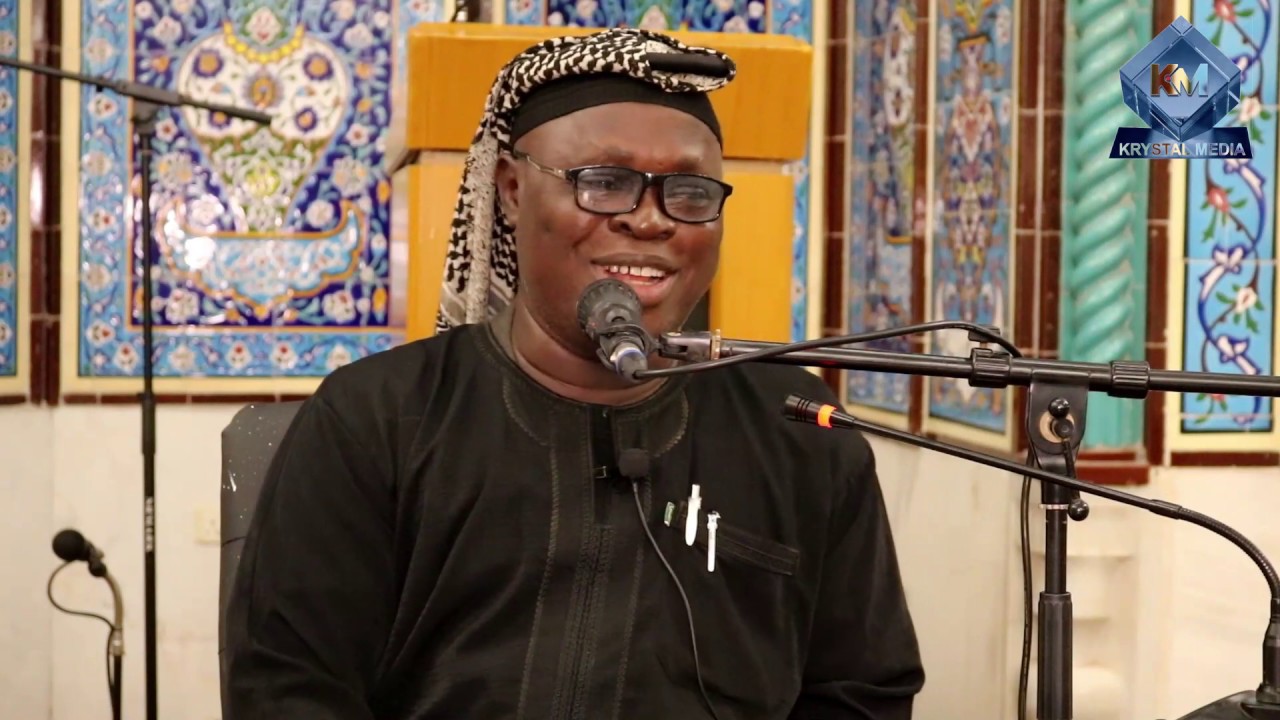
The Muslim Rights Concern (MURIC) has thrown its weight behind a proposed Federal Road Safety Corps (FRSC) bill seeking to prohibit preaching and hawking inside commercial buses, describing the move as a necessary step to improve road safety and maintain public order.
In a statement issued on Saturday, the organisation’s Founder and Executive Director, Professor Ishaq Akintola, said the proposed legislation was “a step in the right direction” and praised the FRSC for what he described as a proactive initiative aimed at reducing distractions that could lead to road crashes.
According to MURIC, preaching inside commercial vehicles distracts drivers, increasing the risk of accidents, while also creating situations capable of causing public disturbance among passengers.
The group argued that bus preaching is inconsistent with global best practices, noting that similar activities are not permitted in commercial public transport systems in major cities such as London, Paris and Frankfurt.
READ ALSO:
- Police Hunt Teacher Over Alleged Flogging to Death of 12-Year-Old Pupil in Anambra
- My Period Saved Me: Oyo Woman Escapes Rape by Armed Bororo Fulani Attackers
- Case for replicating the Oyo kidnap-rescue template nationwide, By Farooq Kperogi
Akintola said bus preachers frequently board intra-city, inter-city and interstate commercial buses, sometimes preaching throughout long-distance journeys, a practice he described as discourteous to passengers and potentially dangerous for road users.
He said MURIC’s support for the bill is based on two key considerations: the need to minimise driver distraction and the need to prevent conflicts that may arise from unsolicited religious activities in confined public spaces.
The Islamic rights organisation further stated that passengers often tolerate bus preaching despite finding it disruptive, adding that disagreements arising from such activities have, in some cases, led to altercations.
MURIC urged members of the National Assembly to expedite consideration of the proposed bill, citing Nigeria’s persistent road safety challenges.
The group referenced FRSC road crash statistics, which showed thousands of crashes, fatalities and injuries recorded across the country in recent years, arguing that measures capable of reducing distractions on the roads should receive legislative backing.
Akintola also observed that bus preaching is more commonly associated with Christian evangelists and called on Christian leaders and churches, particularly in the South-West, to discourage the practice among their members.
He maintained that preventing distractions capable of contributing to fatal road crashes should take precedence in efforts to improve road safety nationwide.
The proposed FRSC bill also seeks to prohibit hawking on highways and prescribes penalties for violations as part of broader efforts to enhance safety on Nigerian roads.
MURIC backs FRSC bill to ban preaching, hawking in commercial buses
-

 metro1 day ago
FG Arraigns Three Suspects Over Abduction of Oyo Schoolchildren, Teachers
-

 metro3 days ago
Mary Habila: NYCN gives David Umahi seven days to resign, threatens nationwide protest
-
 News1 day ago
Just in: Supreme Court Orders Final Forfeiture of Emefiele’s Assets, Ends Legal Battle
-

 News2 days ago
Senate passes Bill proposing N50,000 fine for preaching, hawking in commercial buses
-
 metro2 days ago
CAC Commences Deregistration of 100,000 Companies Over Unfiled Annual Returns
-

 News2 days ago
Appeal Court Restores INEC Guidelines, Paves Way for 2027 General Elections
-
 metro2 days ago
BREAKING: “I’ve Never Met Him”: Gbajabiamila Files ₦15bn Defamation Suit Against PFIPC DG
-

 News3 days ago
Sanwo-Olu Tours Flood-hit Lagos Communities, Orders Urgent Drainage Works, Long-term Fixes