

metro
Many trapped as building collapses in Oyo police barracks
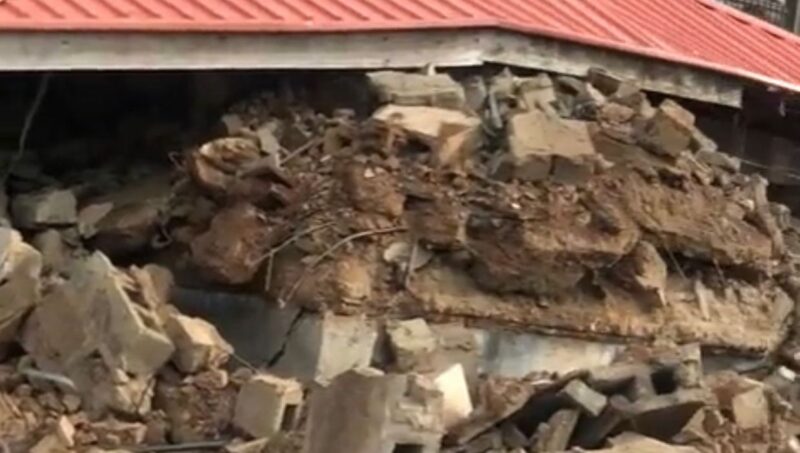
A block of flats in the Sango Police Barracks in Oyo State collapsed on Saturday evening.
A video with the caption, “This block just collapsed at Sango police Barracks, Ibadan, Oyo State,” posted on Twitter by one Miss Urie Keshia, revealed that the collapsed structure was in front of a residential three-storey building.
READ ALSO:
- I regret being caught on camera smoking cigarette — Don Jazzy
- Man Utd step up interest in Napoli’s Osimhen after scouting mission
- Eid-el-Fitr: Fasting, tool to teach Muslims how to be kind to others – Cleric
But the Director of Operations, Oyo State Fire Service, Ismail Adeleke said he has not been informed about the development.
All attempts to reach the officials of the Oyo State Police Command for comments on the incident were futile.
The men of the National Emergency Management Agency, Oyo State were also not forthcoming.
Meanwhile, the residents are intensifying efforts to evacuate the rubble as the number of trapped persons remains unknown.










metro
Amnesty demands probe into alleged killings, disappearances, police abuses in South-East
Amnesty demands probe into alleged killings, disappearances, police abuses in South-East
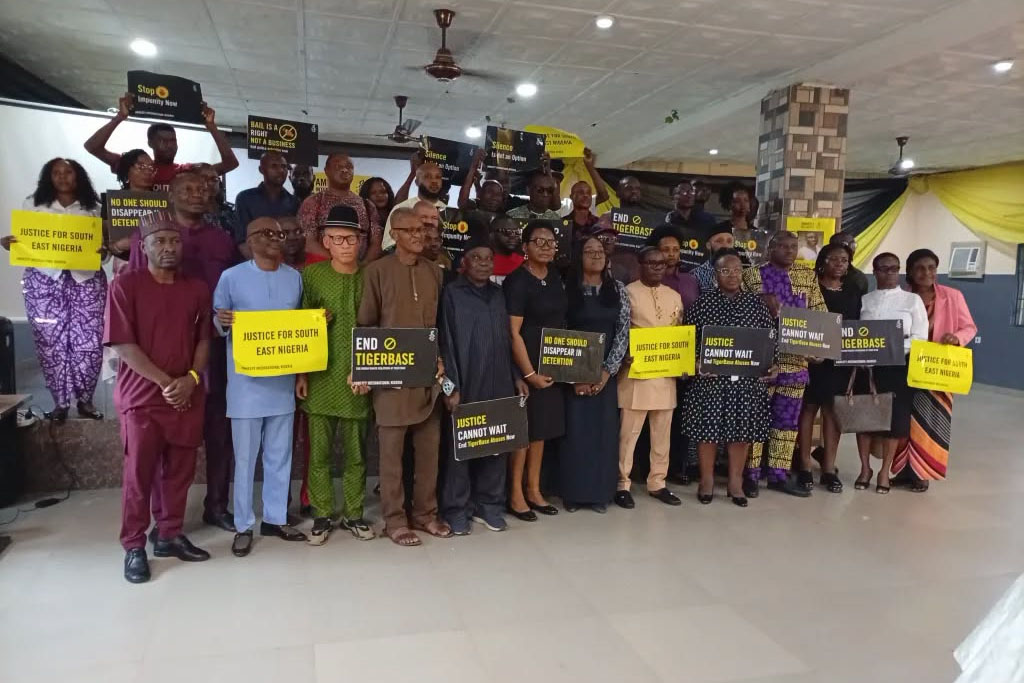
UMUAHIA, Abia State — Amnesty International has called for urgent investigations into alleged unlawful killings, enforced disappearances, torture, arbitrary arrests and other human rights violations in South-East Nigeria, urging security agencies to account for people allegedly taken into custody.
The rights organisation made the call in Umuahia during the presentation and campaign launch of its report, A Decade of Impunity: Attacks and Unlawful Killings in South-East Nigeria.
Amnesty said families across the region had continued to live with uncertainty over the fate of relatives who allegedly disappeared following encounters with security personnel, while some others were reportedly found dead.
The organisation urged security agencies to either charge detainees to court or release them, stressing that prolonged detention without trial violates fundamental rights and undermines the rule of law.
Amnesty researcher Maurice Chukwu said the organisation had received accounts of young people from the South-East who were allegedly being held in police detention facilities without trial.
He said families had shared what he described as disturbing accounts of relatives who allegedly disappeared after being arrested by security operatives and whose whereabouts remained unknown for years.
Chukwu also raised concerns about alleged abuses involving the police tactical unit popularly known as Tiger Base, including allegations of extortion, intimidation, torture and unlawful detention.
Amnesty’s concerns over Tiger Base follow a separate 2026 investigation in which the organisation alleged that officers attached to the unit in Imo State were involved in serious human rights violations, including arbitrary detention, torture, extortion, enforced disappearances and deaths in custody.
Amnesty called for independent and impartial investigations into the allegations and urged authorities to ensure that anyone found responsible is held accountable.
READ ALSO:
- Lagos Moves to Tackle Housing Deficit, Inaugurates 2026 World Habitat Day Committee
- Lagos Moves to Tackle Housing Deficit, Inaugurates 2026 World Habitat Day Committee
- Hawk Fire in US Rages On, Burns 10,500 Acres in Nevada, Forces Mass Evacuations
The organisation’s broader report on the South-East documented the scale of violence in the region and stated that at least 1,844 people were killed between January 2021 and June 2023.
The report attributed violence to a range of actors, including security forces, armed groups, criminal gangs, vigilantes and other non-state actors. Amnesty stressed that accountability should apply to all perpetrators, regardless of whether they are state or non-state actors.
At the Umuahia event, Amnesty campaigner Samson Abobarin said the organisation was submitting a petition signed by concerned residents to governors in the South-East.
According to him, the petition calls on the governors to put pressure on security agencies to provide information about people allegedly taken away during security operations.
Representing the Abia State Attorney-General, Director of the Citizens’ Rights Department in the Ministry of Justice, Chinoyerem Patience Onyemenam, said the state government had zero tolerance for human rights abuses and injustice.
She acknowledged that while many police officers remained committed to their duties, concerns had been raised about some operational practices. She assured participants that the issues presented at the event would be investigated.
A representative of the Abia State Commissioner for Tertiary Education, Nkechi Okoji, also supported the campaign and recounted the alleged arrest and extortion of a medical student from Aba.
She alleged that the student was arrested by police officers, taken to a location far from where he was picked up and subsequently extorted.
The campaign also featured emotional testimonies from relatives who said their husbands, brothers and sons had disappeared or died following encounters with security operatives.
Esther Chilem alleged that her husband, Godspower Chilem, was arrested at the premises of Life Gate Church in Aba on June 23, 2022.
She said she was subsequently informed that he had been taken to the Rapid Response Squad but that repeated efforts to locate him at police detention facilities were unsuccessful.
READ ALSO:
- ICPC uncovers alleged fake agency claiming 2017 FEC approval after nine years
- Rivers Monarch Escapes Assassination as Gunmen Raze Palace, Several Wounded
- 2027: Over 500 Northern Muslim Clerics Endorse Tinubu for Second Term
Another petitioner, Carolina Chukwuma, alleged that her husband, Chukwuma Mwaokike, was arrested by the Department of State Services at St Paul Junction, Aba, on April 26, 2021.
She said she later received information that he had been transferred to the Central Police Station in Aba and appealed to authorities to establish his whereabouts or secure his release.
Cecilia Anonorachi said her husband, Christian Ifeanyi, was arrested in Aba in 2023 and had not been seen since.
She appealed to Abia State Governor Alex Otti to intervene and assist families whose relatives were allegedly missing after encounters with security agencies.
Another petitioner, Nicholas Egekwu, alleged that police officers attached to the State Criminal Investigation Department in Umuahia took several young people away following an attack by unknown gunmen.
He said his two sons, Obinna and Onyebuchi, were among those taken away and that he later discovered their bodies at a mortuary in Umuahia.
“It remains the saddest day of my life,” Egekwu said, according to his testimony at the event.
A human rights activist trained by Amnesty International, Samuel Agwu, also called for an independent investigation into alleged disappearances and security operations in the region.
Agwu alleged that many families were afraid to speak publicly about missing relatives because of concerns about possible reprisals.
He further alleged that some young people arrested during security operations were being held for prolonged periods without trial, including people allegedly taken into custody during operations in Obigbo, Rivers State.
Amnesty’s campaign comes amid a complex security situation in the South-East, where authorities have been battling attacks blamed on armed separatist groups, criminal networks and other armed actors.
The organisation’s research has emphasised that the violence cannot be attributed to a single group. Its report documented alleged abuses involving both security agencies and non-state actors, including IPOB/ESN, unknown gunmen, cult groups, vigilantes and Ebube Agu.
Amnesty has therefore called for accountability across the board, insisting that violations committed by security personnel should be investigated just as abuses allegedly committed by armed and criminal groups must also be addressed.
The organisation’s separate investigation into Tiger Base alleged that detainees were subjected to beatings and other forms of torture, while some were allegedly held in overcrowded and unsanitary conditions.
Amnesty also documented allegations of extortion and deaths in custody and called for an independent investigation into the conduct of officers attached to the unit.
The organisation has said authorities must ensure that victims and their families have access to justice, effective remedies and appropriate reparations where violations are established.
The campaign also comes after Nigerian authorities announced changes concerning the Tiger Base operational structure following widespread concerns over alleged abuses. Amnesty said it would continue monitoring the implementation of the measures.
For families whose relatives remain missing, however, the demand remains straightforward: they want authorities to establish what happened to their loved ones and provide official answers.
Amnesty said security operations must comply with Nigerian law and international human rights standards, stressing that efforts to combat insecurity should not come at the expense of fundamental rights.
The organisation maintained that lasting peace and stability in the South-East would require not only effective security measures but also accountability, justice, transparency and respect for the rule of law.
Amnesty demands probe into alleged killings, disappearances, police abuses in South-East
metro
NDLEA uncovers new Thailand drug route, seizes N4.4bn Loud as 101-year-old woman, others arrested
NDLEA uncovers new Thailand drug route, seizes N4.4bn Loud as 101-year-old woman, others arrested
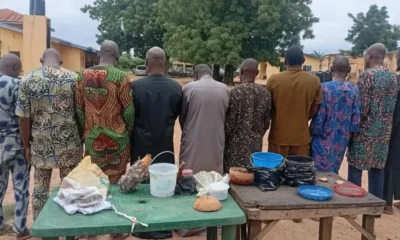
The National Drug Law Enforcement Agency (NDLEA) has uncovered what it described as a new maritime route allegedly being exploited by international drug trafficking syndicates to smuggle synthetic cannabis into Nigeria, following the seizure of about 1.49 tonnes of cannabis indica, popularly known as Loud, at the Apapa and Lekki Deep Sea ports in Lagos.
The consignments, which originated from Laem Chabang Port in Thailand, had a combined estimated street value of more than N4.4 billion, according to the NDLEA.
The agency said the interceptions represented its first-ever seizure of illicit drugs shipped from Thailand through Nigeria’s maritime corridor, raising concerns about attempts by international trafficking networks to establish new routes into the country. (NDLEA)
The seizures formed part of a series of intelligence-led operations carried out by NDLEA commands across the country between August 15 and 22, 2026. The operations also led to the arrest of a 101-year-old great-grandmother allegedly involved in the retail sale of cannabis, the interception of cocaine concealed in fufu, the destruction of 10 tonnes of cannabis and the recovery of methamphetamine, tramadol, codeine and other controlled substances.
At the Apapa Port, NDLEA operatives, working with the Nigeria Customs Service and other agencies, jointly examined a container on Friday, August 21.
The container had been declared as carrying dry fish, rice, vehicle spare parts, turmeric soap and inverter batteries. However, the inspection uncovered 1,090.5 kilogrammes of Thai Loud, packed in 54 cartons containing 2,181 sachets, each weighing 500 grammes.
The NDLEA said the container had originated from Laem Chabang Port in Thailand.
At the Lekki Deep Sea Port, another container that had been placed on the agency’s watchlist was jointly examined on Wednesday, August 19, after being monitored by the NDLEA Marine Special Operations Unit.
Four of seven pallets wrapped in black nylon were found to contain 400 kilogrammes of Thai Loud, packed in 96 cartons containing 400 parcels. The remaining three pallets contained 798 rims of A4 paper, which the agency said had been used to conceal the illicit consignment. (NDLEA)
READ ALSO:
- Lagos Moves to Tackle Housing Deficit, Inaugurates 2026 World Habitat Day Committee
- Lagos Moves to Tackle Housing Deficit, Inaugurates 2026 World Habitat Day Committee
- Hawk Fire in US Rages On, Burns 10,500 Acres in Nevada, Forces Mass Evacuations
The combined seizure from the two ports amounted to 1,490.5 kilogrammes, or roughly 1.49 tonnes, of Thai Loud.
The discovery comes amid increased scrutiny of Nigeria’s ports and maritime borders as drug traffickers continue to explore sophisticated concealment methods and alternative routes for moving narcotics across the country.
101-year-old woman arrested over cannabis
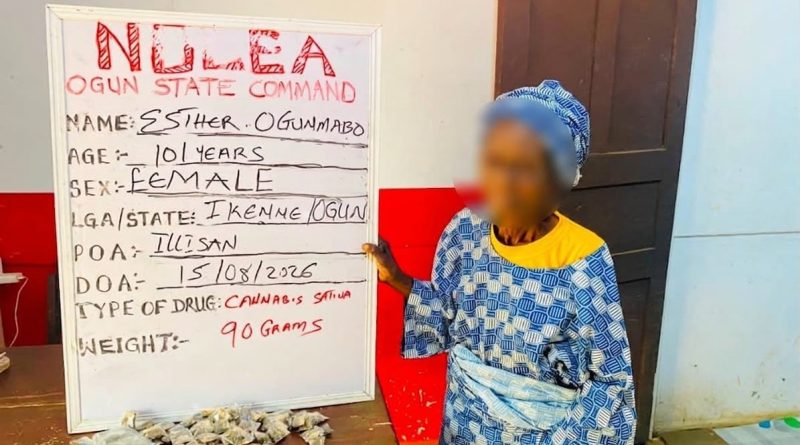
In Ogun State, NDLEA operatives arrested 101-year-old Esther Ogunmabo at Ilisan on Saturday, August 15, allegedly for selling cannabis.
The agency said Ogunmabo was found with 90 grammes of skunk, a strain of cannabis, packaged in small retail sachets.
According to the NDLEA, the centenarian told investigators that she turned to selling cannabis after a fire destroyed her provisions shop. She allegedly said one of her daughters, who lives in Lagos, supplied her with cannabis every four days for onward sale in small quantities.
Because of her advanced age, NDLEA Chairman and Chief Executive Officer, Brig. Gen. Mohamed Buba Marwa (retd.), directed that Ogunmabo be granted bail and placed on counselling.
The agency, however, arrested her daughter over her alleged connection to the cannabis supply. (NDLEA)
Cocaine concealed inside fufu intercepted
In Akwa Ibom State, NDLEA operatives intercepted a wooden boat allegedly transporting illicit drugs towards fishing settlements in Cameroon.
The operation, conducted on Friday, August 21, resulted in the arrest of three suspects identified as Etima Effiong Eekpo, 29; Otobong Eyoh Etukudoh, 33; and Kingsley Effiong John, 27.
The agency said Eekpo was found with 1.120 kilogrammes of skunk, while Etukudoh had 42.060 kilogrammes of skunk.
John allegedly possessed 435 grammes of skunk and 20 grammes of cocaine concealed inside a large wrap of edible cassava flour, popularly known as fufu.
A total of 42.622 kilogrammes of narcotics was recovered from the three suspects. (NDLEA)
10 tonnes of cannabis destroyed in Ondo
NDLEA operatives in Ondo State also destroyed 10,000 kilogrammes of skunk cultivated across four hectares of farmland in Ijare forest, Ifedore Local Government Area.
The operation followed the earlier arrest of three suspected cannabis cultivators at the same location on August 16.
In another operation at Ita-Ogbolu in Akure North Local Government Area, officers recovered 210 kilogrammes of skunk and a Toyota Camry allegedly belonging to Sylvester Dibiagu Anthony, who the agency said remained at large. (NDLEA)
24,410 tramadol capsules intercepted in FCT
In the Federal Capital Territory, NDLEA operatives on Saturday, August 22, intercepted three waybill packages containing 24,410 tramadol capsules inside a Hummer bus travelling from Enugu to Zuba.
A follow-up operation in Kontagora, Niger State, led to the arrest of 28-year-old Sunday Eze, whom the agency identified as the alleged owner of the consignment.
He was subsequently transferred to Abuja for further investigation. (NDLEA)
Methamphetamine, cannabis recovered in Kwara
In Kwara State, NDLEA officers patrolling the Ogbomosho-Ilorin Expressway on Friday, August 21, intercepted a Toyota Starlet without a registration number.
A search of the vehicle allegedly produced 1.325 kilogrammes of methamphetamine, wrapped in black nylon bags, alongside quantities of cannabis.
A 22-year-old suspect, Muhammadu Usman, was arrested in connection with the seizure. (NDLEA)
65-year-old woman arrested in Oyo
In Oyo State, NDLEA operatives arrested 65-year-old Adebayo Kaosarat at Akobo-Ojuirin in Ibadan.
The agency said she was found with 1.795 kilogrammes of Scottish Loud, 1.66 kilogrammes of tramadol, 600 grammes of codeine syrup, 125 grammes of diazepam and 50 grammes of flunitrazepam.
The combined weight of the substances was put at 4.68 kilogrammes. (NDLEA)
More cannabis seizures in Kano, Lagos and Abia
In Kano State, NDLEA officers recovered 73.3 kilogrammes of skunk from 31-year-old Chibuzor Madueke during a raid along Hadeija Road.
At Seme in Lagos, three members of the same family—52-year-old Nasiru Tijjani and his two relatives, 27-year-olds Moshood Tijjani and Salami Tijjani—were arrested at Ashipa near the border with 48 kilogrammes of skunk, according to the agency.
In Abia State, officers raided the residence of 36-year-old Ikechukwu Anthony Iwuno at Umuobia Olokoro, Umuahia South Local Government Area.
The operation allegedly recovered 14.4 kilogrammes of Loud, 2.3 kilogrammes of Colorado, 386 grammes of tramadol and 134 grammes of Rohypnol. (NDLEA)
NDLEA steps up prevention and enforcement
The NDLEA said its enforcement operations were accompanied by public awareness activities under its War Against Drug Abuse (WADA) campaign.
The agency conducted sensitisation programmes in schools, religious institutions, workplaces and communities in Kano, Oyo, Kebbi, Taraba and Edo states, while its Idiroko Special Area Command in Ogun State also held an advocacy engagement with the chairman of Ipokia Local Government Area.
Marwa commended personnel from the Ogun, Apapa, Lekki, Seme, Akwa Ibom, Ondo, Oyo, Kwara, Kano, Abia and FCT commands for the operations.
He urged officers to maintain what he described as a balanced drug-control strategy combining law enforcement, prevention, counselling, public enlightenment and community engagement. (NDLEA)
The latest seizures come shortly after the NDLEA publicly destroyed 329,865.585 kilogrammes of assorted illicit drugs valued at about N301.058 billion in a court-ordered exercise in Lagos. The destroyed substances included cocaine, heroin, methamphetamine, various cannabis strains, ephedrine, tramadol, codeine syrup and other opioids. (NDLEA)
The agency has also received renewed backing from the United States International Narcotics and Law Enforcement Bureau (INL). On August 20, INL Nigeria Country Director Derek Tolliver commended the NDLEA’s recent operational successes and pledged to build on the existing partnership between the two agencies. (NDLEA)
The latest operations highlight the expanding range of methods allegedly being used by trafficking networks—from hiding narcotics in legitimate maritime consignments and food products to transporting drugs through waterways and overland routes.
For the NDLEA, the interception of the Thai consignments is particularly significant because it points to a potentially new international maritime trafficking route into Nigeria, making continued intelligence sharing, port surveillance and cooperation among law-enforcement agencies increasingly important.
NDLEA uncovers new Thailand drug route, seizes N4.4bn Loud as 101-year-old woman, others arrested
metro
Lagos Moves to Tackle Housing Deficit, Inaugurates 2026 World Habitat Day Committee
Lagos Moves to Tackle Housing Deficit, Inaugurates 2026 World Habitat Day Committee
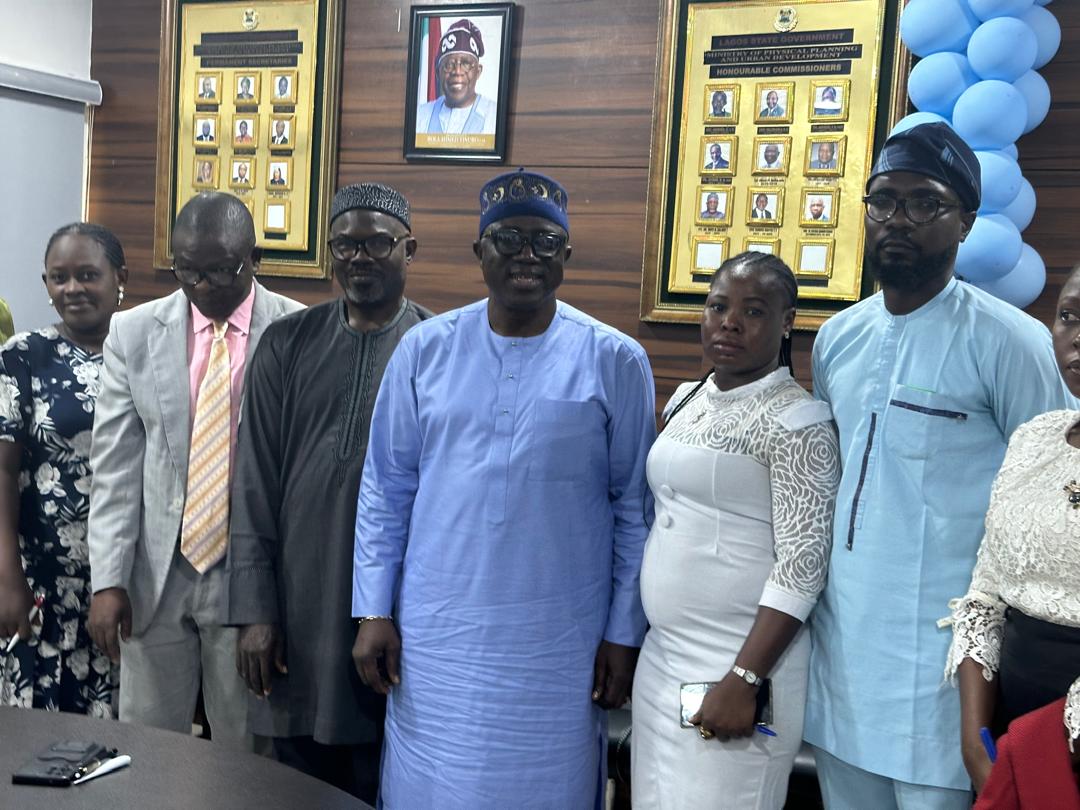
The Lagos State Government has inaugurated the planning committee for the 2026 World Habitat Day celebration, charging members to deploy their expertise and work collaboratively towards finding sustainable solutions to the state’s housing and urban development challenges.
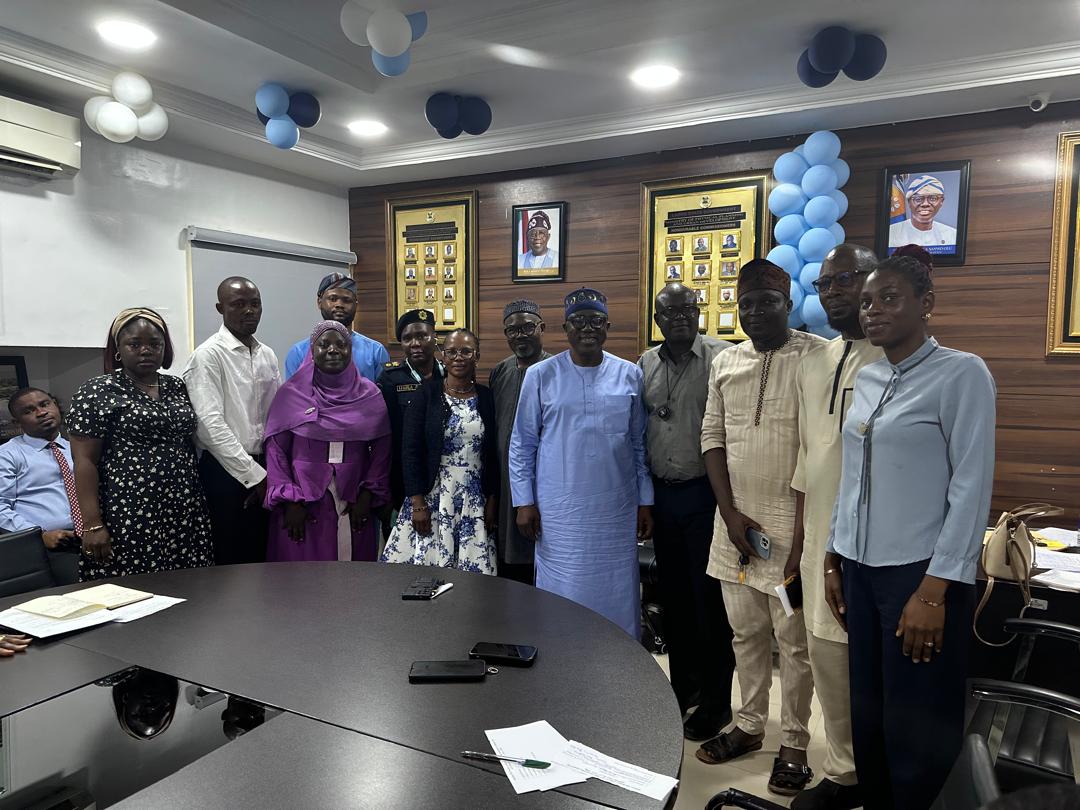
The committee was inaugurated last Tuesday by the Permanent Secretary, Office of Physical Planning, Lagos State Ministry of Physical Planning and Urban Development, Tpl. Olayinka Adebayo Wasiu, at the Ministry’s Conference Room in Alausa, Ikeja.
Speaking at the inauguration, Wasiu described World Habitat Day as an important platform for reflecting on the state of human settlements and reaffirming the fundamental right of every individual to adequate housing.
He said the 2026 theme, “Adequate Housing for All,” was particularly relevant to Lagos, given the need for stronger and more coordinated efforts to address housing challenges and improve living conditions across the state.
The Permanent Secretary called for greater collaboration among government agencies, private sector operators, development partners and other stakeholders in the built environment, stressing that the housing challenge required a comprehensive and sustainable response.
“I want you all to bring your expertise and contribute meaningfully before, during and after the programme because Lagos is widely regarded as the pacesetter of development in Nigeria,” he said.
Wasiu further urged committee members to approach their assignments with professionalism, dedication and a strong sense of purpose, while leveraging their diverse expertise to deliver a meaningful and impactful celebration.
He said the housing deficit could no longer be addressed through fragmented interventions, noting that a holistic approach was required to bridge the existing gap.
“The housing deficit is something we have to critically and holistically address in order to bridge the existing gap,” he added.
READ ALSO:
- Lagos Moves to Tackle Housing Deficit, Inaugurates 2026 World Habitat Day Committee
- Hawk Fire in US Rages On, Burns 10,500 Acres in Nevada, Forces Mass Evacuations
- ICPC uncovers alleged fake agency claiming 2017 FEC approval after nine years
He explained that the Office of Physical Planning was responsible for coordinating the annual World Habitat Day observance in Lagos, adding that members of the 2026 planning committee were drawn from various Ministries, Departments and Agencies to promote broad representation, inclusiveness and effective coordination.
World Habitat Day is observed globally on the first Monday of October each year to draw attention to the state of human settlements and the right to adequate shelter.
The 2026 Lagos State celebration is scheduled for Monday, October 5, at the Blue Roof, LTV Complex, Agidingbi, Ikeja.
The state government reaffirmed its commitment to sustainable urban development, expanding access to adequate housing and implementing policies aimed at improving the quality of life of Lagos residents.
Lagos Moves to Tackle Housing Deficit, Inaugurates 2026 World Habitat Day Committee
-

 metro2 days ago
History in Makkah: Nigerian Teen Wins Prestigious Qur’anic Contest, Breaks 46-Year Gender Barrier
-

 News2 days ago
Delta Governor Reveals ₦503,000 Monthly Salary, Says Permanent Secretaries Earn ₦900,000
-
 metro3 days ago
Former MFM Pastor Femi Jimoh Dies After Years of Detention, Legal Dispute
-
 Auto3 days ago
Dangote deploys technology to curb truck crashes, improve road safety
-
 metro11 hours ago
Lagos Police arrest five suspected telecom vandals, recover truckload of iron rods
-

 News2 days ago
Atiku’s Fuel Subsidy Plan Unrealistic, Destructive, Says Presidency
-

 Sports2 days ago
Okocha Ignites Fresh GOAT Debate: Nigerian Legend Says Messi Is ‘Art,’ Ronaldo Is ‘Goalscorer Like Haaland’
-
 Politics2 days ago
2027: Senator Saliu Mustapha quits APC after losing Kwara governorship ticket