

Sports
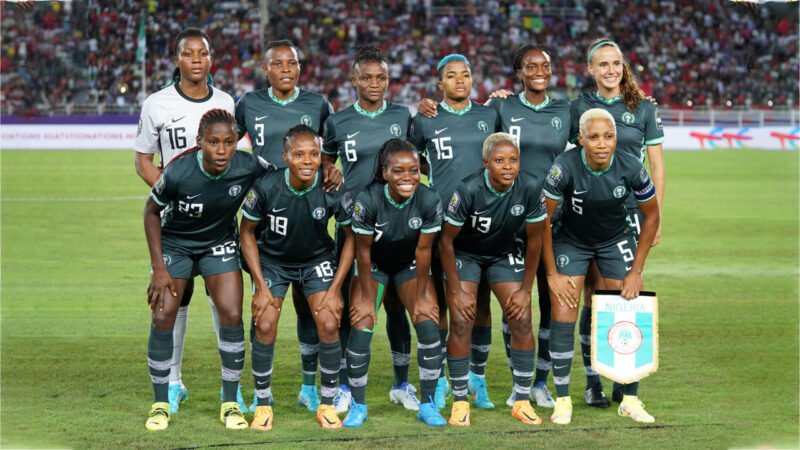
Falcons plan protest, World Cup boycott as NFF cancels bonuses
Falcons plan protest, World Cup boycott as NFF cancels bonuses
The Super Falcons are planning to stage a strike and boycott their opening game of the 2023 Women’s World Cup after the General Secretary of the Nigeria Football Federation Dr Mohammed Sanusi told them their match bonuses for the competition had been cancelled by the federation.
A camp source said the decision was taken after six senior players — captain Onome Ebi, Rasheedat Ajibade, Asisat Oshoala, Ohale Osinachi, Tochukwu Oluehi and Desire Oparanozie — held a lengthy meeting on arrival at the Mercure Resorts, Gold Coast, following Sanusi’s announcement.
“We are going ahead to press for our demands,” a senior player told The PUNCH. “We are ready to go as far as missing our first game against Canada July 21 because this has to stop.
“On Wednesday night, we held a meeting where we agreed that we were going to find out if what we were asking for is legitimate, and that if it’s legitimate, we will press for our demands. It was what was agreed. The next meeting will be after we get the information we need and then the protest will start.”
It was learnt that shortly before the Nigerian contingent departed Abuja for Australia July 2, Sanusi, during a meeting with the players, told them that they would not be paid match bonuses by the federation, since FIFA had already announced that every player would get $30,000 in the group stage of the tournament in Australia and New Zealand.
READ ALSO:
- How 50-year-old father of three butchered estranged lover
- Tribunal dismisses petition challenging election of Delta’s Gov Oborevwori
- Soldiers gun down terrorists crossing into Nigeria from Cameroon
The PUNCH was told that he also announced that the players would no longer be given 30 per cent from the $1,560,000 FIFA grant to all member associations for the group stage of the competition
Our source said the players were stunned “after Sanusi landed the sucker punch.”
“The General Secretary came for the meeting clutching so many papers; he told us that we won’t be paid match bonuses at the World Cup because FIFA had already given each player $30,000 for the group stage. He also said we won’t get 30 per cent from the $1,560,000 FIFA would give the NFF.
“We were shocked, team morale went down immediately because we couldn’t believe what the man was saying,” our source said.
“One of the oldest players in the team asked him if FIFA would deduct the money ($30,000) they would give us from the $1.5m they gave the federation but he (Sanusi) said no. So, she said if its like that, then it shouldn’t affect our match bonuses. After several minutes of argument, Sanusi asked us if we would have preferred the $9,000 match bonus or the $30,000 from FIFA.”
Our source dismissed reports that American team coach Randy Waldrum had instigated the players to stage “a coup” against the federation.
“That’s not true, it’s a ploy to distract Nigerians from the truth. Randy has no hand in this. We’ve been suffering this maltreatment and injustice long before he took charge of the team. When the team revolted after the 2018 WAFCON and the 2019 World Cup, was Randy with us? We are fighting a good cause, we don’t need anyone to push us. They should allow the coach do his job.
READ ALSO:
- DSS arrests 2 suspected smugglers over deadly attack on customs officers
- Sanwo-Olu fulfills N10M promise to LASU top student, Aminat Yusuf (+ Photos)
- Reports on ministerial nominees mere spéculations – Presidency
“Since the federation is treating us like this, we have decided to stage a protest before the competition begins, so that the whole world will know what we are passing through. We can’t keep suffering and smiling.
“At the last World Cup, the same thing happened and we were shortchanged, we won’t allow this to happen any longer. They dare not treat the Super Eagles like this. Is it because we are women? We must put a stop to this this time around.”
NFF president Ibrahim Gusau and Sanusi did not respond to telephone calls on the matter, while they also didn’t reply to the text and WhatsApp messages sent to their phones as of the time of filing this report.
It’s not the first time the Falcons would be involved in a bonus row at an international tournament.
The record African champions refused to travel back home after winning the 2004 WAFCON in South Africa, insisting they were paid their bonuses first.
In 2016, after returning from Cameroon with an eighth WAFCON trophy, they also staged a sit-in protest at their Abuja hotel to press home their claims for each player to be paid $16,500 after their triumph.
Striker Desire Oparanozie was stripped of her captaincy and banished from the team after she led a bonus protest at the 2019 World Cup in France, while the squad also boycotted training sessions ahead of their third-place clash agains Zambia at last year’s WAFCON in Morocco over same issue.
Falcons plan protest, World Cup boycott as NFF cancels bonuses









Sports
Enough Is Enough: Muslim Supporters Demand Change of New Man United Owners
Enough Is Enough: Muslim Supporters Demand Change of New Man United Owners
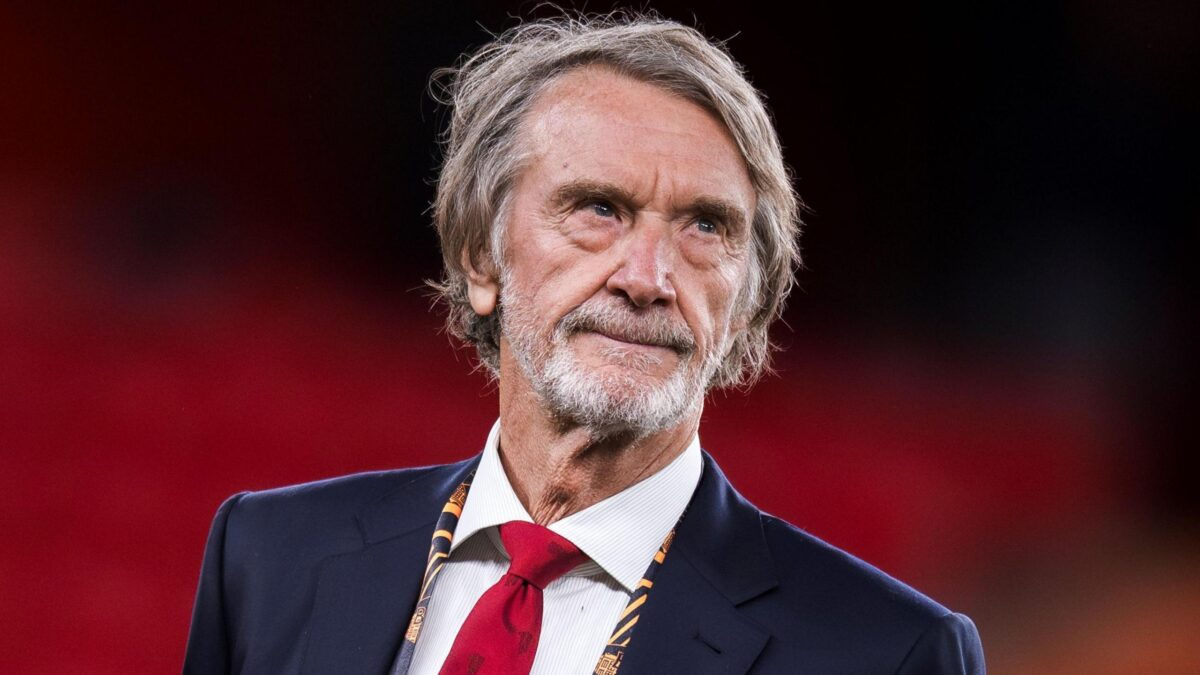
The Manchester United Muslim Supporters’ Club (MUMSC) has called for a change in the ownership of the English Premier League club, demanding that Sir Jim Ratcliffe and the Glazer family leave following fresh comments by the billionaire about immigration, welfare and the state of the United Kingdom.
The supporters’ group issued a strong statement of no confidence in the Manchester United ownership after Ratcliffe, the club’s co-owner and chairman of INEOS, said Britain was “on the slide” and argued that politicians were not being sufficiently tough on immigration and welfare.
Ratcliffe made the comments during a BBC interview in which he discussed Britain’s economic and political challenges. He attributed part of what he sees as the country’s decline to high taxes and immigration and called for politicians to take tougher decisions on immigration and benefits. (The Guardian)
The remarks triggered a fresh response from the Manchester United Muslim Supporters’ Club, which said it had previously hoped Ratcliffe’s apology over earlier immigration comments would mark a change in his approach.
The group said the latest remarks were “deeply disappointing” and “completely unacceptable”, arguing that they were inconsistent with the diverse character of Manchester United.
According to the supporters’ group, the club brings together players, staff, stewards, security personnel and supporters from different countries, cultures, ethnicities, religions and backgrounds.
It said that diversity is not separate from the identity of Manchester United, but is an important part of what the club represents.
The latest dispute follows comments Ratcliffe made earlier in 2026 in which he said Britain had been “colonised by immigrants”. He later apologised for his choice of language and for causing offence.
MUMSC said it had condemned those earlier comments and hoped the apology indicated that a lesson had been learned, but argued that Ratcliffe’s latest remarks showed otherwise.
The supporters’ group also expanded its criticism beyond the billionaire’s comments on immigration, pointing to concerns about Manchester United ticket prices, the condition of Old Trafford, the club’s performances and what it described as repeated unfulfilled promises.
MUMSC said many supporters had initially welcomed Ratcliffe’s arrival because they hoped his investment would bring meaningful change after years under the Glazer family’s ownership.
READ ALSO:
- Stray Bullet Kills 400-Level IBBU Student During Land Dispute in Niger
- Oyo Police: Student Who Died by Suicide Was Charged With Assault, Not ₦8,000 Debt
- Delta Police Intercept Sienna With Military Uniforms, Suspected Drugs
However, the group said its confidence in the current ownership had now been exhausted.
“Enough is enough. It is time for change. The Glazers and Sir Jim Ratcliffe must go,” the group said.
Ratcliffe became a major shareholder in Manchester United in 2024 after his INEOS group acquired a minority stake in the club. The agreement also gave INEOS significant responsibility for football operations, while the Glazer family retained control of the club.
The ownership dispute comes amid a difficult start to the 2026/27 Manchester United season, with results on the pitch adding to the frustration among sections of the supporters.
United were knocked out of the Carabao Cup in the third round after losing 3-2 to Brighton & Hove Albion at Old Trafford despite taking a two-goal lead within the opening 10 minutes.
Teenager Shea Lacey opened the scoring before Mason Mount doubled United’s advantage, but Brighton responded through Charalampos Kostoulas, Pascal Gross and Maxim De Cuyper to complete the comeback.
The defeat ended United’s Carabao Cup campaign at the first hurdle and marked the first time in 50 years that the club had lost at Old Trafford after taking a 2-0 lead. (The Guardian)
Manager Michael Carrick accepted responsibility for the collapse and said the team had to respond quickly by returning to winning football.
The cup defeat followed a 1-0 loss to Manchester City in the Premier League and contributed to a difficult opening period for Carrick’s side. Recent reporting put United 13th in the Premier League after collecting four points from their opening four league matches. (The Guardian)
The football struggles have therefore become another source of tension between sections of the fan base and the club’s leadership, although the MUMSC’s latest statement makes clear that its concerns are broader than results.
The supporters’ group has linked its demand for ownership change at Manchester United to questions about the club’s direction, supporter relations, commercial decisions and its treatment of the diverse community that follows the team.
Ratcliffe’s involvement has already produced significant changes at the club, including restructuring and job cuts, while his decisions on ticketing and other operations have generated criticism from some supporter groups.
His latest comments have now added an additional point of contention, particularly among the Muslim supporters’ group, which says Manchester United’s international and multicultural identity should be reflected in the conduct and public statements of those running the club.
Despite the demand from MUMSC, there has been no indication that Sir Jim Ratcliffe or the Glazer family is preparing to sell their respective interests in Manchester United.
The latest development nevertheless places renewed attention on the relationship between the club’s ownership and its supporters as Manchester United attempts to recover from a difficult start to the new season.
Enough Is Enough: Muslim Supporters Demand Change of New Man United Owners
Sports
Ronaldo Included in Portugal’s Nations League Squad as Jorge Jesus Begins New Era
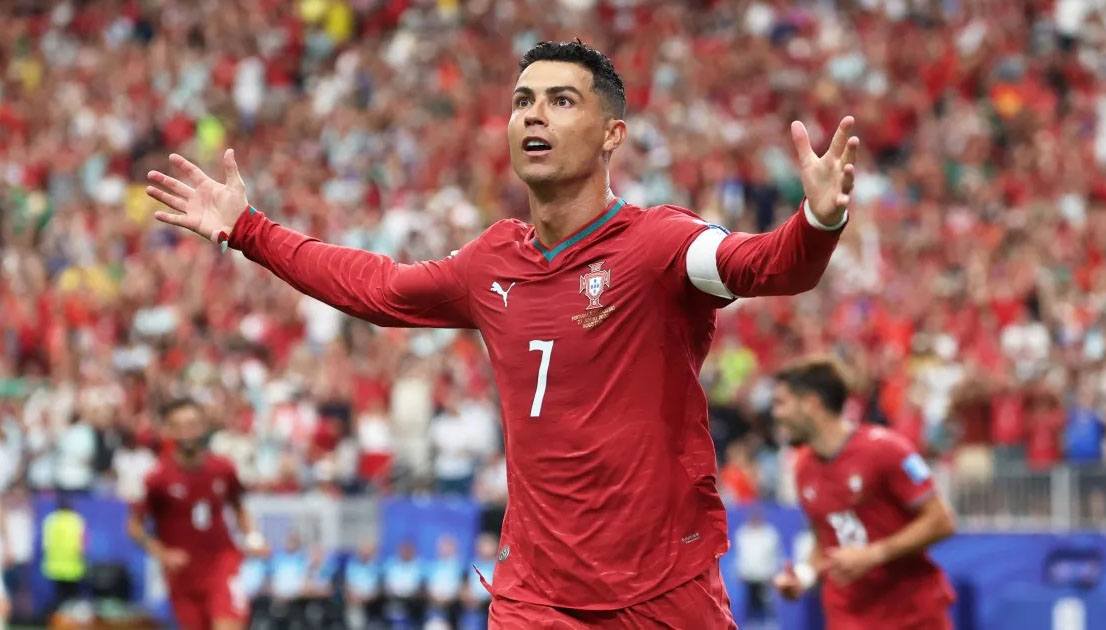
Ronaldo Included in Portugal’s Nations League Squad as Jorge Jesus Begins New Era
Cristiano Ronaldo has been included in Portugal’s 25-man squad for the opening fixtures of the 2026/27 UEFA Nations League, ending immediate uncertainty over the 41-year-old captain’s continued involvement with the national team.
New Portugal head coach Jorge Jesus named Ronaldo in his first squad on Friday, September 18, as the reigning Nations League champions prepare for four Group A4 matches between September 24 and October 4.
Ronaldo’s selection comes less than three months after the veteran forward confirmed that the 2026 FIFA World Cup would be his final appearance at the tournament.
He has also fuelled wider retirement speculation after saying in August that the coming year would probably be the final season of his professional football career.
However, Ronaldo has not announced his retirement from international football, and his inclusion in Jesus’ first squad confirms that he remains available for Portugal.
The five-time Ballon d’Or winner remains the leading scorer in men’s international football, with 146 goals in 233 appearances for Portugal.
His international career has included victory at Euro 2016 and two UEFA Nations League titles, in 2019 and 2025.
Ronaldo was unable to add the FIFA World Cup trophy to his collection after Portugal were eliminated by Spain in the round of 16 at the 2026 tournament.
The defeat brought his World Cup career to an end after six appearances at the global tournament, but did not immediately mark the end of his Portugal career.
READ ALSO:
- BREAKING: Bloodbath at Pakistan Mosque as Suicide Blast Kills 21, Injures 103
- Xenophobia: FG Brings 33 More Nigerians Home From South Africa
- Falconets Thrash England 3-0, Face Colombia in U-20 World Cup Quarter-Finals
Jesus, who was appointed after Roberto Martinez left the post following Portugal’s World Cup exit, has a previous working relationship with Ronaldo.
The 72-year-old coach managed Ronaldo at Saudi Arabian club Al-Nassr, where they won the Saudi Pro League title during the 2025/26 season.
Jesus, however, has made it clear that Ronaldo’s reputation will not guarantee him a starting place in the new Portugal team.
Discussing the veteran forward’s selection, the coach said performance would determine his decisions.
Jesus said Ronaldo would be treated like the other players when it came to selection, although he acknowledged that the Portugal captain has a different status because of his achievements.
The new coach’s comments underline his intention to maintain competition for places as he begins rebuilding the national team following the World Cup.
Jesus has retained most of the players who featured at the 2026 World Cup, with only a small number of changes to the squad.
Among the players returning to the national team are Joao Palhinha, Nuno Tavares and Fabio Silva, while Benfica goalkeeper Samuel Soares has also been included.
The squad features several of Portugal’s established stars, including Bruno Fernandes, Bernardo Silva, Ruben Dias, Vitinha, Joao Neves, Nuno Mendes, Rafael Leao and Pedro Neto.
Ronaldo is joined in the forward line by Fabio Silva, Francisco Trincao, Francisco Conceicao, Goncalo Ramos, Joao Felix, Pedro Neto and Rafael Leao.
Portugal will begin the new Nations League campaign at home against Wales on September 24 at the Estadio Jose Alvalade in Lisbon.
Jesus will then take his team to Oslo to face Norway on September 27 before Portugal travel to Copenhagen for a meeting with Denmark on October 1.
The four-match sequence will conclude with Portugal hosting Norway at the Estadio do Dragao in Porto on October 4.
The fixtures will provide Jesus with his first competitive tests since replacing Martinez and give him an opportunity to assess his squad ahead of the next phase of Portugal’s international programme.
Portugal enter the competition as the defending UEFA Nations League champions, having defeated Spain on penalties in the 2025 final to win the tournament for the second time.
The team’s previous Nations League triumph came in 2019, when Portugal defeated the Netherlands in the final.
Ronaldo’s selection also keeps alive the possibility of the veteran playing a role in Portugal’s preparations for future competitions, although his long-term international plans remain unclear.
The next major European international tournament will be Euro 2028, by which time Ronaldo will be 43.
For now, however, his immediate focus is the Nations League and the start of the Jorge Jesus era.
Ronaldo is also approaching another major personal milestone.
He has scored 979 official career goals for club and country, leaving him 21 goals short of the 1,000-goal mark.
Jesus was asked about the possibility of Ronaldo reaching the milestone with Portugal but suggested that he expected the forward to achieve it at club level rather than with the national team.
The comment adds another dimension to the relationship between the coach and Portugal’s most prolific international scorer.
Despite Ronaldo’s advancing age and retirement comments, his continued selection means he remains part of Portugal’s plans at the start of the new international cycle.
Jesus has nevertheless stressed that past achievements will not determine who plays, placing the emphasis on current performances.
Portugal’s first test under the new manager will therefore attract considerable attention, with Ronaldo expected to remain one of the central figures as the European champions begin their 2026/27 Nations League defence.
Portugal’s 25-Man Nations League Squad
Goalkeepers: Diogo Costa, Rui Silva, Samuel Soares.
Defenders: Goncalo Inacio, Joao Cancelo, Diogo Dalot, Nuno Tavares, Nuno Mendes, Renato Veiga, Ruben Dias, Tomas Araujo.
Midfielders: Bruno Fernandes, Joao Palhinha, Joao Neves, Ruben Neves, Vitinha, Bernardo Silva.
Forwards: Cristiano Ronaldo, Fabio Silva, Francisco Trincao, Francisco Conceicao, Goncalo Ramos, Joao Felix, Pedro Neto, Rafael Leao.
Ronaldo Included in Portugal’s Nations League Squad as Jorge Jesus Begins New Era
International
Asian Games Organisers Apologise After Blunder Broadcasts North Korean Anthem for South Korea
Asian Games Organisers Apologise After Blunder Broadcasts North Korean Anthem for South Korea
A mistaken stadium audio track following South Korea’s 5-0 hockey win over Bangladesh triggers protests amid wider logistical issues in Japan.
Organisers of the Asian Games in Japan issued a formal apology on Friday after mistakenly playing the North Korean national anthem for South Korea’s men’s hockey team.
The embarrassing mix-up occurred shortly after South Korea secured a commanding 5-0 victory over Bangladesh, leaving players standing perplexed on the pitch as the wrong national anthem echoed through the stadium speakers.
Following the initial blunder, venue operators played the national anthem of Bangladesh before finally broadcasting South Korea’s proper anthem, prompting a stadium announcer to issue an immediate apology over the public address system.
However, South Korea coach Min Tae-seok condemned the oversight as an inexcusable operational failure. Min stated that while tournament officials blamed an individual operator for selecting the wrong audio file, an international competition must never tolerate errors of such sensitive political magnitude.
Furthermore, the anthem blunder compounds wider operational difficulties facing Japanese host venues ahead of Saturday’s official opening ceremony. Several delegations have voiced strong frustration over logistical arrangements, with visiting teams reporting airport delays lasting up to six hours.
In addition, members of South Korea’s basketball squad published videos showing water pouring from broken pipes into their athlete village rooms, intensifying pressure on local organisers to resolve village infrastructure and technical coordination before mainstream competitions begin.
Asian Games Organisers Apologise After Blunder Broadcasts North Korean Anthem for South Korea
-
 News3 days ago
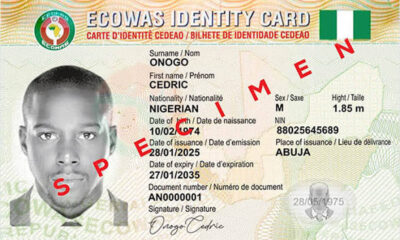
ECOWAS Biometric Card Expands as Seven Countries Begin Rollout
-

 Sports3 days ago
Ballon d’Or 2026: Mbappe Responds to Yamal’s Bold Claim
-
 metro3 days ago
FG Suspends Niger NSCDC Commandant As 37 Suspected Illegal Miners Die In Custody
-
 International3 days ago
Ninth Body Discovered in South Africa: Nigeria Issues Urgent Safety Alert to Nationals
-

 Politics3 days ago
Toyin Abraham Rejects Lagos APC Campaign Council Inclusion
-

 Politics3 days ago
2027: Sowore Says He’d Rather Die Than Travel Abroad For Medical Treatment
-

 International2 days ago
BREAKING: Bloodbath at Pakistan Mosque as Suicide Blast Kills 21, Injures 103
-

 metro2 days ago
Niger Miners’ Deaths: Families Demand Compensation, Justice for Victims