

metro
Political parties and the quality of elections

Political parties and the quality of elections
The 11 TH Technical Session of The Electoral Forum was held online on Friday, 14 July 2023.
The meeting focused on understanding the impact of political parties on the quality of elections
in Nigeria.
The Chair of the Forum, Professor Adebayo Olukoshi noted that the role of political parties in
the democratic process, and the credibility/quality of elections has been a recurrent issue of
concern for The Forum. As such, the meeting was convened to focus the minds of the members
of the Forum on the role and place of political parties in the quest for strengthening democratic
governance in Nigeria, and the securing and deepening of electoral integrity in the country. As a
concrete point of entry, it was decided to examine the ways in which, over time, political parties
have impacted the quality Nigerian elections. Out of the deliberation of the members of the
Forum, ideas would be proposed for the consideration of stakeholders to help raise the standard
of political part on the quality of elections in Nigeria and propose solutions to stakeholders in
order to raise the standard of elections and the performance of political parties. The Chair noted
that strong, programme based and ideologically inclined political parties are very vital for
credible elections and democratic consolidation.
The Chairman thereafter outlined the objectives of the Technical Session as follows:
· To examine the role, significance and performance of political parties in Nigeria as
critical institutions for electoral credibility and democratic advancement.
· To review the engagement between the Independent National Electoral Commission and
political parties.
· To identify strategies and mechanisms for addressing the challenges impeding political
parties’ functionality as agents for quality elections.
During the technical session, Forum members explored theoretical, historical and practical issues
arising relating to and arising from the functionality of political parties in Nigeria and their
effectiveness in shaping election outcomes. The first presentation was by Professor Adele Jinadu
on the topic “Political Parties as Institution of Democracy: Theory and Ideals.” The presenter
noted that the struggle for democracy is a perpetual attempt to expand the political space,
inclusion, participation and accountability. This expansion has resulted in the emphasis placed on
election as the preferred modality for choosing leaders. And with elections being the preferred
approach for choosing leaders, political parties become very key to the process. According to
him, political parties and the party system in Nigeria have been shaped by a complex intersection
of colonial-rule-induced fusion of ethno-regionalism coupled with long term experience with
military rule. He further asserted that political parties have general tendency to develop internal
oligarchies of the rich and powerful who are in full control of these parties, which raises
concerns about internal democracy.
Professor Jinadu provided further insight into historical efforts at recalibrating the character of
Nigerian political parties and the challenges encountered in the process. Amongst the challenges
he identified were the proclivity for political parties and candidates to rely on ethno-regional and
religious appeals and the issue of contradictory judicial verdicts. These challenges, he observed,
have subsisted to present times as evident in the rush for ethnic voting blocs during the 2023
general elections. Consequently,the country today has neither a national party nor national
leader.
Having laid out the theoretical and historical overview of the problems inhibiting and impeding
political parties’ functionality as democratic institutions, a second presentation was made by
Hajia Amina Zakari, former INEC National Commissioner. In her analysis, she laid out a litany
of efforts exerted by INEC at engaging and strengthening political parties and the challenges
encountered. These efforts include monitoring party finance, convention and primaries,
capacity-building programmes, and enforcement of requirements of national spread and presence
in the FCT, amongst others. The success of these efforts is however limited by trust gaps
between parties and INEC, disregard for electoral rules by political parties, malfeasance by some
staff of the commission, etc.
Following extensive deliberations and inputs by Forum members on the issues raised, the Forum
proposed far-reaching recommendations for improving political parties and ensuring that they
contribute to credible elections. These recommendations include:
¾ That parties should be strengthened to ensure their survival after elections. Presently, we
have nine parties with elected representatives at the National and State Assemblies, a
diversity which might be lost if parties are not strengthened.
¾ The INEC department on Election and Party Monitoring should be reorganise and
reinforced to focus strictly on political parties’matters – registration, regulations,
monitoring etc. also, campaign finance monitoring should be given more visibility.
¾ The INEC political party deparment should be strengthened including professional
training for staff.
¾ There should be much greater attention to ways of growing party membership,
programme vision, and internal party democracy in Nigeria
¾ INEC should collaborate with CSO, and former INEC non-partisan staff in monitoring
political party elections, congresses and conventions, particularly, their primaries.
¾ Capacity building programmes should be organized for political parties, including the full
time staff who run the day to day operations of the parties. Also, elected officials of
political parties should undertake induction sessions organised by them as well as by
INEC.
¾ If the trend of party violation of electoral guidelines and ideals of electoral conduct
persists, there would be a need to set up a political party monitoring agency.
¾ The powers of the Electoral Commission should be strengthened and exercised to allow it
to decide on, and provide verdicts, on party candidacy and leadership as stipulated in the
Electoral Act 2022.
¾ On the imperative of strengthening INEC’s impartiality in monitoring political parties,
efforts should be exerted at depoliticising the appointment of members of the
Commission, including the Chairperson and National Commissioners, and Resident
Electoral Commissioners (RECs). In the same vein, continuous investments should be
made in engancing the professionalism of the staff of INEC at all levels.
¾ There will be much benefits in revisiting the Uwaise report in order, inter alia, to rid
INEC of the extra baggage so that it does not become overburdened
Various outputs from the technical meeting will shortly be released on The Electoral Forum’s
webpage: https://electoralhub.org/electoralforum. Stakeholders in the electoral process are urged
to join the Forum in the advocacy for better electoral governance in Nigeria.
Signed
Professor Adebayo Olukoshi, Chairman of The Electoral Forum
Secretariat phone: +234 9121551331 and +234 9086998850
Secretariat email: electoralforum@gmail.com and electoralhub@gmail.com
Forum Facebook: @electoralforum
Forum Instagram: @theelectoralforum
Forum page: https://electoralhub.org/electoralforum
Political parties and the quality of elections






metro
Why Akpabio Rejected ‘Acting President’ Title — Rufai Oseni

Why Akpabio Rejected ‘Acting President’ Title — Rufai Oseni
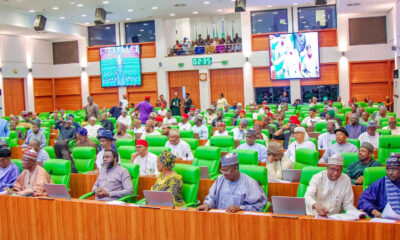
LAGOS — Arise Television Morning Show anchor, Rufai Oseni, has offered insight into why Senate President Godswill Akpabio reportedly rejected the title of “Acting President” during the recent absence of President Bola Tinubu and Vice President Kashim Shettima from the country.
In a commentary that has sparked widespread debate across political circles, Oseni suggested that Akpabio’s refusal to embrace the title was not merely a matter of constitutional propriety, but a reflection of the legislature’s unwillingness to assert its independence as a co-equal branch of government.
The controversy arose when, with both the President and Vice President out of the country, some political associates reportedly began referring to Akpabio as the acting president. Akpabio swiftly moved to quell the speculation, clarifying that he remains the Senate President and that there is no vacancy in the presidency, noting that President Tinubu was still running the country from abroad.
However, Oseni, speaking on his morning show, argued that the situation raises fundamental questions about the balance of power in Nigeria’s presidential system. He contended that the Senate President’s eagerness to dismiss the acting title highlights a deeper issue: the National Assembly’s reluctance to genuinely challenge or check the executive arm of government.
Oseni pointed to the legislature’s earlier endorsement of a state of emergency in Rivers State as evidence that the current leadership under Akpabio would not stand up for the independence of the parliament. He questioned whether a Senate President who shies away from the constitutional implications of a power vacuum can effectively champion the legislature’s role as a separate arm of government.
“The refusal to accept the acting president title is not just about protocol; it is about the willingness of the National Assembly to assert its constitutional independence,” Oseni said during the broadcast. “If the Senate President cannot stand up for the legislature in a moment like this, it raises serious questions about the checks and balances in our democracy.”
The political analyst’s remarks have reignited conversations about the relationship between the executive and the legislature under the current administration, with critics arguing that the National Assembly has become increasingly subservient to the presidency.
While Akpabio’s allies maintain that his decision was a mark of respect for constitutional order and the sitting president, Oseni’s analysis suggests that the move may have wider implications for the balance of power in Abuja.
As the debate continues, observers say the incident underscores the ongoing tension between constitutional duty and political reality in Nigeria’s democratic experiment.
Why Akpabio Rejected ‘Acting President’ Title — Rufai Oseni
metro
Lagos Club Robbery: Police Arrest Suspect After N5m Bounty
Lagos Club Robbery: Police Arrest Suspect After N5m Bounty
The Lagos State Police Command has arrested a suspected member of the gang that allegedly robbed clubgoers outside Ghost and Spirits Lounge on Ekoro Road, Abule Egba, Lagos.
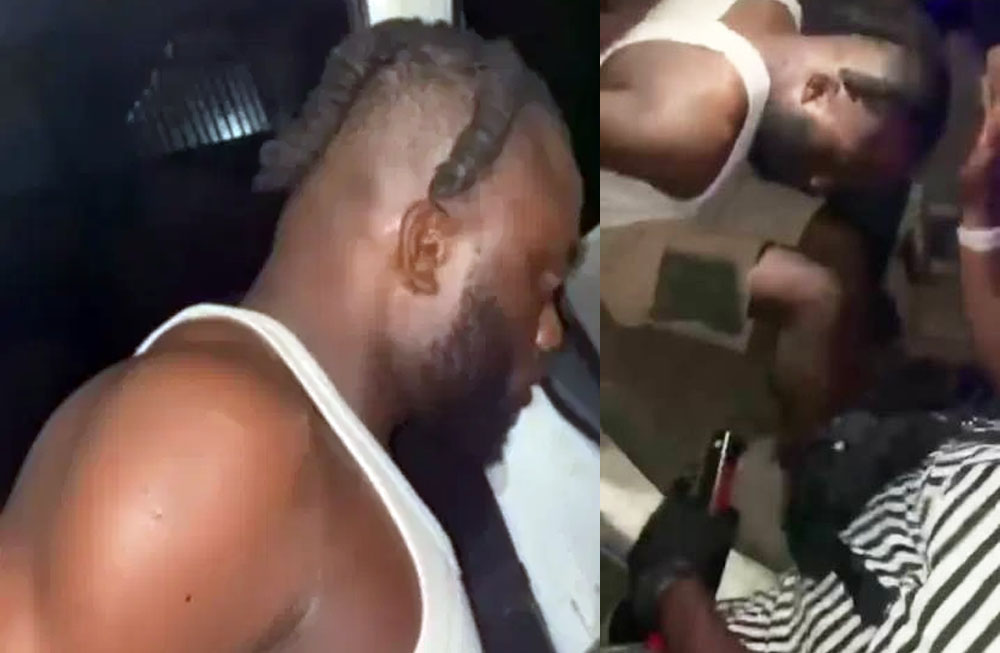
The suspect was reportedly identified from video footage of the incident, which showed several people being attacked outside the entertainment venue in the early hours of the morning.
The Lagos club robbery reportedly occurred at about 4am on Saturday after some customers had left the lounge and gathered around their vehicles.
Footage from the scene showed several clubgoers sitting around a vehicle when the suspected robbers approached.
READ ALSO:
- Five Arrested Near US-Used RAF Fairford in UK Terror Probe
- Kano Upgrades Five PHCs to General Hospitals, Begins Assessment
- Iran Claims Capture of Second US Underwater Drone in Strait of Hormuz
One of the suspects, reportedly dressed in a green shirt and cap, appeared to move among the people before allegedly targeting one of the victims.
Another member of the group was reportedly seen in an SUV parked across the road before a gunshot was fired, causing some of the people at the scene to run for safety.
The suspect in the green shirt was then allegedly seen taking a wristwatch from one of the victims, while other members of the group reportedly collected valuables before escaping in their vehicle.
Following the incident, the management of the lounge announced a N5 million reward for information leading to the arrest of the perpetrators.
The reward and subsequent investigation helped the police identify and track one of the suspects, who was eventually arrested.
A police source said the suspect was in custody and being interrogated, with investigators seeking information that could lead to the arrest of the other alleged members of the gang.
The Lagos Police Command has also intensified efforts to locate the remaining suspects, who are reportedly still at large.
The incident has raised concerns among residents and nightlife customers in Abule Egba, particularly over the security of people leaving entertainment venues during the early hours.
Police authorities have urged residents with useful information about the suspects or the robbery to assist the investigation.
The arrested suspect remains presumed innocent unless proven guilty in court, while investigations continue into the alleged robbery and the identities and whereabouts of the other suspects.
Lagos Club Robbery: Police Arrest Suspect After N5m Bounty
metro
Passenger Dies After Jumping From Moving Bus In Lagos

Passenger Dies After Jumping From Moving Bus In Lagos
A passenger has died after jumping from a moving commercial bus at Ogunlana Junction, inward Ojuelegba, in the Surulere area of Lagos.
The incident involved a Volkswagen commercial bus with registration number LND 130 XR, which reportedly crashed into a median pole around the Fallout area of Surulere.
The Lagos State Traffic Management Authority (LASTMA) said preliminary security reports indicated that the driver was allegedly under the influence of alcohol and had been driving recklessly shortly before the crash.
According to the agency, motorists approaching the bus from behind had to exercise caution to avoid colliding with the vehicle as it reportedly moved erratically.
Amid the incident, a male passenger reportedly jumped from the moving bus, apparently attempting to escape from the uncontrolled vehicle. He sustained serious injuries after hitting the ground and later died from his injuries.
LASTMA officials conducting routine traffic surveillance along the Ojuelegba axis responded to the scene after noticing the crash. They secured the area, managed traffic and removed the damaged bus and the deceased passenger from the carriageway to reduce the risk of a secondary collision.
READ ALSO:
- Five Arrested Near US-Used RAF Fairford in UK Terror Probe
- Kano Upgrades Five PHCs to General Hospitals, Begins Assessment
- Iran Claims Capture of Second US Underwater Drone in Strait of Hormuz
Police officers from the Area C Police Division, Ojuelegba, provided security at the scene, while officials of the State Emergency Management Agency evacuated the remains of the deceased.
LASTMA General Manager, Olalekan Bakare-Oki, described the incident as a reminder of the dangers associated with driving under the influence of alcohol, reckless driving and operating vehicles that may not be mechanically fit for the road.
Bakare-Oki urged commercial and private motorists to conduct comprehensive checks on their vehicles before every journey, with particular attention to the braking system, tyres, steering mechanism and other critical safety components.
He also commiserated with the family of the deceased and reaffirmed LASTMA‘s commitment to responding promptly to road crashes, managing traffic and clearing accident scenes.
The agency urged motorists and other road users to report accidents, vehicle breakdowns and other traffic obstructions through its toll-free short code, 3367.
Passenger Dies After Jumping From Moving Bus In Lagos
-
 News3 days ago
Keyamo: ₦70,000 Minimum Wage No Longer Enough as Cost of Living Soars
-
 metro3 days ago
EFCC Chairman Raises Alarm Over Alleged Theft of Nigeria’s Public Funds
-
 Sports2 days ago
AFCON 2027 Qualifier: Nigeria Fight Back to Beat Madagascar 2-1 in Uyo
-
 Politics3 days ago
2027: Otti Explains Why He Supports Tinubu Despite Remaining in Labour Party
-

 Entertainment3 days ago
Jetour Takes Adventure Beyond the Road, Brings Solar-powered Borehole to Ibeju-Lekki community
-
 metro2 days ago
Viral Anti-Obi Video: Lagos Police Move Against Inspector Osumah Frank
-
 metro3 days ago
Umahi Announces First Niger Bridge Reopening Next Week, Orders Tinubu Pictures
-
 metro3 days ago
Anambra Police Arrest 25-Year-Old Suspect Linked to 2023 Kidnap, Murder