

Africa
Niger Coup: Nigeria cuts power supply to Niger Republic

Niger Coup: Nigeria cuts power supply to Niger Republic
Nigeria has disconnected the supply of 150 megawatts of electricity daily to Niger as sanctions against the neighbouring country by the Economic Community of West African States increase.
AFP reported on Wednesday that Nigeria had cut its electricity supply to Niger.
The disconnection was effected by the Transmission Company of Nigeria, TCN, directly involved in the transmission of power on Tuesday night.
READ ALSO:
-
Why I stayed away from APC caucus meeting – Osinbajo
-
NIS rescues 52 Libya-bound trafficked victims in Kebbi
-
Labour unions to suspend protest after meeting with Tinubu
AFP quoted a source close to the management of the Nigerien Electricity Company, popularly known as Nigelec, adding that the move was in line with the sanctions decided by ECOWAS.
The source said, “It is true Niger was disconnected from the national grid last night based on the instruction of the government. Nigeria used to supply 150 megawatts, MW of power to Niger.
“It is total disconnection in line with ECOWAS moves to restore democracy in that country.”
Niger Coup: Nigeria cuts power supply to Niger Republic







Africa
Court Sentences TV Presenter, 11 Others to Death Over Narcotics Network

Court Sentences TV Presenter, 11 Others to Death Over Narcotics Network
A Cairo criminal court has sentenced Egyptian television presenter Sarah Khalifa and 11 other defendants to death by hanging after convicting them of forming an organized criminal gang involved in manufacturing and trafficking narcotics, as well as possessing unlicensed firearms and ammunition.
The court also sentenced nine defendants to life imprisonment and acquitted seven others, bringing the total number of defendants in the case to 28.
Khalifa, 39, is best known for presenting the crime-focused programme Mission Impossible on the private channel al-Mehwar. She also owns a plastic surgery clinic and a production company that specialises in organising parties and events. She has 2.5 million followers on her Instagram account. Khalifa was arrested in Cairo in April 2025 in connection with the investigation. An arrest warrant was issued on April 17, 2025, and she told prosecutors she was arrested that day, while the formal seizure report was dated April 19.
The Public Prosecution charged Khalifa and 27 other defendants with forming an organized criminal group specializing in importing raw materials used in the manufacture of synthetic narcotics, to produce and traffic the drugs, as well as possessing unlicensed firearms and ammunition. According to the prosecution’s investigations, members of the group divided roles among themselves, with some responsible for importing raw materials, others for manufacturing the drugs, and others for distributing them. The group used a residential property to store the materials and manufacture the drugs. Prosecutors alleged that Khalifa provided funds for the operation and travelled abroad to meet two of the alleged leaders and help coordinate their activities with other members of the group. The case was referred to the criminal court with 28 defendants. The prosecution also ordered the defendants’ assets and bank accounts to be placed under precautionary measures and ordered the continued detention of those in custody. Two defendants who remain at large were placed on travel bans and watch lists.
READ ALSO:
- Kneeling to Propose Is Why Western Marriages Fail — Pete Edochie Sparks Fresh Debate
- US Strikes Three Iranian Oil Tankers in Retaliation for Missile Attack on Navy Ships
- Ondo Tragedy: 3 Siblings, Including Twins, Found Dead Near River on Family Farm
The prosecution presented evidence from 20 witnesses, as well as technical and digital evidence, including messages, photographs, and videos that the prosecution said documented the defendants’ alleged criminal activities. Authorities reportedly seized more than 750 kilograms of narcotics and raw materials, and discovered two apartments used as laboratories, as well as unlicensed firearms and ammunition.
Khalifa has consistently denied the charges against her. According to the state-run Akhbar al-Youm newspaper, when asked by a judge about her alleged role during a court appearance last September, Khalifa stated she had never seen any drugs until she was photographed with them inside the anti-narcotics authority offices. In a post on X following the sentencing, she declared: “I’ve never smoked a cigarette in my life. I swear to God, I’m innocent.” In a separate case, the court also sentenced Khalifa and others to five years in prison over the kidnapping and assault of a young man.
The death sentence was confirmed only after the court obtained a religious opinion from the Grand Mufti of Egypt, a legal requirement in capital cases. The Mufti’s opinion is advisory and not binding on the court. Despite the verdict, Khalifa’s lawyer has stated that she will appeal the death sentence. The verdict is subject to appeal before the Court of Cassation, the country’s highest court for criminal cases.
Egypt applies the death penalty for premeditated murder, terrorism, some rape offenses, and drug trafficking. Human rights groups have raised concerns about the use of the death penalty in Egypt. According to a 2025 report by Amnesty International, there were 492 death sentences issued in the country that year, 23 of which were carried out. The Egyptian Commission for Rights and Freedoms reported that 541 death sentences were issued in Egypt in 2025. The defendants were found guilty of drug trafficking and rape, “crimes that did not amount to ‘intentional killing’ to which the use of the death penalty must be restricted under international law and standards,” the Amnesty International report said.
Court Sentences TV Presenter, 11 Others to Death Over Narcotics Network
Africa
Ghana Launches Marrify App to Let Users Verify Partner’s Marital Status Before Marriage

Ghana Launches Marrify App to Let Users Verify Partner’s Marital Status Before Marriage
Ghana has taken a significant step towards curbing deception in marriage with the launch of Marrify, a digital platform designed to help prospective couples verify their partner’s marital status before tying the knot. The app was officially unveiled in Accra on August 28, 2026, in partnership with the Ministry of Gender, Children and Social Protection (MoGCSP) and Marry Right Ghana Limited, an agency specialising in family law. The application operates as a searchable digital registry designed to bring transparency to marriage administration. It pulls legal data from several official sources, including the Registrar-General’s Department, courts, Metropolitan, Municipal and District Assemblies, and the Ghana Gazette. The platform covers records for ordinance, customary and Islamic marriages, as well as divorce records based on court rulings and judgments.
A core feature of the platform is the ability to conduct a formal check on a prospective spouse’s marital history. Users can search the platform using details including names, spouse names, towns, certificate numbers, and Gazette numbers. This helps prevent the emotional, financial and legal complications that can arise when someone enters a relationship without knowing their partner is already married. The platform cautions that records are still being uploaded and a search returning “no result” should not automatically be interpreted as proof that a person has never been married. Individuals and institutions can also submit marriage and divorce records, together with supporting documents, for verification and inclusion on the platform.
READ ALSO:
- Viral TikTok Live Catches Regina Daniels at Ned Nwoko’s House: Is There a Reconciliation?
- From University of Lagos to Canadian Dean: Nigerian Scholar Appointed Law Dean at USask
- ‘I Needed Money for Wedding’ – Police Arrest Three Over N21m Kidnap Ransom in Lagos
Marrify’s scope extends beyond individual background checks. Members of the public can also use the platform to verify whether marriage venues are duly licensed, churches are registered to conduct marriages, and pastors and imams hold the appropriate licences to legally officiate marriages. This feature closes loopholes in how marriages are solemnised across the country.
Speaking at the launch, Minister of Gender, Children and Social Protection, Dr Agnes Naa Momo Lartey, commended the initiative for promoting transparency, accountability, and public confidence in marriage administration. She emphasised that marriage extends beyond a legal union, highlighting its social, cultural and economic significance for individuals, children, families and communities. “You would not have to take a person’s word for it, even in the most trusted relationship. You can verify with this app,” she stated. Lartey further noted that the platform could help prevent individuals from entering unions based on incomplete or false information, which can contribute to disputes, fraud and emotional harm. She also described the launch as an important step towards encouraging responsible relationships and strengthening family structures, while contributing to efforts aimed at preventing gender-based violence.
The launch of Marrify addresses a significant challenge in Ghana’s marriage landscape. According to the 2021 Population and Housing Census, 80.8% of married persons in Ghana had not registered their marriages. The data showed that proportions of unregistered marriages range from 59.9% in the Greater Accra Region to a staggering 97.1% in the Northern Region. Dennis Adei Dwomoh, founder of the Marrify App and the Marriage Governance Conference, also raised concerns about marriage data management, stating that marriage and divorce records can have consequences decades later, including for inheritance, property settlements and widowhood rights. The platform brings together historical records dating as far back as 1886.
The Marrify initiative is intended to give prospective couples another way to verify a partner’s marital status before making a legal commitment. The ministry has committed to supporting innovations that strengthen the integrity of marriage administration in Ghana.
Ghana Launches Marrify App to Let Users Verify Partner’s Marital Status Before Marriage
Africa
Tinubu takes South Africa xenophobic attacks against Nigerians to AU
Tinubu takes South Africa xenophobic attacks against Nigerians to AU
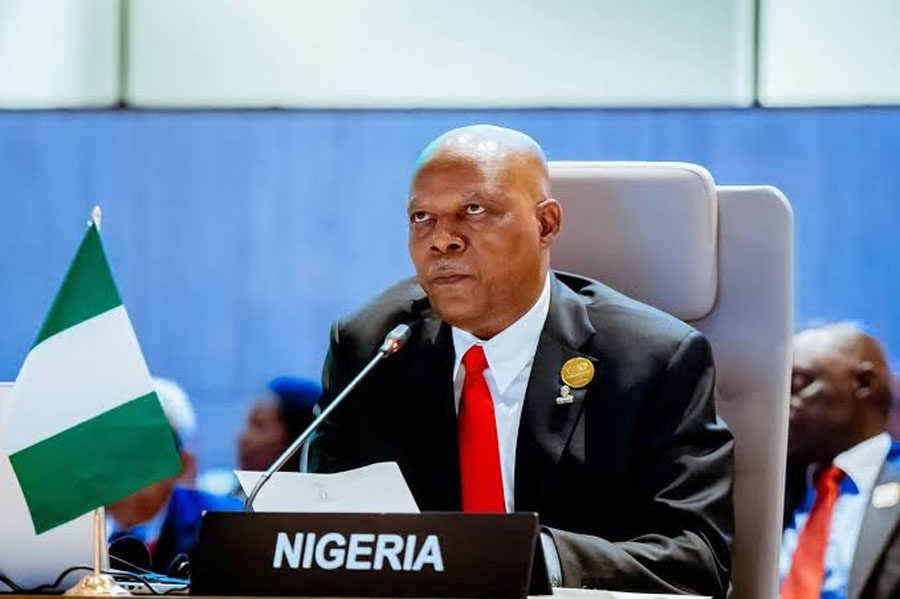
President Bola Ahmed Tinubu has asked the African Union (AU) to take urgent action on recurring xenophobic and Afrophobic attacks targeting Africans and other foreign nationals in South Africa.
Tinubu made the demand in a message delivered by Vice President Kashim Shettima at the 21st Extraordinary Session of the Assembly of the African Union in Luanda, Angola, on Sunday.
The summit focused largely on strengthening Africa’s capacity for conflict prevention and resolution, improving early-warning mechanisms and reinforcing the principle of African ownership of the continent’s peace and security challenges.
However, Nigeria used the high-level gathering to raise concerns over the treatment of Africans and other foreign nationals in South Africa, asking the continental body to give the matter formal consideration.
“Nigeria wishes to express its concern over the recurring xenophobic and Afrophobic attacks against Africans and other nationals in South Africa,” Tinubu said in the message.
The President acknowledged South Africa’s sovereign right to enforce its immigration laws and recognised the country’s contributions to the continent.
He, however, warned that attacks against foreign nationals undermine the principles of African solidarity, unity and peaceful coexistence and require a collective response.
“While recognising South Africa’s sovereign right to enforce its immigration laws and acknowledging its contributions to the continent, Nigeria stresses that such attacks undermine African solidarity, unity and peaceful coexistence, and require urgent collective attention,” he said.
Tinubu consequently asked the AU Assembly to place the issue on the agenda of its 40th Ordinary Session, scheduled for January 2027, for consideration and appropriate action.
“It is on this note that Nigeria calls on this august Assembly to place the matter on the agenda of the upcoming 40th Ordinary Session of the AU Assembly, scheduled for January 2027, for consideration and appropriate action,” he declared.
READ ALSO:
- DSS moves to halt Sowore’s cybercrime trial until after 2027 election
- Kogi Abduction: Kidnappers Demand ₦20m Ransom for Each NYSC Member
- Deadly Ikola clash: Lagos demolishes shanties beneath high-tension lines
The latest move represents a further escalation of Nigeria’s diplomatic efforts to address xenophobic attacks in South Africa, particularly those affecting Nigerians and other African migrants.
Nigeria has previously raised concerns with South African authorities over attacks and anti-foreigner sentiments. The Nigerian government has consistently maintained that concerns over immigration enforcement should not result in violence, discrimination or attacks against African nationals.
Tinubu’s decision to take the matter before the AU effectively broadens the issue from a bilateral dispute between Nigeria and South Africa into a wider continental concern involving the safety and dignity of African citizens across national borders.
The issue is particularly significant given the longstanding political, economic and people-to-people relations between Nigeria and South Africa, two of Africa’s most influential countries.
Beyond the South Africa issue, Tinubu used the summit to call for stronger African ownership of the continent’s peace and security agenda.
Nigeria backed the adoption of the Luanda Action Plan as a roadmap for strengthening conflict prevention and resolution mechanisms across Africa.
“For Nigeria, conflict prevention remains more cost-effective and sustainable than conflict management,” Tinubu said.
He warned that fragmented peace initiatives and increasing dependence on foreign military forces, mercenaries and private defence contractors could weaken Africa’s ability to manage its own security challenges.
“The growing reliance on external actors risks weakening African institutions and the principle of African ownership,” he said.
Tinubu called on African governments to strengthen their commitment to home-grown solutions, preventive diplomacy and collective responsibility rather than relying excessively on external actors to resolve conflicts on the continent.
He also urged arms-producing and exporting countries to strengthen cooperation with African states and take steps to prevent weapons and ammunition produced within their jurisdictions from being diverted to terrorists and other non-state armed groups.
According to the President, the uncontrolled flow of weapons continues to aggravate insecurity and prolong conflicts in different parts of Africa.
He said African countries needed stronger cooperation with international partners to stop the diversion of arms into criminal and terrorist networks while simultaneously strengthening domestic mechanisms for preventing and resolving conflicts.
READ ALSO:
- Benue varsity student arrested after allegedly pouring hot water on colleague
- Anambra Police Arrest 28-Year-Old Suspected Drug Dealer, Recover ₦5.8m Illicit Consignment
- You Can’t Reopen What Is Already Open — Tunji-Ojo Fires Back at Atiku
Tinubu further noted that the AU already has established mechanisms for conflict prevention and resolution, but limited trust, inconsistent implementation and inadequate resources continue to undermine their effectiveness.
He urged member states to demonstrate stronger political commitment to the decisions of the continental body and improve coordination between the AU and Africa’s regional organisations.
The President also backed sustainable and predictable financing for AU peace operations, saying the continental body must have adequate resources to respond effectively to emerging conflicts and security crises.
He specifically supported the full operationalisation of United Nations Security Council Resolution 2719, which established a framework for financing eligible AU-led peace support operations through UN assessed contributions on a case-by-case basis.
The financing mechanism is considered important to the AU’s long-term ambition of reducing dependence on unpredictable external funding for African-led peace operations.
Tinubu said strengthening the financial and institutional capacity of the AU would enable the continent to respond more quickly to crises before they escalate into prolonged conflicts.
The Nigerian leader’s intervention came against the backdrop of a deteriorating security environment in several parts of Africa, including conflicts, terrorism, violent extremism, political instability and transnational organised crime.
The AU has repeatedly warned that the continent’s security challenges are becoming increasingly complex, requiring stronger early-warning systems, preventive diplomacy and coordinated action.
Tinubu therefore urged African leaders to renew their commitment to solidarity and shared responsibility in addressing the continent’s challenges.
“Let us therefore renew our collective commitment to solidarity, cooperation, and shared responsibility as we build the Africa we want,” he said.
The President’s call for AU action on xenophobia in South Africa is expected to keep the issue on the continental diplomatic agenda ahead of the AU’s 40th Ordinary Session in January 2027.
For Nigeria, the immediate concern remains the protection of Nigerians and other Africans living or conducting business in South Africa, while the broader objective is to ensure that immigration enforcement does not become a justification for violence or discrimination.
Tinubu’s intervention also reinforces Nigeria’s position that African countries must take collective responsibility for protecting the rights, safety and dignity of Africans wherever they live on the continent.
Tinubu takes South Africa xenophobic attacks against Nigerians to AU
-

 Politics2 days ago
Why Did Peter Obi Attend Seyi Makinde’s Campaign Launch? Here’s What He Said
-

 News2 days ago
Lagos Moves to Slash Agency Fees, Curb Rent Hikes With New Tenancy Bill
-
 metro3 days ago
Catholic priest leaves priesthood, weds Kenyan woman after 12 years in Kenya
-
 metro3 days ago
El-Rufai Demands ₦10bn from Defence Minister Over Southern Kaduna Killings Allegation
-

 Education2 days ago
FG opens six-month teacher certification for BSc, HND, ND holders – How to Apply
-
 metro2 days ago
Osun Police Arrest Woman After Vigilante Member Dies During Sexual Encounter in Ile-Ife
-
 Politics9 hours ago
Remi Tinubu Appeals To South-East Voters, Says She Wants To ‘Enjoy Nigeria’ In Old Age
-

 Politics13 hours ago
Amaechi will be caged politically, Wike shouldn’t bother about Ikwerre votes — Wihioka