
News
Buhari seeks Senate confirmation of service chiefs appointment
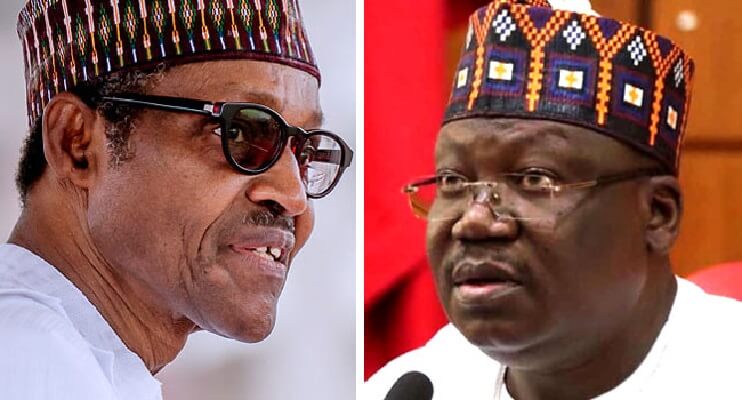
President Muhammadu Buhari has asked the Senate to confirm the appointment of the newly named service chiefs.
The presidency on Tuesday had named Lucky Irabor as the chief of defence staff; Ibrahim Attahiru as chief of army staff; Auwal Gambo as chief of naval staff, and Isyaka Amao as chief of air staff.
In a statement on Friday by Babajide Omoworare, Special Adviser to the President on National Assembly Matters, Buhari asked the Senate to confirm the appointment of the security nominees in a letter dated January 27.
“President Muhammadu Buhari has communicated the appointment of the service chiefs to the National Assembly and has sought for the confirmation of the said appointment by the Senate through his letter to the Senate President dated 27th January 2021.
“This was done in furtherance of Section 18 (1) of the Armed Forces Act Cap. A.20 Laws of the Federation of Nigeria,” Omoworare said in the statement.
“Contrary to fears expressed in some quarters that President Muhammadu Buhari has ‘bypassed’ the National Assembly in the process of appointment of the service chiefs and that he has no intention of seeking consideration and confirmation of their appointment, Mr President upon nomination for appointment sought confirmation of the Senate for the appointment of Major General Lucky Irabor, Major General Ibrahim Attahiru, Rear Admiral Awwal Gambo and Air Vice Marshal Isiaka Amao as Chief of Defence Staff, Chief of Army Staff, Chief of Naval Staff and Chief of Air Staff respectively, vide his aforementioned letter.
“It is on record that this same procedure was adopted when the immediate past service chiefs were appointed. Upon announcement of the appointment of the then service chiefs – Major General Abayomi Olonisakin (Chief of Defence Staff), Major General Tukur Buratai (Chief of Army Staff), Rear Admiral Ibok-Efe Ibas (Chief of Naval Staff) and Air Vice Marshal Sadique Abubakar (Chief of Air Staff), Mr President had written the 8th Senate on 14th July 2015 for confirmation. Whilst the correspondence was read on the floor of the Senate on 28th July 2015, consideration and confirmation of the appointments was carried out at the committee of the whole on 4th August 2015
“It will be recalled that the National Assembly will only resume plenary sessions on 9th February, 2021 when hopefully Mr President’s communication for consideration and confirmation of the nomination for appointment of the service chiefs would be undertaken.”
Before the Buhari administration, the appointment of service chiefs was not subject to confirmation by the National Assembly.
Omoworare said the President was acting in accordance with a 2013 court order mandating the executive to seek legislative confirmation in the appointment of service chiefs.
He said, “We are aware that in Keyamo Vs. President & Ors, the Federal High Court set aside the Armed Forces Modification Order 2008 (purportedly made under Section 315 [2) of the Constitution) on 1st July 2013 and ruled that the confirmation of the National Assembly must be sought for the appointment of the service chiefs. We are in compliance with the spirit and letters of both the statute and case law.”









News
Ex-Power Minister Denies Snubbing Tinubu, Says Exit Was Approved
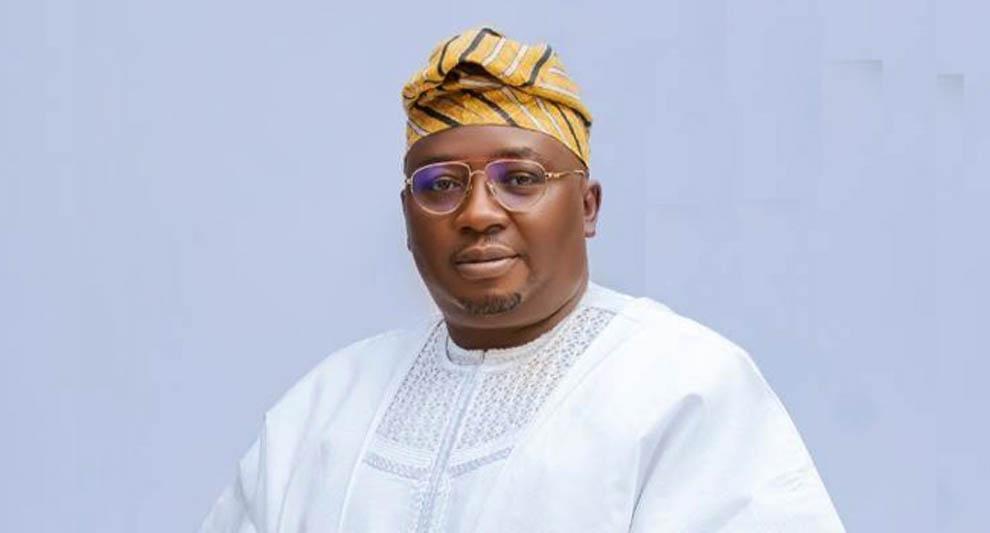
Ex-Power Minister Denies Snubbing Tinubu, Says Exit Was Approved
Former Minister of Power, Adebayo Adelabu, has clarified that he secured the approval of Bola Tinubu before stepping down from office, putting to rest speculation surrounding his resignation.
In a statement issued on Saturday through his Media Aide, Femi Awogboro, Adelabu dismissed claims that he failed to consult the presidency, describing such reports as misleading and unfounded.
The former minister recently resigned from his position, a move widely linked to his ambition to contest the Oyo State governorship election under the All Progressives Congress (APC).
According to the statement, Adelabu followed due process and obtained the full consent of President Tinubu before making his decision. “Adelabu actually obtained the full approval and blessing of President Tinubu before taking the decision to resign. Those spreading false speculations should desist, as such claims are baseless,” the statement read.
READ ALSO:
- Trump Reveals CCTV of Suspect After Shooting Scare in Washington
- Trump Evacuated Safely as Gunman Targets White House Correspondents’ Dinner
- Macron Calls for Strait of Hormuz Reopening as Energy Crisis Fears Mount
The clarification comes amid growing controversy over Adelabu resignation, with some reports suggesting a breach of protocol. However, Adelabu’s camp insists the narrative is being pushed by political opponents seeking to undermine his rising influence ahead of the next election cycle.
The statement further noted that critics were unsettled by the massive turnout that welcomed Adelabu back to Ibadan last Thursday, describing it as a sign of his growing grassroots support.
Political observers say Adelabu has intensified consultations across Oyo State as he positions himself for the 2027 governorship race, having previously contested the seat in 2019.
His resignation has fueled discussions around Oyo State governorship race 2027, with analysts viewing his exit from the Federal Executive Council as a strategic move to focus fully on local politics.
Adelabu’s departure also comes at a critical time for Nigeria’s power sector, which continues to grapple with challenges in electricity generation and distribution — making the Nigeria power sector leadership changes a key issue for stakeholders.
Ex-Power Minister Denies Snubbing Tinubu, Says Exit Was Approved
News
Xenophobic Attacks: FG Advises Nigerians in South Africa to Close Businesses
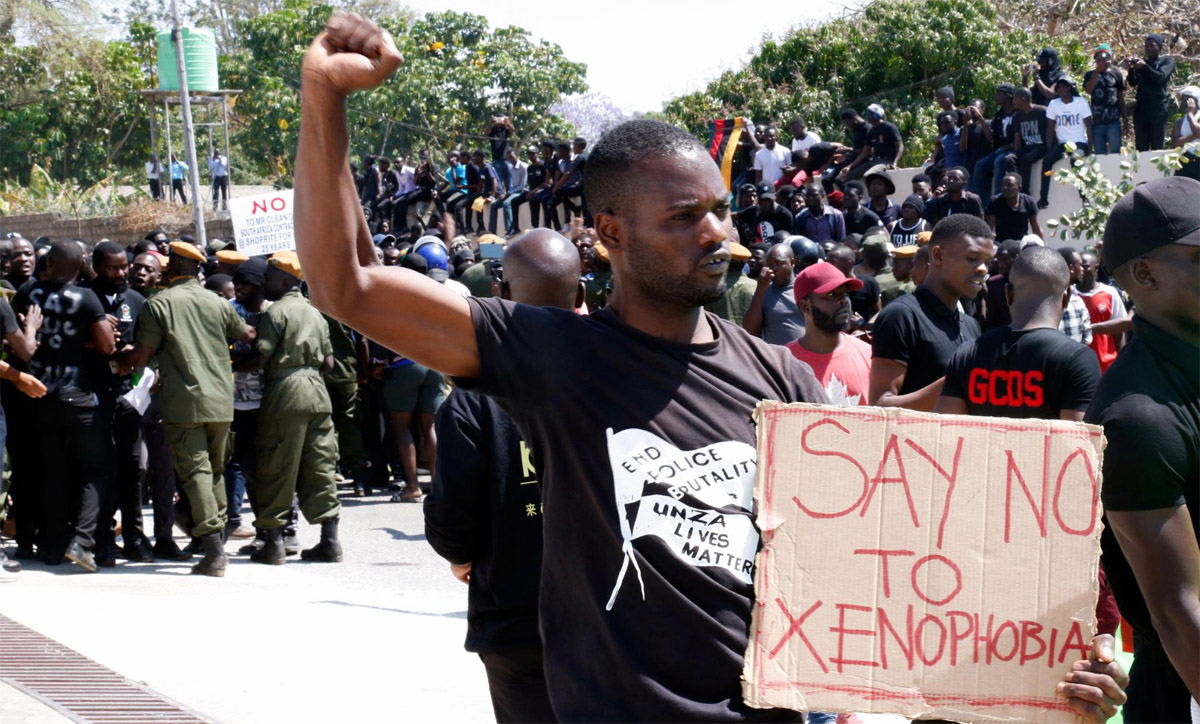
Xenophobic Attacks: FG Advises Nigerians in South Africa to Close Businesses
The Federal Government of Nigeria has advised Nigerian nationals operating businesses in South Africa to temporarily suspend operations following a fresh wave of xenophobic violence, protests, and targeted attacks on foreign-owned shops across several parts of the country.
The advisory was issued through the Nigerians in Diaspora Commission (NiDCOM) after reports confirmed rising tensions, looting, and destruction of properties belonging to foreign nationals in multiple South African cities.
NiDCOM said the directive followed an official security circular from the Consulate General of Nigeria in Johannesburg, which warned of escalating unrest in areas including East London, Cape Town, Durban, Gauteng Province, and parts of KwaZulu-Natal. According to the circular, recent protests in these regions have degenerated into violent confrontations, resulting in injuries and widespread vandalisation of foreign-owned businesses in South Africa. Intelligence reports also indicated that additional protests were planned between April 27 and 29, 2026, raising concerns over possible escalation of violence during the period.
Speaking on the development, NiDCOM spokesperson Abdur-Rahman Balogun said the advisory to shut down businesses is a precautionary step aimed at safeguarding Nigerians amid rising insecurity. He urged Nigerian nationals to remain law-abiding, avoid confrontation, and comply with local laws while the situation is being monitored. Balogun stressed that the directive is temporary and designed strictly to protect lives and property during the period of unrest.
READ ALSO:
- Obasanjo, Atiku, Kwankwaso Lead Opposition Unity Talks in Ibadan Summit
- US, AU Condemn Coordinated Terror Attacks on Military Bases Across Mali
- Adelabu Resigns as Power Minister Despite Tinubu’s Opposition
NiDCOM clarified that there is currently no evacuation plan for Nigerians living in South Africa, noting that such action would only be considered if the situation worsens significantly. The commission added that Nigerian diplomatic missions remain active and are working closely with South African authorities and police to ensure the safety of citizens. Officials also confirmed that diplomatic engagement is ongoing between Nigeria’s Ministry of Foreign Affairs and South African counterparts over the rising tensions.
The President-General of Nigerians in South Africa, Smart Nwobi, expressed concern over what he described as increasing hostility toward migrants, especially during protests linked to unemployment and economic hardship. He urged the Nigerian government to intensify diplomatic intervention and ensure stronger protection for citizens abroad. Community leaders have also advised Nigerians to avoid protest hotspots, remain indoors where necessary, and prioritise personal safety until tensions subside.
South Africa has experienced repeated incidents of xenophobic attacks, often triggered by socio-economic grievances such as unemployment and competition for informal trade. Foreign nationals, including Nigerians, have frequently been targeted in incidents involving shop looting, property destruction, harassment, and physical assaults.
Videos circulating on social media show confrontations between local residents and foreign nationals, with some individuals demanding that migrants leave South Africa. In several cases, people were reportedly questioned over their immigration status, while others were harassed or attacked during chaotic protest scenes. Authorities have yet to issue a comprehensive nationwide response, although increased police deployment has been reported in affected areas.
Nigeria’s Minister of State for Foreign Affairs, Ambassador Bianca Odumegwu-Ojukwu, is reportedly engaging South African authorities to address the situation and ensure the protection of Nigerian citizens. The Nigerian Consulate in Johannesburg continues to coordinate with local security agencies to monitor developments and provide updates to affected nationals.
Xenophobic Attacks: FG Advises Nigerians in South Africa to Close Businesses
News
‘Nigeria’s Breakup Likely Inevitable,’ Ex-US Mayor Tells Congress
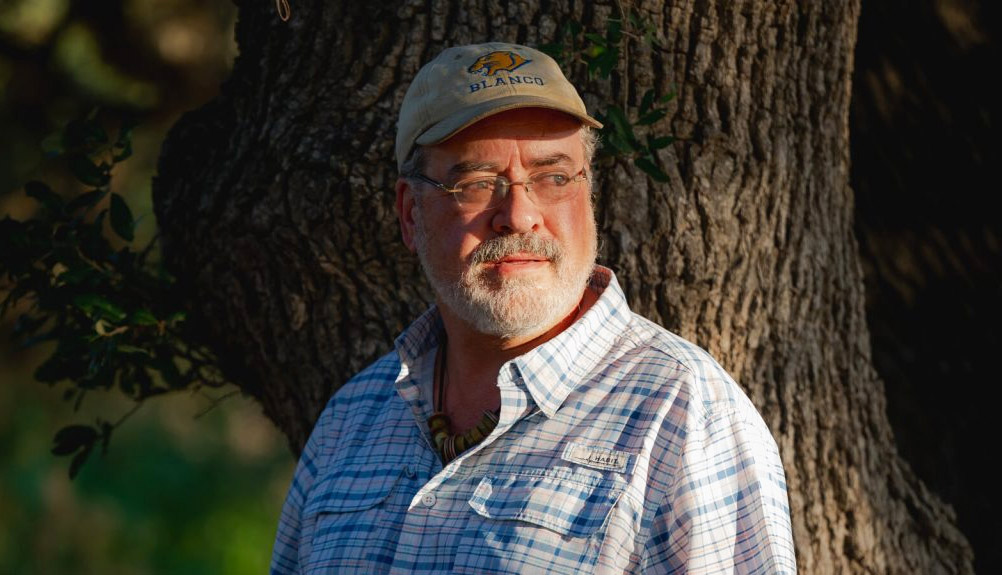
‘Nigeria’s Breakup Likely Inevitable,’ Ex-US Mayor Tells Congress
A former United States mayor, Mike Arnold, has told members of the US Congress that the breakup of Nigeria is “likely inevitable and just,” citing what he described as deep-rooted structural, historical, and humanitarian crises confronting the country.
Arnold made the remarks during a presentation titled “Nigeria at the Crossroads: The Case for Action,” where he argued that the country’s challenges are rooted in its colonial formation and long-standing governance issues. He called for a referendum that would allow Nigerians to determine their preferred constitutional future, including the possibility of restructuring or separation.
According to him, Nigeria’s federal system—shaped during British colonial rule—has continued to generate tensions around power distribution, ethnicity, and governance. He maintained that a referendum in Nigeria could offer a peaceful and democratic pathway to resolving these challenges.
READ ALSO:
- Army Dismantles IPOB Camp, Recovers Remains of Slain Soldier Couple in Imo
- Nigerian Union Demands Autopsy After Member Dies in South African Police Custody
- A coup trial without precedent, By Farooq Kperogi
Arnold, who has previously expressed support for the Biafra movement, revisited the history of the Nigerian Civil War, describing the former Eastern Region as one of the fastest-growing economies in Africa before the conflict under the leadership of Michael Okpara.
He also raised allegations about the role of foreign powers during the war, particularly Britain’s support for the Federal Military Government, and the humanitarian consequences of the conflict, including widespread famine and civilian casualties.
On contemporary issues, Arnold expressed concern over insecurity in Nigeria, including religious and communal violence, claiming that conditions have worsened despite international attention. He referenced Nigeria’s designation as a Country of Particular Concern (CPC) under the International Religious Freedom Act, noting ongoing attacks in parts of the country.
He further criticised the handling of internally displaced persons, raising concerns about gaps in recognition and humanitarian support. According to him, such issues point to broader governance and human rights challenges.
However, analysts stress that Arnold’s views do not reflect official US government policy. Nigeria remains constitutionally a united country, and successive administrations have consistently rejected calls for secession, instead promoting national unity and reforms.
The remarks are expected to spark renewed debate around Nigeria restructuring, Biafra agitation, and the country’s political future, both domestically and internationally.
‘Nigeria’s Breakup Likely Inevitable,’ Ex-US Mayor Tells Congress

-

 metro20 hours ago
Gunmen Invade OOU Hostels, Injure Students in Midnight Robbery Attack
-
 Politics21 hours ago
Obasanjo, Atiku, Kwankwaso Lead Opposition Unity Talks in Ibadan Summit
-

 metro2 days ago
Panic in Oyo as Stray Elephant Invades Community, One Dead
-

 metro1 day ago
Court Stops Police, FRSC From Imposing Fines On Motorists Without Court Order
-
 metro3 days ago
Kidnappers Invade Lagos Home, Abduct Woman, Demand ₦60m Ransom
-

 Sports2 days ago
Ex-Super Eagles Striker Dies After Collapsing During Training
-

 Entertainment2 days ago
VIDEO: Sirbalo’s Car Damaged by Agberos in Lagos After Refusing ₦200,000
-
 International1 day ago
US Resumes Executions as Trump Reintroduces Firing Squad Option
You must be logged in to post a comment Login