

News
Bandits abduct 26 in Kaduna, 246 Borno terrorists surrender

Gunmen have abducted about 26 people along the Kaduna-Kachia road and Kugo village, in Chikun Local Government Area of Kaduna State.
While 21 of the victims were reportedly kidnapped along the Kaduna-Kachia road, five women were abducted at Kugo village, near Godani Railway Station on their way to the farm.
However, in Borno State, about 246 suspected Boko Haram members, reportedly, laid down their arms and surrendered as part of the current efforts at ceasefire.
The counsellor representing Zonkwa ward in Zango Kataf Local Government Area of the state, Luka Bako, was among those abducted along the Kaduna-Kachia road, but he miraculously escaped.
Bako told THISDAY that he was travelling from Zonkwa to Kaduna in a Sharon commercial bus when the bandits struck.
He said the incident occurred on Friday around 5pm after Doka village, Kajuru Local Government Area.
He said, “We were travelling in a Sharon commercial bus from Zonkwa to Kaduna. We were eight in the bus. As we approached the mango plantation after Doka, we saw two people in military camouflage carrying AK47 riffles standing on the road.
“Initially, we thought they were soldiers, but when we got closer, we realised that their dressing was not complete. But it was too late for us to turn back.
“They stopped us and asked us where we were coming from and where we were going. They asked the driver to open the booth of the vehicle. As the driver went to open the booth, they ordered the eight of us in the bus to come down.
“Four other vehicles carrying passengers were also stopped. They ordered everybody into the bush. As we entered the bush, other bandits came out from their hideouts to guide us into the bush. A driver that carried passengers from Jos and I miraculously escaped.”
Bako said based on his calculation, 21 people might have been abducted.
“I am not certain,” he stated. “They could be more or less. But based on my calculation, 21 people were abducted.”
He said he had since reported the incident to the Kajuru Divisional Police Station.
At Kugo village, five women were also abducted on their way to the farm on Friday. A resident of the village said that the women were going to harvest yam.
When contacted, spokesman for the Kaduna State police command, Mohammed Jalige, said he was not aware of the incident along the Kaduna-Kachia road, but promised to do his findings and get back.
At the time of filing this report, he was yet to respond.
Meanwhile, security agencies have captured three suspected bandits and rescued two kidnap victims. This was disclosed in a statement by the Commissioner for Internal Security and Home Affairs, Samuel Aruwan.
He said, “Troops under the auspices of Operation Thunder Strike rescued two kidnapped women, close to Gadanin Gwari, Gwagwada District of Chikun Local Government Area.”
Aruwan said operational feedback to the state government indicated “the women were suddenly abducted as they made their way to their farm.”
He said, “The troops on patrol tracked down the criminals and engaged them in a firefight, forcing them to abandon their captives and run for their lives. After securing the women, the troops pursued the bandits, destroying many bandit camps along the way.”
The statement said the bandits were eventually trapped in Gajina settlement in Chikun Local Government Area, adding that three suspected “kidnappers were apprehended and are now in custody, while the rescued women have returned to their homes.”
The statement also explained that police personnel rescued two persons, who were abducted at Kurmin Idon axis along Kaduna-Kachia Road in Kajuru Local Government Area.
In Borno, one of the leaders of the Civilian JTF, a security support group, Baba Shehu Abdul-Gani, who spoke to THISDAY, confirmed that the 246 militants surrendered at different towns in the state.
He said they surrendered to both the Army and members of his group.
“Two days ago, 100 members of Boko Haram surrendered in Bama, another 100 in Gwoza and 46 in Ngala” Abdul-Gani said, noting that all the 246 have been handed to the Army.
On the Chibok girls, who were said to have escaped from captivity after they were kidnapped, Abdul-Gani said he did not have any information to that effect.
General Officer Commanding, 7 Division of the Nigerian Army, Maiduguri, Brig. Gen. Abdul Khalifa Ibrahim, said some insurgents and their wives had equally surrendered to them.
He said, “As GOC of 7 Division, I have no information of any escaped Chibok girls and I should know if any. But we are still pressing on, they will come out. However, some Boko Haram criminals and their wives are surrendering.”
When contacted about the case of the reported fresh escape at Chibok, the spokesman for Borno State Governor (Prof. Babagana Zulum, said there was “no official information yet from our end.”
He noted, “The military normally handles Chibok girls issue. They present them to the presidency.”










News
Shell Exits Nigeria’s Gas Distribution Business, Sells Stake to Vaaris Energy
Shell Exits Nigeria’s Gas Distribution Business, Sells Stake to Vaaris Energy
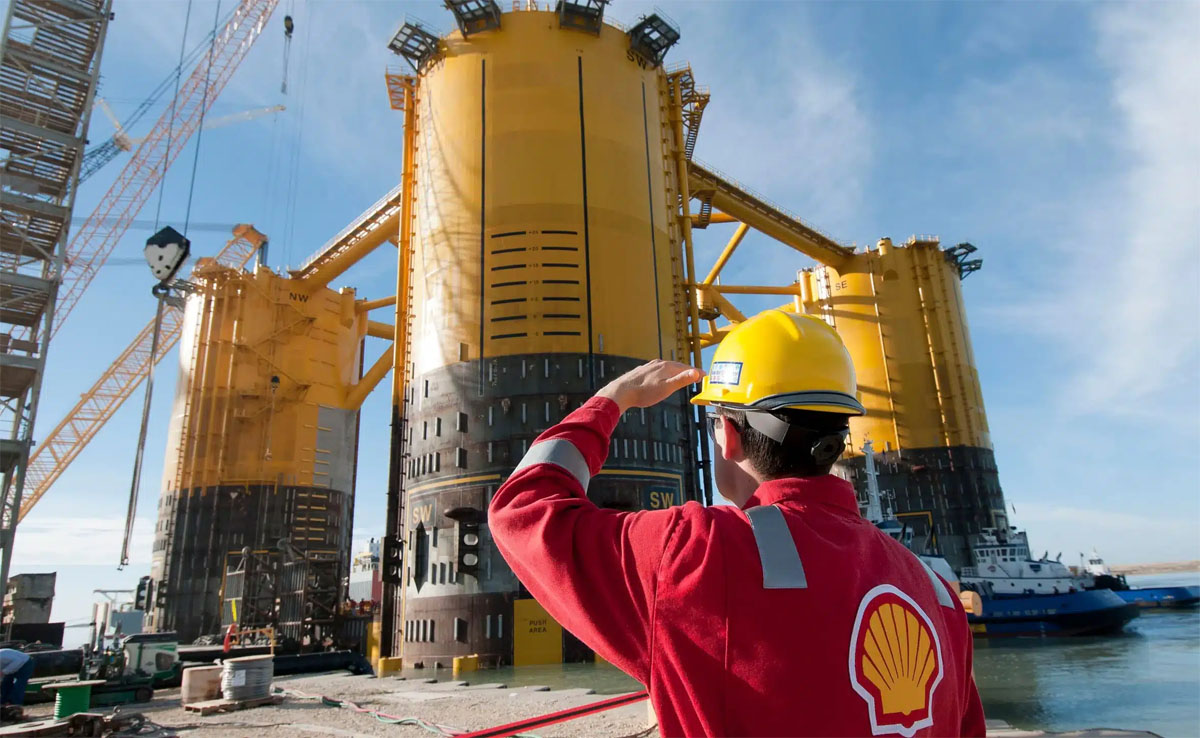
Shell Petroleum B.V. has agreed to sell its entire interest in the Shell Nigeria Gas Group to indigenous energy company Vaaris Energy Limited, marking another major shift in the international oil giant’s business portfolio in Nigeria.
The agreement, announced on Tuesday, October 13, 2026, covers Shell’s domestic gas distribution business in the country. The financial terms of the transaction were not disclosed in the announcement.
The proposed sale will transfer Shell’s interest in the gas distribution group to Vaaris Energy, a Nigerian-owned company seeking to expand its presence in the country’s oil and gas industry.
The transaction represents another adjustment to Shell’s Nigerian operations as the company focuses on selected oil, gas and integrated energy projects.
Shell’s latest move follows its earlier exit from onshore oil production through the sale of its interest in the Shell Petroleum Development Company of Nigeria Limited (SPDC) to the Renaissance consortium. That transaction was completed in March 2025 after receiving the necessary regulatory approvals.
However, the two transactions involve different parts of Shell’s Nigerian business. The earlier deal covered its onshore oil-producing subsidiary, while the latest agreement concerns its domestic gas distribution operations.
READ ALSO:
- Delta Tragedy: Man Allegedly Kills Wife, Dies by Suicide After Land Dispute
- VIDEO: Outrage as Indian National Assaults Nigerian Truck Drivers in Lagos
- Forgery Probe: Police Arrest Ex-Imo Governor Rochas Okorocha in Abuja
Following the SPDC sale, Shell retained other interests in Nigeria, including its deepwater oil and gas operations and its participation in Nigeria LNG Limited. The company also continued operating its domestic gas distribution business, which is now expected to come under Vaaris Energy’s ownership once the latest transaction is completed.
Shell said the proposed divestment aligns with its strategy of simplifying its global portfolio and concentrating investment on projects expected to deliver stronger returns.
Elohor Aiboni, Shell’s country chair in Nigeria, said the company would continue to focus on its strategic deepwater and integrated gas positions in the country.
For Vaaris Energy, the proposed acquisition offers an opportunity to strengthen its position in Nigeria’s natural gas market and expand its participation in the domestic energy value chain.
The company is a privately held Nigerian energy business with interests across the oil and gas sector. However, details of its plans for the acquired business, including any operational changes or investment commitments, were not disclosed in the announcement.
The financial value of the transaction and the precise timeline for completion were also not made public in the information available at the time of reporting.
The deal comes as Nigeria seeks to increase domestic gas utilisation, improve energy supply and attract investment into its gas infrastructure. Gas distribution plays an important role in connecting producers with industrial users and other customers that rely on natural gas for their operations.
The implications of the acquisition for Nigeria’s domestic gas market will depend on the completion of the transaction and how Vaaris Energy manages and develops the business under its ownership.
Shell’s agreement with Vaaris therefore marks another change in the ownership of a significant energy asset in Nigeria, while allowing the international company to maintain its focus on other strategic oil and gas interests in the country.
Shell Exits Nigeria’s Gas Distribution Business, Sells Stake to Vaaris Energy
News
Delta Tragedy: Man Allegedly Kills Wife, Dies by Suicide After Land Dispute

A domestic dispute allegedly involving the sale of landed property and accusations of infidelity has left a couple dead in Agbarho community, Ughelli North Local Government Area of Delta State, leaving their four children without either parent.
The incident reportedly occurred on Owiri Street in Agbarho, where the man allegedly attacked and killed his wife before later dying by suicide after ingesting a poisonous substance.
According to a report published by Vanguard on Tuesday, October 13, 2026, the tragedy followed a disagreement between the couple over landed property and alleged infidelity. However, the full circumstances surrounding the confrontation have not been independently established.
A source quoted in the report said the man was reportedly angered by allegations concerning his wife’s fidelity and the sale of his landed property. The precise sequence of events leading to the couple’s deaths remains unclear.
A neighbour reportedly said the couple had experienced repeated physical confrontations before the incident, suggesting that tensions within the household may have persisted for some time. However, details of the earlier clashes and whether the authorities had previously been alerted have not been confirmed.
READ ALSO:
- VIDEO: Outrage as Indian National Assaults Nigerian Truck Drivers in Lagos
- Forgery Probe: Police Arrest Ex-Imo Governor Rochas Okorocha in Abuja
- INEC Demands Formal Complaints as Missing Candidates Rock 2027 Election List
The deceased man’s elder brother also reportedly expressed shock over the deaths, saying he was not fully aware of what had triggered the fatal confrontation. He confirmed that the couple had four children, with the eldest said to be about 21 years old, but declined to disclose their identities.
A senior police officer at the Agbarho Division reportedly confirmed the incident, saying officers evacuated the bodies to a morgue as investigations began. The officer also indicated that no formal complaint had been lodged by the families as of the time of the report.
Attempts to obtain further comments from the Delta State Police Command’s spokesperson, SP Bright Edafe, were reportedly unsuccessful before the report was published.
The deaths have left the couple’s four children facing the loss of both parents, adding to the devastating consequences of the incident. The circumstances surrounding the reported property dispute, the allegations of infidelity and the events immediately preceding the deaths remain subject to investigation.
The tragedy highlights the potentially devastating consequences of unresolved domestic conflict. Disagreements involving marital relationships, property ownership and land sales should be addressed through peaceful dialogue, appropriate support and lawful channels. Violence is never an acceptable way to resolve such disputes.
Delta Tragedy: Man Allegedly Kills Wife, Dies by Suicide After Land Dispute
News
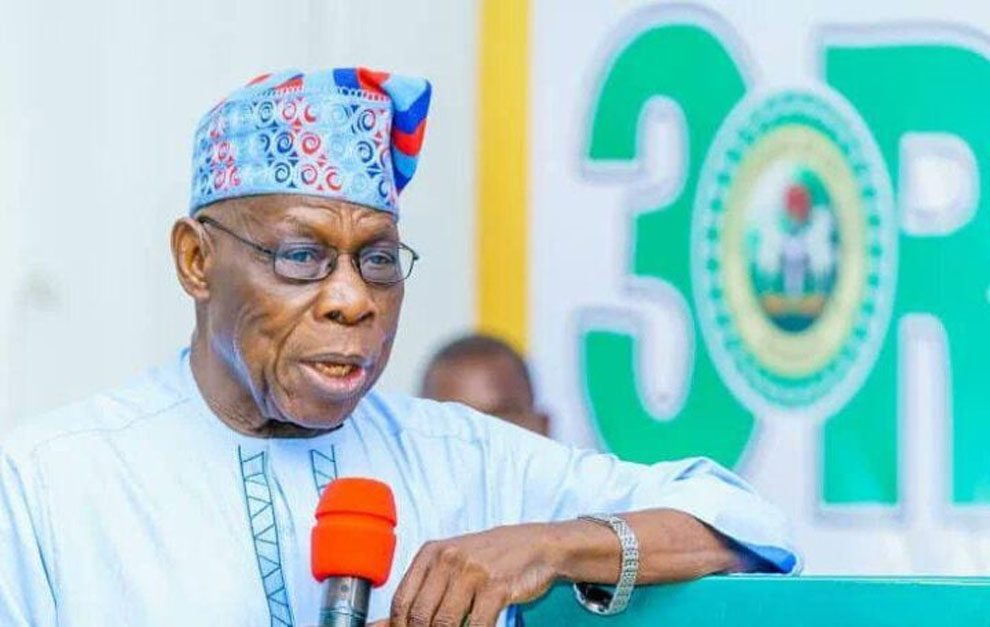
Obasanjo Backs Higher Oil Derivation, Says 13% Is Only the Beginning
Obasanjo Backs Higher Oil Derivation, Says 13% Is Only the Beginning
Former President Olusegun Obasanjo has backed calls for an increase in the 13 per cent oil derivation fund allocated to oil-producing states, saying the existing arrangement should be regarded as a starting point rather than a final settlement.
Obasanjo made the position known on Monday during the inauguration of the Crude Distillation Unit (CDU) of the $1 billion Azikel Refinery at Obunagha in Yenagoa Local Government Area of Bayelsa State.
Addressing Bayelsa State Governor Douye Diri, the former president acknowledged that oil-producing states and communities had yet to receive what he considered a fair share of the benefits from the exploitation of their natural resources.
“You are right that the states and oil-producing communities have not got a fair deal so far. Thirteen per cent is the beginning. You can continue to talk,” Obasanjo said.
His remarks reinforced renewed demands for a review of Nigeria’s revenue-sharing arrangement, particularly from the Niger Delta, where crude oil production has remained central to the national economy.
Under the existing constitutional framework, oil-producing states receive at least 13 per cent of revenue accruing to the Federation Account directly from natural resources, in line with the principle of derivation.
However, the allocation has remained a source of debate, with stakeholders in the oil-producing region arguing that the revenue does not adequately address the environmental damage, infrastructure challenges and economic difficulties associated with petroleum exploration.
Diri also criticised the existing arrangement, insisting that communities where crude oil is extracted should have a greater say in how the resources are managed and how the resulting wealth is distributed.
READ ALSO:
- How Bandits Demand ₦300m Ransom for Abducted Kaduna Couple, Baby in Viral Video
- 2027 Elections: Atiku Demands Names of INEC Ballot Printers, Questions Secret Contracts
- ₦8.7bn Erosion-Control Budget Gap Raises Questions as Anambra Gullies Expand
The governor argued that the region had endured years of agitation over what residents perceive as an imbalance between the resources extracted from their communities and the benefits they receive.
He also faulted the Land Use Act, arguing that the distinction between state control of surface resources and Federal Government control of resources beneath the ground places oil-producing communities at a disadvantage.
Diri maintained that the Niger Delta was not demanding exclusive ownership of the proceeds from petroleum production but wanted to become a more active participant in decisions affecting the industry.
“We do not want to take all to ourselves. We just want to be co-players in determining how it is done. Thirteen per cent is not enough for the states,” he said.
The governor urged young people in Bayelsa to acquire relevant technical and professional skills to benefit from industrial investments, including the refinery project.
He warned that the presence of major oil and gas facilities would have limited benefits for local communities if residents lacked the expertise needed to secure employment and participate in their operations.
The refinery project, owned by Azikel Petroleum under the Azikel Group, is expected by its promoters to produce about 2.5 million litres of petrol and two million litres of diesel daily, alongside other petroleum products, when completed.
The installation of the crude distillation unit marks a significant stage in the development of the facility, whose foundation was laid by Obasanjo about eight years ago.
The former president commended Azikel Group President, Azibapu Eruani, for sustaining the project and urged him to complete the refinery within the next 12 months.
Obasanjo also acknowledged the contributions of the African Finance Corporation and the African Export-Import Bank (Afreximbank), calling for continued support to bring the investment to completion.
He praised Diri for supporting the project and commended the Bayelsa government for what he described as the productive use of the state’s available revenue.
Eruani said the refinery was conceived to position Bayelsa and the wider Niger Delta as active participants in the petroleum industry rather than merely suppliers of crude oil.
He expressed confidence that the project would support industrialisation, create economic opportunities and strengthen local participation in the oil and gas value chain.
The refinery initiative comes amid continuing debates over resource control, revenue allocation and development in the Niger Delta, with calls for oil-producing communities to receive greater economic benefits from the natural resources extracted from their territories.
Obasanjo Backs Higher Oil Derivation, Says 13% Is Only the Beginning
-

 metro2 days ago
Tension in Kano as Phone Traders Confront Chinese Sellers Over Cheaper Phones
-

 Entertainment2 days ago
‘My Wife Fed Actresses I Was Dating Despite Knowing About Our Affairs’ – Yinka Quadri
-
 metro1 day ago
₦8.7bn Erosion-Control Budget Gap Raises Questions as Anambra Gullies Expand
-
 Politics1 day ago
Obi Positioning for SGF Role Under Atiku’s ADC Ticket – Sowore
-

 International2 days ago
US Names 24 More Nigerians in Fresh Fraud, Money Laundering Crackdown
-
 Africa2 days ago
Djibouti Boat Disaster: 139 Migrants Dead, Dozens Missing
-

 Politics1 day ago
Okonkwo Alleges Return of Subsidy, Accuses NNPC of Plotting Trillions in ‘Lost Profit’
-

 metro1 day ago
Child Soldiers, Baby Factories: US Raises Alarm Over Official Complicity in Nigeria
You must be logged in to post a comment Login