

News
Summary of Atiku’s Chicago fishing expedition – Bayo Onanuga
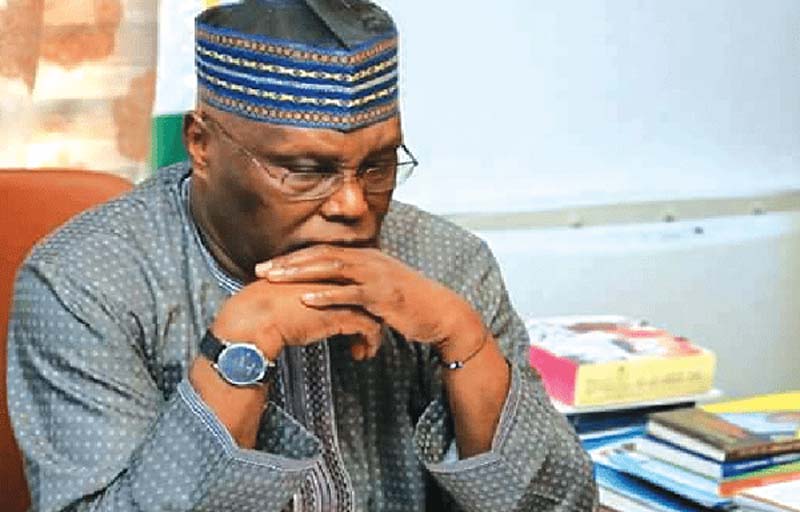
Summary of Atiku’s Chicago fishing expedition – Bayo Onanuga
With the circulation of misleading reports about Atiku’s case in Chicago, I asked a lawyer, Oluwole Afolabi for an executive summary. He did a good job, offering non-legalese, succinct insight.
How it started: Atiku’s lawyers brought an application under U.S.C. 1782 for the court’s assistance to obtain evidence from CSU by way of Subpoena regarding President Bola Tinubu’s academic records.
Tinubu’s lawyers brought an application on his behalf to Intervene in the matter. The application was granted.
Tinubu’s lawyers opposed the issuing of subpoena to obtain his academic records primarily on 3 grounds:
1. The documents are protected by FERPA (Federal Educational Rights Protection Act).
2. Atiku did not plead any facts relating to whether Asiwaju attended or graduated from CSU in his Petition at the Election Tribunal and as such any information that he obtained will not be admissible.
3. Atiku’s petition at the Election Tribunal had gone beyond the ‘evidentiary stage’ in that parties had adopted their processes and all that remained for the Tribunal to do was to deliver judgment. The Tribunal could no longer admit evidence.
READ ALSO:
- Thought subsidy was bad. Why is Tinubu bringing it back? – Farooq Kperogi
-
BBN-All-Stars: CeeC wins brand new Innoson car
-
FG, states, LGs get N1.1tn as August allocation
AFTERMATH OF JUDGMENT OF THE COURT OF APPEAL
While Atiku’s application was pending, the Court of Appeal delivered judgment. The judgment was against Atiku and in favour of Asiwaju.
MAGISTRATE JUDGE GILBERT
The Magistrate Judge to whom the case was assigned scheduled hearing of the case for September 11th, 2023. At the hearing, Atiku’s lawyers contended that they needed the documents for Atiku’s use at the Supreme Court of Nigeria.
Tinubu’s lawyers countered that not only are the documents protected by FERPA, they can not use them at the Supreme Court because they were not pleaded in the Petition as required by the Electoral Act.
CSU informed the Court that Tinubu graduated from CSU and that the school does not have a copy of the Diploma that Tinubu allegedly submitted to INEC and so was not in a position to speak on the veracity or otherwise of the document.
CSU counsel further told the court that the school, like most schools in America, does not keep copies of Diplomas that it issued to its students.
DECISION OF THE MAGISTRATE JUDGE
Magistrate Judge Gilbert ordered CSU to respond to a limited portion of Atiku’s subpoena within 48 hours.
TINUBU’S MOTION FOR STAY
Tinubu’s lawyers filed a motion for stay of the execution of Magistrate Judge Gilbert’s order on the ground that the Magistrate Judge did not have the power to make the order it made.
He could only have made a recommendation to the Supervising Judge, who may then affirm or modify or reject it outrightly while proceeding to hear the application afresh.
Tinubu’s prayer was granted by Judge Nancy Maldonado. The Order of Magistrate Judge Gilbert was stayed and the Judge decided to hear the application afresh. Judge Maldonado then directed Tinubu’s lawyers to file papers on their client’s behalf not later than 9am Monday, September 25th on why a subpoena should not be issued against CSU to release some of Asiwaju’s documents.
Atiku’s lawyers were directed to respond to Asiwaju’s court filings not later than 11:59pm on Wednesday and Asiwaju’s lawyers should file a Reply to it, if necessary, not later than 11:59pm on Thursday, September 28th.
Now that all the processes have been filed, Judge Nancy Maldonado will give a date for the hearing of Tinubu’s application. Ruling will be delivered thereafter.
Summary of Atiku’s Chicago fishing expedition – Bayo Onanuga











News
Keyamo: ₦70,000 Minimum Wage No Longer Enough as Cost of Living Soars
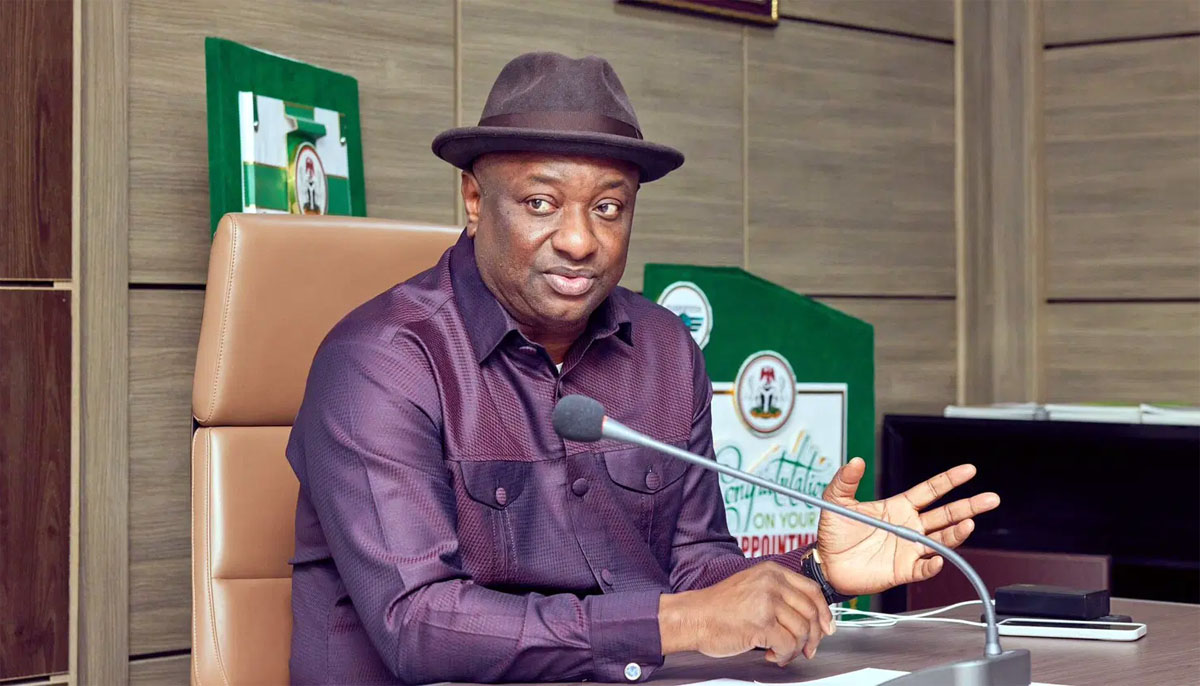
Keyamo: ₦70,000 Minimum Wage No Longer Enough as Cost of Living Soars
By Newstrends.ng
Minister of Aviation and Aerospace Development, Festus Keyamo, has acknowledged that Nigeria’s ₦70,000 national minimum wage is no longer sufficient for workers to cope with the rising cost of living.
Keyamo made the statement at the 2026 National Pre-Retirement Summit, organised by XEM Consultants Limited in Abuja, where discussions focused on workers’ welfare, remuneration and the economic challenges confronting Nigerians.
The minister said economic pressures had substantially weakened workers’ purchasing power, making it necessary to consider an upward review of wages.
He urged the Federal Government and organised labour to find common ground in their ongoing discussions over workers’ pay, saying the government should meet labour “midway” rather than allow disagreements over the size of a proposed increase to stall negotiations.
Keyamo, who previously served as Minister of State for Labour and Employment, recalled the negotiations that led to the increase in Nigeria’s minimum wage from ₦30,000 to ₦70,000 in 2024.
According to reports of his remarks, he argued that the present wage was no longer sufficient to absorb the economic pressures facing workers.
The minister’s comments came amid renewed pressure from organised labour for improved wages and measures to reduce the impact of rising living costs.
Reports indicate that labour representatives have cited figures as high as ₦500,000 in current discussions on a new minimum wage. The figure has been reported as a labour demand or opening position rather than an agreed new wage.
The debate is also taking place ahead of the expected review of the current wage framework. Reports from the summit said the current minimum-wage cycle, following reforms reducing the review period from five years to three, is due for review around 2027.
Keyamo also raised concerns about government spending priorities, particularly situations in which workers allegedly struggle to receive basic allowances while substantial resources are approved for official international trips.
He stressed the importance of workers to national productivity, arguing that the economy and government cannot function effectively without them.
Also speaking at the summit, Nigeria Labour Congress President Joe Ajaero reportedly argued that the real value of workers’ earnings should be measured by their purchasing power rather than the nominal amount printed on their pay slips.
Ajaero called for salaries and pensions to be linked to inflation or a cost-of-living index, arguing that such a mechanism would allow workers’ incomes to respond more directly to changes in the prices of essential goods and services.
The labour leader also called for government intervention to cushion workers against the impact of higher food and transportation costs.
The latest statements from Keyamo and labour leaders have renewed attention to the gap between Nigeria’s ₦70,000 statutory minimum wage and the cost of meeting basic household needs, as preparations for another wage review gather momentum.
For many Nigerian workers, the emerging wage debate is increasingly centred not simply on the amount stated on their monthly pay slip, but on what that income can actually buy amid rising prices.
Keyamo: ₦70,000 Minimum Wage No Longer Enough as Cost of Living Soars
Entertainment
Jetour Takes Adventure Beyond the Road, Brings Solar-powered Borehole to Ibeju-Lekki community

Jetour Takes Adventure Beyond the Road, Brings Solar-powered Borehole to Ibeju-Lekki community
Jetour Nigeria has taken its SUV adventure beyond the asphalt, combining a high-octane convoy through some of Lagos toughest coastal trails with a humanitarian intervention that delivered clean, reliable water to the people of Iwerekun Orile, Ibeju Lekki.
The automaker’s 2026 Africa Expedition last Saturday turned into more than a showcase of automotive power and off-road capability as the convoy of eight Jetour models arrived at the Roman Catholic Mission Primary School, Iwerekun Orile, to commission a new solar-powered borehole for the community.

The convoy, comprising the Jetour Dashing, X50, X70 Plus, X90 Plus, T2, T2 PHEV, X70 PHEV and flagship G700, departed Falomo Square, Ikoyi, after a road safety briefing by the Federal Road Safety Corps.
Escorted by personnel of the Nigeria Police Force and the Lagos State Traffic Management Authority, the convoy moved through Victoria Island and beyond the city’s urban landscape before tackling difficult stretches of the Coastal Highway.
The demanding terrain, characterised by swampy sections, rocks and uneven trails, provided an opportunity for the vehicles to demonstrate their off-road capability and endurance.
But beyond the adventure and display of automotive technology, the expedition took on a more significant purpose when the convoy arrived at the Roman Catholic Mission Primary School, Iwerekun Orile.
There, Jetour Nigeria commissioned a new solar-powered borehole, providing the school and surrounding community with access to clean and reliable water.

The intervention was greeted with excitement as schoolchildren, traditional leaders, farmers and market women turned out to welcome the visitors with cultural performances.
Jetour also distributed food items to households in the community, while pupils received books and refreshments.
A representative of Jetour Nigeria, Kemi Adeola, said the initiative reflected the company’s belief that its activities should extend beyond automobiles to making a positive difference in the communities it reaches.
“This is where adventure meets purpose,” Adeola said. “Our mission doesn’t stop at building capable vehicles; it lives in our pledge to drive tangible progress and touch the hearts of the communities we reach.”
The community’s traditional leader, High Chief Michael Oluwa, described the water project as an unprecedented development in the history of Iwerekun Orile and pledged that residents would protect and maintain the facility.
The head teacher of the school, Mrs Ariyike Bakre, also expressed gratitude to Jetour, describing the intervention as a lifetime gift to the school and community.
“This is my first time seeing a solar-powered borehole,” Bakre said, adding that the facility would make a significant difference to the children and residents.
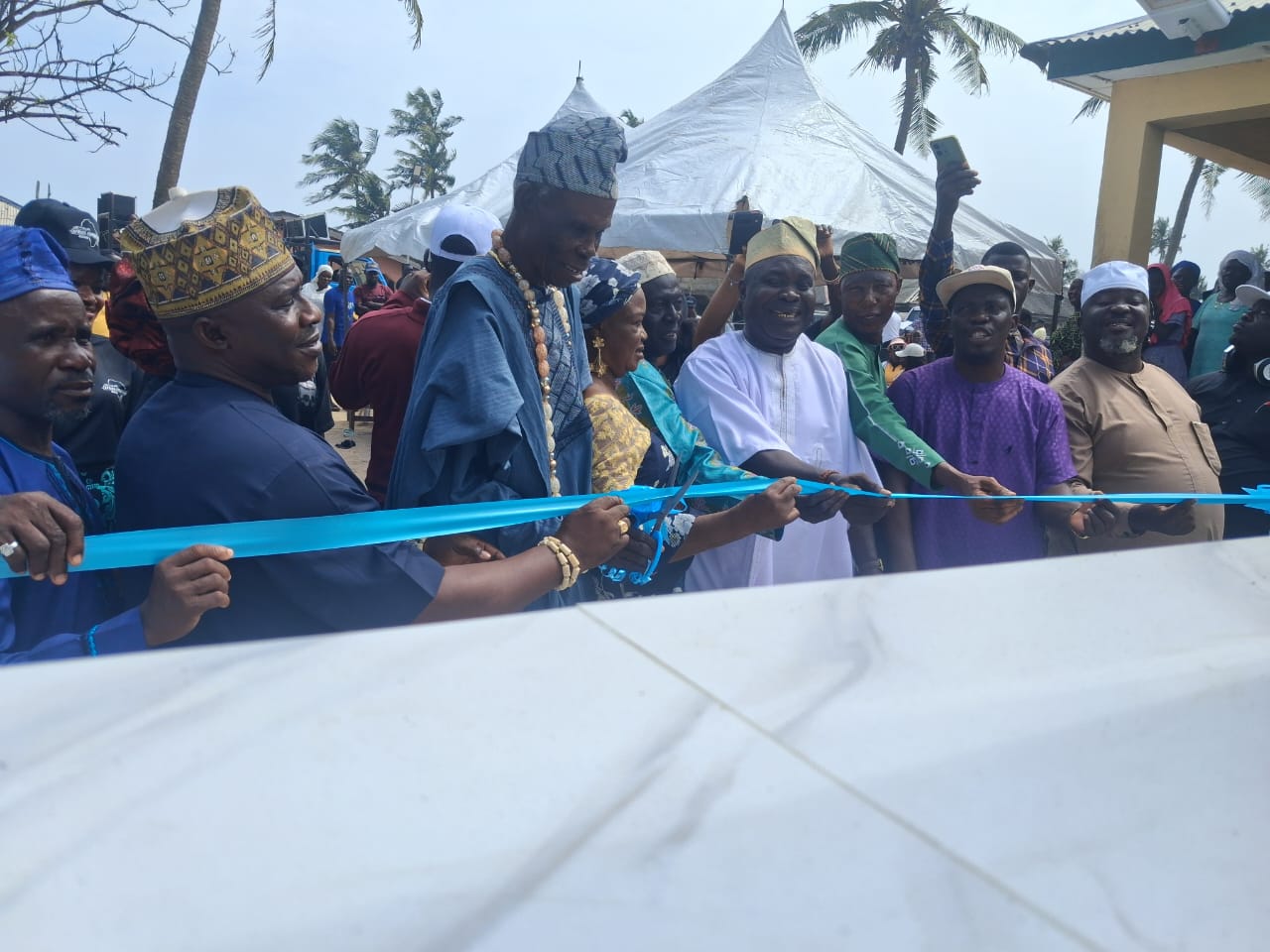
She thanked Jetour for making it possible for the community to witness the commissioning of the project.
The expedition later ended at a beach lounge, where the drivers, organisers and participants relaxed over food, music and entertainment.
For Jetour Nigeria, however, the significance of the expedition extended beyond conquering difficult terrain. It demonstrated how an automotive adventure could be linked to community development, leaving behind not only memories of a demanding road trip but also a lasting source of clean water for Iwerekun Orile.

News
Anambra Releases ₦473m Salary Arrears Document as Obi’s Debt Claim Sparks Fresh Dispute
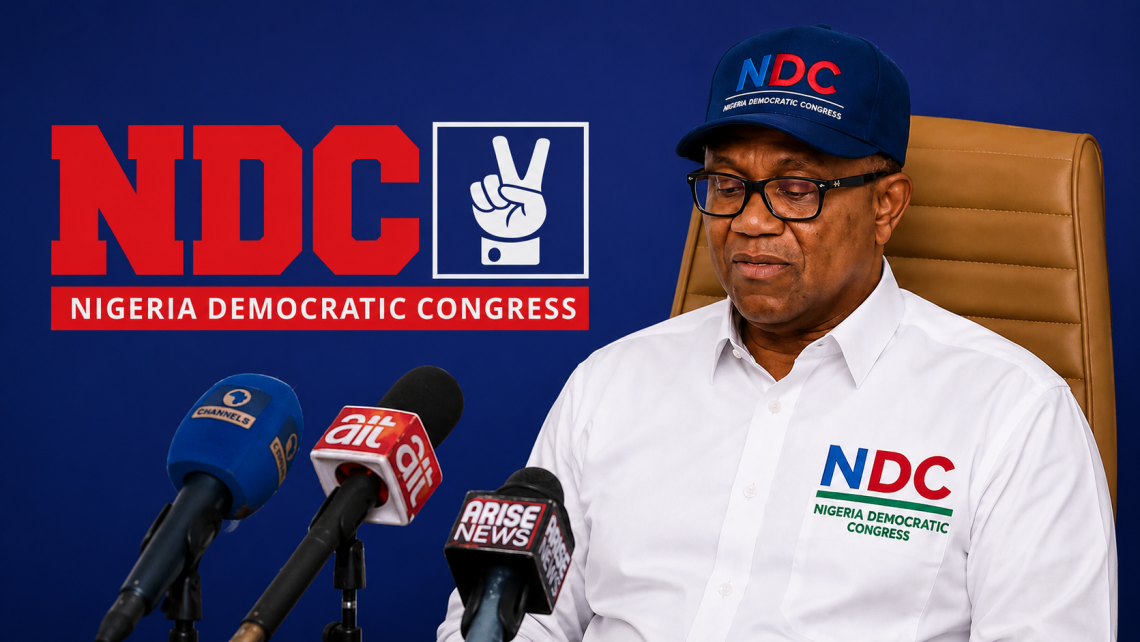
Anambra Releases ₦473m Salary Arrears Document as Obi’s Debt Claim Sparks Fresh Dispute
The Anambra State Government has released a 2024 payment document relating to ₦473 million in salary arrears owed to former workers and pensioners of two defunct state agencies, intensifying its dispute with former governor Peter Obi over the financial obligations he allegedly left behind.
The latest document concerns the defunct Anambra State Water Corporation (ANSWC) and the Anambra State Environmental Protection Agency (ANSEPA). It was released by the state government as part of its response to Obi’s repeated claim that he left office in March 2014 without outstanding salary, pension or gratuity obligations.
According to the document, the Anambra Government approved ₦473 million as the first tranche of payments to affected staff, pensioners and next of kin. The payment followed an out-of-court settlement reached between the state government and the Amalgamated Union of Public Corporations, Civil Service, Technical and Recreational Services Employees (AUPCTRE) on February 6, 2024.
The settlement provided for further payments totalling ₦1.09 billion, with ₦363.381 million scheduled for each of 2025, 2026 and 2027.
The development has become significant in the ongoing Peter Obi-Anambra debt controversy, after Obi challenged the state government to prove that he left behind unpaid obligations when he handed over power to Willie Obiano in 2014.
Obi has maintained that his administration cleared historical arrears and left the state without outstanding salaries, pensions, gratuities or verified payments due to contractors.
Speaking recently on Arise TV’s Prime Time, Obi said he did not borrow money or issue bonds on behalf of Anambra State during his tenure.
He also said that, at the point of handover, the state was not owing salaries, pensions or gratuities that were due, nor contractors whose projects had been executed, certified and verified.
READ ALSO:
- Former Super Eagles Captain Troost-Ekong Embraces Islam, Recites Shahadah in Doha
- Milei Slams UN as ‘Useless’ Over Falklands Dispute
- Lagos Arrests Man Over Viral Video of Toddler Being Flogged
- Kwara Police Deny Shooting Motorcyclist at Oyun Bridge, Explain Viral Video
Obi has previously said his administration systematically cleared more than ₦35 billion in historical gratuities and arrears inherited from previous administrations.
The Anambra Government, however, has presented a different account.
The state government has said it inherited outstanding liabilities involving retired teachers and workers of the Water Corporation, among others.
It has also released Debt Management Office (DMO) records which it said showed outstanding external loan obligations associated with previous administrations.
The government put the outstanding balance of eight external loans at about ₦127.4 billion as of June 30, 2026, based on its presentation.
The Soludo administration has also said it has cleared about ₦22 billion in inherited gratuity arrears, while maintaining that some legacy liabilities remained.
The latest salary-arrears document strengthens the government’s claim that substantial financial obligations involving former workers and pensioners of the two defunct agencies were eventually settled under the Soludo administration.
However, the existence of the 2024 settlement and subsequent payments does not, by itself, establish when every component of the arrears accrued or conclusively show that all the liabilities originated under Obi’s administration.
That distinction is important because some of the salary arrears referenced by the state government may have originated before Obi assumed office and could have been inherited from an earlier administration.
The central disagreement therefore remains whether the outstanding liabilities being settled in 2024 and subsequent years should be attributed wholly or partly to Obi’s administration, earlier administrations, or the accumulation of obligations over several years.
The Anambra Government has nevertheless continued to use the documents to challenge Obi’s assertion that he left the state without unpaid financial obligations.
Obi, on his part, has challenged the government to provide documentary evidence proving that he left Anambra with the debts and arrears being attributed to his administration.
He has also said he would stop his 2027 presidential campaign if the state can establish the claim.
The dispute has now expanded beyond the original argument over loans to include salary arrears, pensions, gratuities, contractor liabilities and the management of funds allegedly left behind by previous administrations.
Both sides continue to rely on official records and documents to support their positions, but they differ sharply in their interpretation of what those records establish about Anambra’s financial position when Obi left office.
The latest ₦473 million salary-arrears document, therefore, adds another piece of evidence to the increasingly contentious debate over the former governor’s financial record, while leaving unresolved the crucial question of when the underlying arrears were incurred and which administration was responsible for them.
Anambra Releases ₦473m Salary Arrears Document as Obi’s Debt Claim Sparks Fresh Dispute
-

 metro2 days ago
Lagos Arrests Man Over Viral Video of Toddler Being Flogged
-

 Health3 days ago
MTN, Gates Foundation Launch $25m AI Maternal Health Initiative for 500,000 Nigerian Women
-

 metro2 days ago
Police Probe Alleged Self-Kidnapping of Adeleke’s Aide in Osun
-

 Politics2 days ago
Osun APC Warns Adeleke Govt Over Alleged Victimisation of Local Govt Workers
-

 News16 hours ago
Anambra Releases ₦473m Salary Arrears Document as Obi’s Debt Claim Sparks Fresh Dispute
-
 metro2 days ago
Tinubu, Fani-Kayode Face Proposed $36m US Lawsuit Over Alleged Threats
-

 metro2 days ago
Kwara Police Deny Shooting Motorcyclist at Oyun Bridge, Explain Viral Video
-

 Politics3 days ago
2027: Tompolo-Backed Group Deploys 44 Vehicles for Tinubu-Shettima Campaign in Borno