

Auto
My plan was to sell new SUV model for N1m – Innoson Group chairman
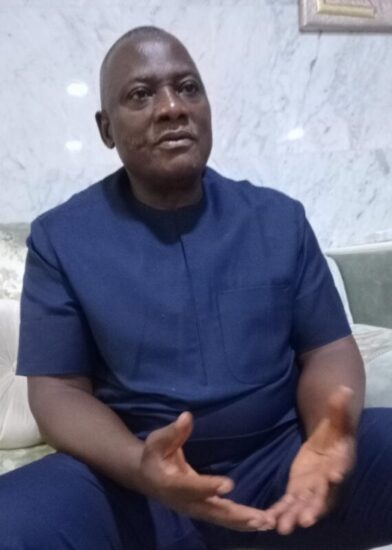
‘What I did chased tokunbo motorcycles away from the Nigerian market’
Chief Innocent Chukwuma, founder and group chairman of Innoson Vehicle Manufacturing Company, who recently marked the 13th anniversary of the auto company, spoke with some motoring journalists on a number of burning issues about the firm and the industry along with his plans for the business.
NewsTrends was there and reports:
Tell us your journey into the automobile business?
What I am doing today in auto manufacturing, I had earlier done in the motorcycle industry and succeeded. The time I joined motorcycles, there were five companies that were dealing in motorcycles. First was Leventis dealing in Honda; Yamako was dealing in Yamaha; Bolous Enterprises dealing in Suzuki; and CFAO was dealing in Kawasaki and Moblet. I brought Jianshe motorcycles (to the country) which were under me.
I studied what the big companies were doing. They were bringing 36 units of fully built motorcycles in one 40-foot container. So with the 36 units in one 40ft container, I did all the expenses on the container and their cost was very high. As a motorcycle expert, before I joined, I calculated the cost and expenditure; then, a motorcycle was N150,000 per unit. I calculated the component parts that make up one motorcycle and found out that the total cost was not up to N150,000. So I decided to go and import the motorcycles in components (instead of ready made). I listed the parts and brought them in, and used local technicians to assemble them in Nnewi. My container of motorcycle components, the same 40 feet, could carry as much 150 units in one, instead of 36 units those companies were bringing in as fully built. As a result, my own motorcycle price was lower than theirs and I sold the first consignment at N800,000 per motorcycle, while they were selling N150,000.
Clients tested it and found out that it was equally good. I did it for about five years like that without competition before others discovered what I was doing and joined. As they were joining, I found another way of making it cheaper. I opened a plastic factory in Enugu to produce the plastic components so that the price would be okay. When I started this component parts, some of them that joined started buying the component parts to sell their own. By then we had dropped the price of one motorcycle to N60,000. From N150,000 to N60,000. Those who bought my plastic components were also selling N60,000, but those who were not buying from me were selling higher. So, they bought my plastic and business was moving. That was when I said let me go into the automobile. Before I did it, people were only using second-hand motorcycles. What I did stopped the use of second-hand (tokunbo) motorcycles because the new motorcycles became cheaper than second-hand motorcycles. That was what chased tokunbo motorcycles away from the Nigerian market.
If you watch in Nigeria today, people are buying second-hand vehicles. That was why I decided to go and develop the auto industry. If not for the foreign exchange issue, that is the weak naira against the US dollar at forex, people would have been buying new vehicles at cheaper prices in Nigeria now. For instance, I planned selling one of my sports utility vehicles (SUVs) for N1 million for all to buy. But because of foreign exchange issue, the vehicle is going for N10 million now.
People that import new vehicles cannot sell at their own price and that means we are still at an advantage.
What are your challenges since you started the auto manufacturing journey of 13 years ago?
I would say the journey has been full of ups and downs. But we still managed to survive. Starting from when I was building this factory, a lot of challenges came up. Some people came to the factory and kidnapped the workers, including (Chinese) foreigners and Nigerians. They took them away and started calling me.
The second one was when GTBank wanted to shut down this place. Every Nigerian knows about it. I went to court and finally defeated them. GTBank is still owning me up to today.
When we started, electricity was very poor even though it has improved now. What about the challenges of sourcing foreign exchange? I am a manufacturer. We are in a better position than importers. This is because what we import is not everything we are using in the manufacturing of our vehicles. So we import a few items and use local materials to complete our needs. But importers of ready-made goods import 100 per cent, which means that their forex requirements are higher. So I can say that foreign exchange depends on a number of things; sometimes, you do some export and get foreign exchange. Government allocation of foreign exchange is no longer working.
How do you get funds for your projects?
Normally, banks are supposed to be sponsoring businesses, but they are not sponsoring the industries. Nigerian banks are trading in foreign exchange. They are no longer sponsoring (supporting) productive ventures, like manufacturing. Any investor that relies entirely on banks will fail because the banks will even crush him. Banks are not ready to support manufacturing. They can support people that import oil, but to support manufacturing, banks are not ready to wait, because manufacturing cannot bring that type of quick money they want on a daily basis. We are trying to manage so that we don’t need to borrow so much to manufacture.
What is the percentage of local content in your auto manufacturing, and how do you source them?
We source some of the items we use locally and we import some. For example, we produce plastic components of the vehicles like bumper, dashboard, front grille at our Innoson Technical and Industrial Company Ltd, in Enene, Enugu. We are in a position to buy any item that anybody can produce locally. We don’t need to import any of the items we can get in Nigeria.
The local content used in my vehicles are not less than 65 per cent.
But we are still importing engine and gearboxes. The country they come from depends on the model we are doing. I don’t produce tyres but when we need tyres we reach out to tyres dealers and tell them what we want.
You made an attempt at tyre manufacturing many years ago. How did it go?
National Environmental Standards and Regulations Enforcement Agency (NESREA) said we cannot produce tyres because they did not authorise it. So we shut down, despite having invested a massive part of our resources in the project and imported some heavy equipment.
Are you not disturbed that in your 13 years of existence, Nigeria has witnessed three Presidents and none of them has used IVM which is the practice in other vehicle producing nations?
I cannot say that our Presidents are not using my vehicles, because I have not checked their fleets. It is people that are close to them that will check and find out. My vehicles are in the market and anybody can buy. I cannot say they are not using it. For instance, I never knew that the Lagos State Government was using my vehicles until someone told me.
How did you get the seed money for this huge investment? Again, where do you get the steel?
On steel, I don’t produce steel. I buy from steel dealers in Nigeria. When I need steel, I tell them the size I need and sometimes, they source it locally or from outside. We have a caliper to check the millimeter to confirm the gauge. If they are not up to the quality standard, we reject them.
What are your plans for motorsports? Nigeria is big with a large market. My focus is to conquer the motor needs of people in Nigeria and beyond. The people that are doing motorsports in other places have conquered this for a long time before they joined motorsports. I will join that when I conquer the people’s vehicle needs in Nigeria.
Do you have the facility to test vehicles and what is your daily or annual production capacity?
We have the facility to test vehicles. We have that section. I do 50,000 units and with what we are building, our factory is to produce 60,000 units annually if there is demand. We don’t produce and keep because of where to keep them. But we have an installed capacity that can handle the production, if there is the need. When there is a demand, we open up the production line and employ more people. When you are producing like 10 vehicles a day; when there is demand, you can make those 10 vehicles to 100 vehicles per day. What you do is to add workers times 10. Then what will take you one hour to do, you will do it in 10 minutes. We have the capacity to produce 60,000 if there is the demand.
What capacity do you have for conversion of vehicles to CNG?
We can do conversion. Government said they brought in conversion kits, but I don’t know how or what they imported. I convert for people.
What are the advantages of CNG-powered vehicles?
President Tinubu has done Nigeria some good by removing subsidy and introducing CNG. Any day, people understand what the CNG is, they will be happy with the government. I started the production of the CNG vehicles two years before it was formally introduced following the removal of oil subsidy on May 29 by the President. As of the time the government announced the removal of subsidy on petrol and the talk about CNG as an alternative commenced, I already have up to 100 units of vehicles running on CNG on the ground, parked here in the factory. It happened that way because I knew that one day, subsidy would be removed. I have vehicles that are powered by the CNG in all the IVM models, and I also convert for people who are driving Innoson. I want to give them the advantage first because they are my customers.
What are your views about the automotive industry in Nigeria?
My view is that if everybody supports the automotive policy, it will go well. The automotive industry is the way forward and I want Nigeria to be leading the industry in Africa.
You were approached by Abia State government to supply some vehicles but you turned it down. Can you shed more light on that?
What happened was that they needed 100 vehicles and I supplied 80. I told them that the remaining 20 would be ready in 14 days. But they said they needed it immediately. Then I told them they could buy from shops. I am a manufacturer and not a trader. They said they needed the 20 units immediately; that it was for security. The governor is one of my best friends, even before he became governor. He doesn’t joke with my products and that is why if you go to Abia State today, you will see my vehicles everywhere. Even the governor himself is using my vehicles.
You also have issues with Imo State Government. Has it been resolved?
No, it hasn’t been resolved. They just seized the money for almost three years now. The amount is N2. 6 billion for 150 vehicles I supplied to them. Today, the money has gone up to N7 billion. I am in court with them.
The vision of Innoson is to conquer the Nigerian and African market. How many products have you been able to export other African countries?
I have got up to 15 contracts from different countries outside Nigeria. The reason we don’t export from Nigeria to other African countries as often as we want is because Africa does not have shipping lines that go round the continent. Sometimes, when you export to Ghana, the vessel will first carry the containers to Europe before going to Ghana. But if we have shipping lines that go round Africa, Africa has a lot of things that they can export to each other. But if you watch, getting something from other African countries is difficult. If African countries want inter-Africa trade to grow, they should have shipping lines going round Africa. Without that, trading among African countries will be difficult.
I tried to service the 15 contracts but I found out that the problem is unavailability of shipping lines to carry the consignments for them. When they run into that difficulty today, they would not come back to you tomorrow. Some of the countries I have exported vehicles to are Ghana, Sierra Leone and Senegal.
What encouraged you to look home-wards in terms of locating your assembly plant in Nnewi?
It is not that I looked home-wards. The fact is that I don’t like crowds. I think I like where traffic will not be holding me down on the road so much. That was why I decided to be here in Nnewi and Enugu. Other places like Lagos and Onitsha are filled up. So I came down to Nnewi so that it would be easy for me to coordinate.
Right now, I have two factories in Nnewi and accessing them is very easy for me. But if it is in Surulere or Apapa in Lagos, how will I go?
What is the secret of business success of the Nnewi people?
Nnewi people, starting from origin have the keys of business. Remember the late Louis Odumegwu Ojukwu, who was the leader in Nigeria even before the war. Most of our people are business people; they are used to business. Each town has something unique to them and in the case of Nnewi business is their uniqueness.
Where will Innoson be in the next 10 years?
I believe that in the next 13 years, Innoson will be everywhere in Africa.
What are your succession plans?
It doesn’t mean that I am the one doing all the job. People are doing it. And those that are doing the job are younger than me. Didn’t you see that we rewarded some of the people that started with us at our 13th anniversary event today? This is because they are very important in our business? They stayed with us for a long time and we gave out 15 motorcycles to them. I sent our factory manager to China and trained him for eight years. Besides, they are all my friends and we eat at the same table. They love me and they cannot harm me.
Can you tell us something about the new factory in Umuezena, Nnewi?
That place is 400,000 square-meter land space. One of the buildings I am putting up there is 40,000 square meters. There will be three factory buildings, bringing the total to 120,000 square meters.
Which of the IVM models is the fastest selling in your lineup?
Vehicles are like a fashion items. This year, vehicle B can be the fastest selling; next year, vehicle D will come up. We produce all to sell. You cannot say this is the fastest. Three things determine the rate: One is the price; number two is usage; and number three is the utility, like buses and pickups which are built for commercial use. All of them are doing very well. However, what we do is that anyone that is not doing well, we stop it and replace it with another model. That is why I am manufacturing.
How have your people in Nnewi felt the impact of locating your factory in the town?
Locating this factory in Nnewi is one of the good things that have happened to the South-Eastern part of Nigeria. It is bringing a lot of things here. For example, when the Federal Government decided to build an industrial hub for the auto industry, they located one in Lagos, another in Kaduna and one in Nnewi here because of this factory.
In addition, it provides employment. When I finish constructing the factory I am now building in Nnewi, I will employ another 2,000 workers and I prefer to employ people who are at home here. It is one of the good things that have happened to the people.
What are your plans on electric vehicles?
I will shock you on what I am going to do with electric vehicles. I am doing vehicles; if you want me to power with electric, I will power it with electric. If you want CNG, gas, fuel, I will do it for you immediately.









Auto
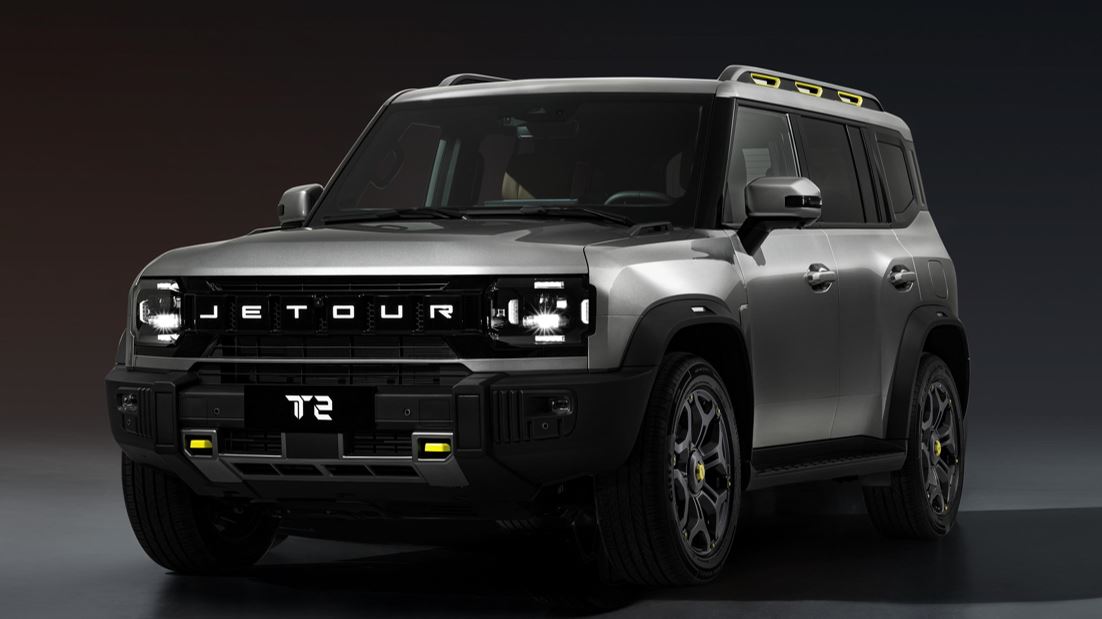
Jetour Set to Storm Abuja Show with Rugged Luxury T2
Jetour Set to Storm Abuja Show with Rugged Luxury T2
Abuja is set for a taste of rugged luxury as Jetour Nigeria puts its adventure-ready T2 SUV in the spotlight at the Jetour Experience Abuja from September 22 to 24, 2026, giving motorists in the Federal Capital Territory and neighbouring states an opportunity to test its blend of off-road capability, premium comfort and advanced technology.
The three-day showcase at Maha Event Centre, Area 8, Garki, will feature test drives, live demonstrations and direct interaction with Jetour product specialists, offering prospective buyers a closer look at the T2 and other models in the automaker’s growing Nigerian line-up.
Positioned as a premium SUV combining off-road capability with comfort and advanced technology, the Jetour T2 is designed for motorists seeking a vehicle capable of handling both city driving and challenging terrain.
Jetour Nigeria is distributing the T2 and other models via its seven accredited dealers — Elizade Nigeria Limited, New Era AutoVehicle Services Limited, Germaine Auto Centre, Kojo Motors, Mandilas Autos, R.T. Briscoe Motors and Tab Autos Limited.
The T 2 SUV is powered by a 2.0-litre turbocharged engine producing 254 horsepower and 390 Nm of torque. The engine is paired with a seven-speed dual-clutch transmission and BorgWarner sixth-generation intelligent four-wheel-drive system.
It also features five driving modes — Eco, Sport, Mud, Rock and X Smart — designed to provide improved adaptability across different road and terrain conditions.
Measuring 4,758mm in length, 2,006mm in width and 1,880mm in height, the SUV offers 220mm ground clearance and a 70-litre fuel tank, giving it the capability for extended journeys and off-road adventures.
Inside the cabin, the T2 combines rugged styling with modern comfort, featuring ergonomic seating and a 15.6-inch touchscreen infotainment system with Apple CarPlay, Android Auto and intelligent voice control.
Its safety and driver-assistance features include a 360-degree panoramic camera, rear parking sensors, Lane Departure Warning, Blind Spot Detection, Anti-lock Braking System and Emergency Brake Assist.
The SUV also comes with off-road crawl control as well as push-button and remote-start functions.
The Abuja experience follows Jetour Nigeria’s recent showcase in Lagos as the automaker continues to expand its presence and customer reach across the country.
With its combination of performance, technology, safety and luxury, the Jetour T2 is expected to attract motorists seeking an SUV capable of combining everyday urban mobility with adventure and off-road driving.
Auto
Jetour Targets Abuja Market with X70 PHEV as Nationwide Expansion Gathers Pace
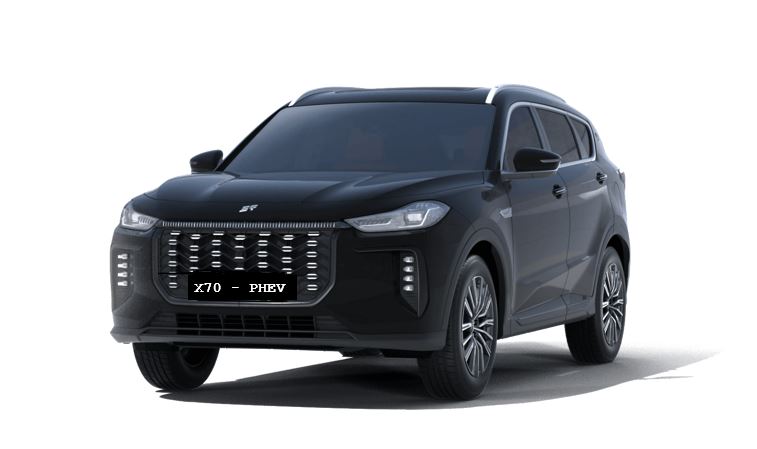
Jetour Targets Abuja Market with X70 PHEV as Nationwide Expansion Gathers Pace
Jetour Nigeria is taking its hybrid SUV offensive to Abuja, with the X70 Plug-in Hybrid Electric Vehicle (PHEV) set to headline the three-day Jetour Experience from September 22 to 24 as the automaker accelerates its drive to expand its footprint and capture a larger share of Nigeria’s fast-evolving mobility market.
The Abuja showcase, coming on the heels of a strong Lagos edition that generated significant consumer interest, test drives and sales enquiries, is designed to bring Jetour’s latest technologies closer to customers in the Federal Capital Territory and neighbouring states.
The event at Maha Event Centre, Area 8, will give prospective buyers and auto enthusiasts the opportunity to test-drive the X70 PHEV and other Jetour models while interacting with product specialists and experiencing their technology, safety features, performance and comfort firsthand.
According to the company, expanding the showcase to the Federal Capital Territory was a direct response to rising demand from residents in Abuja and neighbouring states.
READ ALSO:
- ASUU Crisis Deepens: Lagos Universities Join UNIBEN, Taraba on Indefinite Strike
- Lagos Power Outage: Ikeja Electric Blames TCN as Businesses, Homes Groan
- US Court Blocks Trump Visa Rule Limiting Stay of Foreign Students, Journalists
To bolster buyer confidence, Jetour Nigeria—the country’s sole authorised distributor—backs the X70 PHEV with a five-year or 150,000-kilometre warranty.
The distributor operates through an accredited nationwide dealer network, including: Elizade Nigeria Limited,
New Era Auto Vehicle Services Limited, Kojo Motors, Germaine Auto Centre, Tab Autos Limited, R.T. Briscoe Motors, and Mandilas Autos.
The X70 PHEV pairs a 1.5-litre turbocharged engine with a 19.43kWh battery and a dedicated hybrid transmission. Designed to balance performance with fuel efficiency, the vehicle supports fast, slow, engine, and regenerative braking charging options—reducing reliance on external charging infrastructure.
Jetour’s rapid growth in the Nigerian market has earned both private and corporate patronage, driven by competitive pricing, high specification levels, and an expanding service footprint. The brand was named “Fastest Growing Auto Brand of the Year” at the 2024 Nigeria Auto Journalists Association (NAJA) Awards.
With the X70 PHEV leading the Abuja showcase, Jetour aims to deepen customer engagement and consolidate its position in the local automotive market.
Jetour Targets Abuja Market with X70 PHEV as Nationwide Expansion Gathers Pace
Auto
X90 Plus Leads Jetour’s Abuja Drive for Bigger SUV Market Share
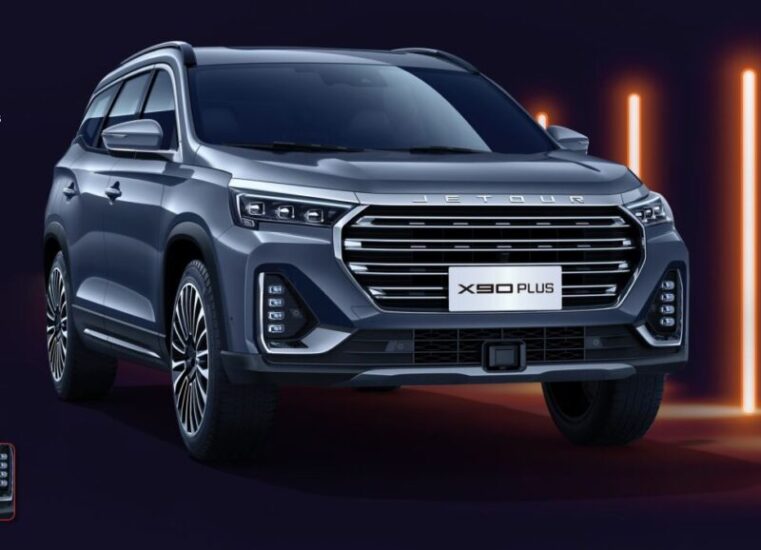
X90 Plus Leads Jetour’s Abuja Drive for Bigger SUV Market Share
Jetour Nigeria is taking its premium SUV battle to Abuja, with the seven-seater X90 Plus set to headline the Jetour Experience Abuja from September 22 to 24, as the automaker moves to capture a larger share of Nigeria’s fast-growing high-end family SUV market.
The three-day motoring showcase will give prospective buyers, families and auto enthusiasts in the Federal Capital Territory and neighbouring states an opportunity to experience the X90 Plus and other models in the Jetour range through test drives and hands-on demonstrations.
The Abuja showcase follows the success of the brand’s earlier Jetour Experience in Lagos, where strong customer interest, inquiries and sales momentum reportedly encouraged the company to take the initiative to the Federal Capital Territory.
Jetour Nigeria said growing demand from customers in Abuja and neighbouring states was a major factor behind the decision to expand the experience to the northern market.
Positioned as a full-sized family SUV, the X90 Plus is designed for executives and families seeking a combination of space, technology, performance and comfort without the price tag associated with some luxury SUVs.
The model is offered with 1.6-litre and 2.0-litre turbocharged engines paired with a seven-speed dual-clutch transmission. The powertrain produces up to 254 horsepower and 390Nm of torque.
Inside the cabin, the X90 Plus features a 12.3-inch LCD touchscreen infotainment system, panoramic sunroof, Sony premium audio system and wireless charging.
Its safety and driver-assistance features include a 360-degree panoramic camera, Forward Collision Warning, Lane Departure Warning and electronic stability systems.
Jetour’s growing profile in Nigeria has also earned the brand recognition from the Nigeria Auto Journalists Association (NAJA), which named it Fastest Growing Auto Brand, while it was also recognised as Auto Brand of the Year at the Nigeria Transport Lecture.
To support its expanding customer base, Jetour Nigeria, the sole authorised distributor, operates through seven accredited dealer partners across the country: Elizade Nigeria Limited, Mandilas Autos, R.T. Briscoe Motors, Germaine Auto Centre, Kojo Motors, Tab Autos Limited and New Era Auto Vehicle Services Limited.
The Abuja Experience is expected to provide Jetour with another platform to engage potential customers and reinforce its position in Nigeria’s increasingly competitive SUV market.
-
 Politics3 days ago
2027: Northern Lecturers Back Tinubu, ASUU Disowns Endorsement
-

 Sports2 days ago
‘I Was Never the Chosen One’ — Dembele Responds to Mbappe
-

 International1 day ago
Islamic Council Condemns Attempted Attack on Holy City of Mecca
-

 metro2 days ago
Lagos Power Outage: Ikeja Electric Blames TCN as Businesses, Homes Groan
-
 News1 day ago
Keep Politics Out of My Office — Ogbomoso Grand Chief Imam Warns Politicians, Bloggers
-

 Education2 days ago
JAMB Moves 2027 UTME Time — Here’s What Candidates Need To Know
-
 Politics2 days ago
2027: APC Governors Reject Wike’s Rainbow Coalition, Insist on Party Loyalty
-

 News2 days ago
I Wanted to Disgrace Tinubu — Omokri Reveals What He Discovered at Chicago Varsity