

metro
EFCC reviews terms of arrest, bail conditions

EFCC reviews terms of arrest, bail conditions
The Economic and Financial Crimes Commission (EFCC) has reviewed its regulations regarding suspect processing, bail, and arrest.
On Monday, October 31, 2023, the evaluation was applied across all of its Commands, and it is based on the need to treat suspects in accordance with global best practices and the rule of law.
In the new guideline, premium attention is focused on the rights of suspects, especially where arrest, detention and bail issues are concerned. Operational activities are to be tailored towards relevant provisions of the Constitution of the Federal Republic of Nigeria, 1999 (as amended), the Administration of Criminal Justice Act, 2011 and the EFCC’s Standard Operating Procedures, SOP.
READ ALSO:
-
EFCC frees 59 OAU students, detains 10
-
Osimhen, Salah, others get nominations for African Player of the Year (Full list)
-
“My tenant defiled, impregnated my 16-year-old daughter,” Pastor tells Lagos court
Specifically, operatives of the Commission are not allowed to demand for professional certificates of sureties as a bail condition. Also, every demand for international passport of suspects would henceforth be exercised with discretion, depending on the nature of the case, personality and country of residence of the suspect.
Director, Legal and Prosecution Department of the EFCC, Commander of the EFCC, CE Sylvanus Tahir, SAN, cautioned that,
“bail conditions served on suspects must be reasonable and practicable to be fulfilled by suspects and their sureties. Detention of suspects without a Remand Warrant for unreasonable length of time beyond the constitutionally allowed period must henceforth stop forthwith”.
Officers of the Commission are also warned against unwarranted violation of rights of suspects. He called for professionalism in all operational activities, stressing that
“it is time to have a paradigm shift and change the narrative. Henceforth, professionalism shall be the watchword. Let’s follow the best international standards worth our identity as a flagship law enforcement agency”.
EFCC reviews terms of arrest, bail conditions










metro
Police Bust Phone Theft Syndicate, Recover Nine Android Devices in Asaba
Police Bust Phone Theft Syndicate, Recover Nine Android Devices in Asaba
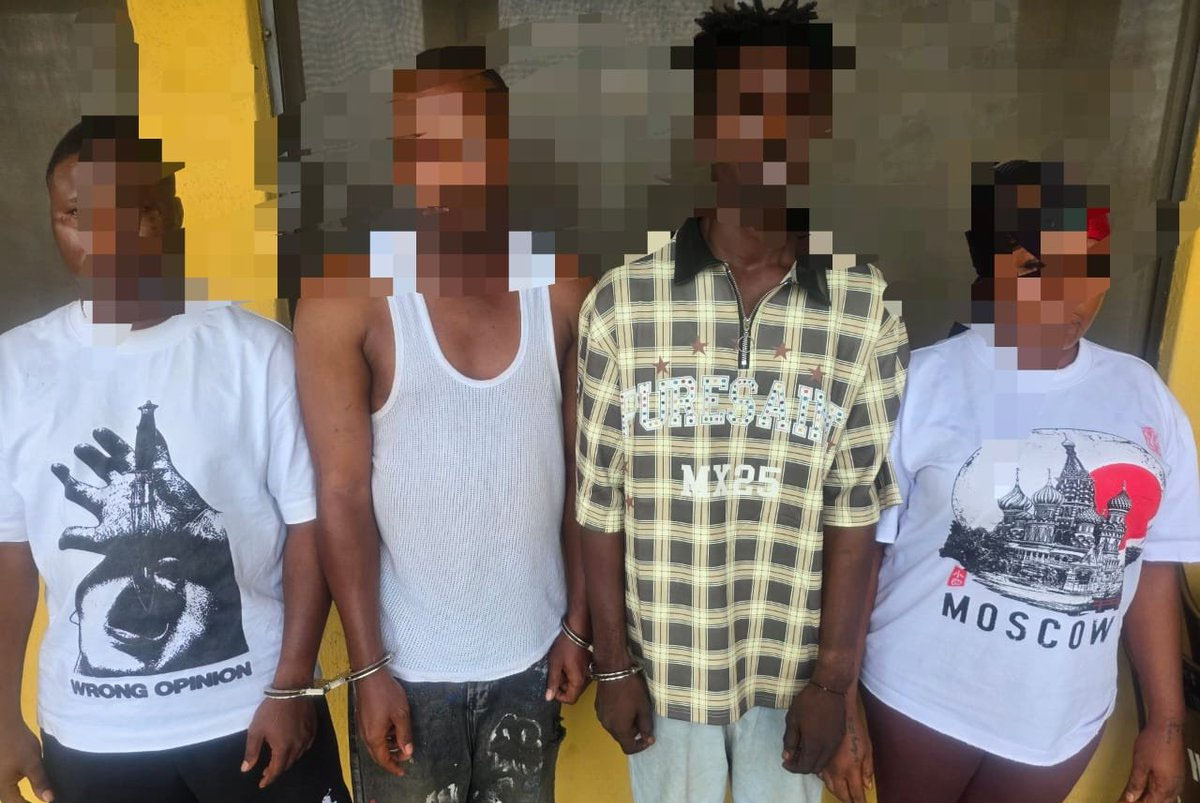
Operatives of the Delta State Police Command have arrested four suspected members of a phone theft syndicate and recovered nine brand-new Android devices in Asaba, the state capital. The suspects were apprehended on July 25, 2026, at their hideout along St. Brigid’s Road, Asaba, following a series of reported phone thefts from shops in the city and its environs. The police acted on credible intelligence and technical analysis to track down the syndicate.
The police identified the arrested suspects as Johna Omarocha, Kelvin Onogho, Nkechi Nnaji, and Ufuoma Joshua. A search of their hideout led to the recovery of nine brand-new Android phones, all still sealed in their original cartons. According to the police spokesperson, SP Bright Edafe, preliminary investigations revealed that the suspects employed a coordinated method to evade detection. The syndicate members would disguise themselves as genuine customers visiting shops and supermarkets. While pretending to shop, they used newspapers to conceal mobile phones displayed in the stores before secretly walking away with them.
READ ALSO:
- Tinubu Agrees to Meet South African Envoy After Ramaphosa’s Intervention
- “We Can’t Run a Country on Vibes” – Rufai Oseni Knocks Peter Obi Over Lack of Clear Policy Details
- Three-Storey Student Hostel Collapses Near Oko Polytechnic, Many Trapped
Investigators further disclosed that the female suspect, Nkechi Nnaji, allegedly played a strategic role in the operation. She reportedly waybilled the stolen phones to Lagos, where the International Mobile Equipment Identity (IMEI) numbers of the devices were altered before the phones were resold—making it difficult to trace them to their rightful owners. The suspects have reportedly confessed to their involvement in the criminal enterprise. The police stated that efforts are ongoing to arrest other fleeing members of the syndicate and identify the legitimate owners of the recovered phones. The four suspects remain in police custody and are expected to be charged to court upon the conclusion of investigations.
Reacting to the development, the Commissioner of Police, Delta State Command, CP Yemi Oyeniyi, reaffirmed the command’s commitment to tackling robbery and other property-related crimes across the state. He urged members of the public, particularly shop owners and business operators, to remain vigilant, strengthen security measures around their business premises, and promptly report suspicious persons or activities to the police.
Police Bust Phone Theft Syndicate, Recover Nine Android Devices in Asaba
metro
“We Can’t Run a Country on Vibes” – Rufai Oseni Knocks Peter Obi Over Lack of Clear Policy Details
“We Can’t Run a Country on Vibes” – Rufai Oseni Knocks Peter Obi Over Lack of Clear Policy Details
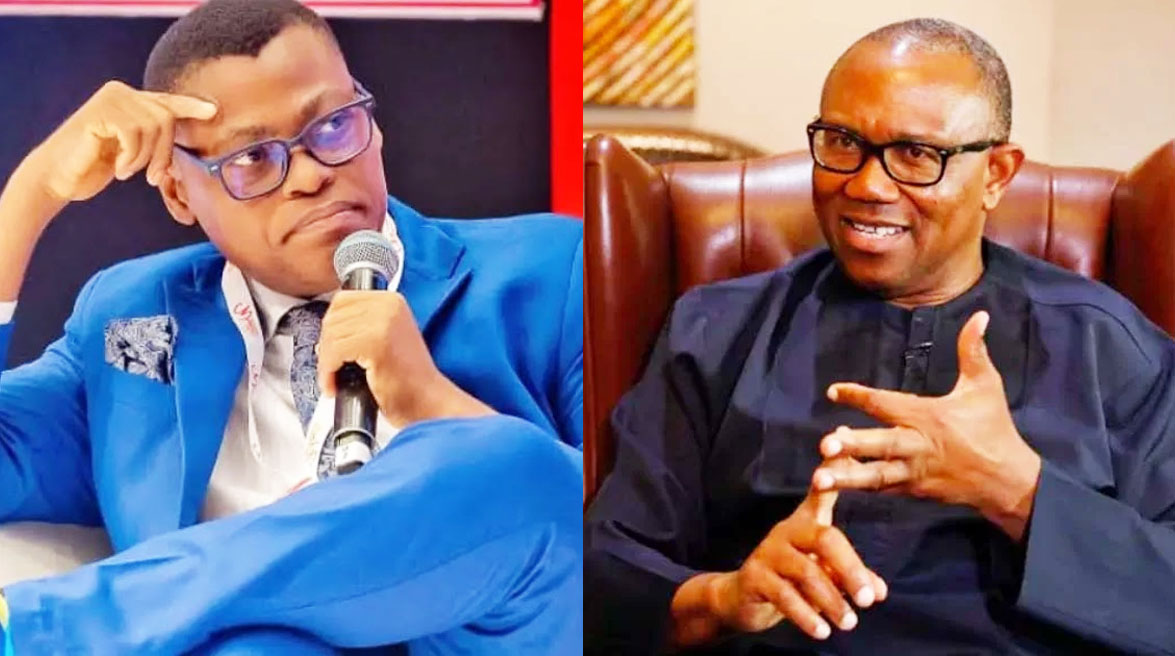
Arise Television presenter Rufai Oseni has criticised NDC presidential candidate Peter Obi’s recent television appearance, saying the former Anambra governor failed to clearly explain how he would implement his campaign promises if elected in 2027. Speaking on Monday during the Arise Television Morning Show, Oseni said presidential hopefuls must move beyond broad promises and begin presenting detailed policy frameworks and practical strategies for solving Nigeria’s problems.
Referring to Obi’s interview on Channels Television’s Sunday Politics, Oseni said candidates have a responsibility to show Nigerians how they plan to address the country’s challenges. “And that’s what I did not see yesterday. I didn’t see the how. We can’t run a country on vibes,” Oseni said. He argued that with the 2027 election drawing closer, Nigerians should already have access to comprehensive manifestos and well-articulated plans from candidates seeking the country’s highest office. “By now, if elections are in January, we are now in August, we have not seen manifesto. Six months to go. Secondly, we are not seeing proper articulation of how you will do it,” he said. “In fact, I think all candidates should stop telling us I will do this. They should start telling us how. We should see an idea. It’s the idea that we want to debate, the workability of the idea, and that I didn’t see. I didn’t see a lot of that,” Oseni added.
The broadcaster also questioned the repeated campaign promise of ending insecurity without explaining the strategy behind it. According to him, candidates should provide clear methodologies instead of withholding broad policy explanations under the excuse of protecting operational details. “We will fix insecurity. How? And please, people should stop telling us ‘I don’t want to share my operational details’. Nobody say you should share your operational details, because as a candidate, you can’t have operational details. Operational details are specific to operations, hence the name operational details. Nobody say you should share that. What we are saying is overarching details, methodology, how you are going to do it. That’s just it,” he said.
READ ALSO:
- Three-Storey Student Hostel Collapses Near Oko Polytechnic, Many Trapped
- Lawyers Begin Indefinite Strike Over Unpaid Allowances, Salary Harmonisation
- Nigeria’s Renewable Energy Milestone: 15 Universities Now Fully Connected to Solar Farms
Oseni further stated that he expected candidates to explain their technical plans for key sectors, particularly electricity, rather than making general promises. “I mean, these are things as regards technicality and methodology. These are the things I want to hear from our candidates. Power sector, what would you do as regards them about creating thousands of megawatts? Major problem in the power sector today is transmission. We have 13,000 installed capacity, but why are we not seeing more than 5000 megawatts capacity for transmission? Are you going to put investment there? Are you going to raise the equity for the investment? I mean, those are paramount questions. So please, we want to see more of those details,” Oseni said.
Oseni’s remarks came a day after Obi appeared on Channels Television’s Sunday Politics, where he outlined his vision for Nigeria in a two-hour wide-ranging interview. The NDC presidential candidate promised to personally lead the fight against insecurity, build a production-driven economy, reduce the cost of governance, strengthen anti-corruption efforts, and serve only one four-year term if elected president.
On security, Obi faulted the current approach to combating insecurity, insisting that Nigeria requires more committed and visible leadership. He said unlike the present arrangement, he would personally coordinate the country’s response to insecurity, regularly visit troubled communities, and ensure that security agencies receive adequate equipment, funding, and operational support. “I will personally lead the fight against insecurity. I will be visible, engaged and directly involved. I will visit affected communities and ensure that our security architecture is properly equipped, adequately funded, and fully supported,” Obi stated. According to him, poverty remains the biggest driver of insecurity, and lasting peace cannot be achieved without massive investments in education, job creation, and economic opportunities for young Nigerians. “You cannot create widespread poverty and expect peace. The more people are pushed into poverty, the greater the insecurity. Education and job creation remain the most sustainable solutions,” he said.
READ ALSO:
- Reps Uncover 29 Forged Documents in Fake Agency Probe, Order IGP to Produce Suspect Adeyemi
- Prophetess who made husband swear fidelity oath celebrates mother-in-law’s death
- MURIC Tells Adeleke to ‘Pack Your Dancing Kits’ Ahead of Osun 2026 Election
On the economy, Obi said his administration would abandon what he described as a consumption-driven model and replace it with a production-based economy anchored on agriculture, manufacturing, and support for small businesses. “Nigeria must move from consumption to production. Agriculture alone can generate more revenue than crude oil if properly developed. We have enough arable land not only to feed ourselves but also to become a major exporter,” he said. He maintained that Nigeria possessed sufficient human and natural resources to become a major global producer of agricultural commodities if appropriate policies were implemented. He added that government under his leadership would prioritise support for farmers and manufacturers, improve access to affordable credit, and create an enabling environment for businesses to thrive.
Obi also criticised the implementation of the fuel subsidy removal policy, saying although he supports ending the subsidy regime, the process should have been gradual, transparent, and accompanied by clear communication with Nigerians. “The problem is not simply removing subsidy. Government must explain to Nigerians what is being saved and where those savings are being invested. Economic reforms must translate into improved living conditions for ordinary citizens,” Obi was quoted as saying. He maintained that while some macroeconomic indicators might have improved, the benefits had not reached average Nigerians. “Many macroeconomic indicators may appear positive, but ordinary Nigerians are not feeling the impact. Poverty has increased, government revenue has grown, borrowing has continued and citizens have endured severe hardship without corresponding benefits,” he stated.
The former Anambra governor also said economic reforms would only succeed if government demonstrated equal determination in tackling graft. He called for greater transparency in public finance, insisting that Nigerians deserve detailed explanations whenever government grants waivers, incurs major expenditure, or makes significant financial decisions. “If government can implement painful economic reforms with determination, it should demonstrate the same resolve in fighting corruption. Citizens have the right to know how public resources are being managed,” he stated. Obi also promised to reduce what he described as the excessive cost of governance, saying scarce national resources should be redirected from official luxuries to education, healthcare, and infrastructure. He criticised expenditure on luxury government assets, including aircraft, stating that leaders must demonstrate prudent management of public resources. “There is too much waste in government. Before buying luxury assets, we should ask whether the same resources could build hospitals, schools, or critical infrastructure. Leadership is about setting priorities,” he said.
Obi reiterated his long-held position against maintaining a publicly funded Office of the First Lady, describing it as a non-constitutional creation. “My wife will naturally perform ceremonial duties as the president’s spouse, but there will be no separate government bureaucracy or publicly funded Office of the First Lady. Nigerians elected the president, not the president’s spouse,” Obi said. Reaffirming his earlier promise to serve only one term if elected, Obi said leadership was about keeping one’s word and delivering measurable results. “I do not need more than four years to put Nigeria on the right path. If elected, I will serve only one term of four years, not one day longer,” he declared. He also stressed that his greatest partners would be Nigeria’s young people, saying the objective is not simply to win an election but to build a Nigeria that works for everyone. Obi also defended his personal integrity, insisting that all his assets were lawfully declared while in office as governor, and challenged anyone with evidence of wrongdoing during his tenure to make it public.
“We Can’t Run a Country on Vibes” – Rufai Oseni Knocks Peter Obi Over Lack of Clear Policy Details
metro
Three-Storey Student Hostel Collapses Near Oko Polytechnic, Many Trapped
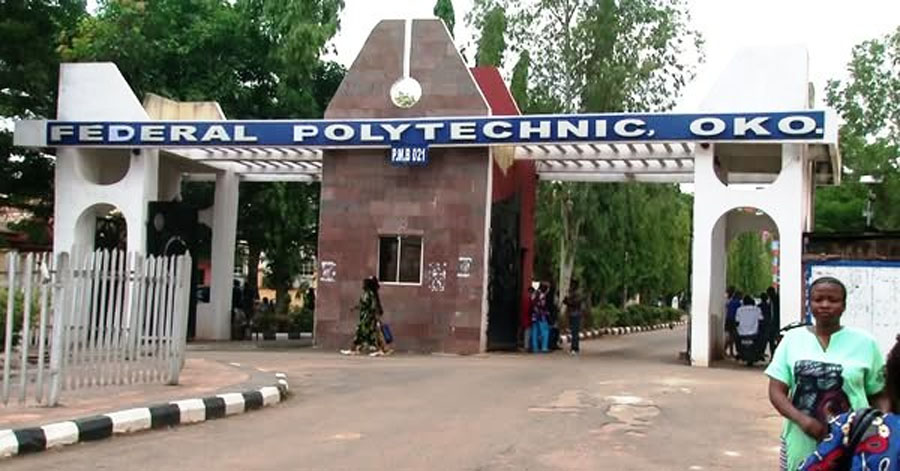
Three-Storey Student Hostel Collapses Near Oko Polytechnic, Many Trapped
A three-storey private hostel, Elite Five Star Lodge, collapsed late Sunday night in Oko, Anambra State, trapping an unspecified number of students and other occupants beneath the rubble. The building, located beside Tonimas Filling Station in the Amokpala area behind Federal Polytechnic Oko, caved in during the late hours of Sunday, July 26, 2026, triggering panic among residents and students, with desperate cries for help reportedly heard from beneath the debris shortly after the structure collapsed. Emergency responders, including personnel from the Anambra State Police Command, the Anambra State Fire Service, and the Anambra State Emergency Management Agency (SEMA) , immediately launched a coordinated search-and-rescue operation, with several injured victims pulled from the debris and rushed to a hospital in Oko for medical treatment. Bodies recovered from the scene have been deposited in a mortuary, though authorities have yet to confirm the exact number of casualties.
Confirming the incident, the Police Public Relations Officer, SP Tochukwu Ikenga, said a police-led joint security team responded swiftly after receiving a distress call, securing the area to prevent further danger and coordinating rescue efforts. In a statement, Ikenga said that rescue operations are ongoing to reach other persons who may still be trapped, and the number of casualties or affected persons cannot yet be confirmed, adding that some injured victims have been rescued from the debris and evacuated to a hospital in Oko, where they are currently receiving medical attention.
READ ALSO:
- Lawyers Begin Indefinite Strike Over Unpaid Allowances, Salary Harmonisation
- Nigeria’s Renewable Energy Milestone: 15 Universities Now Fully Connected to Solar Farms
- Reps Uncover 29 Forged Documents in Fake Agency Probe, Order IGP to Produce Suspect Adeyemi
The management of Federal Polytechnic Oko has clarified that the collapsed structure is a privately owned lodge located in Amaokpala, a neighbouring community to Oko town, and not within the institution’s premises, with the institution’s Public Relations Officer, Dr Oguegbu Celestine Udoka, stating that reports circulating on social media were misleading and exaggerated, adding that the building accommodates both students and non-students. The Polytechnic disclosed that its Rector, Dr Chioma Irene Awuzie, visited the scene early Monday morning to assess the situation and ascertain the welfare of any affected students, accompanied by the Students’ Union Government President, the Dean of Students’ Affairs, and other senior staff.
Residents described scenes of fear and confusion as the building suddenly collapsed without warning, with one eyewitness, who identified herself simply as Ifeoma, saying that many people initially mistook the loud sound for an explosion before discovering that the student hostel had crumbled, and that within moments after the loud noise, the occupants inside started shouting for help as the building fell. Emergency response teams continued operations on Monday, with heavy equipment and personnel remaining at the site, as the building, which is usually overcrowded with students from the academic institution currently in its second semester of the 2025/2026 academic session, collapsed while many occupants were believed to be asleep. The police appealed to residents to remain calm, avoid spreading unverified information, and stay away from the scene to enable emergency responders carry out their work effectively, while the cause of the building collapse has yet to be determined.
Three-Storey Student Hostel Collapses Near Oko Polytechnic, Many Trapped
-
 metro3 days ago
PFICP scandal: How ₦1.3bn ‘fake agency’ traced to Buhari’s government entered 2026 budget
-
 metro3 days ago
Dalung gives Mutfwang 72-hour ultimatum to withdraw apology to Igbos over civil war role
-
 Politics2 days ago
2027 election: Atiku accuses Obasanjo of reviving false allegations to favour preferred candidate
-

 metro17 hours ago
NDLEA intercepts ₦10bn worth of cocaine, Loud, opioids in Lagos
-

 Sports2 days ago
Anthony Joshua stuns Kristian Prenga with dramatic knockout to revive career
-

 Politics3 days ago
ADC leadership crisis deepens as court dismisses objections by David Mark, Aregbesola
-
 metro2 days ago
Al-Mustapha Fires Back: Ex-DSS Officer’s Account of Abacha’s Death Is a Lie, I Have CCTV Evidence
-

 metro2 days ago
ISWAP finance chief surrenders to Nigerian troops with two children in Borno