

Opinion
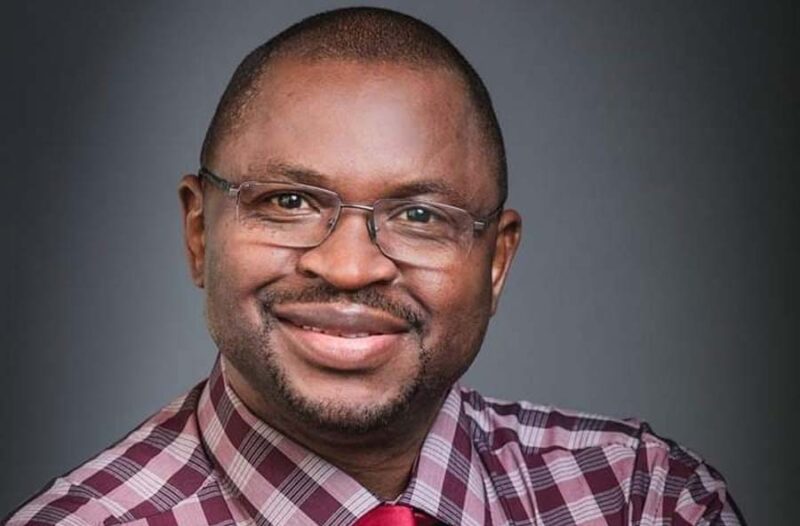
What critics of Rufai Oseni don’t know about journalism – Farooq Kperogi
What critics of Rufai Oseni don’t know about journalism – Farooq Kperogi
A viral, contentious dialogic confrontation between Arise TV’s Rufai Oseni and one Jesutega Onokpasa, identified as a lawyer and “APC chieftain,” on October 30 has once again centralized conversations about who a journalist is and what constitutes journalism, which I’d addressed in previous columns.
In the exchange, Oseni asked Onokpasa a legitimate, well-chosen question about the deleterious consequences of the removal of fuel subsidies on ordinary citizens and on the national economy. Onokpasa tried to prevaricate. He said Tinubu didn’t remove fuel subsidies. Buhari did before he left.
That’s technically true, but it was Tinubu’s recklessly precipitous and ill-advised announcement in his inaugural speech that subsidies were gone for good that sparked an instantaneous but totally unjustified spiraling of the cost of petrol, which also touched off a devastating hyperinflationary inferno that’s still consuming Nigeria.
As any journalist invested in the pursuit of the truth should do, Oseni vigorously pushed back against Onokpasa’s equivocation. Unable to defend his position with the resources of evidence, logic, and reason, Onokpasa launched unprovoked ad hominem verbal assaults on Oseni.
He threatened to walk out of the interview, belittled Oseni as a “boy,” a “badly brought up little boy,” and then questioned Oseni’s professional journalistic credentials in order to delegitimize him and his uncomfortable questions.
“Listen, Rufai. This is not animal psychology,” he said in a fit of groundless gerontocratic and professional arrogance. “It is law. If you want to be a journalist, you can be a journalist, and you should learn the ropes ahead of you. You can never be my mate.”
READ ALSO:
- Again, MultiChoice hikes DSTV, GOtv subscription prices
- Naira continues recovery, strengthens to N950
- Presidential yacht already delivered yet to be paid for – Ndume
- Reps Seat: Appeal Court sacks Cornelius Nnaji, upholds election of LP’s Nnamchi
Another APC chieftain by the name of Joe Igbokwe was reported to have said on Friday that he won’t rest until Oseni is fired from Arise TV. “He is not a Journalist. He has no training in journalism,” Igbokwe reportedly wrote on Facebook. “Now if Arise TV still wants Rufai they should send him to the Department of Mass Communication University of Lagos. Journalism is special [sic] profession. It demands tack, smooth and sound engagements, discipline, organization, common sense, commitment, civilization, respect for human dignity.”
The obsession with Oseni’s course of study at the university (some people said he studied animal science or zoology, a reason Onokpasa made the absurdly snarky remark about fuel subsidy removal not being “animal psychology”) and the attempt to delegitimize his journalistic credentials because of this betrays deep-rooted ignorance of journalism.
The practice of journalism preceded its formal study by centuries. The University of Missouri in the United States awarded the world’s first undergraduate degree in journalism in 1909. But there had been journalists and journalism in the world centuries before 1909. So, to say someone isn’t a journalist because they have no formal certification in journalism is actually stupid.
Although journalism is now formally studied all over the world, it has resisted licensing to regulate entry into and exit from it in keeping with the openness that is at its core. In other words, anyone can be a journalist even if they didn’t formally study journalism or mass communication.
More than that, though, as I pointed out in my April 15, 2023, column titled “Partisan Comparisons of Channel TV’s Seun and Arise TV’s Rufai,” some of which I reproduce in the paragraphs that follow, journalism has three broad traditions: advocacy, reporting, and exposé.
The advocacy tradition is the first and oldest. In this tradition, journalists didn’t pretend to be “objective” or ideologically unaffiliated. News, in the sense in which we understand it today, was scarce. Opinion, partisan opinion I might add, was the stuff of journalism. Note, though, that the word “journalism” didn’t exist in English at the time.
The advocacy tradition got a rival in the 1830s in the United States with the advent of what was called the “penny press,” which inaugurated the reporting tradition we recognize as the only form of legitimate journalism in most parts of the world today.
Incidentally, it was in 1833 that the word “journalism” emerged in English for the first time after a reviewer of a book about journalism in French titled Du journalisme translated the French journalisme to “journalism” and remarked that such “a word was sorely wanted” in the English language.
The reporting tradition prioritizes documenting facts, describing the world as reporters see it, ferreting out the “best obtainable version of the truth” incrementally through constant reportage, and recording the thoughts and perspectives of people other than the reporters. That was the time the notion of “objectivity” in journalism was born. It was coterminous with the growth and reification of the scientific method, called positivism in social science scholarship.
Journalists in the reporting tradition “professionalized” journalism by embracing the “scientific” hype of the nineteenth century, which manifested in the notion of “objective journalism,” an unrealizable ideal that journalists have now abandoned in place of fairness, balance, and accuracy.
READ ALSO:
- BREAKING: Joe Ajaero : NLC, TUC announce nationwide strike
- Channels TV anchor’s father dies in kidnappers den
- ‘If I demand N20bn every month, it’s politics’ – Wike justifies fight with Fubara
By the early 1900s, journalism began to be offered as a degree in U.S. universities in furtherance of the professionalization of the field. But not being formally trained in journalism has never been disqualifying in the history of journalism, not only because journalism education itself is relatively recent but also because such an attitude would violate the intrinsic openness of journalism.
The third tradition of journalism is the exposé tradition, known today as investigative journalism, whose goal is to reform, not merely to inform, society. Like advocacy journalism, it doesn’t pretend to be neutral or “objective.” As former Minister of Youth and Sports Sunday Dare said of the guerrilla journalism that he and his colleagues practiced in the 1990s, it is animated by “partisan objectivity in defense of the truth.”
Over the years, these traditions have meshed and overlapped. In many traditional news organizations, views are separated from news. Views are represented by columns and editorials and news by reportage of facts. In other words, peddlers of opinions, even biased opinions, are journalists in the advocacy tradition.
There has never been any expectation in the history of journalism that opinions should be “objective.” In fact, “objective opinion” is a silly oxymoron. If it’s objective, that is, undistorted by personal dispositions, emotions, bias, etc., then it’s not an opinion. Opinions can never be objective. Only facts can. Opinions are, by nature, subjective and idiosyncratic.
Being opinionated doesn’t delegitimize people from being journalists. That’s the first kind of journalism the world knew before the reporting tradition came less than 200 years ago.
In broadcast journalism, moreover, a different tradition emerged in the United States, which has been exported globally, and that tradition is the popularization and lionization of news anchors and leveraging of the star power of news anchors to sell news. The loud discomfort that government officials and APC chieftains evince when they confront Rufai Oseni makes him a highly prized employee that Nduka Obaigbena would be stupid to fire.
Plus, as I wrote when Femi Fani-Kayode lost it because a Daily Trust reporter had asked who was “bankrolling” his tour of PDP states, asking questions that get a politician’s dander up, that inflame a politician’s passions, is a treasured skill in journalism.
READ ALSO:
- Stop blackmailing labour minister, others, NURTW warns Baruwa
- Industrial action throws entire Imo into darkness – EEDC
- Eberechi Eze: Crystal Palace ‘optimistic’ over new contract, says Roy Hodgson
Here’s why: Politicians reveal the most headline-worthy information when reporters cause them to lose control of their emotions. Loss of emotional control forces them to depart from their scripted, predictable, choreographed, and often mendacious and boring performances. Oseni does a better job of it than most trained journalists.
I, like every journalism teacher worth the name, teach my journalism students the skill to ask politicians trenchant questions that have the capacity to cause the politicians to throw tantrums because politicians, in a state of meltdown, such as we saw in Onokpasa’s histrionics, let their guards down and involuntarily divulge the truth.
Smart politicians know this. Instead of allowing themselves to be immobilized by impotent anger, they respond to high-pressure, “embarrassing” questions with poise, and disarm adversarial reporters with humility, grace, and gentleness.
Finally, why was Onokpasa hung up on Oseni’s age vis-a-vis his? As I once pointed out, one of Nigeria’s enduringly lumbering cultural burdens is that it’s hopelessly trapped in regressive reverse ageism, i.e., the idea that only old age, not youth or knowledge, should confer authority on people.
Everyone who is older than the next person thinks his numerical age bestows some superiority on him over a younger person.
Emotional and intellectual age are immaterial in this culture of reverse ageism, so that even emotionally immature and cognitively empty dimwits trapped in adults’ bodies think of themselves as superior to biologically younger but intellectually superior people because of the accidents of their years of birth.
But if you’re older than someone, someone is also older than you are, and the person you’re older than is also older than someone else. It’s an infinite continuum.
Only backward, lowbrow bumpkins are hung up on age and invoke it to delegitimize valid criticism that they can’t confront with the force of their intellect. Let Oseni breathe!
What critics of Rufai Oseni don’t know about journalism – Farooq Kperogi
Farooq Kperogi is a renowned Nigerian newspaper columnist and United States-based Professor of Journalism.








Opinion
WHO WILL SPEAK FOR WASILAT? WHEN TRADITION BECOMES HUMILIATION, JUSTICE MUST SPEAK

WHO WILL SPEAK FOR WASILAT? WHEN TRADITION BECOMES HUMILIATION, JUSTICE MUST SPEAK
A young Nigerian lady, Wasilat, has become the centre of a disturbing controversy that should concern every defender of human rights, justice, and the rule of law.
According to her own account during a live interview on Lagelu FM, she did not film the Olóòlù masquerade itself. She said she only recorded the gathering of people and later uploaded the video to TikTok. She further stated that she was advised to remove the video, and she complied.
If her account is true, the events that followed should alarm every conscientious citizen.
She alleged that she was arrested the following day by followers of the olóòlù and later detained by the police. Images that circulated widely on social media appeared to show her publicly humiliated—made to wear a red wrapper, adorned with ritual objects, compelled to carry a live She-goat, and having her head shaved in public while being filmed. She also stated that these rituals were arranged between her mother and those involved while she was in detention not with her own consent.
Whether one believes in the spiritual significance of the Olóòlù tradition is beside the point.
The questions are:
1- Can any Nigerian be deprived of liberty, publicly humiliated, or compelled to participate in rituals against their will simply because of a traditional belief?
2- If the belief is that any woman who sees Olóòlù will automatically suffer supernatural consequences, why would human beings need to arrest, detain, and punish the alleged offender the next day?
3- If the supernatural claim is true, why was human intervention necessary?
4- If it is not true, then what justification exists for the alleged humiliation?
These are legitimate questions. They are not attacks on culture. They are questions about justice.
Nigeria is governed by law, not fear.
The Constitution guarantees the dignity of every human person. It protects personal liberty. It protects freedom of conscience. It prohibits degrading treatment.
No tradition, however ancient, should become a licence for intimidation, coercion, or public disgrace.
Culture deserves respect.
Human dignity deserves greater respect.
If Wasilat’s account is accurate, then what happened to her represents far more than a disagreement over tradition. It raises concerns about arbitrary arrest, coercion, degrading treatment, invasion of privacy, and possible violations of her constitutional rights.
Even more troubling is the public circulation of images depicting her alleged humiliation. In the digital age, such images can haunt a victim for years, affecting education, employment, mental well-being, and social acceptance.
Justice cannot remain silent.
Today it is Wasilat.
Tomorrow it could be another young woman.
The silence of good people is often the greatest ally of injustice.
This is therefore a call—not for violence, not for hatred against any cultural group—but for lawful action.
We call upon human rights organisations, the legal community, civil society organisations, women’s rights advocates, youth groups, and all lovers of justice to demand an impartial investigation into these allegations.
Let the truth be established.
If Wasilat’s rights were violated, those responsible should be held accountable in accordance with the law.
If public officials participated in or enabled unlawful conduct, they too should answer before the law.
No Nigerian should be subjected to degrading treatment in the name of culture.
No woman should be publicly humiliated because of superstition.
No citizen should lose her dignity because others choose fear over justice.
A society is judged not by how it treats the powerful, but by how it protects the vulnerable.
Justice delayed encourages injustice.
Justice denied encourages oppression.
Justice done restores confidence in both culture and the law.
Today, let us ask one simple question:
If this happened to your daughter, your sister, your wife, or your mother, would you remain silent?
If your answer is “No,” then now is the time to speak—not with anger, but with courage; not with violence, but with justice; not with vengeance, but with the unwavering conviction that every Nigerian deserves dignity, liberty, and equal protection under the law.
Justice for Wasilat is justice for every Nigerian woman.
Almudeer Ajiginni
Director, The City of knowledge /SSA to National chairman PCRC
4/8/2026.
WHO WILL SPEAK FOR WASILAT? WHEN TRADITION BECOMES HUMILIATION, JUSTICE MUST SPEAK
Opinion
Five days in Salvador, Brazil’s Yoruba city, By Farooq Kperogi

Five days in Salvador, Brazil’s Yoruba city, By Farooq Kperogi
Opinion
Stop, CBN! The baby is in the bathwater
Stop, CBN! The baby is in the bathwater
Tunde Odesola
(Published in The PUNCH, on Friday, July 31, 2026)
I invite you to join me on this journey to the Central Bank of Nigeria headquarters in Abuja, where I shall be meeting with the CBN Governor, Mr Olayemi Michael Cardoso. The meeting is neither official nor scheduled, but its importance highlights the potential harm a recent CBN directive portends for the nation’s banking sector.
The trip will be long and windy; I will be driving in my rugged BMW, which can only take a few passengers. So, the privilege to be on the trip will be on a ‘first come, first served’ basis. The journey is a rescue mission! The CBN is about to disrupt the equilibrium in the banking sector over advertisement fines, giving no room for feedback or consultation with stakeholders. Even the itinerant thrift collector, Bàbá AlájọṢómólú, talks with stakeholders.
Having traversed the nation’s banking corridors for forty-four years, with nearly three of those years as the helmsman at CBN, it is not too much to expect Cardoso, at 69, to possess the wisdom of an elephant.
I looked up Cardoso’s name half‑expecting to find “Solomon” tucked in the middle; instead, I found “Michael.” And the more I weighed both names, the clearer it became that Michael suits him better. Archangel Michael stands for protection and justice, flaming sword in hand, while Solomon’s famed judgment has long been questioned by ethicists who argue that no ruler should threaten or appear willing to endanger an innocent child, insisting that the outcome of Solomon’s judgment depended on emotional reaction, which could have been mistaken.
Instructively, the case I’m discussing with Cardoso rests more on protection and justice than wisdom, though justice rarely walks without wisdom in its shadow.
It was in the groundbreaking book, “Frames of Mind: The Theory of Multiple Intelligences,” written by Harvard professor Howard Gardner and published in 1983, that I discovered why I always muddle up music notes whenever I sing. It was Gardner’s book that told me music intelligence was among the eight types of intelligences there are. Gardner’s work opened my eyes to a moment of epiphany when I realised that no matter what I do, I can never sing according to notes because I do not possess music intelligence. Just look in my direction if you’re looking for the king of ‘off-beat’ singing. You won’t have to mock me for too long though, as I shall enrol in a music school soon.
But Bob Marley wasn’t beset with my “off-key” fate. Still the greatest reggae music band after 45 years of dissolution, Bob Marley and the Wailers bequeathed to humanity timeless songs such as ‘One Love’, ‘No Woman, No Cry’, ‘War’, ‘Buffalo Soldier’, ‘Exodus’, ‘Could You Be Loved’, ‘Three Little Birds’, and many more. The acronym of Marley’s evergreen band is BMW.
READ ALSO:
- Osun Speaker: CP Gotan Arrested SSG Igbalaye for Laughing When Police Boss Was Booed
- Police Release Osun SSG After Controversial Arrest Over Alleged Electoral Offences
- ‘We’ll Marry Beautiful Ones, Kill the Rest’ – Terrorists Reject N155m Ransom for 176 Kwara Captives
If you ask me which I prefer between going down on bended knees before a cheering crowd in the street, engagement ring in hand, asking my beloved, “Will you marry me?” and holding my partner in high esteem at all times? I would choose the latter. What is the essence of public display of affection when the man is a King Kong at home?
Anyway, the whole essence of dating and courting becomes promising when the man proposes and tells the lady to “Be My Wife”: BMW.
Germany produced Adolf Hitler, the mass murderer. It also gave the world great men like Karl Marx, Beethoven, Goethe, Kant, Nietzsche, Engels, and Bismarck, even as the auto world owes gratitude to Germany’s genius, which produced Mercedes-Benz, Porsche, Maybach, Volkswagen, Audi, Opel, etc.
Germany is also the home of Bayerische Motoren Werke, the makers of my very first car, a three-series BMW. Is there someone who didn’t like their first car? I was besotted by my darling BMW. Young and dashing, with a dream job in hand, my silver BMW represented the five stars on the epaulette of a bachelor ready to explore possibilities, promise and passion.
One day, I took my BMW to my panel beater, whose shack flanked the Central Bank of Nigeria, Akure branch. I had just bought a stereo and the gadget wasn’t sitting properly in the radio cavity. The stereo jutted out a jot from the cavity, and I felt the panel beater would have a device to slightly expand the cavity for the radio to sit smugly.
“I’ll be back soon,” I told the guy as I trekked to my bank across the road. When I got back from the bank, the panel beater sprouted from under a car; a big smile spread on his face. “I have finished your work,” he beamed. I joked with him as I paid him his charge, and we both walked to my BMW. I got into my car and froze as I looked at the radio.
The stereo was right there sitting in the cavity. But the panel beater had gouged a big hollow under the cavity to allow the stereo to fit in, leaving an unsightly gash, like missing incisors. I looked at him for an explanation. Heartily, he sprinted from my side to the passenger’s side, got into the car and regaled me about the genius he employed to perform the magic.
I felt like punching him right in the face. But the close range he was to me in the car wouldn’t allow me to deliver the type of punches I wanted. I was too angry to talk as I watched him fiddling with the stereo and telling me the wisdom that produced his act of vandalism. So, I got out of the car, paced about as I wrestled with the thoughts of how best to avenge the wanton destruction.
When other craftsmen saw my state, they abandoned what they were doing and came over to me, asking, “Ọ̀gá, kíló ṣẹlẹ̀. Wetin happen?” It was the panel beater who answered the questions. “Ọ̀gá ń bínú nítorí iṣẹ́kékeré tí mo ṣe ni,” he announced, smiling, “Ọ̀gá is angry because of the little job I did.” So, his colleagues went to the car to see the little job he did. Everyone was aghast, vehemently condemning his stupidity and calling him names.
I got into my car and drove off with my stereo. I didn’t even remember to collect the money I paid him. That was about 30 years ago.
The panel beater’s reckless solution – a crude fix that destroys what it intends to improve – is exactly what the CBN is about to inflict on Nigeria’s banking sector. A badly worded directive that threatens to deduct from the Cash Reserve Ratio kept with the CBN, following a five-day ultimatum, is not regulation. It is panel beaters at work at the CBN
READ ALSO:
- 42 Cows Die Mysteriously in FCT Community, Herder Collapses in Shock
- No Ransom, No Negotiation: President Reveals Intelligence Behind Oriire School Rescue
- Unpaid arrears: Resident doctors threaten total nationwide strike
Now, let’s unbare the issues. In a July 24, 2026, circular to all commercial banks aka Deposit Money Banks (DMBs), the CBN recalled a November 27, 2025, circular, alleging that many banks had failed to comply “with regulatory provisions on advertisement,” thereby ordering “immediate withdrawal of non-compliant advertisements”.
The latest circular entitled “Imposition of Regulatory Sanctions For Breaches of Advertising Requirement,” goes on to say that the CBN had conducted a review of non-compliant advertisements, promotions and related communications by affected commercial banks, adding that “continued circulation of non-compliant advertisements and promotional materials after the November 27, 2025, circular” has attracted fines that run into billions of naira across the banks. My investigation revealed that over 95% of commercial banks are affected in a wave of fines that range between N250m and N500m.
Accusing the affected commercial banks of unprofessionalism in their advertisements, the CBN alleged that, “Misleading claims, omitted conditions and prohibited inducements distort consumer decisions, cause avoidable harm and give non-compliant institutions an unfair advantage over those that observe the rules.” The apex bank added that “penalties are imposed pursuant to Section 95(f) and (g) of BOFIA 2020,” stressing that “the sanctions reflect the nature, severity and persistence of the breach, as well as the consumer protection risks arising therefrom”. BOFIA is the Banks and Other Financial Institutions Act. It encourages sound banking practices and the prevention of misleading representations in promotions and gambling-like advertisements.
To put the scenario in perspective, a layman’s explanation would suffice. The CBN is frowning on advertisements and promotional materials that say bank customers can win a certain amount of money if they participate in a promotion. In the wisdom of the CBN, such a promotion is unethical because not all bank customers can win the promised package.
As good as CBN’s oversight appears in this context, it will amount to cutting off the nose to spite the face if Cardoso does not take a critical look at the whole process holistically. For example, the banks coming under the hammer of the CBN obtained approvals from relevant statutory regulators such as the Advertising Regulatory Council of Nigeria (ARCON) and the Federal Competition and Consumer Protection Commission (FCCPC). Does this mean that the alleged breaches the CBN is complaining about are different from the laws of the nation’s apex regulatory bodies for advertising and consumer protection? Are there two sets of advertising and consumer protection laws in the country? Should there not be a consultative meeting among the CBN, the affected banks and the nation’s advertising and consumer protection bodies so that a proper perspective of all the issues could be unfurled before commercial banks’ balances with the CBN are deducted?
READ ALSO:
- IGP Redeploys Osun CP to Force Headquarters Ahead of August 15 Governorship Election
- Where Will Peter Obi’s Votes Come From? I Can’t See It – Keyamo Predicts Tinubu’s Landslide Victory
- Obi Must Apologise, Pay ₦25,000 or Face FAAN Action — Keyamo Issues Ultimatum
Given the interconnected nature of the banking system in Nigeria, as is the case in most jurisdictions around the world, the practice of deducting regulatory penalties directly from commercial banks’ accounts maintained with the Central Bank of Nigeria (CBN) carries the risk of creating unintended disruptions. Such deductions can adversely affect the liquidity reserves of Deposit Money Banks (DMBs), funds that ultimately underpin customer deposits and financial obligations. Consequently, while regulatory sanctions are an important tool for enforcing compliance, care must be taken to ensure that their implementation does not inadvertently undermine the very financial stability and depositor interests that the CBN is mandated to protect. This concern becomes particularly relevant for several reasons.
Except the CBN takes the role of another panel beater, it should be crystal clear that if substantial penalties are debited directly from a bank’s balances maintained with it, the following industry implications may arise:
Firstly, deductions may temporarily reduce the affected bank’s liquidity position, particularly where the sanction is significant and applied without prior provisioning.
Also, the penalties may negatively impact profitability by reducing earnings available to shareholders and limiting resources that could otherwise be deployed for lending, technology investments, branch expansion or customer service improvements.
It should be noted that widespread industry sanctions can create operational pressure on banks, prompting emergency compliance reviews, forensic audits and the diversion of management attention from business growth initiatives to regulatory remediation efforts.
If the sanctions are imposed simultaneously on a large number of banks, the cumulative effect could tighten liquidity within the banking sector, albeit temporarily, depending on the magnitude of the deductions and prevailing market conditions.
Such actions may increase regulatory risk perceptions among investors, potentially affecting market sentiment, valuation metrics and confidence in the stability of the operating environment.
And there may be reputational consequences for affected institutions, particularly where sanctions receive extensive media coverage. Customers and counterparties may seek explanations regarding the nature of the breaches, even where the infractions relate to historical marketing materials rather than prudential or solvency concerns.
However, arguing from a regulatory perspective, the CBN may contend that enforcement actions are necessary to preserve market discipline, promote consumer protection, ensure compliance with BOFIA, and maintain confidence in the banking system. Sound argument!
But what is the motive behind a punitive circular that does not state the particular infractions committed by respective banks – in the face of the fact that most of the alleged infractions had been corrected by some of the banks? Why issue sanctions without allowing affected banks to respond and present their cases? By holding affected commercial banks by the jugular, without giving room for fair hearing, the CBN has chosen to be draconian. This is a disturbing trend.
I strongly think that the CBN should look inwards and evolve an organic solution to the sectoral challenge because where the alleged infractions relate to historical advertisements already withdrawn by banks, and where there is no evidence of customer loss, financial instability, fraud or prudential misconduct, a collaborative remediation framework may achieve regulatory objectives more effectively than punitive sanctions of a magnitude capable of affecting industry liquidity and operational efficiency
Cardoso, I have laid out the cards. Please, deal wisely. Use your flaming sword of protection and justice fairly.
Email: tundeodes2003@yahoo.com
Facebook: @Tunde Odesola
X: @Tunde_Odesola
Stop, CBN! The baby is in the bathwater
-
 News2 days ago
Oloyede clears air on JAMB’s ₦36m ‘snake swallowed money’ controversy
-
 News2 days ago
475 Police Officers Recalled After Controversial Retirement, Ordered for Mandatory Induction
-

 metro2 days ago
MURIC Hails Oloyede as ‘Game Changer,’ Says He Proved Muslims Can Excel in Public Office
-

 Sports2 days ago
Nigeria Shines in Commonwealth Games, Tops Africa with 10 Gold Medals
-

 Auto2 days ago
Lanre Shittu Motors Leads Drive to Steer Lagos Students Away from Crime, Donates books to public Schools
-

 Education2 days ago
UNIOSUN ranks third among state universities in latest Webometrics ranking
-

 metro2 days ago
DSS, Vigilantes Ambush, Kill Notorious Bandit Kingpin Idi Abasu Aiki, Over 60 Fighters in Katsina
-

 Auto2 days ago
FRSC Boss: Tinubu’s CNG, EV Drive Creating Jobs, Attracting Investment