

Politics
4,500 FRSC personnel, 105 vehicles for Kogi, Imo, Bayelsa gov elections

4,500 FRSC personnel, 105 vehicles for Kogi, Imo, Bayelsa gov elections
The Federal Road Safety Corps (FRSC) has deployed 4,500 personnel in Imo, Kogi, and Bayelsa states on monitoring duty for the governorship elections scheduled for November 11.
A total of 105 vehicles, including tow trucks and ambulances belonging to the corps have also be used by the officials during the special duty.
The Corps Marshal of the FRSC, Dauda Ali Biu, gave the deployment approval, according to a statement from the Deputy Corps Marshal, Bisi Kazeem, on Wednesday.
The deployed FRSC operatives were instructed to collaborate effectively with the Nigerian Police Force, Independent National Electoral Commission (INEC), and other security agencies to enforce restrictions on vehicular movement during the elections.
The personnel were also tasked with clearing road obstructions, conducting rescue operations in emergencies, and maintaining orderliness at polling booths.
The statement reads, “To ensure that the Corps plays an effective role in the elections, the Corps Marshal has directed the deployment of 1500 personnel of the Corps and 35 Vehicles including tow trucks, and ambulances to each of the respective States to strengthen enforcement of restrictions during the entire process of the election.”
The Corps Marshal emphasised the importance of professionalism and urged the personnel to avoid actions that could infringe on the rights of voters.
He called on the electorate to comply with all regulations and restrictions to ensure peaceful, free, and fair elections.








Politics
2027: Tinubu Edges Peter Obi by 1.55 Points in Oxford-Metro Poll
2027: Tinubu Edges Peter Obi by 1.55 Points in Oxford-Metro Poll
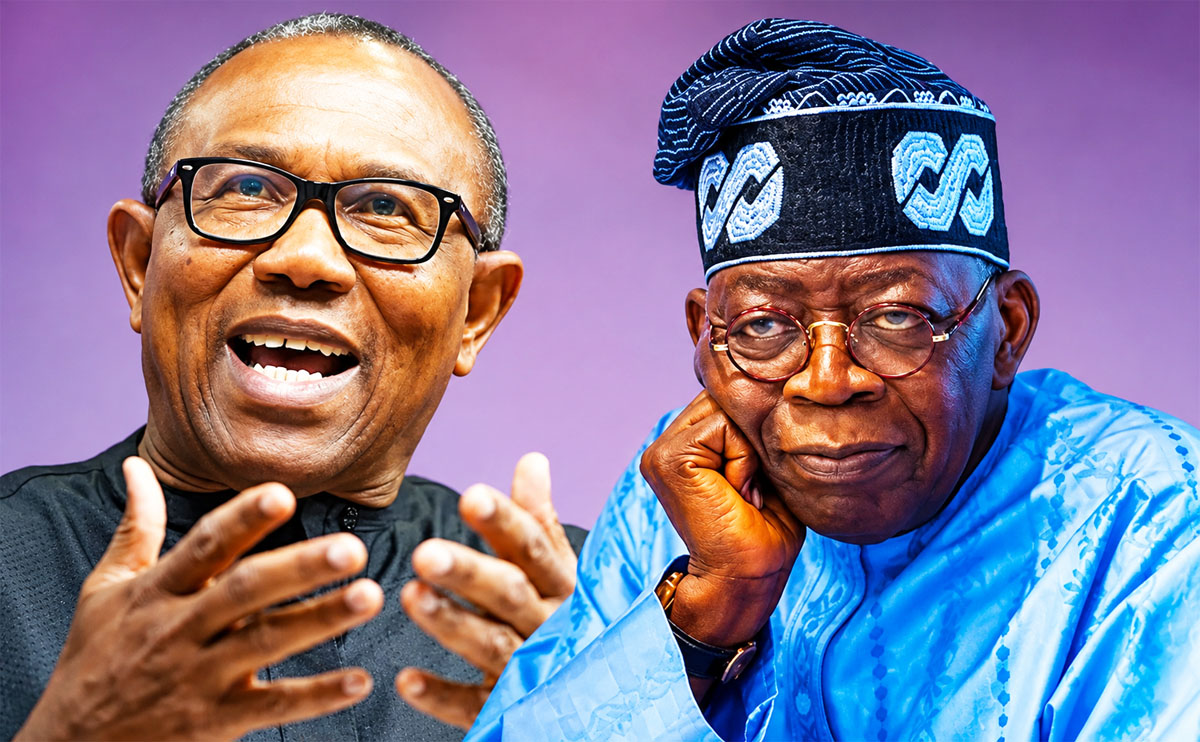
President Bola Ahmed Tinubu has narrowly edged Peter Obi in the latest Oxford-Metro Analytics National Trust Poll conducted ahead of Nigeria’s 2027 presidential election, with the incumbent recording 1,067 more responses than the former Anambra State governor.
The poll, which closed on September 7, recorded 69,110 approved and unflagged responses in its final analytical dataset. Tinubu received 24,469 responses, representing 35.41 per cent, while Obi polled 23,402 responses, representing 33.86 per cent.
The figures put Tinubu 1.55 percentage points ahead of Obi, based on the published percentages. Former Vice-President Atiku Abubakar, the ADC presidential candidate, finished third with 18,430 responses, representing 26.67 per cent of the total.
The result points to a closely contested three-way race among Tinubu, Peter Obi and Atiku Abubakar, although the poll should not be interpreted as a prediction of the eventual outcome of the 2027 election.
The geographical distribution of the responses presented a more complex picture. Tinubu recorded the highest number of responses in 20 states and the Federal Capital Territory, while Obi and Atiku each led in eight states.
Tinubu’s reported support extended into several northern states where he did not emerge as the leading presidential candidate in the 2023 election. He recorded the highest number of responses in Kaduna, Katsina and Gombe, states won by Atiku in 2023.
The President also led in Kano, where Rabiu Kwankwaso of the New Nigeria Peoples Party won the presidential election in 2023.
READ ALSO:
- Obafemi Martins Plans Six-Zone Football Tournament for Tinubu’s Re-election
- NANS Threatens ‘Mother of All Protests’ Over Ondo Varsity Strike
- Former PDP Chairman Bamanga Tukur Dies at 90
- Police Arrest Woman Over Alleged Drug Trafficking in Delta
At the geopolitical-zone level, Tinubu led in the South-West, North-West and North-Central, while Obi recorded the strongest showing in the South-East and South-South. Atiku dominated the North-East.
Tinubu’s strongest regional performance came in the South-West, where he received 10,968 responses, representing 43.53 per cent of participation in the zone. He also led in the North-West with 4,129 responses, representing 43.10 per cent, while his 6,370 responses in the North-Central accounted for 36.97 per cent of participation.
Obi recorded his strongest performance in the South-East, where he secured 5,796 responses, representing 63.97 per cent of the region’s participation. He also led in the South-South with 2,389 responses, representing 41.48 per cent.
Atiku’s strongest regional showing came in the North-East, where he received 1,235 responses, accounting for 55.46 per cent of participation in the zone.
The regional figures underline the different political bases of the three leading contenders. While Tinubu recorded a broader geographical spread in the poll, Obi maintained a commanding position in the South-East and a lead in the South-South, while Atiku’s strongest support remained concentrated in the North-East.
Some state-level contests were particularly close. In Kogi State, Tinubu received 39 responses, compared with 38 for Atiku and 33 for Obi, out of 110 responses recorded.
The Federal Capital Territory recorded a considerably larger number of participants. Tinubu polled 5,599 responses against Obi’s 5,278, giving the President a lead of 321 responses, while Atiku received 3,954.
In Rivers State, Tinubu also finished ahead of Obi, polling 975 responses against Obi’s 892, while Atiku received 568.
Beyond the three leading contenders, Omoyele Sowore received 1,016 responses, followed by Oyo State Governor Seyi Makinde with 519 and former President Goodluck Jonathan with 284.
Other candidates recorded significantly smaller figures, with Anita Zugwai-Chukwu receiving 18 responses, Sandy Onor six and Prince Kennedy Ahanotu two.
The poll also recorded 638 participants who selected “I Do Not Trust Any Candidate Yet”, while 204 respondents were undecided and 122 selected “Other Candidate”.
READ ALSO:
- Dangote raises petrol price 6.7% to N1,350/litre
- Anambra Police Arrest Woman Over Alleged Sexual Abuse of Child, Rescue Four
- MURIC fires back at Peter Obi: Forget Sallah ceremony, free Nigerian Muslims
One of the most significant features of the exercise was the concentration of participation in a relatively small number of locations. Lagos and the FCT accounted for 54.44 per cent of all responses, meaning more than half of the final dataset came from the two locations.
The final dataset also contained 56 diaspora responses, which were excluded from the six domestic geopolitical-zone tallies.
The distribution of responses varied considerably from state to state. While Lagos and the FCT recorded tens of thousands of responses combined, some states had fewer than 100 participants. This variation is important when interpreting state-by-state comparisons and the broader national figures.
Oxford-Metro Analytics describes the exercise as an open public-pulse poll rather than a conventional scientific opinion survey. The organisation says its platform applies measures designed to identify duplicate submissions, suspicious voting patterns and other forms of manipulation.
However, the poll’s own methodology makes clear that it should not be regarded as a population-representative scientific poll or an official election forecast. The results reflect the preferences expressed by people who participated in the online exercise and were approved for inclusion in the final dataset.
That distinction is particularly important ahead of the 2027 Nigerian presidential election, as the actual electorate will be determined by registered voters who participate in the election conducted by the Independent National Electoral Commission.
The Oxford-Metro figures nevertheless provide an indication of the political preferences expressed by participants in the exercise and highlight the competitiveness of the emerging presidential contest.
Tinubu’s narrow national lead over Obi contrasts with the stronger regional leads recorded by the two opposition contenders in their respective areas of strength. The figures also show Atiku retaining significant support in the North-East despite trailing Tinubu and Obi nationally.
The results could therefore fuel further debate among political parties and supporters about the strength of the major candidates as preparations for the 2027 presidential election intensify.
For Tinubu, the poll’s most notable feature is the reported lead across the South-West, North-West and North-Central, alongside gains in northern states where other candidates performed strongly in 2023.
For Obi, the figures reinforce his continued dominance among participants in the South-East and his lead in the South-South. Atiku’s performance in the North-East, meanwhile, points to his continuing regional strength.
Overall, the Oxford-Metro exercise places Tinubu on 35.41 per cent, Obi on 33.86 per cent and Atiku on 26.67 per cent among the 69,110 approved responses.
With the difference between Tinubu and Obi standing at just 1,067 responses, the figures indicate a close contest within the poll, while the significant regional variations suggest that the geographical distribution of political support could remain a major factor in the build-up to the 2027 election.
2027: Tinubu Edges Peter Obi by 1.55 Points in Oxford-Metro Poll
Politics
Haske Dumps APC for APM, Sets Sights on 2027 Adamawa Governorship
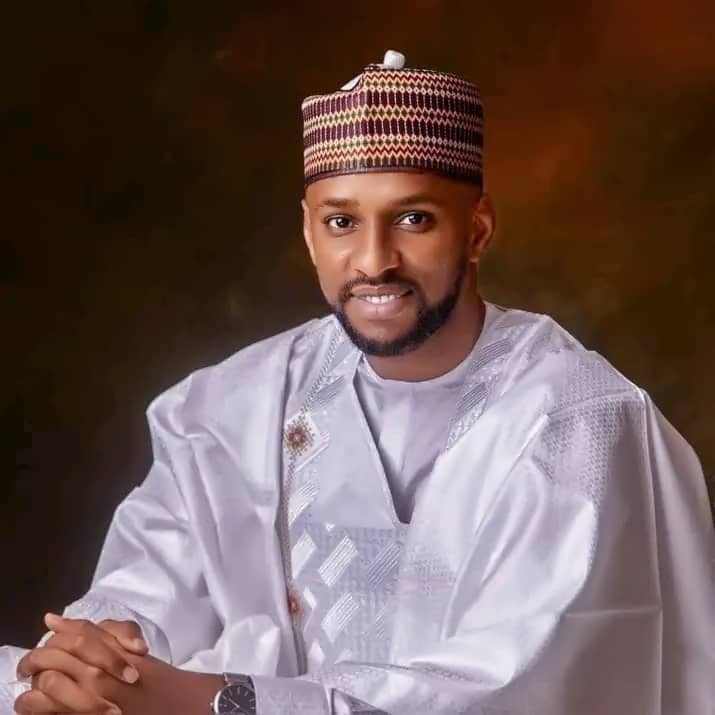
The political contest for Adamawa State’s governorship in 2027 has taken a new turn following Abdulrahman Haske‘s decision to abandon the APC and contest the election on the platform of the Allied Peoples Movement.
Haske, a businessman and politician, formally joined the APM at a gathering in Yola on Saturday attended by party officials, community leaders and supporters drawn from across Adamawa.
His decision comes months after he sought the APC ticket for the governorship race. Reports earlier in September had indicated that he was preparing to leave the ruling party, with associates saying his supporters were also moving towards the APM.
Now under the APM, Haske says his political agenda will centre on improving the lives of residents through stronger investment in agriculture, infrastructure, education and healthcare.
He also identified security, job creation and economic empowerment as priorities, while promising greater accountability in the handling of government resources.
Accepting the party’s ticket, Haske expressed appreciation to the APM leadership and pledged to approach the 2027 contest with what he described as integrity, hard work and commitment to public service.
Dantalle, the APM national chairman, said Haske’s emergence followed consultations by the party and reflected its confidence in his leadership capacity.
According to him, the former APC aspirant’s emphasis on inclusive development and youth empowerment made him suitable to represent the party in the election.
At the state level, APM chairman Badejo Bello described Haske as a bridgebuilder who understands the challenges facing Adamawa and said the party was confident his candidacy could provide voters with an alternative in 2027.
With Haske now formally carrying the APM flag, attention will turn to how his new political platform affects the race and the wider alignment of political forces in Adamawa ahead of the election.
Politics
Bamanga Tukur Dies at 90, Tinubu Pays Tribute to Ex-PDP Chairman
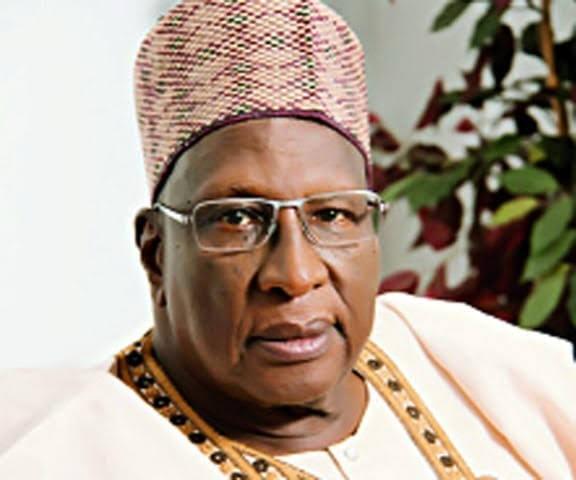
Bamanga Tukur Dies at 90, Tinubu Pays Tribute to Ex-PDP Chairman
President Bola Tinubu has mourned the death of former Peoples Democratic Party National Chairman, Bamanga Mohammed Tukur, describing the former governor and minister as a towering statesman whose footprints cut across Nigeria’s political, economic and business history.
Tukur, who also served as governor of the old Gongola State and Minister of Industries, died on Saturday at the age of 90.
In a condolence statement issued by his Special Adviser on Information and Strategy, Bayo Onanuga, Tinubu said Tukur’s long career in public administration, governance, industry, politics and pan-African business leadership made him an important figure in Nigeria’s national development.
Born on September 15, 1935, Tukur served as General Manager of the Nigerian Ports Authority between 1975 and 1982, where the President credited him with contributing to the development of Nigeria’s maritime sector.
He later ventured into partisan politics and was elected governor of the old Gongola State in 1983, before the state was eventually split into the present Adamawa and Taraba states.
Paying tribute to the deceased, Tinubu described Tukur as “urbane, generous and deeply rooted in the values of integrity and service that the Adamawa Emirate and the nation hold dear.”
He added, “He was a man of big ideas and bold enterprise who believed in Nigeria’s limitless potential. Nigeria will sorely miss his wise counsel and fatherly guidance.”
Beyond public office, Tukur established a strong presence in the private sector as Chairman of BHI Holdings and the DADDO Group of Companies, with business interests spanning manufacturing, agriculture, logistics and trading.
He also contributed to African economic integration and business advocacy, serving as Executive President of the African Business Roundtable and Chairman of the NEPAD Business Group.
At the political level, Tukur became National Chairman of the PDP in March 2012, serving until January 2014 under former President Goodluck Jonathan.
Tinubu extended his condolences to the Tukur family, the Fombina Emirate, the Adamawa State Government and the political and business communities in Nigeria and across Africa.
He prayed to Allah to forgive the deceased’s shortcomings, grant him Aljannah Firdaus and give his family and other mourners the strength to bear the loss.
The family had earlier announced Tukur’s death in a statement signed by his son, Hon. Awwal D. Tukur.
-

 metro1 day ago
Woman disguises as Muslim woman in Niqab to steal in Ado-Ekiti market, video sparks outrage
-

 metro2 days ago
Police Arrest Woman Over Fake OPay Shutdown Notice
-

 Politics3 days ago
Amaechi will be caged politically, Wike shouldn’t bother about Ikwerre votes — Wihioka
-

 metro2 days ago
Residents Cry Out Over Poorly Constructed Entrance of Ademola Abiola Street, Demand Urgent Intervention
-
 Politics2 days ago
Remi Tinubu Appeals To South-East Voters, Says She Wants To ‘Enjoy Nigeria’ In Old Age
-

 Politics2 days ago
Breaking the Cycle of Collective Guilt: When a Ruling Party Voice Backs Peter Obi
-
 Business11 hours ago
Dangote: ₦525 Refinery Shares Could Rise to ₦10,000
-

 News1 day ago
AI on the Roads: LASTMA Turns to China to Fix Lagos Traffic