
Opinion
P&G exit : Why more investors will leave Nigeria – Atedo Peterside
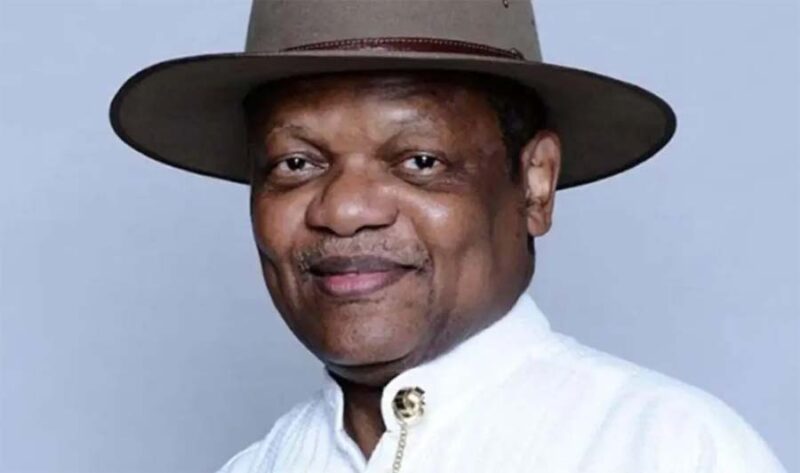
P&G exit : Why more investors will leave Nigeria – Atedo Peterside
An Economist and Founder of the Stanbic IBTC Bank, Mr. Atedo Peterside, has stated that businesses that value rule of law, policy consistency, macroeconomic stability and level playing field would continue to depart from Nigeria, saying only investors who know how to “partner” with politicians would stay.
Peterside’s sober and penetrating insights to the factors behind the trend where some multinational manufacturing concerns were shutting down operations and leaving the country followed the announcement by Procter &Gamble (P&G) to stop its manufacturing activities in Nigeria.
Peterside wrote on his X (Twitter) handle: “Another way to look at this @ProcterGamble exit story is that multiple investors who cherish the rule of law, policy consistency, macroeconomic stability, a level playing field etc. are running away from Nigeria.
“They are being ‘replaced’ only partially by investors who know how to ‘partner’ with politicians and/or game the system through waivers, exemptions etc.”P&G is the third multinational to announce its exit from Nigeria after GlaxoSmithKline Consumer Nigeria Plc (GSK) and Sanofi-Avantis Nigeria Limited, a French pharmaceutical company had announced similar decisions.
Also reacting to P&G’s decision to quit Nigeria, the Director General of Nigeria Employers’ Consultative Association (NECA), Mr. Adewale-Smatt Ayorinde, urged the federal government to take proactive action to stop businesses organisations from moving out the country because, “these regrettable departures will persistently undermine the federal government’s efforts to attract Foreign Direct Investment, rendering its initiatives ineffective.
”NECA, according to Ayorinde, “strongly emphasised the immediate need for decisive measures to halt the ongoing trend of companies divesting from the country.
READ ALSO:
- ECOWAS court declines Niger junta’s request to lift sanctions
- Two more of abducted youth corps members regain freedom — NYSC
- Emefiele bubbling in our custody, no DSS, EFCC’s threats, says NCoS CG
“We urge a quick and definitive action to arrest the continuous exit and divestment of legitimate organisations in Nigeria.
In the last few years, hitherto strong brands, both multinationals and strong local brands have either closed shop or divested fully or partially.”He noted that Nigeria’s “challenging business landscape, marked by stringent regulatory and legislative activities, insufficient infrastructure, and policy inconsistencies collectively exacerbates the difficulties faced by businesses.”
He observed that the situation whereby, “regulatory bodies tasked with fostering business growth persist in prioritising revenue generation at the expense of their core mandate while legislators, in the guise of oversight functions, consistently create impediments for organised businesses, hindering their operations” would frustrate businesses and foster their exit from Nigeria.
Oyerinde, “earnestly implored President Bola Tinubu, as well as the Minister for Finance and the coordinating Minister of the Economy, to prioritise the survival of local businesses as the primary step before actively seeking Foreign Direct Investment.”He, however, commended the federal government for supporting the Small and Medium Enterprises (SMEs), and manufacturers through the disbursement of N125 billion as part of Presidential Palliative Programme (PPP).The Director General of Lagos Chamber of Commerce and Industry (LCCI), Dr. Chinyere Almona, described the increase in exit plans, or a reduction in involvement in the Nigerian market, by the multinationals as worrisome.
Almona said: “In Nigeria, lingering foreign exchange scarcity, poor power supply, port congestion, multiple taxation, insecurity, and poor infrastructure, among others, have taken a toll on many businesses in the country.“The chamber recommends that the government should implement measures to stabilise and ensure the availability of foreign exchange for businesses, particularly those operating in dollar-denominated environments.
“The LCCI also implores the government to create a more flexible and transparent foreign exchange policy to address scarcity issues.“Furthermore, the chamber urges the government to engage multinational corporations and the business community to understand their challenges and gather input and feedback on policy decisions to collaboratively develop solutions that will forestall the exodus of businesses from Nigeria.“The CBN should prioritise the stability of the country’s currency and adopt the right policy mix to ensure price stability.”
Recently, the Chief Financial Officer of P&G, Mr. Andre Schulten, stated at the Morgan Stanley Global Consumer & Retail Conference that “we have announced that we will turn Nigeria into an import-only market, effectively dissolving our footprint on the ground in Nigeria and reverting to an import-only model.”
READ ALSO:
- Osimhen battles Salah, Hakimi for CAF best player award 2023
- Kaduna massacre intentional, Gumi hits military
- Gunmen kidnap 10 varsity’s students in Nasarawa
Schulten added that “the other reality that arises in some of these markets is that it gets increasingly difficult to operate and create U.S dollar value. So when you think about places like Nigeria and Argentina, it is difficult for us to operate because of the macroeconomic environment.“So with that in mind, we are announcing a restructuring program with the intent to adjust operating model and adjust the portfolio to ensure that we maintain the portfolio discipline that has brought us to this point.”
The P&G, in its 2023 annual report for the fiscal year that ended on June 30, 2023, which was prepared in pursuant to Section13 or 15(d) of the United States Securities and Exchange Act of 1934, categorically identified conditions that might cause it to remove its operation from any country.It stated that there would be “need to de-consolidate or even exit certain businesses in particular countries” where its business, operations or employees have been and could continue to be adversely affected by “geopolitical conflicts, political volatility, trade controls, labor market disruptions or other crises or vulnerabilities in individual countries or regions (including) deterioration in the creditworthiness of local governments, particularly in emerging markets.
“Our business could be negatively impacted by reduced demand for our products related to one or more significant local, regional or global economic or social disruptions. These disruptions have included and may in the future include: a slow-down, recession or inflationary pressures in the general economy; reduced market growth rates; tighter credit markets for our suppliers, vendors or customers; a significant shift in government policies; significant social unrest.
“Results of elections, referendums, sanctions or other political processes and pressures in certain markets in which our products are manufactured, sold or distributed could create uncertainty regarding how existing governmental policies, laws and regulations may change, including with respect to sanctions, taxes, tariffs, import and export controls and the general movement of goods, materials, services, capital, data and people between countries.
“The potential implications of such uncertainty, which include, among others, exchange rate fluctuations, new or increased tariffs, trade barriers and market contraction, could adversely affect the company’s results of operations and cash flows.”
It stated further that it is “a global company, with operations in approximately 70 countries and products sold in approximately 180 countries and territories around the world.
“Fluctuations in exchange rates for foreign currencies have and could continue to reduce the U.S. dollar value of sales, earnings and cash flows we receive from non-U.S. markets, increase our supply costs (as measured in U.S. dollars) in those markets, negatively impact our competitiveness in those markets or otherwise adversely.
“Moreover, discriminatory or conflicting fiscal or trade policies in different countries, including changes to tariffs and existing trade policies and agreements, could adversely affect our results.”
P&G exit : Why more investors will leave Nigeria – Atedo Peterside
(THISDAY)









Opinion
El Rufai’s Arise News mind game with Ribadu, By Farooq Kperogi

El Rufai’s Arise News mind game with Ribadu, By Farooq Kperogi
El Rufai’s Arise News mind game with Ribadu, By Farooq Kperogi
Opinion
Oshiomhole: Behold the 13th disciple of Christ
Oshiomhole: Behold the 13th disciple of Christ
Opinion
AFCON 2025: Flipping Content Creation From Coverage to Strategy

AFCON 2025: Flipping Content Creation From Coverage to Strategy
By Toluwalope Shodunke
The beautiful and enchanting butterfly called the Africa Cup of Nations (AFCON) emerged from its chrysalis in Khartoum, Sudan, under the presidency of Abdelaziz Abdallah Salem, an Egyptian, with three countries—Egypt, Sudan, and Ethiopia—participating, and Egypt emerging as the eventual winner.
The reason for this limited participation is not far-fetched. At the time, only nine African countries were independent. The remaining 45 countries that now make up CAF’s 54 member nations were either pushing Queen Elizabeth’s dogsled made unique with the Union Jack, making supplications at the Eiffel Tower, or knocking at the doors of the Palácio de Belém, the Quirinal Palace, and the Royal Palace of Brussels—seeking the mercies of their colonial masters who, without regard for cultures, sub-cultures, or primordial affinities, divided Africa among the colonial gods.
From then until now, CAF has had seven presidents, including Patrice Motsepe, who was elected as the seventh president in 2021. With more countries gaining independence and under various CAF leaderships, AFCON has undergone several reforms—transforming from a “backyard event” involving only three nations into competitions featuring 8, 16, and now 24 teams. It has evolved into a global spectacle consumed by millions worldwide.
Looking back, I can trace my personal connection to AFCON to table soccer, which I played alone on concrete in our balcony at Olafimihan Street—between Mushin and Ilasamaja—adjacent to Alafia Oluwa Primary School, close to Alfa Nda and Akanro Street, all in Lagos State.
Zygmunt Bauman, the Polish-British sociologist who developed the concept of “liquid modernity,” argues that the world is in constant flux rather than static, among other themes in his revelatory works.
For the benefit of Millennials (Generation Y) and Generation Z—who are accustomed to high-tech pads, iPhones, AI technologies, and chat boxes—table soccer is a replica of football played with bottle corks (often from carbonated drinks or beer) as players, cassette hubs as the ball, and “Bic” biro covers for engagement. The game can be played by two people, each controlling eleven players.
I, however, enjoyed playing alone in a secluded area, running my own commentary like the great Ernest Okonkwo, Yinka Craig, and Fabio Lanipekun, who are all late. At the time, I knew next to nothing about the Africa Cup of Nations. Yet, I named my cork players after Nigerian legends such as Segun Odegbami, Godwin Odiye, Aloysius Atuegbu, Tunji Banjo, Muda Lawal, Felix Owolabi, and Adokiye Amiesimaka, among others, as I must have taken to heart their names from commentary and utterances of my uncles resulting from sporadic and wild celebrations of Nigeria winning the Cup of Nations on home soil for the first time.
While my connection to AFCON remained somewhat ephemeral until Libya 1982, my AFCON anecdotes became deeply rooted in Abidjan 1984, where Cameroon defeated Nigeria 3–1. The name Théophile Abéga was etched into my youthful memory.
Even as I write this, I remember the silence that enveloped our compound after the final whistle.
It felt similar to how Ukrainians experienced the Battle of Mariupol against Russia—where resolute resistance eventually succumbed to overwhelming force.
The Indomitable Lions were better and superior in every aspect. The lion not only caged the Eagles, they cooked pepper soup with the Green Eagles.
In Maroc ’88, I again tasted defeat with the Green Eagles (now Super Eagles), coached by the German Manfred Höner. Players like Henry Nwosu, Stephen Keshi, Sunday Eboigbe, Bright Omolara, Rashidi Yekini, Austin Eguavoen, Peter Rufai, Folorunsho Okenla, Ademola Adeshina, Yisa Sofoluwe, and others featured prominently. A beautiful goal by Henry Nwosu—then a diminutive ACB Lagos player—was controversially disallowed.
This sparked outrage among Nigerians, many of whom believed the referee acted under the influence of Issa Hayatou, the Cameroonian who served as CAF president from 1988 to 2017.
This stroll down memory lane illustrates that controversy and allegations of biased officiating have long been part of AFCON’s history.
The 2025 Africa Cup of Nations in Morocco, held from December 21, 2025, to January 18, 2026, will be discussed for a long time by football historians, raconteurs, and aficionados—for both positive and negative reasons.
These include Morocco’s world-class facilities, the ravenous hunger of ball boys and players (superstars included) for the towels of opposing goalkeepers—popularly dubbed TowelGate—allegations of biased officiating, strained relations among Arab African nations (Egypt, Algeria, Tunisia, and Morocco), CAF President Patrice Motsepe’s curt “keep quiet” response to veteran journalist Osasu Obayiuwana regarding the proposed four-year AFCON cycle post-2028, and the “Oga Patapata” incident, where Senegalese players walked off the pitch after a legitimate goal was chalked off and a penalty awarded against them by DR Congo referee Jean-Jacques Ndala.
While these narratives dominated global discourse, another critical issue—less prominent but equally important—emerged within Nigeria’s media and content-creation landscape.
Following Nigeria’s qualification from the group stage, the Super Eagles were scheduled to face Mozambique in the Round of 16. Between January 1 and January 3, Coach Eric Chelle instituted closed-door training sessions, denying journalists and content creators access, with media interaction limited to pre-match press conferences.
According to Chelle, the knockout stage demanded “maximum concentration,” and privacy was necessary to protect players from distractions.
This decision sparked mixed reactions on social media.
Twitter user @QualityQuadry wrote:
“What Eric Chelle is doing to journalists is bad.
Journalists were subjected to a media parley under cold weather in an open field for the first time in Super Eagles history.
Journalists were beaten by rain because Chelle doesn’t want journalists around the camp.
Locking down training sessions for three days is unprofessional.
I wish him well against Mozambique.”
Another user, @PoojaMedia, stated:
“Again, Eric Chelle has closed the Super Eagles’ training today.
That means journalists in Morocco won’t have access to the team for three straight days ahead of the Round of 16.
This is serious and sad for journalists who spent millions to get content around the team.
We move.”
Conversely, @sportsdokitor wrote:
“I’m not Eric Chelle’s biggest supporter, but on this issue, I support him 110%.
There’s a time to speak and a time to train.
Let the boys focus on why they’re in Morocco—they’re not here for your content creation.”
From these three tweets, one can see accessibility being clothed in beautiful garments. Two of the tweets suggest that there is only one way to get to the zenith of Mount Kilimanjaro, when indeed there are many routes—if we think within the box, not outside the box as we’ve not exhausted the content inside the box.
In the past, when the economy was buoyant, media organisations sponsored reporters to cover the World Cup, Olympics, Commonwealth Games, and other international competitions.
Today, with financial pressures mounting, many journalists and content creators seek collaborations and sponsorships from corporations and tech startups to cover sporting events, who in turn get awareness, brand visibility, and other intangibles.
As Gary Vaynerchuk famously said, “Every company is a media company.” Yet most creators covering AFCON 2025 followed the same playbook.
At AFCON 2025, most Nigerian journalists and content creators pitched similar offerings: on-the-ground coverage, press conferences, team updates, behind-the-scenes footage, analysis, cuisine, fan interactions, and Moroccan cultural experiences.
If they were not interviewing Victor Osimhen, they were showcasing the stand-up comedy talents of Samuel Chukwueze and other forms of entertainment.
What was missing was differentiation. No clear Unique Selling Proposition (USP). The result was generic, repetitive content with little strategic distinction. Everyone appeared to be deploying the same “Jab, Jab, Jab, Hook” formula—throwing multiple jabs of access-driven content in the hope that one hook would land.
The lesson is simple: when everyone is jabbing the same way, the hook becomes predictable and loses its power.
As J. P. Clark wrote in the poem “The Casualties”, “We are all casualties,” casualties of sameness—content without differentiation. The audience consumes shallow content, sponsors lose return on investment, and creators return home bearing the “weight of paper” from disappointed benefactors.
On November 23, 1963, a shining light was dimmed in America when President John F. Kennedy was assassinated.
As with AFCON today, media organisations sent their best hands to cover the funeral, as the who’s who of the planet—and if possible, the stratosphere—would attend. Unconfirmed reports suggested that over 220 VVIPs were expected.
While every newspaper, radio, and television station covered the spectacle and grandeur of the event, one man, Jimmy Breslin, swam against the tide. He chose instead to interview Clifton Pollard, the foreman of gravediggers at Arlington National Cemetery—the man who dug John F. Kennedy’s grave.
This act of upended thinking differentiated Jimmy Breslin from the odds and sods, and he went on to win the Pulitzer Prize in 1986.
Until journalists and content creators stop following the motley and begin swimming against the tide, access will continue to be treated as king—when in reality, differentiation, aided by strategy, is king.
When every journalist and content creator is using Gary Vaynerchuk’s “Jab, Jab, Jab, Hook” template while covering major sporting events, thinkers among them must learn to replace one jab with a counterpunch—and a bit of head movement—to stay ahead of the herd.
Toluwalope Shodunke can be reached via tolushodunke@yahoo.com

-

 News1 day ago
Saudi Arabia Confirms Sighting of Ramadan Crescent, Fasting Begins Wednesday
-

 metro2 days ago
US Freezes Assets of Eight Nigerians Over Boko Haram, ISIL, Cybercrime Links
-

 metro1 day ago
Lagos Woman Shares Ordeal After Alleged Rape, Sparks Nationwide Outcry
-

 News24 hours ago
Ramadan Begins in Nigeria as Sultan Confirms Crescent Sighting
-

 Entertainment2 days ago
Mystery in Lekki: Police Probe Death of Two Nollywood Crew Found Lifeless in Parked Car
-

 metro2 days ago
Terror in Lagos Traffic: Cutlass Gang Unleashes Mayhem on Mile 12–Ketu Road
-

 Auto2 days ago
Appeal Court Ruling on VIO Limited to Abuja, Not Lagos — LASG
-
 News2 days ago
Teargas, Chaos at EFCC as El-Rufai’s Supporters Clash with Security Operatives