

News
NNPCL to pay pending $1.76bn equity in Dangote Refinery
NNPCL to pay pending $1.76bn equity in Dangote Refinery
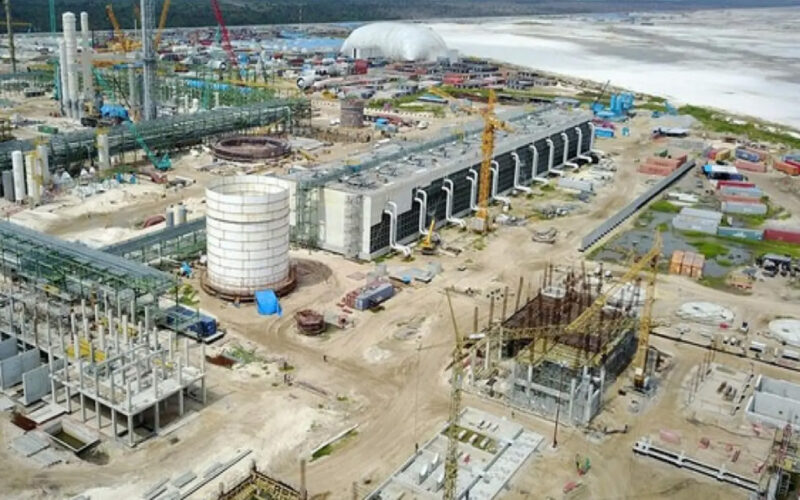
The Nigerian National Petroleum Company Limited (NNPCL) is to pay its pending $1.76 billion equity in Dangote Refinery with $2.5/barrel crude oil and dividend accruals.
The NNPCL disclosed that once the plant came on stream, which was initially for April 2023, it would begin the discounting of $2.5 for every barrel from the supply of 300,000 barrels per day to offset its remaining equity participation.
This is contained in NNPCL’s latest Audited Financial Statement (AFS) released on Friday.
“In September 2021, the NNPC acquired 20 per cent interest in Dangote Petroleum Refinery and Petrochemicals Free Zone Enterprise (DPRP FZE) worth $2.76 billion. This investment is held by NNPC Greenfield (a special purpose vehicle that is 100 per cent owned by NNPC) in trust for NNPC.
“This acquisition was financed by a $1.036 billion funding of which $1 billion was paid to Dangote Refinery and $36 million accounting for transaction costs.
“The balance of the cost of equity investments made in DPRP FZE, which is $1.76 billion will be paid upon completion of the refinery project starting April 1, 2023 or any other date agreed between the parties, that is the NNPC and Dangote Oil Refining Company Limited.
“(This shall be done) via a combination of a $2.5/bbl discount on the official selling price per barrel on 300,000 barrels per day to DPRP FZE, and 100 per cent of NNPC’s portion of any dividend declared by DPRP FZE throughout the repayment period,” the report said .
READ ALSO:
- AFCON 2023: Give us this day, fans tell Super Eagles
- Israel must prevent acts of genocide in Gaza, ICJ rules
- Customs confiscate N4bn cocaine, arms from South Africa, Canada
However, it stated that it already entered into a forward sale agreement with Lekki Refinery Funding Limited, to supply 35,000 barrels of crude oil per day for the settlement of the $1.036 billion (N426.2 billion) funding already received for the financing of the investment in Dangote refinery.
“The interest rate for the facility is three-month libor plus 6.125 per cent. The arrangement has been scheduled to commence from August 30, 2023. Project Bison has been transferred to NNPC Limited,” the AFS highlighted.
Aside from the 35,000 forward sale for the repayment of the $1 billion part payment for the Dangote refinery, the NNPC also has a 90,000 bpd oil-for-debt financing deal of $3.3 billion with Afreximbank.
The increase in the overall performance of the NNPC, including the profit which it attributed to “owners of the company” and “non-controlling interest”, may also have been further enhanced by the recent decision to take the liability occasioned by the controversial fuel subsidy off its books after commercialisation.
Meanwhile, the report said NNPCL increased its revenue profile by 37.2 per cent, from N6.42 trillion in 2021 to N8.81 trillion in 2022, its latest Audited Financial Statement (AFS) released yesterday revealed.
The document, the fourth in the series to be made public since 1977, when the then NNPC began operations, also showed that the company recorded Profit After Tax (PAT) of N2.52 trillion, representing about 274 per cent increase when compared to the N674 billion it recorded in 2021.
In all, the audited statement for the year ended December 2022 showed that during the period under review, the NNPC had total non-current assets of N37 trillion and current assets of N21.59 trillion, to give a total of N58.65 trillion in assets.
READ ALSO:
- Pandemonium as teacher allegedly flogs pupil to death in Lagos
- Communal clash looms between Osogbo, Iragbiji over boundary matter
- Oluomo challenges impeachment, says he remains Ogun assembly speaker
It also meant an increase by about 260.47 per cent compared to N16.27 trillion in 2021. But non-current liabilities stood at N19.98 trillion, while current liabilities were N29.3 trillion, to hit N49.35 trillion at the end of 2022 as against N13.46 trillion in 2021. This was an increase of about 266.6 per cent.
According to the new AFS, deferred tax liabilities was N13.23 trillion during the year, while deferred tax assets were N3.098 trillion. Cost of sales climbed to N6.7 trillion in 2022, that is, a 25.47 per cent increase from N5.34 trillion in 2021.
The NNPCL’s auditors noted that for the 16-month period ending December 2022, they had no doubt that the NNPC could continue as a going concern without fear of going bankrupt.
“The financial statements have been prepared in accordance with the going concern principle under the historical cost convention.
“Nothing has come to the attention of the directors to indicate that NNPC will not remain a going concern for at least 12 months from the date of these financial statements. At this time, no significant events after the reporting date that may have an impact on going concern have been noted,” the auditors said in their notes to the 2022 AFS.
Signed into law by ex-President Muhammadu Buhari in 2021, under the PIA, NNPC officially ‘transformed’ from a state-run oil corporation to a commercial venture in July 2022, even though it is still, to a large extent, being controlled by the federal government.
Looking back, in 2018, the NNPCL recorded a loss of N803 billion, while in 2019, it was reduced to N1.7 billion by the company. The NNPCL appeared to have turned the corner in 2020 when it posted a profit of N287 billion for the first time in its history and thereafter disclosed N674.1 billion as profit in 2021.
NNPCL to pay pending $1.76bn equity in Dangote Refinery





News
NEC Targets Cheaper Fares, Food Prices in 90-Day Plan to Ease Nigerians’ Hardship
NEC Targets Cheaper Fares, Food Prices in 90-Day Plan to Ease Nigerians’ Hardship
Nigerians struggling to cope with soaring food prices and transport fares may be in line for some relief as the National Economic Council has approved a 90-day economic action plan aimed at reducing the cost of living and making essential services more affordable.
At the heart of the initiative is a push to ensure that government economic reforms translate into tangible benefits for ordinary citizens, particularly commuters who spend a significant portion of their daily earnings travelling to work, trading centres and other places of livelihood.
The council has specifically directed federal and state governments to ensure that savings from the use of compressed natural gas-powered and electric vehicles are reflected in lower transport fares, rather than remaining with fleet owners and transport operators.
The plan was proposed by the Federal Ministry of Finance and endorsed on Thursday at the 161st meeting of the NEC, chaired virtually by Vice-President Kashim Shettima.
According to a statement by Stanley Nkwocha, the Senior Special Assistant to the Vice-President on Media and Communications, the 90-day programme has five priority areas: food affordability, tax harmonisation, completion of high-impact projects, removal of investment bottlenecks and regulated household support.
The council’s intervention comes amid persistent pressure on household budgets, with the rising cost of transportation and food leaving many Nigerians with less money to meet other essential needs.
For workers, traders, artisans and small business owners, cheaper transportation could mean retaining more of their daily earnings, while improved food affordability could ease the pressure on already stretched household incomes.
Speaking at the meeting, Shettima said the effectiveness of government policies should be judged by their impact on the daily lives of citizens, including access to affordable transportation, healthcare, employment and financial security.
“The first dividend of prosperity should be the confidence to plan a life. Our task is to make such confidence less dependent on fortune,” he said.
The Vice-President stressed that the National Compressed Natural Gas Bus Initiative should not be judged merely by the number of buses deployed but by how much it reduces the financial burden on commuters.
“The cost of reaching a livelihood should never consume the livelihood itself,” he said.
The council consequently resolved to establish a joint financing framework between the Federal Government and state governments to accelerate the deployment of CNG-powered and electric vehicles.
It also directed relevant authorities to engage transport unions and operators to ensure that the operational savings associated with the vehicles translate into lower fares for passengers.
The directive seeks to address a key concern surrounding the transition to alternative-energy transportation: whether the savings from cheaper fuel and more efficient operations will benefit commuters or simply improve operators’ profit margins.
Beyond transportation, the 90-day plan will focus on measures to improve food affordability, streamline taxation, remove barriers to investment and fast-track projects expected to deliver significant economic benefits.
The NEC also approved the establishment of a national dashboard to monitor projects across the country, with particular emphasis on transparency, accountability and tracking the utilisation of funds generated from the removal of petrol subsidies.
The monitoring mechanism is expected to strengthen oversight of public spending and improve the tracking of projects intended to cushion the effects of economic reforms.
Shettima called for closer cooperation between the Federal Government and state governments, warning that their separate responsibilities must not become excuses for failing to provide essential services.
However, the ultimate test of the 90-day plan will be whether Nigerians begin to experience measurable improvements in the cost of transportation, food and other necessities within the stipulated period.
For a worker who must spend a substantial part of a day’s wages getting to work, or a family struggling to put affordable meals on the table, the success of the initiative will not be determined by government announcements or the number of alternative-fuel buses introduced.
It will be measured by the money left in their pockets at the end of the day.
News
FG Moves Against Filling Stations Short-Changing Nigerians With False Measurements

FG Moves Against Filling Stations Short-Changing Nigerians With False Measurements
The Federal Government has announced plans to intensify nationwide surveillance against false measurements and short-changing of consumers at filling stations and other commercial outlets, warning businesses against practices that deny Nigerians the full value of their money.
The planned enforcement drive is expected to strengthen checks on measuring equipment used in commercial transactions, including fuel dispensers, as authorities seek to curb under-dispensing of petrol and other forms of measurement fraud.
The initiative comes amid renewed concerns about inaccurate fuel pumps at retail outlets, where motorists may pay for a specified quantity of petrol but receive less than the amount displayed on the dispensing meter.
The Nigerian Midstream and Downstream Petroleum Regulatory Authority (NMDPRA) has already raised the alarm over cases of under-dispensing at filling stations across the country and directed operators to carry out immediate calibration and verification of their dispensing equipment.
In September, the regulator warned that filling stations found delivering less fuel than customers paid for, using improperly calibrated equipment or otherwise compromising dispensing accuracy would face enforcement action. Persistent or serious violations could attract sanctions, including the revocation of operating licences.
The NMDPRA said the directive was intended to ensure that motorists receive the correct quantity of petroleum products and restore confidence in transactions within the downstream oil sector.
READ ALSO:
- Police Arrest Man Over Fake Presidency Number Plate in Abuja
- Shettima Blasts States Over Power Woes, Says Govs Must Stop Waiting for Abuja
- Fourth Gas Leak in Six Months: Over 100 Ogun Pupils Hospitalised, Schools Shut as Parents Panic
The regulator also called on industry associations, including the Independent Petroleum Marketers Association of Nigeria (IPMAN), the Petroleum Products Retail Outlets Association of Nigeria (PETROAN), the Major Energy Marketers Association of Nigeria and the Depot and Petroleum Products Marketers Association of Nigeria, to notify their members and ensure compliance.
PETROAN subsequently directed its members nationwide to inspect their dispensing meters, while its president, Billy Gillis-Harry, urged motorists to monitor pump readings and request receipts when buying fuel.
The association acknowledged that dispensing equipment could develop faults through prolonged use, potentially resulting in either under-dispensing or over-dispensing. It said regular checks were necessary to ensure that customers received the quantity for which they paid.
The Federal Government’s planned nationwide crackdown is expected to reinforce efforts to improve measurement accuracy and protect consumers from dishonest commercial practices.
The issue has become particularly significant amid high petrol prices and the deregulation of Nigeria’s downstream petroleum sector, which has left consumers facing varying pump prices across locations.
With motorists spending substantial amounts on fuel, even small discrepancies in dispensing measurements can result in financial losses when repeated across multiple transactions.
Authorities have continued to stress that filling station operators are responsible for ensuring that their equipment is properly maintained, calibrated and verified in line with applicable regulations.
The broader enforcement effort is also expected to address the use of faulty or manipulated measuring equipment in other commercial activities, where inaccurate weights and measurements can similarly short-change consumers.
The Federal Government’s stated objective is to promote fair trade, strengthen consumer protection and ensure that Nigerians receive the exact quantities of goods and services for which they pay.
However, the effectiveness of the planned crackdown will depend on consistent inspections, transparent enforcement and appropriate sanctions against businesses found violating measurement standards.
FG Moves Against Filling Stations Short-Changing Nigerians With False Measurements
News
Jubilation in Ogun Camp as 3,050 NYSC Members Receive ₦50,000 Palliative, 500 Mattresses

Jubilation in Ogun Camp as 3,050 NYSC Members Receive ₦50,000 Palliative, 500 Mattresses
Abeokuta, Ogun State — There was widespread jubilation at the NYSC Orientation Camp in Ogun State on Wednesday following the announcement that 3,050 serving corps members will receive a one-off cash palliative of ₦50,000 to cushion the effects of the current economic hardship in the country.
The announcement, which was met with wild cheers and celebrations, comes as part of the state government’s efforts to support youths undergoing their mandatory one-year national service.
In addition to the cash disbursement, the Ogun State Government has also approved the immediate delivery of 500 mattresses to the camp to improve the living conditions of the corps members.
The news broke via a report by Pulse, detailing that the palliative is aimed at easing the financial burden on the young graduates, particularly in light of the rising cost of living and transportation across the nation.
Visuals from the camp showed corps members in their traditional white and green kits, raising their caps in excitement, a clear indication of the relief the financial support brings.
Speaking on the development, a camp official noted that the cash injection will go a long way in helping the corps members manage their daily expenses, including transportation to their Places of Primary Assignment (PPA) and personal upkeep.
The distribution of the ₦50,000 cash palliative and the provision of the 500 mattresses are expected to be rolled out in the coming days. The move has been widely commended by stakeholders who view it as a proactive step by the Ogun State Government to prioritize the welfare of youths serving in the state.
Jubilation in Ogun Camp as 3,050 NYSC Members Receive ₦50,000 Palliative, 500 Mattresses
-
 metro3 days ago
Atiku: US Lobbying Firm Raises Alarm Over Alleged Assassination Plot
-

 metro3 days ago
‘We Don’t Know What Else to Do’ — Mother Begs for Release of Abducted Children
-

 metro3 days ago
Five Arraigned Over Kidnapping of 20 Prospective NYSC Members in Imo
-

 Auto2 days ago
Hyundai Unveils Mufasa, Grand Creta SUVs to Strengthen Nigeria Line-up (Updated)
-

 Auto3 days ago
Happening now: Hyundai unveiling of Mufasa and Grand Creta
-

 Education2 days ago
NELFUND Warns Schools: Student Loans Are Voluntary, Not Compulsory
-

 Auto3 days ago
No 5% Petrol Tax Plan, Oyedele Says, Amid Public Concerns
-
 News3 days ago
Mexico Clears Reno Omokri as Nigeria’s Ambassador After Eight-Month Wait