

News
Lagos court orders forfeiture of 36 exotic cars allegedly stolen from Canada
Lagos court orders forfeiture of 36 exotic cars allegedly stolen from Canada
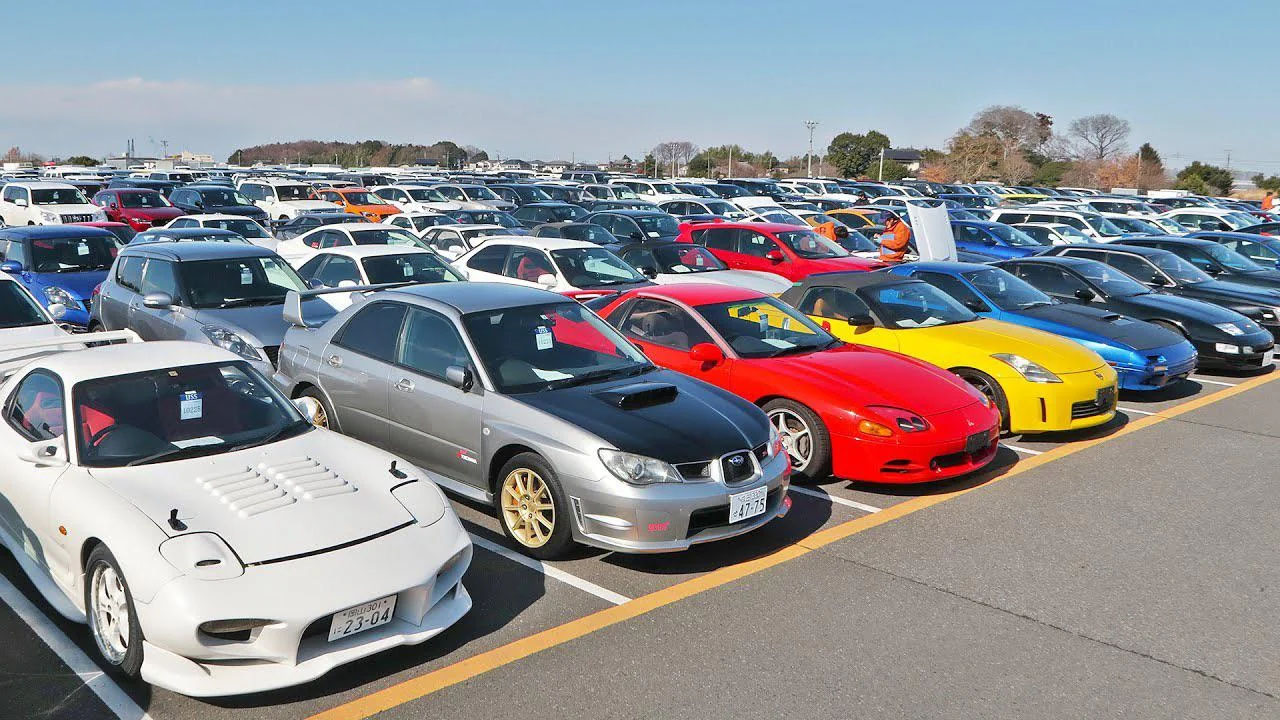
A Lagos Federal High Court has ordered final forfeiture of 36 exotic cars, ‘allegedly stolen’ from Canada to Nigeria.
Justice Deinde Isaac Dipeolu, who presided over the court, made the final forfeiture order while granting an application filed and argued by a lawyer to the Economic and Financial Crimes Commission (EFCC), Mr. A. B. Abdul Rasheed.
The forfeited cars include the 2017 Model Toyota Rav, Ash colour; the 2019 Toyota Tacoma 2019 model, silver colour; the 2019 Lexus RX 350 Grey colour, Lexus RX350 Black colour; the 2019 Model 5 FORD FI50 Black colour; the 2018 Model Honda CRV black colour; 2020 Toyota Tacoma black colour; Dodge Black colour; Land Rover and 2020 Lexus RX 350 Jeep.
Others include; 2016 Toyota 4Runner, black colour; Range Rover, Maroon black; Lexus 460 Saloon black colour; Ford F150 2018 Model, Grey colour; 2019 Lexus RX 350, Gold colour; 2020 Lexus RX 350, White colour; 2021 Lexus RX 350 Sport, grey colour; Honda Civic Touring, red colour; Honda Pilot Suv, grey colour; 2020 Range Rover Suv, grey colour; Toyota 4Runner SUV, Ash colour; Toyota Highlander, Grey colour and 2018 Toyota Tacoma, Black colour.
Others also include; the Toyota 4Runner white colour; the Lexus RX 350 Jeep, white colour; the Lexus RX 350 Jeep White colour; the 2016 Toyota 4runner, ash colour; the 2019 Toyota Tacoma, grey colour; the 2017 Lexus RX 350 Jeep, white colour; 2018 Toyota Highlander Jeep black colour; 2018 Honda CRV, ash colour; 2006 Toyota Yaris, black colour; 2008 Honda Accord, black colour; 2005 Toyota Camry, Gold colour and 2016 Toyota Corolla, Black colour.
And three unclaimed vehicles; Acura MDX Saloon Car, grey colour; 2018 FORD FISO Model, black colour and Ford Model F150, Pickup Ass, white colour.
Listed as respondents in the suit numbered FHC/L/CS/2051/2023 are: Wilmon Autos Nigeria Limited; Ikeoyi Enterprises; Ichie Autos; Bounce Autos; Assured Motors Emeko Auto; CNC Auto; Green Hill Auto; First Core Auto; Samuel Motors; Unique Motors; Nice and Rich Auto; Overall Properties; GIDI Auto and Chris Jane Auto Nigeria Limited.
The auto shops where the cars are recovered are located at Lekki-Ajah; Ojodu-Berger; Ikeja; Festac Town; Magodo and Ikota-Lekki respectively.
The court had on November 29, 2023, made an order for the interim forfeiture of the cars from Canada, after listening to the EFCC lawyer, who moved the application for such an order.
Upon granting the interim forfeiture of the cars, the court ordered the EFCC to advertise the orders in a national newspaper, for any interested persons parties to appear before the court, and show cause, why the cars should not finally be forfeited.
READ ALSO:
- Nigeria’s Woes: There is nothing much anyone can do – Buhari
- Bandits demand N40trn, 150 bikes to release 16 Kaduna residents
- Electricity: FG plans 6,000MW in 6 months, threatens revocation of licences
The EFCC lawyer, Abdulrasheed, however on Wednesday, informed the court of the agency’s motion on notice for final forfeiture of the cars.
Abdulrasheed informed the court that the motion was under sections 44(2)(b) of the Constitution of the Federal Republic Nigeria 1999 (as Amended) Section 17 of the Advance Fee Fraud and Other Fraud Related Offences Act, 2006 and the court’s inherent jurisdiction.
He further informed the court that the order of the court made on November 30, 2023, had been complied with, by advertising the interim forfeiture order on page 19, of the January 30, 2024 edition of The Punch newspaper, and that no person or party has filed any counter to the forfeiture.
He therefore urged the court to grant his agency’s request by ordering the final forfeiture of the cars from Canada.
Justice Dipeolu after listening to the EFCC lawyer and perusing through the processes and citing a plethora of authorities, acceded to the request of the anti-graft agency and ordered the final forfeiture of the 36 cars.
The EFCC in an affidavit in support of the motion deposed to by one of its investigators, Olufemi Olukini.
Parts of the deposition of the deponent in the affidavit read: “Sometime in April 2022, during an official meeting held at 7A Okoti-eboh Street, Ikoyi Lagos between officials of the Royal Canadian Mounted Police (RCMP) and EFCC officials, RCMP officials passed credible intelligence to the Commission which alleged that over 350 vehicles which were comprehensively listed out on an excel sheet with their respective vehicle identification Number (VIN) were stolen from Canada and shipped to Nigeria.
“These vehicles from Canada have been sold and/or are being sold on an online website www.jiji.com by some online vendors/agents while others are displayed for sale at various car stands across the country.
Abdulrasheed added “Our team commenced preliminary investigation into the case by identifying the Vehicle Identification Number (VIN) of each of the said stolen vehicles and subjecting them to analysis using open source intelligence (OSINT). The preliminary results from the analysis revealed the vehicles stolen from Canada were largely located across Lagos State metropolis particularly Lekki at different car stands and places.
“Surveillance was thereafter carried out on the identified locations followed by sting operations which led to the recovery of the vehicles.
“The VIN of the vehicles corresponds with those of the stolen vehicles contained in the intelligence received from Canada’s RCMP and no person has come forward to claim ownership of these vehicles.
“Investigation carried out revealed that a substantial number of the motor vehicles described aforesaid were stolen from Canada and shipped to Nigeria between the years 2019-2021,” he said before explaining how the cars arrived Nigeria from Canada.
“That the cars were parked in residential driveways and company car lots in Canada from where they were stolen. That various Canadian insurance companies which insured the vehicles indemnified the car owners and are pursuing criminal complaints lodged in Canada with the RCMP Liaison Officer attached to the Canadian Deputy High Commission, Nigeria concerning the theft of the vehicles.
“Based on the facts stated in paragraphs, the applicant filed an application dated 13th October, 2023 for interim forfeiture of properties to the Federal Government of Nigeria which was duly granted by this Honourable Court on 29th November, 2023. This Honourable Court ordered for publication of the said order in The Punch Newspaper and the Commission’s website for any interested party to show cause why the property should not be forfeited to the Federal Government of Nigeria.
“That in compliance with the order of the court, Applicant on the 30th January 2024 made publication on page 19 of The Punch newspaper and the Commission’s website. Since then, no person, body corporate or financial institution has come forward to show cause why the property should not be forfeited to the Federal Government of Nigeria.
“That applicant has now filed this Application for the final forfeiture of the Assets to the Federal Government of Nigeria.
“That it is expedient and in the best interest of justice to grant this application. And that the respondents will not be prejudiced by the grant of this application.”
Lagos court orders forfeiture of 36 exotic cars allegedly stolen from Canada








News
Military Salary Hike Sparks Mixed Reactions as South-East Youths Weigh Enlistment
Military Salary Hike Sparks Mixed Reactions as South-East Youths Weigh Enlistment
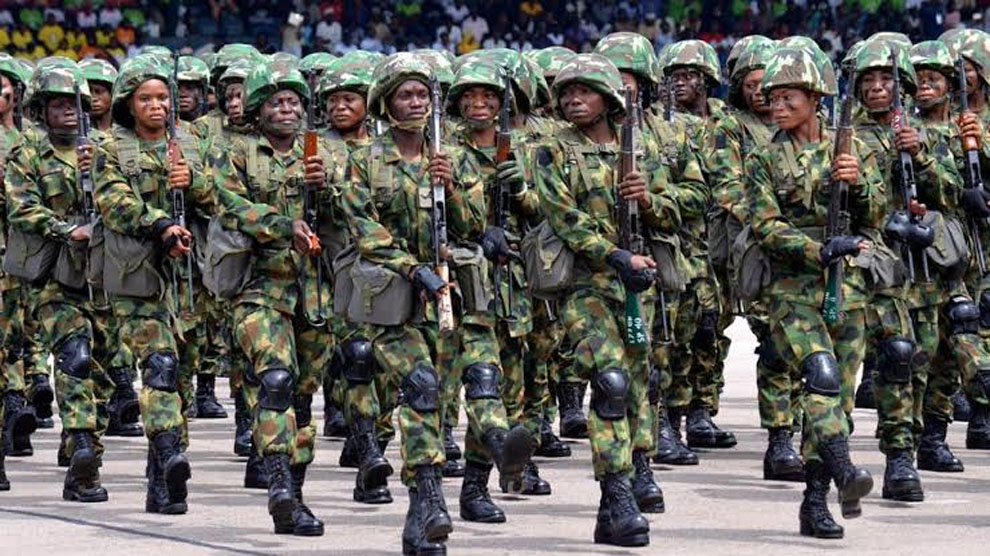
Young men in Nigeria’s South-East are reconsidering military enlistment following President Bola Tinubu’s approval of an 80% salary increase for junior ranks, though deep-seated distrust and historical grievances continue to shape attitudes toward service in the region. The Federal Government approved a salary increment of between 30 and 80 per cent for personnel of the Nigerian Armed Forces, effective September 1, 2026. The decision increased the annual wage bill of the forces from N660 billion to N924 billion, adding N264 billion in personnel expenditure. Approximately 250,000 officers and soldiers will benefit from the new pay structure. Under the new salary structure, junior personnel from Private to Staff Sergeant will receive the highest adjustment of 80 per cent. Middle-level personnel and non-commissioned officers, from Warrant Officer to Colonel, will enjoy a 50 per cent increase, while officers above the rank of Colonel will receive a 30 per cent salary increase. The government also approved the recruitment of 28,000 new personnel into the armed forces and the creation of additional military divisions, as part of the Strategic Force Expansion Initiative aimed at strengthening operational capacity against terrorism, insurgency, banditry, kidnapping and other security threats.
While some young men in the region view the salary increase as an incentive to enlist, others remain reluctant due to concerns about career prospects, safety and the legacy of past military actions. Stephen Ezike, a bucket hawker from Okpoto in Ebonyi State, said he never wanted to join the military because his uncle retired without building a house. “He kept complaining that the injury he sustained in active service did not allow him to serve at war fronts where he could have gotten better allowances. My uncle currently works as a security man at a private university. He struggles to train his children. I hawk buckets, but I have built a house. I don’t want a job that I don’t know when I will die or not, and no guarantee that my children will go to school if I die early.” Ebubeagu Okoye, who sells used shoes, said with the increment, he would like to join the military. “Joining may not even be easy as such because there will be competition. Unemployment is much. Many will like to join. Because of the activities of bandits, the need for more recruitment has arisen. I will join because I’m a patriotic Nigerian. Let them also make entrance to the Nigerian Defence Academy easy for everybody. Rich men’s children go through NDA, and become officers. Ordinary Nigerians start as privates. That should stop if the military career is all about patriotism.” Mrs Dorothy Ekwueme said she would like her son to join, referring to two brothers who are Major Generals in the military. “These brothers are doing fine; we respect them. I like my son to become a soldier. But I don’t want my son to go to war. The way soldiers die makes me sad. Before, any place a soldier is attacked would be in trouble. Today, even Generals die carelessly.”
READ ALSO:
- Osun Account Freeze: EFCC Insists It Has 72-Hour Power Without Court Order
- Osun Election: ‘Prepare to Sign Your Uncle as Dancer’ — Uzodimma Fires Back at Davido
- Abuja Earth Tremor: Minister Orders Hourly Monitoring, Assures Residents of Safety
Military authorities have repeatedly expressed concern over low enlistment in the South-East. Chief of Army Staff Lieutenant General Waidi Shaibu, speaking at the passing-out parade of 2,989 recruits at the Amasiri-Edda Depot, directly appealed to Ndigbo to embrace military service. “To Ndi-Igbo, I wish to urge you to encourage your youths to take up their rightful place in the defence of our fatherland. For some time now, the recruitment quota for this zone has not been fully utilised. That should not continue. Military service is not just a career but an honourable endeavour of patriotism, leadership, and national contribution.” COAS Olufemi Oluyede, during an engagement with stakeholders in Umuahia, Abia State, similarly warned that when allocated slots are left vacant, they are eventually taken up by qualified applicants from other parts of the country, reducing the region’s representation in the Nigerian Army. The Nigerian Army has intensified its recruitment sensitisation campaign in the region, establishing the Amasiri-Edda Recruit Training Depot in Ebonyi State – the Army’s third training depot nationwide and the first in the South-East. The depot became operational on November 25, 2025. The Ebonyi graduates are part of the first batch of 14,000 out of 28,000 new soldiers approved by President Tinubu under the Federal Government’s Armed Forces Expansion Initiative.
A retired Assistant Commandant General of the Nigerian Security and Civil Defence Corps, Mr Edwin Ugwuja, said the increment would boost enlistment of South-East youths in the military. According to him, their aversion to the military stemmed from poor remuneration. “These youths understand the tenets of businesses. With the popular Igbo apprenticeship system, the young ones get established within some years. They will feel more comfortable to answer their own bosses than undergoing military assignments. But apart from serving your country as patriots, the military serves as an employment platform. The increment will boost the morale of the personnel and strength of troops who are fighting banditry and insurgency.” Dr Obi Eze, an industrial psychologist, called for more sensitisation to encourage Igbo youths to join the military. “Some parents still recollect the episodes of the Biafran War. Some young ones read negative literature of the war. They need to be informed that the military is a noble profession, established as a patriotic institution to preserve Nigeria’s unity. Check it, there are many children of senior military officers in the military. If it were a bad career, you wouldn’t have seen them there.”
Aloy Ejimakor, Special Counsel to detained IPOB leader Nnamdi Kanu, has argued that the reluctance of Igbo youths to enlist stems from distrust of the military rather than a lack of courage. “The reluctance of Igbo youths to enlist in the Nigerian armed forces is not a deficit of valour, but a calculated refusal to serve an institution they deeply mistrust. Historically and presently, Ndigbo face systematic marginalisation within an ethnically unbalanced leadership structure in Nigeria’s security services.” Ejimakor pointed to the anti-Igbo killings by soldiers in Northern Nigeria in 1967 as an “unhealed wound” that has been “constantly reopened” by more recent incidents. He also noted that South-East youths are unsettled by the integration of “repentant” Boko Haram fighters into the military.
The Labour Party and the Obidient Movement have questioned the motive behind the salary increase, despite acknowledging its benefits. The National Publicity Secretary of the Labour Party, Ken Asogwa, described the decision as overdue but suggested it was politically motivated. “It looks like it’s a political move done to score some political points.” However, Senator Orji Uzor Kalu praised the salary increase, describing it as a timely intervention that reflects the Federal Government’s commitment to improving the welfare of military personnel. Defence Minister General Christopher Musa (rtd) also expressed gratitude to the President, describing the move as a major boost to troop morale.
Military Salary Hike Sparks Mixed Reactions as South-East Youths Weigh Enlistment
News
Tinubu Orders EFCC to Unfreeze Osun Govt Accounts, Says Timing ‘Embarrassing’
Tinubu Orders EFCC to Unfreeze Osun Govt Accounts, Says Timing ‘Embarrassing’
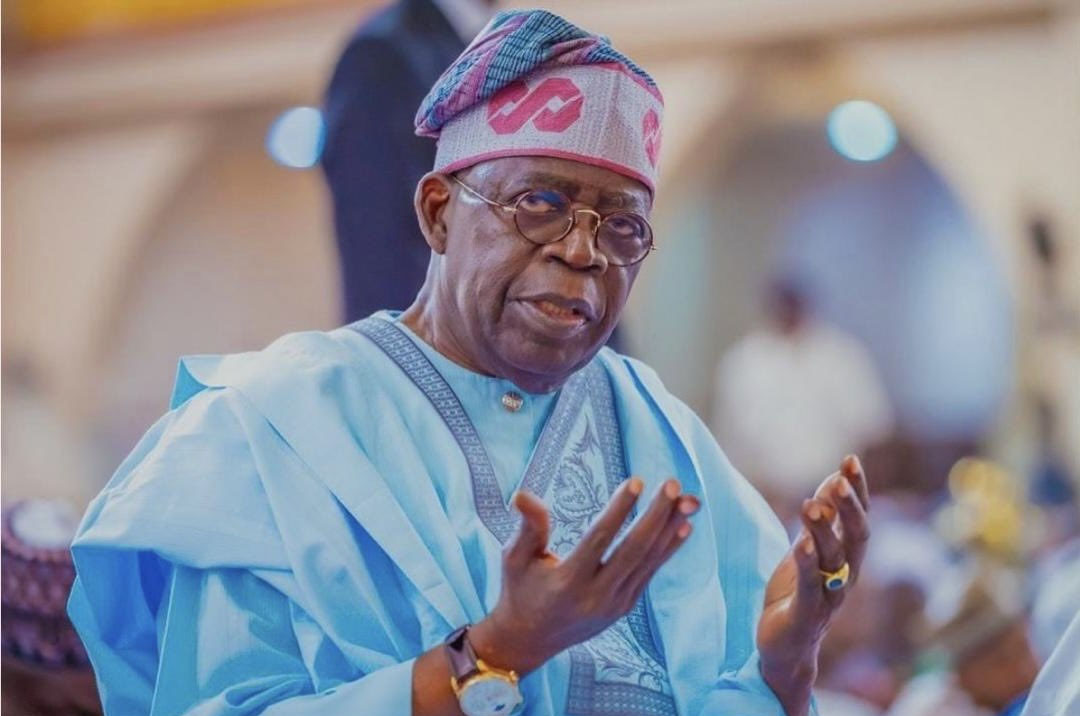
President Bola Ahmed Tinubu has directed the Economic and Financial Crimes Commission (EFCC) to immediately vacate the court order freezing the bank accounts of the Osun State Government, describing the timing of the action as “deeply embarrassing” and capable of undermining confidence in the state’s forthcoming governorship election.
In a personally signed statement issued on Thursday, the President said he became aware that the EFCC had obtained a court order on August 5, 2026, freezing the accounts of the Osun State Government. While he did not question the EFCC’s legal powers or operational independence, he expressed strong reservations about the timing of the action. “I must state that I feel deeply embarrassed not by the EFCC’s exercise of its mandate backed by a court order, but by the timing of the agency’s action,” Tinubu said. He explained that every action taken by a federal institution is often attributed to him as President, regardless of whether he had prior knowledge of such action.
The President reaffirmed his long-standing policy of allowing anti-corruption agencies and other law enforcement institutions to operate independently, professionally and without political interference. “Since assuming office, I have consistently maintained that anti-corruption and law enforcement agencies must be allowed to discharge their statutory responsibilities independently, professionally, without fear or favour, or political interference,” Tinubu said. He noted that he had deliberately refrained from directing or interfering in the operational activities of the EFCC and other investigative agencies because he believes that strong democratic institutions operating within the rule of law are essential to good governance.
READ ALSO:
- Osun Account Freeze: Atiku Accuses Tinubu of Weaponising State Institutions Against Opposition
- Former Finance Minister Kemi Adeosun Loses Husband, Niyi Adeosun
- 176 Kwara Abductees Regain Freedom After Six Months in Captivity
Tinubu explained that although he was yet to receive a full briefing on the circumstances that prompted the EFCC to seek the court order, the proximity of the action to the Osun governorship election necessitated presidential intervention. “Osun State is only a few days away from its gubernatorial election. Therefore, nothing ought to be done to give an impression that the EFCC or indeed any other agency of the federal government is being used to interfere with the election,” the President stated. He said preserving public confidence in the integrity, credibility and fairness of the democratic process outweighed every other consideration. “Based on the foregoing premise, I am duty-bound to issue a directive on this issue in consonance with the overriding public interest in preserving public confidence and the integrity, credibility, and fairness of our democratic process,” Tinubu added.
The EFCC had earlier defended its decision to freeze the account, stating that the action was triggered by suspicious movement of funds amid an ongoing investigation into the alleged fraudulent handling of about N11 billion in Ecology Funds, Intervention Funds, and Federal Account Allocation Committee (FAAC) allocations. The commission’s Director of Public Affairs, Wilson Uwujaren, explained that the restriction was placed on a single account, not all accounts of the Osun State Government. He noted that the EFCC has the legal authority under Section 34 of the EFCC Act and Section 7, Subsection 6 of the Money Laundering (Prohibition) Act 2022 to impose a temporary restriction for up to 72 hours before seeking a court order. “The restriction order can last within 72 hours before we can come with a court order if we need to provide a court order,” Uwujaren said. He maintained that the action was not politically motivated despite the timing ahead of the Osun governorship election.
The President ordered the anti-graft agency to immediately return to court to vacate the freezing order and discontinue all proceedings instituted against the Osun State Government in relation to the matter. “Accordingly, I have directed the EFCC to immediately proceed to the court to vacate the order and discontinue whatever action it has instituted against the Osun State Government in this regard,” the President said. The directive follows widespread reactions to the freezing of the Osun State Government’s accounts, with opposition parties, lawyers and civil society organisations expressing concern that the move could affect governance and raise questions about political interference ahead of the governorship election. The Osun State governorship election is scheduled to hold on August 15, 2026, making the controversy over the account freeze a major issue in the political landscape of the state.
Tinubu Orders EFCC to Unfreeze Osun Govt Accounts, Says Timing ‘Embarrassing’
News
EFCC Defends Osun Account Freeze Amid N11bn Fraud Probe, Adeleke Vows Legal Battle
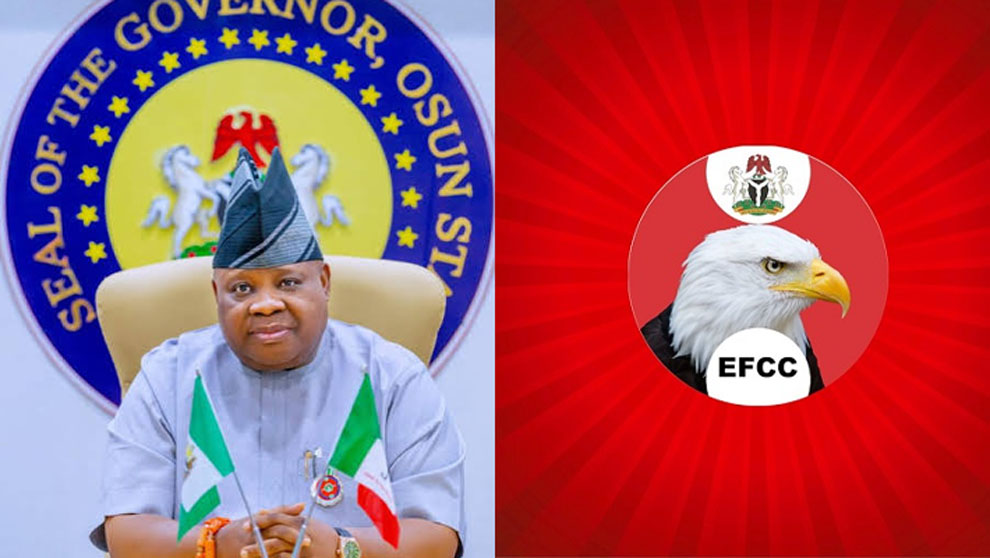
EFCC Defends Osun Account Freeze Amid N11bn Fraud Probe, Adeleke Vows Legal Battle
The Economic and Financial Crimes Commission (EFCC) has confirmed freezing Osun State Government accounts, citing an ongoing N11 billion fraud investigation and suspicious transfers detected days before the governorship election. Governor Ademola Adeleke has rejected the action as unconstitutional and vowed to challenge it in court, while the Nigerian Bar Association has also faulted the agency’s move.
The Economic and Financial Crimes Commission (EFCC) has publicly defended its decision to freeze the bank accounts of the Osun State Government, insisting the action was a preventive measure to safeguard public funds and was not politically motivated. The anti-graft agency confirmed that it directed First Bank to place a “Post No Debit” (PND) order on the state government’s statutory allocation account, effectively halting all withdrawals. This development comes just ten days before the state’s governorship election scheduled for August 15, 2026, sparking fierce political backlash and raising concerns about the timing and legality of the intervention. In a statement issued on August 5, 2026, by the EFCC’s Head of Media and Publicity, Dele Oyewale, the Commission revealed that it has been investigating the Osun State Government since March 2026 over the alleged fraudulent handling of Ecology Funds, Intervention Funds, and Federal Account Allocation Committee (FAAC) allocations totaling approximately N11 billion. The statement disclosed that several state officials, including the Accountant General of the state, had already been questioned as part of the ongoing probe, demonstrating the depth and seriousness of the investigation.
According to the EFCC, the investigation alone would not have warranted freezing the account. However, the Commission said it was forced to act after detecting what it described as “precipitate and unwarranted” movement of funds beginning on August 2, 2026. Investigators observed large transfers of money from the state government’s accounts into various corporate entities deemed suspicious, prompting the swift intervention to halt further transactions. The agency maintained that it could not stand idly by while public funds were allegedly being diverted, emphasizing that the action was part of its statutory responsibility to protect public resources. “The Commission noticed huge transfers of funds into different corporate entities and had to swiftly halt the trend by freezing the accounts from which such heavy funds are being moved,” the EFCC statement read. The agency further explained that the freeze was a temporary measure designed to preserve the integrity of the investigation and prevent further dissipation of public funds.
READ ALSO:
- Super Falcons Thrash Egypt 6-2, Book WAFCON Quarter-Final Date with Cameroon
- Two Rifles, Live Ammunition Recovered as FCT Police Storm Bandits’ Hideout
- Police Launch Investigation as Three Children Die at Anambra Native Doctor’s Residence
Responding to accusations that the move was politically motivated and aimed at influencing the upcoming governorship election, the EFCC insisted that its actions were independent of the electoral process. While acknowledging the imminent election, the Commission argued that it could not use the political calendar as an excuse to neglect its legal duties and allow potential financial crimes to go unchecked. “It will be uncharitable for the Commission to allow an excuse of an upcoming election to fold its arms to perform its legally-assigned functions,” the EFCC stated. The anti-graft agency also revealed that it is monitoring the finances of several other states across Nigeria, emphasizing that Osun is not being singled out for political reasons. This assertion was aimed at countering claims that the EFCC was being used as a tool for political persecution ahead of the gubernatorial poll. “The Commission has always pointed out that it is non-partisan and non-sectarian but always working in the overall interests of Nigerians. The Osun State Government account was frozen to save public funds from being looted,” the statement added. The EFCC urged the public to disregard what it described as false narratives and attempts to discredit its operations, calling on citizens to support its efforts in combating corruption and financial crimes.
However, the EFCC’s explanation has done little to appease the Osun State Government, which has described the account freeze as unconstitutional and a threat to democracy. Governor Ademola Adeleke criticized the EFCC for acting without a court order and vowed to challenge the decision in court, setting the stage for a legal showdown between the state and the federal anti-graft agency. “This action was taken without any court order. We are supposed to be in a democracy, where the Rule of Law must always prevail. We will therefore not accept a situation where federal agencies trample on the constitutional rights of subnational governments,” Adeleke said during a press conference in Osogbo. The governor’s strong words reflected the deep frustration within his administration over what they perceive as executive overreach and political interference.
The governor further alleged that the account freeze was part of a coordinated campaign of intimidation against his administration, orchestrated by political opponents ahead of the August 15 governorship poll. He claimed that the state had experienced months of disruption to local government administration, police raids, and harassment of political supporters, with over 60 members of his party arrested and detained without charges. These allegations, if true, paint a troubling picture of political tension in the state as the election approaches. Adeleke has since instructed the state Attorney-General, Oluwole Jimi-Bada, to initiate legal proceedings against the EFCC at the Federal High Court in Osogbo. The Attorney-General argued that while the commission has the authority to investigate financial records, it cannot freeze a state government’s accounts without first obtaining a court order, which the EFCC failed to secure. “EFCC can investigate the accounts, but it can’t freeze the accounts without an order of court,” Jimi-Bada said. He warned that the restriction could hamper the government’s ability to meet its obligations and administer the state effectively, potentially affecting the payment of salaries and the delivery of essential services to citizens.
The Nigerian Bar Association (NBA) has also faulted the EFCC over the account freeze, stating that the anti-graft agency lacks the constitutional power to impose a blanket restriction on a state’s finances without due legal process. NBA President, Afam Osigwe (SAN), warned that any directive restricting withdrawals from accounts belonging to a state government would effectively cripple governance and amount to an abuse of power. “No government agency or any person has the right or the power to restrict withdrawals from the account of any state because, first of all, the order has the effect of grounding the activities of a government,” Osigwe said. He maintained that any decision to freeze the account of an individual or government institution must be supported by sufficient legal grounds and a valid court order, emphasizing the importance of judicial oversight in such matters.
Other Senior Advocates of Nigeria also weighed in on the controversy, offering diverse legal perspectives on the issue. Isiaka Olagunju (SAN) described the freezing of the bank account as a serious violation of the 1999 Constitution and contrary to the principles of federalism, arguing that states should not be subjected to such unilateral actions by federal agencies. However, Professor Damilola Olawuyi (SAN) defended the use of account freezing as a recognized preventive tool in tackling economic and financial crimes, provided it is exercised within the limits of the law. He cautioned that such powers “should not be used as a cudgel to settle political scores,” highlighting the need for balance between anti-corruption efforts and the protection of constitutional rights. Wolemi Esan (SAN) explained that the EFCC could place a temporary stop order on a suspected account for up to 72 hours without first obtaining a court order under Section 7(6) of the Money Laundering (Prevention and Prohibition) Act, but any restriction beyond that period must be backed by judicial authorization. This legal nuance adds complexity to the ongoing dispute, as both sides present arguments rooted in different interpretations of the law.
The controversy has also drawn reactions from civil society organizations, with some calling for restraint and due process while others support the EFCC’s proactive stance against corruption. The situation remains fluid, with the legal challenge and the upcoming election adding layers of political and legal uncertainty.
EFCC Defends Osun Account Freeze Amid N11bn Fraud Probe, Adeleke Vows Legal Battle
-

 metro1 day ago
Troops arrest four suspected Boko Haram, ISWAP suppliers, intercept 20 relatives
-

 Opinion2 days ago
WHO WILL SPEAK FOR WASILAT? WHEN TRADITION BECOMES HUMILIATION, JUSTICE MUST SPEAK
-
metro2 days ago
TikToker undergoes cleansing after filming Oloolu procession in Ibadan
-
 News1 day ago
Tinubu Meets Jim Ovia, NELFUND CEO at Aso Rock as Student Loans Hit ₦303bn
-
 Education1 day ago
BREAKING: 61.54% Pass Rate as WAEC Releases 2026 WASSCE Results – How to Check Results
-
 International3 days ago
Iran Denies US Talks After Trump Announces Negotiations as War Enters Sixth Month
-
 metro1 day ago
Police Probe AIG Jimoh Over VeryDarkMan’s Corruption Allegations
-

 metro1 day ago
N78 Million Solar Inverters, 410 Cattle, 10 Guns Recovered as Kaduna Police Arrest 25 Suspects