

Opinion
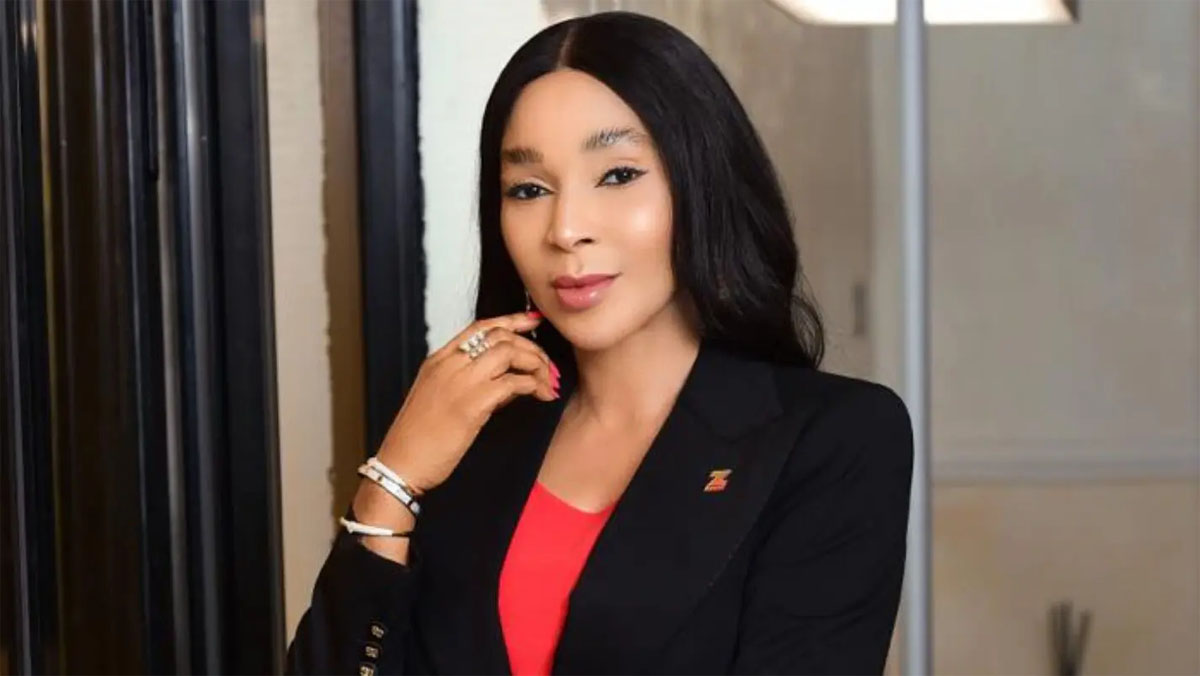
Zenith Bank’s new MD and the burden on successful women – Farooq Kperogi
Zenith Bank’s new MD and the burden on successful women – Farooq Kperogi
It so often happens that whenever a Nigerian woman makes the news as having been appointed to a high position that is, has been or, in the minds of male chauvinists “should be,” the exclusive preserve of men, she becomes the object of (social) media slander, unconscionable belittlement, vile gossip, slut-shaming, and malicious smears.
That is the fate Zenith Bank’s Mrs. Adaora Umeoji Nwokoye has been suffering since her announcement as the first woman Group Managing Director and CEO of the bank. In what is supposed to be her moment of joy, she’s contending with an avalanche of mean, nasty remarks and misogynistic bullying from insecure men with fragile egos who, instead of being happy for her, choose to question her qualifications, obsess over her looks, and ascribe her rise to a reward for sexual favors.
The most egregious of this came from a widely shared Facebook post by one Azalike Nonso who wrote that Mrs. Umeoji-Nwokoye looked “like a hook up [sic] girl” and that he would “NEVER take [Zenith Bank] seriously again” for appointing her its boss.
When he was challenged, he doubled down on his evidence-free moral stigmatization of the woman by insisting that she “knack her way to the top,” a Nigerian Pidgin English expression for she slept her way to the top, a sentiment one Okoye re-echoed in another widely shared Facebook post.
As the father of three girls, these dreadful patriarchal putdowns and vilifications of a successful, high-flying woman by some idle worthless scum of men hurt me on a personal level. Mrs. Nwokoye embodies what every responsible parent should want their daughter to grow up to be. She got the job because she was more qualified than anybody for the position.
READ ALSO:
- [UPDATED] Newly married man killed as bandits force Muslim women to break fast
- DHQ declares Simon Ekpa, 96 other suspected terrorists declared wanted
- Super Eagles beat Ghana Black Stars 2-1 in int’l friendly
She has multiple degrees, including advanced ones, in sociology, accounting, business administration, and law—in addition to three decades of experience in banking. She was, in fact, the Deputy Managing Director of Zenith Bank in the last eight years that preceded her elevation to the status of GMD/CEO of the bank. In other words, she had functioned as the second in command of the bank.
What more does it take to merit her position? Plus, she achieved her career success while married to her husband, Emmanuel Nwokoye, said to be a medical doctor, with whom she has children. And that’s the more reason why the unprovoked besmirching of her moral integrity is in such bad taste. Nigeria is supposed to be a traditional society where the institution of marriage is supposed to shield women from these sorts of calumnies.
I honestly wanted to ignore the social media skunks who cast aspersions on her honor without a shred of evidence because, truth be told, the overwhelming majority of people, both male and female, exulted in Mrs. Nwokoye’s norm-bending, glass-ceiling-breaking elevation as the boss of Zenith Bank.
Nonetheless, when I read Chido Nwakanma’s article titled “Zenith Bank and Managing Dr Umeoji’s PR” on Thursday and sensed suppressed, even benign, but nonetheless significant signs of misogyny in the garb of professional public relations analysis, I felt compelled to intervene.
Nwakanma is a well-regarded journalist and public relations expert for whom I have a great deal of respect. But his article on Mrs. Nwokoye’s promotion to the top of the ladder was a letdown.
He deployed what we call “blame-the-other-technique” to channel and validate patriarchal and misogynistic views of successful women, which basically consists in fixation on women’s dress and appearance, using discriminatory standards to assess women’s performance, and paternalistic condescension.
He said, “An observer noted that Zenith probably needed to prepare for the communication and PR challenge of showcasing an overly beautiful and over-educated female as MD.” “Overly beautiful and over-educated female as MD”! That’s classic patriarchal phraseology.
No serious analyst would ever talk of the handsomeness of a male bank CEO or describe a man with three bachelor’s degrees (in sociology, accounting, and law), two master’s degrees (in business administration and law), and a doctorate in business administration from a for-profit online American university as “over-educated.”
READ ALSO:
- Emulate Otti, abolish pensions for ex-govs, Obasanjo tells governors
- 15 abducted Sokoto Quranic school students regain freedom
- Catherine, Princess of Wales, says she has cancer
He would be described as “well-educated” instead. There is a tone of mild disapproval in the term “over-educated.” Over-education means having more education than is useful or needed. It’s as if she earned degrees above her gender station.
But it gets worse. He talked about concerns over her red dress, why she uses her maiden name as her middle name, and then had this gem: “She is beautiful, no doubt, and parades an exciting Figure 8. Unfortunately, Figure 8 is not corporate. She must sacrifice the vanity of Figure 8 for the corporate essence.”
That’s someone’s wife and some people’s mother, not to mention the CEO of one of Nigeria’s top banks, we are talking about. She’s being scrutinized for the shape of her body, not the content of her character (as Martin Luther King, Jr would say) or the quality of her ideas. Would any expert deserving of that name write about the sturdy, six-pack build of a newly appointed male CEO of a bank and then go ahead to dismiss it as “not corporate”?
Nwakanma mentioned “Figure 8” three times in three sentences. That’s extreme, unwarranted, and frankly, disappointing sexualization of a successful woman (not to mention someone’s wife!) who owes her rise in the corporate ladder to her brain, not her so-called Figure 8.
Nwakanma’s piece is merely a more intellectually sophisticated version of the crude misogynistic digs at Mrs. Nwokoye by bitter, no-good social media lowlifes.
Look, I have zero personal or professional familiarity with the woman, but I have a personal investment in how men handle the success of women because I am also raising three potentially successful women. My first daughter is studying engineering at a top-three engineering university in the United States.
I would be concerned if insecure men attribute her success in life to factors other than her brilliance, grit, and her hard work. I would lose it if middle-aged men were to fixate on her figure and choice of dress for analysis—things that are never done for men.
A similar scenario played out in 2017 when Mrs. Aisha Ahmad was appointed as one the deputy governors of the Central Bank of Nigeria. As I wrote in my October 14, 2017, column titled, “CBN’s Aisha Ahmad, Misogynistic Bullying, and Religious Hypocrisy,” two categories of (male) Nigerian social media users were disconcerted by her appointment.
“The first group,” I wrote, “said she is unqualified because her promotion as Executive Director by her bank was suspiciously co-extensive with her appointment as CBN’s deputy governor, suggesting that her promotion was done in anticipation— or as a direct consequence— of her appointment.”
I added: “The second group, made up of mostly northern Muslim men, said she was unworthy of her position—wait for it— because her formal western attire doesn’t conform to the Islamic dress code for Muslim women! One widely shared Facebook status update, in fact, defamed her as a ‘sex worker” on account of her dressing. That’s a prima facie case of libel.”
As is by now apparent, successful women—be they southerners or northerners, Muslims or Christians—can’t catch a break. They are always judged more harshly than men. This culture has to stop!
Zenith Bank’s new MD and the burden on successful women – Farooq Kperogi
Farooq Kperogi is popular Nigerian newspaper columnist and United States-based Professor of Journalism.









Opinion
Lesson from Dotun Oladipo’s Brave Daughters, by Bamidele Johnson
Lesson from Dotun Oladipo’s Brave Daughters, by Bamidele Johnson
I hope to grow old. I want to see my kids become real adults, find their own feet, make mistakes, recover from them, and perhaps one day complain that their own children are giving them grey hairs. I want that plainly stated before anything else, as everything that follows might read as a man agreeing to an early exit rather than a man simply being honest about the odds.
I want the decades. I want to become the grandfather who repeats the same stories until nobody bothers correcting him anymore. But wanting a thing and being granted are different things. The last year has made that difference harder to ignore than I would like. I have lost many friends recently to keep thinking that optimism is my natural resting state. Some of these men had better blood pressure than mine, better habits, better everything that is supposed to count. It did not save them.
There is no formula I know that reliably separates the men who make it to 70 from those who do not. Anyone who says he knows one is selling something. So, I do not assume that old age is an already booked destination. Even if I once did, which I doubt, the last three years have cured me of such an illusion. As such, I treat it as a hope rather than an expectation, and I have found that a more honest way to live.
It is exactly why I want something placed on record now, while I am still able to place things on record, rather than leave it for people to guess what my wishes were in the fog of a funeral week. If I do not make old bones, my children are not to be asked to read tributes at my funeral. Not one line, however short, however lovingly written.
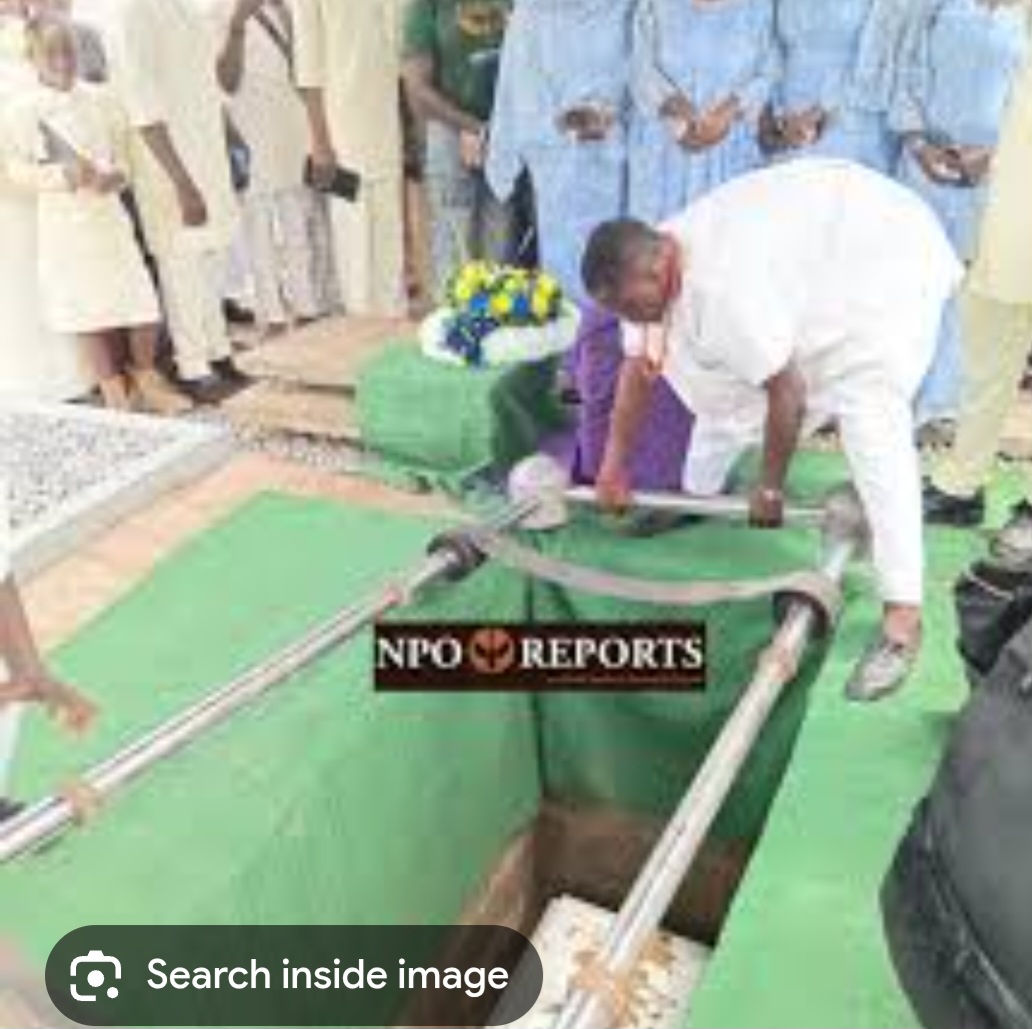
This, for me, was settled today rather than re-opened. At Dotun Oladipo’s funeral service, his three daughters took turns to read their tributes to their dad, and I found myself watching them with awe. There was a kind of strength in them that I do not possess. It is the strength needed to stand in front of a hall brimming with grieving adults and speak about a man they have just lost. Forever. Strength, however, is not the same as ease. I could see plainly what that strength was costing them as they read. Their voices caught. Their composure held and then did not hold and then held again through sheer will.
In front of them, in the pews, men and women considerably older than them came undone in ways the girls themselves were somehow managing to resist. I went mightily close. Some of the sobbing was quiet, the type people try to fold into a handkerchief. Some of it was not quiet at all, the kind that announces itself whether or not you want it.
Those young women honoured their father with a grace that is beyond me. What they did was astonishing. So, what I am attempting is an observation of a custom I have now watched wound people. This was not the first time I had watched this particular ritual extract more than it should from people already running on fumes. I saw an earlier and harder version of it at a friend’s wake back in 2015.
The first son was called forward to read his father’s tribute, and he could not do it. He tried, but the words would not come, and he stood there in front of a crowd of mourners, with his grief simply refusing to organise itself into sentences. The officiating minister, rather than releasing him from the task, urged him to continue. I sat fizzing with sorrow and ire. He could not go on and, eventually, the minister accepted, but not before insisting a while longer than it should have reasonably taken. His younger brother was called up next, presumably on the theory that if one grieving son could not manage it, maybe another one could. He flunked it in the same way. Grief does not distribute itself more conveniently among siblings just because a programme has been printed and needs to be followed.
I have turned that memory over many times since, trying to work out why this part of the rites is treated as mandatory in the first place. I have not found a satisfying answer. Maybe it comes from a belief that a child’s words carry more weight than anyone else’s, which may even be true, but weight is exactly the problem when those carrying it are struggling to hold themselves together with nothing but adrenaline and the fear of dissolving in public.
Maybe it is simply inertia, the reason we still do a hundred things at funerals that nobody can explain the original purpose of. Either way, I have stopped looking for the justification. I no longer think one exists that is good enough to weigh against what I watched happen to that boy in 2015.
So, let this stand as my instruction rather than my preference, the kind of thing I would rather state plainly now than leave for my children to infer later from how uncertain I sound when the subject comes up in passing. If I do not get the old age I am hoping for, my children will not be asked to read a single word over my body. Someone else can speak for me. A friend, a stranger with a steadier voice and a smaller stake in the loss, anyone whose grief will not be quite so total that standing upright becomes almost impossible.
My children, of course, will sit in front and fall apart if that is what the day requires of them, but without the microphone. That, at least, is one small mercy I intend to arrange for them while I am still here to arrange it.
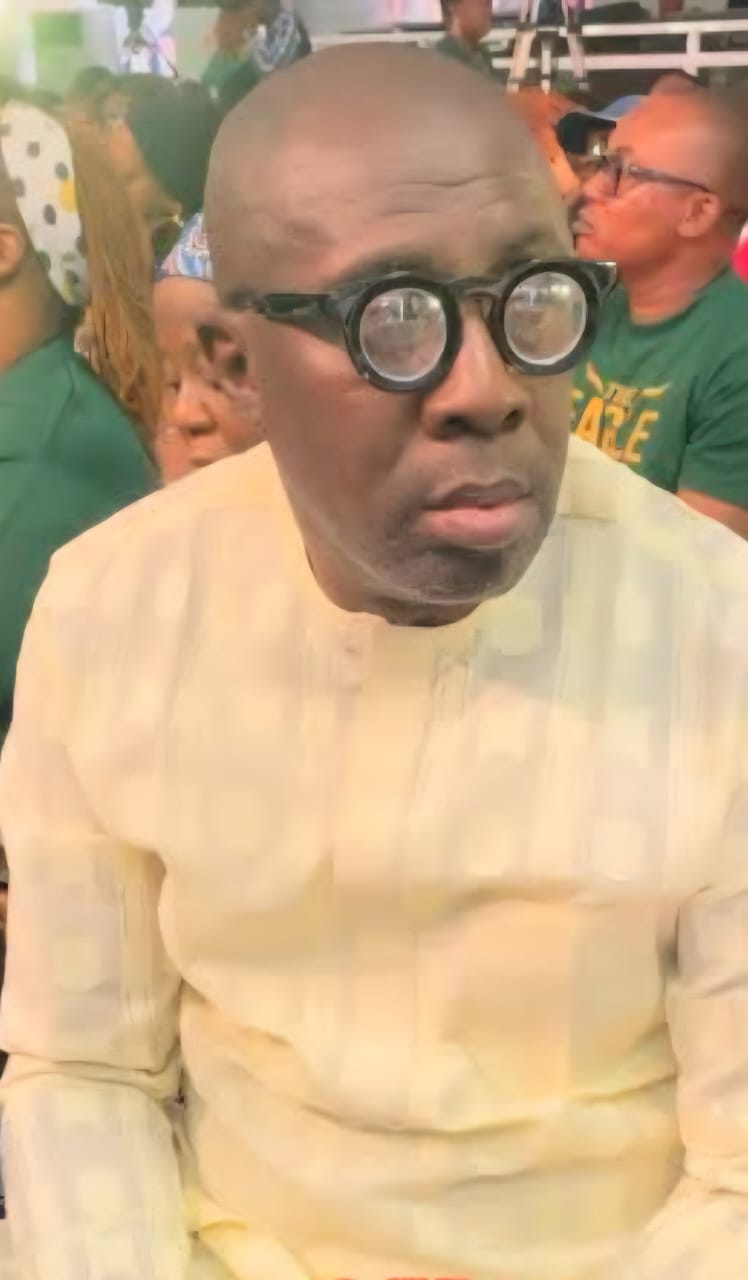
Dotun deserved every bit of the send-off his daughters gave him today, and I suspect he would have been the first to tell them to sit down and let someone else carry the weight for a while. He did not get a say in that, as none of us ever do once we are the ones being spoken of rather than the ones speaking. Rest well, Dotun. You raised three young women whose strength I will not soon forget. That alone says everything worth saying about the man you were.
Opinion
‘Tinubu Will Win Again in 2027’ — Charismatic Bishops’ Secretary
‘Tinubu Will Win Again in 2027’ — Charismatic Bishops’ Secretary
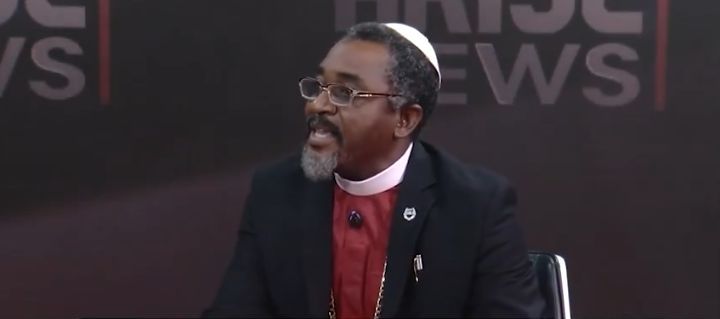
A senior Nigerian cleric, Archbishop Chivir Chianson, has declared that President Bola Tinubu will retain the presidency after the 2027 general election, attributing the prediction to a message he said came from God.
Chianson, who serves as Secretary General of the Charismatic Bishops’ Conference of Nigeria, made the statement while appearing on Arise Television on Saturday.
Rather than basing his prediction on political calculations, the archbishop said his confidence came from what he described as the prophetic role of bishops.
He maintained that the conference had previously spoken about Tinubu’s political future based on what he said was divine revelation and that the President would return for another term.
Chianson also predicted that Tinubu’s performance would improve if he wins the 2027 election.
READ ALSO:
- DSS warns Osun churches, mosques, markets over alleged terrorist attack plot ahead of 2027
- ‘Tinubu Will Win Again in 2027’ — Charismatic Bishops’ Secretary
- Fake miracles, bogus grants: How clerics allegedly fleece Nigerians of millions
Addressing the political opposition, the cleric said the bishops could not be blamed if rival parties failed to unite or organise themselves effectively ahead of the election.
He also sought to clarify the position of the bishops when dealing with government, saying their role in speaking truth to power did not mean they should approach political leaders with hostility or disrespect.
According to him, the Constitution, alongside their religious convictions, should guide how they engage the President and the country.
Chianson said he was sufficiently confident in his prediction to promise that he would return to the Arise TV studio after the 2027 election, when he expects the result to demonstrate that the bishops’ prophecy was correct.
His comments add a religious dimension to the increasingly active political conversation surrounding the 2027 presidential race.
‘Tinubu Will Win Again in 2027’ — Charismatic Bishops’ Secretary
Opinion
Ejimakor: Kanu, IPOB Members Should Not Be Jailed Over Biafra Agitation
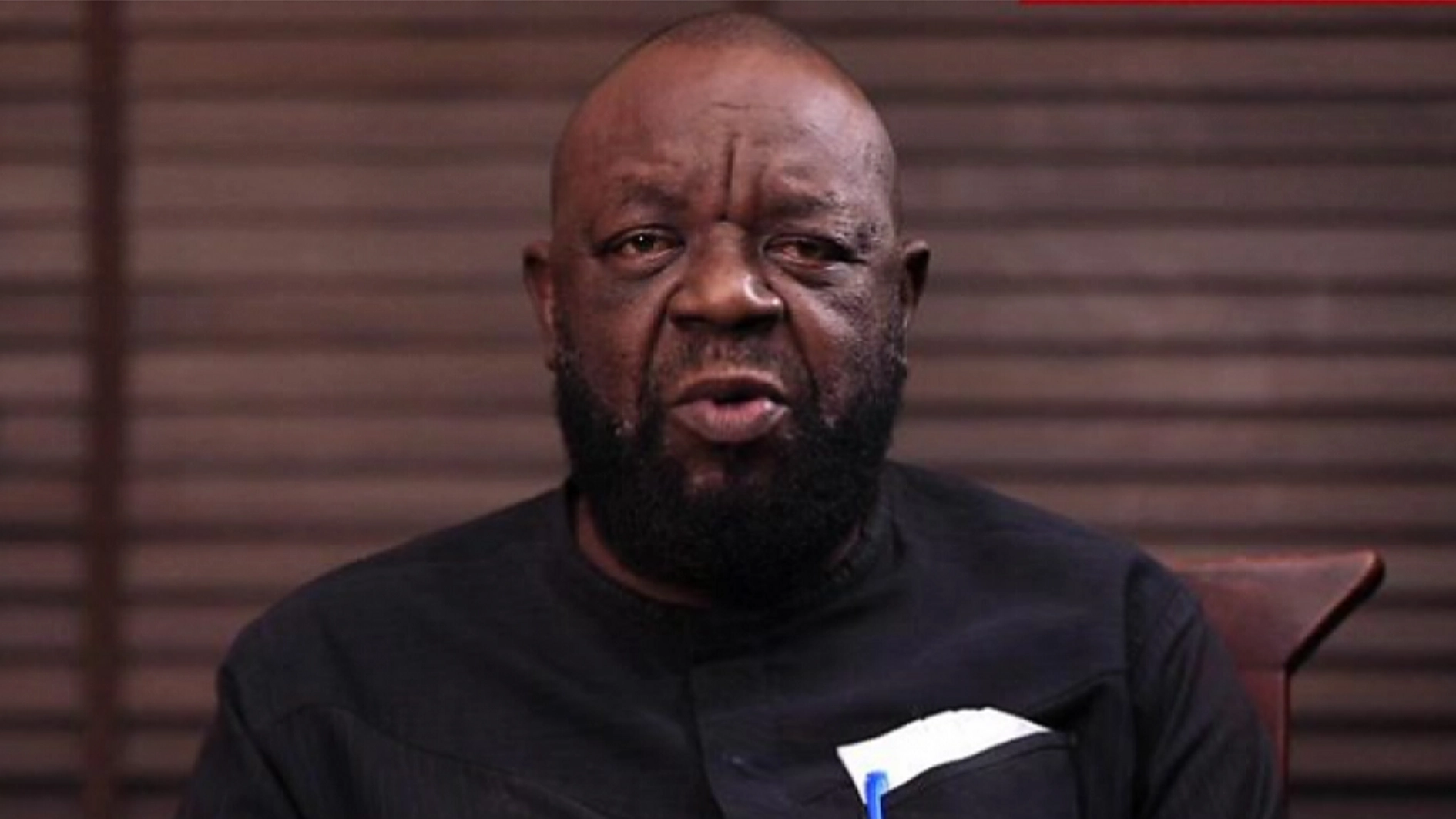
Aloy Ejimakor, Special Counsel to Indigenous People of Biafra (IPOB) leader Nnamdi Kanu, has called for the release of people he described as prisoners of conscience ahead of Nigeria’s 2027 general elections.
Ejimakor made the demand while arguing that the continued imprisonment of Kanu and other alleged IPOB members for their separatist position could further deepen political and social divisions in the country.
In a statement issued on Saturday, the lawyer said the Nigerian government should address the grievances driving calls for Biafra rather than relying on prosecution and imprisonment.
He maintained that advocating for self-determination, regardless of how controversial or forceful the expression may be, should not automatically amount to terrorism or treason.
According to Ejimakor, democratic societies should have room for political opinions that are unpopular or challenging to the existing order.
He warned that punishing people for expressing separatist aspirations could create greater resentment and make efforts at national reconciliation more difficult.
The lawyer also pointed to examples of countries and territories where demands for self-determination had resulted in political processes, including referendums.
Ejimakor argued that Nigeria should similarly consider political engagement and dialogue as a way of addressing the Biafra question.
He further criticised what he described as the criminalisation of political dissent, saying the government should focus on resolving the grievances behind the agitation.
The lawyer consequently urged the Federal Government to consider freeing what he called prisoners of conscience before the 2027 elections, arguing that dialogue and a political settlement would offer a more sustainable path to peace.
-

 metro2 days ago
Woman disguises as Muslim woman in Niqab to steal in Ado-Ekiti market, video sparks outrage
-

 metro1 day ago
Ondo Herbal Drink Tragedy: Survivor Vows Never to Drink Again as Death Toll Tops 30
-
 Business1 day ago
Dangote: ₦525 Refinery Shares Could Rise to ₦10,000
-

 metro1 day ago
Sokoto Cleric Stabbed Twice in Neck After Juma’at Prayer, Attacker Killed
-

 Africa2 days ago
Murder of Nigerian Bishop in South Africa Sparks Outcry Over Unsolved Killings
-

 News2 days ago
AI on the Roads: LASTMA Turns to China to Fix Lagos Traffic
-

 Community2 days ago
Kaduna Traditional Rulers Set for 100% Pay Rise as Zazzau Emir Backs Proposal
-

 International2 days ago
Iran’s President Seeks End to War as US Tightens Economic Pressure