

News
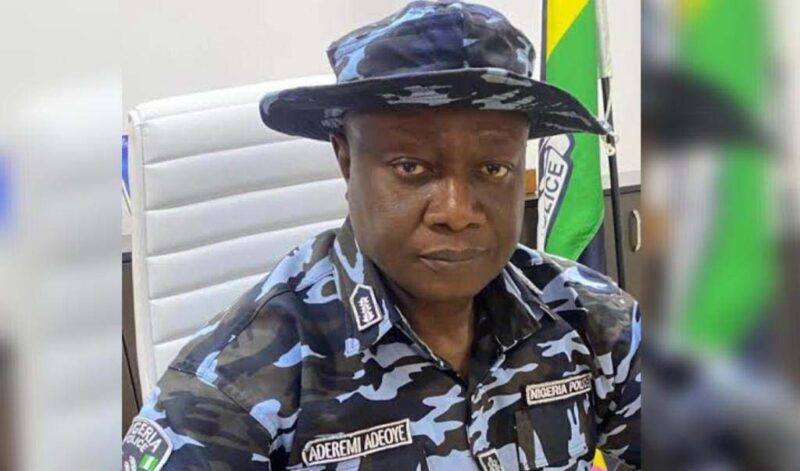
I never said I’m a billionaire— Ex-Anambra CP
I never said I’m a billionaire— Ex-Anambra CP
Aderemi Adeoye, a retired commissioner of police in Anambra, has disowned claims that he described himseld as a “billionaire.”
Adeoye said this on ‘The Morning Show’, an Arise Television programme, on Friday.
He said that he has never amassed wealth nor abuse his office, adding that the civil service rules and police code of conduct does not bar anyone from investing neither is the law against buying shares.
The retired commissioner also denied saying he would compete with Aliko Dangote, the Forbes’ richest African in 10 years time.
The group accused him of operating a “Ponzi scheme” and misappropriating funds meant for investments in Alpha Trust Investment Club, the cooperative co-founded by him
“May I request that you provide the clip where I said I am now a billionaire,” Adeoye said.
“I never said so and i am shocked that erudite journalist of very high reputation will simply run with a story they never researched. I have never said anything of such. I weigh my words before I alter them and every word say, i say in good faith. I never said I am now a billionaire and anyone who has proved to be contrary is challenged to produce it. Now going to whether I have used my office. Those who make their assertion can also prove that if they have evidence.
“I have never abused my office. I have never amassed wealth. I have never done anything that is against civil service rules or any law known to man.
“Civil service rules and police code of conduct does not bar anyone from investing. There is no law against buying shares. There is no law against investing in land or property. The only thing is that you must be able to justify the means.
READ ALSO:
- Terrorists kill eight vigilantes in Kaduna community, two village heads
- Nigerian Army begins recruitment; See requirements, how to apply
- Traveller from Egypt nabbed at Kano Int’l airport with hard drugs
On April 27, the commissioner bowed out of service after 35 years of service and 10 months of leading the police command in the state.
He revealed that during his service period, he equipped himself through trainings in Nigeria and abroad, gained financial education, leading to the establishment of an investment club in 2018.
Olusegun Adeniyi, a former presidential spokesperson and chairman of THISDAY editorial board, in article tittled “The Billionaire Police Commissioner” alleged Adeoye to have said his net worth is now N20 billion and he has set his eyes on displacing Aliko Dangote as the richest man in Africa within the next ten years.
Adeniyi said he is not opposed to legitimate ‘side hustles’ but there is a problem when public officials acquire stupendous wealth that is impossible to explain and then make a show of it.
He added that he conducted a search at the Corporate Affairs Commission (CAC)and google search, and the results were shocking as a business concern with a portfolio of N20 billion is not listed at the CAC.
Reacting to this, the retired commissioner said he did the same google search himself and found several entries that explained to the world what the investment club does and its mode of operation.
“It is an investment club that has an arm that is registered with the local state government as a cooperative and we are registered with the corporate affairs commission (CAC) Olusegun Adeniyi, in his verdict calling, claimed to have done a google search and he couldn’t find anything else,” the commissioner continued.
“Even though when I did the same google search myself, I found several entries that explained to the world what we do and how we do it. He said he checked the CAC database and he could not find us, meaning we are illegal, meaning we don’t exist. That’s a fallacy.
“I have our certificate of registration here, and I hereby display it for the world to see. This is for CAC. Not only are we registered with CAC, our armament files are up to date with the CAC. Like I mentioned earlier, our known arm is also registered with the local state government as a cooperative. Here is our school certificate issued by the EFCC. So you can begin to see when someone says we don’t exist, we are not registered, and I’ve shown evidence that we are, including registration with EFCC.
READ ALSO:
- Court stops NERC from implementing new electricity tariff
- Floods kill over 200 in Kenya, cyclone approaches
- BREAKING: N70bn fraud: Matawalle can’t escape probe, says EFCC as protesters storm anti-graft office
Adeoye added that the former presidential spokesperson only found out a petition to the inspector general of police by renegade members expelled for criminal conduct.
“The inspector general of police is a disciplinarian. He does not tolerate nonsense and the IG will not condone an officer going into anything that is against the ethics of the job, and we look on, the IG never does that.
“The IG forwarded the petition to me in the spirit of fairness, and I replied, addressing every issue that was raised in the petition, the IGP was satisfied.
The retired commissioner clarified that the name of the club he founded is Alpha Trust Investment Club, adding that it is an investment forum and not a business entity.
“Our purpose is to invest. Not to do business. So we don’t have an office, We don’t have overhead costs, we have no employee. We don’t pay salary, we don’t run generator. We have no official car, we don’t refund the expenses of any kind.
“We never campaigned publicly for membership. We simply put out an update and our members informed their relations and friends who might be interested and for 5 years of our existence, we have paid dividends every year without fail. We pay dividends once a year. The question you ask about how we put resources together is very simple.
“Only thing members pay, those who are officials of the club, is their data and that data each person uses for his work is seen as their individual contribution to the growth of the club. Only thing we spend money on is organizing our meetings.
“Physical meetings and this is paid for by membership dues which is 5,000 Naira per member per annum for anyone to be a member, he must be a Nigerian. Irrespective of where he is domiciled in the world. Number two. He must have a visible means of livelihood. Which we verify. Usually we demand to see workplace identity card and we do further to verify. If he did, his documents are genuine. We do background check.
“We insist that any member we are to admit must not have a criminal record or a pending criminal matter at any police commission in Nigeria. Those who are pending matters with EFCC are excluded. Majority of our members are Nigerian professionals all over the world.
So, anyone to be admitted must meet these criteria. He has a visible means of livelihood. He is now free to indicate how many units of our shares he or she wishes to buy, subject to a minimum of 50,000 units.
I never said I’m a billionaire— Ex-Anambra CP






News
MURIC Warns FG: Any Move Against Atiku Now Lacks Tact
MURIC Warns FG: Any Move Against Atiku Now Lacks Tact
The Muslim Rights Concern (MURIC) has warned the Federal Government against any move to arrest, interrogate or otherwise take action against former Vice-President Atiku Abubakar over a fresh petition before the Economic and Financial Crimes Commission, saying such a step at this time could send the wrong signal to Nigerians.
The warning came as the controversy over a renewed call for the EFCC to investigate allegations dating back to Atiku’s tenure as Vice-President intensified, with opposition figures and the petitioner trading sharply different arguments over the matter.
In a statement issued on Tuesday, September 22, 2026, MURIC Founder and Executive Director, Professor Ishaq Akintola, said the government should exercise caution, particularly with the 2027 general elections approaching.
According to MURIC, the renewed allegations have assumed greater sensitivity because Atiku is now the presidential candidate of the African Democratic Congress and a leading opposition figure.
“We warn that such an attempt at this point in time will send the wrong signal to Nigerians,” the group said, adding that with the 2027 elections “at the doorsteps,” the Federal Government should carefully consider the consequences of any action against the former Vice-President.
MURIC described any such move as lacking tact and “short” of emotional intelligence, while urging the government to avoid conduct that could create the impression that state institutions were being used against political opponents.
The organisation also warned against what it described as a damaging “body language” capable of portraying Nigeria as a “banana republic.”
MURIC said that although the country had already lost some ethical ground, its democratic values and norms remained important safeguards that should not be compromised.
“Our corporate image in the global community is sinking fast,” the group added.
READ ALSO:
- JAMB Allows Candidates to Change Lost SIM, Email Addresses
- How Nigerians Can Get Federal High Court Affidavit Online Without Visiting Court
- Plateau Violence: Several Killed as Fresh Attacks Trigger Mass Exodus
The statement followed renewed controversy over a petition by former House of Representatives member, Ehiozuwa Agbonayinma, asking the EFCC to revisit allegations concerning Atiku’s activities while he was Vice-President.
Reports indicate that the petition relates to allegations investigated by the EFCC between 2005 and 2006. Agbonayinma reportedly gave the anti-graft agency a 14-day ultimatum to act and threatened legal action if the commission failed to respond.
Former Senator Dino Melaye has strongly opposed the renewed petition, describing it as an attempt to “resurrect the dead.” Melaye argued that the matter had previously been dealt with and questioned the basis for bringing it back almost two decades later.
The dispute, however, has escalated beyond the original petition, with Agbonayinma hitting back at Melaye and challenging him to produce documentary evidence for his claim that the allegations had been investigated and dismissed.
In a statement reported on September 20, Agbonayinma insisted that he was asking the EFCC to perform its statutory responsibility and argued that the substance of the allegations should be addressed rather than his personality or political affiliation.
“You cannot defend Atiku Abubakar from an EFCC petition by attacking me,” Agbonayinma was quoted as saying, while urging the anti-graft agency to determine whether the allegations warranted further investigation.
The renewed controversy has also brought attention to the distinction between a petition seeking investigation and a finding of criminal guilt. The existence of a petition does not, by itself, establish that the person named in it committed an offence.
There is also a historical legal dimension to the allegations. Reports on the previous proceedings state that a Lagos State High Court set aside an EFCC administrative indictment against Atiku in December 2006, while no criminal conviction against him resulted from the allegations.
Atiku has continued to deny wrongdoing and has challenged anyone with credible evidence against him to present it through the appropriate legal channels.
Meanwhile, there was no confirmed announcement from the EFCC, as of the latest reports reviewed, that it had arrested Atiku or formally invited him over the fresh petition. A separate and more recent EFCC investigation reported on September 20 concerns individuals connected to allegations surrounding the Mambilla Power Project, which is distinct from the 2005–2006 allegations at the centre of the present political dispute.
The MURIC intervention has therefore added a fresh dimension to an increasingly heated political controversy, with the organisation urging the Federal Government to exercise restraint and protect public confidence in Nigeria’s democratic institutions.
With the 2027 elections approaching, the dispute over the renewed EFCC petition is expected to remain a significant political issue, particularly if the anti-graft agency decides to take further steps.
For MURIC, however, the timing of any action is crucial. The organisation wants the Federal Government to ensure that whatever steps are taken by law-enforcement agencies are grounded in due process and do not create the perception of political persecution.
The group’s central warning is that Nigeria must guard its democratic reputation and avoid actions that could further erode public confidence in its institutions at a particularly sensitive period in the nation’s political calendar.
MURIC Warns FG: Any Move Against Atiku Now Lacks Tact
News
NiMet Predicts Thunderstorms, Rain Across Nigeria Till Wednesday

NiMet Predicts Thunderstorms, Rain Across Nigeria Till Wednesday
The Nigerian Meteorological Agency (NiMet) has predicted thunderstorms and rainfall across several parts of Nigeria from Monday to Wednesday.
The agency, in its weather outlook released on Sunday, also warned that strong winds could occur ahead of thunderstorms in some areas.
For Monday, NiMet expects thunderstorms and light rain over parts of Taraba and Kebbi during the morning. Later in the day, moderate rainfall is expected across several areas in the North-East, Kaduna, Taraba and Kebbi.
In the North-Central region, parts of Niger State could experience thunderstorms and light rain in the morning, while most parts of the region may record thunderstorms with moderate rainfall by afternoon or evening.
The southern states are also expected to experience wet conditions. NiMet forecasts cloudy skies in the morning, with isolated thunderstorms and light rain over parts of Bayelsa, Rivers, Akwa Ibom and Cross River. More thunderstorms and light rain are expected later in the day.
Tuesday and Wednesday Forecast
On Tuesday, the northern region is expected to have patches of cloud in the morning, with thunderstorms and light rain possible in parts of Taraba.
By afternoon or evening, most parts of the region could experience thunderstorms accompanied by moderate rain.
In the North-Central, parts of the Federal Capital Territory, Niger, Nasarawa and Plateau states are expected to receive thunderstorms and moderate rainfall later in the day.
Southern areas, including parts of Ebonyi, Enugu, Abia and the South-South, may also experience thunderstorms and light rain.
NiMet expects more widespread rainfall on Wednesday, particularly across northern and North-Central states. Borno, Bauchi, Gombe, Kaduna, Adamawa and Taraba are among the areas listed for morning thunderstorms and moderate rain.
The agency also forecasts thunderstorms and moderate rainfall across much of the South later on Wednesday.
NiMet advised residents to secure loose objects and take precautions against strong winds. Motorists were urged to avoid driving during heavy rainfall, while residents were advised to disconnect electrical appliances during thunderstorms and stay away from tall trees.
Airline operators were also advised to obtain airport-specific weather information when planning flights.
NiMet Predicts Thunderstorms, Rain Across Nigeria Till Wednesday
News
Working People United Celebrates Oluremi Tinubu at 66, Commends Her Humanitarian Efforts

Working People United Celebrates Oluremi Tinubu at 66, Commends Her Humanitarian Efforts
Civic organisation Working People United has congratulated Nigeria’s First Lady, Senator Oluremi Tinubu, on her 66th birthday, praising her contributions to humanitarian services, education, healthcare and the empowerment of vulnerable Nigerians.
Oluremi Tinubu celebrates her 66th birthday on Monday, September 21, 2026, with messages of goodwill coming from individuals and organisations across the country.
In a congratulatory message issued on Sunday, National Coordinator-General of Working People United, Prince Williams Akporeha, described the First Lady’s years of public service as an important part of her contribution to Nigerian society.
Akporeha said the organisation recognised Oluremi Tinubu’s continued involvement in programmes designed to improve the welfare of children, women, young people and underserved communities.
He particularly highlighted her advocacy and interventions in education, healthcare access, youth development and economic empowerment, saying such initiatives were directed at addressing challenges faced by ordinary Nigerians.
According to the group, the First Lady’s humanitarian activities have focused on providing practical support to communities and creating opportunities for people who might otherwise have limited access to social and economic resources.
Working People United also commended Oluremi Tinubu’s interest in family welfare and children’s development, describing those areas as important to the long-term development of the country.
The organisation said efforts to strengthen access to basic education and healthcare, particularly at the grassroots, remained critical to improving the quality of life of Nigerians.
It also praised initiatives aimed at providing young people with skills and economic opportunities, noting that youth empowerment could help reduce vulnerability and expand participation in the economy.
Akporeha urged the First Lady to sustain her advocacy for vulnerable Nigerians as she begins another year of her life.
READ ALSO:
- ‘Join the Hunt’ — Soludo Urges Igbos to Strategically Align Ahead of 2027
- 18 Suspects Transferred to US Over 2021 Killing of Haitian President Moïse
- My Heart Has Always Been Home With You — Tinubu’s Powerful Message to Oluremi at 66
He said the organisation was joining Nigerians across the country to celebrate Oluremi Tinubu and acknowledge what it described as her commitment to humanitarian service.
Working People United wished the First Lady good health, wisdom, strength and fulfilment as she continues her public responsibilities and supports initiatives focused on the welfare of Nigerians.
The group also expressed hope that her birthday would provide an opportunity to renew attention to issues affecting children, women, young people and low-income families, particularly in education, healthcare and economic empowerment.
Oluremi Tinubu, a former senator representing Lagos Central Senatorial District, has been involved in public service and humanitarian activities for several years.
As First Lady, she has continued her intervention programmes through the Renewed Hope Initiative (RHI), which has focused on areas including education, health, agriculture, social investment and economic empowerment.
Her recent programmes have included support for women, vulnerable households, students, farmers, young people and families affected by economic hardship.
The birthday messages therefore come as the First Lady continues her public engagements and humanitarian programmes across different parts of Nigeria.
Working People United Celebrates Oluremi Tinubu at 66, Commends Her Humanitarian Efforts
-
 metro2 days ago
Oyo Police: Student Who Died by Suicide Was Charged With Assault, Not ₦8,000 Debt
-

 metro3 days ago
Niger Miners’ Deaths: Families Demand Compensation, Justice for Victims
-

 metro3 days ago
Mambilla: ICC Raises Questions Over $500,000 Payment to Atiku’s Former Wife
-

 Entertainment3 days ago
“She Wanted to Stay Single”: Rema Opens Up About Rejection That Inspired Hit Song ‘Oh No’
-
 International20 hours ago
18 Suspects Transferred to US Over 2021 Killing of Haitian President Moïse
-

 Auto2 days ago
Abuja Demand Rises as Jetour Brings X70 Plus Experience to FCT
-

 metro2 days ago
Irreconcilable Developments: Wedding Cancelled 24 Hours Before Ceremony
-

 metro3 days ago
Niger Miners’ Deaths: Survivor Alleges Substance Was Sprayed in Cell as Probe Intensifies