

International
World cannot afford Lebanon becoming another Gaza, says UN chief
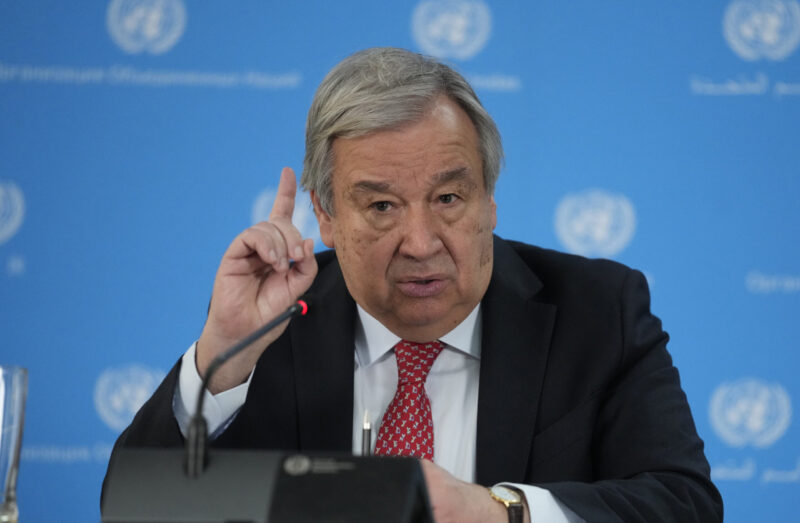
World cannot afford Lebanon becoming another Gaza, says UN chief
United Nations Secretary-General Antonio Guterres expressed increasing concern over the escalating war of words and deadly border clashes between Israel’s military and Lebanon’s Hezbollah fighters.
UN peacekeepers are working to calm the situation and prevent “miscalculation” after both sides heightened their rhetoric and raised the possibility of full-scale conflict, he said on Friday.
“One rash move – one miscalculation – could trigger a catastrophe that goes far beyond the border and, frankly, beyond imagination,” Guterres told reporters. “Let’s be clear: The people of the region and the people of the world cannot afford Lebanon to become another Gaza.”
A UN peacekeeping force UNIFIL, as well as unarmed technical observers known as UNTSO, have long been stationed in southern Lebanon to monitor hostilities along the demarcation line between Lebanon and Israel, known as the Blue Line.
“UN peacekeepers are on the ground working to de-escalate tensions and help prevent miscalculation,” Guterres said. “The world must say loudly and clearly: immediate de-escalation is not only possible – it is essential. There is no military solution.”
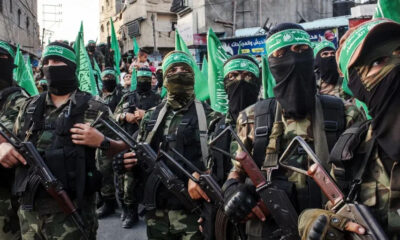
Hezbollah has fired rockets and drones into Israel since it launched the war on Gaza last October with the Israelis responding with deadly air strikes and heavy artillery fire. Hundreds have been killed and tens of thousands displaced along the border.
Israeli Prime Minister Benjamin Netanyahu and Defence Minister Yoav Gallant have previously pledged to “turn Beirut into Gaza”. This week, Hezbollah leader Hassan Nasrallah warned of “no restraint and no rules” if Israel launches a major attack on Lebanon.
‘Israelis will pay a huge price’
Analysts have said it remains unclear if both sides are upping their threats as deterrence, or if they are actually on the brink of all-out war. In terms of Israel’s war on Gaza, one expert said it is not accurate to compare Palestinian armed groups with Lebanese Hezbollah.
READ ALSO:
- 200 Chinese companies ready to invest in Nigeria – Minister
- British Airways flights disrupted after grounding aircraft at Lagos airport
- Cholera: Nigeria faces vaccine shortage as death toll hits 40
“Hezbollah is more trained, more organised with even more lethal weapons compared to Qassam Brigades, Hamas’s armed wing. And for this reason, I think the Israelis will pay a huge price for something they can avoid,” Hassan Barari, a professor of international affairs at Qatar University, told Al Jazeera.
Orna Mizrahi, a former official in Israel’s National Security Council, said none of the options are good for the country.
“But the big question is, how much can Israel suffer under this attack? I think most of the government doesn’t really want to get into a war, but it’s possible that we are getting there,” she said.
In Lebanon, Nasrallah’s comments left many bracing for a wider war. But some diplomats and analysts said his threats are an attempt to match the escalating rhetoric from Israel.
“To me, now this is part of a deterrent strategy,” said Hubert Faustmann, professor of history and international relations at the University of Nicosia.
“There is a high danger of Israel escalating the confrontation with Hezbollah and an all-out, full-scale war, which I don’t think Hezbollah wants,” Faustmann added, saying Hezbollah is demonstrating what it “could do” if that were to happen.
Hezbollah has indicated it is not seeking a wider conflict, even as it has steadily drawn on more potent weaponry.
While Israel has the most powerful army in the Middle East, Hezbollah has thousands of fighters, many with experience in the Syrian civil war, and an arsenal of tens of thousands of missiles capable of hitting cities all over Israel.
It also has a large fleet of drones, one of which appears to have carried out an extended flight over the port city of Haifa this week, underlining the potential threat to key economic infrastructure including power systems.
‘Tall order for Israeli air defences’
There are fears a wider escalation could overwhelm Israel’s Iron Dome missile defence system, which has so far intercepted most of the hundreds of missiles fired by Hezbollah.
READ ALSO:
- Kenya investigates police conduct in protests over new tax plan
- Peter Obi didn’t create Obidient Movement, says Aisha Yesufu
- Falana, other lawyers fault court ruling on Sanusi, Bayero dispute
“My sense is that Hezbollah feels it has some leverage over the Israelis, because an escalating war – as much damage as it might do in Lebanon and Syria – would create terror in Israel,” said Seth G Jones, an analyst at the Centre for Strategic and International Studies in Washington, DC.
“It would be a tall order for Israeli air defences to confront the widespread rocket arsenal coming from the north. It would be a huge problem.”
Israel has had bruising experiences in Lebanon in the past. After its forces invaded in 1982, they were stuck holding a buffer zone for nearly two decades after a war that saw the birth of Hezbollah. There was a second 34-day war in 2006 that bloodied both sides.
But the political pressure on Netanyahu has swelled with no indication of when life will return to normal more than eight months after the beginning of the conflict.
Dozens of Israeli towns are deserted with about 60,000 people evacuated to temporary accommodation, leaving empty streets with the occasional building scarred by rocket fire. Some 90,000 have also fled southern Lebanon.
Sarit Zehavi – a former Israeli military intelligence official who runs a think tank that specialises on Israel’s northern border – said after the trauma Israel suffered on October 7, few of those who left their homes would be ready to return while Hezbollah remained entrenched along the border.
“For 17 years, we did nothing against the threat and now dealing with it will cost a very high price,” Zehavi said.
World cannot afford Lebanon becoming another Gaza, says UN chief
SOURCE: AL JAZEERA AND NEWS AGENCIES






Health
Fiji Declares National HIV Emergency as Diagnoses Surge Sixteenfold
Fiji Declares National HIV Emergency as Diagnoses Surge Sixteenfold
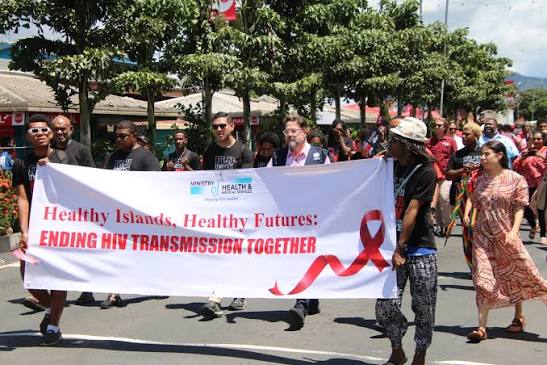
Authorities launch a multi-agency public health campaign to expand free testing, treatment, and harm-reduction services
Fiji has announced a nationwide health response to address a significant rise in HIV cases and ensure that all residents can access essential medical care.
On Wednesday, Health Minister Dr. Atonio Lalabalavu shared the emergency declaration, explaining that national agencies are joining forces to provide rapid medical support, expand testing, and protect community well-being across the islands.
Official reports indicate that about one in every 60 adults in Fiji currently lives with HIV, following an increase in new infections over recent years. Health specialists explain that the virus spreads primarily through intimate sexual contact and shared needles among individuals using illicit substances.
Additionally, routine screenings revealed that two out of every 100 expecting mothers carry the virus, highlighting an urgent need for early maternal healthcare to protect newborns from infection.
To safeguard public health, authorities are delivering free daily treatments, distributing protective preventive medications, and setting up clean needle programs to stop infections before they start.
Furthermore, global partners, including Australia, New Zealand, India, and United Nations health bodies are providing financial resources and medical supplies to back the local effort.
By encouraging open community conversations and delivering accessible healthcare without judgment, health workers aim to ensure that everyone receives the care and dignity they deserve.
Fiji Declares National HIV Emergency as Diagnoses Surge Sixteenfold
International
Kim Yo-jong: Only ‘Idiots’ Think North Korea Will Give Up Nuclear Weapons

International
Gaza Building Collapse Kills 21, Including Eight Children
Gaza Building Collapse Kills 21, Including Eight Children
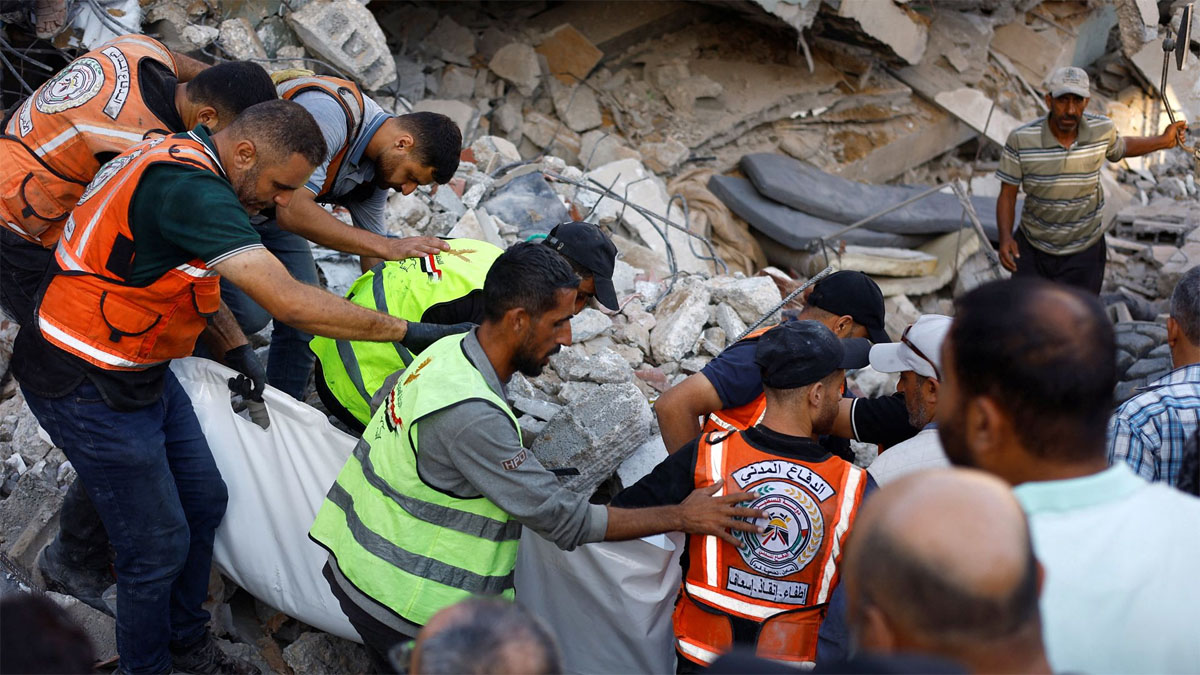
At least 21 people have been killed, including eight children, after a war-damaged building collapsed in Gaza City overnight, rescuers and medics say. The tragedy has renewed concerns about the collapse risk facing hundreds of bomb-damaged structures across the Gaza Strip as winter approaches.
The six-storey residential building in Gaza City’s Tal al-Hawa area collapsed in the early hours of Wednesday. According to the United Nations humanitarian coordinator for the occupied Palestinian territories, Ramiz Alakbarov, an estimated 100 people, including 50 children, were living in the building when it came down. The Gaza Civil Defence agency confirmed that rescuers extracted 21 bodies and rescued 20 unharmed individuals from the rubble on al-Sinaa Street in Tal al-Hawa. Dozens remain missing or injured underneath the debris.
Witnesses told the BBC that the building had been left tilting dangerously to one side after an Israeli strike more than a year ago. Displaced families had moved inside because they were desperate, with nowhere else to go. The building had been hit multiple times in 2024 and March 2025, leading to warnings for Gazans not to return, according to Civil Defence spokesman Mahmoud Basal. More than 10 families, totalling around 80 people, lived in the building, according to residents, with dozens of them being children. Sherif, whose sister was killed, said: “They couldn’t find a tent or somewhere to live. This was the last place they could turn to, despite the danger. They were aware that it would likely end in tragedy. A lack of resources drove them towards certain death.“
A woman living in a tent nearby, Umm Mohammed Bakrun, said she had been talking to her son when the building collapsed suddenly. “It felt like an earthquake. There was a loud sound and I couldn’t stand up. Stones rained down on us and when I looked outside I saw a lot of dust,” she told the BBC. “Within minutes, there were screams everywhere.” Another witness, Mansour Abu Mohammed, said the building collapsed “in a few seconds”. “Every day, a stone or a few stones would fall from it, but the people inside couldn’t find anywhere else to live. I used to live next door to it and you could see that it was tilting to one side.”
READ ALSO:
- Niger Mosque Abductions: Terrorists Execute 30 of 500 Captive Muslim Worshippers
- OAU Investigates Death of Final-Year Student as Police Begin Probe
- 57-Year-Old Man Arrested Over Sexual Abuse of Stepdaughter in Edo
UN and Egyptian teams joined the search for survivors, which was slow due to a lack of heavy machinery. Initially, rescuers from the Hamas-run Civil Defence agency had to use their bare hands. Egypt provided heavy machinery for the rescue operation, while the United Arab Emirates and Qatar were set to deliver relief items. The Palestinian Civil Defence said rescue teams had been working continuously since the collapse, but lacked even the most basic tools. “In the first moments after the collapse, we had to ask neighbours and displaced people nearby to bring hammers, shovels and other tools because of the severe shortage of equipment,” said Abdullah al-Majdalawi, director of public relations at Gaza’s Civil Defence. The head of the United Nations Development Programme (UNDP) Gaza office, Alessandro Mrakic, told reporters at the scene that “the situation… is tragic because we don’t have the equipment and machinery that is needed”.
Mrakic warned that approximately 400 other war-damaged buildings across Gaza were at imminent risk of collapse, particularly as winter approaches. The Civil Defence agency has identified around 2,000 buildings across the territory at risk of collapse. “We need support, most importantly with machinery, equipment, among others. Our colleagues here don’t have [engine] oil and spare parts to continue to work with all the equipment that is still in Gaza.” The UN’s humanitarian relief coordinator, Ramiz Alakbarov, said he was “devastated” by the reports. “No-one should have to risk their life simply to find a safe place to shelter,” he said. He also urged Israeli authorities to approve deliveries to Gaza of heavy machinery for rescue operations, as well as tents, tarpaulins and other non-food items for displaced people ahead of the winter rains. Israel says its restrictions are meant to keep equipment out of the hands of Palestinian armed groups that could also have military uses.
An estimated 80% of all structures in Gaza have been destroyed or damaged during the war between Israel and Hamas, according to the UN. More than 1.9 million people — about 90% of the territory’s population — have been displaced, many of them multiple times, and 1.2 million of them are currently living in tents or makeshift shelters. The UN has warned that the humanitarian situation in Gaza remains dire despite the ceasefire agreed last October, as Israeli air strikes and other attacks continue to hit populated areas, causing casualties and property damage and driving further displacement. According to Gaza’s health ministry, 1,369 Palestinians have been killed and 4,627 wounded since the fragile ceasefire took effect on 11 October 2025. The total death toll since the war began has reached 73,783, with 174,738 injured.
On Tuesday, Israeli air strikes killed at least five Palestinians, including two children and a Hamas commander, according to health officials and Hamas sources. The Israeli military said it killed a Hamas commander in southern Gaza and another fighter in the north. In both cases, a child was also reportedly killed. Separately, the British charity Medical Aid for Palestinians said that a patient was killed by an Israeli drone at a health centre it supports in Jabalia in northern Gaza. A spokesperson for the Israeli military told the BBC it was not aware of such an incident.
The Gaza war was triggered by the Hamas-led attack on southern Israel on 7 October 2023, when about 1,200 people were killed and 251 others were taken hostage. Since then, more than 73,790 people have been killed in Gaza, according to the territory’s Hamas-run health ministry, whose figures are considered reliable by the UN. In a statement, the Gaza government media office under Hamas said it held “the Israeli occupation and the international community fully and directly responsible for this catastrophe befalling our Palestinian people“.
Gaza Building Collapse Kills 21, Including Eight Children
-

 Sports3 days ago
‘I Was Never the Chosen One’ — Dembele Responds to Mbappe
-

 International2 days ago
Islamic Council Condemns Attempted Attack on Holy City of Mecca
-

 metro2 days ago
Lagos Power Outage: Ikeja Electric Blames TCN as Businesses, Homes Groan
-

 Education3 days ago
JAMB Moves 2027 UTME Time — Here’s What Candidates Need To Know
-

 News2 days ago
Keep Politics Out of My Office — Ogbomoso Grand Chief Imam Warns Politicians, Bloggers
-

 Politics3 days ago
2027: APC Governors Reject Wike’s Rainbow Coalition, Insist on Party Loyalty
-

 News3 days ago
I Wanted to Disgrace Tinubu — Omokri Reveals What He Discovered at Chicago Varsity
-

 metro2 days ago
A Son Wouldn’t Have Done Better — Dangote Speaks on Daughters, Succession