

News
Buhari, Jonathan, governors, Tinubu, others pay tribute to late Odumakin

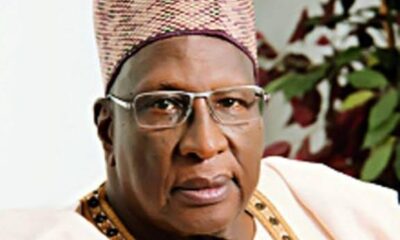
President Muhammadu Buhari, ex-President Goodluck Jonathan, former Vice-President Atiku Abubakar, Asiwaju Bola Tinubu, governors and other prominent Nigerians in paying tribute to the spokesman for the Pan-Yoruba group, Afenifere, Mr Yinka Odumakin, who died on Saturday.
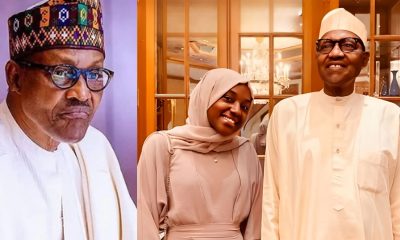
Buhari, in a condolence message signed by his Special Adviser on Media and Publicity, Mr Femi Adesina, described Odumakin as dutiful and a person of conviction.
Odumakin was President Buhari’s spokesperson when he ran for the 2011 presidential election on the platform of the defunct Congress for Progressive Change (CPC).
The President recalled Odumakin as “dutiful, and a person of conviction.”
He expressed sorrow at his demise “when he had a lot more to contribute to society and the nation at large.”
Buhari prayed God to “grant repose to the soul of the departed activist, and comfort all those who mourn him.”
Vice President Yemi Osinbajo also commiserated with the wife of the deceased, family and associates and prayed that the Lord will “comfort the family, and bless his memory always.”
Former President Goodluck Jonathan described the deceased as a great voice for equity and a courageous patriot.
“He was a great asset for just causes whose considerable contributions to the growth of civil society is not in doubt.
“He also acquitted himself as a seasoned journalist and columnist who promoted egalitarianism and social well-being, in his regular essays,” Jonathan said in a condolence message to the Odumakins.
He added, “Mr Odumakin exits this world with rich democratic credentials, having played active roles in the years of activism that birthed and stabilised civil rule in our country.”
Former Vice President Atiku Abubakar said the death of the human rights activist was a rude shock.
He said, “Much as our heart grieves over this unpleasant development, we must take solace in accepting it as an act of God and acknowledge the fact that Yinka lived a life of purpose in defence of the ordinary people of this country and to enthrone a better Nigeria.”
The Chief Edwin Clark-led Southern and Middle Belt Forum of Nigeria described Odumakin as a fearless and courageous nationalist.
The group in a condolence message signed by Chief Clark, National Leader; Prof. George Obiozor, President-General, Ohaneze Ndigbo; Dr. Pogu Bitrus, President-General, Middle Belt Forum; and Senator Emmanuel Ibok-Essien, National Chairman, Pan Niger Delta Forum (PANDEF) said the news of Odumakin’s demise came to them as a rude shock.
They said Odumakin was a backbone who in the past few years worked tirelessly to give the organisation both national and international visibility and recognition.
They said, “Although he was an Afenifere chieftain, his commitment to building a Nigerian state where fairness, equity and justice reigns was unparalleled.
“For Southern Nigerian and Middle Belt Forum, Yinka was a backbone who in the past few years worked tirelessly to give the organisation both national and international visibility and recognition. He also brought clarity and common understanding to the problems bedeviling our country, aimed at providing timely solutions to them.
“Yinka has etched his name in steel in the anal of Nigerian history. He will, therefore, be remembered by all citizens as one of our greatest citizens ever.”
Aare Ona Kakanfo of Yorubaland, Chief Gani Adams, called him a gem and a dependable ally.
He said, “We’ll all miss his voice. We’ll miss his commitment, we’ll miss is bravery because the late Yinka Odumakin’s fearless image loomed larger than what we can easily forget in a hurry.”
The Arewa Consultative Forum (ACF) said much as its own views were always in disagreement with those of the interest represented by the deceased, their differences were “on principle and not personal.”
The ACF National Publicity Secretary, Emmanuel Yawe, said, “We had hoped that Odumakin would live long enough to work for and see the new day. His death today has robbed us of that opportunity.”
The Peoples Democratic Party (PDP) said, “The death of Odumakin is a huge loss to the nation and particularly the PDP, given his erudite contributions to national dialogue and relentless commitment towards the development of democratic ethos in our country.
“Odumakin was consistently focused in fighting for a nation in which the principles of equity, fairness and justice will thrive in every sphere of our national life.”
He lived a selfless life –Sanwo-Olu
Lagos State Governor Babajide Sanwo-Olu, said, “Odumakin was undoubtedly a great nationalist, passionate leader and champion of a true Nigeria that would work for every citizen.
“Odumakin as civil rights activist was selfless. He spent the greater part of his life in the service of humanity, particularly the emancipation of the Yoruba people, the development of the South West region in particular and the nation in general.
“He stood firmly behind the attainment of constitutional democracy and fiscal federalism as the basis for sustainable development and lifting the masses out of poverty.”
A nationalist who gave his all — Akeredolu
Governor Rotimi Akeredolu of Ondo State said, “His roles in the enthronement of popular democracy as well as his fiery advocacy for the rule of law remain undoubtedly legendary.
“We recall his fiery beginning in the struggle as the Publicity Secretary of Obafemi Awolowo University Student Union where he discharged his duties creditably.
“He represented a memorable era having participated actively in the passion and action for a better Nigeria in his lifetime. Those left behind will find great inspiration in Yinka’s legacies to continue with the struggle.”
Fayemi: He was a man of the people
Governor Kayode Fayemi of Ekiti State said, “This is a very sad day. The Yoruba and indeed Nigeria have lost an illustrious son, a voice for the voiceless, a fearless and dogged fighter, and a leader who loved and served his people passionately.
“For me, Yinka’s death is a personal loss. He was not just my comrade in the democratic struggle, he was a brother and a friend. He was firm in his conviction, focused and progressive-minded. Even when we disagreed, he was never disagreeable.
“Our thoughts and prayers are with Joe, his widow, members of his immediate family, associates, and the leadership of Afenifere, at this trying period. We pray that God grants him eternal rest and gives the family the fortitude to bear the irreparable loss.”
A dependable ally of the masses – Olurode
Lai Olurode, former National Commissioner of INEC and a professor of Sociology at the University of Lagos, said the passing Yinka Odumakin is a devastating loss to the progressive camp and to all lovers of a great and peaceful Nigeria.
He said the deceased was a dependable ally of the masses who was consistently committed to a great but restructured Nigeria.
Olurode said, “He was a dogged and committed fighter for causes that he believed in. And really, he was committed to fighting against whatever would rob off negatively on the masses, no matter their ethno-religious identity.”
He also said Odumakin was “unrelenting and consistent in the pursuit of truth. He had no permanent friend except in what is just, fair and right.
“The last time he was in touch with me was a couple of weeks back and in respect of the death of yet a greater Nigerian, Alh. Lateef kayode Jakande. He wanted some clarifications about LKJ’s unbelievably Spartan life, which I obliged him. May the soul of Odumakin rest in peace and may God be with his wife, Dr. Mrs. Joe Odumakin and the children he left behind.”
Pro-democracy Movement declares 7-day mourning
The Convener of the June 12 Pro-Democracy Movement of Nigeria, Olawale Okunniyi, announced a seven-day mourning for the loss of Odumakin.
Okunniyi said Yinka Odumakin was one the fiercest and most prolific comrades of the Pro-Democracy Movement in Nigeria, who fought the cause of a just and equitable Nigeria and therefore deserved to be immortalised by the Pro Democracy Movement.








News
MURIC Warns FG: Any Move Against Atiku Now Lacks Tact
MURIC Warns FG: Any Move Against Atiku Now Lacks Tact
The Muslim Rights Concern (MURIC) has warned the Federal Government against any move to arrest, interrogate or otherwise take action against former Vice-President Atiku Abubakar over a fresh petition before the Economic and Financial Crimes Commission, saying such a step at this time could send the wrong signal to Nigerians.
The warning came as the controversy over a renewed call for the EFCC to investigate allegations dating back to Atiku’s tenure as Vice-President intensified, with opposition figures and the petitioner trading sharply different arguments over the matter.
In a statement issued on Tuesday, September 22, 2026, MURIC Founder and Executive Director, Professor Ishaq Akintola, said the government should exercise caution, particularly with the 2027 general elections approaching.
According to MURIC, the renewed allegations have assumed greater sensitivity because Atiku is now the presidential candidate of the African Democratic Congress and a leading opposition figure.
“We warn that such an attempt at this point in time will send the wrong signal to Nigerians,” the group said, adding that with the 2027 elections “at the doorsteps,” the Federal Government should carefully consider the consequences of any action against the former Vice-President.
MURIC described any such move as lacking tact and “short” of emotional intelligence, while urging the government to avoid conduct that could create the impression that state institutions were being used against political opponents.
The organisation also warned against what it described as a damaging “body language” capable of portraying Nigeria as a “banana republic.”
MURIC said that although the country had already lost some ethical ground, its democratic values and norms remained important safeguards that should not be compromised.
“Our corporate image in the global community is sinking fast,” the group added.
READ ALSO:
- JAMB Allows Candidates to Change Lost SIM, Email Addresses
- How Nigerians Can Get Federal High Court Affidavit Online Without Visiting Court
- Plateau Violence: Several Killed as Fresh Attacks Trigger Mass Exodus
The statement followed renewed controversy over a petition by former House of Representatives member, Ehiozuwa Agbonayinma, asking the EFCC to revisit allegations concerning Atiku’s activities while he was Vice-President.
Reports indicate that the petition relates to allegations investigated by the EFCC between 2005 and 2006. Agbonayinma reportedly gave the anti-graft agency a 14-day ultimatum to act and threatened legal action if the commission failed to respond.
Former Senator Dino Melaye has strongly opposed the renewed petition, describing it as an attempt to “resurrect the dead.” Melaye argued that the matter had previously been dealt with and questioned the basis for bringing it back almost two decades later.
The dispute, however, has escalated beyond the original petition, with Agbonayinma hitting back at Melaye and challenging him to produce documentary evidence for his claim that the allegations had been investigated and dismissed.
In a statement reported on September 20, Agbonayinma insisted that he was asking the EFCC to perform its statutory responsibility and argued that the substance of the allegations should be addressed rather than his personality or political affiliation.
“You cannot defend Atiku Abubakar from an EFCC petition by attacking me,” Agbonayinma was quoted as saying, while urging the anti-graft agency to determine whether the allegations warranted further investigation.
The renewed controversy has also brought attention to the distinction between a petition seeking investigation and a finding of criminal guilt. The existence of a petition does not, by itself, establish that the person named in it committed an offence.
There is also a historical legal dimension to the allegations. Reports on the previous proceedings state that a Lagos State High Court set aside an EFCC administrative indictment against Atiku in December 2006, while no criminal conviction against him resulted from the allegations.
Atiku has continued to deny wrongdoing and has challenged anyone with credible evidence against him to present it through the appropriate legal channels.
Meanwhile, there was no confirmed announcement from the EFCC, as of the latest reports reviewed, that it had arrested Atiku or formally invited him over the fresh petition. A separate and more recent EFCC investigation reported on September 20 concerns individuals connected to allegations surrounding the Mambilla Power Project, which is distinct from the 2005–2006 allegations at the centre of the present political dispute.
The MURIC intervention has therefore added a fresh dimension to an increasingly heated political controversy, with the organisation urging the Federal Government to exercise restraint and protect public confidence in Nigeria’s democratic institutions.
With the 2027 elections approaching, the dispute over the renewed EFCC petition is expected to remain a significant political issue, particularly if the anti-graft agency decides to take further steps.
For MURIC, however, the timing of any action is crucial. The organisation wants the Federal Government to ensure that whatever steps are taken by law-enforcement agencies are grounded in due process and do not create the perception of political persecution.
The group’s central warning is that Nigeria must guard its democratic reputation and avoid actions that could further erode public confidence in its institutions at a particularly sensitive period in the nation’s political calendar.
MURIC Warns FG: Any Move Against Atiku Now Lacks Tact
News
NiMet Predicts Thunderstorms, Rain Across Nigeria Till Wednesday

NiMet Predicts Thunderstorms, Rain Across Nigeria Till Wednesday
The Nigerian Meteorological Agency (NiMet) has predicted thunderstorms and rainfall across several parts of Nigeria from Monday to Wednesday.
The agency, in its weather outlook released on Sunday, also warned that strong winds could occur ahead of thunderstorms in some areas.
For Monday, NiMet expects thunderstorms and light rain over parts of Taraba and Kebbi during the morning. Later in the day, moderate rainfall is expected across several areas in the North-East, Kaduna, Taraba and Kebbi.
In the North-Central region, parts of Niger State could experience thunderstorms and light rain in the morning, while most parts of the region may record thunderstorms with moderate rainfall by afternoon or evening.
The southern states are also expected to experience wet conditions. NiMet forecasts cloudy skies in the morning, with isolated thunderstorms and light rain over parts of Bayelsa, Rivers, Akwa Ibom and Cross River. More thunderstorms and light rain are expected later in the day.
Tuesday and Wednesday Forecast
On Tuesday, the northern region is expected to have patches of cloud in the morning, with thunderstorms and light rain possible in parts of Taraba.
By afternoon or evening, most parts of the region could experience thunderstorms accompanied by moderate rain.
In the North-Central, parts of the Federal Capital Territory, Niger, Nasarawa and Plateau states are expected to receive thunderstorms and moderate rainfall later in the day.
Southern areas, including parts of Ebonyi, Enugu, Abia and the South-South, may also experience thunderstorms and light rain.
NiMet expects more widespread rainfall on Wednesday, particularly across northern and North-Central states. Borno, Bauchi, Gombe, Kaduna, Adamawa and Taraba are among the areas listed for morning thunderstorms and moderate rain.
The agency also forecasts thunderstorms and moderate rainfall across much of the South later on Wednesday.
NiMet advised residents to secure loose objects and take precautions against strong winds. Motorists were urged to avoid driving during heavy rainfall, while residents were advised to disconnect electrical appliances during thunderstorms and stay away from tall trees.
Airline operators were also advised to obtain airport-specific weather information when planning flights.
NiMet Predicts Thunderstorms, Rain Across Nigeria Till Wednesday
News
Working People United Celebrates Oluremi Tinubu at 66, Commends Her Humanitarian Efforts

Working People United Celebrates Oluremi Tinubu at 66, Commends Her Humanitarian Efforts
Civic organisation Working People United has congratulated Nigeria’s First Lady, Senator Oluremi Tinubu, on her 66th birthday, praising her contributions to humanitarian services, education, healthcare and the empowerment of vulnerable Nigerians.
Oluremi Tinubu celebrates her 66th birthday on Monday, September 21, 2026, with messages of goodwill coming from individuals and organisations across the country.
In a congratulatory message issued on Sunday, National Coordinator-General of Working People United, Prince Williams Akporeha, described the First Lady’s years of public service as an important part of her contribution to Nigerian society.
Akporeha said the organisation recognised Oluremi Tinubu’s continued involvement in programmes designed to improve the welfare of children, women, young people and underserved communities.
He particularly highlighted her advocacy and interventions in education, healthcare access, youth development and economic empowerment, saying such initiatives were directed at addressing challenges faced by ordinary Nigerians.
According to the group, the First Lady’s humanitarian activities have focused on providing practical support to communities and creating opportunities for people who might otherwise have limited access to social and economic resources.
Working People United also commended Oluremi Tinubu’s interest in family welfare and children’s development, describing those areas as important to the long-term development of the country.
The organisation said efforts to strengthen access to basic education and healthcare, particularly at the grassroots, remained critical to improving the quality of life of Nigerians.
It also praised initiatives aimed at providing young people with skills and economic opportunities, noting that youth empowerment could help reduce vulnerability and expand participation in the economy.
Akporeha urged the First Lady to sustain her advocacy for vulnerable Nigerians as she begins another year of her life.
READ ALSO:
- ‘Join the Hunt’ — Soludo Urges Igbos to Strategically Align Ahead of 2027
- 18 Suspects Transferred to US Over 2021 Killing of Haitian President Moïse
- My Heart Has Always Been Home With You — Tinubu’s Powerful Message to Oluremi at 66
He said the organisation was joining Nigerians across the country to celebrate Oluremi Tinubu and acknowledge what it described as her commitment to humanitarian service.
Working People United wished the First Lady good health, wisdom, strength and fulfilment as she continues her public responsibilities and supports initiatives focused on the welfare of Nigerians.
The group also expressed hope that her birthday would provide an opportunity to renew attention to issues affecting children, women, young people and low-income families, particularly in education, healthcare and economic empowerment.
Oluremi Tinubu, a former senator representing Lagos Central Senatorial District, has been involved in public service and humanitarian activities for several years.
As First Lady, she has continued her intervention programmes through the Renewed Hope Initiative (RHI), which has focused on areas including education, health, agriculture, social investment and economic empowerment.
Her recent programmes have included support for women, vulnerable households, students, farmers, young people and families affected by economic hardship.
The birthday messages therefore come as the First Lady continues her public engagements and humanitarian programmes across different parts of Nigeria.
Working People United Celebrates Oluremi Tinubu at 66, Commends Her Humanitarian Efforts
-
 metro2 days ago
Oyo Police: Student Who Died by Suicide Was Charged With Assault, Not ₦8,000 Debt
-

 Entertainment3 days ago
“She Wanted to Stay Single”: Rema Opens Up About Rejection That Inspired Hit Song ‘Oh No’
-

 metro3 days ago
Niger Miners’ Deaths: Families Demand Compensation, Justice for Victims
-

 metro3 days ago
Mambilla: ICC Raises Questions Over $500,000 Payment to Atiku’s Former Wife
-
 International15 hours ago
18 Suspects Transferred to US Over 2021 Killing of Haitian President Moïse
-

 Auto2 days ago
Abuja Demand Rises as Jetour Brings X70 Plus Experience to FCT
-
 Politics2 days ago
2027: NDC Predicts Wider Obi Victory Over Tinubu in Lagos
-

 metro2 days ago
Irreconcilable Developments: Wedding Cancelled 24 Hours Before Ceremony