

News
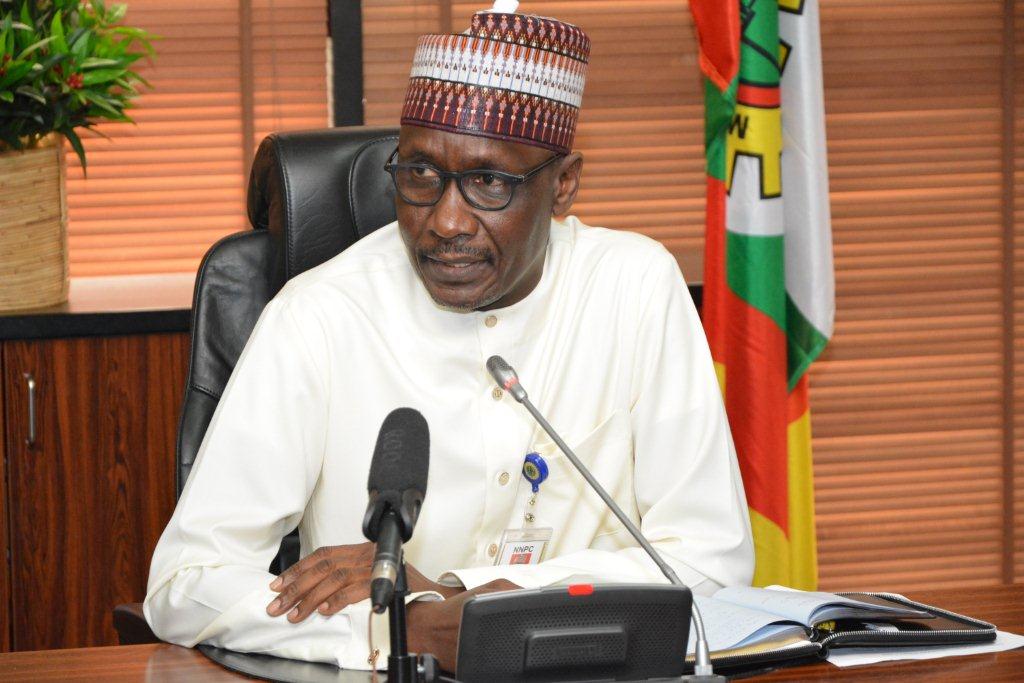
Dangote refinery: Reps begin probe, vow to demand NNPCL boss sacking
Dangote refinery: Reps begin probe, vow to demand NNPCL boss sacking
The House of Representatives has threatened to push for the removal of Mele Kyari, the Group Chief Executive Officer of the Nigerian National Petroleum Company Limited (NNPCL), if he continues to impede the operations of the Dangote Refinery.
Deputy House Spokesman, Philip Agbese, revealed this during a press briefing in Abuja.
Agbese noted that the House has already voiced its support for the removal of Farouk Ahmed, the Chief Executive Officer of the Nigerian Midstream and Downstream Petroleum Regulatory Authority (NMDPRA).
The lawmaker accused both the NNPCL and NMDPRA of working against the interests of the Dangote Refinery.
READ ALSO:
- Israel hits Hezbollah targets after football pitch attack kills 12
- Israeli strike on Gaza school kills 30 persons
- Don’t attack protesters, Lagos CP warns, after meeting traditional rulers
He said, “We have been seeing many demarketing campaigns to discredit the Dangote Petroleum Refinery, and given the negative impact of this, which has caused panic in the country.
“It is on record that the House directed the President to sack the NMDPRA’s CEO.
“The House of Representatives will not hesitate to call for the dismissal of Mele Kyari if the attempt to destroy the refinery project, a national asset, does not stop immediately.”
This development follows a recent visit by House Speaker Tajudeen Abbas and a House delegation to the Dangote Refinery and Petrochemicals Company in Lagos.
Dangote refinery: Reps begin probe, vow to demand NNPCL boss sacking







News
FAAN Debunks Fire Scare at Lagos Airport Terminal 2, explains cause of smoke
FAAN Debunks Fire Scare at Lagos Airport Terminal 2, explains cause of smoke
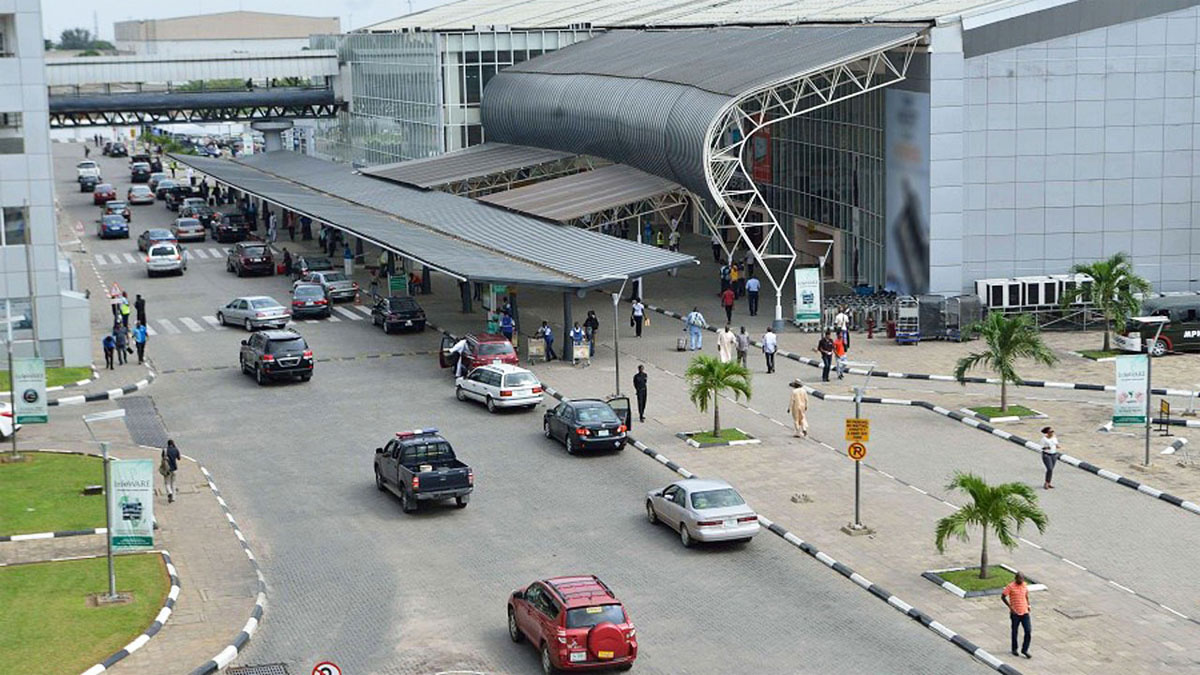
FAAN has dismissed reports of a fire outbreak at Terminal 2 of the Murtala Muhammed International Airport (MMIA), Lagos, clarifying that Sunday’s emergency was triggered by the discharge of the terminal’s fire suppression system rather than an actual fire.
The Federal Airports Authority of Nigeria (FAAN), in an updated statement on Sunday, explained that preliminary investigations revealed the smoke seen within parts of the terminal was caused by the activation of the FM-200 fire suppression system.
The authority said investigations are underway to establish what caused the automatic system to discharge.
“Preliminary findings indicate that there was no fire at the terminal. The smoke observed within the affected area resulted from the discharge of the terminal’s FM-200 fire suppression system. The reason for the activation of the fire suppression system is currently being investigated,” FAAN stated.
The clarification followed an earlier announcement by the authority that an incident had occurred at the terminal, prompting the immediate deployment of its Aerodrome Rescue and Firefighting Service (ARFFS) and the activation of emergency response procedures as a precaution.
FAAN confirmed that the incident did not result in any injuries or casualties.
It also assured passengers and other airport users that normal activities have fully resumed, with passenger processing and flight operations continuing without disruption.
“Normal operations have since resumed at the terminal, while detailed investigations are ongoing to determine the exact cause of the incident,” the authority added.
FAAN expressed appreciation to passengers, airlines and other stakeholders for their patience and cooperation during the emergency response, reaffirming its commitment to maintaining the highest standards of safety and security across Nigeria’s airports.
The Murtala Muhammed International Airport in Lagos remains Nigeria’s busiest aviation gateway, serving thousands of domestic and international travellers daily.
News
Political Realignments: Kwankwaso Receives APC Defectors into NDC in Kano
Political Realignments: Kwankwaso Receives APC Defectors into NDC in Kano
The vice-presidential candidate of the Nigeria Democratic Congress (NDC), Senator Rabiu Kwankwaso, has formally received a group of defectors from the All Progressives Congress (APC) in Madobi Local Government Area of Kano State, marking another significant political realignment in the state as the 2027 elections approach.
The political landscape in Kano State witnessed another realignment over the weekend as Senator Rabiu Kwankwaso, the vice-presidential candidate of the Nigeria Democratic Congress (NDC), formally received a group of defectors from the ruling All Progressives Congress (APC) into his party and the Kwankwasiyya Movement. The reception, which took place at Kwankwaso’s residence along Miller Road in Kano, underscores the NDC’s ongoing efforts to expand its support base in one of Nigeria’s most politically significant states ahead of the 2027 general elections.
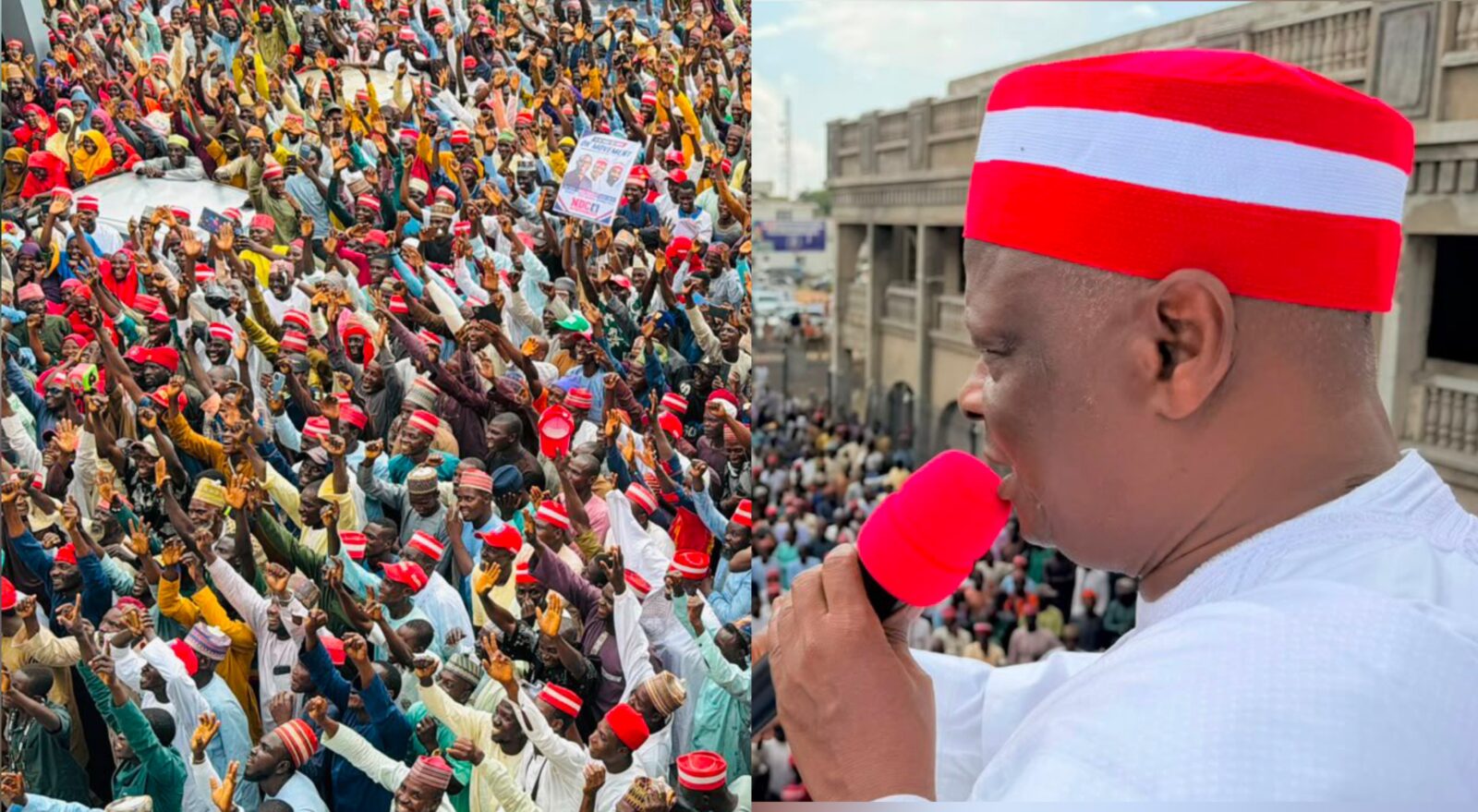
The delegation was led by Danlami Zakari Unguwar Gertai, also known as Garkuwan Gari, from Gari Local Government Area of Kano State. According to the Kwankwasiyya Movement, the defectors pledged their loyalty and unwavering commitment to Kwankwaso and the movement’s vision for a better Nigeria. The movement further stated that the new members promised to work for the growth of the NDC and support its campaign agenda. While the exact number of defectors was not disclosed, the reception drew a large crowd of enthusiastic supporters, many wearing the signature red caps associated with the Kwankwasiyya movement.
READ ALSO:
- DSS, Vigilantes Ambush, Kill Notorious Bandit Kingpin Idi Abasu Aiki, Over 60 Fighters in Katsina
- 475 Police Officers Recalled After Controversial Retirement, Ordered for Mandatory Induction
- Oloyede clears air on JAMB’s ₦36m ‘snake swallowed money’ controversy
In a statement shared on his official X account on Sunday, Kwankwaso expressed delight over the development and assured the new members of equitable treatment within the party. “I was elated to receive a group of defectors from Madobi Local Government who have left the APC to join the Nigeria Democratic Congress (NDC),” he wrote. “I warmly welcomed them into our fold and assured them of fair and comfortable positions within our party. We continue to grow stronger, free from major distractions.” Photographs from the event showed Kwankwaso, dressed in white traditional attire and his trademark red-and-white cap, flanked by the party’s Kano Central Senatorial candidate, Nasiru Gawuna, addressing a large crowd of supporters from an elevated position while holding a microphone. Other images captured large gatherings of supporters cheering and raising their hands in solidarity.
The development came barely 24 hours after the Independent National Electoral Commission (INEC) published the personal particulars and credentials of Kwankwaso and the NDC presidential candidate, Peter Obi, ahead of the 2027 general elections. Kwankwaso and Obi had previously contested the 2023 presidential election on different platforms before joining the African Democratic Congress (ADC) and later moving to the NDC, citing internal disagreements and prolonged court cases within the ADC. However, the reception of new defectors comes amid reports of internal strains within the Kwankwasiyya movement. Recent political realignments have seen some long-standing allies exit the movement, including Senator Rufa’i Sani Hanga, who represents Kano Central Senatorial District, and who recently lost his senatorial ticket in the NDC to Nasiru Gawuna. Hanga publicly reflected on his disappointment, stating: “I followed the Kwankwasiyya movement with absolute loyalty, but in the end, I was left facing the mockery of my enemies and the tears of those who cared about me.” Furthermore, the NDC has reportedly replaced some candidates earlier nominated by the Kwankwasiyya movement in Kano State as part of efforts to implement a power-sharing agreement, potentially affecting the perception of the movement and the unity of the NDC in the state. Gawuna, who was seen at the reception with Kwankwaso, had been the subject of defection talks to the African Democratic Congress (ADC) in recent months, with negotiations reportedly shifted from the state to the national level of the party. He was named as the NDC’s Kano Central Senatorial candidate in May 2026, alongside Aminu Abdussalam Gwarzo as the party’s governorship candidate for the state.
The latest defections are expected to strengthen the NDC’s grassroots mobilisation in Kano, one of Nigeria’s most politically significant states, as political parties intensify realignments and membership drives ahead of the 2027 elections. Despite internal challenges and the exit of some key figures, the Kwankwasiyya movement continues to command significant grassroots support, particularly among youths and urban voters through its distinctive red-cap identity and extensive political network.
Political Realignments: Kwankwaso Receives APC Defectors into NDC in Kano
News
475 Police Officers Recalled After Controversial Retirement, Ordered for Mandatory Induction
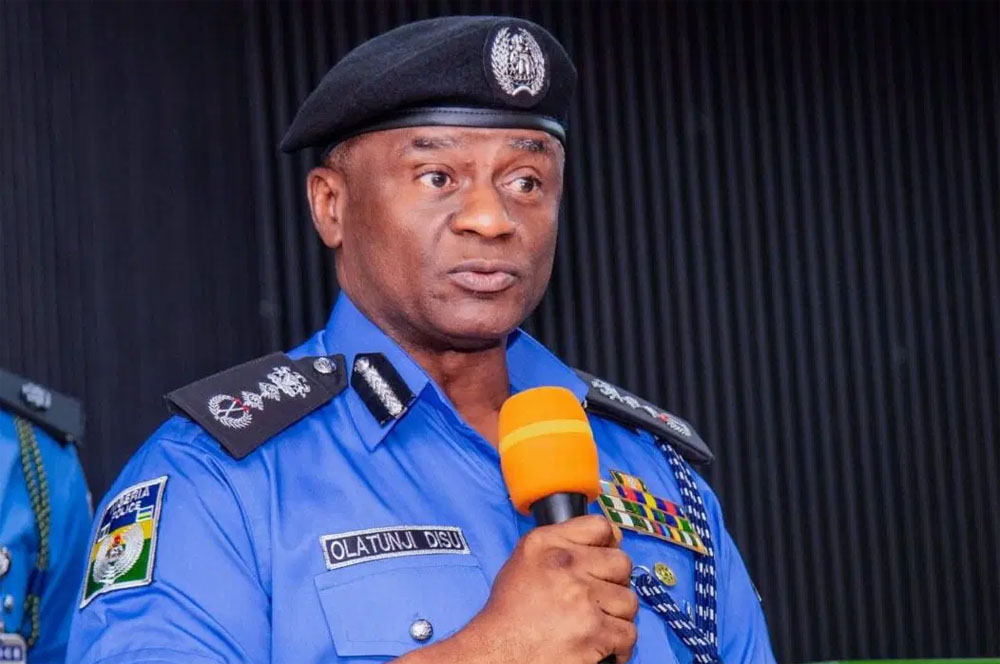
475 Police Officers Recalled After Controversial Retirement, Ordered for Mandatory Induction
The Nigeria Police Force reinstates 475 senior officers following court victory, with AIGs Owohunwa and Igwe among those returning for compulsory six-month training at Police Staff College, Jos.
The Nigeria Police Force has ordered the reinstatement of 475 senior police officers who were previously retired under the contentious “merger of service” policy, directing them to report for a compulsory six-month induction programme at the Police Staff College, Jos. The directive follows a court ruling that nullified their retirement, marking one of the largest single recalls of senior officers in the Force’s recent history.
The directive was contained in a confidential letter dated July 31, 2026, signed by Force Secretary, Assistant Inspector-General of Police Bode Akinbamilowo, on behalf of the Inspector-General of Police. The communication was addressed to Assistant Inspectors-General across the country’s 17 police zones, Commissioners of Police in all states, and the Commandant of the Police Staff College, Jos. The officers were initially retired following a Police Service Commission (PSC) decision reached at its First Extraordinary Meeting on January 31, 2025, which approved the implementation of the disputed merger of service policy. However, the National Industrial Court, in Suit No. NICN/ABJ/28/2025, overturned the retirements, ruling that the date of first appointment of the affected officers, as contained in their appointment letters, was not subject to review by the defendants. The Court of Appeal subsequently affirmed the ruling in April 2026. The PSC later approved the regularisation of the officers’ dates of first appointment at its plenary meeting on June 25, 2026, in compliance with the court judgment.
READ ALSO:
- Oloyede clears air on JAMB’s ₦36m ‘snake swallowed money’ controversy
- MURIC Hails Oloyede as ‘Game Changer,’ Says He Proved Muslims Can Excel in Public Office
- Peller, Jarvis’ Glamorous Lagos Wedding: N400m Mansion, $20,000 Gift, Over 50,000 Virtual Guests
Among the senior officers named on the recall list are AIG Idowu Owohunwa (AP/No 50645), who was appointed on August 15, 1996, as part of Force Entrants Cadet ASP Course 19/1996; AIG Benneth Chinedu Igwe (AP/No 50703), also appointed on August 15, 1996, under the same course; AIG Uche Ifeanyi Henry (AP/No 57903), appointed on May 1, 2000, as part of Force Entrants Cadet ASP Course 20/2000; and DCP Simon Asamber Lough (AP/No 57917), also appointed on May 1, 2000, under the same course. The affected officers span multiple entrant courses dating back to 1992 through 2012, cutting across ranks from Assistant Inspector-General down to Superintendent of Police. Other prominent officers recalled include AIG Joseph O. Eribo, CP Fidelis Ndubuisi Ogarabe, SP Olasukanmi Lateef Olujide, CSP Sanusi Amiru, CSP Grace Idowu Agboola, CSP Oluwadare Ezekiel Ayeni, CSP Angela Agabe, DCP Akinbayo Olasukami Olasoji, DCP Louis Chike Nwabuwa, ACP Benjamin Okehielam Okwara, and CSP Rita A.A. Inoma-Abbey, PhD.
The Force Secretary instructed all zonal commands and state police commissioners to ensure that affected officers are contacted and directed to report to the Police Staff College for the mandatory training programme. He further instructed them to “locate and warn” the officers to report for the induction course. The induction programme has been scheduled in two phases, with documentation and arrival taking place between August 1 and August 16, 2026, while the six-month induction proper will run from August 17, 2026, to February 16, 2027. The Inspector-General directed the Commandant of the Police Staff College to submit the list of all documented participants on or before August 24, 2026, stressing that “lateness will not be tolerated.” Copies of the directive were circulated to the IGP’s Secretariat and the Deputy Inspectors-General overseeing Finance and Administration, Operations, Logistics and Supply, Investigation, Training and Development, Research and Planning, Information and Communication Technology, Intelligence, as well as the Assistant Inspector-General in charge of Police Accounts and Budget to ensure the smooth implementation of the induction exercise.
Official records accompanying the directive show revised retirement timelines for the recalled officers following the court-ordered reinstatement. AIG Idowu Owohunwa now has a new retirement date of July 20, 2030, while AIG Benneth Chinedu Igwe is now scheduled to retire on October 7, 2028, and DCP Simon Asamber Lough will retire on May 14, 2029. Several officers on the list are already approaching retirement, with ACP Benjamin Okwara expected to retire in December 2026, while CSP Sanusi Amiru is due for retirement in February 2027.
The matter arose after the Police Service Commission, working with the police leadership, retired the senior officers in January 2025 over discrepancies in service records and alleged age falsification. However, the officers challenged their forced retirement from the police force, arguing they had neither completed 35 years of pensionable service nor reached the mandatory retirement age of 60. The case, filed by ACP Chinedu Ambrose Emengaha and seven others, also involved a separate suit filed by the three senior officers — AIG Owohunwa, AIG Igwe, and DCP Lough — which had been pending before the court. The reinstatement represents one of the largest single recalls of senior officers in the Force’s recent history and effectively overturns a retirement exercise that had sparked widespread controversy within the police establishment. The development raises questions about the Police Service Commission’s recruitment and retirement policies, as well as the implementation of the merger of service policy that led to the initial mass retirement.
475 Police Officers Recalled After Controversial Retirement, Ordered for Mandatory Induction
-

 Education2 days ago
ICYMI: Court orders JAMB, CBT centre to pay ₦10m over forced removal of candidate’s hijab during UTME
-

 Education3 days ago
Segun Aina assumes office as JAMB registrar, vows to protect examination integrity
-
 News4 hours ago
Oloyede clears air on JAMB’s ₦36m ‘snake swallowed money’ controversy
-
 Education2 days ago
Oyo Muslim Leaders Receive Saudi Delegation, Intensify Drive for Muslim College of Nursing
-

 Entertainment3 days ago
Tyla drops Lagos from A*POP World Tour amid boycott calls, concert threats
-
 News3 days ago
FG to phase out electricity subsidy from 2027 as power sector debts rise
-
 metro3 days ago
Catholic Priest Found Dead in Kogi After Machete Attack as Police, Govt Launch Investigations
-
 metro3 days ago
Osun Guber: IGP Deploys New Election CP as INEC Identifies 11 Flashpoint LGAs