

Aviation
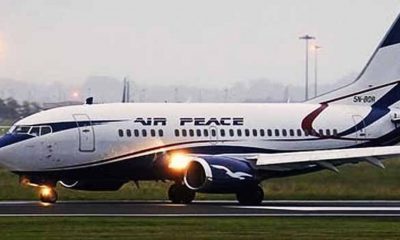
Air Peace: We’ll respond to Nigeria’s threat to bar BA, others, says UK
Air Peace: We’ll respond to Nigeria’s threat to bar BA, others, says UK
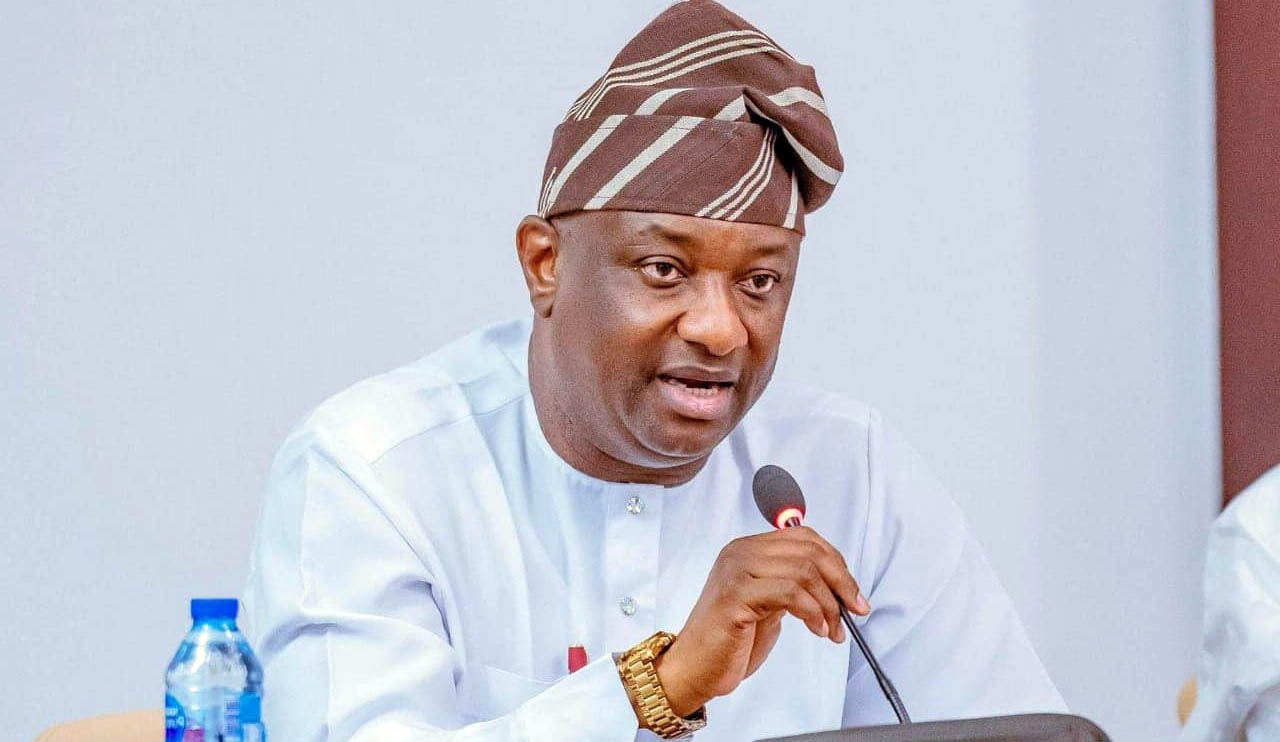
On August 1, 2024, Nigeria’s Aviation Minister, Festus Keyamo, issued a bold ultimatum to the United Kingdom government, setting the stage for a potential standoff between the two nations in the aviation sector. In his emphatic statement, Keyamo made it clear that unless the Nigerian airline, Air Peace, is granted the much-coveted landing slots at London Heathrow Airport, British Airways and Virgin Atlantic could face the possibility of being denied access to Nigeria’s major international gateways—Lagos and Abuja.
The minister’s warning is contained in a letter to UK Transport Secretary, Louise Haigh and reflects Nigeria’s growing determination to ensure fair treatment for its airlines on the global stage, emphasising that the nation’s aviation sector can no longer be sidelined in key international markets, especially as Air Peace has been forced to fly to Gatwick Airport.
Keyamo’s stance signals Nigeria’s readiness to assert its position, seeking reciprocity in international aviation agreements and standing firm against what is perceived as unequal access to lucrative routes.
This move, if acted upon, could disrupt the long-standing operations of British Airways and Virgin Atlantic, two of the most prominent international carriers servicing Nigeria. At the heart of the issue is Nigeria’s quest for equity and access to competitive markets, a challenge that Air Peace, one of Nigeria’s leading carriers, has faced in securing operational rights at one of the world’s busiest airports.
Keyamo told his UK counterpart giving Air Peace Gatwick airport was a blatant violation of the Bilateral Air Services Agreement (BASA) between both countries, which promotes reciprocal rights for airlines.
Keyamo said that while British carriers enjoy unrestricted access to Nigeria’s tier one airports, which are in Abuja and Lagos, Air Peace has been unable to obtain slots at Heathrow. He demanded immediate action to rectify the situation, warning that Nigeria will not tolerate the unfair treatment of its national carrier.
No response from the UK government
Daily Sun reached out to UK’s Transport Secretary, to verify if she has received Keyamo’s letter and what the UK government intends to do to resolve the dispute. In response, an email was sent by her researcher, Mr. Henry Smith, saying the Daily Sun’s request has been transferred to the Department of Transport. Daily Sun then sent a Freedom of Information request to the UK’s Department of Transport and the department acknowledged receipt of the request, saying a response will be issued in due time.
READ ALSO:
- Petrol sells for nears N1,000/litre in FCT, states
- Nigerian man eats in 150 restaurants in 24 hours, breaks Guinness World Record
- After third night, NAHCON chairman still in EFCC detention
Daily Sun also contacted the Minister’s office to verify if there has been a response from the UK government on the issue and his Special Adviser on Media, Mr. Tunde Moshood, said none has been received yet.
Airport slot allocation
Following the demands made by the Minister in his letter, Daily Sun sought to verify the issues raised. This paper analysed the 38-page Nigeria-UK BASA signed in 1988, which is administratively still in force and it revealed a very significant oversight: the absence of provisions addressing airport slot allocation. Though the aspect of frequencies was clearly spelt out in the BASA, airport slot alocation wasn’t. There has been no change of rules since the signing in 1988 and Daily Sun understands that the omission of airport slot allocation may likely be attributed to the non-scarcity of slots at the time of the agreement’s drafting. The allocation of slots at Heathrow airport is managed by Airport Coordination Limited (ACL), an independent slot coordinator in which the UK government has no input and is subject to the International Air Transport Association (IATA) guidelines.
An industry stakeholder who prefers anonymity, echoed Daily Sun’s findings, telling the paper that the Nigeria-UK BASA designates city destinations rather than specific airports. The stakeholder said Heathrow cannot be explicitly mentioned in the agreement as it falls outside the purview of the Department of Transport and that given the UK government’s lack of involvement in airport slot allocation, Air Peace must independently address this issue.
“The BASA specifies city destinations not particular airports. In the case of the UK, this means a bilateral agreement will never specify Heathrow since this is not in the remit of the department of transport. The UK government plays no part in airport slot allocation, so, the onus is on Air Peace to fight this battle. The politics is complicated. It is a matter of fact that considerable debt for Nigerian airlines that operated in London remain as they still owe large sums of money to UK airports. By failing to acknowledge the truth of our circumstances and also the fact that it is our own fault that we are not taking full advantage of the BASA, we do ourselves no favours, “ the stakeholder said.
Daily Sun can also report that there was a review of the BASA in 2008 which allowed for multiple airlines from each country and a substantial number of weekly flights. The UK and Nigeria may designate up to four airlines each and frequencies are restricted to 21 passenger services per week to each side; UK airlines – between any points in the UK and Abuja, Kano, Lagos and Nigerian airlines, between any point in Nigeria and London. While UK carriers have taken full advantage of these provisions, Nigeria’s absence of a national carrier has significantly hindered its ability to capitalise on it. To compensate, domestic carriers are often designated as ‘flag or national carriers’ for the purpose of fulfilling these agreements like in the case of Arik Air.
However, the 2003 International Civil Aviation Oganisation (ICAO) conference highlighted the growing importance of airport slot management due to capacity constraints at major airports. The conference recommended addressing slot-related issues and suggested prioritising countries with non-slot-constrained airports. The body said the principles of fairness, non-discrimination, transparency, and stakeholder consideration should be prioritised for any slot allocation system.
Way forward
Industry experts who spoke to Daily Sun said the minister’s letter to his UK counterpart is a bold move. Their argument is that by limiting Air Peace to Gatwick, while British carriers enjoy access to Lagos and Abuja, the UK is effectively hindering the Nigerian airline’s commercial viability and competitive position. They however pointed out that a collaborative approach involving the aviation authorities of both countries, Heathrow Airport, and Air Peace is essential to resolve this issue. Aviation expert, Amos Akpan said that while potential disruptions to travelers and businesses are a concern, the Minister’s actions aims to level the playing field and ensure fair competition between Nigerian and British carriers. While Alex Nwuba says a resolution that secures Heathrow slots for Air Peace is crucial for the growth of the Nigerian aviation industry.
READ ALSO:
- JUST IN: N21m monthly pay to each senator is running cost not salary, says Senate
- Military jets crash in France, 2 pilots die
- PSquare: Yul Edochie says being happy better than staying together in crisis
Akpan said the Minister’s proposal to relocate British Airways and Virgin Atlantic operations away from Lagos and Abuja should be carefully considered because of its potential consequences. He advised that contingency plans to address the diplomatic tensions likely to arise from such a decision must be developed. Additionally, he said, strategies to minimise the inconvenience for passengers and businesses connecting to destinations beyond London Heathrow should be prioritised.
“Our minister of aviation is well within his role by writing to the UK transportation secretary threatening to stop BA and Virgin from operating to Lagos Abuja unless Air Peace is given slots at Heathrow and he has a strong case. The Lagos and Abuja traffic is a good negotiation tool that will impact BA and VA dislocation on this route. By logic it is also the Heathrow traffic that will make Air Peace gain commercial viability on the route.
“The best option is for UK CAA, Nigerian CAA, Heathrow ACL, and Air Peace to meet and work out solutions. At worst, it may involve extra financial costs in the interim. Limiting Air Peace to Gatwick while BA and VA operates Lagos and Abuja and Heathrow violates the principle in the BASA between the UK and Nigeria. This restriction to Gatwick harms Air Peace potential commercial viability on the London route. It does not position Air Peace to be competitive with BA and VA on the route. Reciprocity is the cardinal principle in BASA. If the BASA is not specific about Heathrow, Lagos and Abuja as the designated entry ports for carriers between the UK and Nigeria, then our minister can use the reallocation to other airports in Nigeria.
“This action may throw up unpleasant consequences like a diplomatic row. The worst may be discomfort to travelers and traders that use London Heathrow airport as their gateway and transit. But they are the reason for the struggle in the first instance. The minister’s action will pressure the British aviation authorities to also pressure the Heathrow airport slot coordinators to find slots for Air Peace,” Akpan said.
Nwuba told Daily Sun that the Minister’s initial public threat to demote British Airways to a lower-tier airport was a strategic misstep, which may create a negative atmosphere for constructive dialogue. He said however that the Minister can achieve his goals through persistence and he must maintain a firm stance as the UK may adopt a tough negotiating position.
“The Minister can get what he wants by being persistent and unrelenting but he must stick to his guns. TheUK will also play hardball with him but Nigeria is a very important market for UK carriers. He however shouldn’t have started with the supposed threat of banishing BA to a low tier airport and publicly because it sets a negative tone to begin serious discussions,” he said.
Air Peace: We’ll respond to Nigeria’s threat to bar BA, others, says UK











Aviation
FAAN reinstates Bolt at airports, denies fixing taxi fares
FAAN reinstates Bolt at airports, denies fixing taxi fares
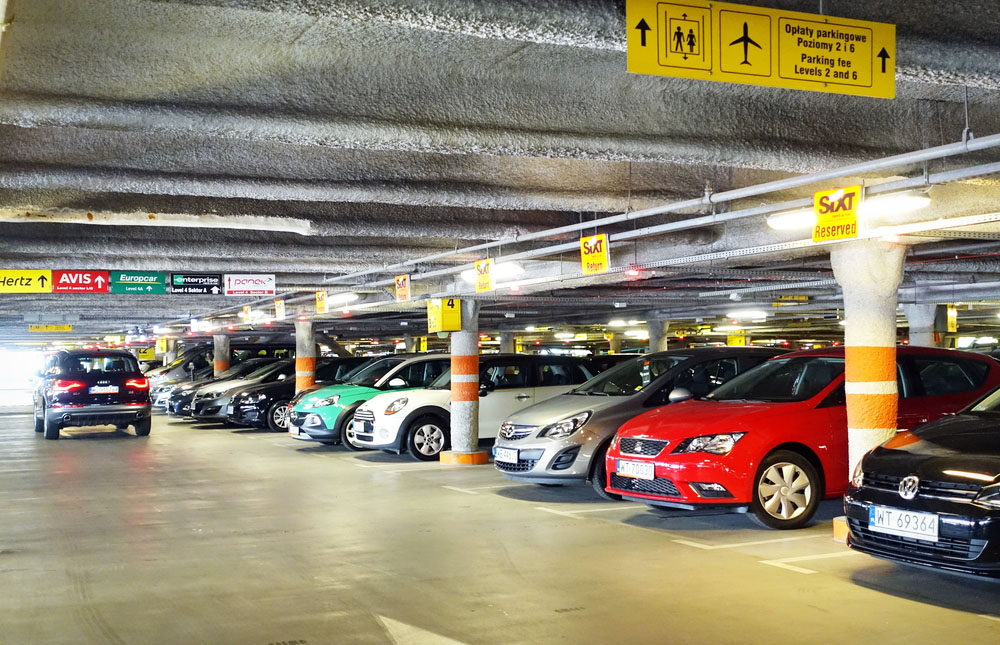
The Federal Airports Authority of Nigeria (FAAN) has cleared Bolt to resume operations at all airports under its management after reaching an operational agreement with the ride-hailing company.
The development follows growing complaints from travellers over the temporary disruption of e-hailing services at Nigerian airports, with passengers raising concerns about higher transportation costs and reduced options for getting to and from airports.
FAAN also apologised to passengers affected by the disruption, acknowledging that the temporary interruption caused inconvenience and increased transportation difficulties for some travellers.
In a statement by its Director of Public Affairs and Consumer Protection, Henry Agbebire, FAAN said it had listened to the concerns raised by passengers and made the necessary adjustments following constructive engagements with Bolt.
The authority said the agreement with Bolt provides an operational framework that allows the company to resume services while complying with requirements relating to airport security, passenger safety, accountability and orderly transportation.
FAAN’s latest announcement marks a significant development after the authority had faced mounting public criticism over restrictions affecting e-hailing operations at some of the country’s airports. FAAN had earlier maintained that it had not imposed a blanket ban on Bolt, Uber or other e-hailing platforms, but said operators needed to work within an appropriate framework for airport operations. (FAAN)
According to FAAN, airports are highly regulated environments, making it necessary for commercial transportation providers to operate under arrangements that give the authority adequate visibility over vehicles, drivers and passenger pick-ups.
READ ALSO:
- Probe Me Over $16bn Power Spending If You Have Evidence – Atiku Dares FG
- 20-Year-Old Arrested for Allegedly Macheting Father to Death in Anambra
- How Filling Station Sold Me Water Instead Of Petrol – Lagos Resident Recounts Ordeal
The authority said it had been dealing with challenges including passenger solicitation, touting, random pick-ups, unregulated commercial transportation and concerns about safety, security and accountability.
FAAN said these challenges had become more complicated in situations where drivers operate across multiple ride-hailing platforms, prompting the authority to strengthen its oversight of commercial transportation within airport premises.
At the centre of the controversy is the Airport Car Hire Rank Management System (ACHRAMS), which FAAN introduced to bring greater structure and visibility to airport car-hire operations.
FAAN stressed that ACHRAMS is not an e-hailing application and was not created to compete with Bolt, Uber or any other mobility platform. Rather, the authority describes it as an airport-specific system for managing car-hire ranks, dispatch, identification and operational oversight within FAAN-managed airports. (FAAN)
The authority has also rejected suggestions that ACHRAMS was introduced to create a monopoly in airport transportation.
FAAN said it supports competition and does not intend to prevent passengers from choosing between different transportation providers.
The controversy intensified after passengers began complaining about the cost of airport taxi fares, particularly during the period when access to conventional e-hailing services was disrupted.
Reports from Lagos indicated that some passengers were being quoted fares as high as N30,000 for trips from Murtala Muhammed International Airport to parts of Ikeja, while travellers reported substantially lower prices through alternative ride-hailing services. (Aboki Forex)
FAAN, however, has denied claims that it fixed or introduced the airport taxi fares being discussed.
The authority said the fares existed independently of ACHRAMS and were not newly created by the system. According to FAAN, ACHRAMS merely brought greater visibility and transparency to existing airport taxi rates, making the applicable charges more apparent to passengers.
FAAN acknowledged that the comparison with the lower prices many travellers had become accustomed to through e-hailing platforms understandably fuelled public concern over the cost of airport transportation.
The authority said its actions were motivated by regulatory, safety and security considerations, rather than economic interests.
It nevertheless acknowledged that the immediate effect of the temporary disruption was significant for passengers.
FAAN therefore apologised to travellers and said it appreciated their patience and understanding while discussions with e-hailing operators continued.
The authority said the resolution with Bolt demonstrates that it is possible to maintain the integrity and security of the airport environment while preserving the convenience and freedom of choice associated with e-hailing services.
The latest development is also consistent with FAAN’s earlier position that it wanted to establish a workable framework rather than permanently exclude e-hailing companies from airports. On August 20, the authority said discussions with operators were aimed at resolving issues involving passenger safety, security, operational visibility, accountability and the management of pick-up activities. (FAAN)
Bolt’s own airport guidance already requires its drivers operating at Murtala Muhammed International Airport to comply with FAAN rules, including using designated parking areas for pick-ups and drop-offs. Bolt also warns drivers that violations of airport rules can result in penalties or vehicle impoundment. (Bolt)
Bolt’s official Nigeria platform also lists several Nigerian airports where airport transfers are available, including Murtala Muhammed International Airport, Nnamdi Azikiwe International Airport, Mallam Aminu Kano International Airport, Port Harcourt International Airport and Sam Mbakwe International Airport. (Bolt)
FAAN said it remains in discussions with other e-hailing operators and expects outstanding engagements to be concluded in the coming days.
The authority reiterated that passengers remain free to choose from available authorised transportation options that best meet their needs.
FAAN said its responsibility is to ensure that whichever authorised service passengers choose operates within a safe, secure, orderly and accountable airport environment.
The reinstatement of Bolt is expected to give air travellers greater choice and restore access to app-based transportation at FAAN-managed airports, while the authority continues efforts to regulate commercial transportation without compromising passenger safety and convenience.
FAAN assured travellers that their safety, security, convenience and overall airport experience would remain at the centre of its decisions.
FAAN reinstates Bolt at airports, denies fixing taxi fares
Aviation
Keyamo Issues One-Week Ultimatum to Airlines Over Debt Repayment Plans

Keyamo Issues One-Week Ultimatum to Airlines Over Debt Repayment Plans
The Minister of Aviation and Aerospace Development, Festus Keyamo, has given airlines operating in Nigeria one week to agree on realistic repayment plans with aviation agencies over their outstanding financial obligations. This directive was part of resolutions reached at an emergency stakeholders’ meeting convened by Keyamo on Thursday, August 13, 2026, to address the recent industrial dispute between aviation sector unions and some airlines. The meeting followed the temporary suspension of industrial action by aviation unions on Tuesday, August 11, 2026, which disrupted operations at some airports across the country, causing widespread concern among passengers and stakeholders. The emergency meeting was attended by representatives of airlines, aviation sector unions, and heads of aviation agencies, including the Nigeria Civil Aviation Authority (NCAA), the Federal Airports Authority of Nigeria (FAAN), and the Nigerian Airspace Management Agency (NAMA). The Minister emphasized that the era of impunity in the aviation sector is over and that airlines must take responsibility for their financial obligations while working with the government to resolve outstanding debts amicably.
According to a statement signed by the Permanent Secretary, Ministry of Aviation and Aerospace Development, Mahmud Adam Kambari, the NCAA and other aviation agencies were directed to obtain payment schedules from airlines, taking into consideration their operating costs and prevailing economic realities. The statement emphasized that the Directors of Finance and Accounts of all aviation agencies were to meet individually with the affected airlines and agree on realistic repayment plans within one week. The resolution is aimed at addressing financial obligations owed by airlines to aviation agencies while preventing the disputes from escalating into further industrial action and disruption of air travel. The Minister stressed that the repayment plans must be realistic and achievable, as the government is not interested in empty promises but in concrete actions that will restore financial sanity to the sector. Airlines that fail to comply within the stipulated timeframe would face drastic actions, including the possible grounding of aircraft and suspension of operating licenses.
READ ALSO:
- [ICYMI] How Nigerian Medical Doctor Was Promoted to Captain in US Army
- JAMB Aggregate Score 2026/2027: How Nigerian Universities Calculate Your Admission Chances
- Davido Halts London Concert, Threatens to Walk Off Stage Over Fan’s Disrespect to Staff
The emergency meeting was convened in response to a growing industrial dispute between aviation sector unions and some airlines. The unions had threatened industrial action over issues including the unionisation of airline workers and the alleged refusal of some airlines to allow their employees to join trade unions. The dispute escalated to the point where aviation unions temporarily suspended industrial action on Tuesday, August 11, 2026, which had disrupted flight operations at some Nigerian airports, causing significant inconvenience to passengers and raising concerns about the stability of the aviation sector. The disruption had heightened fears over possible widespread cancellations and delays, prompting the Minister to intervene swiftly to prevent a full-blown crisis that could have paralyzed air travel across the country.
The stakeholders also reached an agreement on the contentious issue of unionisation among airline workers. The Minister affirmed the right of workers to decide whether or not to belong to trade unions, stressing that such decisions should be made directly by the workers rather than through airline management. Consequently, the NCAA was directed to ensure that aviation unions have direct access to workers of all airlines solely for the purpose of distributing union forms to enable employees to indicate whether they wish to unionise. The ministry warned that any airline that prevents the unions from having such direct access would face sanctions from the NCAA, including possible fines or suspension of operating licenses. This resolution represents a significant victory for workers’ rights in the aviation sector and ensures that employees can exercise their freedom of association without interference from employers.
The stakeholders further resolved that another meeting would be convened in one month to review progress made in implementing the resolutions and assess the state of the aviation sector. The statement described the resolutions as collective decisions of all parties at the meeting, emphasizing the collaborative approach taken to resolve the disputes. The Minister, while assuring stakeholders of the Federal Government’s commitment to a safe and viable aviation sector, reiterated President Bola Tinubu’s commitment to maintaining a safe, efficient, peaceful, and sustainable aviation industry. This commitment aligns with the broader agenda of the current administration to reform critical sectors of the economy and ensure the welfare of workers and the public. The Minister also noted that the government would continue to engage with stakeholders to address other challenges facing the industry, including infrastructure decay, multiple taxation, and the high cost of aviation fuel.
The latest intervention comes after the aviation unions temporarily suspended their industrial action following the disruption of flight operations at some airports on Tuesday. The dispute had heightened concerns over possible disruptions to air travel and the financial pressures facing airlines operating in the country. Airlines now have until August 20, 2026, to agree on repayment plans with aviation agencies. The Ministry has set up a task force to review the submissions and ensure compliance. Airlines that fail to meet the deadline or fail to reach acceptable repayment agreements will face sanctions, which could include suspension of operating licenses, grounding of aircraft, prohibition from accessing government facilities, and legal action to recover outstanding debts. The Ministry has also directed the NCAA to ensure that aviation unions have direct access to airline workers to distribute unionisation forms, and any airline found obstructing this process will face sanctions. This development marks a significant step in the Minister’s broader efforts to reform the aviation sector, improve financial accountability, and ensure that airlines operate within the framework of the law.
Keyamo Issues One-Week Ultimatum to Airlines Over Debt Repayment Plans
Aviation
Obi Must Apologise, Pay ₦25,000 or Face FAAN Action — Keyamo Issues Ultimatum
Obi Must Apologise, Pay ₦25,000 or Face FAAN Action — Keyamo Issues Ultimatum
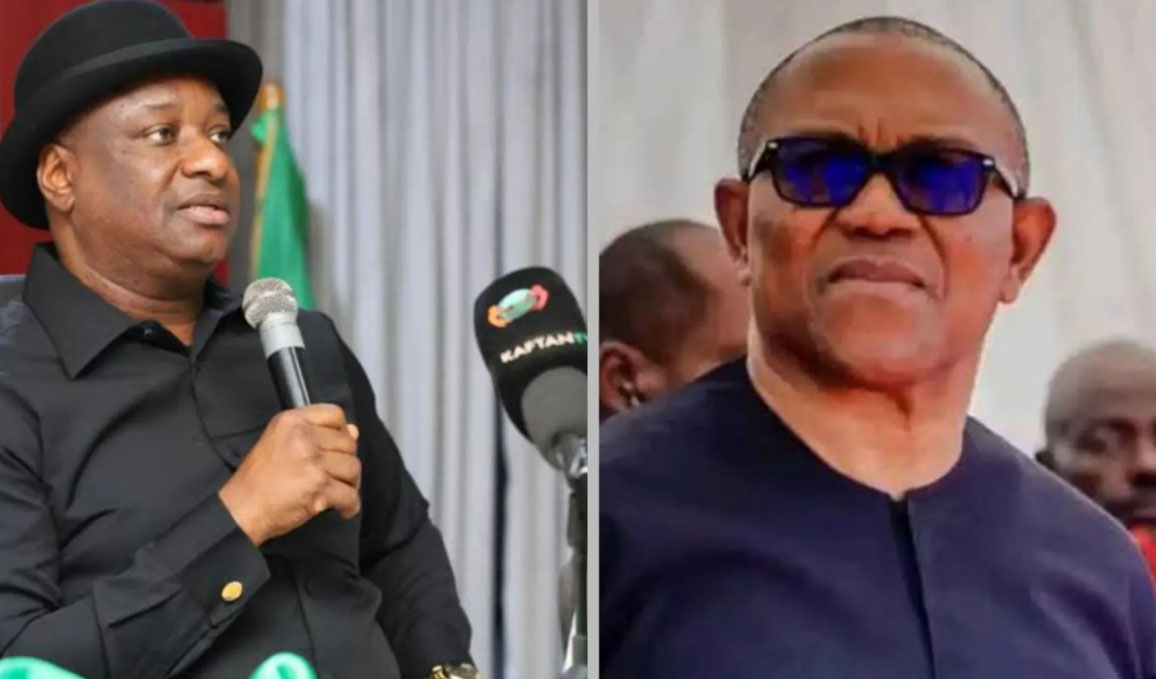
The Minister of Aviation and Aerospace Development, Festus Keyamo, has issued a seven-day ultimatum to Nigeria Democratic Congress (NDC) presidential candidate Peter Obi, demanding a public apology and payment of a ₦25,000 fine over a parking violation at Abuja’s Nnamdi Azikiwe International Airport. Keyamo’s demand follows an internal investigation he ordered after Obi publicly claimed his vehicle was unjustly clamped as part of a political persecution campaign by the Federal Government. The minister released CCTV footage which he says contradicts Obi’s account, insisting the former Anambra governor violated airport regulations and then used his influence to evade the prescribed fine. In a statement posted on his X page, Keyamo declared that what had emerged was a clear case of an opposition candidate trying to whip up unnecessary sentiments for a wrong he and his driver committed.
According to the minister’s detailed narrative, the incident occurred on July 4, 2026, and the CCTV footage tells a very specific story. Obi arrived at the domestic terminal at approximately 8:28 p.m., driven by a police officer, and entered the building with two other occupants. The police driver then parked the vehicle in a designated drop-off zone—almost blocking the entrance—and also left the vehicle unattended. The driver briefly returned at about 8:32 p.m. to retrieve an item but abandoned the vehicle again. Airport security personnel then clamped the tyres, with Keyamo insisting nobody knew the vehicle belonged to Obi at the time. When the driver discovered the clamp, he contacted Obi, who spoke with an airport manager and requested the vehicle’s release—which was granted without payment of the ₦25,000 fine. Keyamo emphasised that the vehicle remained unattended for about 30 minutes in a restricted zone, describing this as a security risk under global airport standards.
READ ALSO:
- Grand Chief Imam warns Bennylee against religious provocation, urges respect for judicial process
- DSS arraigns five suspected Ansaru members over Oyo school abduction, alleged killings
- PFIPC probe: HoS admits failure to verify recruitment documents
However, the Peter Obi Media Office and the Obidient Movement have strongly rejected Keyamo’s narrative, accusing the minister of releasing poorly edited propaganda and manipulating CCTV footage to criminalise the opposition leader. They have raised several counter-claims that directly challenge the minister’s version of events. On the timing dispute, the Obidient Movement argues that timestamps on Keyamo’s own footage show Obi’s vehicle arriving at 20:28 and being clamped at approximately 20:34—six minutes, not thirty. The group accused Keyamo of zooming into the seconds display to confuse viewers into believing they were looking at the minute counter. On the identity of the driver, Obi’s spokesman, Idris Zekeri Jnr, stated that Peter Obi does not have any police or civil defence personnel attached to him in Abuja, challenging Keyamo’s reference to a “police driver”. Obi’s camp also claims the incident Keyamo publicised is entirely different from the one Obi narrated during his interview, suggesting a pattern of targeting the opposition figure. Furthermore, both the Obidient Movement and Obi’s media office insist other vehicles were parked in the same area without being clamped, pointing to selective enforcement targeting Obi. They also questioned why Keyamo showed no similar enthusiasm in investigating high-profile incidents involving Adams Oshiomhole and KWAM 1—known associates of the President.
The Presidency has weighed in on the matter, with presidential spokesman Bayo Onanuga backing Keyamo’s position. Onanuga stated that the evidence completely debunked Obi’s falsehood that he was unduly targeted and persecuted, insisting that he and his police driver broke a simple parking rule at the Airport.
Keyamo has made two formal demands, warning that failure to comply within seven days would prompt him to direct the Federal Airports Authority of Nigeria (FAAN) to take further action. First, Obi must tender an unreserved, public apology to the airport workers he accused of persecution. Second, Obi must voluntarily return to the airport and pay the ₦25,000 fine for wrongful parking, which he allegedly evaded through influence peddling. The minister declared that Obi cannot be bigger than the law.
Meanwhile, legal analyst Ekemini Udim, a Senior Partner at Justice Chambers, has questioned the minister’s authority to impose a fine, arguing that Keyamo is not a court of law. Udim cited a Court of Appeal decision which held that the Federal Road Safety Commission cannot impose fines without taking offenders before a magistrate’s court, arguing the same principle should apply to FAAN. Furthermore, he noted that under the principle of criminal liability, it is the person who commits the offence that should be made to pay for the offence—suggesting that if Obi was not the driver, he cannot be held personally liable.
Obi Must Apologise, Pay ₦25,000 or Face FAAN Action — Keyamo Issues Ultimatum
-

 International2 days ago
18 Suspects Transferred to US Over 2021 Killing of Haitian President Moïse
-
 News2 days ago
NiMet Predicts Thunderstorms, Rain Across Nigeria Till Wednesday
-

 Politics2 days ago
‘Join the Hunt’ — Soludo Urges Igbos to Strategically Align Ahead of 2027
-

 Sports2 days ago
Messi Fires Stunning 75th Career Free-Kick to Reach 930 Goals in Inter Miami Draw
-

 metro2 days ago
My Heart Has Always Been Home With You — Tinubu’s Powerful Message to Oluremi at 66
-

 News2 days ago
Working People United Celebrates Oluremi Tinubu at 66, Commends Her Humanitarian Efforts
-

 News1 day ago
NLC Backs ₦500 Petrol Demand, Workers Propose ₦500,000 Salary
-

 Auto2 days ago
Jetour T1 Storms Abuja as Automaker Accelerates Nigeria Expansion