

International
US ports shut down as dockworkers embark on strike
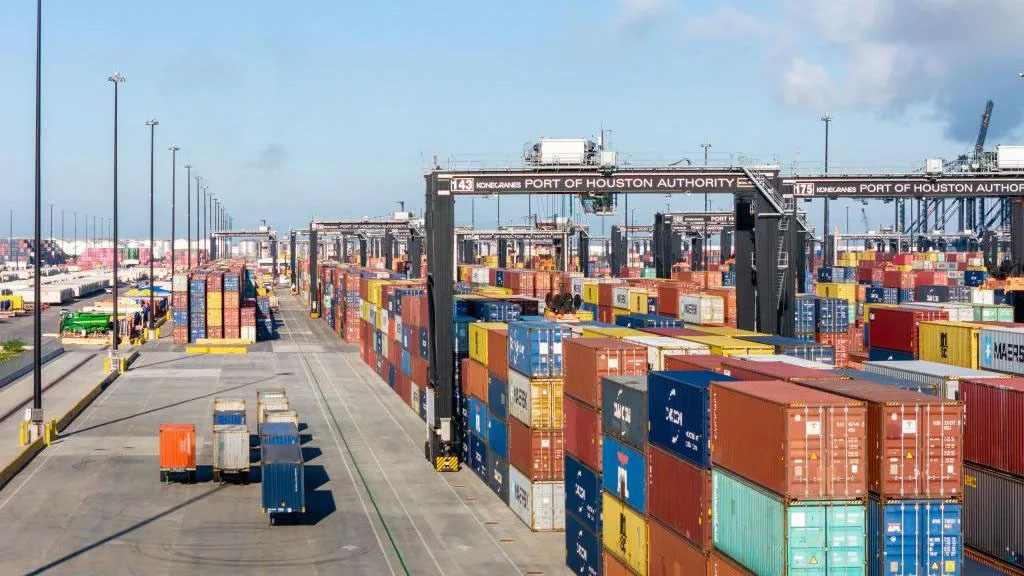
US ports shut down as dockworkers embark on strike
Tens of thousands of dockworkers have gone on strike indefinitely at ports across much of the US, threatening significant trade and economic disruption ahead of the presidential election and the busy holiday shopping season.
Members of the International Longshoremen’s Association (ILA) walked out on Tuesday at 14 major ports along the east and gulf coasts, halting container traffic from Maine to Texas.
The action marks the first such shutdown in almost 50 years.
President Joe Biden has the power to suspend the strike for 80 days for further negotiations, but the White House has said he is not planning to act.
What is the strike about?
Talks have been stalled for months and the current contract between parties expired on Monday.
The two sides are fighting over a six-year master contract that covers about 25,000 port workers employed in container and roll-on/roll-off operations, according to the US Maritime Alliance, known as USMX, which represents shipping firms, port associations and marine terminal operators.
On Monday, USMX said it had increased its offer, which would raise wages by almost 50%, triple employers’ contributions to pension plans and strengthen health care options.
READ ALSO:
- Tinubu confused about economic policies – Segun Sowunmi
- Mob sets ablaze man who killed son, nursing mother in Delta
- 64th Independence: IPOB bans celebration in South-East
Union boss Harold Daggett has called for significant pay increases for his members, while voicing concerns about threats from automation.
USMX has accused the union of refusing to bargain, filing a complaint with labour regulators that asked them to order the union back to the table.
Under the previous contract, starting wages ranged from $20 to $39 per hour, depending on a worker’s experience. Workers also receive other benefits, such as bonuses connected to container trade.
Mr Daggett has indicated the union wants to see per-hour pay increase by five dollars per year over the life of the six-year deal, which he estimated amounted to about 10% per year.
The ILA said workers are owed after shipping firm profits soared during the Covid pandemic, while inflation hit salaries. It has warned to expect a wider strike of its members, including those not directly involved in this dispute, though the exact numbers are unclear.
The union has said it represents more than 85,000 people; it claimed about 47,000 active members in its annual report to the Labor Department.
What items will be affected by the strike?
Time-sensitive imports, such as food, are likely to be among the goods first impacted.
The ports involved handle about 14% of agricultural exports shipped by sea and more than half of imports, including a significant share of trade in bananas and chocolate, according to the Farm Bureau.
Other sectors exposed to disruption include tin, tobacco and nicotine, Oxford Economics said. Clothing and footwear firms, and European carmakers, which route many of their shipments through the Port of Baltimore, will also take a hit.
Imports in the US surged over the summer, as many businesses took steps to rush shipments ahead of the strike.
READ ALSO:
- Woman jailed 26 years for killing uncle over insurance payout
- Independence: PDP urges Tinubu to slash fuel price now
- Two ladies sell kidnapped five-year-old boy for N600,000 in Akwa Ibom
“I don’t think we will see immediate, significant economic impacts…but over the course of weeks, if the strike lasts that long, we can begin to see prices rise and for there to be some shortages in goods,” said Seth Harris, a professor at Northeastern University and a former White House adviser on labour issues.
What will the economic impact be?
More than a third of exports and imports could be affected by the strike, hitting US economic growth to the tune of at least $4.5bn each week of the strike, according to Grace Zemmer, an associate US economist at Oxford Economics, though others have estimated the economic hit could be higher.
She said more than 100,000 people could find themselves temporarily out of work as the impact of the stoppage spreads.
“This is really a trigger event, one that will see dominoes fall over the coming months,” said Peter Sand, chief analyst at ocean freight analytics firm Xeneta, warning that the stand-off also has the potential push up wider shipping costs.
That would hit consumers and businesses which tend to rely on so-called “just-in-time” supply chains for goods, he added.
How could this affect the US election?
The stand-off injects uncertainty into the US economy at a delicate time.
The economy has been slower and the unemployment rate is ticking higher as the US election approaches in six weeks.
The strike risks putting President Biden in a tricky spot.
US presidents can intervene in labour disputes that threaten national security or safety by imposing an 80-day cooling-off period, forcing workers back on the job while negotiations continue.
In 2002, Republican President George W Bush intervened to open ports after 11 days of a strike action by dockworkers on the west coast.
The US Chamber of Commerce business group has called on President Biden to take action.
“Americans experienced the pain of delays and shortages of goods during the pandemic-era supply chain backlogs in 2021. It would be unconscionable to allow a contract dispute to inflict such a shock to our economy,” said Suzanne P. Clark, president and chief executive of the business group.
The ILA’s Mr Daggett endorsed Democrat Biden in 2020, but has been critical of the president more recently, citing pressure on west coast dockworkers to reach a deal a year ago. He met with Donald Trump in July.
Although any strike chaos is likely to hurt Democrats, the cost of alienating allies in the labour movement just weeks before the election would be greater, said William Brucher, a professor of labor studies and employment relations at Rutgers University.
But public support of strikes could be tested by the dispute, which has been championed by Mr Daggett, who was acquitted of having links to organised crime in a 2004 case by federal prosecutors. A related civil suit remains unresolved.
Films such as the 1954 classic On the Waterfront once defined the dockworkers union’s image, but Prof Brucher said he thought that historical memory had largely faded and many people shared the dockworkers’ concerns about cost-of living and automation.
“As much as it could sway public opinion against the ILA, a strike by ILA members is their decision and I don’t think they will be swayed by public opinion in any meaningful way,” he said.
“What is more likely to happen is the pressure of a strike will likely force the employers back to the table with a much more substantial offer.”
US ports shut down as dockworkers embark on strike









International
Trump Tells Supporters to ‘Cheat Like Hell’ Ahead of US Election

Trump Tells Supporters to ‘Cheat Like Hell’ Ahead of US Election
US President Donald Trump has made an unusual appeal to his supporters ahead of the November 3 election, telling them to turn out with their families and friends while declaring that he would “cheat like hell.”
Trump made the comments during a Republican gathering in Dallas, Texas, where he led attendees through a mock pledge intended to encourage them to support him and participate in the election.
After asking the crowd to raise their right hands and repeat after him, Trump urged his supporters to help bring their relatives and friends to the polls.
READ ALSO:
- MURIC fires back at Peter Obi: Forget Sallah ceremony, free Nigerian Muslims
- Fani-Kayode Condemns Fresh Killing of Two Nigerians in South Africa
- FG Targets 2 Million Creative Jobs by 2030
He then made the controversial remark while discussing voter registration, saying he was unconcerned about whether he was registered and accusing his political opponents of being bigger “cheaters.”
Trump went on to encourage supporters to vote either on November 3 or before election day, ending the pledge with an appeal to God.
The president also joked that supporters who failed to vote could face divine punishment, telling the crowd they would “go to hell” if they did not turn out.
The remarks came as Trump sought to energise Republican voters ahead of the election, in which control of Congress is also at stake.
His comments are likely to attract attention because of the language he used during an event aimed at mobilising voters, particularly his reference to cheating and his claims about the conduct of his opponents.
Trump Tells Supporters to ‘Cheat Like Hell’ Ahead of US Election
International
France Train Derailment Injures 44, 18-Year-Old Woman in Critical Condition

France Train Derailment Injures 44, 18-Year-Old Woman in Critical Condition
At least 44 people were injured after a passenger train carrying 186 people derailed in northwestern France on Friday evening, with an 18-year-old woman among those injured and reported to be in critical condition.
The Rouen-Caen regional train derailed at about 7:45 p.m. local time near Cléon, in the Seine-Maritime department of Normandy, while travelling between the cities of Rouen and Caen.
The incident triggered a major emergency response, with authorities deploying about 130 firefighters, five medical teams and 80 emergency vehicles to the scene.
A mass-casualty emergency plan was activated to coordinate the rescue operation and treatment of those injured.
According to Rouen prosecutor Sébastien Gallois, 44 passengers were injured in the France train derailment, including the 18-year-old woman who was airlifted to Rouen University Hospital in critical condition.
The other 43 injured passengers were treated for less serious injuries.
The initial estimate of the number of injured passengers was lower, but the figure was revised to 44 after emergency teams completed their assessment of passengers at the scene.
Transport Minister Philippe Tabarot said the train was travelling between Rouen and Caen when the accident occurred.
A passenger identified as 24-year-old Louis described the moments before the train accident in France as frightening.
He said the train first experienced several jolts before the movement became increasingly violent.
“Suddenly there were a few jolts, and then after about three seconds it got stronger and stronger,” he told ICI Normandie radio.
READ ALSO:
- Ondo Herbal Drink Tragedy: Survivor Vows Never to Drink Again as Death Toll Tops 30
- Sokoto Cleric Stabbed Twice in Neck After Juma’at Prayer, Attacker Killed
- Woman disguises as Muslim woman in Niqab to steal in Ado-Ekiti market, video sparks outrage
“I couldn’t stay in my seat any more. The windows partially shattered; the stones from the track came into the carriage. It was really shocking. I’m still shaking,” he said.
A police source said the train may have struck an unidentified object shortly before it derailed. However, authorities have not established whether the object was responsible for the accident.
The cause of the Cléon train derailment therefore remains under investigation.
The Rouen prosecutor said drug and alcohol tests conducted on the train driver were negative.
Police and railway investigators have begun examining the train, the railway infrastructure and the circumstances surrounding the derailment to determine what caused the accident.
The railway operator, SNCF Réseau, suspended traffic on the affected line and switched off electricity to the tracks to allow emergency workers to operate safely.
“The priority is to care for the passengers and then to restore safe operating conditions,” SNCF Réseau said.
The disruption affected rail services along the Rouen-Caen route, while other services connecting Caen with Le Havre were also affected.
Rail authorities worked to arrange alternative transport for passengers whose journeys were disrupted while emergency and investigative operations continued at the accident scene.
Passengers who were not seriously injured were moved away from the crash site as emergency teams attended to those requiring medical attention.
The prefecture urged members of the public to stay away from the affected area to allow rescue workers and investigators to carry out their duties.
The accident caused significant disruption to rail services across the region, with authorities prioritising the safety of passengers and the restoration of the affected railway line.
The investigation is expected to establish whether the train’s contact with the unidentified object, a problem with the railway infrastructure or another factor contributed to the derailment.
As of the latest reports, there were no fatalities recorded in the accident, while the 18-year-old woman remained in critical condition and the other injured passengers were receiving medical attention.
Authorities said investigations into the France train accident were continuing.
France Train Derailment Injures 44, 18-Year-Old Woman in Critical Condition
International
Five Dead After Coach Carrying Dutch Tourists Overturns in Switzerland

Five Dead After Coach Carrying Dutch Tourists Overturns in Switzerland
A holiday trip in Switzerland has ended in tragedy after a coach carrying 45 Dutch adults overturned in the eastern part of the country, killing five people and injuring the remaining passengers.
The crash occurred on Thursday afternoon on the road linking Susch and Zernez in the Graubünden region. Police said the vehicle went off the roadway while passing through an area where construction work was taking place before overturning.

Three of those injured are in serious condition, while another 37 people sustained less severe injuries. The driver, who is also Dutch, survived the crash but was among those taken for medical treatment.
READ ALSO:
- Yari: God Chose Me to Lead Tinubu’s 2027 Campaign
- Iran’s President Seeks End to War as US Tightens Economic Pressure
- Woman disguises as Muslim woman in Niqab to steal in Ado-Ekiti market, video sparks outrage
Authorities have begun investigating the incident and are working to establish what caused the coach to leave the road.
Tour operator Oad said the company was devastated by the deaths and described the incident as a deeply shocking tragedy.
The crash took place close to Zernez, a popular gateway to Switzerland’s National Park, a large Alpine nature reserve in the Engadine valley.
Five Dead After Coach Carrying Dutch Tourists Overturns in Switzerland
-

 metro1 day ago
Woman disguises as Muslim woman in Niqab to steal in Ado-Ekiti market, video sparks outrage
-

 metro3 days ago
Police Arrest Woman Over Fake OPay Shutdown Notice
-

 Politics3 days ago
Amaechi will be caged politically, Wike shouldn’t bother about Ikwerre votes — Wihioka
-

 metro3 days ago
Residents Cry Out Over Poorly Constructed Entrance of Ademola Abiola Street, Demand Urgent Intervention
-

 Politics3 days ago
Remi Tinubu Appeals To South-East Voters, Says She Wants To ‘Enjoy Nigeria’ In Old Age
-

 Politics3 days ago
Breaking the Cycle of Collective Guilt: When a Ruling Party Voice Backs Peter Obi
-

 Business18 hours ago
Dangote: ₦525 Refinery Shares Could Rise to ₦10,000
-

 News1 day ago
AI on the Roads: LASTMA Turns to China to Fix Lagos Traffic