Hajj fare may hit N10m as NAHCON ends subsidy - Newstrends
Connect with us

News

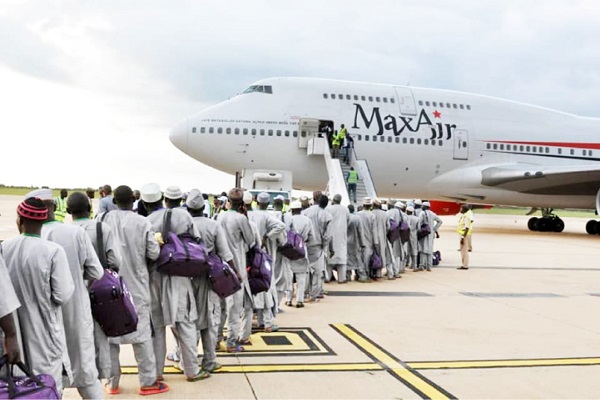
Hajj fare may hit N10m as NAHCON ends subsidy
Published

on

Hajj fare may hit N10m as NAHCON ends subsidy

The National Hajj Commission of Nigeria (NAHCON) has stated that the federal government will not subsidise hajj payment for pilgrims in 2025.

Daily Trust reports that government subsidy is mostly in the form of concessionary rate which allows pilgrims to access dollars at a reduced rate from the Central Bank of Nigeria (CBN).

A statement by the spokesperson of the commission, Fatima Sanda Usara, said for the 2025 Hajj, “There will be no concessionary exchange rate from the government for Hajj fare payment for pilgrims whether under state or private Hajj operators.”

This means that if the naira maintains its current rate of N1,650 to a dollar, each intending pilgrim will pay almost N10million for hajj fare as pilgrims pay at least $6,000.

While NAHCON is yet to announce the hajj fare for the 2025 hajj, States Pilgrims Welfare Board have begun asking intending pilgrims to pay N8.5m as initial deposit pending the announcement of the hajj fare.

The statement also announced the refund of 64,682 (150 Saudi Riyal) to every Nigerian pilgrim that participated in the 2023 hajj.

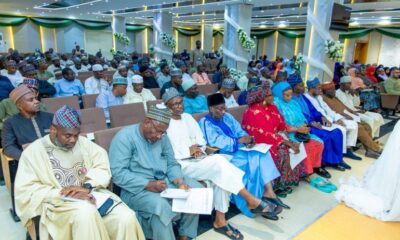
The statement added that the revelations were made during an interactive meeting between NAHCON and members of Private Tour Operators in Nigeria (PTOs).

READ ALSO:

“The meeting held today, 7th October 2024 was to update members on resolutions reached after resumption of office on Wednesday, 2nd October 2024 by Acting Chairman of the Commission, Prof Abdullahi Sale Pakistan who had been absent briefly on a trip.

“NAHCON’s Commissioner of Operations, Prince Anofi Olanrewaju Elegushi, chaired the virtual meeting with the PTO’s where he relayed new developments from both Saudi Arabia’s Ministry of Hajj and Umrah (MoHU) and NAHCON’s decisions resulting from the second EXCO meeting with the new head of the Commission.”

Elegushi also stated that Saudi Arabia had further reduced the number of PTO to 10 from 20 that was initially announced and each company must register a minimum of 2,000 pilgrims to be considered for Hajj visa approval.

He said for the 2022 refund, the commission is still awaiting further details but refund details have emerged only for PTOs that camped on Field Office 18 in 2022 and they are to collectively receive SR62, 602 (N26,993,224) as refund for poor feeding in the Masha’ir.

“Similarly, the Commissioner Operations informed the PTO members that the NAHCON’s EXCO has approved the option of honouring bank guarantee as payment of N40 million caution deposit for the 2025 Hajj. In view of the above, any operator who wishes to make the payment through bank guarantee but has already made a cash deposit is invited to request for collection of the earlier deposit in order to present the bank guarantee.”

He also clarified that contrary to claims that NAHCON owes PTOs N17 billion from the 2024 Hajj caution deposit of N25million, it only received N2billion, N750million from 110 companies that registered for the 2024 Hajj.

“The amount included a roll-over of N1billion, 250million from the previous year. From the amount, 30 companies requested for refunds amounting to N750m, which has been paid. The balance still in the custody of the commission accruing to undecided PTOs is N750m.”


Hajj fare may hit N10m as NAHCON ends subsidy

Loading

News

Ex-INEC Chairman Yakubu Officially Assumes Office as Nigeria’s Ambassador to Qatar

Published

on

Ex-INEC Chairman Yakubu Officially Assumes Office as Nigeria’s Ambassador to Qatar
Former INEC Chairman, Prof. Mahmood Yakubu

Ex-INEC Chairman Yakubu Officially Assumes Office as Nigeria’s Ambassador to Qatar

Former Chairman of the Independent National Electoral Commission (INEC), Mahmood Yakubu, has officially assumed office as Nigeria’s Ambassador to Qatar, marking the beginning of his diplomatic service in the Gulf state.

Yakubu arrived in Doha, the capital of Qatar, where he was formally received by senior officials of the Qatari Ministry of Foreign Affairs, African diplomats based in the country, and members of the Nigerian community.

At Hamad International Airport, he was welcomed by Ambassador Ibrahim Abdullah Fakhro, Director of the Protocol Department at Qatar’s Ministry of Foreign Affairs, in line with standard diplomatic reception procedures for newly arrived envoys.

His arrival attracted notable diplomatic attention, with about 13 African ambassadors and heads of mission present in Doha to receive him, reflecting his standing within Africa’s diplomatic community.

READ ALSO:

The reception was led by Ambassador Thierno Sow of Guinea, who serves as President of the Bureau of the African Group of Ambassadors to Qatar. Diplomats from countries including Algeria, Burundi, Morocco, Tanzania, Mali, Niger, Burkina Faso, Ghana, Senegal, Togo, Benin, and the Central African Republic were also present.

Other dignitaries at the reception included the Secretary-General of the Gas Exporting Countries Forum, Dr. Philip Mshelbila, alongside leaders of the Nigerian diaspora community in Qatar, including the President of the Nigerians in Diaspora Organisation in Qatar, Michael Ihekwaba.

Yakubu exchanged greetings with several diplomats during the reception, including envoys from Mali, Senegal, and Tanzania, before proceeding to the Nigerian Embassy in Doha.

At the embassy, he met with diplomatic staff and officials as part of formal procedures marking his assumption of duties as Nigeria’s envoy to Qatar.

His appointment comes after years of service as INEC Chairman, where he oversaw major electoral cycles in Nigeria. He is now expected to focus on strengthening Nigeria–Qatar diplomatic relations, including cooperation in governance, trade, investment, and diaspora engagement.

Ex-INEC Chairman Yakubu Officially Assumes Office as Nigeria’s Ambassador to Qatar

Loading

Continue Reading

News

NGF, Attorneys-General Hold Consultations on State Police Implementation

Published

on

NGF, Attorneys-General Hold Consultations on State Police Implementation

NGF, Attorneys-General Hold Consultations on State Police Implementation

  • Nigeria Governors’ Forum holds second meeting of 2026, reviews state police proposals amid historic National Assembly passage of constitutional amendment bill

ABUJA, Nigeria – Governors of Nigeria’s 36 states have intensified their push for the establishment of state police, opening fresh consultations with state Attorneys-General to shape the legal and constitutional framework for its implementation as the National Assembly advances a historic constitutional amendment bill.

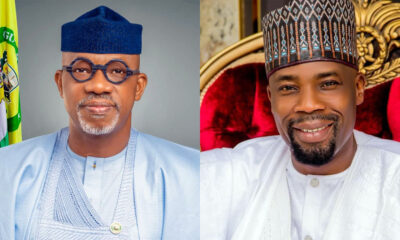
The development was made public on Thursday after the Nigeria Governors’ Forum (NGF) held its second meeting of 2026 in Abuja. The meeting, chaired by Kwara State Governor AbdulRahman AbdulRazaq, stretched from Wednesday into the early hours of Thursday. Ogun State Governor, Dapo Abiodun, who addressed journalists after the meeting on behalf of the Forum, said the discussions centered on ensuring that any structure for state police must have strong constitutional backing and must fit into Nigeria’s federal system.

According to Abiodun, governors are united on the need to push the proposal forward but insist that the legal foundation must be clear to prevent abuse and protect the rights of Nigerians. The forum is working closely with state legal officers to fine-tune areas of concern before a final position is presented. “The forum received a presentation from the NGF Secretariat and a delegation of the Honourable Attorneys-General of the states on efforts to support establishing state police in Nigeria. It noted a dedicated consultation with the Attorneys-General to review the proposed constitutional amendments and frameworks. Governors emphasised the need for the state police to be constitutionally sound and aligned with federalism and citizens’ rights. The forum noted the collaborative effort and added that the consultation outcomes would strengthen the states’ collective position,” Abiodun stated.

The renewed call for state police comes amid persistent insecurity across several parts of Nigeria, including banditry, kidnapping, insurgency, and communal violence, which have continued to stretch the operational capacity of the centrally controlled police system. For over two decades, Nigeria has faced severe insecurity driven by Boko Haram, armed bandits, and other criminal groups, resulting in thousands of deaths and the displacement of millions. Although the Federal Government and security agencies have recorded some successes, the threat persists, and supporters argue that state governments, being closer to the people, are better positioned to respond quickly to threats and gather intelligence.

READ ALSO:

The push for state policing gained significant momentum at the National Assembly earlier this month. On June 10, the House of Representatives passed a constitutional amendment bill seeking to legalise state police, with 289 lawmakers voting in favour, one abstaining, and none voting against — demonstrating overwhelming bipartisan support. The bill, titled “A Bill for an Act to Alter the Constitution of the Federal Republic of Nigeria, 1999 to Provide for the Establishment of State Police and for Related Matters (Sixth Alteration) Bill, 2026,” was approved during plenary presided over by Speaker Tajudeen Abbas. The House also approved 18 constitutional amendment clauses as part of the broader constitutional review exercise aimed at reforming critical aspects of governance and public administration. The Senate followed suit on June 11, passing the bill for second reading and referring it to its Committee on Constitution Review for further legislative consideration. The development marks one of the most significant constitutional and security reforms undertaken by the National Assembly since Nigeria’s return to democratic rule in 1999 and comes amid growing concerns over rising insecurity across the country.

A central feature of the state police bill is the proposed amendment of Section 214 of the 1999 Constitution to formally establish both Federal Police and State Police formations. Under the proposed framework, the National Assembly would retain authority to prescribe the structure, organisation, administration, and powers of the Federal Police while also setting minimum standards and legal requirements for the establishment and operation of state police services nationwide. The bill stipulates that no state police formation can commence operations unless it is created through legislation enacted by the relevant State House of Assembly and certified as meeting nationally prescribed minimum standards. It further provides that until any state police force becomes operational, the Federal Police shall continue to exercise policing responsibilities within that state. In what appears to be an attempt to balance decentralisation with national oversight, the bill limits the circumstances under which the Federal Police may intervene in the affairs of state police formations. According to the proposal, federal intervention would only occur in situations involving a complete breakdown of law and order, upon the request of a state governor, or where a state police force becomes unable to function due to administrative, financial, or operational challenges.

The amendment also introduces significant reforms to the police command structure and appointment process. Under the proposed changes to Section 215 of the Constitution, the Inspector-General of Police would be appointed by the President based on the advice of the Nigeria Police Council and subject to confirmation by the National Assembly. Similarly, State Commissioners of Police would be appointed by governors on the advice of the Nigeria Police Council from among serving officers of the respective state police formations and confirmed by their State Houses of Assembly. The bill empowers governors to issue lawful directives to State Commissioners of Police on matters relating to public safety and maintenance of law and order. However, where a commissioner believes such directives are unlawful or inconsistent with established policing standards, the matter may be referred to the Nigeria Police Council, whose decision would be final. The legislation also amends Section 84 of the Constitution by replacing references to the “National Police Council and the Federal Police Service Commission” with the “Nigeria Police Council and the Police Service Commission.”

READ ALSO:

To address concerns that state police could be abused by state governments for political purposes, particularly during elections and periods of political tension, sponsors of the bill have incorporated several safeguards into the proposed framework. These include mandatory confirmation of appointments by State Houses of Assembly, oversight by the Nigeria Police Council, and provisions allowing State Commissioners of Police to report alleged unlawful directives from governors to oversight bodies for review. The bill also establishes State Police Service Commissions in each state, composed of members from the National Human Rights Commission, the Nigerian Bar Association, the Nigerian Labour Congress, the Public Complaints Commission, retired police officers, and journalists. The bill will now proceed through the constitutional amendment process, requiring concurrence by the Senate and approval by at least two-thirds of the Houses of Assembly of the states before it can be transmitted for presidential assent. If eventually enacted, the legislation would usher in a new era of multi-layered policing in Nigeria and could redefine the country’s approach to tackling banditry, terrorism, kidnapping, and other forms of violent crimes through a more localised security architecture.

Beyond security, governors also discussed national nutrition challenges during the meeting. Abiodun said the forum reviewed progress under the National Nutrition 774 Initiative and restated commitment to reducing child malnutrition across Nigeria. “The forum received a presentation from the Federal Ministry of Budget and Economic Planning on progress under the National Nutrition 774 Initiative. The forum reaffirmed the governors’ commitment to improving nutrition outcomes and reducing child malnutrition across Nigeria.” He added that governors called for stronger engagement among stakeholders to improve nutrition laws and policies, while noting ongoing progress on the National Nutrition Bill. The meeting also featured a presentation from the World Bank on its proposed Country Partnership Framework for Nigeria between 2026 and 2032. Governors said the framework would support agriculture, improve food security, strengthen value chains, and boost private sector participation. Abiodun said states would continue to partner with the Federal Government and development agencies to ensure effective delivery of the projects. On electricity, the forum reviewed plans under the National Solar Super-Grid Initiative aimed at widening access to power through solar energy. Governors said the initiative could improve electricity supply, support industrial growth, and strengthen state-level energy markets. “The forum noted the initiative’s potential to support industrialisation, improve energy security, strengthen state electricity markets, and accelerate economic growth.” They also reaffirmed their support for ongoing reforms in the power sector, stressing the need for affordable and stable electricity across Nigeria.

NGF, Attorneys-General Hold Consultations on State Police Implementation

Loading

Continue Reading

News

FG Launches FreeTV, Offers Nigerians Over 100 Free Digital TV Channels

Published

on

FG Launches FreeTV, Offers Nigerians Over 100 Free Digital TV Channels
Minister of Communications, Innovation and Digital Economy, Bosun Tijani

FG Launches FreeTV, Offers Nigerians Over 100 Free Digital TV Channels

The Federal Government formally launched Nigeria’s long-awaited Digital Switch Over (DSO) programme on Wednesday, unveiling a new hybrid digital broadcasting platform called FreeTV that offers Nigerians access to over 100 television channels without monthly subscription fees. The launch, held in Abuja, marks Nigeria’s formal transition from analogue to digital terrestrial television broadcasting, a project that has faced years of delays despite repeated commitments by successive administrations. The initiative is expected to reach 40 million homes, unlock over N600 billion in economic opportunities, create thousands of jobs, and expand access to quality broadcasting services across the country.

The Federal Government unveiled FreeTV as a digital television platform accessible through compatible decoders, satellite and terrestrial signals, as well as a mobile application. Nigerians can watch a wide range of content, including news, sports, movies, music, educational programmes, children’s shows, and indigenous language channels including Yoruba, Hausa, and Igbo at no cost. Households do not need to purchase new television sets to enjoy the service. Existing TVs can access the platform with compatible DVB-T2 or DVB-S2 decoders, while many households already using free-to-air decoders may be able to connect immediately. The service will also be available through the FreeTV mobile application on smartphones, enabling users in both urban and rural communities to access digital television services without the need for a decoder or satellite dish.

Speaking at the launch event, the Minister of Communications, Innovation and Digital Economy, Bosun Tijani, described the rollout as a major milestone in Nigeria’s digital transformation agenda and said it would support the administration’s broader ambition of building a $1 trillion economy. Tijani stated: “Today, Nigeria joins the ranks of nations that have embraced modern digital broadcasting infrastructure to serve their people. While this may appear to be a broadcasting milestone, its true significance lies in what it means for ordinary Nigerians. It means better access to information, broader access to educational and cultural content, an improved quality of service and the ability to ensure that no Nigerian is left behind simply because of where they live.” He linked the project to the Federal Government’s wider digital infrastructure strategy, noting that the government is rolling out 90,000 kilometres of fibre-optic open-access infrastructure across the country and has secured approval for two additional satellites to enhance communications services. He stated that Nigeria is the only country in West Africa with a communications satellite, and the fibre network would cover all national borders, allowing neighbouring countries to benefit from broadcasting and digital services.

READ ALSO:

The Director-General of the National Broadcasting Commission (NBC) , Charles Ebuebu, described the launch as the unveiling of a new national communications architecture and a critical step in Nigeria’s digital transformation journey. “Today, we are not merely launching a digital broadcasting platform; we are launching a new national communications architecture. The big picture represents our collective ambition to democratise access to information, unlock new opportunities for Nigerian content creators, stimulate investment across the broadcasting value chain, empower local manufacturers, strengthen media plurality, expand consumer choice and improve spectrum efficiency,” he said. Ebuebu also disclosed that broadcasters joining the FreeTV platform would enjoy an 18-month free carriage window, nationwide visibility, and access to audience data through the proposed audience measurement system. He noted that Nigeria’s DSO strategy had evolved from the previous Digital Terrestrial Television (DTT)-only model into a hybrid system integrating Direct-to-Home satellite broadcasting (DTH), Digital Terrestrial Television, and Internet Protocol (IP)-based streaming, ensuring that Nigerians in all parts of the country, regardless of their location or infrastructure, can access the new platform.

As part of the initiative, regional production centres have been established in Lagos, Abuja, Port Harcourt, Enugu, Kano, and Benin to drive content development and support jobs across the media industry. The centres are expected to create opportunities for producers, editors, camera operators, sound engineers, technicians, and other media professionals. The platform is expected to stimulate growth within Nigeria’s creative and media sectors by creating new opportunities for content creators and broadcast professionals. The Nigeria’s digital migration journey had suffered multiple delays, but stakeholders expressed optimism that a clearer implementation framework was emerging.

READ ALSO:

The Minister of Information and National Orientation, Mohammed Idris, described the launch as the culmination of years of efforts by stakeholders and government agencies to actualise the digital broadcasting project. “Today is not merely a broadcasting milestone. It is a more connected, more competitive and more prosperous Nigeria. The Digital Switch Over project is therefore not simply a technological transition. It is an investment in Nigeria’s future. The goal is simple: to make quality broadcasting available to more Nigerians than ever before,” Idris stated. He noted that the project aligns with President Bola Tinubu’s Renewed Hope Agenda, which places emphasis on digital transformation, innovation, economic growth, and critical national infrastructure. He said a fully implemented digital broadcasting ecosystem would create jobs, stimulate local manufacturing, expand audience reach, strengthen content production, increase advertising opportunities and unlock new revenue streams for broadcasters and content creators.

The Managing Director and Chief Executive Officer of NigComSat Limited, Jane Egerton-Idehen, described the DSO programme as a strategic investment in Nigeria’s digital future“Beyond the N600bn opportunity it brings, beyond delivering broadcast services to 40 million homes, beyond creating jobs for the advertising sector and the wider nation, it is one of the most important steps we can take toward creating a more informed, connected, inclusive and empowered society. As Nigeria’s premier satellite communications company, our mission is to ensure that geography does not determine opportunity,” she said. According to her, the transition would deliver better picture quality, clearer sound, greater content diversity and improved viewing experiences while creating fresh opportunities for broadcasters, content creators, technology providers and investors. She added that the initiative would help bridge connectivity gaps, particularly in underserved and remote communities, ensuring that all Nigerians, regardless of where they live, can benefit from the digital revolution.

Deputy Speaker of the House of Representatives, Benjamin Kalu, delivered the keynote address and likened the digital switchover to transformative developments such as railways, electricity and the internet. He argued that digital infrastructure is now as essential to national competitiveness and economic advancement as roads, ports and power facilities. “What we are witnessing today may appear as a technical milestone, but history consistently shows that the most consequential transformations often begin precisely this way. The digital divide is therefore no longer a technical divide but a development divide,” Kalu said, emphasizing the transformative potential of the DSO project for Nigeria’s digital economy and its ability to drive inclusive growth across all sectors.

Despite the latest milestone, authorities say the country’s final analogue television switch-off remains scheduled for December 31, 2028. The government has encouraged Nigerians to check whether their decoders are compatible with the new platform and take advantage of the service as the country moves closer to a fully digital broadcasting ecosystem. The Federal Government reaffirmed its commitment to working closely with industry stakeholders to ensure the successful delivery of the DSO programme and the realisation of its full economic and social benefits for Nigerians.

FG Launches FreeTV, Offers Nigerians Over 100 Free Digital TV Channels

Loading

Continue Reading

Trending