

Opinion
Does it still make sense to trust Tinubu? by Azu Ishiekwene
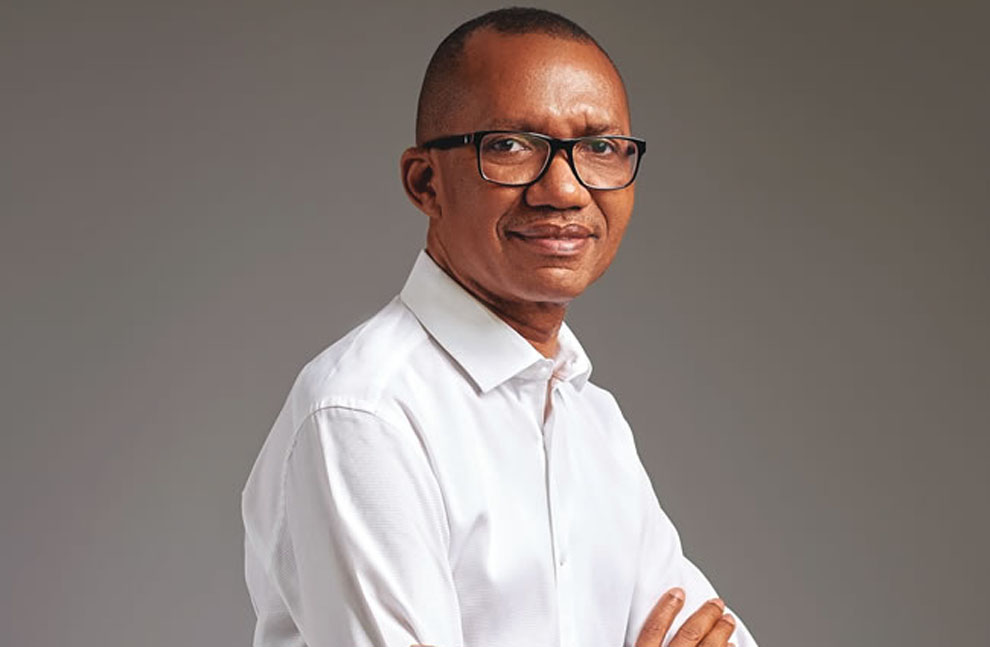
Does it still make sense to trust Tinubu? By Azu Ishiekwene
This was tough to write. My heart resisted it, but I yielded to my head. The petrol in my car, a 2.0-litre 2012 Tokunbo Camry, was at half-tank the day before writing.
When pump prices went from 195/litre to 617/litre between May and June 2023, I parked my Jeep and, despite being occasionally mistaken for an Uber driver, opted for the saloon, which, as of the third fuel price increase by September this year, cost about 65k to fill up.
After petrol pump price went up again by about 15 percent last week, it would now cost about 80k to fill up the saloon, depending on where you bought petrol from and how badly the pump was rigged.
The changes in petrol price and energy costs have affected everything else, from the price of fish to milk and the cost of bread and grains. Essential medicines are a different thing altogether. Life was hard. But it’s been a nightmare for millions more since President Bola Ahmed Tinubu’s government was inaugurated.
Generation crisis
In July, The Financial Times said the hardship under Tinubu has triggered “the worst cost of living crisis in a generation.” The newspaper gave the president credit for tackling two of the most malignant economic problems in decades – the petrol subsidy and fixed exchange rate – but said the shock therapy was so disjointed that calling it “Tinubunomics” would be a joke.
But Nigerians hardly need a foreign newspaper to render their misery in torrid colours. They know this was not the life promised. Tinubu pledged to prioritise security and jobs, tackle the mounting debt, and improve infrastructure when he took office. He came with a pro-business credential and a track record of success in Lagos that was difficult to ignore.
In the last year, however, with millions impoverished by the government’s economic policies and two major nationwide protests against hunger and bad governance, Tinubu’s reputation has taken such a severe beating that promises of light at the end of the tunnel have been brushed aside.
Turn of excuses?
His government has explained that the rot was worse than expected; that whereas previous governments since 1973 said oil money was not the problem, but how to spend it, President Muhammadu Buhari handed his successor an empty treasury, to which the response has been: yours is a continuation of the APC government, deal with it.
READ ALSO:
- JUST IN: Four police officers face trial in Imo for bribery
- Lagos Assembly to scrap 37 LCDAs created by Tinubu
- Hamas leader Yahya Sinwar feared killed in Israeli Gaza operation
Complaints about post-Covid-19 supply chain problems, long-standing structural problems, the protracted legal challenge to his election, and a hostile opposition have also been dismissed as untenable for a man who said it was his turn to govern.
Temptation
Yet, I wouldn’t write off the government, however tempting. If Tinubu’s shock therapy has been disjointed, and his economic policies severely criticised by a despairing public, the tax-and-spend remedy by The Financial Times, the West’s standard response to budget deficits – apart from the added trope about transparency and corruption – is hardly the cure in Nigeria’s case for at least two reasons.
Apart from severe loopholes, rampant poverty makes it difficult to expand the tax net or improve the yield, except if the government wishes to levy taxes on blood. Poor industrialisation, even de-industrialisation, and heavy dependence on imports, especially food imports, compound the problem and further reduce wiggle room to raise badly needed cash.
For Tinubu to dig Nigeria out of its current hole – and I believe he still can – efforts to restructure government income, including taxes, by repurposing the Federal Inland Revenue Service (FIRS) must be matched by policies that create wealth.
Options for compound problems
The government should intentionally target industrialisation and food production, with reduced foreign input. Unfortunately, widespread floods have piled on insurgency and kidnapping to reduce farm supplies and worsen food inflation.
Yet, while elites like me complain the most and the loudest, the measure of Tinubu’s success is not how much petrol I’m able to buy in my car but the impact of government policies on the rural poor, mainly farmers, who make up the bulk of the country’s 220m population.
Tinubu must work with Nigeria’s state governors, who collect security votes monthly before thinking of what to do with it to fix the security problem so that farmers can return. The country needs a system to incentivise farming, one far better managed than the Anchor-borrowers’ scheme under which the Buhari government staged occasional shows of huge grain pyramids that disappeared as soon as the events were over.
Examples from elsewhere
There would be no easy options. Examples of countries that have turned things around show that their leaders defied the norm in pivotal moments. Deng Xiaoping reversed Zedong’s isolationism by introducing market reforms and imposing a one-child policy.
READ ALSO:
- JAMB makes U-turn, directs higher institutions to admit 16-year-old candidates
- Cement company, Lafarge, to face trial over subsidiary alleged funding terrorism
- Illegal CNG conversion caused Benin car explosion – PCNGi
Lee Kuan Yew ignored Western prescriptions of democracy, even laying down markers for the foreign-owned Strait Times, limited protests, and restricted strikes and industrial actions.
Those who obsess about diversity and size would find India a good example. To the displeasure of the elite, Indira Gandhi focused on rural India. She achieved self-sufficiency in food production, reducing poverty and laying the groundwork for long-term national development.
One thing common to all three but lacking in Tinubu’s government is energy and speed of execution. For example, three months after he announced an interim measure to remove tariffs on grains and essential pharmaceuticals, the Customs have yet to get the memo – or perhaps they have, and it’s been washed up by red tape.
Sitting on the mines
Sadly, oil isn’t about to take the backstage soon. Yet, our assets, especially oil mining leases in seven blocks, including OML 111 and disputed Pan Ocean assets, have been poorly managed by NNPCL. The corporation that ought to be alarmed at divestments from the upstream and midstream is too busy piling on the government’s debt by brokering crude-for-loan deals to think of what to do with massive, fallow oil assets that it has cornered since 2009.
Experts estimate that prudent management of these assets could increase Nigeria’s production quota by between 500kbpd and 1mbpd and improve the pool of investible funds. How and why, despite his experience in the oil industry, Tinubu indulges NNPCL’s damaging and scandalous incompetence, only he can explain.
Eat that frog!
But I’m not giving up on him yet. I’m hoping he was playing politics when the political pressure group, the Patriots, led by the statesman Chief Emeka Anyaoku, visited him, and he said he needed to fix the economy before restructuring the country.
Except he prioritises that, the current system, which puts revenue sharing ahead of innovation, competition, production and reward, but instead creates a phantom of Abuja as Father Christmas, will continue to retard the country’s progress.
It’s not Tinubu’s fault that the states are yoked to Abuja. However, he cannot make any lasting changes, keep his election promises on security, jobs, the economy, or infrastructure or even inspire the states to depart their waywardness without changing how the country is governed.
He starts to lose me, not when I pay a higher petrol price but when his actions show, irretrievably, that despite his solid credentials as an advocate of restructuring, he is determined to put the cart before the horse.
Does it still make sense to trust Tinubu? By Azu Ishiekwene
Ishiekwene is Editor-In-Chief of LEADERSHIP and author of the book Writing for Media and Monetising It.








Opinion
Ejimakor: Kanu, IPOB Members Should Not Be Jailed Over Biafra Agitation
Aloy Ejimakor, Special Counsel to Indigenous People of Biafra (IPOB) leader Nnamdi Kanu, has called for the release of people he described as prisoners of conscience ahead of Nigeria’s 2027 general elections.
Ejimakor made the demand while arguing that the continued imprisonment of Kanu and other alleged IPOB members for their separatist position could further deepen political and social divisions in the country.
In a statement issued on Saturday, the lawyer said the Nigerian government should address the grievances driving calls for Biafra rather than relying on prosecution and imprisonment.
He maintained that advocating for self-determination, regardless of how controversial or forceful the expression may be, should not automatically amount to terrorism or treason.
According to Ejimakor, democratic societies should have room for political opinions that are unpopular or challenging to the existing order.
He warned that punishing people for expressing separatist aspirations could create greater resentment and make efforts at national reconciliation more difficult.
The lawyer also pointed to examples of countries and territories where demands for self-determination had resulted in political processes, including referendums.
Ejimakor argued that Nigeria should similarly consider political engagement and dialogue as a way of addressing the Biafra question.
He further criticised what he described as the criminalisation of political dissent, saying the government should focus on resolving the grievances behind the agitation.
The lawyer consequently urged the Federal Government to consider freeing what he called prisoners of conscience before the 2027 elections, arguing that dialogue and a political settlement would offer a more sustainable path to peace.
Health
“Cheap Alcohol Fuels Banditry”: NAFDAC Chief Stands Firm on Sachet Ban
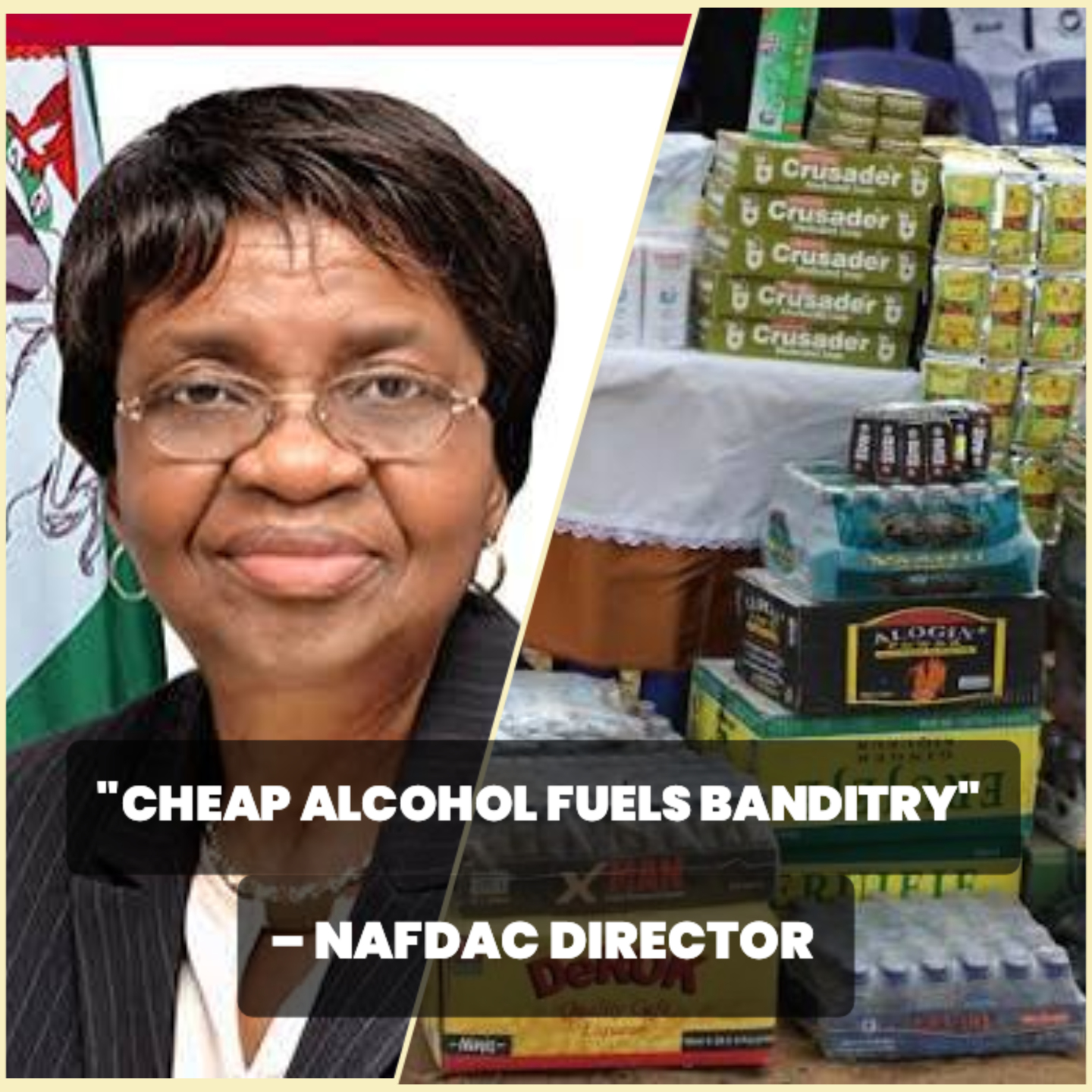
Nigeria’s top food and drug regulator has linked the widespread availability of pocket-sized alcohol directly to violent crime and a mounting public health crisis.
Opinion
2027: Tinubu May Get Less Than 10% of Northern Votes — Ard
2027: Tinubu May Get Less Than 10% of Northern Votes — Ard
President Bola Tinubu could suffer a dramatic collapse in his Northern support in the 2027 presidential election, securing less than 10 per cent of votes from the region if the poll is free and credible, Convener of the League of Northern Democrats and key promoter of the All-Democratic Alliance (ADA), Dr Umar Ardo, has predicted.
Ardo made the prediction on Monday in an interview on Frontline, a current affairs programme on Eagle 102.5 FM, Ilese-Ijebu, Ogun State, arguing that the outcome would largely reflect how Northern voters assess the Tinubu administration’s performance.
He identified insecurity, worsening poverty, economic hardship and the rising cost of living as major issues likely to influence voting decisions in the region.
According to him, the persistent insecurity affecting communities, farmers, traders and businesses remains one of the administration’s biggest challenges.
READ ALSO:
- JUST IN: Tension in Benue as Suspected Thugs Attack Peter Obi’s Convoy, Block Access
- FIFA, CAF suspend NFF election as Nigeria football reforms face fresh review
- NNPC Disowns Cannabis-Laden Tanker, Threatens Legal Action Over Brand Misuse
“You can solve the issue of insecurity and insurgency in one year,” he said, insisting that the Federal Government could significantly reduce the crisis with the right strategy and sufficient political will.
Ardo also faulted the administration’s economic reforms, particularly the removal of fuel subsidy, questioning whether ordinary Nigerians had experienced corresponding benefits.
“Subsidy removal, is it a benefit?” he asked, arguing that the reforms had eroded purchasing power and made basic necessities increasingly unaffordable.
He said the impact had been particularly severe in Northern Nigeria, where a large proportion of the population is economically vulnerable.
“The economic reform has pushed from the state of poverty to destitution,” he said.
The political commentator also raised concerns about political representation under the Tinubu administration, arguing that the composition of government could shape public perception of its commitment to different regions.
Ardo said Northern voters should not be assumed to be permanently aligned with the voting pattern recorded in 2023, stressing that prevailing economic and security conditions would determine their choices in 2027.
“If a free, fair and credible election is conducted in Nigeria, Tinubu can’t get 10 percent of the Northern part,” he declared.
His prediction puts the spotlight on the opposition’s capacity to exploit any erosion of Tinubu’s Northern support, with former Vice President Atiku Abubakar and other opposition figures potentially positioned to benefit from any major electoral realignment.
2027: Tinubu May Get Less Than 10% of Northern Votes — Ard
-

 metro1 day ago
Woman disguises as Muslim woman in Niqab to steal in Ado-Ekiti market, video sparks outrage
-

 metro2 days ago
Police Arrest Woman Over Fake OPay Shutdown Notice
-

 Politics2 days ago
Amaechi will be caged politically, Wike shouldn’t bother about Ikwerre votes — Wihioka
-

 metro2 days ago
Residents Cry Out Over Poorly Constructed Entrance of Ademola Abiola Street, Demand Urgent Intervention
-
 Politics2 days ago
Remi Tinubu Appeals To South-East Voters, Says She Wants To ‘Enjoy Nigeria’ In Old Age
-
 Politics2 days ago
Breaking the Cycle of Collective Guilt: When a Ruling Party Voice Backs Peter Obi
-

 News1 day ago
AI on the Roads: LASTMA Turns to China to Fix Lagos Traffic
-

 Africa1 day ago
Murder of Nigerian Bishop in South Africa Sparks Outcry Over Unsolved Killings