

International
Trump wins US election, Netanyahu, Starmer react

Trump wins US election, Netanyahu, Starmer react
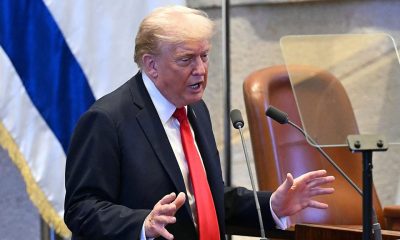
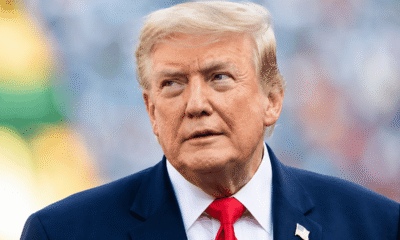
Republican Party candidate Donald Trump has won the United States presidential election after garnering 279 electoral college votes.
Kamala Harris of the Democratic Party, who now has 223 electoral college votes, is preparing her concession speech which will be delivered soon.
Israeli Prime Minister Benjamin Netanyahu and the UK’s Keir Starmer have been among the first world leaders to congratulate Donald Trump on winning the US presidential election.
In his statement, Netanyahu – who has had a difficult relationship with President Joe Biden – spoke of “history’s greatest comeback”, adding that Trump’s return to office offered a “new beginning for America, a powerful recommitment to the great alliance between Israel and America”.
UK Prime Minister Sir Keir Starmer said: “I look forward to working with Trump in the years ahead.”
He added: “From growth and security to innovation and tech, I know that the UK-US special relationship will continue to prosper on both sides of the Atlantic for years to come.”









International
Israeli Actor, Flight Instructor Among Two Killed In California Plane Crash

Israeli Actor, Flight Instructor Among Two Killed In California Plane Crash
Israeli actor and flight instructor Guy Kapulnik, 46, and his passenger, Taylor Laska, 33, have died after a light aircraft crashed into a field in California, United States.
The fatal crash occurred on Thursday, September 24, 2026, near Hesperia in San Bernardino County.

Emergency responders were alerted to the crash shortly before 10am after the small aircraft went down in an open field.
Both occupants were pronounced dead at the scene.
The aircraft, identified as a single-engine Aeronca 7AC Champion, crashed near Summit Valley Road and Telephone Canyon Road, about three miles from Hesperia Airport.
Authorities have launched an investigation into the incident, but the cause of the crash had not been established as of Wednesday.
Kapulnik was not only a pilot and flight instructor but also an actor who appeared in several Israeli and international film productions.
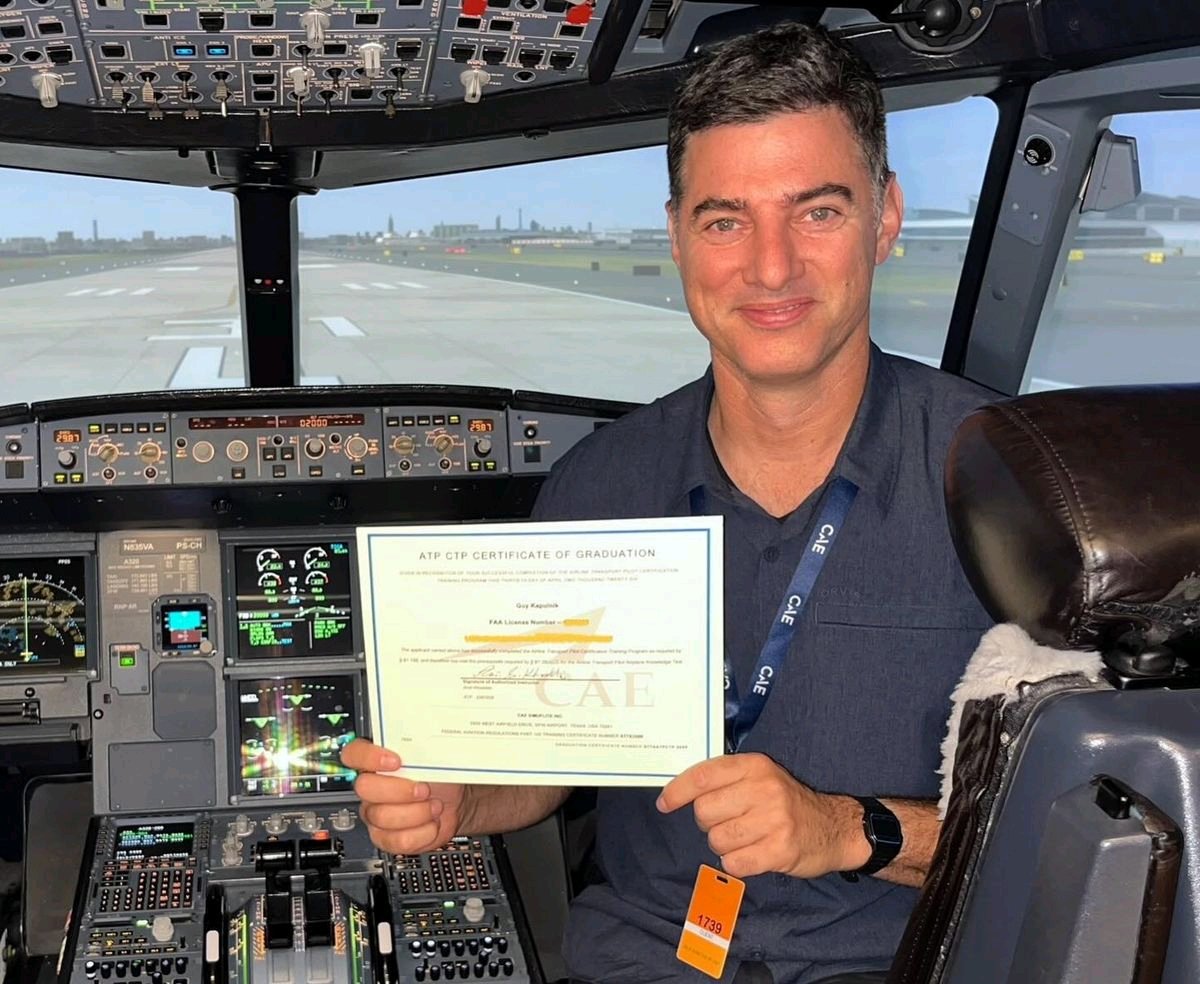
He trained at the Nissan Nativ Acting Studio in Jerusalem before building a career in the entertainment industry. His acting credits included Room 514, Salsa Tel Aviv, Watch Over Me and Lebanon.
After moving to Los Angeles, Kapulnik continued acting while pursuing his passion for aviation. He obtained his pilot’s licence and later became a certified flight instructor.
His aviation career saw him teach aspiring pilots, with friends and former students describing him as passionate about flying and committed to helping others learn.
Kapulnik had also previously served as an officer in Israel’s elite Unit 669, a specialised search-and-rescue unit.
His death has triggered an outpouring of tributes from friends, colleagues and people who knew him through aviation and acting.
Those who knew him remembered him as an adventurous and energetic man who pursued several passions throughout his life, including acting, flying and life at sea.
The passenger, Laska, was also killed in the crash.
Investigators from the relevant aviation authorities are continuing to examine the wreckage and circumstances surrounding the incident to determine what caused the aircraft to crash.
Kapulnik’s funeral is expected to take place in Israel.
Israeli Actor, Flight Instructor Among Two Killed In California Plane Crash
International
Trump Can Resume Third-Country Deportations Temporarily, US Supreme Court Rules
Trump Can Resume Third-Country Deportations Temporarily, US Supreme Court Rules
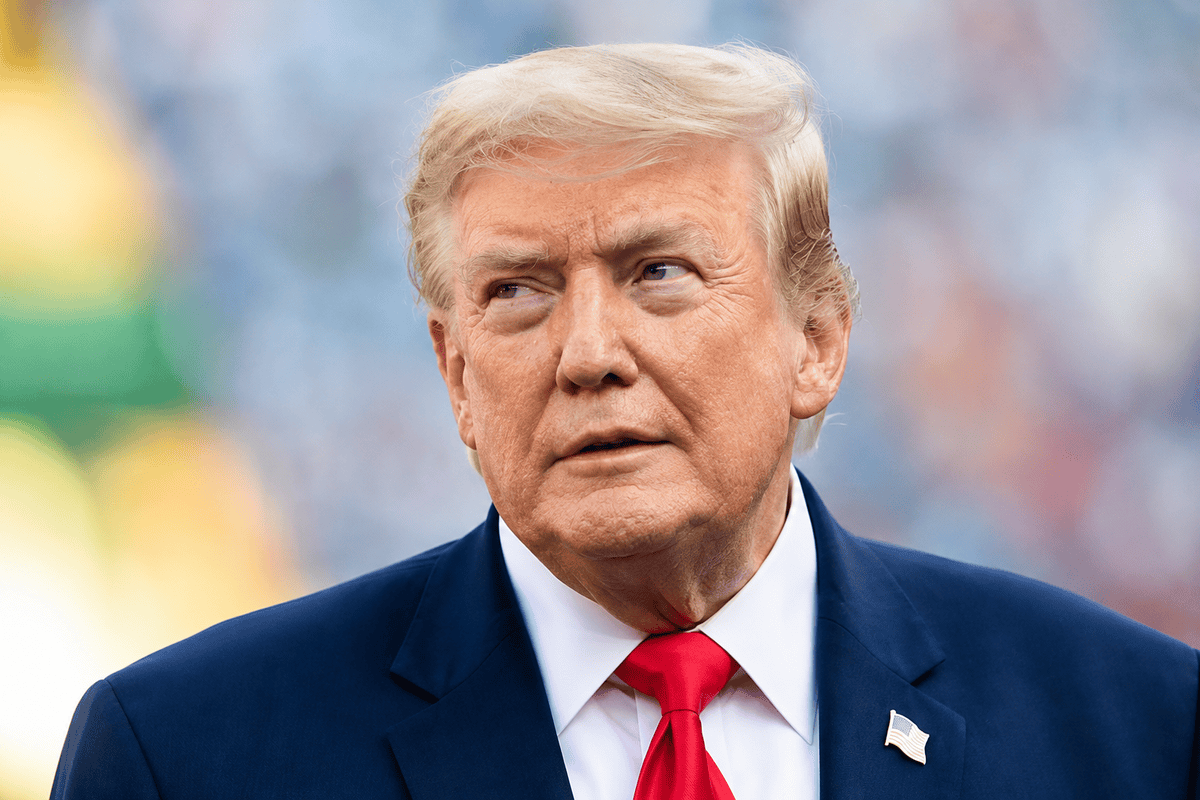
The US Supreme Court has temporarily cleared the way for President Donald Trump’s administration to resume deporting migrants to countries other than their own while the justices consider the legality of the policy.
The emergency order issued Tuesday temporarily suspends a lower-court restriction that required migrants facing third-country deportation to receive adequate notice and an opportunity to raise concerns about possible persecution or torture in the country to which they were being sent.
The Supreme Court’s action is not a final ruling on the legality of the deportation policy. Instead, it allows the Trump administration to proceed with the removals for now while the broader legal challenge moves forward.
The justices have agreed to hear arguments on the case in December, when they are expected to consider whether the policy violates migrants’ due-process rights and whether lower courts had the authority to impose restrictions on the deportations.
The dispute centres on the administration’s policy of sending migrants to third countries rather than returning them directly to their countries of citizenship. Such removals have been used where migrants cannot be returned to their home countries or where those countries refuse to accept them.
READ ALSO:
- Flood Cuts Off Part of Agbarho-Ughelli Road, Strands Commuters in Delta
- Dangote Draws Battle Lines as Fuel Import Fight Heads Back to Court
- Tinubu Returns After 30 Days in Europe, Says ‘I’m Healthy and Ready to Work’
The Trump administration has defended the policy as an important immigration enforcement tool, saying receiving countries provide assurances that deported migrants will not be persecuted or tortured.
The legal challenge intensified after a federal judge in Boston ruled that migrants should have a meaningful opportunity to raise safety concerns before being removed to a third country. A federal appeals court subsequently upheld the requirement, prompting the administration to seek emergency intervention from the Supreme Court.
Tuesday’s order temporarily puts that lower-court restriction on hold. This means third-country deportations can continue for now, but the Supreme Court has not yet determined whether the administration’s policy complies with US law.
The Supreme Court’s unsigned emergency order did not provide an explanation for the decision. Justices Sonia Sotomayor, Elena Kagan and Ketanji Brown Jackson indicated that they would have left the lower-court restriction in place.
The administration has already deported more than 25,000 migrants to third countries, according to figures presented in the legal proceedings. The destinations have included countries in Latin America and Africa.
Government lawyers have argued that lower-court restrictions have created logistical difficulties for immigration authorities, including cancelled deportation flights and delays in carrying out removal orders.
Lawyers representing migrants, however, have challenged the policy on due-process and safety grounds, arguing that people facing removal should have an opportunity to explain why they fear persecution, torture or other serious harm in the countries where they are being sent.
The case therefore remains unresolved. The Supreme Court’s latest order merely allows the deportations to proceed temporarily while the court reviews the underlying legal questions.
The December hearing will give the justices an opportunity to consider the broader dispute and determine whether the administration can continue the policy under the legal framework being challenged.
Until that review is completed and a final ruling is issued, Tuesday’s action should be understood as a temporary suspension of the lower-court restrictions, rather than a final Supreme Court approval of Trump’s third-country deportation policy.
Trump Can Resume Third-Country Deportations Temporarily, US Supreme Court Rules
International
US Judge Blocks Trump From Tying Counterterrorism Grants to Election Rules

US Judge Blocks Trump From Tying Counterterrorism Grants to Election Rules
A US federal judge has blocked the Donald Trump administration from conditioning counterterrorism grants for states and local governments on changes to how elections are administered.
US District Judge Amir H. Ali of the District Court for the District of Columbia issued the ruling on Monday, September 28, 2026, finding that the Federal Emergency Management Agency (FEMA) exceeded the authority granted to it by Congress by attaching the election-related conditions to homeland security funding.
The case followed a lawsuit filed by Nashville and Davidson County, Tennessee; Columbus, Ohio; and several Texas counties, including Harris, El Paso, Dallas and Travis counties.
The local governments challenged conditions FEMA had attached to its 2026 Homeland Security Grant Program, arguing that Congress authorised the programme to help communities prevent, prepare for and respond to terrorism and other security threats, rather than to regulate routine election administration.
The programme provides more than $1 billion in federal funding to state, local and tribal governments. Under the policy challenged in court, FEMA planned to withhold 20 per cent of certain grant awards until recipients complied with specified election-related requirements.
READ ALSO:
- School Attack: 13-Year-Old Student Kills Teacher, Injures Two
- Bauchi Woman Arrested After Co-Wife Dies in Alleged Pestle Attack
- Breaking: Tinubu Ends Extended European Vacation, Departs Paris for Nigeria
Among the requirements were plans to move away from voting systems that use QR codes or barcodes to count ballots and toward equipment that accepts hand-marked paper ballots.
Recipients also had to demonstrate that they conducted a manual audit of at least five per cent of ballots, reconcile the number of voters who participated in federal elections with the number of ballots cast, and use the Department of Homeland Security’s Systematic Alien Verification for Entitlements (SAVE) database to verify citizenship information in voter-registration records.
The conditions also covered citizenship verification for people working at polling places or operating election systems.
The Trump administration defended the requirements as measures intended to strengthen election security against threats including foreign interference and cyberattacks.
However, Judge Ali ruled that the disputed conditions were not sufficiently connected to the purpose of the counterterrorism grants and that Congress had not authorised FEMA to use the programme to impose the election-administration requirements.
In his 24-page ruling, Ali distinguished between measures designed to protect election infrastructure from security threats and requirements governing routine election procedures, such as ballot formats, voter-roll administration and election audits.
The ruling prevents the administration from conditioning the affected Homeland Security Grant Program funding on compliance with the challenged election requirements while the litigation continues.
A separate lawsuit brought by a coalition of states challenging similar conditions remains pending.
The case comes ahead of the November 3, 2026 US midterm elections, adding another legal dispute to the wider debate over the division of authority between the federal government and states in administering US elections.
The latest ruling does not determine whether the individual election-security measures are effective or appropriate as policy. Instead, it addresses whether FEMA had the legal authority to make compliance with those measures a condition for receiving counterterrorism funding.
The broader Homeland Security Grant Program remains in place, while the administration and the plaintiffs may pursue further legal proceedings.
US Judge Blocks Trump From Tying Counterterrorism Grants to Election Rules
-

 metro2 days ago
Osogbo Food Bonanza Turns Nightmare as Discount Vendor Vanishes With Customers’ Millions
-

 metro2 days ago
24 Hours in Darkness: Iju Ishaga Residents, Businesses Count Losses as Ikeja Electric Fails to Restore Power
-

 News3 days ago
Agbede Mourns Baba Alado, Says Mushin Has Lost Pillar of Peace
-

 Education2 days ago
FG Releases 2026–2028 Approved Textbooks, Introduces QR Codes for Tracking
-

 Sports2 days ago
Nigeria XI vs Guinea-Bissau: Awoniyi, Lookman, Adams Lead Super Eagles Attack
-

 News2 days ago
Breaking: Tinubu Ends Extended European Vacation, Departs Paris for Nigeria
-

 Politics3 days ago
Why I Can No Longer Defend Peter Obi’s Lifestyle – Okonkwo
-

 metro2 days ago
Hamzat Clarifies Lagos Traffic ‘Lifestyle’ Remark After Backlash